
Lean IT Services   178-slide PPT PowerPoint presentation slide deck (PPTX)
$79.00

Lean IT Services (178-slide PPT PowerPoint presentation slide deck (PPTX)) Preview Image
Log in to unlock full preview.
Lean IT Services (178-slide PPT PowerPoint presentation slide deck (PPTX)) Preview Image
Arrow   Click main image to view in full screen.

Lean IT Services (PowerPoint PPTX Slide Deck)

PowerPoint (PPTX) + Zip archive file (ZIP) 178 Slides

$79.00
Developed by a seasoned Certified Lean Six Sigma Black Belt with a proven track record at Microsoft, IBM and Panasonic, this comprehensive presentation is your pathway to achieving Operational Excellence through Lean Methodologies.
Add to Cart


Immediate download
Fully editable PowerPoint
Free lifetime updates

BENEFITS OF THIS POWERPOINT DOCUMENT

  1. Provides a holistic framework based on Lean principles to improve IT service delivery.
  2. Provides guidelines on how to apply Lean methods and tools to improve IT service delivery.
  3. Includes examples of Lean applications related to IT-related service delivery.

MIS PPT DESCRIPTION

Editor Summary Lean IT Services is a 178-slide PowerPoint training presentation (PPTX) with a supplemental ZIP, developed by a Certified Lean Six Sigma Black Belt with experience at Microsoft, IBM, and Panasonic. Read more

Lean IT is a management philosophy based on the Toyota Production System (TPS). With Lean IT, you will be able to enhance value for your customers by improving service delivery and eliminating waste. Simply put, by becoming a Lean organization, you will be able to increase productivity and create greater customer value with less resources.

Applying Lean methods to IT service delivery is easy: With the 5S sort technique, tickets can be sorted by complexity and allows System Administrators to build rhythm and increase productivity; using visual management, monitoring queue levels on visual board enables real time decision-making and the ability to flex manpower as required; for helpdesk teams, you can implement labor management to match resources to workload demand.

This Lean IT Services PPT training presentation is especially tailored for the IT services industry. By teaching this presentation to IT service providers and employees, they will have a better understanding of the Lean principles and approach to eliminating waste, and will be more forthcoming to lead and participate in the Lean implementation process.

||||||||||||||||||||||||||||||||||||||||||||||||||||||||||||||||||||||||||||||||||||||||||||||||||||||||||||||||||||||||||||||||||||||||||||||||||||||
This training package includes:
1. Lean IT Services PPT training presentation (PowerPoint format)
2. Lean poster (PDF format, in color and monochrome, printable in A3 size)
3. Eight Wastes of Lean poster (PDF format, in color and monochrome, printable in A3 size)
||||||||||||||||||||||||||||||||||||||||||||||||||||||||||||||||||||||||||||||||||||||||||||||||||||||||||||||||||||||||||||||||||||||||||||||||||||||

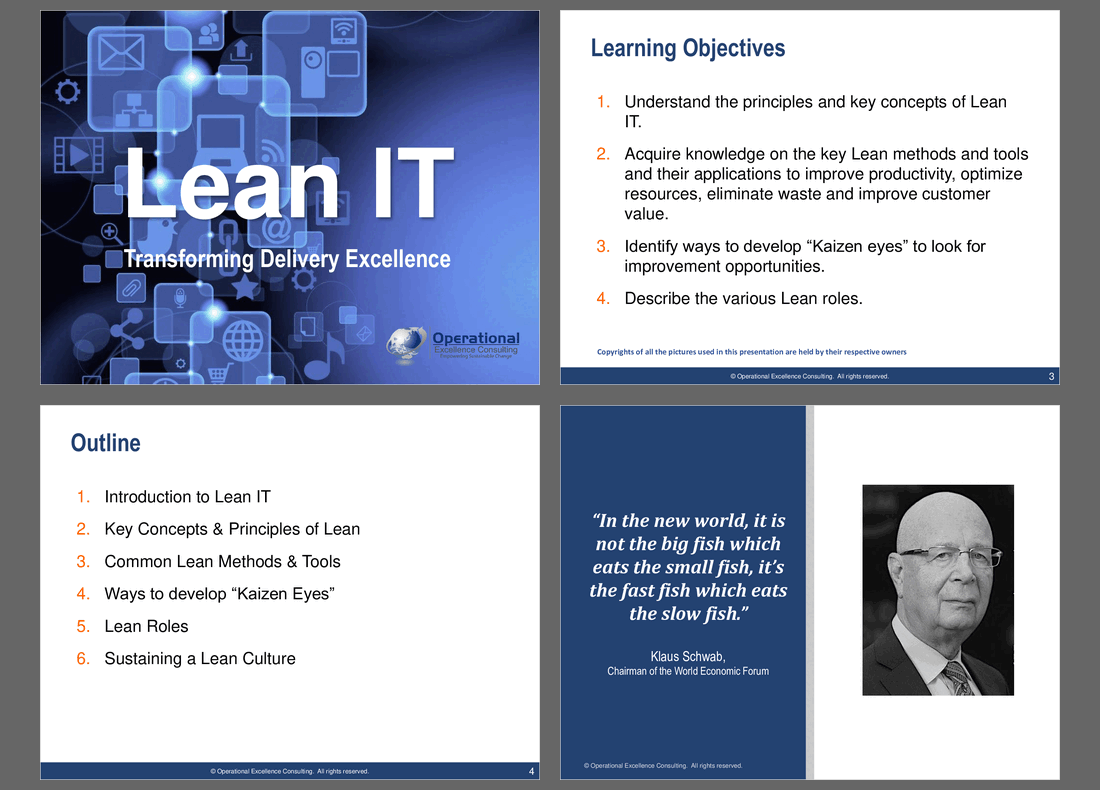
LEARNING OBJECTIVES

1. Understand the principles and key concepts of Lean IT.
2. Acquire knowledge on the key Lean methods and tools and their applications to eliminate waste and create increased value for customers.
3. Identify ways to develop "Kaizen eyes" to look for improvement opportunities.
4. Describe the various Lean roles.

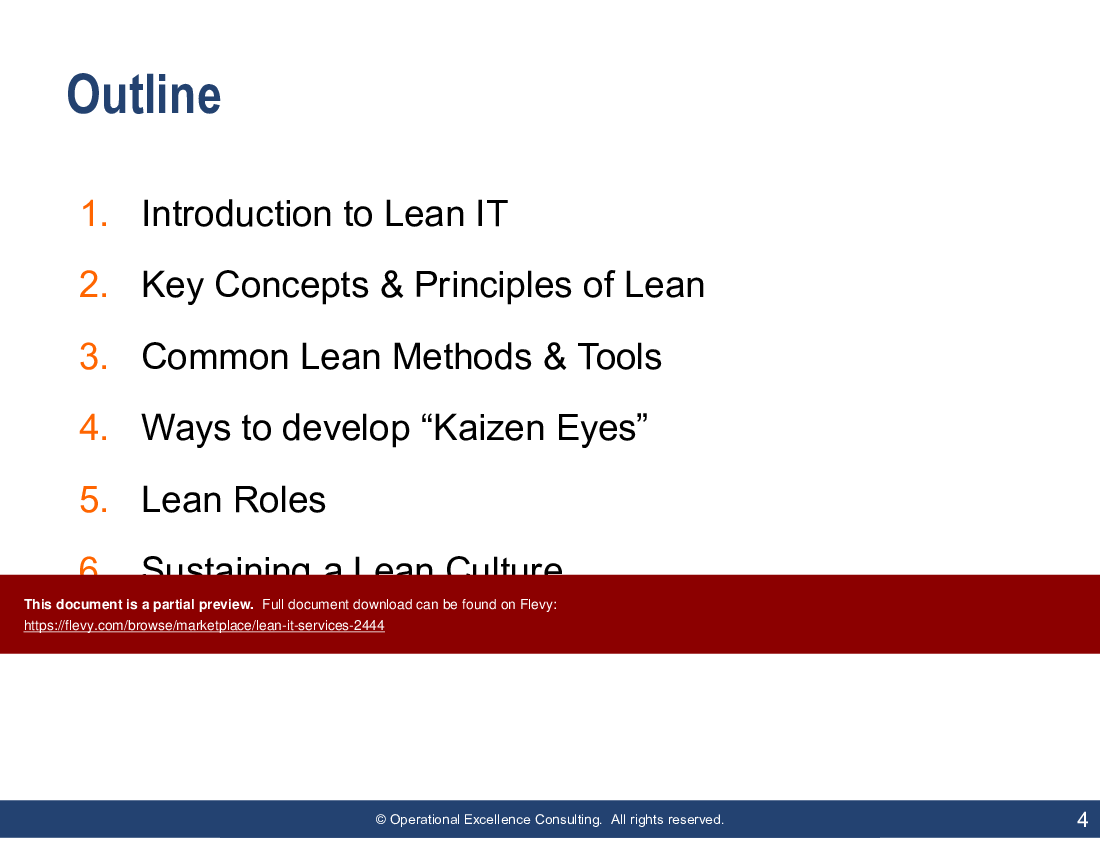
CONTENTS

1. Introduction to Lean Thinking
•  IT imperatives
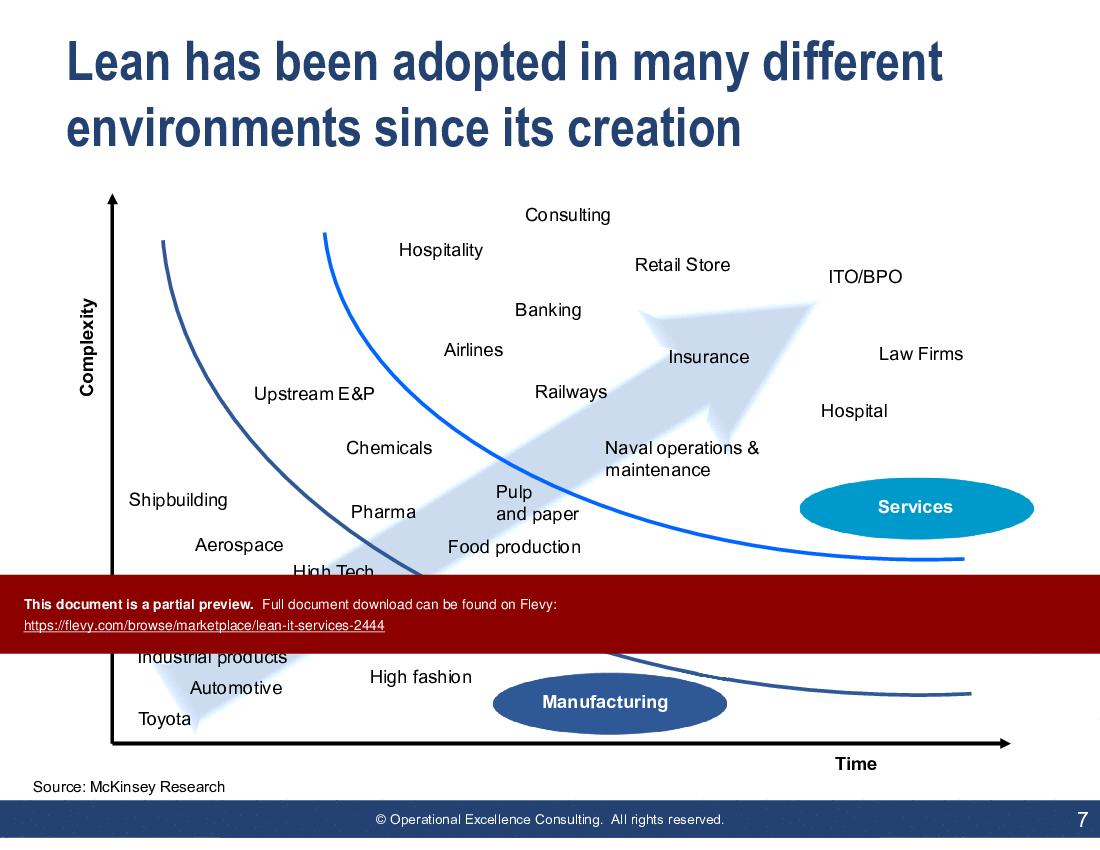
•  Lean adoption in various environments
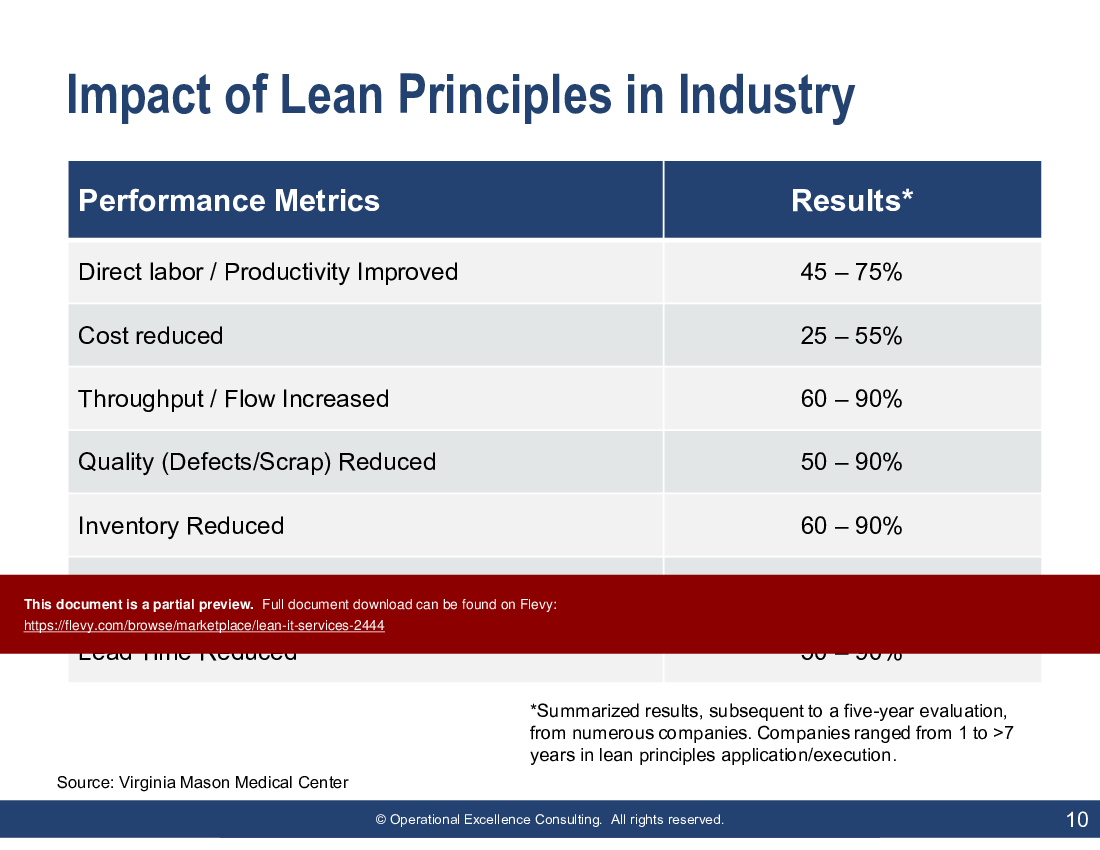
•  Impact of Lean principles in industry
•  Lean applications in service environments
•  What is Lean?
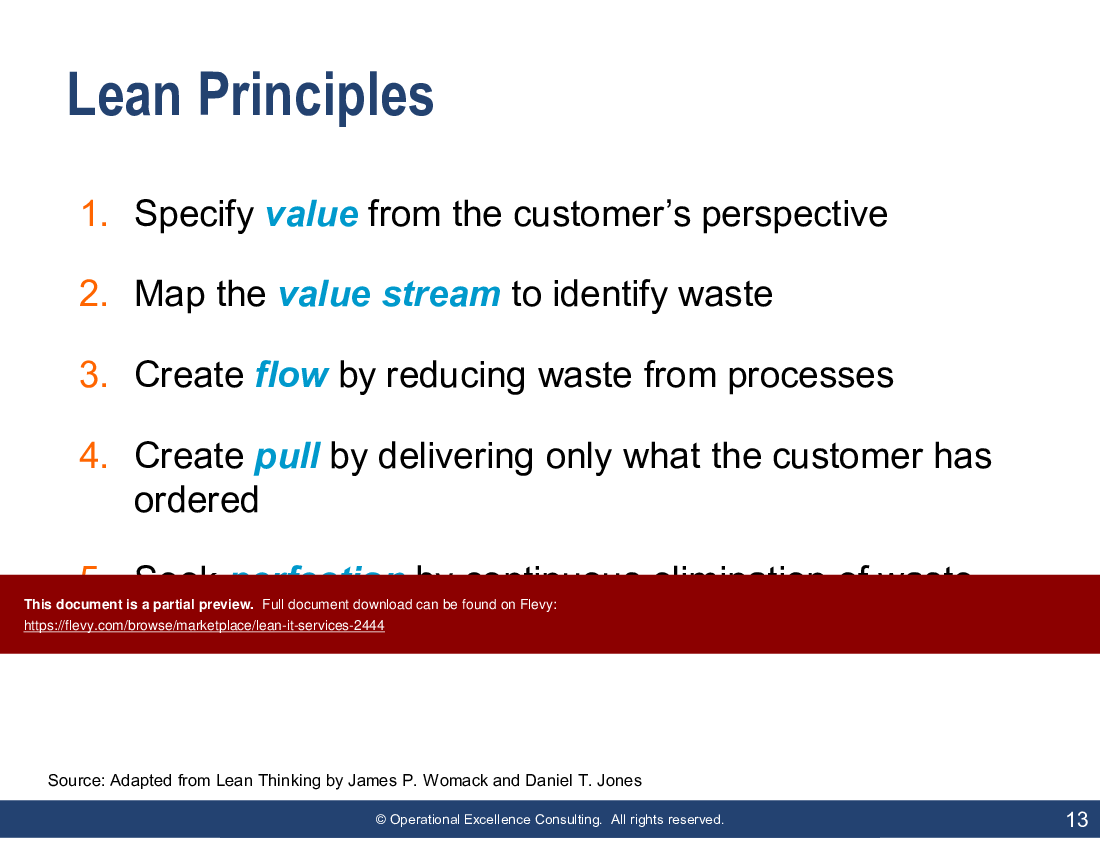
•  Lean principles
•  What Lean is not
•  How does Lean relate to IT?
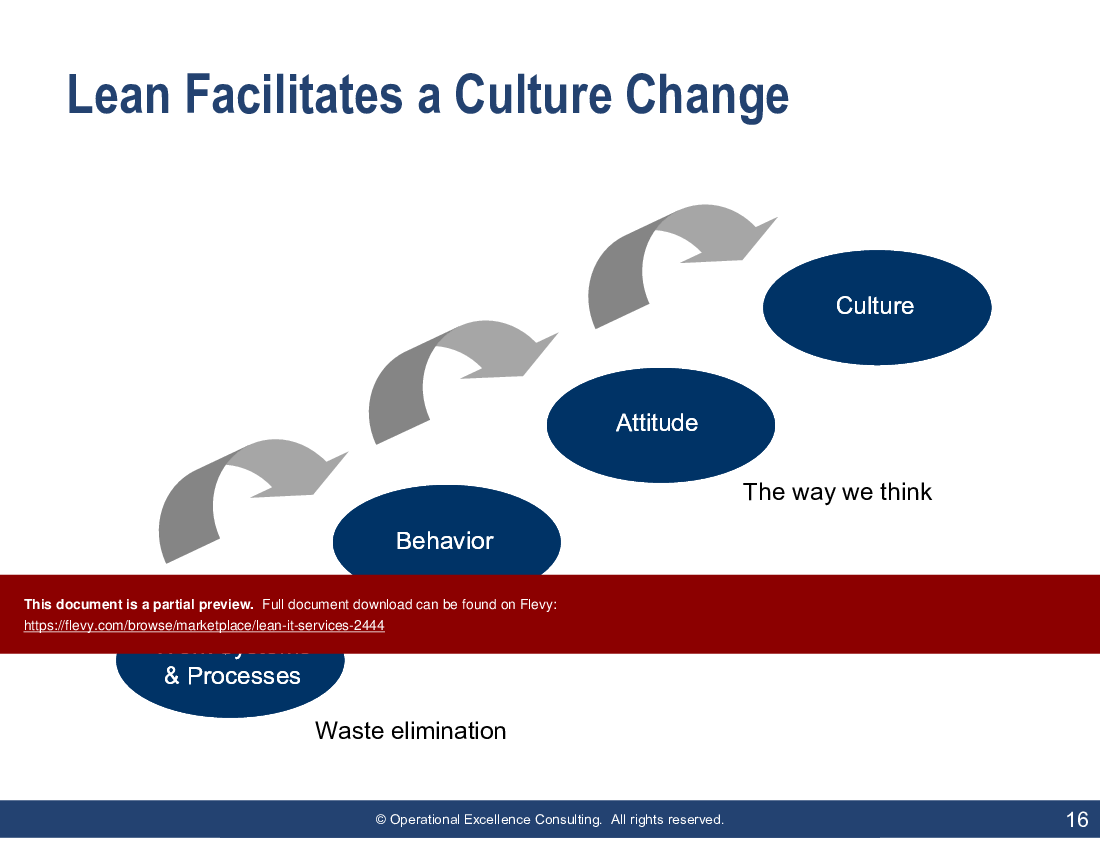
•  Lean facilitates a culture change
•  Traditional culture vs. Lean culture
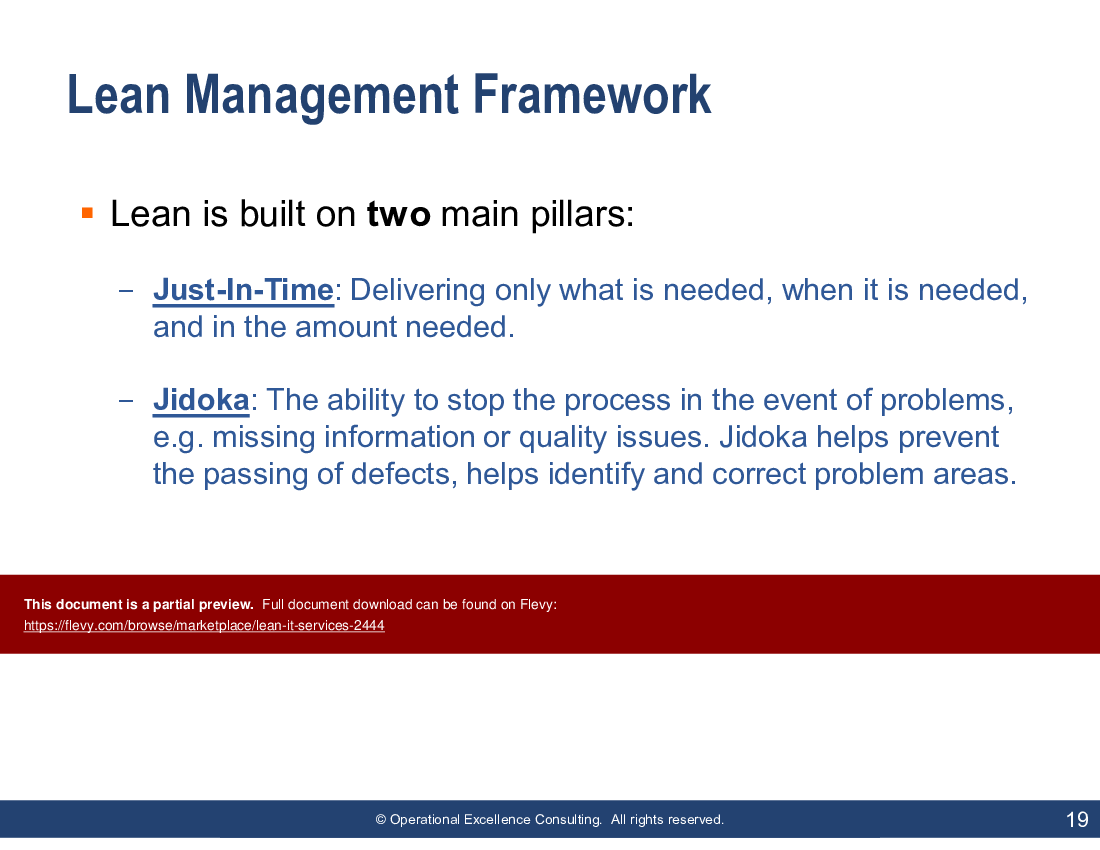
•  Lean management framework
•  Why Lean IT?
•  What is Lean IT?
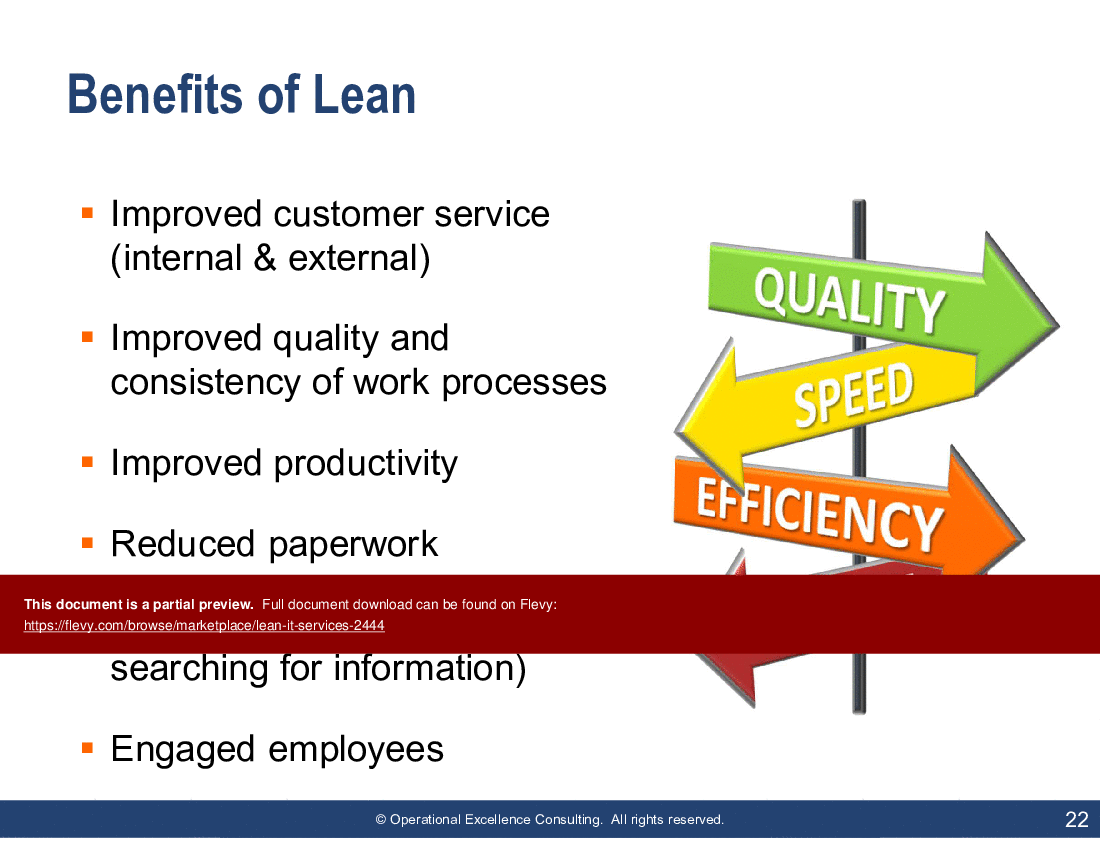
•  Benefits of Lean

2. Key Concepts of Lean Thinking
•  Methods to increase productivity
•  Value and waste
•  Cost reduction principle
•  Eight types of waste in IT services
•  Examples of value-added activities in IT services
•  Examples of waste in IT services
•  Lean emphasis
•  Lean thinking philosophy

3. Common Lean Methods and Tools
•  Muda, Mura and Muri
•  Gemba framework
•  5S principles
•  Visual management
•  Office layout
•  Spaghetti diagram
•  Value stream mapping
•  Standard work
•  Heijunka (Load levelling)
•  Fexible workforce
•  Quality at source
•  Poka yoke (error-proofing)
•  Kaizen
•  PDCA problem solving
•  Pareto chart
•  5 whys
•  Cause and effect diagram

4. Ways to develop "Kaizen Eyes"
•  What are "Kaizen eyes"?
•  Ways to develop "Kaizen eyes"

5. Lean Roles
•  Lean steering committee
•  Lean deployment leader
•  Lean champions
•  Lean process owner
•  Lean coach
•  Team leader
•  Team members

6. Sustaining a Lean Culture
•  Critical success factors
•  Lessons from other adopters

Lean IT Services has demonstrated significant impact across various industries, as evidenced by improved productivity and reduced costs. This presentation equips IT leaders with actionable insights to foster a Lean culture and drive continuous improvement.

Got a question about the product? Email us at support@flevy.com or ask the author directly by using the "Ask the Author a Question" form. If you cannot view the preview above this document description, go here to view the large preview instead.

MARCUS OVERVIEW

This synopsis was written by Marcus [?] based on the analysis of the full 178-slide presentation.


Executive Summary
The Lean IT Services presentation is designed to empower organizations to achieve operational excellence through Lean methodologies. Developed by a seasoned Certified Lean Six Sigma Black Belt with extensive experience at Microsoft, IBM, and Panasonic, this presentation offers a structured approach to enhance productivity, optimize resource management, and eliminate waste in IT environments. By leveraging Lean principles, organizations can improve customer satisfaction and employee engagement while reducing costs. This comprehensive deck provides actionable insights and tools to facilitate a culture of continuous improvement.

Who This Is For and When to Use
•  IT Managers and Directors looking to enhance service delivery and operational efficiency
•  Project Managers overseeing IT service implementations and process improvements
•  Business Analysts focused on identifying waste and optimizing workflows
•  Change Management Professionals aiming to foster a Lean culture within their teams

Best-fit moments to use this deck:
•  During IT transformation initiatives to align teams on Lean principles
•  In training sessions aimed at developing Lean competencies among staff
•  When conducting workshops focused on process improvement and waste elimination
•  As a reference for ongoing Lean projects to ensure alignment with best practices

Learning Objectives
•  Understand the principles and key concepts of Lean IT
•  Acquire knowledge of Lean methods and tools applicable to IT services
•  Identify opportunities for improvement using “Kaizen eyes”
•  Describe various Lean roles and their responsibilities in the implementation process
•  Develop strategies for sustaining a Lean culture within the organization
•  Apply Lean tools to enhance productivity and customer value

Table of Contents
•  Introduction to Lean IT (page 1)
•  Key Concepts & Principles of Lean (page 2)
•  Common Lean Methods & Tools (page 3)
•  Ways to Develop “Kaizen Eyes” (page 4)
•  Lean Roles (page 5)
•  Sustaining a Lean Culture (page 6)

Primary Topics Covered
•  Lean Principles - Focus on specifying value from the customer's perspective, mapping value streams, and eliminating waste to enhance process performance.
•  Lean Methods - Overview of tools such as 5S, Value Stream Mapping, and Kaizen that facilitate waste reduction and process improvement.
•  Kaizen Eyes - Techniques for developing a mindset focused on continuous improvement and recognizing opportunities for enhancement.
•  Lean Roles - Description of key roles such as Lean Champions, Deployment Leaders, and Team Members that drive Lean initiatives.
•  Sustaining Lean Culture - Strategies to maintain a Lean mindset and practices within the organization over time.

Deliverables, Templates, and Tools
•  Lean IT assessment templates for evaluating current processes
•  Value Stream Mapping tools for visualizing workflows
•  5S implementation checklists to organize workspaces
•  Kaizen event planning templates for structured improvement initiatives
•  Training materials for Lean roles and responsibilities
•  Visual management boards for tracking progress and performance

Slide Highlights
•  Overview of Lean principles and their application in IT environments
•  Case studies demonstrating the impact of Lean on productivity and customer satisfaction
•  Visual representations of waste types specific to IT services
•  Examples of successful Lean implementations across various industries
•  Frameworks for developing a Lean culture within organizations

Potential Workshop Agenda
Lean IT Introduction Session (60 minutes)
•  Overview of Lean principles and their relevance to IT
•  Discussion on the importance of waste elimination

Kaizen Eyes Development Workshop (90 minutes)
•  Techniques for identifying improvement opportunities
•  Group activities to practice “Kaizen eyes”

5S Implementation Planning (60 minutes)
•  Steps for organizing workspaces using 5S
•  Team assignments for 5S audits

Customization Guidance
•  Tailor the presentation to reflect specific organizational goals and challenges
•  Modify examples and case studies to align with industry-specific contexts
•  Adjust terminology and metrics to fit the organization’s existing frameworks
•  Incorporate internal success stories to enhance relatability and engagement

Secondary Topics Covered
•  The role of leadership in fostering a Lean culture
•  Strategies for overcoming resistance to change
•  Best practices for aligning Lean initiatives with business objectives
•  Techniques for measuring and tracking Lean project success

Topic FAQ

What are the core Lean IT tools used to reduce waste in IT services?

Common Lean IT tools focus on visualizing flow, standardizing work, and eliminating muda; examples listed in the materials include 5S, Value Stream Mapping, Kaizen events, visual management boards, PDCA problem solving, Pareto charts, 5 Whys, Poka‑Yoke, Heijunka, and spaghetti diagrams, with Value Stream Mapping highlighted as a primary tool.

How do I start a Lean IT transformation in my IT service team?

Begin by assessing current processes with a Lean IT assessment template, map key value streams to reveal waste, prioritize improvement opportunities, and plan Kaizen events with assigned Lean roles. Flevy's Lean IT Services provides assessment templates, value‑stream tools, and Kaizen planning templates to support initial steps.

Who should be involved in Lean IT implementation and what roles do they play?

Lean implementations typically involve a steering committee, Lean deployment leader, Lean champions, process owners, Lean coaches, team leaders, and team members; these roles cover governance, execution, coaching, accountability, and continuous improvement ownership, for example a deployment leader overseeing execution and a process owner maintaining improvements.

How can I measure the success of Lean initiatives in IT?

Success is tracked using operational and customer metrics such as reduced lead times, improved quality, decreased cost, and higher customer satisfaction scores; the presentation highlights performance tracking using visual management boards and quantifying improvements like reduced lead times.

What common challenges arise when implementing Lean in IT and how can they be addressed?

Common challenges include resistance to change, lack of leadership commitment, and insufficient training or resources; addressing these requires ongoing management commitment, regular training, recognition of achievements, and continuous monitoring of Lean practices, with insufficient training or resources called out as a key barrier.

What should I look for when choosing a Lean IT training toolkit?

Look for practical artifacts you can apply: Lean IT assessment templates, value‑stream mapping tools, 5S checklists, Kaizen event planning templates, training slides for Lean roles, and visual management boards; pedigree matters too, such as authorship by an experienced Lean Six Sigma Black Belt, and inclusion of 5S implementation checklists.

How much time should I allocate for a basic Lean IT workshop or training session?

Typical module durations in the package suggest a 60‑minute Lean IT introduction, a 90‑minute Kaizen Eyes development workshop, and a 60‑minute 5S implementation planning session; plan workshop blocks accordingly and consider the 90‑minute Kaizen module as a standalone practical session.

Can Lean IT be applied to helpdesk and support teams, and what practices are most relevant?

Yes; practical practices for helpdesk teams include using the 5S sort technique to classify tickets by complexity, visual management to monitor queue levels for real-time decisions, and labor management to align staffing to workload demand, with the 5S sort technique cited as a specific practice.

Document FAQ
These are questions addressed within this presentation.

What is Lean IT?
Lean IT refers to the application of Lean principles and practices to IT services, focusing on improving efficiency, reducing waste, and enhancing customer value.

How can Lean principles be applied in IT?
Lean principles can be applied by mapping value streams, identifying waste, and implementing tools such as 5S and Kaizen to streamline processes and improve service delivery.

What are the key roles in Lean implementation?
Key roles include Lean Champions, Deployment Leaders, Process Owners, and Lean Team Members, each responsible for different aspects of the Lean initiative.

What are the benefits of implementing Lean in IT?
Benefits include improved customer satisfaction, increased productivity, reduced operational costs, and enhanced employee engagement.

How do I sustain a Lean culture?
Sustaining a Lean culture requires ongoing management commitment, regular training, recognition of achievements, and continuous monitoring of Lean practices.

What tools are essential for Lean IT?
Essential tools include Value Stream Mapping, 5S, Kaizen events, and visual management techniques to track progress and identify areas for improvement.

How can I measure the success of Lean initiatives?
Success can be measured through performance metrics such as reduced lead times, improved quality, and increased customer satisfaction scores.

What challenges might I face when implementing Lean?
Challenges include resistance to change, lack of leadership commitment, and insufficient training or resources dedicated to Lean efforts.

Glossary
•  Lean IT - Application of Lean principles in IT services to improve efficiency and reduce waste.
•  Kaizen - Continuous improvement philosophy focused on incremental changes.
•  5S - A Lean tool for organizing and maintaining a clean workspace.
•  Value Stream Mapping - A visual tool for analyzing and optimizing workflows.
•  Muda - Japanese term for waste; activities that do not add value.
•  Jidoka - Lean principle focusing on quality at the source and stopping processes to prevent defects.
•  Heijunka - Load leveling to balance work and reduce fluctuations in demand.
•  Poka Yoke - Mistake-proofing techniques to prevent errors in processes.
•  Visual Management - Use of visual signals to communicate information and performance.
•  Lean Champion - A leader responsible for promoting and implementing Lean initiatives.
•  Deployment Leader - Individual overseeing the execution of Lean strategies within a specific area.
•  Process Owner - Person responsible for maintaining improvements and ensuring compliance with Lean practices.
•  Lean Team Member - Employee trained in Lean methodologies who participates in improvement projects.

Source: Best Practices in MIS PowerPoint Slides: Lean IT Services PowerPoint (PPTX) Presentation Slide Deck, Operational Excellence Consulting


$79.00
Developed by a seasoned Certified Lean Six Sigma Black Belt with a proven track record at Microsoft, IBM and Panasonic, this comprehensive presentation is your pathway to achieving Operational Excellence through Lean Methodologies.
Add to Cart
  

ABOUT THE AUTHOR

Author image
Additional documents from author: 257
Terms of usage (for all documents from this author)

Operational Excellence Consulting, founded in 2009 by Allan Ung, draws from extensive experience at Microsoft, IBM, and Underwriters Laboratories (UL). We specialize in strategy deployment, customer experience design, and operational excellence, applying Design Thinking, Lean, and Systems Thinking to maximize customer value and minimize waste.

Our ... [read more]

Ask the Author a Question

You must be logged in to contact the author.

Click here to log in Click here register

Did you know?
The average daily rate of a McKinsey consultant is $6,625 (not including expenses). The average price of a Flevy document is $65.



Trusted by over 10,000+ Client Organizations
Since 2012, we have provided business templates to over 10,000 businesses and organizations of all sizes, from startups and small businesses to the Fortune 100, in over 130 countries.
AT&T GE Cisco Intel IBM Coke Dell Toyota HP Nike Samsung Microsoft Astrazeneca JP Morgan KPMG Walgreens Walmart 3M Kaiser Oracle SAP Google E&Y Volvo Bosch Merck Fedex Shell Amgen Eli Lilly Roche AIG Abbott Amazon PwC T-Mobile Broadcom Bayer Pearson Titleist ConEd Pfizer NTT Data Schwab


Read Customer Testimonials

 
"Flevy.com has proven to be an invaluable resource library to our Independent Management Consultancy, supporting and enabling us to better serve our enterprise clients.

The value derived from our [FlevyPro] subscription in terms of the business it has helped to gain far exceeds the investment made, making a subscription a no-brainer for any growing consultancy – or in-house strategy team."

– Dean Carlton, Chief Transformation Officer, Global Village Transformations Pty Ltd.
 
"One of the great discoveries that I have made for my business is the Flevy library of training materials.

As a Lean Transformation Expert, I am always making presentations to clients on a variety of topics: Training, Transformation, Total Productive Maintenance, Culture, Coaching, Tools, Leadership Behavior, etc. Flevy "

– Ed Kemmerling, Senior Lean Transformation Expert at PMG
 
"FlevyPro provides business frameworks from many of the global giants in management consulting that allow you to provide best in class solutions for your clients."

– David Harris, Managing Director at Futures Strategy
 
"FlevyPro has been a brilliant resource for me, as an independent growth consultant, to access a vast knowledge bank of presentations to support my work with clients. In terms of RoI, the value I received from the very first presentation I downloaded paid for my subscription many times over! The "

– Roderick Cameron, Founding Partner at SGFE Ltd
 
"I have used FlevyPro for several business applications. It is a great complement to working with expensive consultants. The quality and effectiveness of the tools are of the highest standards."

– Moritz Bernhoerster, Global Sourcing Director at Fortune 500
 
"Flevy is our 'go to' resource for management material, at an affordable cost. The Flevy library is comprehensive and the content deep, and typically provides a great foundation for us to further develop and tailor our own service offer."

– Chris McCann, Founder at Resilient.World
 
"As a consulting firm, we had been creating subject matter training materials for our people and found the excellent materials on Flevy, which saved us 100's of hours of re-creating what already exists on the Flevy materials we purchased."

– Michael Evans, Managing Director at Newport LLC
 
"I like your product. I'm frequently designing PowerPoint presentations for my company and your product has given me so many great ideas on the use of charts, layouts, tools, and frameworks. I really think the templates are a valuable asset to the job."

– Roberto Fuentes Martinez, Senior Executive Director at Technology Transformation Advisory


Customers Also Bought These Documents


Customers Also Like These Documents

Explore Related Management Topics


Your Recently Viewed Documents
Download our FREE Digital Transformation Templates

Download our free compilation of 50+ Digital Transformation slides and templates. DX concepts covered include Digital Leadership, Digital Maturity, Digital Value Chain, Customer Experience, Customer Journey, RPA, etc.