
Most IT organizations suffer from growing complexity. This is exacerbated in the Digital Age, as emerging Digital Transformation technologies increase the need for IT organizations to operate efficiently and effectively. Thus, IT simplification is a critical foundation for Digital Transformation initiatives.
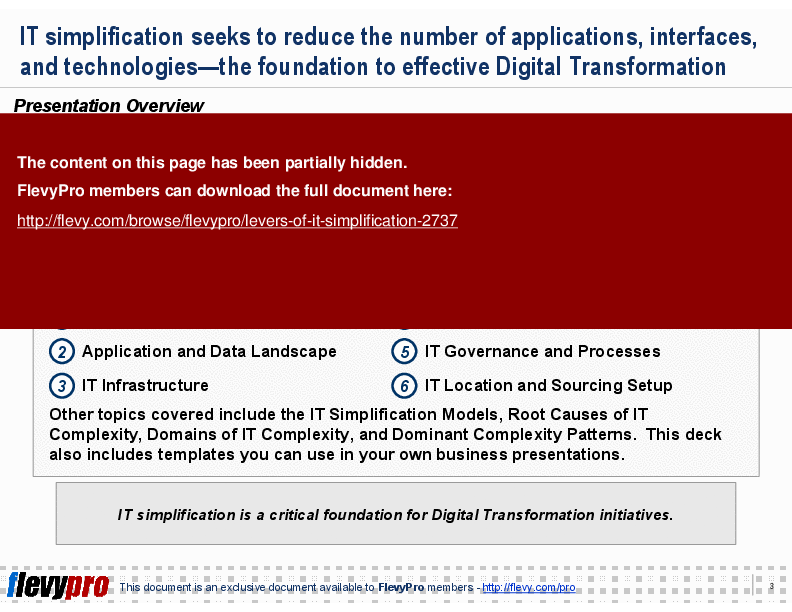
The aim of IT simplification is to reduce the number of applications, interfaces, and technologies to create a clean IT landscape.
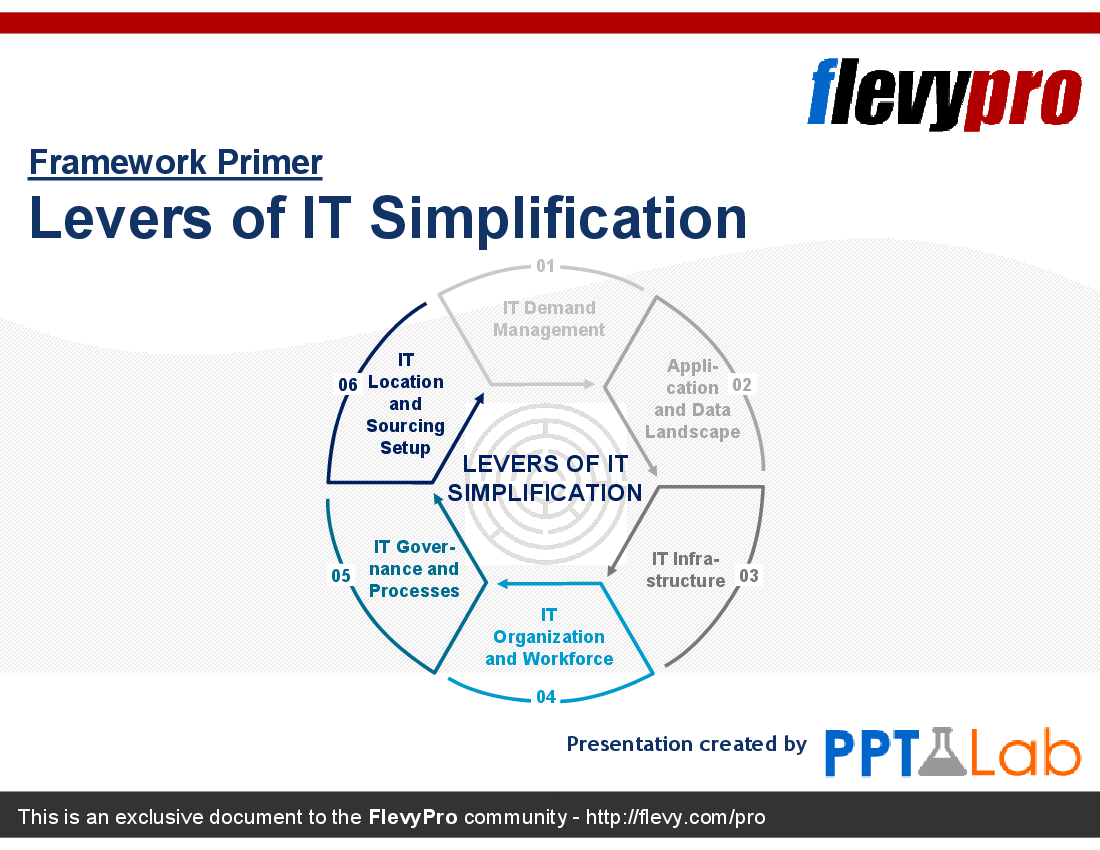
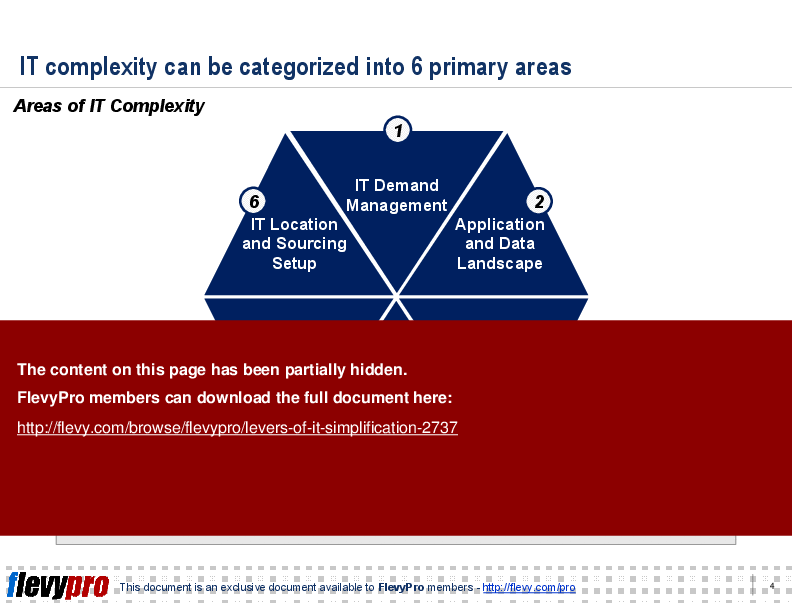
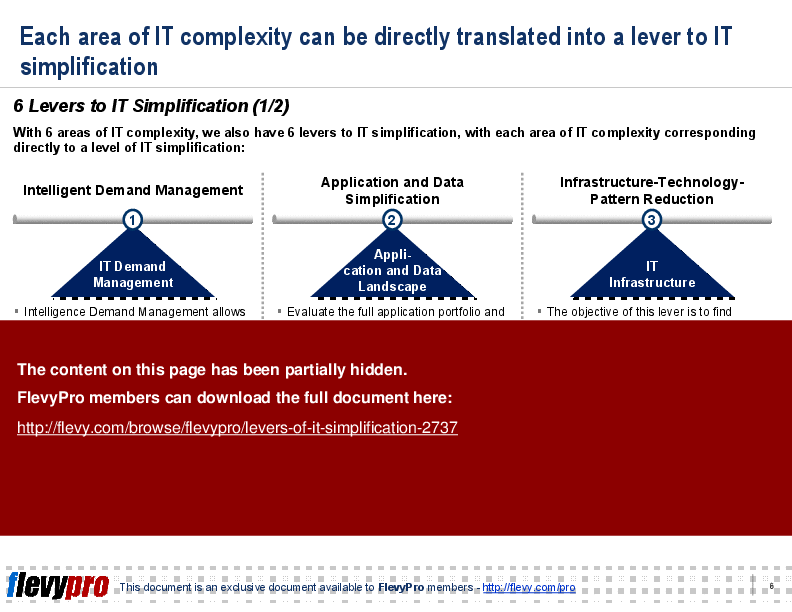
This presentation on IT Simplification examines the 6 levers of IT simplification—derived from the 6 areas of IT complexity:
1. IT Demand Management
2. Application and Data Landscape
3. IT Infrastructure
4. IT Organization and Workforce
5. IT Governance and Processes
6. IT Location and Sourcing Setup
Other topics covered include the IT Simplification Models, Root Causes of IT Complexity, Domains of IT Complexity, and Dominant Complexity Patterns. This deck also includes templates you can use in your own business presentations.
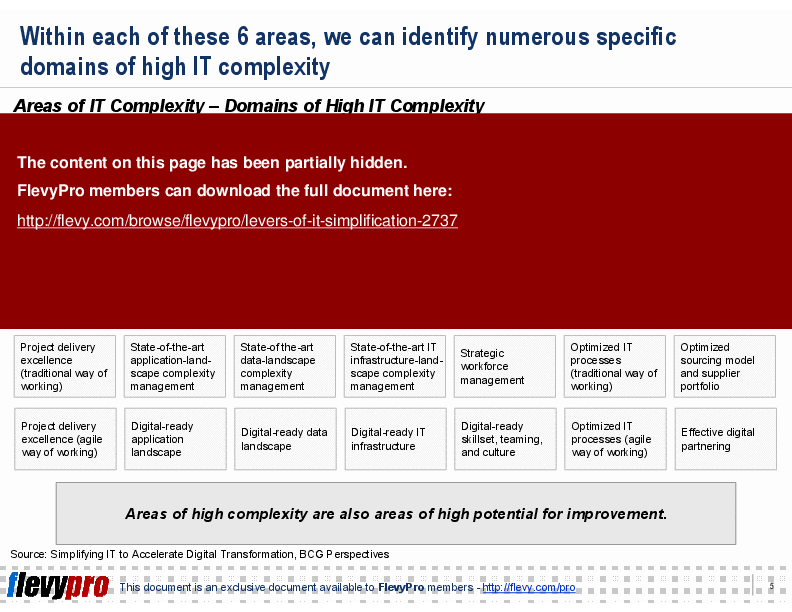
This PPT delves into the intricacies of IT complexity, categorizing it into six primary areas. Each area is meticulously analyzed to identify specific domains of high IT complexity, such as state-of-the-art application landscape complexity management and strategic workforce management. The presentation provides actionable insights into transforming these complex domains into simplified, efficient IT operations.
The presentation also outlines two distinct approaches to IT simplification projects: comprehensive multi-year programs and level-specific simplification initiatives. Comprehensive programs address broad IT complexity issues, potentially reducing the total IT cost base by up to 30%. Level-specific initiatives focus on targeted problems, achieving significant cost savings and operational efficiencies within shorter timeframes.
Root causes of IT complexity, including rapid growth and low business-IT collaboration, are examined in detail. The document emphasizes the importance of addressing these root causes to streamline IT processes and enhance business-IT alignment. This comprehensive guide is essential for any organization aiming to stay competitive through effective IT simplification.
Got a question about this document? Email us at flevypro@flevy.com.
Executive Summary
The "Levers of IT Simplification" presentation provides a structured approach to reducing IT complexity, a critical need in today's Digital Transformation landscape. Developed by experienced consultants, this deck outlines 6 key levers aimed at streamlining IT operations, enhancing efficiency, and enabling organizations to better manage their technology landscape. By focusing on areas such as IT Demand Management, Application and Data Landscape, and IT Governance, this presentation equips executives and IT leaders with actionable insights to simplify their IT frameworks and drive successful digital initiatives.
Who This Is For and When to Use
• IT executives and leaders overseeing digital transformation initiatives
• IT project managers responsible for application and infrastructure simplification
• Business leaders aiming to align IT capabilities with business objectives
• Change management teams facilitating transitions in IT processes
Best-fit moments to use this deck:
• During strategic planning sessions for digital transformation
• When assessing current IT complexity and identifying simplification opportunities
• In workshops aimed at aligning IT and business strategies
• For training sessions on IT governance and process optimization
Learning Objectives
• Define the 6 levers of IT simplification and their relevance to digital transformation
• Identify root causes of IT complexity within an organization
• Develop actionable strategies for reducing application and data landscape complexity
• Establish effective IT governance and process frameworks
• Create a roadmap for implementing IT simplification initiatives
• Assess the impact of simplification on overall IT performance and efficiency
Table of Contents
• Overview (page 3)
• IT Simplification Models (page 9)
• Root Causes of IT Complexity (page 12)
• Dominant Complexity Patterns (page 16)
• Templates (page 20)
Primary Topics Covered
• IT Demand Management - Focuses on understanding IT resource needs and cost drivers to enhance operational efficiency.
• Application and Data Landscape - Emphasizes the consolidation of applications and data to reduce complexity and improve integration.
• IT Infrastructure - Aims to minimize unique configurations of hardware and software, streamlining IT deployments.
• IT Organization and Workforce - Encourages the optimization of IT roles and responsibilities to enhance agility and effectiveness.
• IT Governance and Processes - Establishes frameworks that position IT as a strategic partner, improving collaboration with business units.
• IT Location and Sourcing Setup - Advocates for a shared services model to optimize resource allocation and reduce operational bottlenecks.
Deliverables, Templates, and Tools
• IT simplification strategy template for assessing current complexity
• Application portfolio evaluation framework for consolidation opportunities
• IT governance model outline to enhance collaboration with business units
• Roadmap template for implementing simplification initiatives
• Metrics dashboard for tracking simplification progress and impact
• Workshop facilitation guide for engaging stakeholders in simplification efforts
Slide Highlights
• Overview of the 6 levers of IT simplification and their interconnections
• Detailed analysis of root causes contributing to IT complexity
• Visual representation of dominant complexity patterns across various IT domains
• Case studies showcasing successful IT simplification initiatives
• Templates for practical application in organizational contexts
Potential Workshop Agenda
IT Simplification Overview Session (90 minutes)
• Introduce the concept of IT simplification and its importance
• Discuss the 6 levers and their implications for digital transformation
• Identify current complexity challenges within the organization
Lever-Specific Deep Dive (60 minutes)
• Explore each lever in detail, discussing practical applications
• Facilitate group discussions on potential simplification strategies
• Develop action plans for leveraging identified opportunities
Governance and Process Optimization Workshop (90 minutes)
• Review current IT governance models and processes
• Identify areas for improvement and alignment with business goals
• Create a roadmap for implementing governance enhancements
Customization Guidance
• Tailor the templates to reflect your organization's specific IT landscape and challenges
• Adjust the metrics dashboard to align with your key performance indicators
• Incorporate company-specific terminology and frameworks into the presentation slides
• Modify case studies to include relevant examples from your industry
Secondary Topics Covered
• The impact of digital transformation on IT complexity
• Strategies for fostering business-IT collaboration
• Best practices for managing application and data governance
• Techniques for optimizing IT service delivery models
• Insights into emerging trends in IT simplification
Topic FAQ
Document FAQ
These are questions addressed within this presentation.
What are the 6 levers of IT simplification?
The 6 levers include IT Demand Management, Application and Data Landscape, IT Infrastructure, IT Organization and Workforce, IT Governance and Processes, and IT Location and Sourcing Setup.
How can this presentation help my organization?
This presentation provides actionable insights and frameworks to reduce IT complexity, enhance operational efficiency, and support successful digital transformation initiatives.
What are the common root causes of IT complexity?
Common root causes include rapid growth, incomplete post-merger integration, low business-IT collaboration, and cost pressures.
How can I implement the strategies outlined in this deck?
Utilize the provided templates and frameworks to assess your current IT landscape, identify areas for simplification, and develop a structured implementation plan.
What metrics should I track to measure simplification success?
Key metrics may include application usage rates, IT operational costs, time to deploy new services, and user satisfaction levels.
Can this presentation be customized for my organization?
Yes, the templates and frameworks can be tailored to fit your specific organizational context and needs.
What types of organizations can benefit from IT simplification?
Organizations of all sizes and industries can benefit, particularly those undergoing digital transformation or facing challenges with IT complexity.
How does IT simplification support digital transformation?
By reducing complexity, organizations can streamline operations, enhance agility, and better align IT capabilities with business objectives, facilitating successful digital initiatives.
Glossary
• IT Demand Management - The process of understanding and managing IT resource needs and costs.
• Application Landscape - The collection of applications used within an organization, including their interdependencies.
• IT Governance - The framework for decision-making and accountability in IT management.
• Digital Transformation - The integration of digital technology into all areas of a business, fundamentally changing how it operates.
• Shared Services Model - A centralized approach to delivering IT services across multiple business units.
• Complexity Patterns - Common themes or issues that arise from IT complexity, affecting efficiency and performance.
• Data Landscape - The structure and organization of data within an organization, including its management and governance.
• Infrastructure Optimization - The process of improving IT infrastructure to enhance performance and reduce costs.
• Agile Methodologies - Approaches to software development that emphasize flexibility, collaboration, and customer feedback.
• Cost Pressures - Financial constraints that impact IT investment and resource allocation decisions.
• Business-IT Collaboration - The partnership between business units and IT to align strategies and improve outcomes.
• Post-Merger Integration (PMI) - The process of combining and aligning IT systems and processes after a merger or acquisition.
• Service Level Agreement (SLA) - A contract that defines the expected level of service between a service provider and a customer.
• Legacy Systems - Outdated IT systems that may hinder operational efficiency and flexibility.
• Microservices - An architectural style that structures an application as a collection of loosely coupled services.
• Continuous Deployment - A software release process that allows for frequent updates and improvements.
• Change Management - The approach to managing the transition of individuals, teams, and organizations to a desired future state.
• Performance Metrics - Quantifiable measures used to assess the efficiency and effectiveness of IT operations.
• Operational Efficiency - The ability to deliver services in the most cost-effective manner without compromising quality.
• Technology Stack - The combination of technologies used to build and run an application or project.
• User Satisfaction - A measure of how products and services meet or exceed customer expectations.
Source: Best Practices in Digital Transformation, IT Strategy, IT Simplification, IT Complexity PowerPoint Slides: Levers of IT Simplification PowerPoint (PPT) Presentation Slide Deck, PPT Lab
Did you need more documents?
Consider a FlevyPro subscription from $39/month. View plans here.
For $10.00 more, you can download this document plus 2 more FlevyPro documents. That's just $13 each.
|
Download our FREE Digital Transformation Templates
Download our free compilation of 50+ Digital Transformation slides and templates. DX concepts covered include Digital Leadership, Digital Maturity, Digital Value Chain, Customer Experience, Customer Journey, RPA, etc. |