
Developed by a Senior Executive and Operational Excellence Coach with experience at organizations including NOKIA, MICROVENTION, and MAGELLAN, this presentation covers an introduction to Lean Management Thinking, Methods, and Tools.

Lean management PPT: Learn key lean manufacturing principles, tools, and training essentials. Download this introduction to Lean Management presentation now. Lean - An Introduction to Lean Management is a 155-slide PPT PowerPoint presentation slide deck (PPTX) available for immediate download upon purchase.
The Lean – An Introduction to Lean Management Training Module includes:
1. MS PowerPoint Presentation including 155 slides covering
• History of Lean Management,
• The Five Lean Principles,
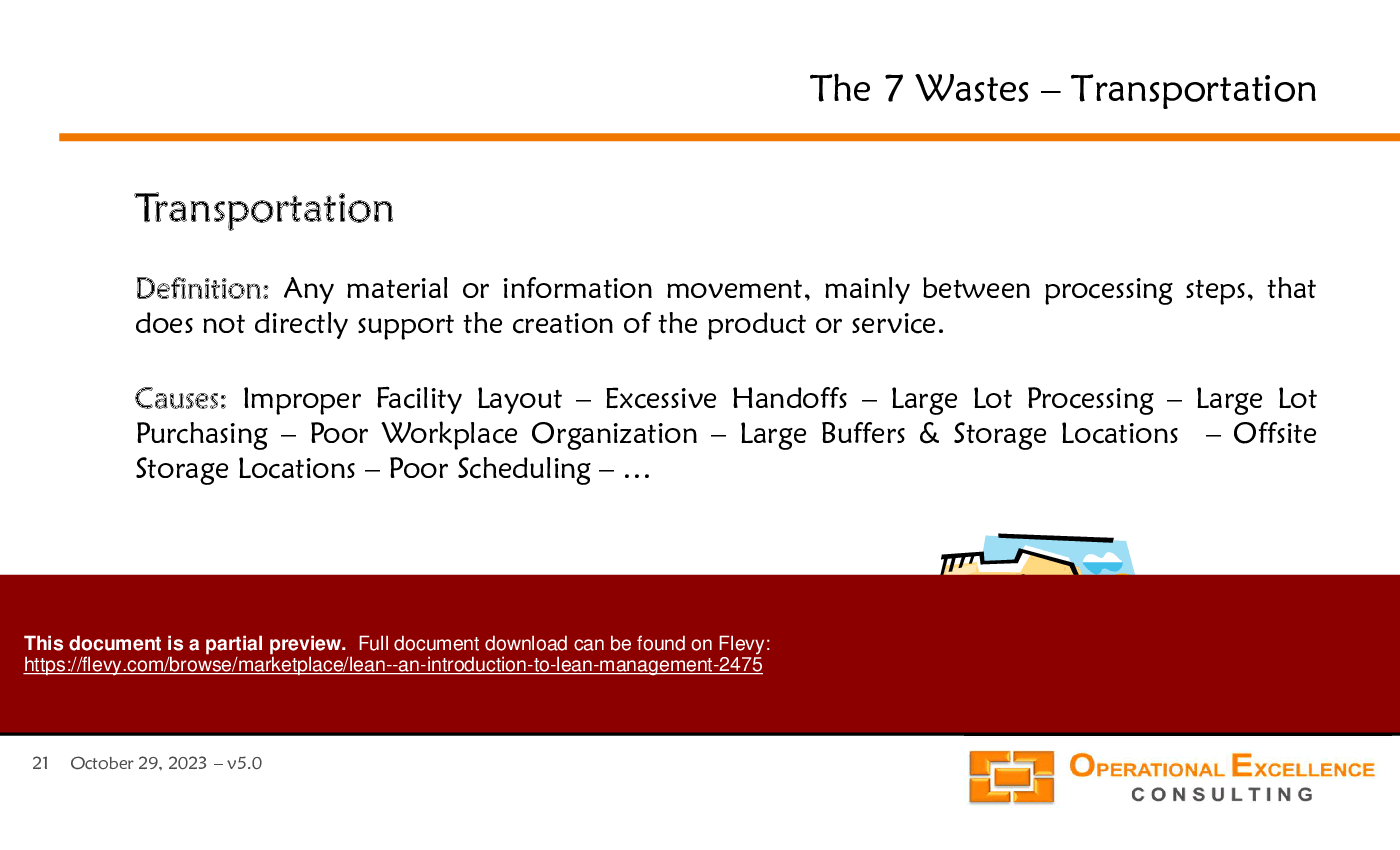
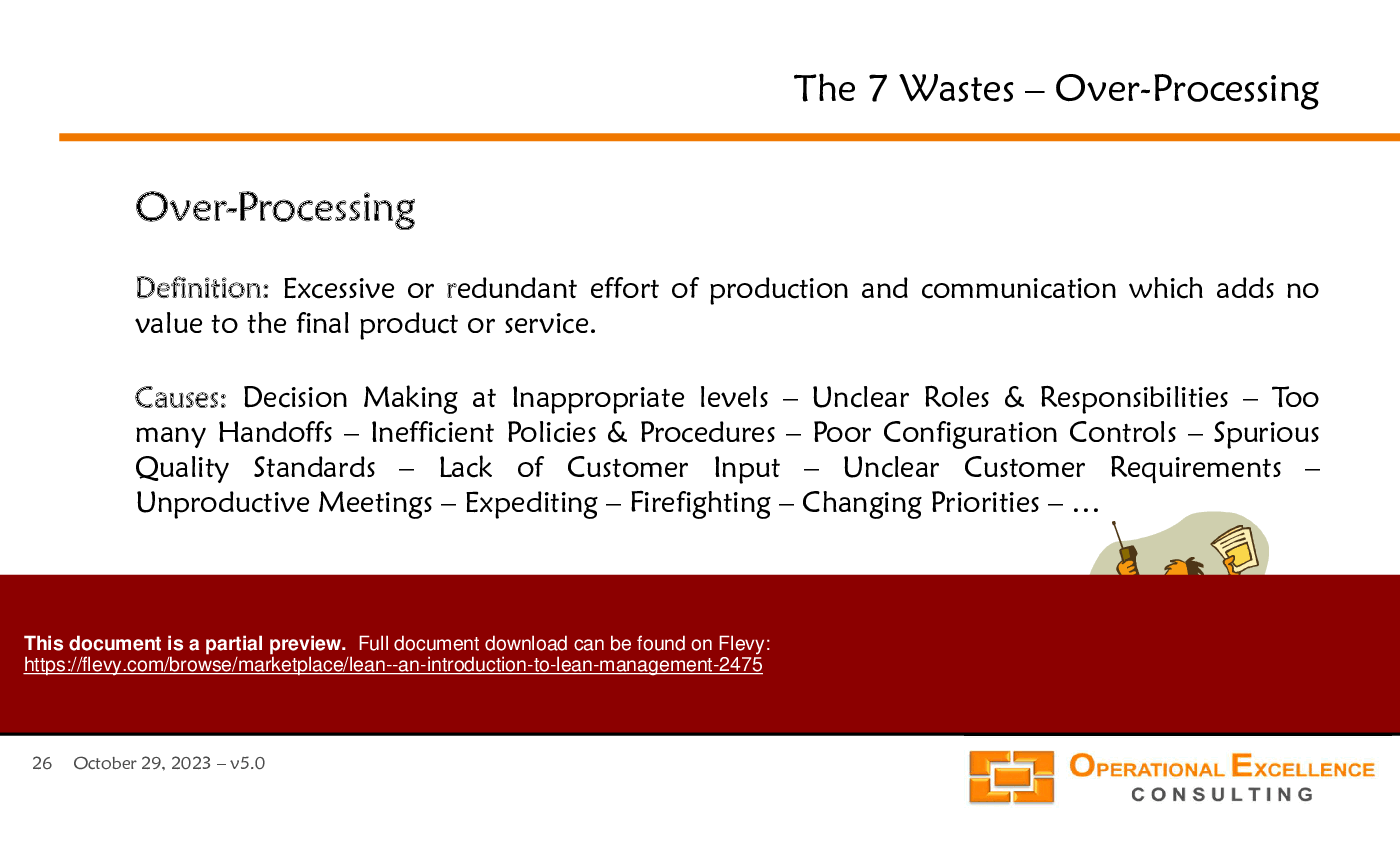
• The Seven Lean Wastes,
• Introduction to Lean Standard Work,
• Introduction to 5S Visual Workplace Organization,
• Introduction to Value Stream Mapping (VSM),
• Introduction to Kanban Scheduling Systems,
• Introduction to Quick Changeovers (SMED),
• Introduction to Total Productive Maintenance (TPM),
• Introduction to Mistake-Proofing (Poka-Yoke), and
• Introduction to Kaizen Events.
"After you have downloaded the training material, you can change any part of the training material and remove all logos and references to Operational Excellence Consulting. You can share the material with your colleagues and clients, and re-use it as you need. The only restriction is that you cannot publicly re-distribute, sell, rent or license the material as though it is your own. Thank you."
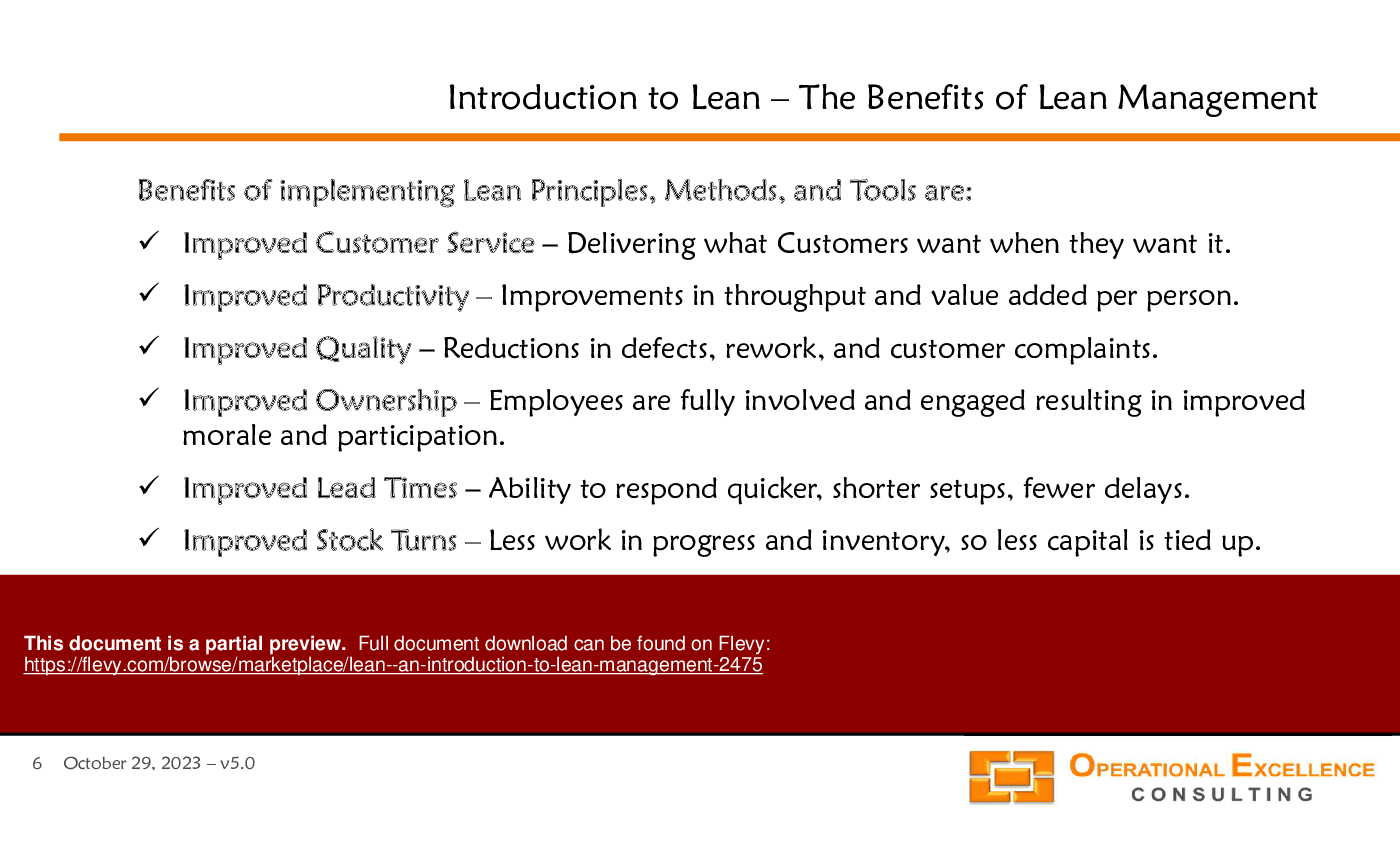
Lean Management is not just a methodology; it's a culture shift. This training module dives deep into the practical benefits of Lean, such as enhancing customer service by delivering exactly what customers want, when they want it. It also focuses on boosting productivity through improved throughput and value-added per person, while simultaneously reducing defects and customer complaints. The module emphasizes employee ownership, leading to higher morale and participation, and highlights the importance of reducing lead times and improving stock turns to free up capital.
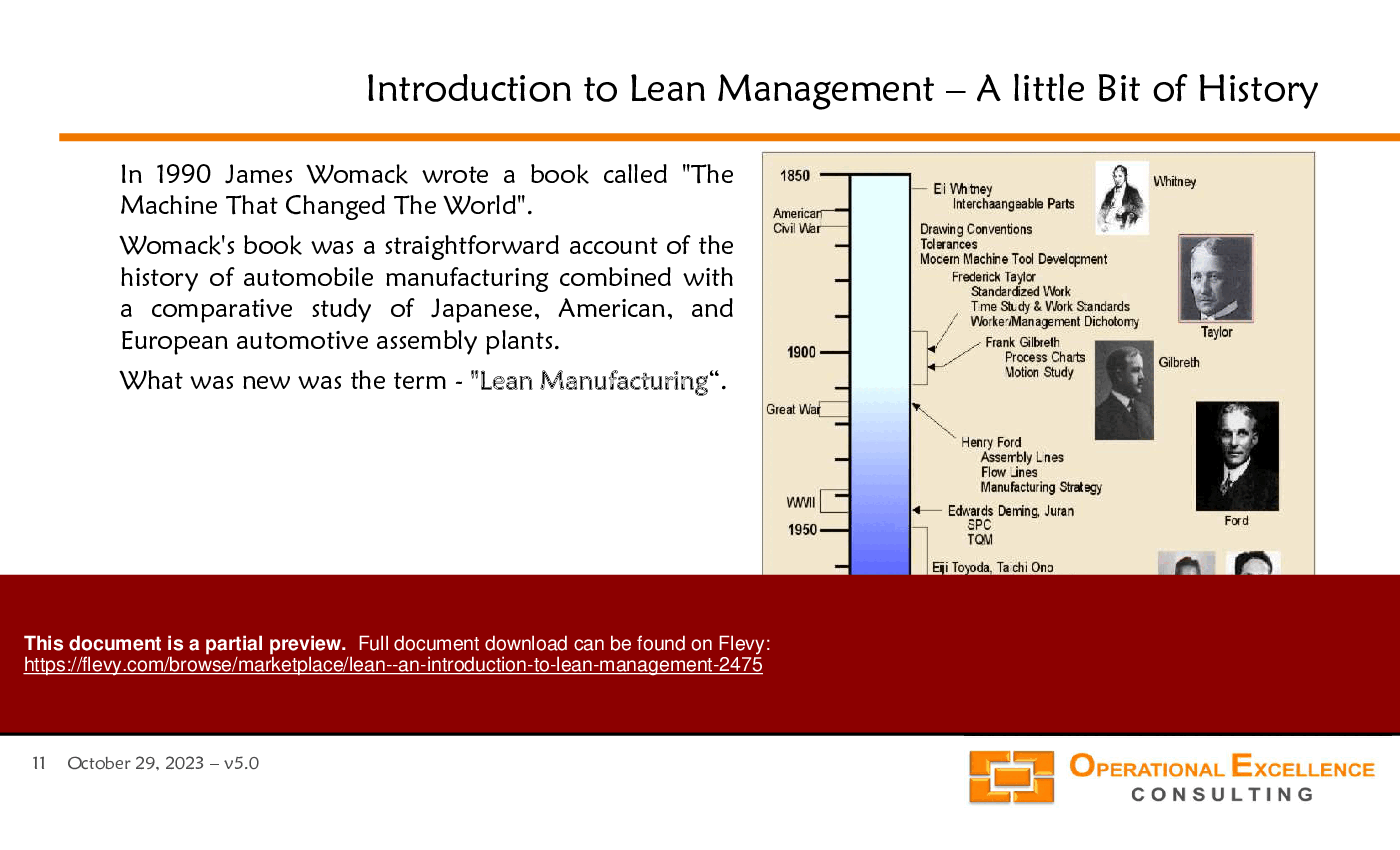
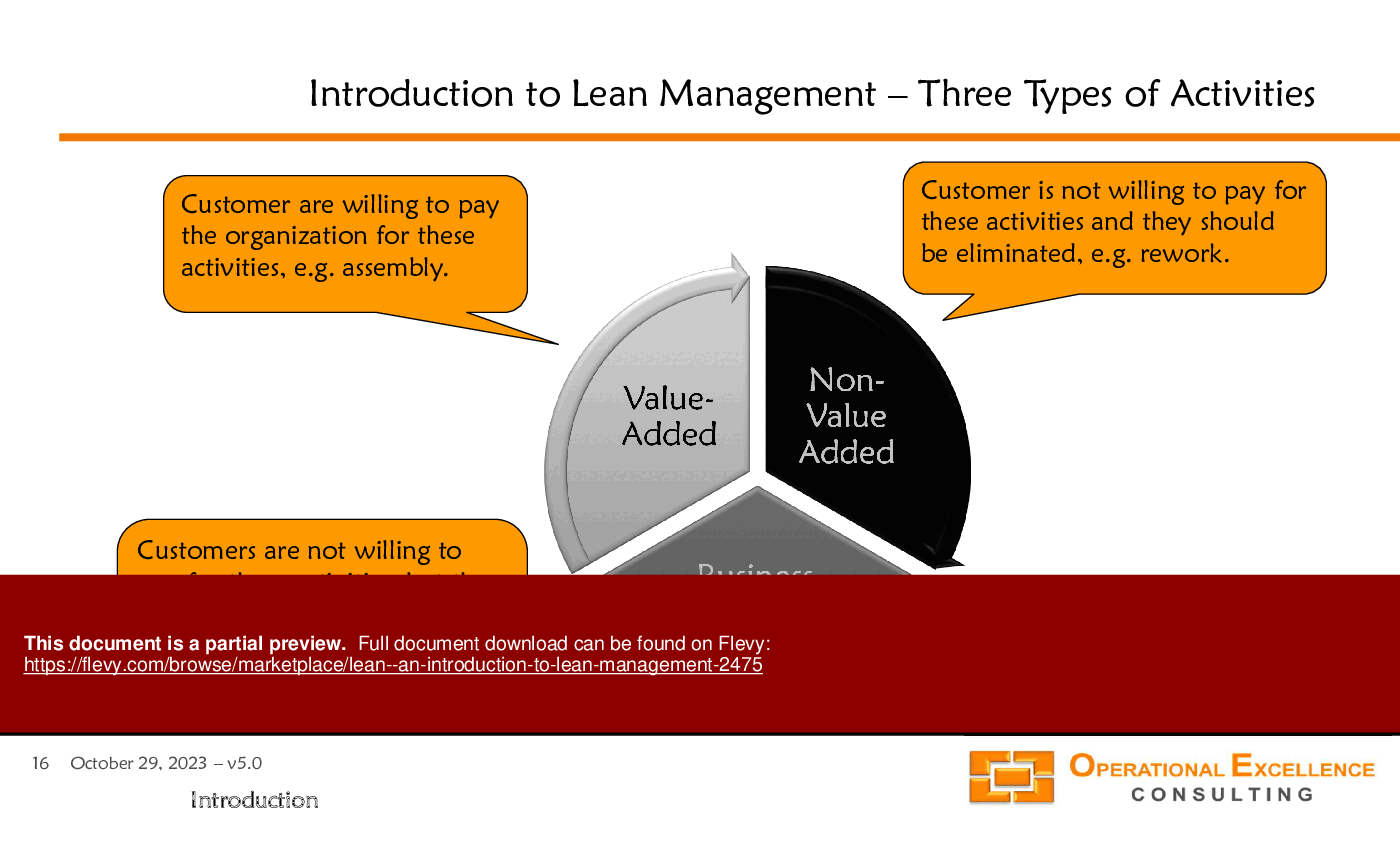
The PPT also provides a historical perspective, tracing the origins of Lean Management back to James Womack's seminal work in 1990. It explains the evolution of Lean Manufacturing and its application in various industries. The module breaks down the three types of activities—value-added, non-value-added, and business non-value-added—providing a clear framework for identifying and eliminating waste. This comprehensive guide is designed to equip your team with the tools and knowledge needed to implement Lean principles effectively, driving substantial improvements in operational efficiency and customer satisfaction.
Got a question about the product? Email us at support@flevy.com or ask the author directly by using the "Ask the Author a Question" form. If you cannot view the preview above this document description, go here to view the large preview instead.
MARCUS OVERVIEW
This synopsis was written by Marcus [?] based on the analysis of the full 155-slide presentation.
Executive Summary
This presentation titled "An Introduction to Lean Management" provides a comprehensive overview of Lean principles, methods, and tools, developed by a Senior Executive and Operational Excellence Coach with extensive experience in organizations like NOKIA and MICROVENTION. It aims to equip corporate executives, integration leaders, and consultants with the knowledge to implement Lean Management effectively. The deck covers essential Lean concepts, including the Seven Wastes, the Five Lean Principles, Value Stream Mapping, and the 5S Visual Workplace Organization, enabling users to enhance operational efficiency, reduce waste, and improve overall business performance.
Who This Is For and When to Use
• Corporate Executives seeking to drive operational excellence
• Integration Leaders responsible for process improvement initiatives
• Consultants advising organizations on Lean transformations
• Operational Managers looking to enhance productivity and efficiency
• Team Leaders involved in continuous improvement projects
Best-fit moments to use this deck:
• During strategic planning sessions focused on operational efficiency
• When initiating Lean training programs for teams
• As a foundational resource for Lean workshops and seminars
• To guide discussions on process improvement and waste reduction initiatives
Learning Objectives
• Define Lean Management and its core principles
• Identify and eliminate non-value-added activities within processes
• Map value streams to visualize and improve workflow
• Implement the 5S methodology for workplace organization
• Establish a culture of continuous improvement through Kaizen events
• Utilize Kanban systems for effective inventory management
Table of Contents
• Introduction to Lean Management (page 3)
• The Objective of Lean Management (page 4)
• Benefits of Lean Management (page 6)
• A Little Bit of History (page 7)
• The House of Lean (page 13)
• The Seven Wastes (page 20)
• The Five Lean Principles (page 15)
• Value Stream Mapping (page 73)
• 5S Visual Workplace Organization (page 49)
• Quick Changeover (SMED) (page 115)
• Total Productive Maintenance (TPM) (page 122)
• Process Risk Analysis & Mistake-Proofing (page 130)
• Kaizen Events (page 144)
Primary Topics Covered
• Lean Management Overview - An introduction to Lean Management principles and their significance in improving operational efficiency and reducing waste.
• The Seven Wastes - Identification of the 7 types of waste (TIMWOOD) that organizations must eliminate to enhance productivity.
• The Five Lean Principles - Core principles guiding Lean practices, including defining value and establishing flow.
• Value Stream Mapping - A technique for analyzing and improving the flow of materials and information in processes.
• 5S Visual Workplace Organization - A methodology for organizing and maintaining an efficient workplace.
• Quick Changeover (SMED) - Strategies for reducing setup times to enhance production flexibility.
• Total Productive Maintenance (TPM) - A framework for maximizing equipment effectiveness through proactive maintenance.
• Mistake-Proofing - Techniques for preventing errors in processes to enhance quality.
• Kaizen Events - Structured events aimed at continuous improvement through team-driven initiatives.
Deliverables, Templates, and Tools
• Lean Management training presentation template
• Value Stream Mapping tool for process analysis
• 5S Visual Workplace Organization checklist
• Quick Changeover (SMED) implementation guide
• Total Productive Maintenance (TPM) framework
• Mistake-Proofing process analysis template
• Kaizen event planning and reporting template
Slide Highlights
• Overview of Lean Management principles and their historical context
• Detailed explanation of the Seven Wastes and their impact on efficiency
• Visual representation of the House of Lean and its components
• Step-by-step guide for implementing the 5S methodology
• Case studies showcasing successful Lean transformations in various industries
Potential Workshop Agenda
Lean Management Introduction Workshop (2 hours)
• Overview of Lean principles and objectives
• Discussion on the benefits of Lean Management
• Interactive session on identifying wastes in current processes
Value Stream Mapping Session (1.5 hours)
• Introduction to Value Stream Mapping techniques
• Hands-on activity to map a current state process
• Group discussion on opportunities for improvement
5S Implementation Workshop (2 hours)
• Overview of the 5S methodology
• Practical exercises on sorting, setting in order, and sustaining workplace organization
• Development of a 5S action plan for participants' teams
Customization Guidance
• Tailor the presentation to reflect specific organizational goals and challenges
• Incorporate industry-specific examples and case studies to enhance relevance
• Adjust the workshop agenda based on the audience's familiarity with Lean concepts
• Include company branding and terminology throughout the materials
Secondary Topics Covered
• The importance of leadership in Lean transformations
• Techniques for fostering a culture of continuous improvement
• The role of employee engagement in successful Lean initiatives
• Strategies for measuring Lean success and sustainability
FAQ What is Lean Management?
Lean Management is a systematic approach to identifying and eliminating waste in processes while maximizing value for customers.
How can Value Stream Mapping help my organization?
Value Stream Mapping visualizes the flow of materials and information, helping identify inefficiencies and areas for improvement.
What are the Seven Wastes in Lean?
The Seven Wastes are: Transportation, Inventory, Motion, Waiting, Over-Production, Over-Processing, and Defects.
How does the 5S methodology work?
5S is a workplace organization method that focuses on Sort, Set in Order, Shine, Standardize, and Sustain to create an efficient work environment.
What is a Kaizen event?
A Kaizen event is a focused, short-term project aimed at improving a specific process or area within an organization.
How do I get started with Lean implementation?
Begin by assessing current processes, identifying wastes, and engaging leadership to support Lean initiatives.
What role does employee involvement play in Lean?
Employee involvement is crucial for identifying improvement opportunities and fostering a culture of continuous improvement.
Can Lean principles be applied to service industries?
Yes, Lean principles can be effectively applied in service industries to improve efficiency and customer satisfaction.
What is the significance of Total Productive Maintenance (TPM)?
TPM aims to maximize equipment effectiveness by involving all employees in maintenance activities, reducing downtime and defects.
Glossary
• Lean Management - A methodology focused on minimizing waste while maximizing value.
• Value Stream Mapping - A visual tool for analyzing the flow of materials and information.
• 5S - A workplace organization method consisting of Sort, Set in Order, Shine, Standardize, and Sustain.
• Kaizen - Continuous improvement through small, incremental changes.
• Total Productive Maintenance (TPM) - A proactive maintenance strategy aimed at maximizing equipment effectiveness.
• Kanban - A scheduling system that signals when to produce or move items.
• Mistake-Proofing - Techniques designed to prevent errors in processes.
• The Seven Wastes - Types of waste in Lean: Transportation, Inventory, Motion, Waiting, Over-Production, Over-Processing, and Defects.
• Quick Changeover (SMED) - A method for reducing setup times in production.
• Continuous Improvement - Ongoing efforts to improve products, services, or processes.
• Operational Excellence - A philosophy of leadership, teamwork, and problem-solving resulting in continuous improvement throughout the organization.
• Process Efficiency - The ratio of value-added time to total time in a process.
• Customer Value - The perceived benefit that a customer receives from a product or service.
• Waste - Any activity that consumes resources, but does not add value to the product or service.
• Standard Work - A documented process that defines the most efficient way to perform a task.
• Root Cause Analysis - A method for identifying the underlying reasons for a problem.
• Poka-Yoke - Error-proofing techniques to prevent defects.
• Visual Management - Tools and techniques used to communicate information visually in the workplace.
• Employee Engagement - The emotional commitment of employees to their organization and its goals.
This PPT slide outlines the 5 core principles of Lean Management essential for enhancing efficiency and value delivery. "Define Value" focuses on identifying value from the customer's perspective, ensuring alignment with customer needs. "Map Value Stream" involves analyzing processes to eliminate non-value-adding activities, streamlining operations for enhanced efficiency. "Create Flow" ensures a smooth delivery process, reducing delays and improving responsiveness. "Establish Pull" bases production on actual demand, minimizing excess inventory and aligning with customer needs. Lastly, "Pursuit Perfection" promotes a continuous improvement mindset, systematically reducing steps and time to deliver value, fostering a culture of ongoing enhancement.
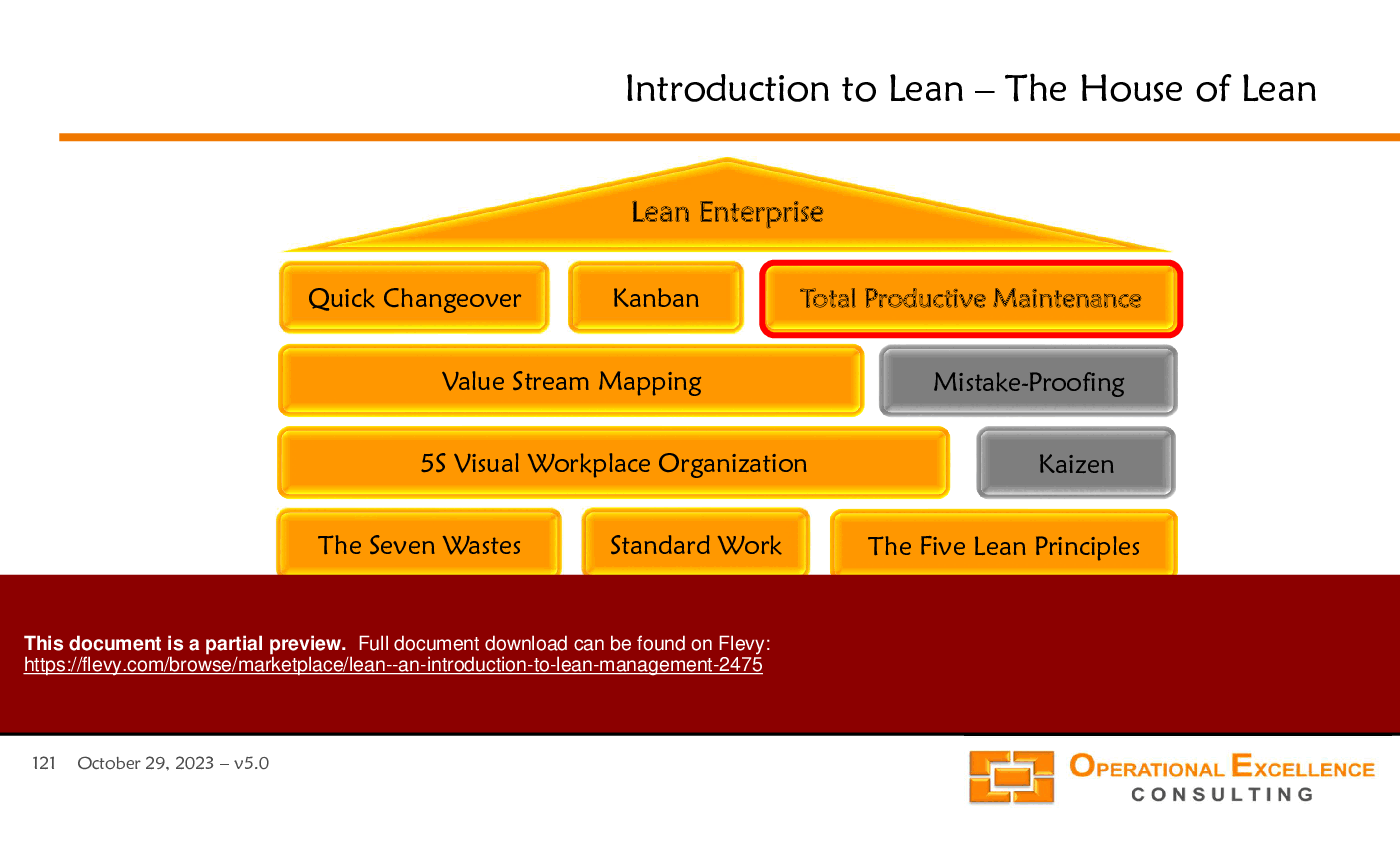
This PPT slide introduces Lean management principles, focusing on the "Lean Enterprise" framework for enhancing efficiency and reducing waste. Key methodologies include "Quick Changeover," "Kanban," and "Total Productive Maintenance," which optimize processes, improve inventory management, and ensure equipment reliability. "Value Stream Mapping" and "Mistake-Proofing" highlight the importance of visualizing workflows and preventing operational errors. The middle section covers "5S Visual Workplace Organization" for standardization and "The Seven Wastes," identifying inefficiencies in processes. "Standard Work" and "The Five Lean Principles" reinforce consistency in Lean practices. Finally, "Performance Management & Balanced Scorecards" emphasize measuring outcomes and aligning objectives with performance metrics, ensuring effective implementation and monitoring of Lean practices for operational excellence and continuous improvement.
This PPT slide provides an overview of value stream mapping, focusing on Kaizen events, or “bursts.” It details the flow of materials and information from suppliers to customers, highlighting critical production and shipping processes. A six-week forecast drives production planning and scheduling, with Kanban scheduling essential for inventory management. The "Cutting" process shows key metrics: a cycle time of 1.5 seconds and a 75% uptime, indicating improvement areas. The "Printing" section notes a cycle time of 2.5 seconds and a 95% uptime,, but a 65-minute changeover time suggests a bottleneck for Kaizen efforts. The "Binding" process has a cycle time of 4.0 seconds and a 55% uptime, emphasizing the need for continuous improvement. The shipping process has a cycle time of 2.0 days, designed to meet customer demands with a daily order of 7,500 pieces. This structured approach underscores the interconnectedness of processes and the importance of ongoing improvements for efficiency and responsiveness.
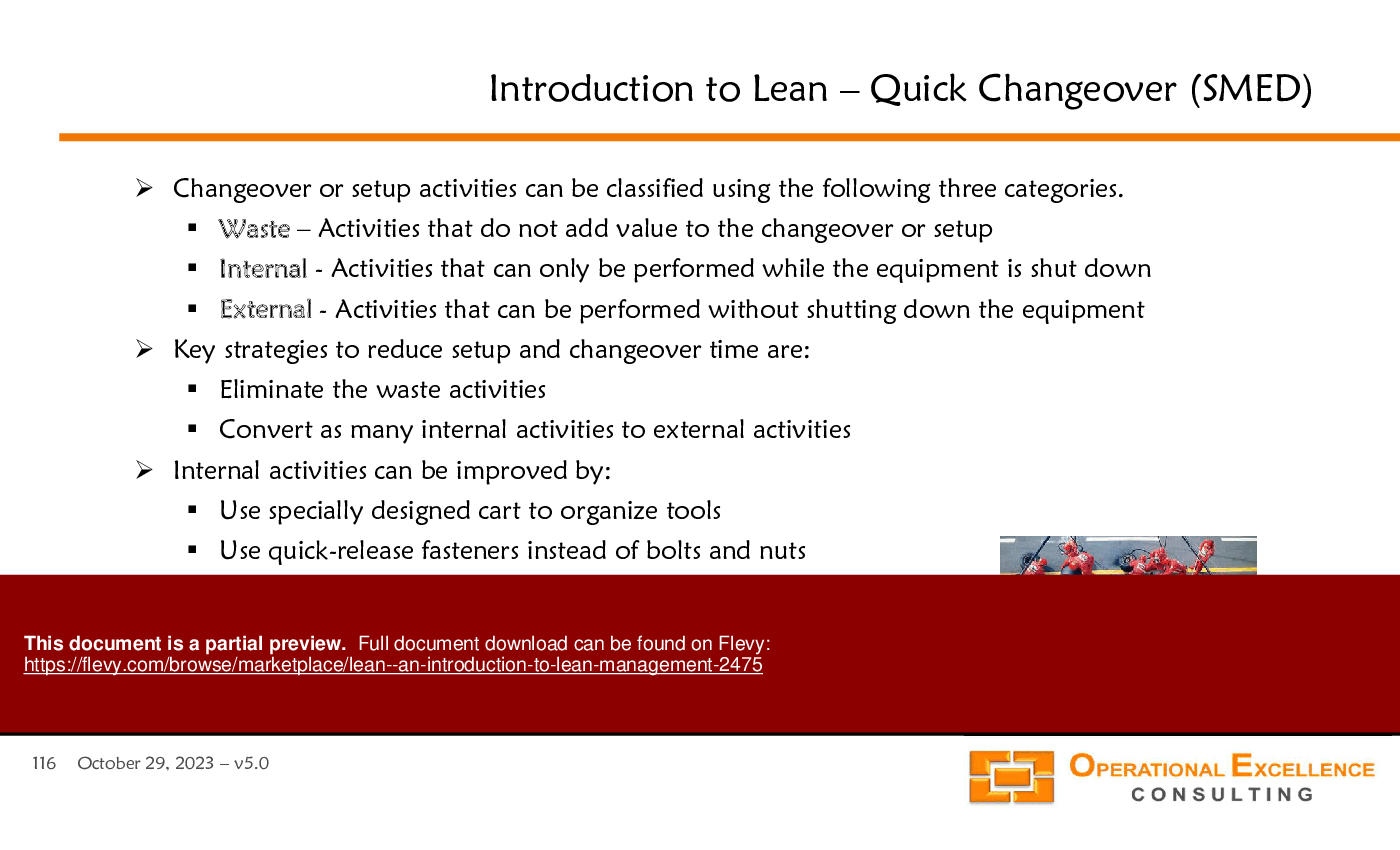
This PPT slide outlines a structured approach to implementing Quick Changeover, or SMED (Single-Minute Exchange of Die), to enhance operational efficiency by minimizing downtime during equipment changeovers. The process begins with observing current practices to identify improvement areas. Next, internal and external activities are separated, allowing focus on tasks that can be performed while the machine is running versus those requiring a complete stop. The third step involves converting internal activities into external ones, reducing machine idle time. The fourth step streamlines remaining internal activities for efficiency. Steps 5 and 6 refine the process by optimizing external activities and documenting the new procedures for future reference. Finally, a decision point assesses whether results meet expectations, fostering continuous improvement through an iterative cycle.
Total Productive Maintenance (TPM) is an approach that involves all employees in maintenance activities to enhance operational efficiency and minimize equipment downtime. The 4 critical phases of TPM include:
1. Breakdown Maintenance: Addresses equipment failures reactively, which can cause productivity losses.
2. Preventive Maintenance: Focuses on scheduled tasks to prevent breakdowns, reducing unexpected failures and extending equipment life.
3. Productive Maintenance: Integrates maintenance into daily operations, fostering employee responsibility and collaboration across departments to improve performance.
4. Continuous Improvement: The overarching philosophy of TPM, emphasizing total participation for optimal performance.
Adopting TPM can lead to significant improvements in productivity, operational efficiency, and employee engagement.
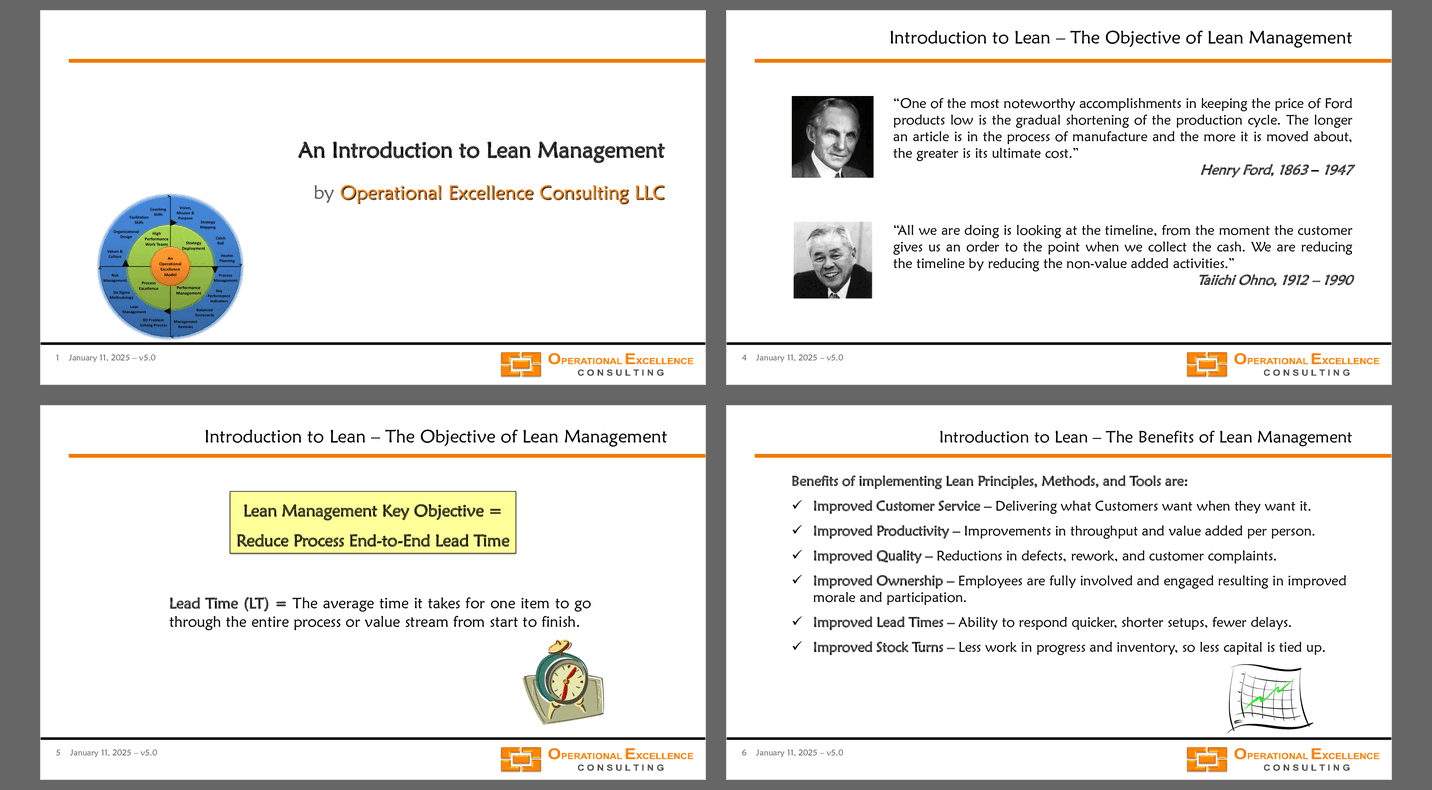
This PPT slide provides an overview of Lean Management, focusing on its primary objective: reducing end-to-end lead time in processes. Lead Time (LT) is defined as the average duration for one item to traverse the complete process, essential for applying Lean principles to enhance efficiency. By concentrating on lead time, organizations can identify bottlenecks and inefficiencies, leading to improved operational performance. Lean methodologies emphasize time management, suggesting that a focus on lead time can significantly enhance workflow and productivity. Adopting Lean principles allows organizations to reduce lead times and improve overall process efficiency, crucial in today’s fast-paced business environment for maintaining a competitive edge.
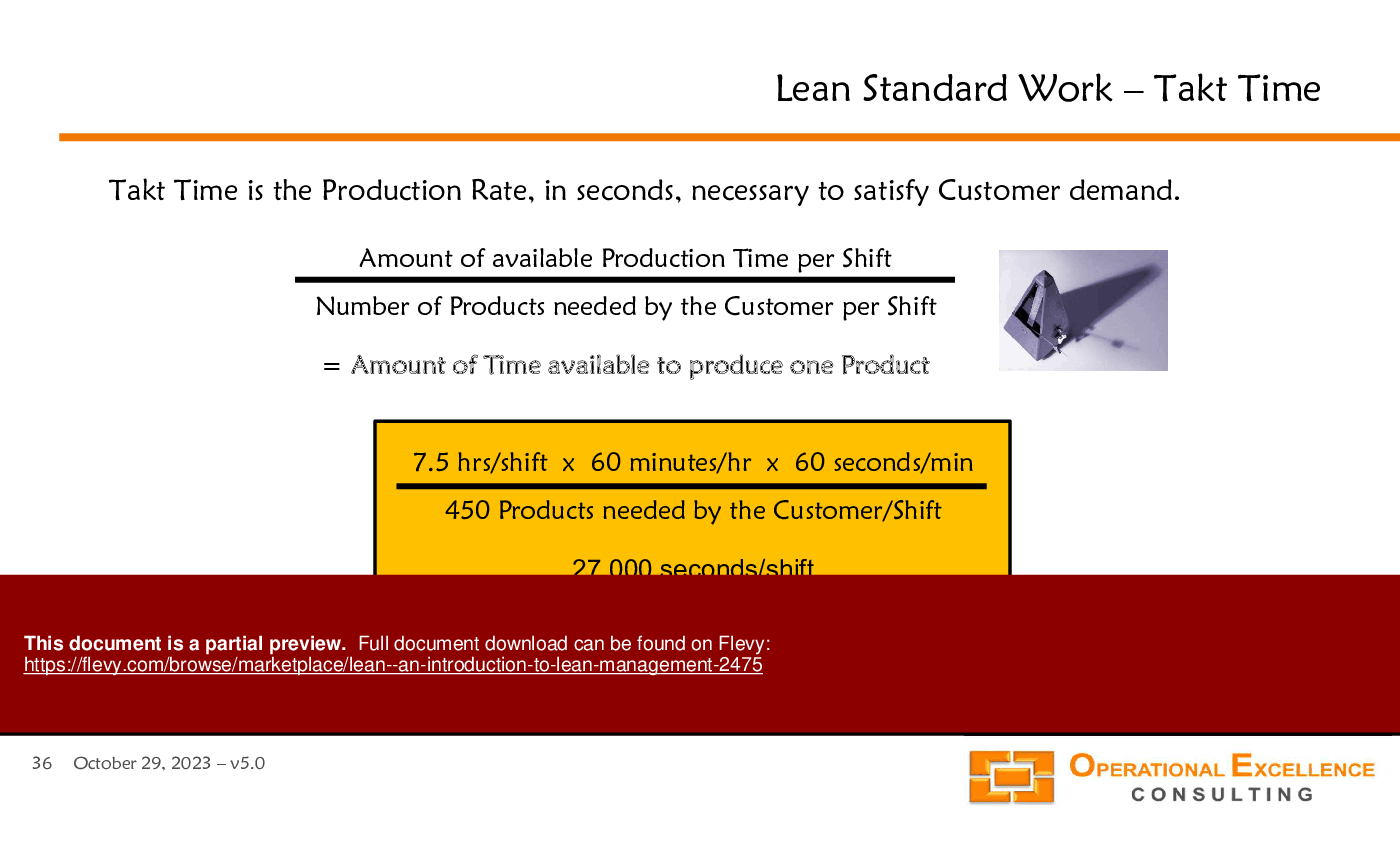
This PPT slide outlines the implementation process for Lean Standard Work, beginning with the identification of a product or part, which is essential for subsequent activities. Key steps include analyzing cycle times for each process element to understand task time requirements and creating a Standard Work Process Study Sheet to standardize procedures. Identifying work balancing opportunities optimizes resource allocation and minimizes bottlenecks. Determining takt time aligns production pace with customer demand. The creation of a Standard Work Chart and Standard Work Process Capacity Sheet provides insights into workflow and capacity management. Additionally, identifying changeover reduction opportunities and implementing kanban enhances operational flexibility. Finally, determining standard work-in-process inventory supports effective inventory management in line with lean principles.
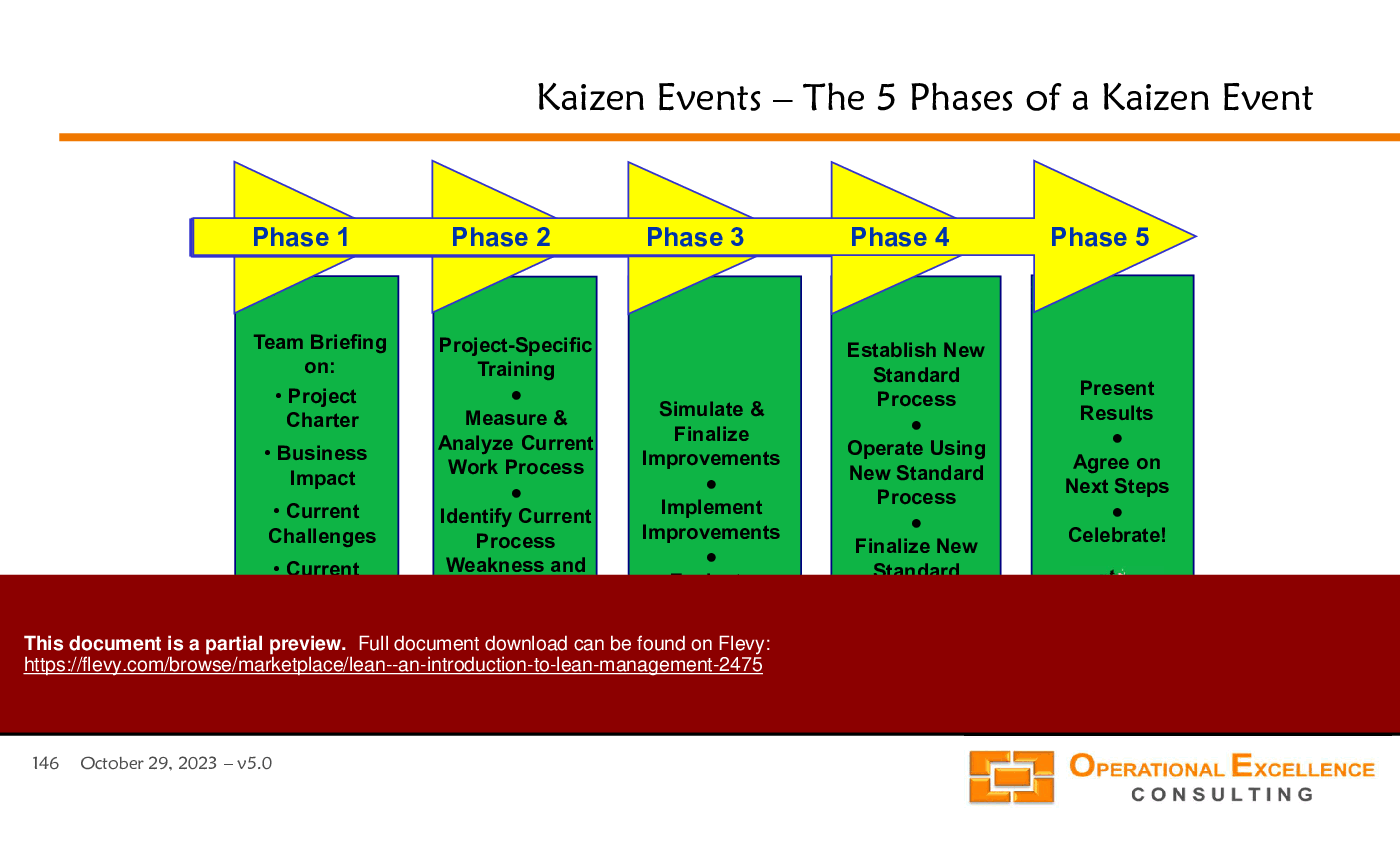
This PPT slide outlines the 5 phases of a Kaizen event, a structured approach for continuous improvement. Phase 1 involves team briefing, focusing on the project charter, anticipated business impact, current challenges, and tools. Phase 2 includes project-specific training, measuring and analyzing work processes to identify weaknesses and quick wins, leading to data-driven improvement plans. Phase 3 focuses on simulation, implementing proposed changes, and evaluating their effectiveness to minimize disruptions. Phase 4 establishes a new standard process, embedding improvements into the organization. Finally, Phase 5 presents results, agrees on next steps, and celebrates achievements, fostering a culture of recognition and motivation.
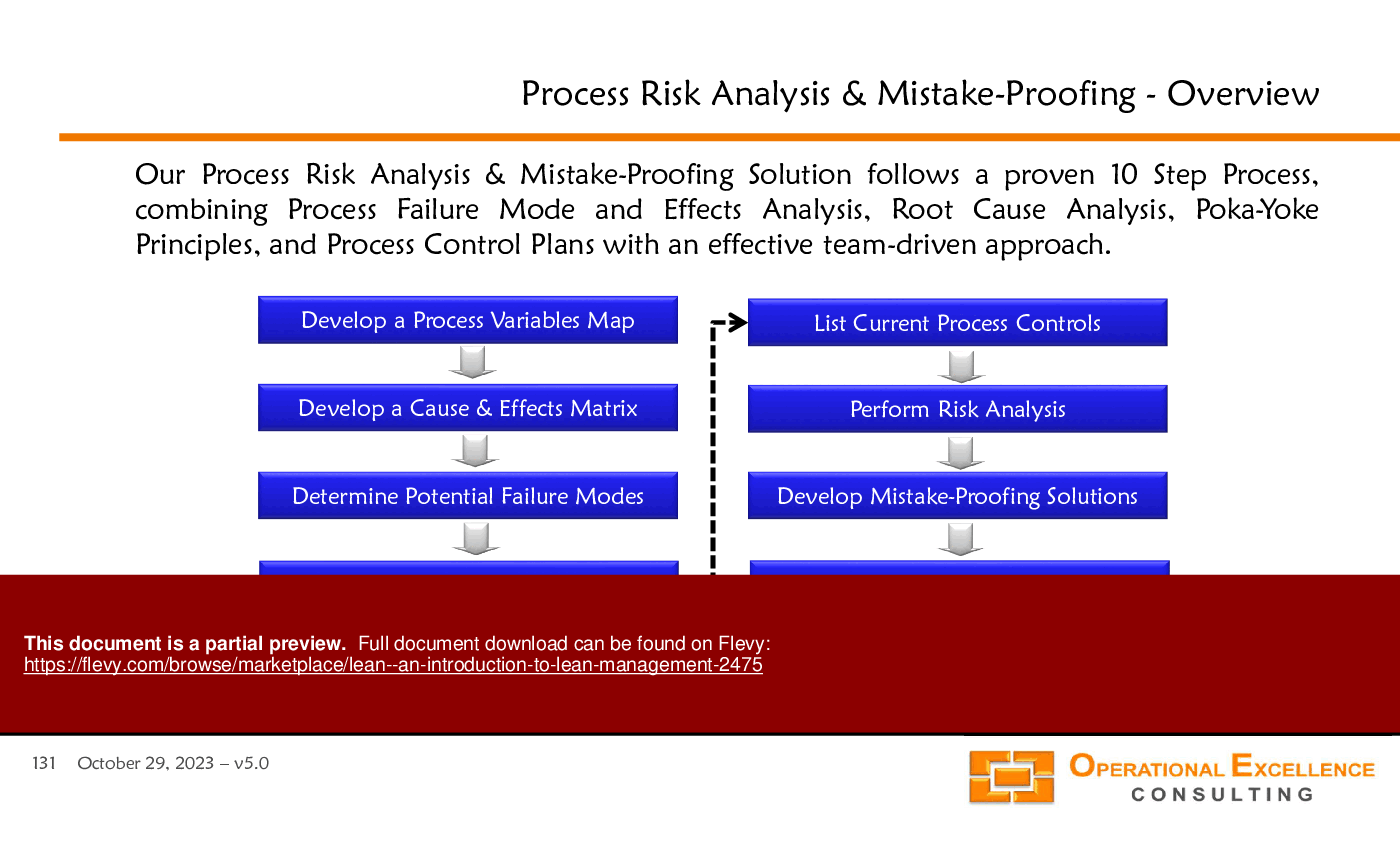
This PPT slide outlines a ten-step methodology for Process Risk Analysis and Mistake-Proofing, integrating analytical tools such as Process Failure Mode and Effects Analysis, Root Cause Analysis, and Poka-Yoke principles. Initial steps include developing a Process Variables Map and a Cause & Effects Matrix to identify critical process elements and their interrelationships. The process then determines potential failure modes and their effects, essential for risk identification. Following this, current process controls are assessed through risk analysis to identify gaps. The methodology culminates in developing and implementing mistake-proofing solutions and establishing a Process Control Plan to ensure sustainable improvements. This structured approach enhances operational efficiency and minimizes errors, providing a roadmap for identifying vulnerabilities and implementing effective solutions.
This PPT slide details a Lean Standard Work Chart for deburring and stamping processes in washing machine production and quality control. Key components include the identification and categorization of work elements by operation, with tasks linked to specific machines like washing and sanding machines. The chart indicates a Work-In-Process (WIP) count of 7, reflecting units currently processed. Operational improvements achieved through standard work practices include optimized operator loading based on takt time to meet customer demand without overtime costs. Task reallocation enhanced efficiency, leading to automation of manual operations and waste reduction. This practical guide illustrates how Lean principles can streamline operations, improve productivity, and enhance quality control.
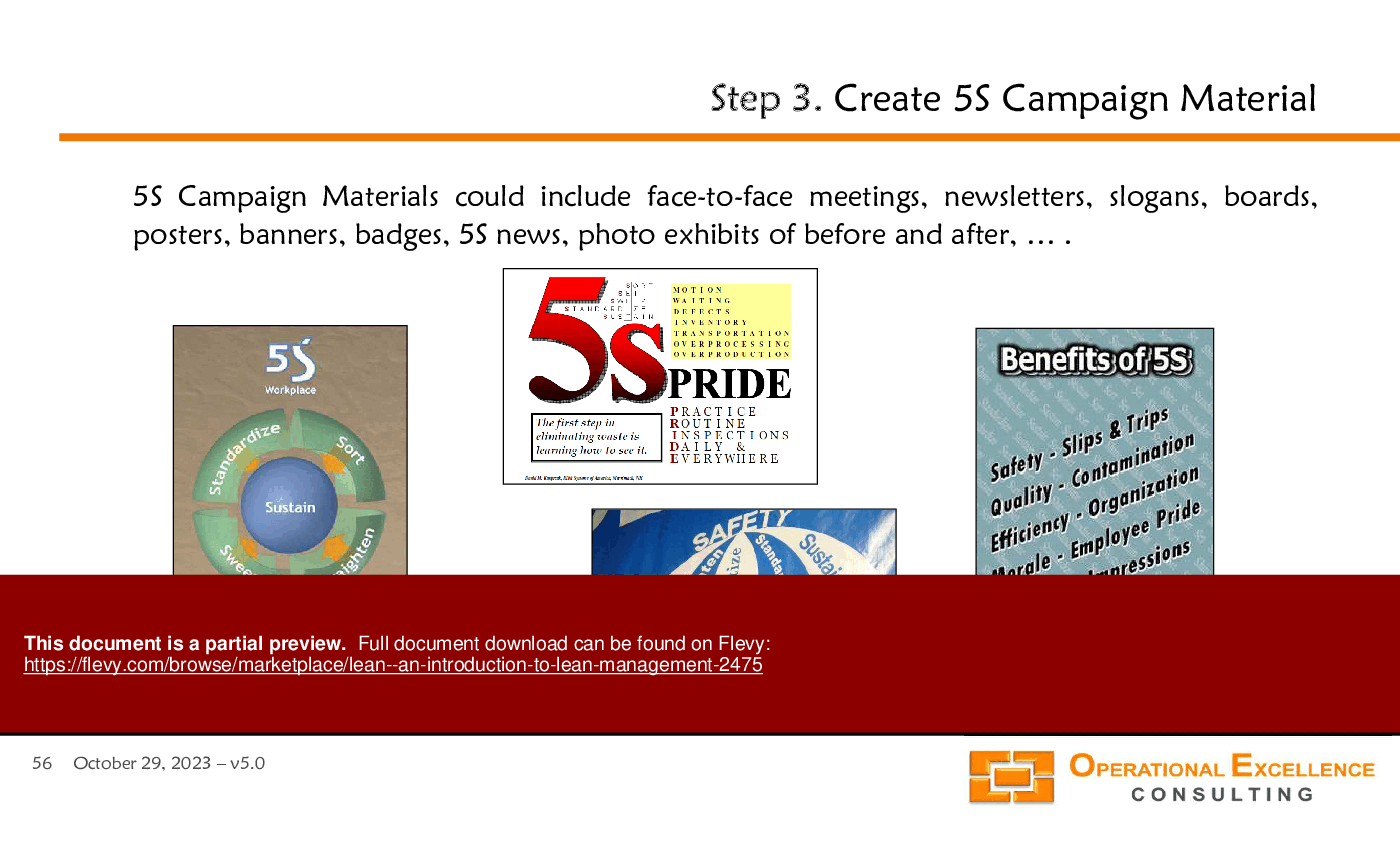
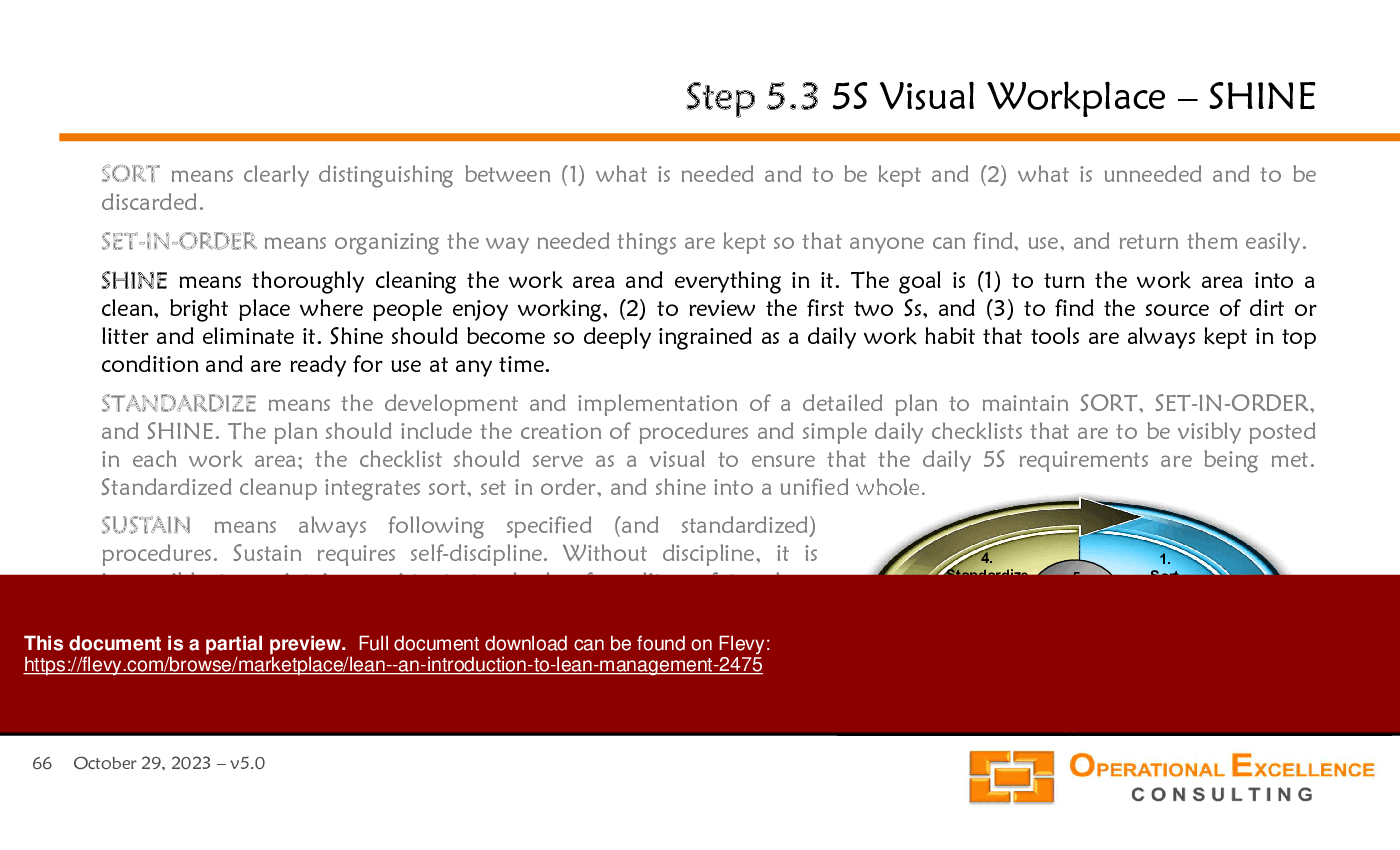
This PPT slide outlines the implementation process for the 5S Visual Workplace Organization methodology, which enhances workplace efficiency. It consists of 6 steps:
Step 1 establishes a dedicated 5S organization to drive the initiative. Step 2 involves creating a detailed implementation plan for stakeholder alignment. Step 3 focuses on developing campaign materials to effectively communicate 5S principles. Step 4 emphasizes in-house education on the 5S methodology, fostering continuous improvement among employees.
Step 5 introduces the core 5S practices: Sort, Set-in-Order, Shine, Standardize, and Sustain, which are essential for maintaining an organized workspace. The cyclical nature of these steps encourages ongoing refinement of the 5S principles. Finally, Step 6 includes evaluation, scoring, and follow-up to assess implementation effectiveness and ensure sustained improvements.
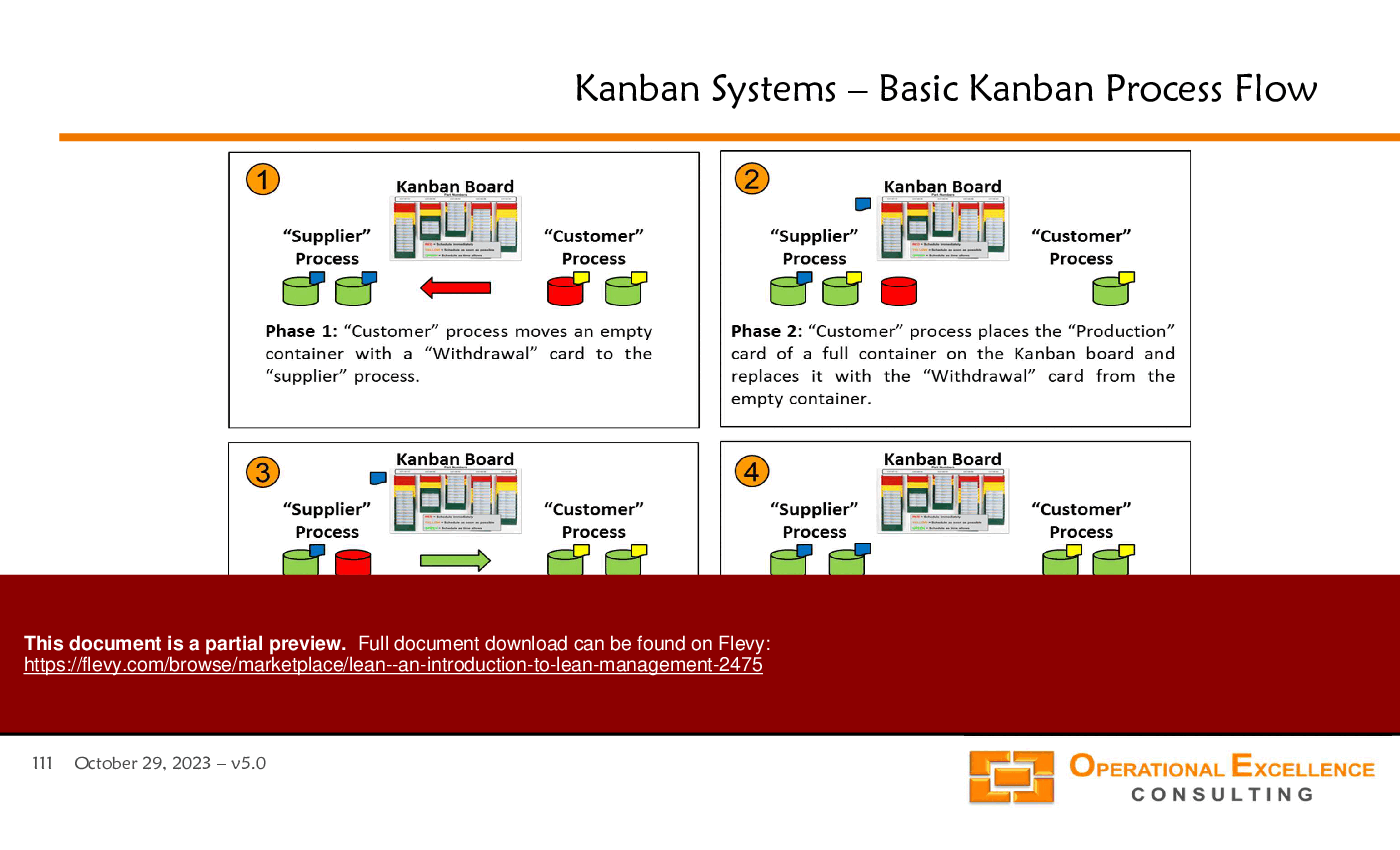
This PPT slide outlines the flow of a Kanban system, a visual management tool for process optimization, structured into 4 phases illustrating customer-supplier interactions. In Phase 1, the customer initiates the process by moving an empty container with a "Withdrawal" card to signal replenishment. Phase 2 involves placing a "Production" card on the Kanban board to indicate a full container is needed, prompting the supplier to replace the "Withdrawal" card. Phase 3 shows the customer moving the full container back, maintaining inventory visibility with the "Withdrawal" card. In Phase 4, the supplier produces new items and attaches the "Production" card, completing the cycle. The Kanban system reduces waste by aligning production with actual demand, supporting lean management principles.
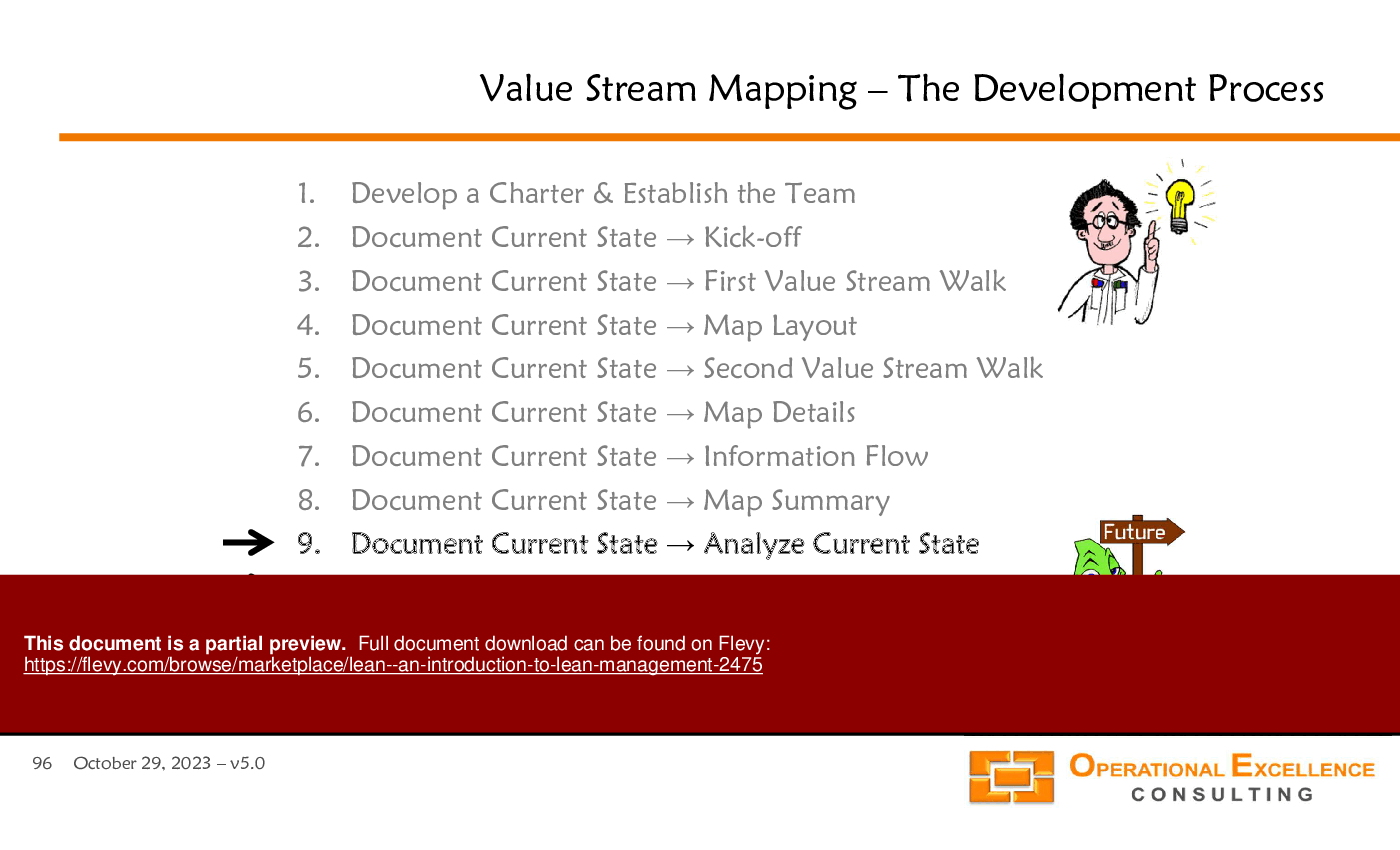
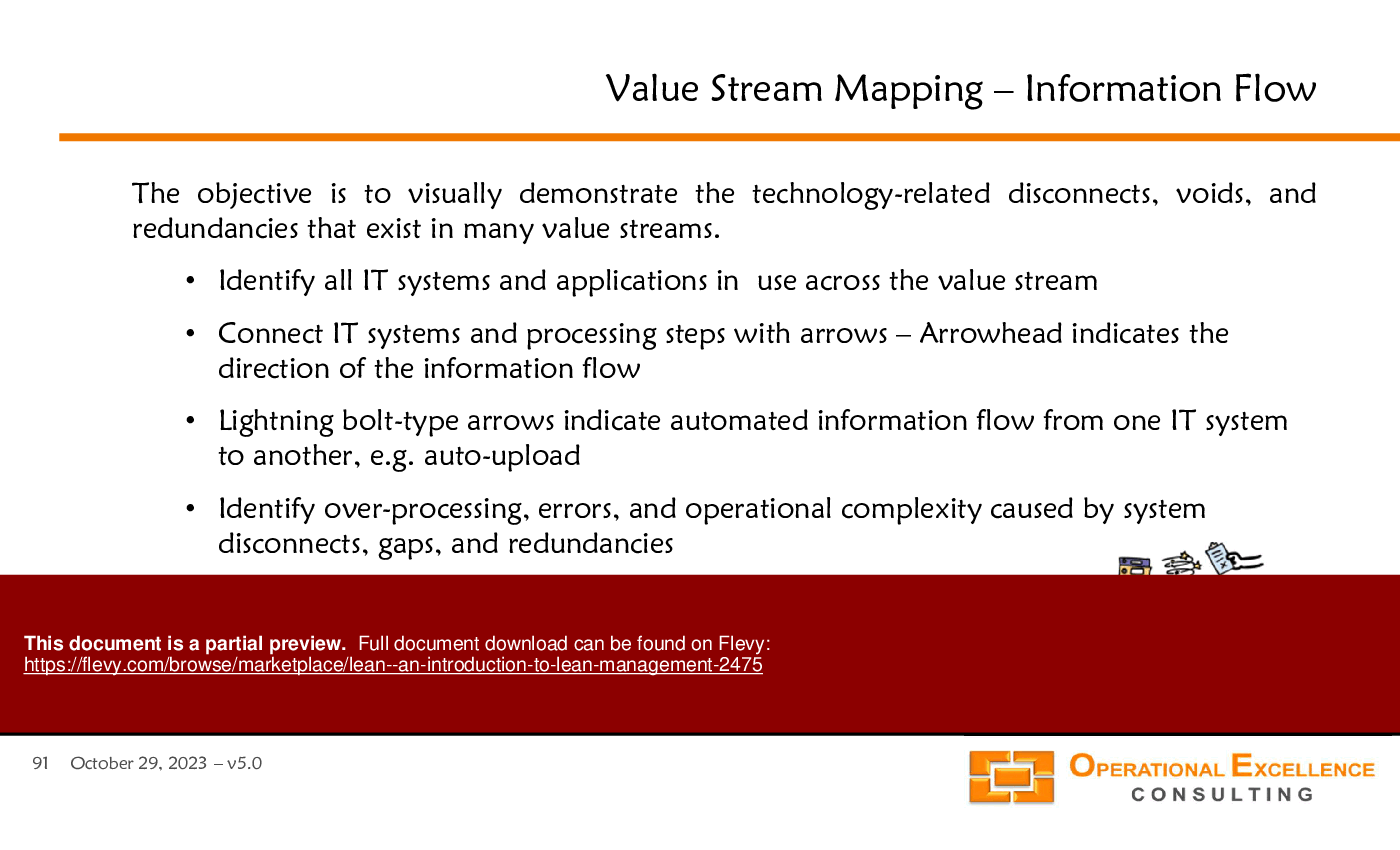
Value stream mapping is a structured approach for optimizing organizational processes. It begins with customer requirements, forming the foundation for all activities, followed by supplier requirements to ensure collaboration in meeting expectations. A six-week lead time for top priorities aligns planning with customer demand. The flow of materials is illustrated, highlighting critical metrics such as cycle time and lead time for assessing efficiency and identifying bottlenecks. Effective information flow is essential for seamless operations, emphasizing real-time data sharing among teams. Tracking performance metrics informs continuous improvement efforts and optimization. Monitoring progress against established benchmarks provides a comprehensive framework for streamlining operations and enhancing overall performance.
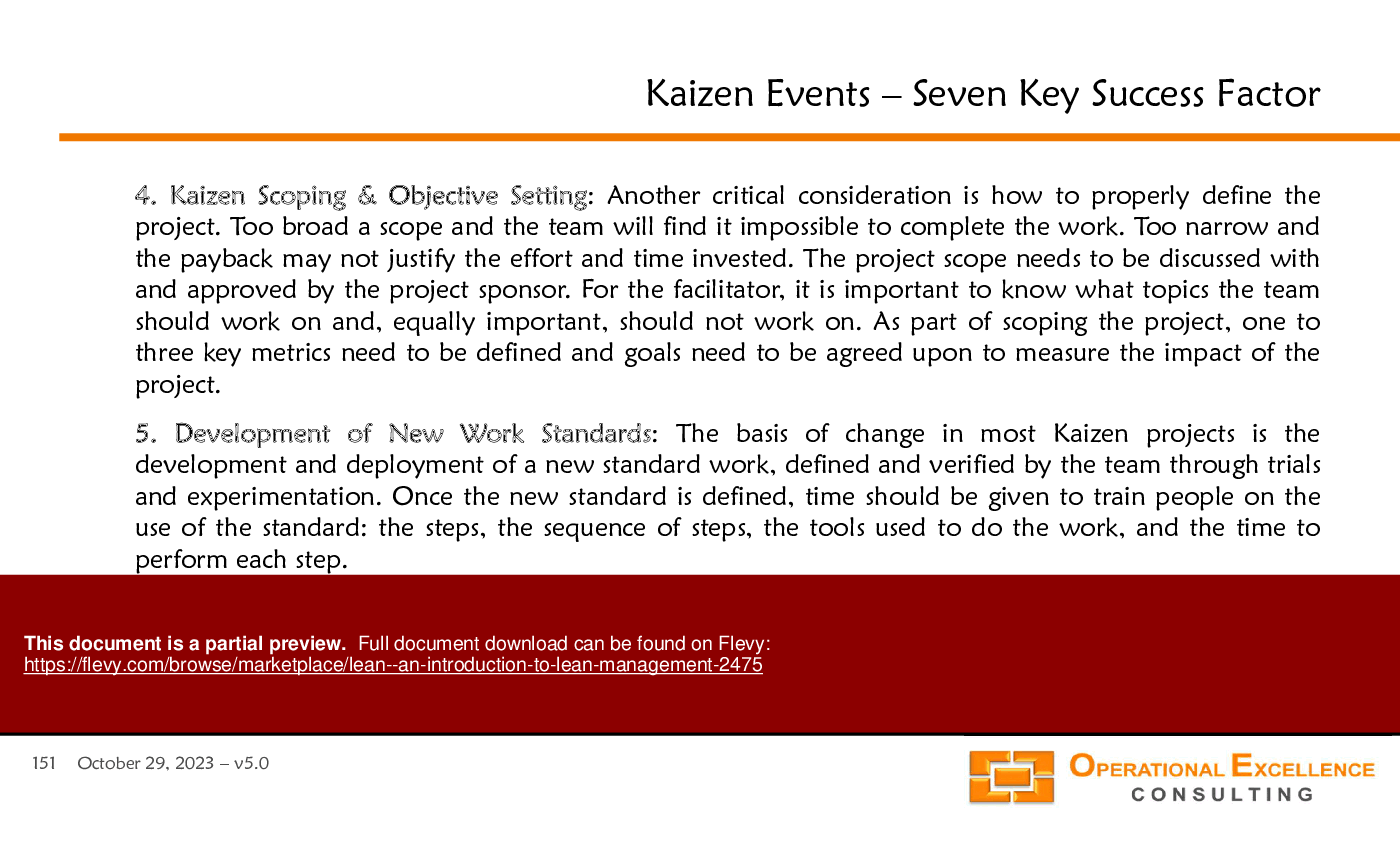
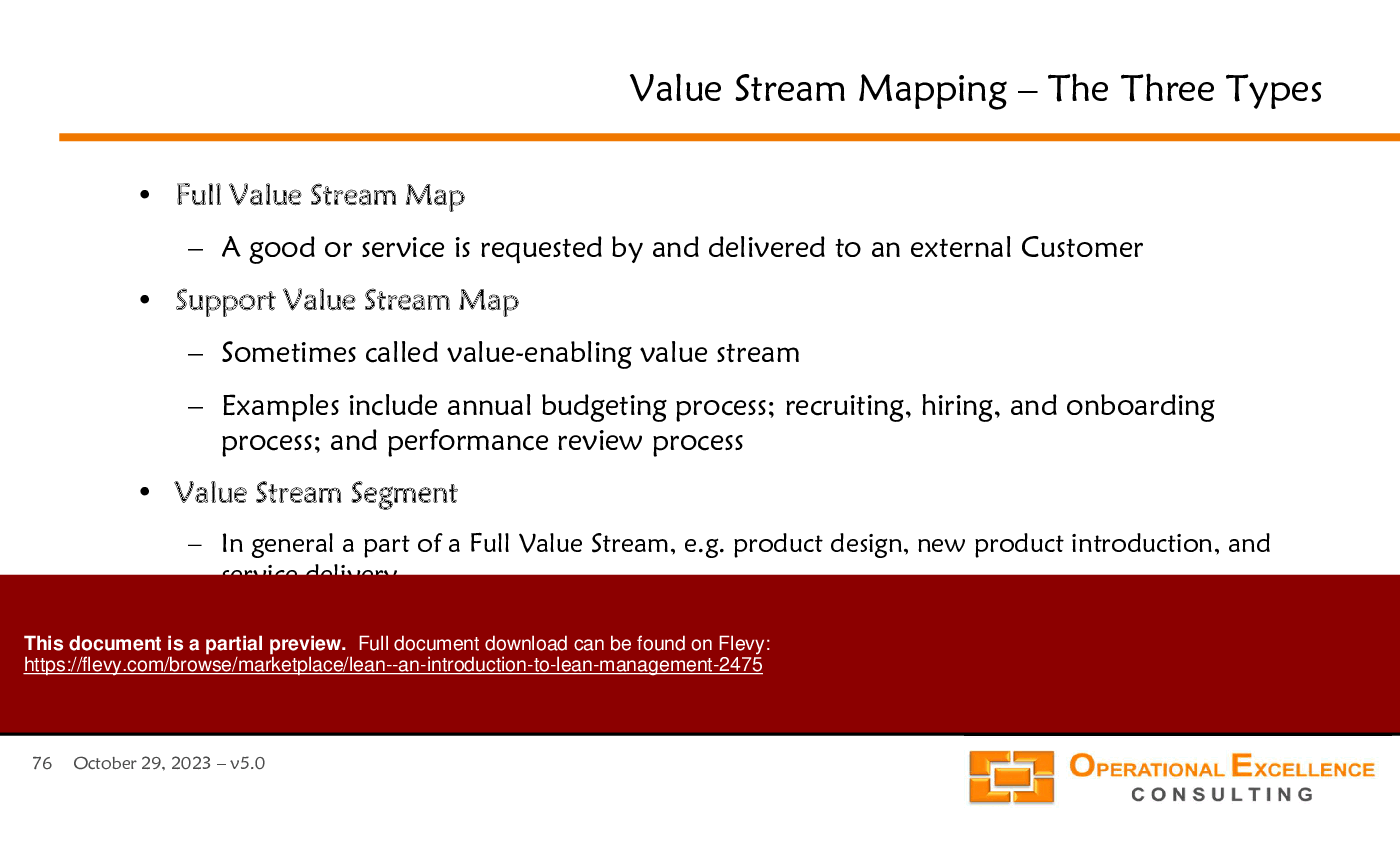
Kaizen events are structured initiatives aimed at fostering continuous and incremental improvements within organizations. The term "Kaizen" combines "Kai," meaning to take apart and put back together, and "Zen," which refers to thoughtful analysis. These events typically last 3 to 5 days, excluding preparation, promoting focused efforts and quick wins. Practical applications include reducing equipment setup time, enhancing order management, and minimizing motion waste. Kaizen is also known as "Point Kaizen" and "Process Kaizen," reflecting different scopes of application. John A. Young, CEO of Hewlett Packard, stated, "Kaizen is the opposite of complacency," highlighting the importance of continual improvement in avoiding stagnation.
This PPT slide illustrates a Kanban system, specifically the Kanban or Heijunka board, essential for managing inventory and production schedules in lean manufacturing. The board features sections for different part numbers and uses a red, yellow, and green color scheme to indicate urgency levels: red for immediate scheduling due to critical shortages, yellow for timely action, and green for flexible scheduling. Two scenarios are depicted: one with empty containers at the supplier process, but sufficient inventory at the customer process, allowing for scheduling flexibility; the other shows empty containers at the supplier and insufficient inventory at the customer, necessitating immediate production. This emphasizes the importance of maintaining a steady flow of materials to prevent supply chain disruptions and highlights the role of visual management in optimizing production schedules and inventory levels.
This PPT slide presents a Lean Standard Work Chart detailing the process flow for washing machine operations and quality control. Key components include the Work Element column, listing tasks such as "Deburring & Stamping," "Washing Machine," and "Quality Control," with specific details on operators and cycle times. The chart indicates Work-In-Process (WIP) as 13 units, reflecting the number of units processed at any time. Visual indicators illustrate work flow and operator movement, with "Walking" elements highlighting the need to minimize unnecessary movement for efficiency. The "Before Standard Work" section serves as a baseline for identifying bottlenecks and areas for improvement in Lean environments.
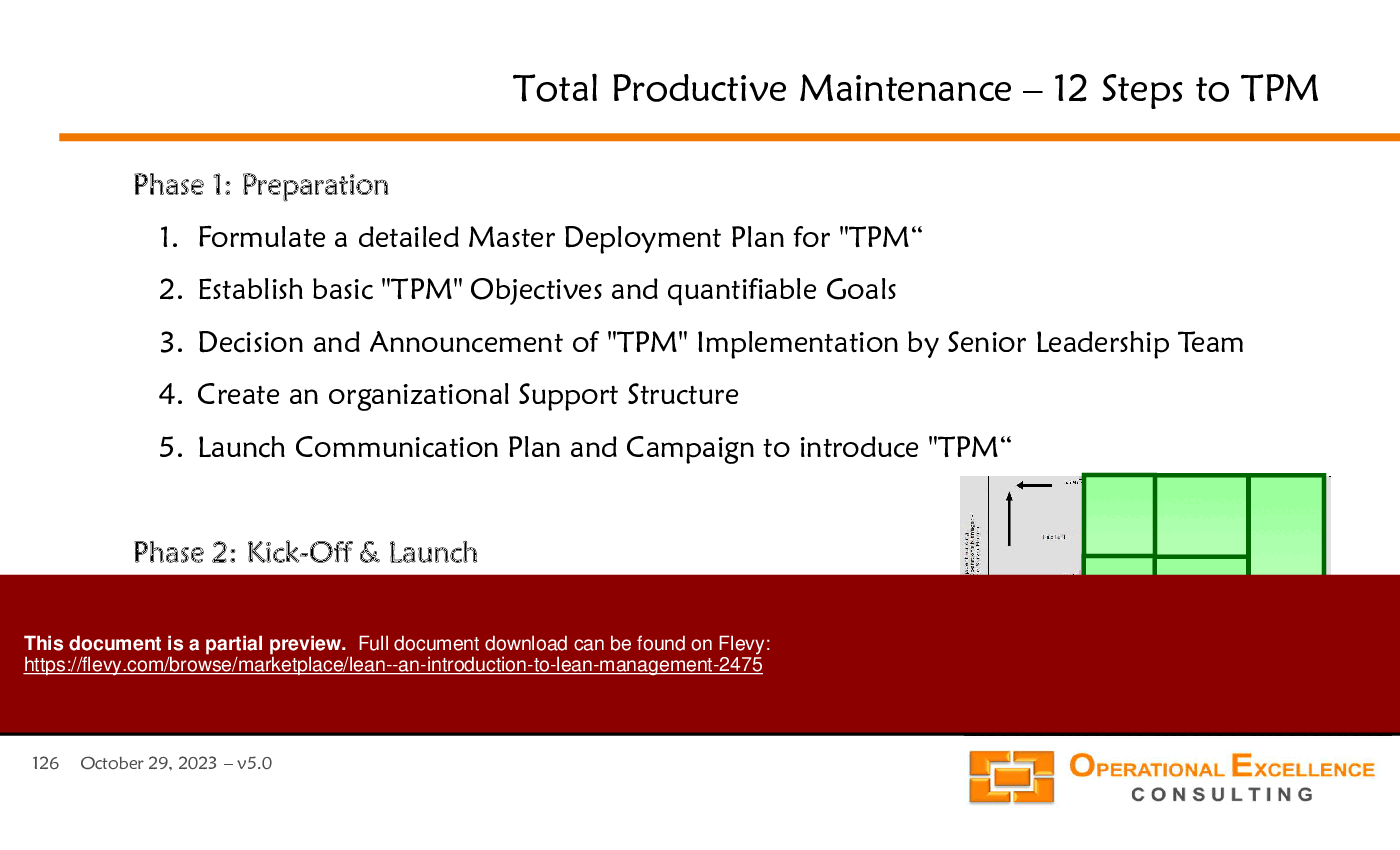
This PPT slide outlines a structured approach to implementing Total Productive Maintenance (TPM), divided into 2 phases: Preparation and Kick-Off & Launch. The Preparation phase includes 5 key steps: formulating a Master Deployment Plan, establishing TPM objectives and quantifiable goals, securing senior leadership's formal decision and announcement for TPM implementation, creating an organizational support structure, and launching a communication plan to engage stakeholders. The Kick-Off & Launch phase begins with a workshop for pilot plants, focusing on education, training, and developing an action plan for practical application of TPM principles. This framework enhances operational excellence and fosters a culture of continuous improvement.
Source: Best Practices in Lean PowerPoint Slides: Lean - An Introduction to Lean Management PowerPoint (PPTX) Presentation Slide Deck, Operational Excellence Consulting LLC
Developed by a Senior Executive and Operational Excellence Coach with experience at organizations including NOKIA, MICROVENTION, and MAGELLAN, this presentation covers an introduction to Lean Management Thinking, Methods, and Tools.
Operational Excellence Consulting LLC provides assessments, training solutions, kaizen event facilitation, and implementation support to enable our clients to achieve superior performance through Operational Excellence - Strategy Deployment & Hoshin Planning, Performance Management & Balanced Scorecards, Process Excellence & Lean Six Sigma, and High
... [read more] Performance Work Teams.
Frank Adler co-founded OEC LLC in 2009 to follow his passion for Operational Excellence and to be able to work with individuals and organizations that share this passion.
He is an accomplished and recognized Operational Excellence, Lean Management, and Six Sigma coach, with over 20 years of domestic and international executive leadership experience in General Management, multi-site Operations & Supply Chain Management, and Quality & Customer Support Management.
Frank is a certified and experienced Lean Six Sigma Master Black Belt with a proven track record of implementing these methods, concepts, and tools in various organizations and industries.
He holds a Master of Science in Mathematics & Physics from the Freie University of Berlin (Germany) and a Doctor of Philosophy in Applied Mathematics & Industrial Economics from the Helsinki University of Technology (Finland).
Since 2012, we have provided business templates to over 10,000 businesses and organizations of all sizes, from startups and small businesses to the Fortune 100, in over 130 countries.
"As a young consulting firm, requests for input from clients vary and it's sometimes impossible to provide expert solutions across a broad spectrum of requirements. That was before I discovered Flevy.com.
Through subscription to this invaluable site of a plethora of topics that are key and crucial to consulting, I
have been able to exceed expectations and deliver quality advice and solutions to my clients. The quality and expertise of the authors are exemplary and gives me great confidence to use as part of my service offerings.
I highly recommend this company for any consultant wanting to apply international best practice standards in their service offerings.
"
– Nishi Singh, Strategist and MD at NSP Consultants
"[Flevy] produces some great work that has been/continues to be of immense help not only to myself, but as I seek to provide professional services to my clients, it gives me a large "tool box" of resources that are critical to provide them with the quality of service and outcomes they are expecting."
– Royston Knowles, Executive with 50+ Years of Board Level Experience
"As a consultant requiring up to date and professional material that will be of value and use to my clients, I find Flevy a very reliable resource.
The variety and quality of material available through Flevy offers a very useful and commanding source for information. Using Flevy saves me time, enhances my expertise and ends up being a good decision."
– Dennis Gershowitz, Principal at DG Associates
"I have used FlevyPro for several business applications. It is a great complement to working with expensive consultants. The quality and effectiveness of the tools are of the highest standards."
– Moritz Bernhoerster, Global Sourcing Director at Fortune 500
"FlevyPro provides business frameworks from many of the global giants in management consulting that allow you to provide best in class solutions for your clients."
– David Harris, Managing Director at Futures Strategy
"I have used Flevy services for a number of years and have never, ever been disappointed. As a matter of fact, David and his team continue, time after time, to impress me with their willingness to assist and in the real sense of the word. I have concluded in fact
that it is not at all just a repository of documents/resources but, in the way that David and his team manage the firm, it is like dealing with consultants always ready to assist, advise and direct you to what you really need, and they always get it right.
I am an international hospitality accomplished senior executive who has worked and lived during the past 35 years in 23 countries in 5 continents and I can humbly say that I know what customer service is, trust me.
Aside from the great and professional service that Flevy's team provide, their wide variety of material is of utmost great quality, professionally put together and most current.
Well done Flevy, keep up the great work and I look forward to continue working with you in the future and to recommend you to a variety of colleagues around the world.
"
– Roberto Pelliccia, Senior Executive in International Hospitality
"Last Sunday morning, I was diligently working on an important presentation for a client and found myself in need of additional content and suitable templates for various types of graphics. Flevy.com proved to be a treasure trove for both content and design at a reasonable price, considering the time I
saved. I encountered a download issue during the ordering process. However, a quick email to Flevy's support team, even on a Sunday (!!!), resulted in assistance within less than an hour, allowing me to download the content I needed. Fantastic job, Flevy! I give 5 stars for both content/price and customer service. Thank you!
"
– M. E., Chief Commercial Officer, International Logistics Service Provider
"As a consulting firm, we had been creating subject matter training materials for our people and found the excellent materials on Flevy, which saved us 100's of hours of re-creating what already exists on the Flevy materials we purchased."
– Michael Evans, Managing Director at Newport LLC
Save with Bundles
This document is available as part of the following discounted bundle(s):
Receive our FREE presentation on Operational Excellence
This 50-slide presentation provides a high-level introduction to the 4 Building Blocks of Operational Excellence. Achieving OpEx requires the implementation of a Business Execution System that integrates these 4 building blocks.