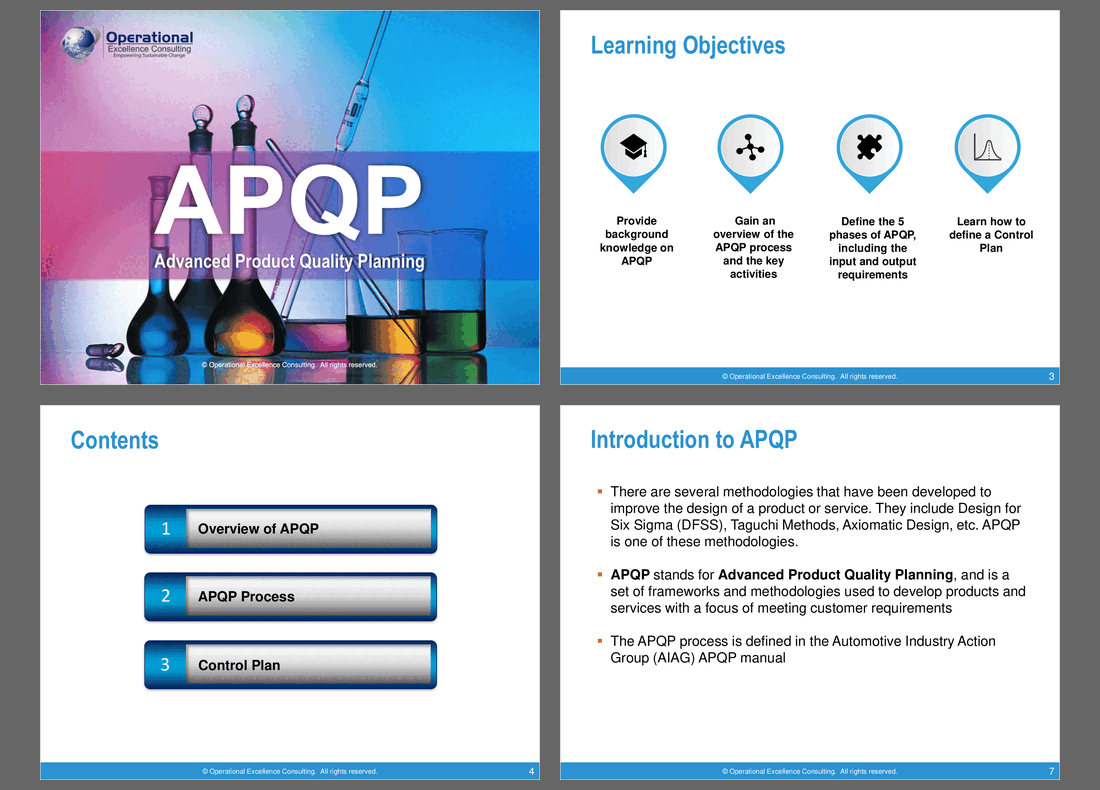

Advanced Product Quality Planning (APQP) 2nd Edition is a structured method of defining and establishing the steps necessary to assure that a product satisfies the customer. It provides a set of detailed requirements to be undertaken at each stage in the APQP system.

APQP is used when a new and/or significantly changed product or process could lead to a failure that would expose the supplier to customer dissatisfaction, safety concerns, or unplanned increase of cost to produce.
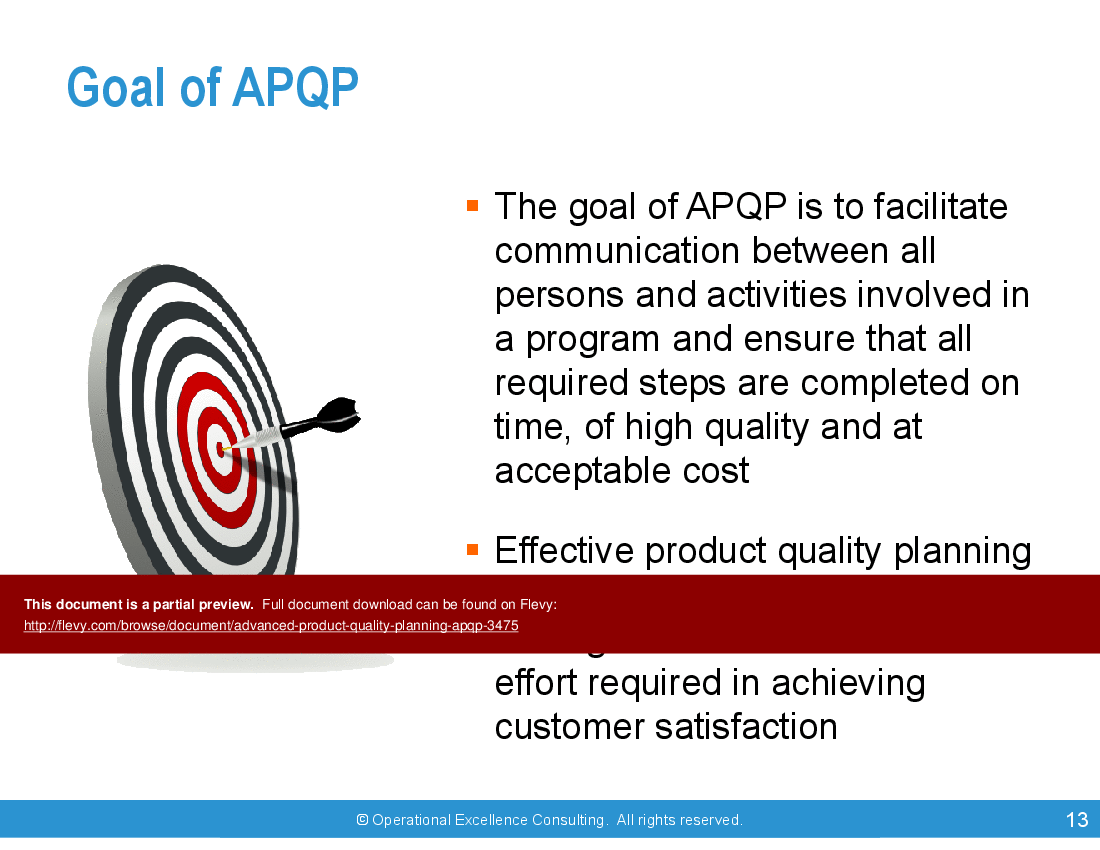
The goal of APQP is to facilitate communication between all persons and activities involved in a program and ensure that all required steps are completed on time, of high quality and at acceptable cost.
This presentation can be used to brief your employees to create awareness of the APQP quality standard. Alternatively, the presentation can be used to supplement your IATF 16949:2016 and/or ISO 9001:2015 materials for the training of QA professionals and internal auditors.
||||||||||||||||||||||||||||||||||||||||||||||||||||||||||||||||||||||||||||||||||||||||||||||||||||||||||||||||||||||||||||||||||||||||||||||||||||
This training package includes:
1. APQP PPT training presentation (PowerPoint format)
2. Control Plan template (Excel format) – FREE
|||||||||||||||||||||||||||||||||||||||||||||||||||||||||||||||||||||||||||||||||||||||||||||||||||||||||||||||||||||||||||||||||||||||||||||||||||||
LEARNING OBJECTIVES
1. Provide background knowledge on APQP.
2. Gain an overview of the APQP process and the key activities.
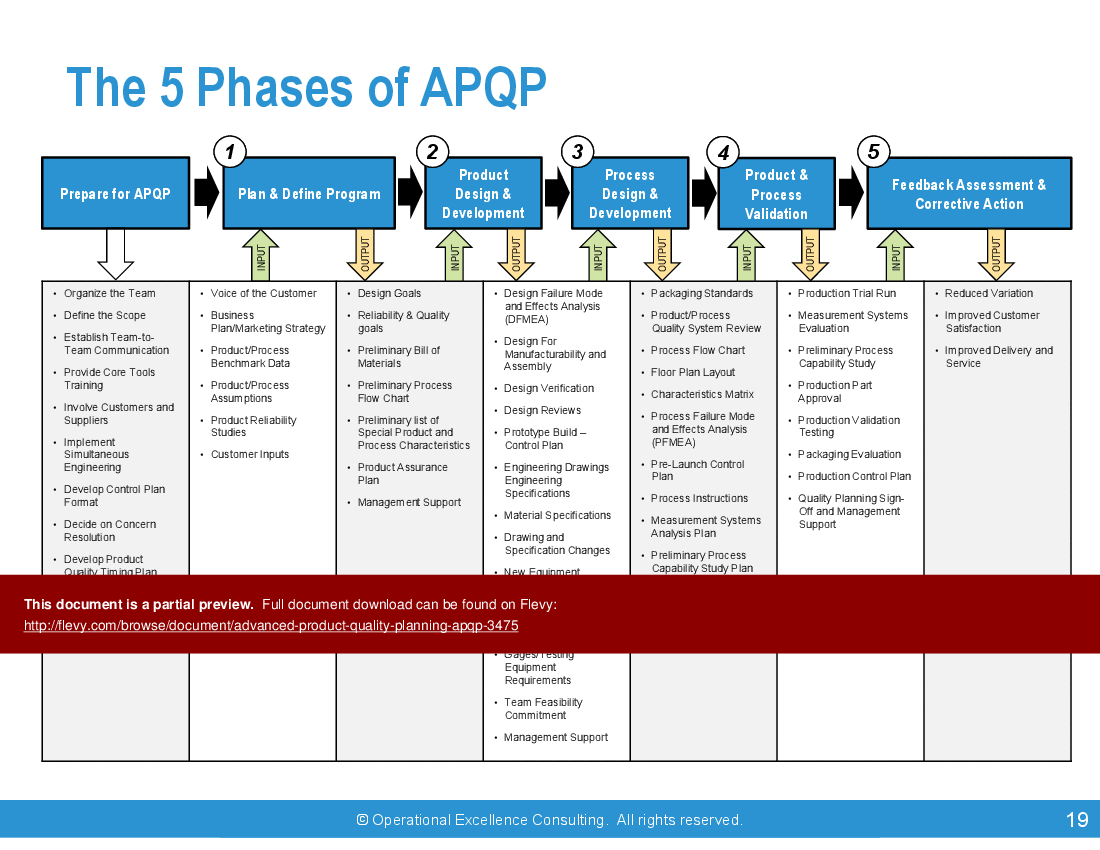
3. Define the 5 phases of APQP, including the input and output requirements.
4. Learn how to define a Control Plan.
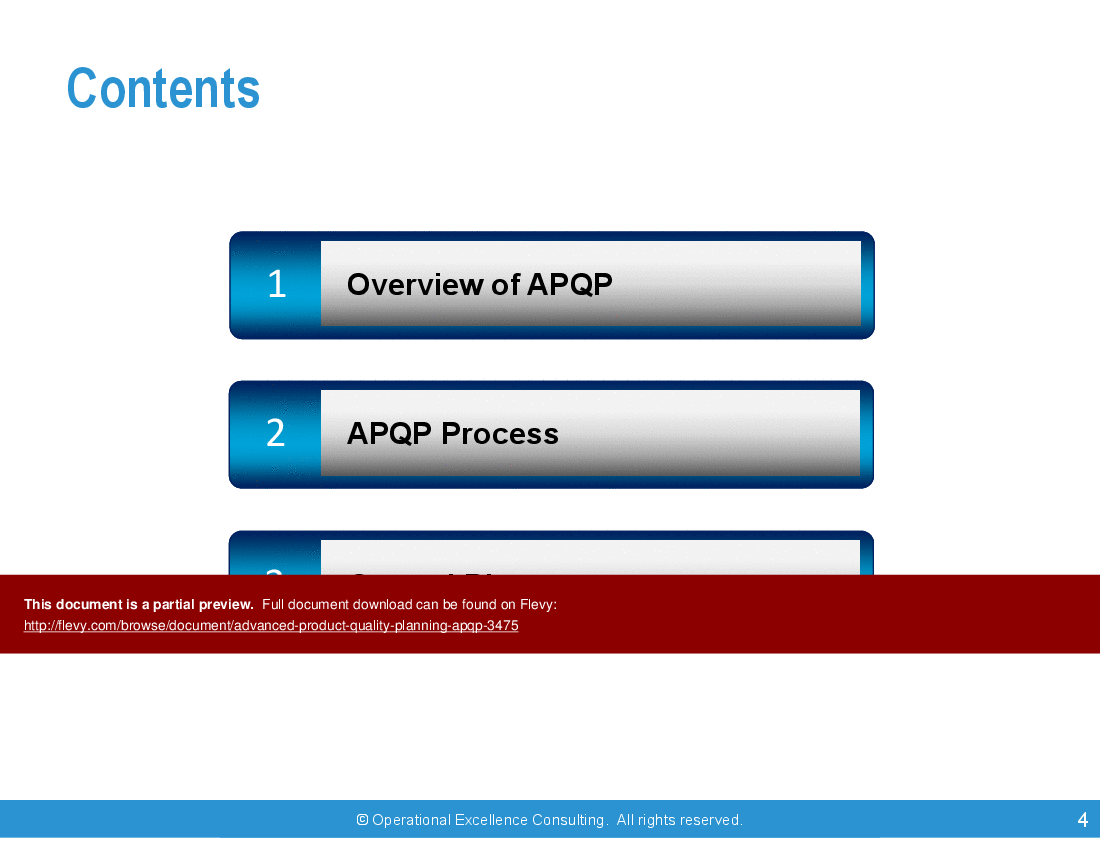
CONTENTS
1. Overview of APQP
• About AIAG
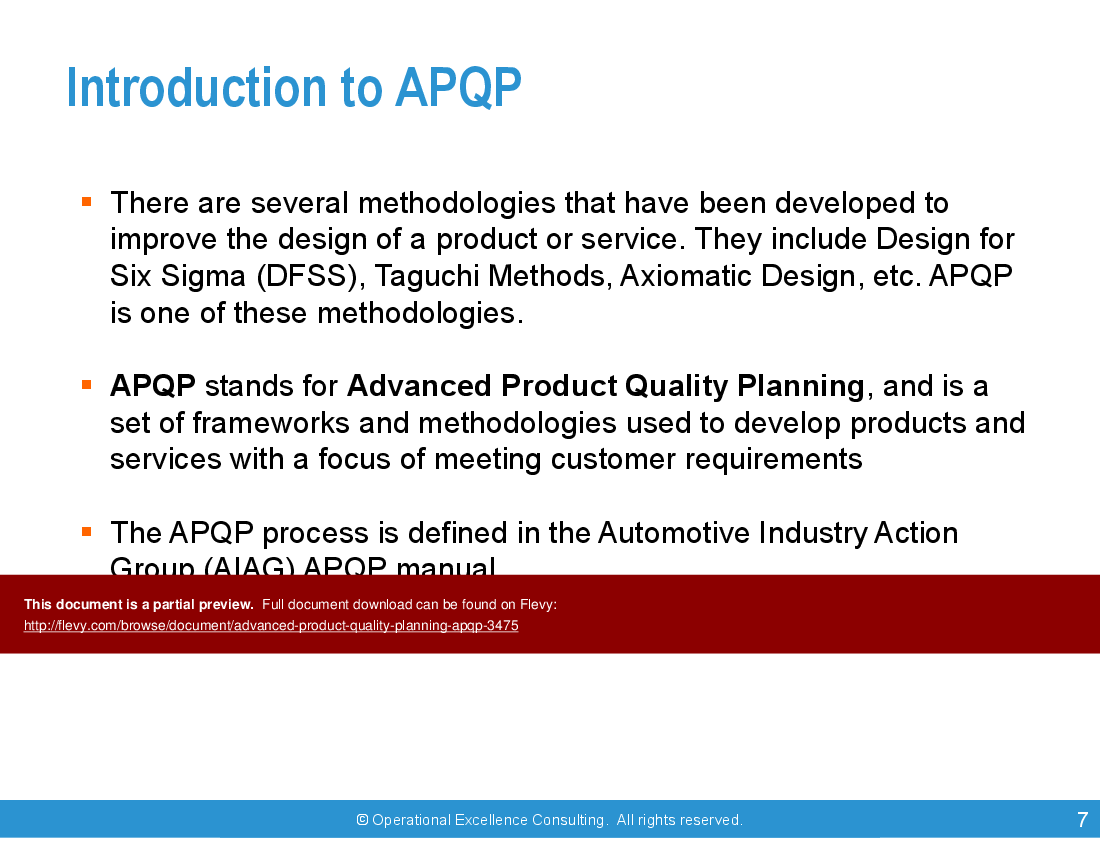
• Introduction to APQP
• Background of APQP
• Working in Silos Results in Poor Quality Design
• What is Quality Planning?
• What is APQP?
• APQP Acronyms
• Goal of APQP
• Benefits of APQP to the Customer
• Benefits of APQP to the Supplier
• Roadblocks to APQP
• APQP Process Flow
• The 5 Phases of APQP
2. APQP Process
• The APQP Process is Based on the Plan-Do-Study-Act (PDSA) Cycle
• APQP Timing Chart
• APQP Phases & Key Activities
• Preparing for APQP
• Phase 1: Plan & Define Program
• Phase 2: Product Design & Development
• Phase 3: Process Design & Development
• Phase 4: Product & Process Validation
• Phase 5: Feedback Assessment & Corrective Action
• List of APQP Elements
• Exercise: APQP Phases
• Core Tools
• APQP: Key Takeaways
3. Control PLan
• Control Plan
• Control Plan Template
• Control Plan: Tool Interaction
• Anatomy of the Control Plan
• Example of Control Plan
• Control Plan: Reviewer's Checklist
• Control Plan & APQP
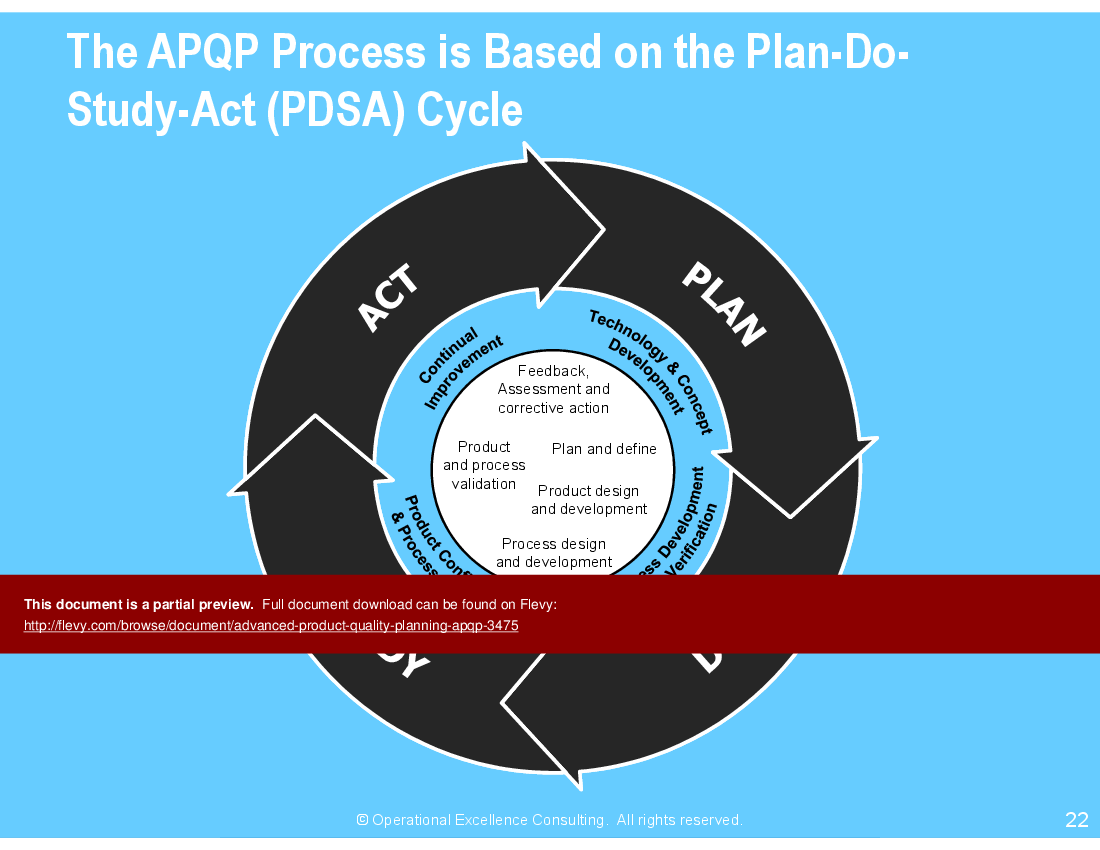
The APQP 2nd Edition process is based on the Plan-Do-Study-Act (PDSA) cycle, ensuring continuous improvement. This training package includes a comprehensive Control Plan template to streamline your quality assurance efforts.
Got a question about the product? Email us at support@flevy.com or ask the author directly by using the "Ask the Author a Question" form. If you cannot view the preview above this document description, go here to view the large preview instead.
Executive Summary
The Advanced Product Quality Planning (APQP) presentation provides a structured approach to ensuring that products meet customer expectations through a comprehensive planning process. This training deck, developed by a Certified Lean Six Sigma Black Belt with extensive experience at major corporations, equips teams with the necessary tools and methodologies to enhance product quality and reduce risks. By utilizing the APQP framework, organizations can streamline their product development processes, improve communication among stakeholders, and achieve operational excellence.
Who This Is For and When to Use
• Quality Assurance Managers overseeing product development and quality control
• Project Managers responsible for new product launches
• Engineering Teams involved in product design and process validation
• Supply Chain Managers ensuring compliance with quality standards
• Executive Leadership committed to operational excellence
Best-fit moments to use this deck:
• During the initiation of new product development projects
• When implementing quality improvement initiatives
• For training sessions focused on quality management frameworks
• In strategic planning meetings to align teams on quality objectives
Learning Objectives
• Define the APQP process and its significance in product development
• Identify the 5 phases of APQP, including input and output requirements
• Develop a Control Plan that aligns with customer expectations
• Understand the role of communication in quality planning
• Implement tools and methodologies to enhance product quality
• Evaluate the effectiveness of the APQP process through feedback and corrective actions
Table of Contents
• Overview of APQP (page 5)
• APQP Process (page 18)
• Control Plan (page 42)
Primary Topics Covered
• Overview of APQP - Introduction to the APQP framework, its purpose, and its relevance in meeting customer requirements.
• APQP Process Flow - Detailed examination of the 5 phases of APQP, including preparation, planning, design, validation, and feedback.
• Control Plan Development - Guidelines for creating a Control Plan to manage critical inputs and maintain quality standards throughout the product lifecycle.
• Benefits of APQP - Insights into how APQP enhances customer satisfaction and operational efficiency.
• Challenges in APQP Implementation - Common roadblocks organizations face when adopting APQP and strategies to overcome them.
• Core Tools in APQP - Overview of essential tools such as FMEA, SPC, and MSA that support the APQP process.
Deliverables, Templates, and Tools
• APQP Process Flow Diagram
• Control Plan Template for managing product and process characteristics
• Design Failure Mode and Effects Analysis (DFMEA) template
• Process Flow Chart for visualizing manufacturing processes
• Measurement Systems Analysis (MSA) framework
• Production Part Approval Process (PPAP) documentation
Slide Highlights
• Overview of the APQP framework and its importance in quality management
• Detailed process flow diagram illustrating the 5 phases of APQP
• Control Plan template outlining critical inputs and control methods
• Benefits of APQP for both customers and suppliers
• Challenges in implementing APQP and strategies for overcoming them
Potential Workshop Agenda
APQP Overview Session (60 minutes)
• Introduction to APQP and its significance
• Overview of the 5 phases of APQP
• Discussion on the role of communication in quality planning
Control Plan Development Workshop (90 minutes)
• Hands-on session to create a Control Plan
• Review of critical inputs and measurement techniques
• Group discussion on best practices for maintaining quality
Feedback and Continuous Improvement Session (60 minutes)
• Evaluating the effectiveness of the APQP process
• Identifying areas for improvement based on feedback
• Developing action plans for future projects
Customization Guidance
• Tailor the Control Plan template to fit specific product requirements and customer needs
• Adjust the APQP process flow to reflect organizational structures and workflows
• Incorporate company-specific terminology and metrics into training materials
Secondary Topics Covered
• The role of AIAG in establishing quality standards
• Importance of cross-functional collaboration in APQP
• Continuous improvement methodologies related to APQP
• Regulatory compliance and its impact on quality planning
Topic FAQ
Document FAQ
These are questions addressed within this presentation.
What is APQP?
APQP stands for Advanced Product Quality Planning, a structured method for defining and establishing the steps necessary to ensure that a product satisfies customer requirements.
Why is a Control Plan important?
A Control Plan outlines how to manage critical inputs to meet customer expectations, ensuring quality throughout the product lifecycle.
What are the 5 phases of APQP?
The 5 phases are: Plan and Define Program, Product Design and Development, Process Design and Development, Product and Process Validation, and Feedback Assessment & Corrective Action.
How can APQP benefit my organization?
APQP enhances communication, reduces product launch times, and improves overall product quality, leading to higher customer satisfaction.
What challenges might we face when implementing APQP?
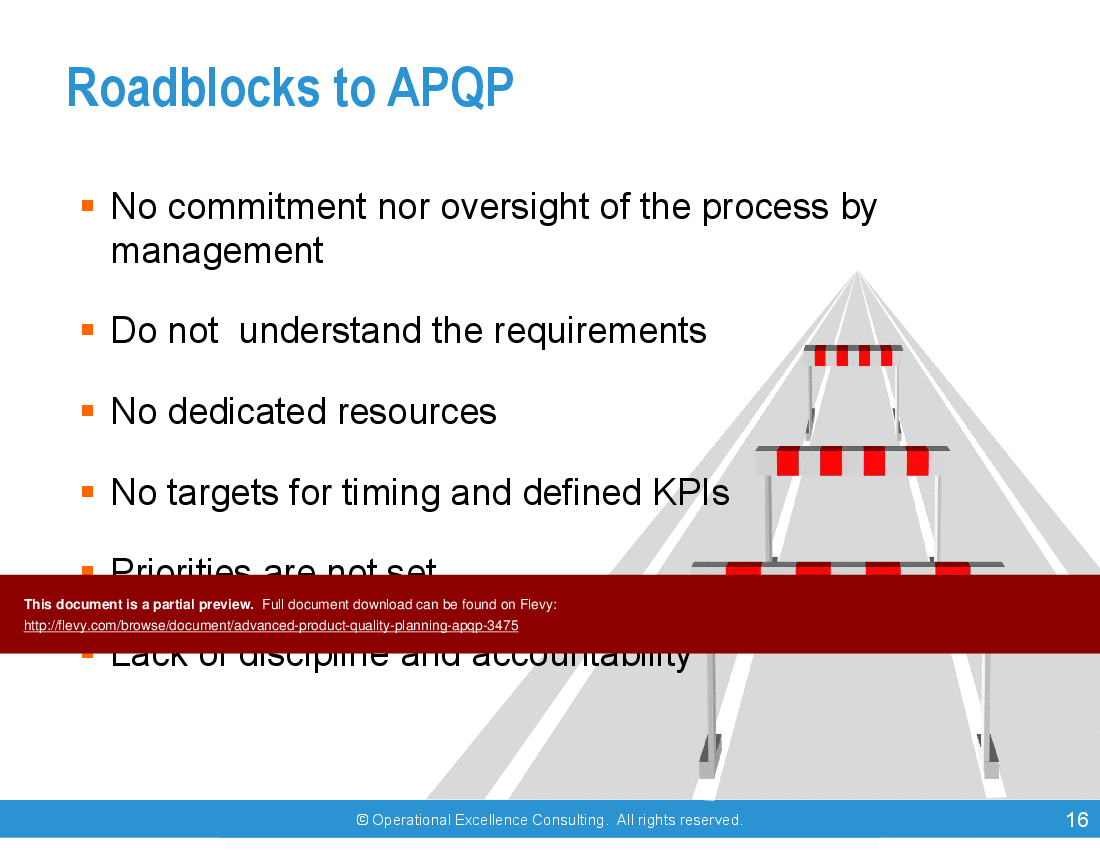
Common challenges include lack of management commitment, insufficient resources, and unclear requirements.
Can APQP be applied outside the automotive industry?
Yes, APQP methodologies can be adapted to various industries to improve product design and process development.
What tools are essential for APQP?
Key tools include FMEA, SPC, MSA, and PPAP, which support quality planning and control.
How do we measure the success of APQP?
Success can be measured through customer satisfaction, reduced variation, and improved delivery and service metrics.
Glossary
• APQP - Advanced Product Quality Planning
• Control Plan - A document that describes how to control critical inputs to meet customer expectations
• FMEA - Failure Mode and Effects Analysis
• SPC - Statistical Process Control
• MSA - Measurement Systems Analysis
• PPAP - Production Part Approval Process
• AIAG - Automotive Industry Action Group
• DFMEA - Design Failure Mode and Effects Analysis
• PDSA Cycle - Plan-Do-Study-Act Cycle for continuous improvement
• Feedback Assessment - Evaluation of output to identify areas for improvement
• Process Validation - Confirmation that the manufacturing process meets all requirements
• Customer Inputs - Feedback and requirements provided by customers
• Quality Planning - The process of defining quality standards and requirements for products
• Prototype - An early sample or model of a product used for testing
• Production Validation - Testing to ensure that the production process meets quality standards
• Risk Management - The process of identifying and mitigating risks in product development
• Continuous Improvement - Ongoing efforts to improve products, services, or processes
• Stakeholders - Individuals or groups with an interest in the outcome of a project or process
• Manufacturing Feasibility - Assessment of whether a product can be produced within specified parameters
• Special Characteristics - Unique features or requirements that must be controlled to ensure quality
Source: Best Practices in Quality Management, Product Strategy, APQP PowerPoint Slides: Advanced Product Quality Planning (APQP) 2nd Edition PowerPoint (PPTX) Presentation Slide Deck, Operational Excellence Consulting
|
Receive our FREE presentation on Operational Excellence
This 50-slide presentation provides a high-level introduction to the 4 Building Blocks of Operational Excellence. Achieving OpEx requires the implementation of a Business Execution System that integrates these 4 building blocks. |