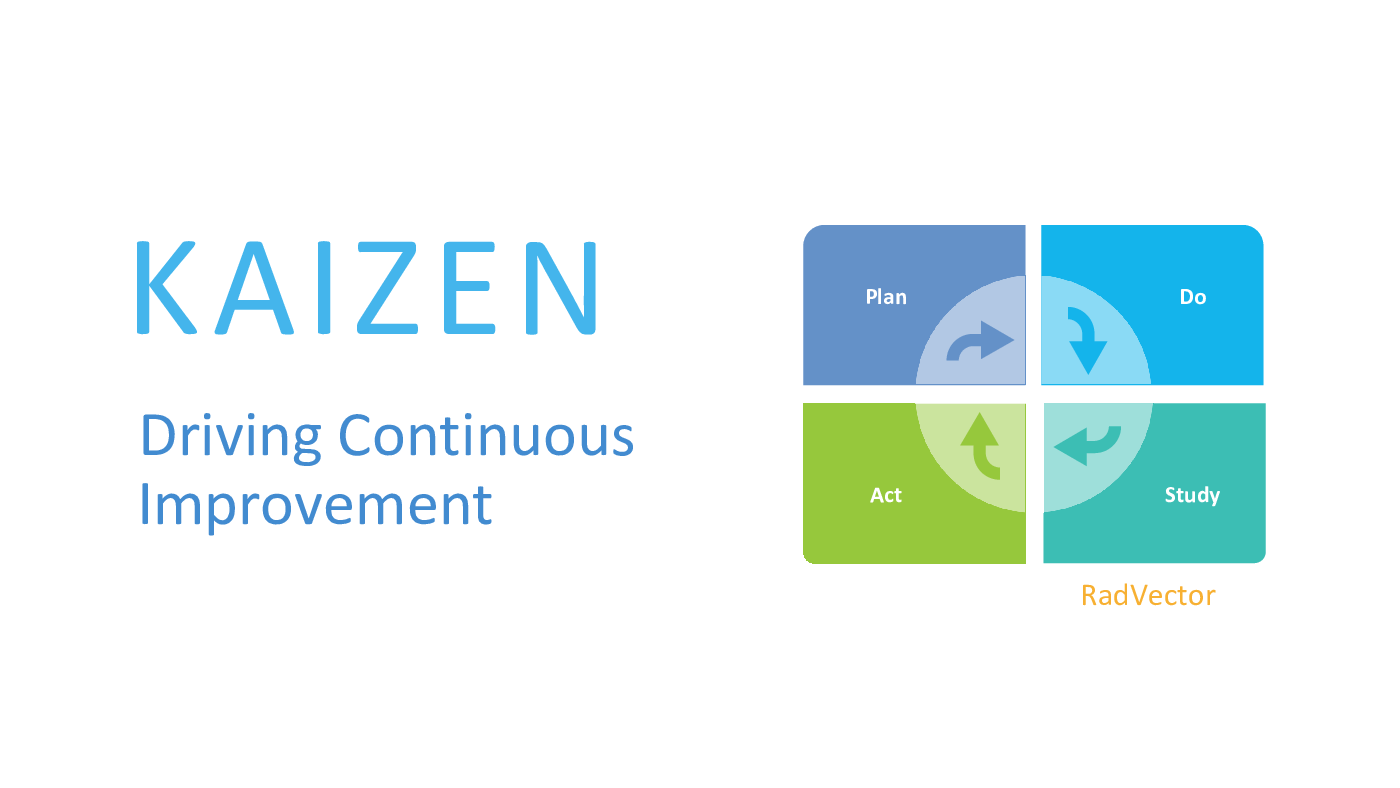

Kaizen - Driving Continuous Improvement   69-slide PPT PowerPoint presentation slide deck (PPTX)
$45.00

Kaizen - Driving Continuous Improvement (69-slide PPT PowerPoint presentation slide deck (PPTX)) Preview Image
Log in to unlock full preview.
Kaizen - Driving Continuous Improvement (69-slide PPT PowerPoint presentation slide deck (PPTX)) Preview Image
Arrow   Click main image to view in full screen.

Kaizen - Driving Continuous Improvement (PowerPoint PPTX Slide Deck)

PowerPoint (PPTX) 69 Slides

$45.00
Developed by a team of security experts with global consulting experience at McKinsey, Deloitte, and Capgemini.
Add to Cart


Immediate download
Fully editable PowerPoint
Free lifetime updates

KAIZEN PPT DESCRIPTION

Editor Summary 69-slide PowerPoint presentation (PPTX) titled "Kaizen - Driving Continuous Improvement" developed by RadVector Consulting and a team with global consulting experience at McKinsey, Deloitte, and Capgemini. Read more

KAIZEN: Driving Continuous Improvement

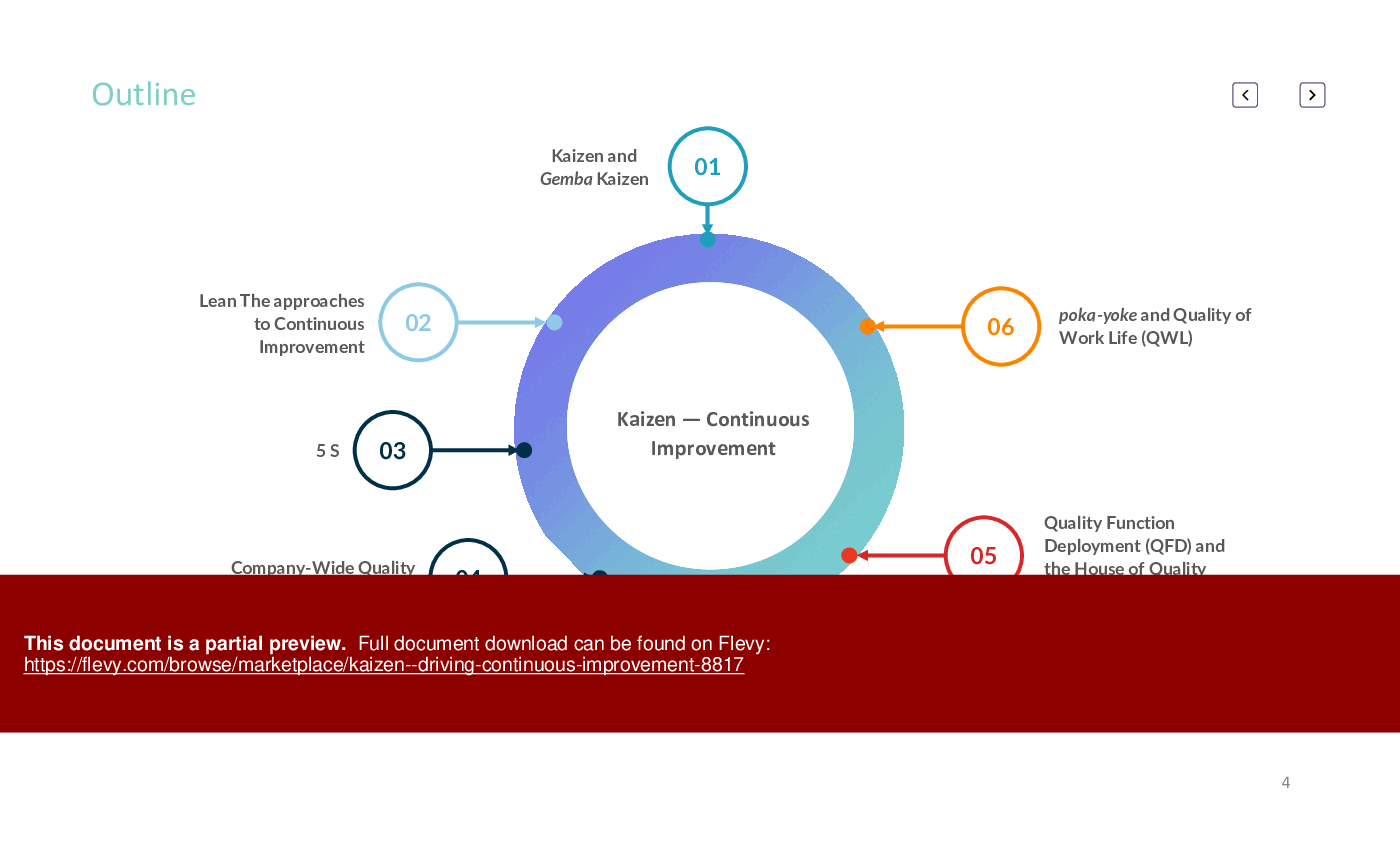
In this presentation, we will delve into KAIZEN, a Japanese philosophy focused on continuous improvement, and its application in business processes. We will explore Gemba Kaizen, the 5S methodology, company-wide quality control, quality function deployment, poka-yoke, and quality of work life (QWL).

Understand Kaizen and Gemba Kaizen

Kaizen means "change for the better" and involves everyone in an organization working together to make incremental improvements. Gemba Kaizen extends this philosophy to the "Gemba" or "the real place," where work is done. It emphasizes improving processes by going to the source and understanding the actual work conditions.

Learn the Approaches to Continuous Improvement

Continuous improvement in Kaizen involves small, consistent changes aimed at enhancing efficiency and quality. It encourages employees at all levels to suggest and implement improvements, fostering a culture of engagement and innovation.

Discuss the 5S

The 5S methodology is a foundational tool for Kaizen, comprising:
1. Sort (Seiri): Removing unnecessary items.
2. Set in Order (Seiton): Organizing remaining items.
3. Shine (Seiso): Cleaning the workspace.
4. Standardize (Seiketsu): Establishing standards for processes.
5. Sustain (Shitsuke): Maintaining and reviewing standards.

Implementing 5S helps create a more organized, efficient, and safe workplace.

Explain Company-wide Quality Control

Company-wide quality control (CWQC) involves all employees in quality improvement efforts. This holistic approach ensures that quality is maintained at every stage of the production process, from design to delivery, resulting in higher customer satisfaction.

Describe Quality Function Deployment and the House of Quality

Quality Function Deployment (QFD) translates customer requirements into specific technical features. The House of Quality, a key tool in QFD, visually represents the relationship between customer desires and the company's ability to meet those needs, facilitating cross-functional collaboration.

Understand Poka-Yoke and Quality of Work Life (QWL)

Poka-Yoke, or mistake-proofing, involves designing processes to prevent errors or make them immediately apparent. This leads to higher quality products and fewer defects. Quality of Work Life (QWL) focuses on improving the work environment, ensuring that employees are satisfied, motivated, and productive.

Kaizen, with its emphasis on continuous improvement and employee involvement, drives significant enhancements in efficiency, quality, and workplace satisfaction. By implementing approaches like Gemba Kaizen, the 5S methodology, company-wide quality control, QFD, poka-yoke, and enhancing QWL, organizations can foster a culture of excellence and achieve sustainable growth.

Got a question about the product? Email us at support@flevy.com or ask the author directly by using the "Ask the Author a Question" form. If you cannot view the preview above this document description, go here to view the large preview instead.

MARCUS OVERVIEW

This synopsis was written by Marcus [?] based on the analysis of the full 69-slide presentation.


Executive Summary
The "Kaizen - Driving Continuous Improvement" presentation is a comprehensive resource designed to equip organizations with the principles and practices of continuous improvement. Developed by a team of seasoned consultants from leading firms, this presentation provides actionable insights into implementing Kaizen methodologies across various organizational levels. Users will learn how to foster a culture of continuous improvement, enhance productivity, and streamline processes through practical examples and tools. This ready-to-use presentation serves as an essential guide for executives and teams aiming to drive efficiency and quality improvements within their organizations.

Who This Is For and When to Use
•  Executives and senior management looking to implement continuous improvement strategies.
•  Team leaders and project managers responsible for process optimization.
•  Quality assurance professionals focused on enhancing product and service quality.
•  HR and organizational development teams aiming to foster a culture of improvement.

Best-fit moments to use this deck:
•  During strategic planning sessions to align improvement initiatives with business objectives.
•  In training workshops to educate employees on Kaizen principles and practices.
•  When launching new projects that require a focus on efficiency and quality enhancement.

Learning Objectives
•  Define the core principles of Kaizen and its application in various organizational contexts.
•  Build a continuous improvement framework that engages all employees in the process.
•  Establish metrics for measuring Kaizen effectiveness, including the Kaizen Participation Index.
•  Identify and eliminate waste using Gemba Kaizen principles.
•  Implement the 5S methodology to enhance workplace organization and efficiency.
•  Apply Quality Function Deployment (QFD) to align product development with customer needs.

Table of Contents
•  Introduction to Kaizen (page 5)
•  Gemba Kaizen Principles (page 9)
•  Lean Management Approaches (page 14)
•  5S Methodology (page 32)
•  Quality Function Deployment (QFD) (page 58)
•  Poka-Yoke Techniques (page 58)
•  Quality of Work Life (QWL) (page 62)
•  Summary of Key Concepts (page 67)

Primary Topics Covered
•  Kaizen Philosophy - A system of continuous improvement that emphasizes small, incremental changes across all levels of an organization.
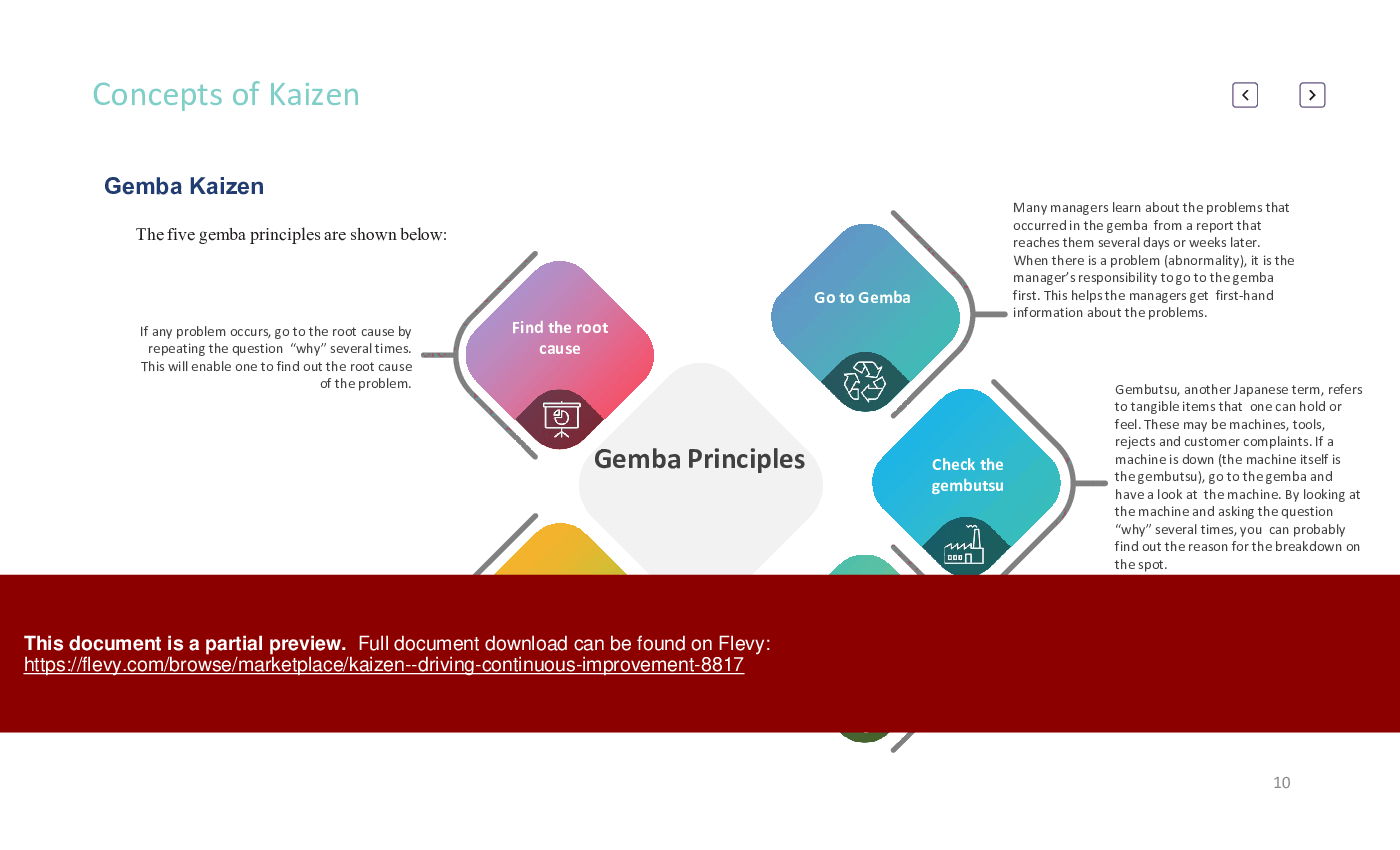
•  Gemba Kaizen - Focuses on improving processes at the actual place of work, encouraging managers to observe operations firsthand.
•  Lean Management - A business philosophy aimed at reducing waste while maximizing customer value through efficient processes.
•  5S Methodology - A workplace organization tool that promotes efficiency and effectiveness through sorting, setting in order, shining, standardizing, and sustaining.
•  Quality Function Deployment (QFD) - A structured approach to ensuring that customer requirements are met throughout the product development process.
•  Poka-Yoke - Techniques designed to prevent errors in manufacturing and service processes, enhancing quality and safety.

Deliverables, Templates, and Tools
•  Kaizen Participation Index template for measuring employee engagement in improvement initiatives.
•  5S audit checklist to evaluate workplace organization and cleanliness.
•  Gemba observation forms to document findings and improvement opportunities.
•  QFD house of quality template for aligning product features with customer expectations.
•  Poka-Yoke implementation guide to reduce errors in processes.

Slide Highlights
•  Overview of Kaizen principles and their impact on organizational culture.
•  Visual representation of the Gemba walk process to enhance understanding.
•  Step-by-step guide to implementing the 5S methodology in any workplace.
•  Case studies showcasing successful Kaizen implementations in various industries.
•  Graphical depiction of the house of quality in QFD for product development.

Potential Workshop Agenda
Introduction to Kaizen (60 minutes)
•  Overview of Kaizen principles and benefits.
•  Discussion on the role of leadership in fostering a Kaizen culture.

Gemba Kaizen Session (90 minutes)
•  Practical exercises on conducting Gemba walks.
•  Identifying waste and improvement opportunities in real-time scenarios.

5S Implementation Workshop (120 minutes)
•  Step-by-step training on the 5S methodology.
•  Group activities to develop a 5S action plan for participants' workplaces.

QFD and Poka-Yoke Techniques (90 minutes)
•  Interactive session on applying QFD to align products with customer needs.
•  Hands-on exercises to design Poka-Yoke systems for error prevention.

Customization Guidance
•  Tailor the Kaizen Participation Index to reflect specific departmental goals and metrics.
•  Adjust the 5S audit checklist to align with organizational standards and practices.
•  Incorporate company-specific examples in case studies to enhance relevance.

Secondary Topics Covered
•  The role of employee engagement in successful Kaizen implementation.
•  Strategies for overcoming resistance to change within organizations.
•  The importance of continuous training and development in sustaining improvement efforts.
•  Techniques for measuring and sustaining improvements over time.

Topic FAQ

What are the core principles of Kaizen and how is it typically applied in a workplace?

Kaizen is a continuous improvement philosophy that emphasizes small, incremental changes involving all employees to improve quality and efficiency. Application focuses on engaging staff at all levels, eliminating waste, and standardizing improvements using tools such as Gemba Kaizen and 5S to embed ongoing change into daily work practices and routines like 5S.

How does Gemba Kaizen help managers identify process issues more effectively?

Gemba Kaizen requires managers to go to the "Gemba" — the real workplace — to observe operations directly, enabling firsthand identification of waste and root causes rather than relying on reports. Findings are typically captured with Gemba observation forms and used to drive immediate, shop-floor level improvements using Kaizen practices.

What is the 5S methodology and what steps does it involve for workplace organization?

5S is a workplace organization method consisting of 5 steps: Sort (remove unnecessary items), Set in Order (organize what remains), Shine (clean the area), Standardize (establish procedures), and Sustain (maintain and review standards). Implementing 5S aims to improve efficiency, safety, and visual management through those 5 specific steps.

How does Quality Function Deployment (QFD) support product development and what tool is used?

QFD translates customer requirements into technical features and design priorities to ensure product development aligns with customer needs. Cross-functional teams map relationships between requirements and solutions using the House of Quality, a visual QFD tool that clarifies trade-offs and development priorities with a House of Quality template.

What should I look for in a Kaizen training slide deck for workshop delivery?

Look for decks that include practical templates (5S audit checklist, Gemba observation forms), ready-made workshop agendas and case studies, and measurement tools like a Kaizen Participation Index to track engagement. Materials that explicitly provide a 5S checklist and Kaizen Participation Index template support hands-on training and measurement.

How much time should I plan for an introductory Kaizen workshop series for frontline teams?

A practical introductory series can be structured as multiple sessions covering theory and practice: a 60-minute Kaizen overview, a 90-minute Gemba session, a 120-minute 5S implementation workshop, and a 90-minute QFD/Poka-Yoke session — totaling about 360 minutes across 4 sessions as shown in the suggested agenda.

I need to reduce defects on a production line quickly — which Kaizen techniques are most relevant?

For fast defect reduction, apply Poka-Yoke (mistake-proofing) to prevent errors, perform Gemba Kaizen to observe defects at the source, and use 5S to organize the workspace and reduce variability. Practical guidance often includes a Poka-Yoke implementation guide and Gemba observation forms to capture and act on findings.

How can I measure employee engagement in continuous improvement efforts?

Use participation-focused metrics such as the Kaizen Participation Index, calculated as number of participants divided by total employees multiplied by 100, alongside outcome measures like improvements in quality and efficiency and employee satisfaction to track engagement and impact with the Kaizen Participation Index.

Document FAQ
These are questions addressed within this presentation.

What is Kaizen?
Kaizen is a philosophy of continuous improvement that involves all employees in making small, incremental changes to enhance quality and efficiency.

How can I implement Kaizen in my organization?
Begin by educating employees on Kaizen principles, establishing a framework for continuous improvement, and encouraging participation at all levels.

What is the Kaizen Participation Index?
The Kaizen Participation Index measures employee engagement in Kaizen activities, calculated as the number of participants divided by total employees, multiplied by 100.

What are the key components of the 5S methodology?
The 5S methodology includes Sort, Set in order, Shine, Standardize, and Sustain, aimed at creating an organized and efficient workplace.

How does Gemba Kaizen differ from traditional management approaches?
Gemba Kaizen emphasizes direct observation and engagement in the workplace, allowing managers to identify and address issues firsthand rather than relying solely on reports.

What is Quality Function Deployment (QFD)?
QFD is a structured approach to ensuring that customer needs are translated into product design and development processes, enhancing overall quality.

What is Poka-Yoke?
Poka-Yoke refers to mistake-proofing techniques designed to prevent errors in processes, ensuring that defects are minimized or eliminated.

How can I measure the success of Kaizen initiatives?
Success can be measured through various metrics, including the Kaizen Participation Index, improvements in quality and efficiency, and employee satisfaction levels.

Glossary
•  Kaizen - Continuous improvement philosophy involving all employees.
•  Gemba - The real place where work is done.
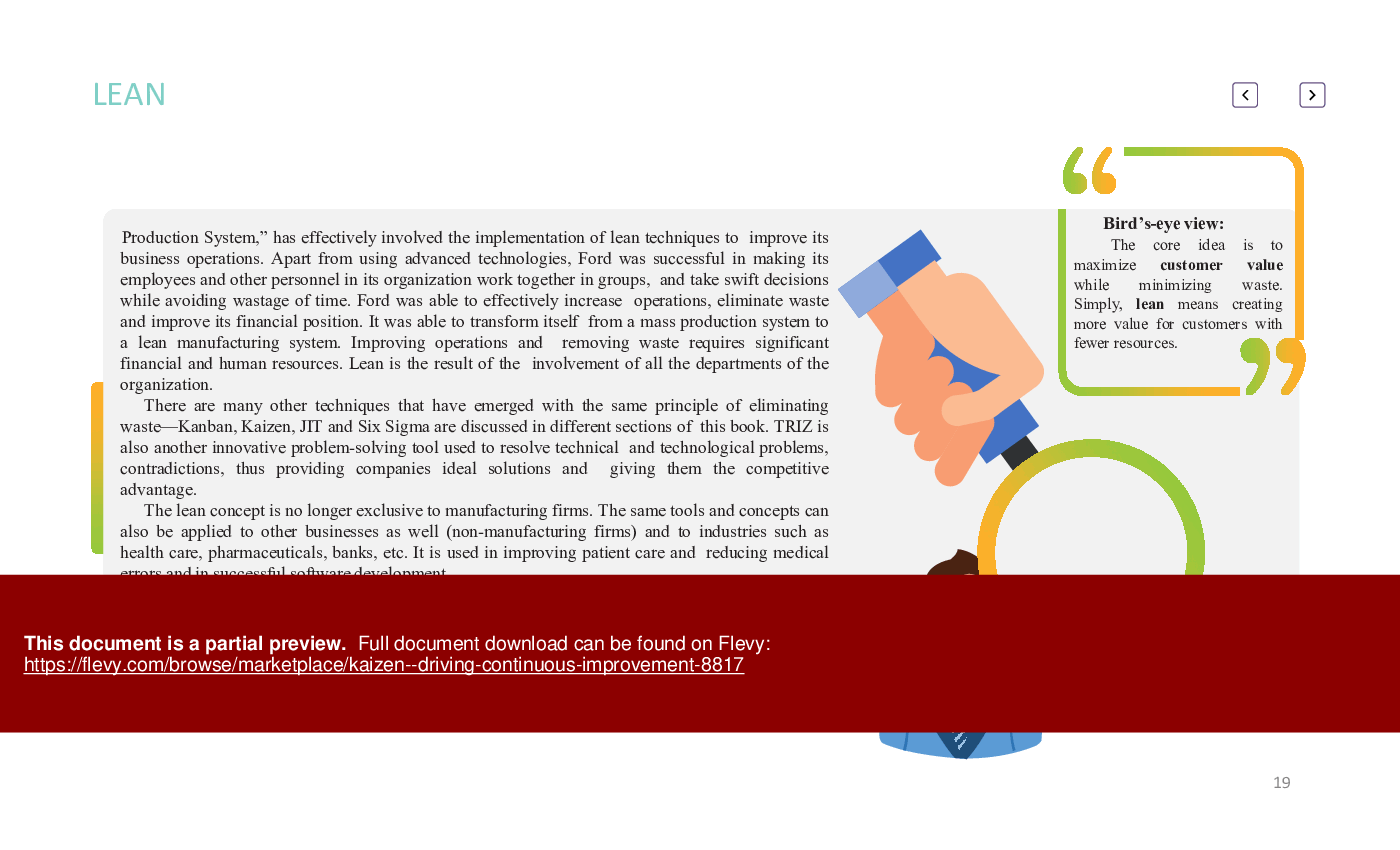
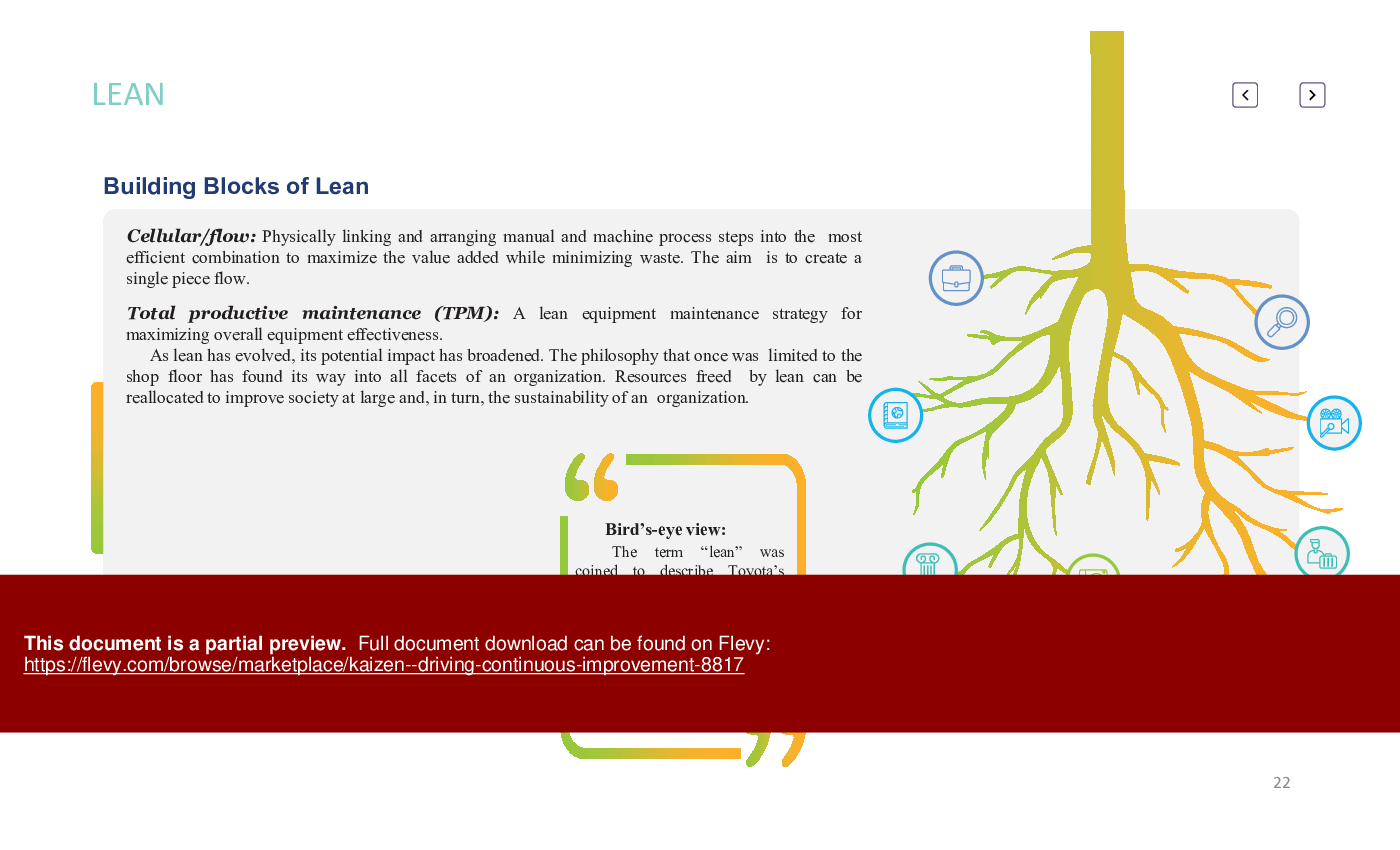
•  Lean Management - Philosophy focused on waste reduction and efficiency.
•  5S - Workplace organization methodology: Sort, Set in order, Shine, Standardize, Sustain.
•  Quality Function Deployment (QFD) - Tool for aligning customer needs with product design.
•  Poka-Yoke - Techniques for preventing errors in processes.
•  Kaizen Participation Index - Metric for measuring employee engagement in improvement activities.
•  Continuous Improvement - Ongoing effort to enhance products, services, or processes.
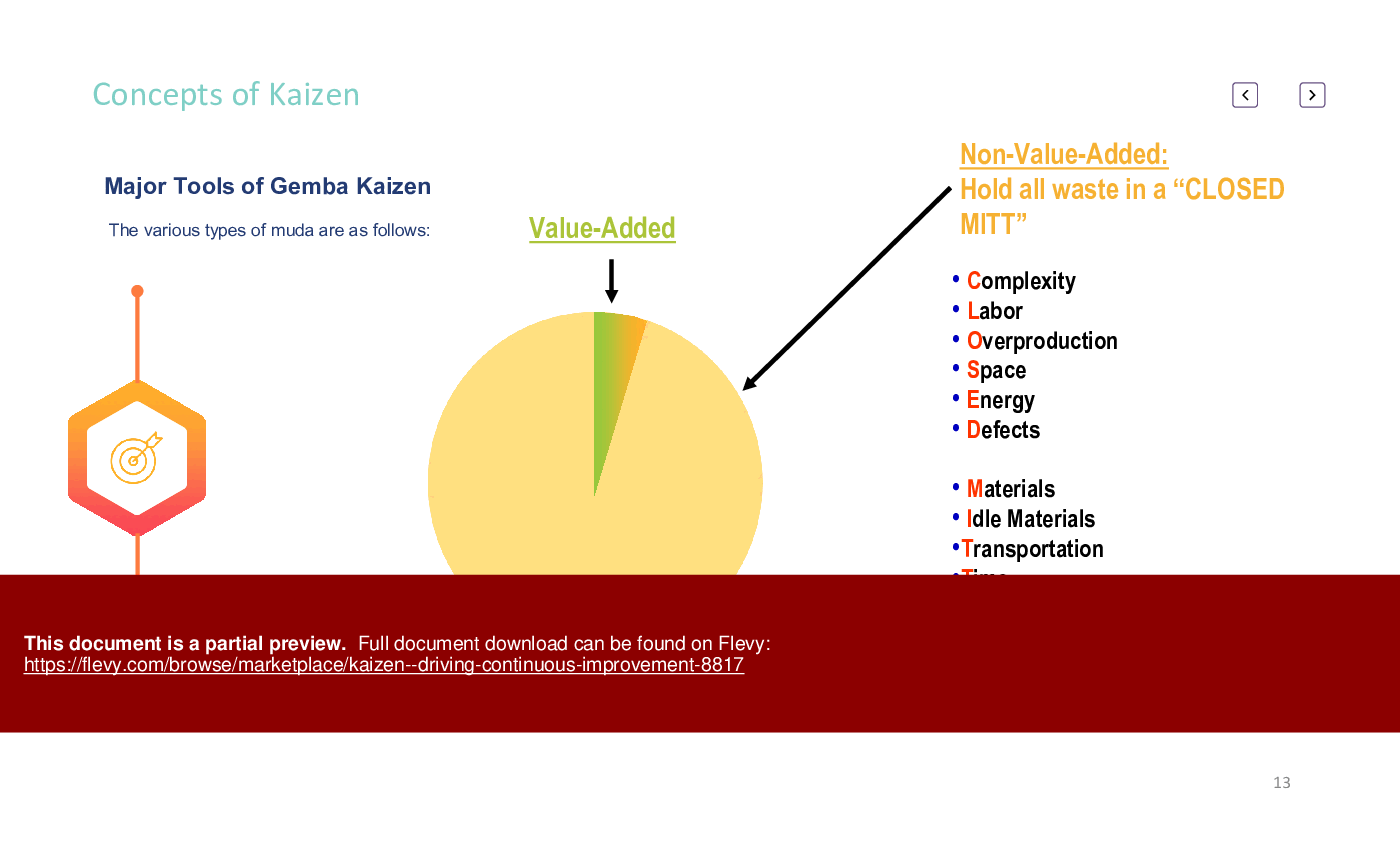
•  Waste - Any activity that does not add value to the product or service.
•  Customer Value - The perceived benefit a customer receives from a product or service.
•  Quality Circles - Groups of employees who meet to discuss and solve work-related problems.
•  Total Quality Control (TQC) - Comprehensive approach to improving quality across all organizational processes.
•  Statistical Process Control (SPC) - Method of monitoring and controlling processes using statistical methods.
•  Deming Wheel (PDCA) - Plan-Do-Check-Act cycle for continuous improvement.
•  Team Dynamics - Interactions and relationships within a team that affect performance.
•  Visual Management - Use of visual signals to communicate information about processes.
•  Standardization - Establishing consistent procedures and practices to ensure quality.
•  Employee Engagement - The emotional commitment an employee has to their organization.
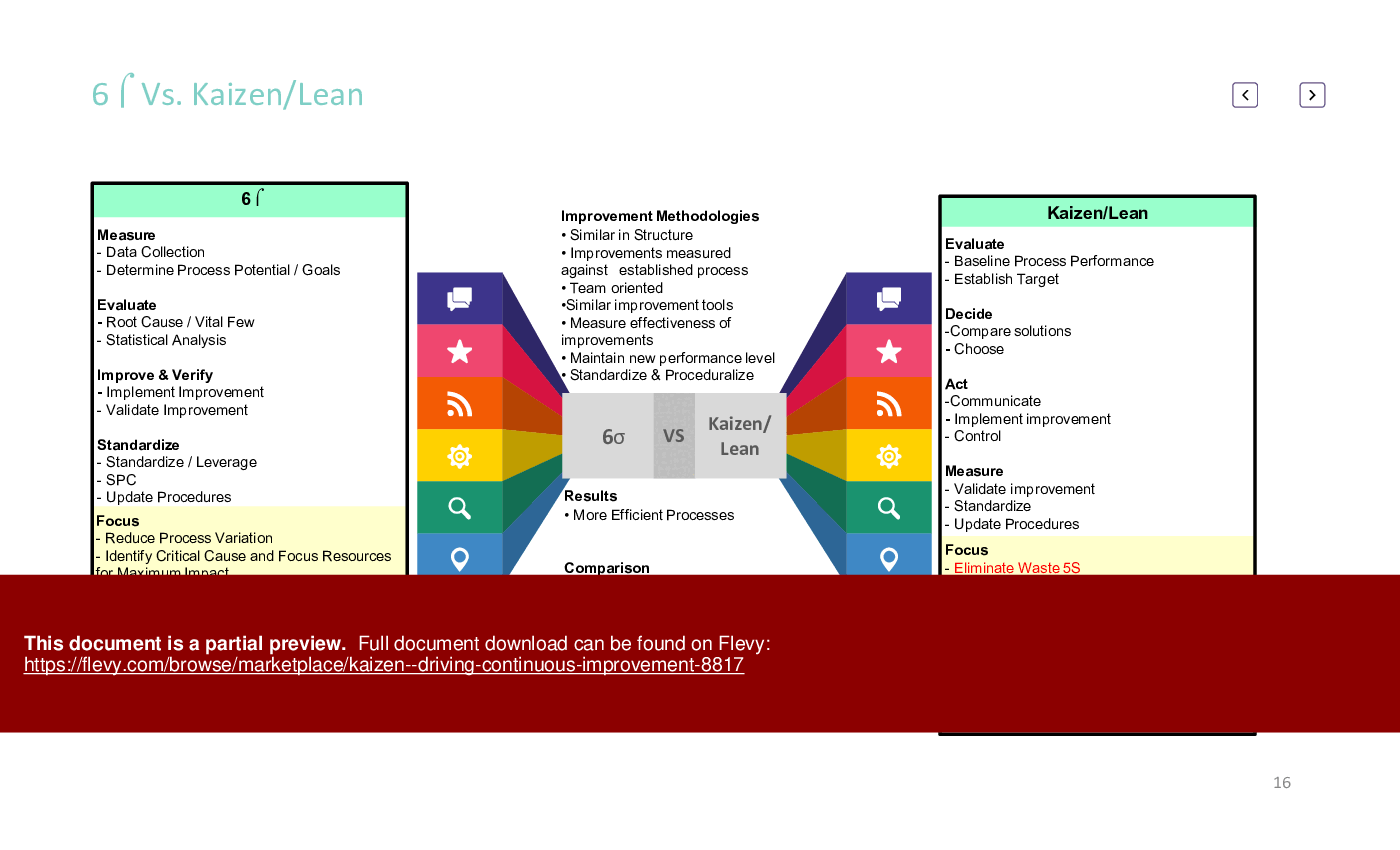
•  Root Cause Analysis - Process of identifying the underlying causes of problems.
•  Benchmarking - Comparing processes and performance metrics to industry bests or best practices.
•  Continuous Training - Ongoing education and skill development for employees.

Source: Best Practices in Kaizen PowerPoint Slides: Kaizen - Driving Continuous Improvement PowerPoint (PPTX) Presentation Slide Deck, RadVector Consulting


$45.00
Developed by a team of security experts with global consulting experience at McKinsey, Deloitte, and Capgemini.
Add to Cart
  

ABOUT THE AUTHOR

Additional documents from author: 183

We are a group of aviation experts & specialists (PhDs, Engineers, Pilots, Navigators, ...), leaders in helping organizations to transform their business performance using Methodologies and Principles of Lean, Agile, Six Sigma, and Innovation.

Ask the Author a Question

You must be logged in to contact the author.

Click here to log in Click here register

Did you know?
The average daily rate of a McKinsey consultant is $6,625 (not including expenses). The average price of a Flevy document is $65.


Trusted by over 10,000+ Client Organizations
Since 2012, we have provided business templates to over 10,000 businesses and organizations of all sizes, from startups and small businesses to the Fortune 100, in over 130 countries.
AT&T GE Cisco Intel IBM Coke Dell Toyota HP Nike Samsung Microsoft Astrazeneca JP Morgan KPMG Walgreens Walmart 3M Kaiser Oracle SAP Google E&Y Volvo Bosch Merck Fedex Shell Amgen Eli Lilly Roche AIG Abbott Amazon PwC T-Mobile Broadcom Bayer Pearson Titleist ConEd Pfizer NTT Data Schwab


Read Customer Testimonials

 
"As a consultant requiring up to date and professional material that will be of value and use to my clients, I find Flevy a very reliable resource.

The variety and quality of material available through Flevy offers a very useful and commanding source for information. Using Flevy saves me time, enhances my expertise and ends up being a good decision."

– Dennis Gershowitz, Principal at DG Associates
 
"One of the great discoveries that I have made for my business is the Flevy library of training materials.

As a Lean Transformation Expert, I am always making presentations to clients on a variety of topics: Training, Transformation, Total Productive Maintenance, Culture, Coaching, Tools, Leadership Behavior, etc. Flevy "

– Ed Kemmerling, Senior Lean Transformation Expert at PMG
 
"My FlevyPro subscription provides me with the most popular frameworks and decks in demand in today’s market. They not only augment my existing consulting and coaching offerings and delivery, but also keep me abreast of the latest trends, inspire new products and service offerings for my practice, and educate me "

– Bill Branson, Founder at Strategic Business Architects
 
"Last Sunday morning, I was diligently working on an important presentation for a client and found myself in need of additional content and suitable templates for various types of graphics. Flevy.com proved to be a treasure trove for both content and design at a reasonable price, considering the time I "

– M. E., Chief Commercial Officer, International Logistics Service Provider
 
"Flevy is our 'go to' resource for management material, at an affordable cost. The Flevy library is comprehensive and the content deep, and typically provides a great foundation for us to further develop and tailor our own service offer."

– Chris McCann, Founder at Resilient.World
 
"As a young consulting firm, requests for input from clients vary and it's sometimes impossible to provide expert solutions across a broad spectrum of requirements. That was before I discovered Flevy.com.

Through subscription to this invaluable site of a plethora of topics that are key and crucial to consulting, I "

– Nishi Singh, Strategist and MD at NSP Consultants
 
"[Flevy] produces some great work that has been/continues to be of immense help not only to myself, but as I seek to provide professional services to my clients, it gives me a large "tool box" of resources that are critical to provide them with the quality of service and outcomes they are expecting."

– Royston Knowles, Executive with 50+ Years of Board Level Experience
 
"I like your product. I'm frequently designing PowerPoint presentations for my company and your product has given me so many great ideas on the use of charts, layouts, tools, and frameworks. I really think the templates are a valuable asset to the job."

– Roberto Fuentes Martinez, Senior Executive Director at Technology Transformation Advisory


Customers Also Bought These Documents


Customers Also Like These Documents

Explore Templates on Related Management Topics


Your Recently Viewed Documents
Receive our FREE presentation on Operational Excellence

This 50-slide presentation provides a high-level introduction to the 4 Building Blocks of Operational Excellence. Achieving OpEx requires the implementation of a Business Execution System that integrates these 4 building blocks.









