
Lean Management System Assessment   79-slide PPT PowerPoint presentation slide deck (PPTX)
$79.00

Lean Management System Assessment (79-slide PPT PowerPoint presentation slide deck (PPTX)) Preview Image
Log in to unlock full preview.
Lean Management System Assessment (79-slide PPT PowerPoint presentation slide deck (PPTX)) Preview Image
Arrow   Click main image to view in full screen.

Lean Management System Assessment (PowerPoint PPTX Slide Deck)

PowerPoint (PPTX) + Excel (XLSX) 79 Slides

Top 1,000 Best Practice $79.00
Developed by a seasoned Certified Lean Six Sigma Black Belt with a proven track record at Microsoft, IBM and Panasonic, this comprehensive assessment guide is your key to achieving Operational Excellence through Lean Methodologies.
Add to Cart


Immediate download
Fully editable PowerPoint
Free lifetime updates

BENEFITS OF THIS POWERPOINT DOCUMENT

  1. Gain an objective understanding of where you stand relative to your Lean management standards.
  2. Identify the specific areas where you need to focus your efforts to improve.
  3. A useful and visible tool to help you achieve faster Lean deployment.

LEAN PPT DESCRIPTION

Editor Summary Lean Management System Assessment is a 79-slide PowerPoint framework (with supplemental Excel radar chart) developed by Operational Excellence Consulting and a Certified Lean Six Sigma Black Belt with experience at Microsoft, IBM and Panasonic. Read more

Assessing your Lean management implementation periodically is not just wise—it's essential. The Lean Management System Assessment (LMA) tool is grounded in the core principles of plan, do, check, act (PDCA), a fundamental aspect of Lean philosophy. It meticulously evaluates both process and behavior standards, defining five levels of maturity that can be applied across all levels of your organization.

This assessment isn't just a routine check—it's a strategic tool that clarifies your organizational goals and personal objectives. It provides a detailed snapshot of your current status relative to your standards and historical performance. Moreover, it's a compass that directs your attention to areas requiring improvement, ensuring your efforts are both focused and effective.

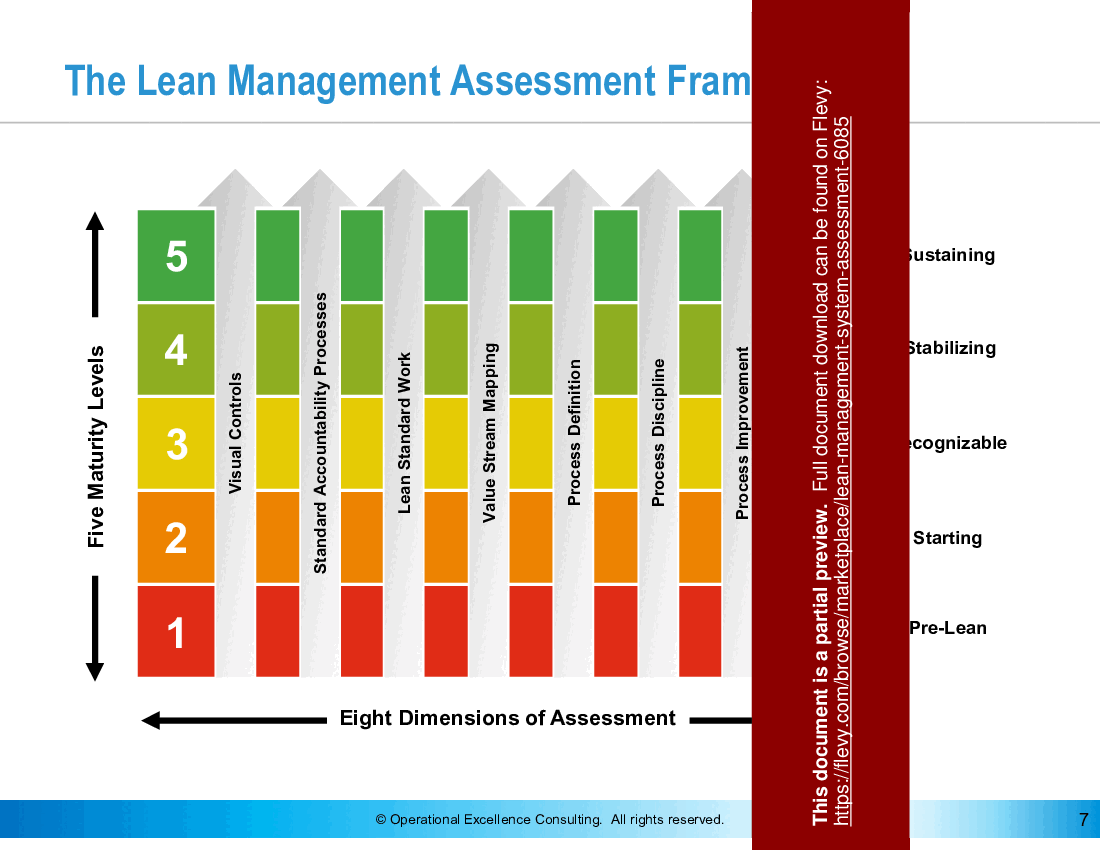
Adapted from the acclaimed work "Creating A Lean Culture" by David Mann, the Lean Assessment Framework stands out as a simpler, more practical alternative to the Shingo Model and the Baldrige Excellence Framework. It features eight comprehensive dimensions or categories, a user-friendly five-level maturity scale, and a straightforward 5-point scoring system that can be employed by individuals or teams.

The LMA tool provides an excellent resource for Lean or Operational Excellence Consultants who plan to use it as a holistic organizational diagnostic tool prior to recommending solutions to the client. It functions as a comprehensive organizational diagnostic tool, allowing consultants to gain a deep understanding of the client's operations before recommending tailored solutions. By utilizing the LMA, consultants can effectively identify areas for improvement, develop targeted strategies, and guide their clients towards achieving sustainable operational excellence.

In essence, the Lean Management Assessment isn't just a tool—it's a pathway to operational excellence. It offers a structured and insightful method to evaluate and enhance your Lean implementation, providing invaluable guidance for continuous improvement and sustainable progress.

||||||||||||||||||||||||||||||||||||||||||||||||||||||||||||||||||||||||||||||||||||||||||||||||||||||||||||||||||||||||||||||||||||||||||||||||||||||
This assessment package consists of:
1. Lean Management Assessment guide (PowerPoint format)
2. Lean Management Assessment Worksheets (PowerPoint format)
3. Radar Chart (for score profiling, Excel format)
||||||||||||||||||||||||||||||||||||||||||||||||||||||||||||||||||||||||||||||||||||||||||||||||||||||||||||||||||||||||||||||||||||||||||||||||||||||

BENEFITS OF ASSESSMENT

1. The dimensions and questions themselves should help to clarify what you are working toward, for yourself and for the rest of your organization.
2. An assessment should tell you where you stand relative to your standards and relative to your earlier status.
3. The results of an assessment will help you identify where you need to focus efforts to improve.

CONTENTS

1. Overview of Lean Management Assessment
•  Introduction to the Lean Management Assessment
•  Benefits of Assessment
•  The Assessment Framework
•  Eights Dimensions (Categories) of Assessment
•  Five Levels of Maturity

2. Scoring System
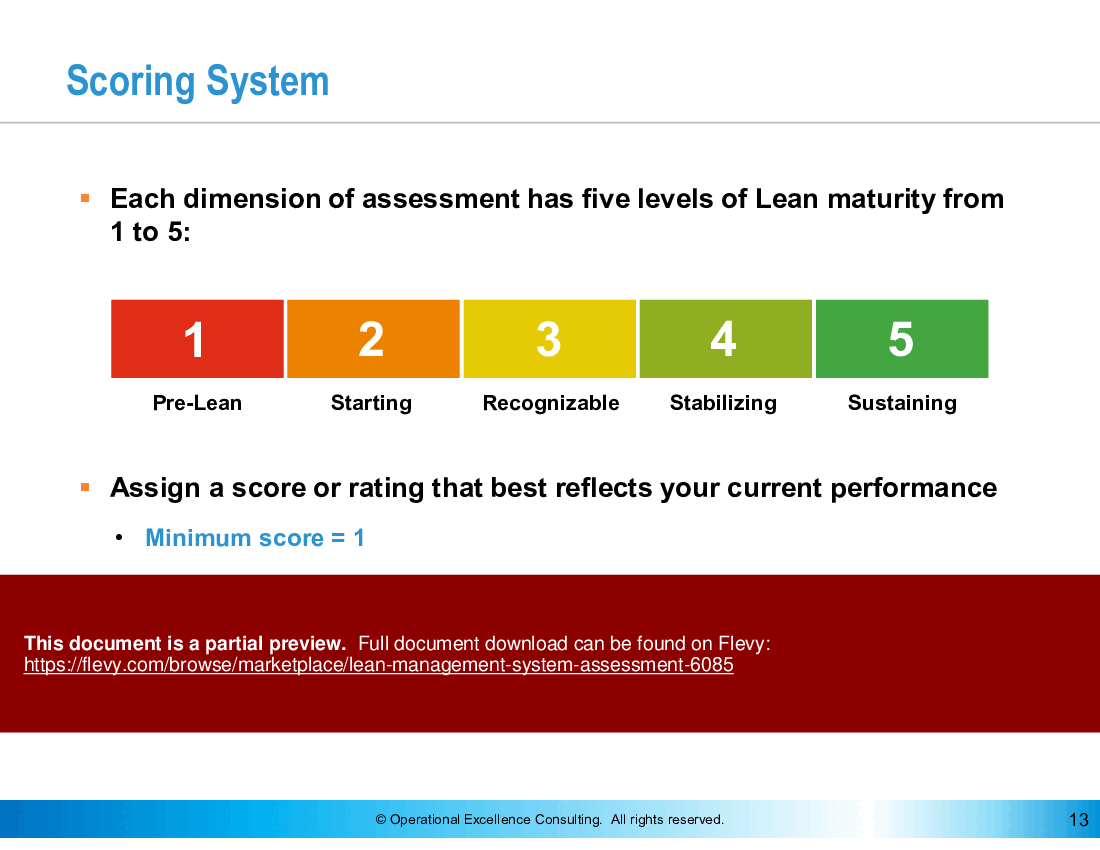
•  5-point Rating Scale
•  Example – Score Profile Data (Table)
•  Example – Score Profile Data (Radar Chart)

3. Assessment Criteria
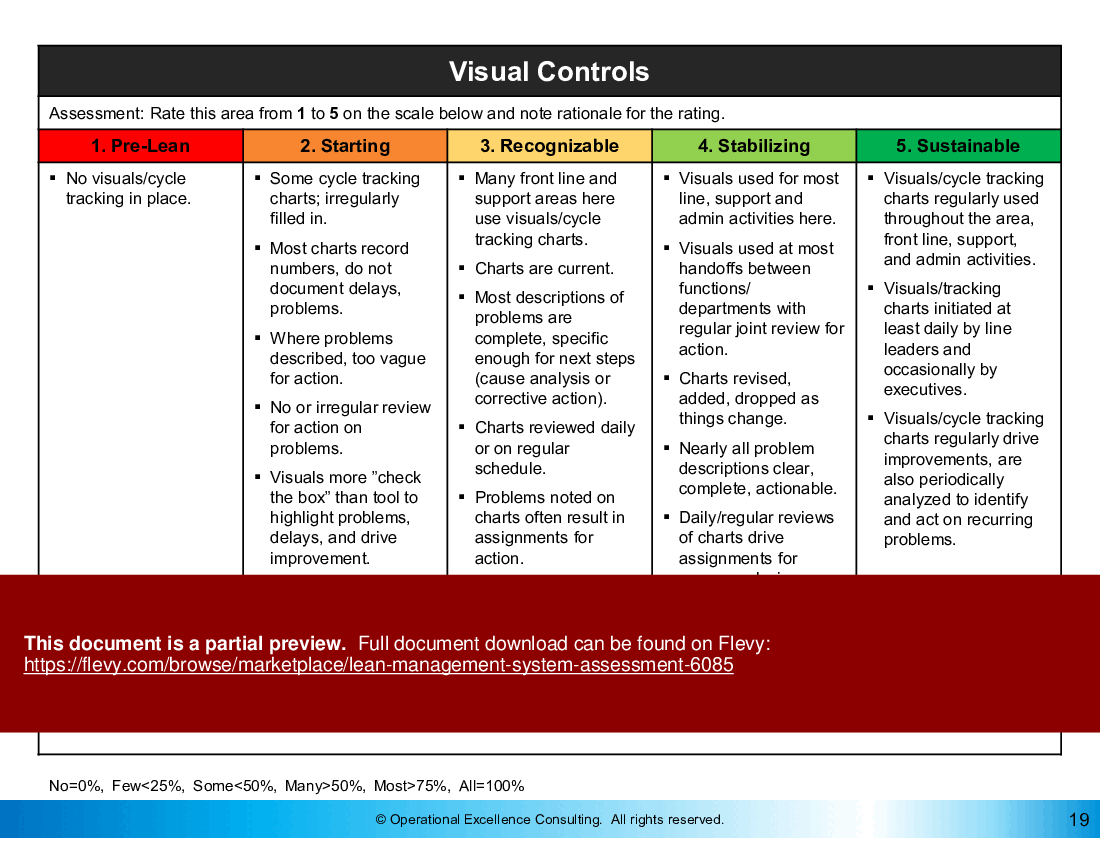
•  Visual Controls
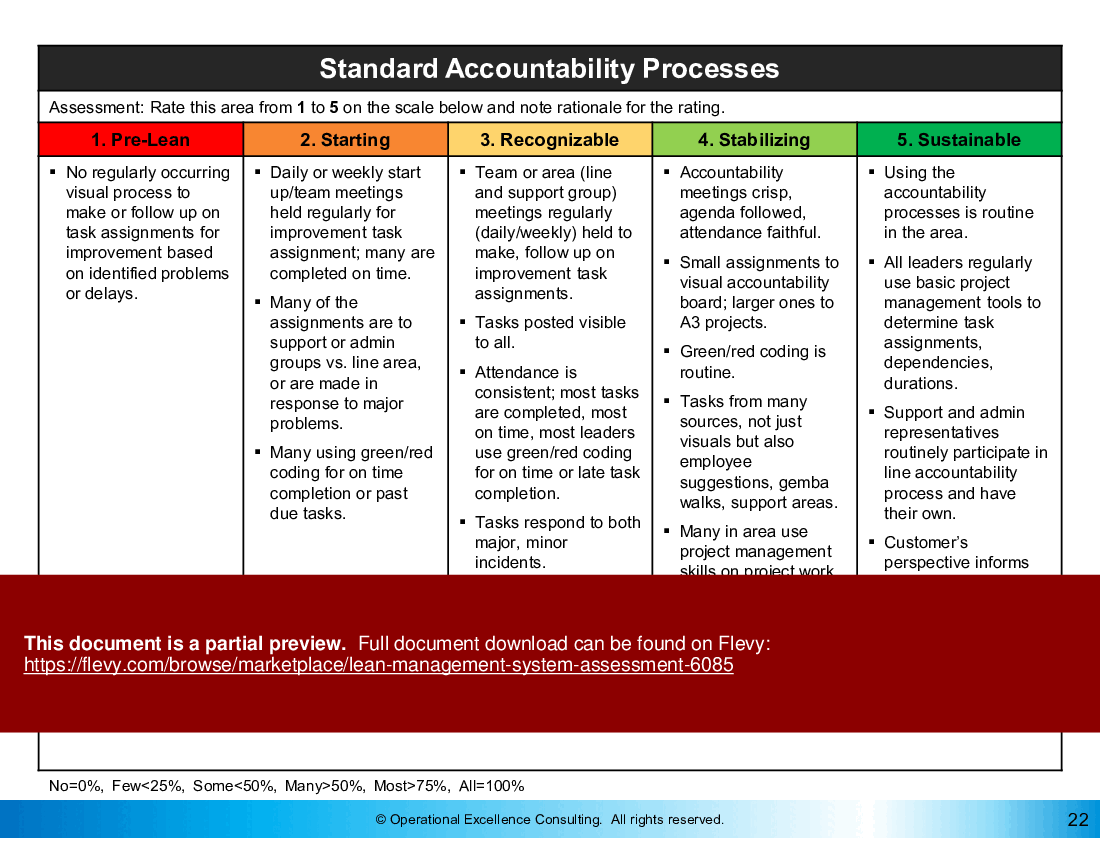
•  Standard Accountability Processes
•  Leader Standard Work
•  Value Stream Mapping
•  Process Definition
•  Process Discipline
•  Process Improvement
•  Root Cause Problem Solving

4. Assessment Guidelines
•  Conducting an Assessment
•  When Should You Assess?
•  Who Should Assess?
•  Interpreting the Result

Appendix
•  Lean Management Assessment Worksheets

The Lean Management System Assessment provides a robust framework for evaluating your organization's Lean maturity across eight critical dimensions. Each dimension is assessed using a clear 5-point scoring system, making it easy to identify areas for improvement and track progress over time.

Got a question about the product? Email us at support@flevy.com or ask the author directly by using the "Ask the Author a Question" form. If you cannot view the preview above this document description, go here to view the large preview instead.

MARCUS OVERVIEW

This synopsis was written by Marcus [?] based on the analysis of the full 79-slide presentation.


Executive Summary
The Lean Management System Assessment (LMA) is a vital tool designed to evaluate the effectiveness of Lean management implementations within an organization. Developed using the PDCA (Plan, Do, Check, Act) framework, this assessment focuses on eight critical dimensions that encompass both process and behavior. By utilizing this assessment, organizations can identify their current Lean maturity level across 5 defined stages, enabling them to pinpoint areas for improvement and drive towards operational excellence.

Who This Is For and When to Use
•  Lean practitioners and consultants seeking to evaluate Lean implementation effectiveness
•  Operational leaders aiming to enhance process efficiency and team engagement
•  Quality assurance teams focused on continuous improvement initiatives
•  Change management professionals facilitating Lean transformations

Best-fit moments to use this deck:
•  During initial Lean implementation to establish a baseline for future assessments
•  At regular intervals (e.g., quarterly) to track progress and identify areas needing focus
•  When preparing for Lean training sessions or workshops to align team objectives

Learning Objectives
•  Define the eight dimensions of Lean management assessment and their significance
•  Assess current Lean maturity levels using the provided scoring system
•  Identify gaps in Lean implementation and prioritize improvement actions
•  Develop a structured approach to continuous improvement based on assessment findings
•  Engage teams in discussions around Lean principles and practices to foster a culture of excellence

Table of Contents
•  Overview of Lean Management Assessment (page 5)
•  Scoring System (page 12)
•  Assessment Criteria (page 17)
•  Assessment Guidelines (page 42)

Primary Topics Covered
•  Overview of Lean Management Assessment - This section introduces the LMA tool and its purpose in evaluating Lean practices within an organization.
•  Scoring System - Details the 5-point scale used to rate each dimension of Lean maturity, providing clarity on how to interpret scores.
•  Assessment Criteria - Outlines the eight dimensions of assessment, including Visual Controls, Standard Accountability Processes, and more, along with diagnostic questions for evaluation.
•  Assessment Guidelines - Offers practical advice on conducting assessments, including who should assess and when assessments should occur.

Deliverables, Templates, and Tools
•  Lean Management Assessment worksheet for recording scores and observations
•  Scoring profile templates for visual representation of assessment results
•  Diagnostic question guides for each assessment dimension
•  Continuous improvement action plan templates based on assessment findings

Slide Highlights
•  Visual representation of the Lean Management Assessment framework showcasing the eight dimensions and 5 maturity levels
•  Example radar chart illustrating assessment results for easy interpretation
•  Detailed scoring system slide explaining the maximum scores for each dimension
•  Assessment criteria slides with diagnostic questions to guide evaluators

Potential Workshop Agenda
Introduction to Lean Management Assessment (30 minutes)
•  Overview of the assessment tool and its benefits
•  Discussion on the eight dimensions of assessment

Conducting the Assessment (60 minutes)
•  Breakout sessions for teams to evaluate their current Lean practices
•  Group discussions on findings and areas for improvement

Action Planning (30 minutes)
•  Develop a continuous improvement action plan based on assessment results
•  Assign responsibilities and timelines for implementation

Customization Guidance
•  Tailor the assessment criteria to reflect specific organizational processes and terminology
•  Adjust scoring interpretations based on industry standards or organizational benchmarks
•  Incorporate additional diagnostic questions relevant to unique operational contexts

Secondary Topics Covered
•  The importance of visual controls in Lean management
•  Best practices for standard accountability processes
•  Techniques for effective root cause problem solving
•  Strategies for engaging all levels of staff in process improvement initiatives

Topic FAQ

What are the core components of a Lean management assessment framework?

A Lean assessment framework evaluates both process and behavior using an iterative cycle such as PDCA, defines assessment dimensions to inspect (e.g., Visual Controls, Standard Accountability Processes), and rates performance on a maturity scale to guide improvements, typically using eight dimensions and a five-level maturity scale.

How do organizations score Lean maturity across functions?

Organizations rate each assessment dimension on a 5-point scale (1 = minimal implementation to 5 = mature effectiveness), record observations in an assessment worksheet, and visualize results via a scoring profile or radar chart to identify gaps and priorities using the 5-point scoring system.

Which specific Lean topics are usually assessed in a management assessment?

Common assessment topics include Visual Controls, Standard Accountability Processes, Leader Standard Work, Value Stream Mapping, Process Definition, Process Discipline, Process Improvement, and Root Cause Problem Solving, covering eight named dimensions in total.

How often should a Lean management assessment be conducted for effective tracking?

The recommended cadence in Lean practice is periodic assessments, with a common recommendation to conduct the review quarterly to monitor progress, compare to prior status, and inform continuous improvement activities on a quarterly basis.

What features should I look for when purchasing a Lean assessment toolkit?

Look for PDCA alignment, a clear scoring system, diagnostic question guides, assessment worksheets, score visualization (radar chart), and customization guidance so results can be adapted to organizational terminology and benchmarks; for example, assets like worksheets, scoring templates, and a radar chart.

How much time should I allocate to run a workshop using a Lean assessment tool?

A typical facilitated workshop structure in the materials allocates roughly 30 minutes for introduction, 60 minutes for conducting the assessment in breakout groups and discussions, and 30 minutes for action planning, totaling about 120 minutes.

I’m preparing Lean training—how can an assessment support that effort?

An assessment establishes a baseline, clarifies target standards and learning objectives, surfaces capability gaps via diagnostic questions, and produces action-plan templates to prioritize training topics and follow-up activities using the provided worksheets and action plan templates.

How do consultants use a Lean assessment before recommending improvement initiatives?

Consultants use the assessment as a diagnostic snapshot to identify gaps across the eight dimensions, align leadership on priorities, and design targeted interventions; Flevy’s Lean Management System Assessment emphasizes PDCA-based evaluation and produces worksheets and a radar chart to support that diagnostic process.

Document FAQ
These are questions addressed within this presentation.

What is the purpose of the Lean Management System Assessment?
The assessment evaluates the effectiveness of Lean management practices and identifies areas for improvement within an organization.

How often should the assessment be conducted?
It is recommended to conduct the assessment quarterly to monitor progress and ensure continuous improvement.

Who should participate in the assessment?
All levels of staff, including operational leaders, team members, and quality assurance professionals, should be involved to gain comprehensive insights.

What are the eight dimensions of assessment?
The dimensions include Visual Controls, Standard Accountability Processes, Lean Standard Work, Value Stream Mapping, Process Definition, Process Discipline, Process Improvement, and Root Cause Problem Solving.

How is the scoring system structured?
Each dimension is rated on a scale of 1 to 5, with 1 indicating minimal implementation and 5 representing maximum effectiveness.

What should be done with the assessment results?
Results should be analyzed to identify gaps and inform action plans for continuous improvement initiatives.

Can the assessment be customized?
Yes, organizations can tailor the assessment criteria and diagnostic questions to better fit their specific operational contexts.

What tools are provided with the assessment?
The assessment includes worksheets, scoring templates, and diagnostic question guides to facilitate the evaluation process.

Glossary
•  Lean Management - A systematic approach to identifying and eliminating waste through continuous improvement.
•  PDCA - A four-step problem-solving process used in Lean management: Plan, Do, Check, Act.
•  Visual Controls - Tools that provide real-time information about performance and process status.
•  Value Stream Mapping - A visual representation of the flow of materials and information through a process.
•  Root Cause Problem Solving - A method focused on identifying the underlying causes of issues to prevent recurrence.
•  Continuous Improvement - Ongoing efforts to improve products, services, or processes.
•  Standard Work - Documented procedures that define the best practices for performing tasks.
•  Kaizen - A Japanese term meaning "change for better," referring to activities that continuously improve operations.
•  Scoring Profile - A visual representation of assessment results across various dimensions.
•  Assessment Criteria - Standards used to evaluate the effectiveness of Lean practices.
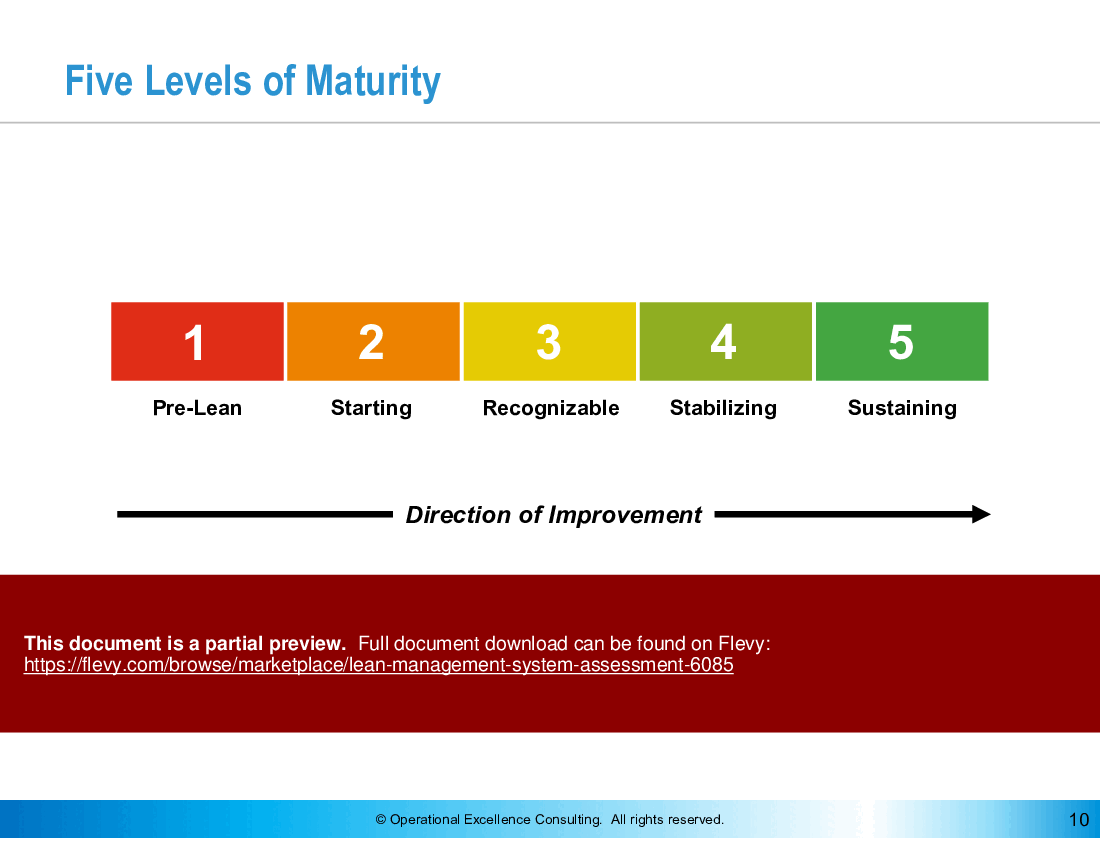
•  Maturity Levels - Stages of development in Lean implementation, ranging from Pre-Lean to Sustaining.
•  Accountability Processes - Systems in place to ensure tasks are assigned and followed up on effectively.

Source: Best Practices in Lean PowerPoint Slides: Lean Management System Assessment PowerPoint (PPTX) Presentation Slide Deck, Operational Excellence Consulting


$79.00
Developed by a seasoned Certified Lean Six Sigma Black Belt with a proven track record at Microsoft, IBM and Panasonic, this comprehensive assessment guide is your key to achieving Operational Excellence through Lean Methodologies.
Add to Cart
  

ABOUT THE AUTHOR

Author image
Additional documents from author: 257
Terms of usage (for all documents from this author)

Operational Excellence Consulting, founded in 2009 by Allan Ung, draws from extensive experience at Microsoft, IBM, and Underwriters Laboratories (UL). We specialize in strategy deployment, customer experience design, and operational excellence, applying Design Thinking, Lean, and Systems Thinking to maximize customer value and minimize waste.

Our ... [read more]

Ask the Author a Question

You must be logged in to contact the author.

Click here to log in Click here register

Did you know?
The average daily rate of a McKinsey consultant is $6,625 (not including expenses). The average price of a Flevy document is $65.



Trusted by over 10,000+ Client Organizations
Since 2012, we have provided business templates to over 10,000 businesses and organizations of all sizes, from startups and small businesses to the Fortune 100, in over 130 countries.
AT&T GE Cisco Intel IBM Coke Dell Toyota HP Nike Samsung Microsoft Astrazeneca JP Morgan KPMG Walgreens Walmart 3M Kaiser Oracle SAP Google E&Y Volvo Bosch Merck Fedex Shell Amgen Eli Lilly Roche AIG Abbott Amazon PwC T-Mobile Broadcom Bayer Pearson Titleist ConEd Pfizer NTT Data Schwab


Read Customer Testimonials

 
"As a small business owner, the resource material available from FlevyPro has proven to be invaluable. The ability to search for material on demand based our project events and client requirements was great for me and proved very beneficial to my clients. Importantly, being able to easily edit and tailor "

– Michael Duff, Managing Director at Change Strategy (UK)
 
"As an Independent Management Consultant, I find Flevy to add great value as a source of best practices, templates and information on new trends. Flevy has matured and the quality and quantity of the library is excellent. Lastly the price charged is reasonable, creating a win-win value for "

– Jim Schoen, Principal at FRC Group
 
"If you are looking for great resources to save time with your business presentations, Flevy is truly a value-added resource. Flevy has done all the work for you and we will continue to utilize Flevy as a source to extract up-to-date information and data for our virtual and onsite presentations!"

– Debbi Saffo, President at The NiKhar Group
 
"As a consulting firm, we had been creating subject matter training materials for our people and found the excellent materials on Flevy, which saved us 100's of hours of re-creating what already exists on the Flevy materials we purchased."

– Michael Evans, Managing Director at Newport LLC
 
"As a consultant requiring up to date and professional material that will be of value and use to my clients, I find Flevy a very reliable resource.

The variety and quality of material available through Flevy offers a very useful and commanding source for information. Using Flevy saves me time, enhances my expertise and ends up being a good decision."

– Dennis Gershowitz, Principal at DG Associates
 
"Flevy is our 'go to' resource for management material, at an affordable cost. The Flevy library is comprehensive and the content deep, and typically provides a great foundation for us to further develop and tailor our own service offer."

– Chris McCann, Founder at Resilient.World
 
"Flevy.com has proven to be an invaluable resource library to our Independent Management Consultancy, supporting and enabling us to better serve our enterprise clients.

The value derived from our [FlevyPro] subscription in terms of the business it has helped to gain far exceeds the investment made, making a subscription a no-brainer for any growing consultancy – or in-house strategy team."

– Dean Carlton, Chief Transformation Officer, Global Village Transformations Pty Ltd.
 
"[Flevy] produces some great work that has been/continues to be of immense help not only to myself, but as I seek to provide professional services to my clients, it gives me a large "tool box" of resources that are critical to provide them with the quality of service and outcomes they are expecting."

– Royston Knowles, Executive with 50+ Years of Board Level Experience


Customers Also Bought These Documents


Customers Also Like These Documents

Explore Templates on Related Management Topics


Your Recently Viewed Documents
Receive our FREE presentation on Operational Excellence

This 50-slide presentation provides a high-level introduction to the 4 Building Blocks of Operational Excellence. Achieving OpEx requires the implementation of a Business Execution System that integrates these 4 building blocks.