
ISO/IEC 20000-1:2018 is an international standard for Service Management Systems (SMS). This standard provides guidance on planning, designing, transitioning, delivering and improving services to meet service requirements and deliver value. Implementing the ISO/IEC 20000 framework can lead to lower operating costs, increased customer satisfaction and a more standardized way of providing services.
ISO/IEC 20000-1:2018 certification demonstrates the quality and reliability of IT services to stakeholders, customers and employees. This ISO/IEC 20000-1 Awareness PPT presentation can be used to create awareness of the standard among your employees, new hires and potential auditees. Additionally, the presentation can be used to supplement your materials for the training of SMS and ITIL professionals and internal auditors.
By the end of this training, attendees will have a solid understanding of the ISO/IEC 20000-1:2018 standard, its requirements, benefits and certification process. They will also be equipped with valuable knowledge on how to prepare for and handle the audit session to ensure a successful audit outcome.
LEARNING OBJECTIVES
1. Gain background knowledge of ISO/IEC 20000 and understand the benefits of implementing the standard.
2. Acquire an overview of the structure of ISO/IEC 20000-1:2018 and the Service Management System requirements.
3. Understand the certification process for ISO/IEC 20000-1:2018 and the importance of maintaining certification.
4. Learn useful tips on how to handle the audit session.
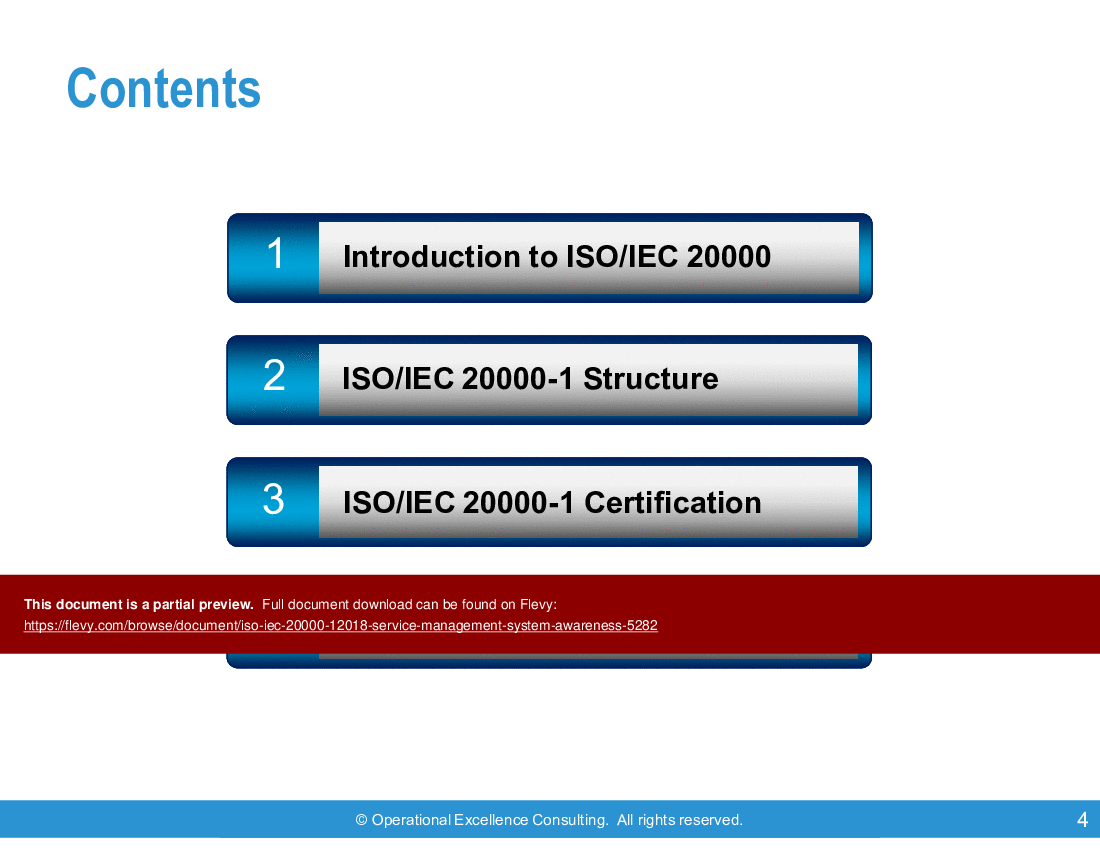
CONTENTS
1. Overview of ISO/IEC 20000-1:2018
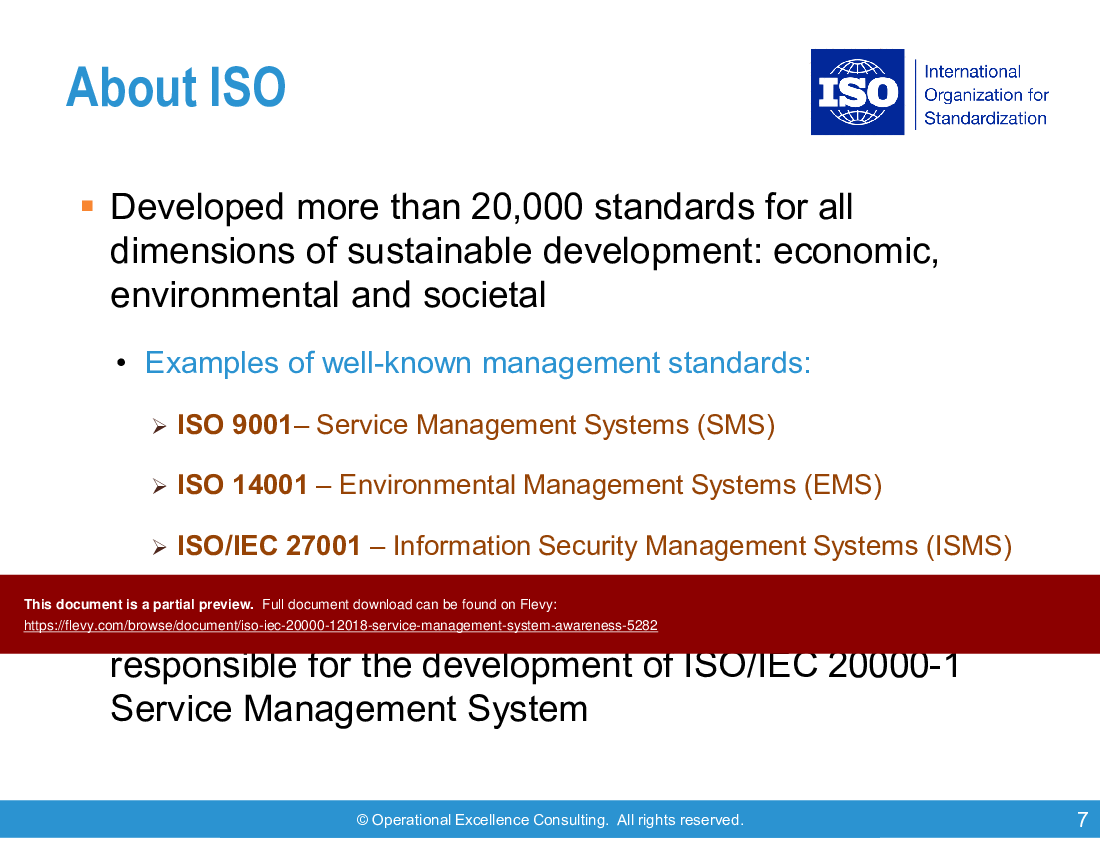
• About ISO
• Introduction to ISO/IEC 20000
• Changing Trends in Service Management
• What is ISO/IEC 20000-1?
• What is "Service Management"?
• Purpose of ISO/IEC 20000-1
• How Does ISO/IEC 20000-1 Work?
• Myths of ISO/IEC 20000-1
• Benefits of Implementing Service Management
• Advantages of Certification
• Development of ISO/IEC 20000-1
• Main Differences Between 2018 & 2011 Versions
• Comparison of ITIL vs. ISO/IEC 20000
• Benefits of the New ISO/IEC 20000-1:2018
2. ISO/IEC 20000-1:2018 Structure
• Annex L
• Framework of Annex L
• High-Level Structure
• The ISO/IEC 20000-1:2018 Structure is Aligned to the Common Structure for MSS
• HLS: The Same Core Elements
• The Plan-Do-Check-Act (PDCA) Process Model
• ISO/IEC 20000-1 Approach is Based on the Plan-Do-Check-Act (PDCA) Model
• PDCA and ISO/IEC 20000-1:2018 Clause Structure
• ISO/IEC 20000-1:2018 Key Clause Structure (4-10)
• Context of the Organization
• Leadership
• Planning
• Support
• Operation
• Performance Evaluation
• Improvement
• Continuous Improvement of the SMS
3. ISO/IEC 20000-1:2018 Certification
• Becoming ISO/IEC 20000-1:2018 Certified
• ISO/IEC 20000-1:2018 Certification Transition Timeline
• ISO/IEC 20000-1:2018 Certification Process
• Audit Findings
• Keys to Success
• Your Role in ISO/IEC 20000-1 Implementation
4. Handling the Audit Session
• Rights of Auditee
• Rights of Auditor
• How to Handle the Audit Session?
• Auditee's Conduct
• Do's and Don'ts
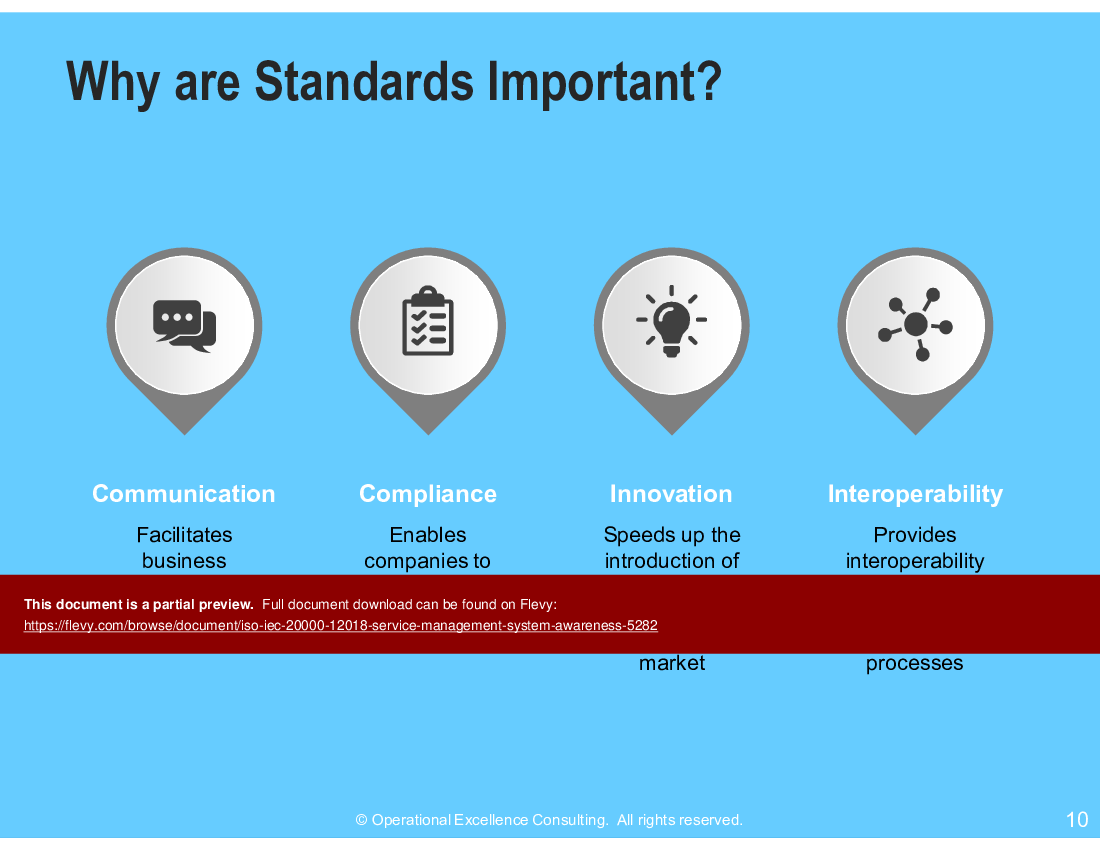
This presentation also covers the importance of standards in facilitating communication, compliance, innovation, and interoperability. It provides insights into the rights and conduct of both auditors and auditees during audit sessions.
Got a question about the product? Email us at support@flevy.com or ask the author directly by using the "Ask the Author a Question" form. If you cannot view the preview above this document description, go here to view the large preview instead.
Executive Summary
The ISO/IEC 20000-1:2018 Service Management System Awareness presentation is designed to enhance understanding of the ISO/IEC 20000-1 standard, which outlines the requirements for establishing, implementing, maintaining, and continually improving a Service Management System (SMS). Developed by Operational Excellence Consulting, this training resource equips organizations with the knowledge needed to improve service quality, meet customer expectations, and navigate the certification process. Participants will gain insights into the structure of the standard, the certification timeline, and effective audit handling techniques.
Who This Is For and When to Use
• Service managers and team leaders responsible for implementing service management practices
• Quality assurance professionals overseeing compliance with international standards
• IT service providers aiming for ISO/IEC 20000-1 certification
• Organizational leaders seeking to enhance service delivery and customer satisfaction
Best-fit moments to use this deck:
• During training sessions for staff involved in service management
• As part of preparation for ISO/IEC 20000-1 certification audits
• For workshops focused on improving service management practices within the organization
Learning Objectives
• Provide background knowledge of ISO/IEC 20000-1
• Gain an overview of the ISO/IEC 20000-1 structure
• Understand the ISO/IEC 20000-1 certification process
• Learn useful tips on handling an audit session
• Identify the benefits of implementing a Service Management System
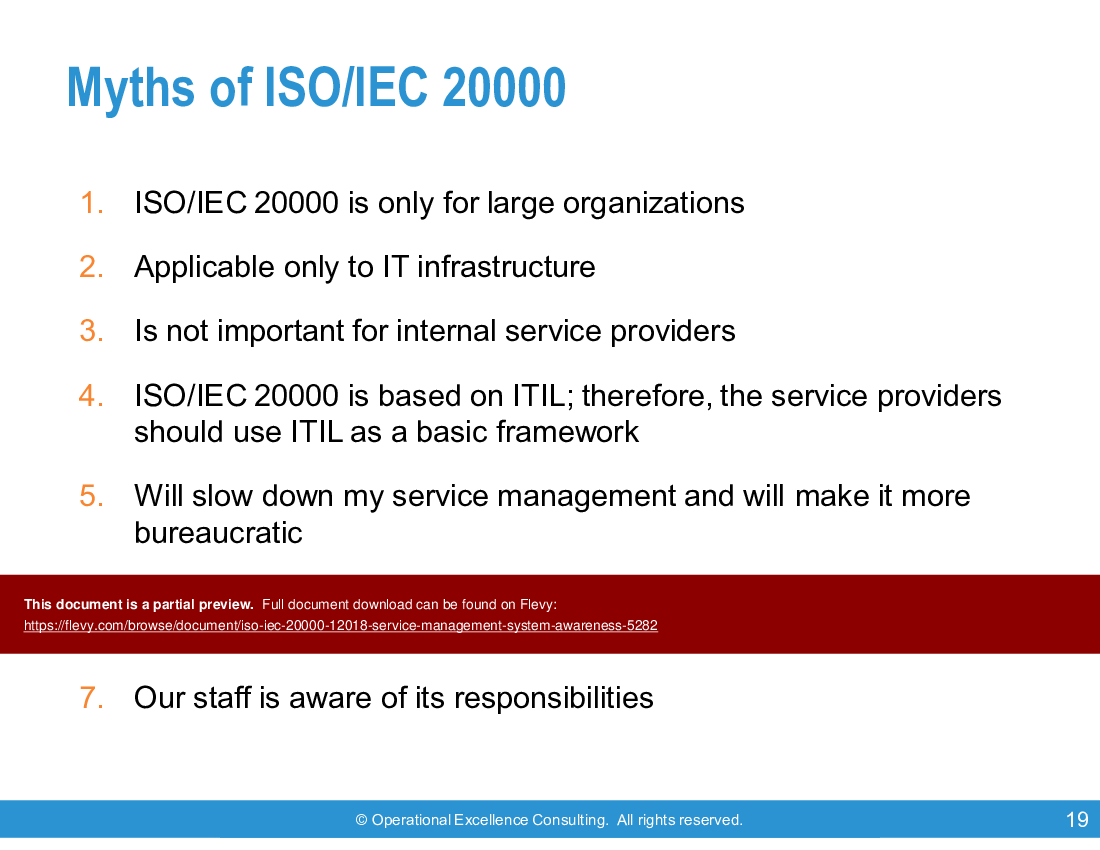
• Clarify common myths surrounding ISO/IEC 20000-1
Table of Contents
• Introduction to ISO/IEC 20000 (page 5)
• ISO/IEC 20000-1 Structure (page 28)
• ISO/IEC 20000-1 Certification (page 41)
• Handling an Audit Session (page 52)
Primary Topics Covered
• ISO/IEC 20000-1 Overview - This section introduces the standard and its significance in service management, emphasizing its applicability across various organizations.
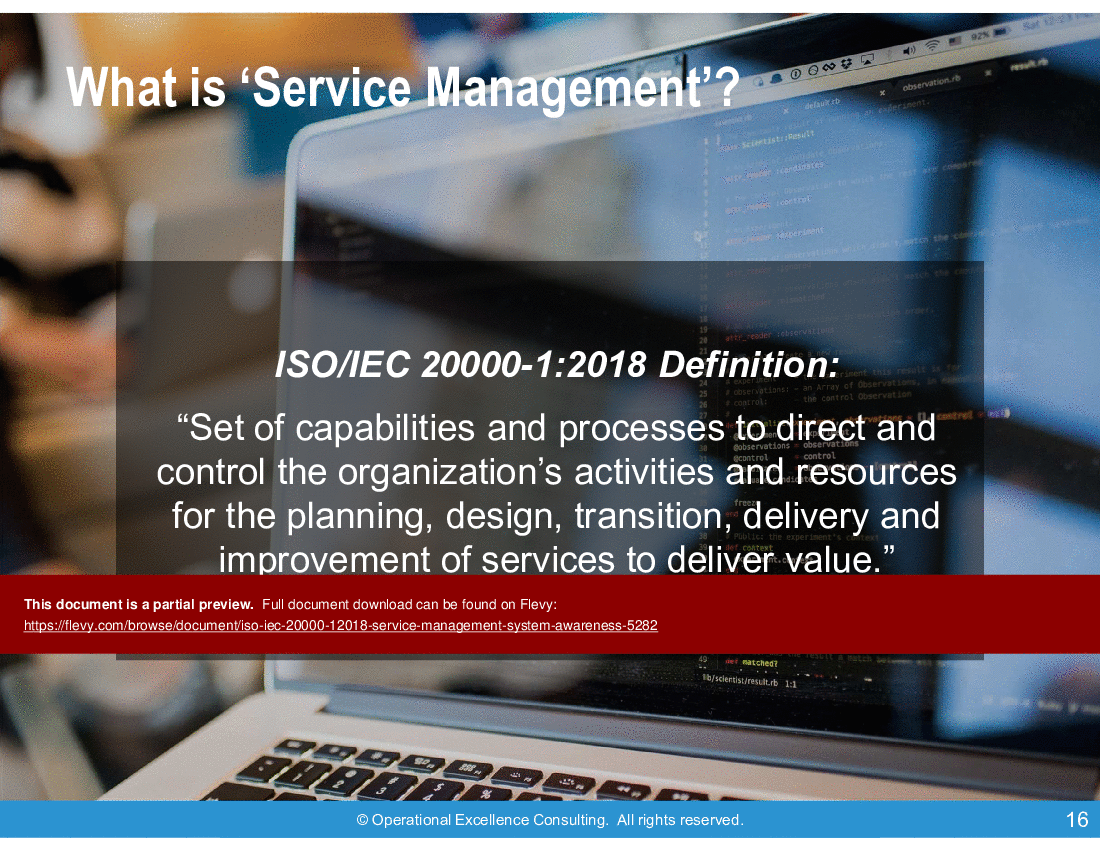
• Service Management Definition - Defines service management as a set of capabilities and processes for planning, designing, transitioning, delivering, and improving services.
• Certification Process - Outlines the steps involved in achieving ISO/IEC 20000-1 certification, including internal audits and the role of certification bodies.
• Audit Handling - Provides strategies for effectively managing audit sessions, including rights of auditees and auditors.
• Benefits of Certification - Discusses the advantages of implementing ISO/IEC 20000-1, such as improved service performance and customer satisfaction.
• Common Myths - Addresses misconceptions surrounding ISO/IEC 20000-1 to clarify its relevance and importance.
Deliverables, Templates, and Tools
• ISO/IEC 20000-1 implementation plan template
• Internal audit checklist for ISO/IEC 20000-1 compliance
• Audit session preparation guide
• Training materials for staff awareness on ISO/IEC 20000-1
• Certification process roadmap
• Service Management System documentation template
Slide Highlights
• Overview of the ISO/IEC 20000-1 standard and its relevance to service management
• Detailed structure of ISO/IEC 20000-1, including the High-Level Structure (HLS)
• Certification transition timeline and key actions for compliance
• Tips for successful audit sessions, including auditee rights and auditor expectations
• Myths vs. facts regarding ISO/IEC 20000-1
Potential Workshop Agenda
ISO/IEC 20000-1 Overview Session (60 minutes)
• Discuss the importance of ISO/IEC 20000-1 in service management
• Review the structure and requirements of the standard
• Identify key benefits of certification
Audit Preparation Workshop (90 minutes)
• Outline the certification process and timeline
• Role-play audit scenarios to practice handling questions
• Review rights and responsibilities of auditees and auditors
Customization Guidance
• Tailor the implementation plan template to fit specific organizational needs and contexts
• Adjust training materials to reflect internal processes and terminology
• Incorporate case studies relevant to the organization’s industry for practical application
Secondary Topics Covered
• The role of ISO in developing international standards
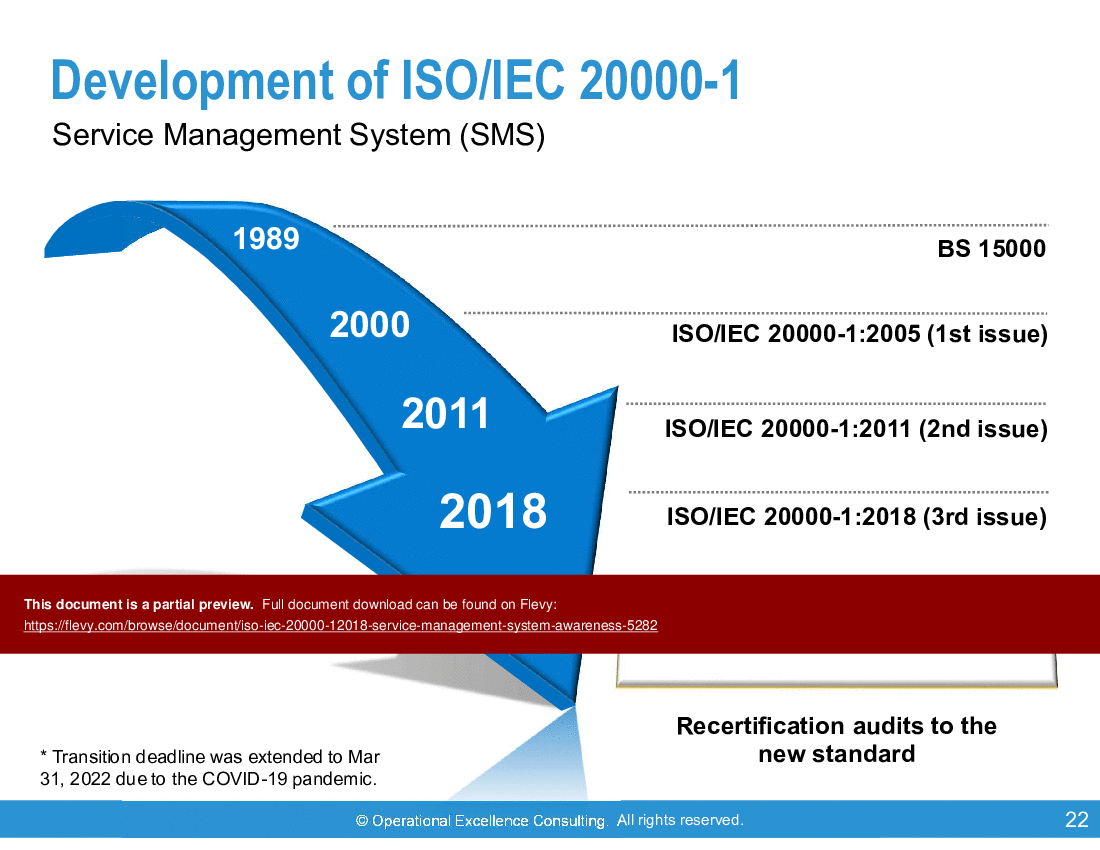
• Differences between ISO/IEC 20000-1:2011 and ISO/IEC 20000-1:2018
• The significance of continual improvement in service management
• The impact of service management on customer satisfaction
Topic FAQ
Document FAQ
These are questions addressed within this presentation.
What is ISO/IEC 20000-1?
ISO/IEC 20000-1 is the international standard for Service Management, specifying requirements for establishing, implementing, maintaining, and continually improving a Service Management System.
Who should pursue ISO/IEC 20000-1 certification?
Organizations of any size and industry that aim to enhance their service management practices and improve customer satisfaction can pursue certification.
What are the benefits of implementing ISO/IEC 20000-1?
Implementing ISO/IEC 20000-1 can lead to lower operating costs, increased customer satisfaction, and a more standardized approach to service delivery.
How does the certification process work?
The certification process involves implementing an SMS, conducting internal audits, selecting a certification body, and undergoing compliance audits.
What should I do if I encounter non-conformities during an audit?
Address non-conformities promptly by providing evidence and explanations, and take note of areas for improvement highlighted by the auditor.

What are common myths about ISO/IEC 20000-1?
Common myths include the belief that it is only for large organizations or that it is solely applicable to IT infrastructure.

How can I prepare for an audit session?
Preparation involves understanding your organization’s SMS, being familiar with the audit process, and ensuring all documentation is readily available.
What is the PDCA cycle in the context of ISO/IEC 20000-1?
The PDCA (Plan-Do-Check-Act) cycle is a continuous improvement model used to manage and enhance the effectiveness of the Service Management System.
Glossary
• ISO - International Organization for Standardization, responsible for developing international standards.
• SMS - Service Management System, a framework for managing service delivery.
• Certification - The process of verifying that an organization meets the requirements of a standard.
• Audit - A systematic examination of a management system to determine conformity with specified requirements.
• Non-conformity - A deviation from a requirement or standard.
• PDCA Cycle - A four-step model for continuous improvement in processes and services.
• Annex L - A guideline for developing ISO standards, ensuring a harmonized structure.
• Service Management - The activities and processes for designing, delivering, and improving services.
• Stakeholders - Individuals or groups with an interest in the performance and outcomes of a service.
• Continual Improvement - Ongoing efforts to enhance services and processes.
• Internal Audit - An evaluation conducted by an organization to assess compliance with its own policies and standards.
• External Supplier - A third-party organization that provides services or products to another organization.
Source: Best Practices in ISO 20K, SLM PowerPoint Slides: ISO/IEC 20000-1:2018 (Service Management System) Awareness PowerPoint (PPTX) Presentation Slide Deck, Operational Excellence Consulting
|
Download our FREE Digital Transformation Templates
Download our free compilation of 50+ Digital Transformation slides and templates. DX concepts covered include Digital Leadership, Digital Maturity, Digital Value Chain, Customer Experience, Customer Journey, RPA, etc. |