
Incident Management Workflow - Process Guide   68-page Word document
$45.00

Incident Management Workflow - Process Guide (68-page Word document) Preview Image
Log in to unlock full preview.
Incident Management Workflow - Process Guide (68-page Word document) Preview Image
Arrow   Click main image to view in full screen.

Incident Management Workflow - Process Guide (Word DOCX)

Word (DOCX) + supplemental PDF 68 Pages

Top 1,000 Best Practice $45.00

Add to Cart


Immediate download
Fully editable Word
Free lifetime updates

BENEFITS OF THIS WORD DOCUMENT

  1. Easier implementation of Incident Management process in your Organisation
  2. ISO 20000 and ITSM best practice compliant
  3. Templates and Samples for key concepts included ( Prioritization, Major incident Procedure, Reporting...)

ITIL WORD DESCRIPTION

Editor Summary The Incident Management Workflow - Process Guide is a 68-page DOCX (with supplemental PDF) process guide authored by ITSM Consulting that defines an incident management framework aligned to ITSM best practice and ISO 20000. Read more

This document establishes an Incident Management (IM) process according to ITSM best practice and ISO 20000. (Word document including Visio diagram of the process)

This document introduces the Incident Management process Framework; the workflow, roles and responsibilities, RACI Matrix, KPIs, metrics, procedures, and policies needed to implement a high quality process.

Document contains suggested templates for:

•  Incident Life-cycle stages
•  Prioritization Matrix
•  Categorization
•  Incident Closure codes
•  Functional and Hierarchic Escalation Matrix
•  Major Incident Procedure
•  Reporting

The Incident Management Workflow – Process Guide is an essential resource for organizations aiming to streamline their incident resolution processes. It provides a comprehensive framework for managing incidents, ensuring that disruptions to services are minimized and resolved efficiently. The guide includes detailed procedures for incident identification, logging, categorization, prioritization, and escalation, making it a valuable tool for IT service management teams.

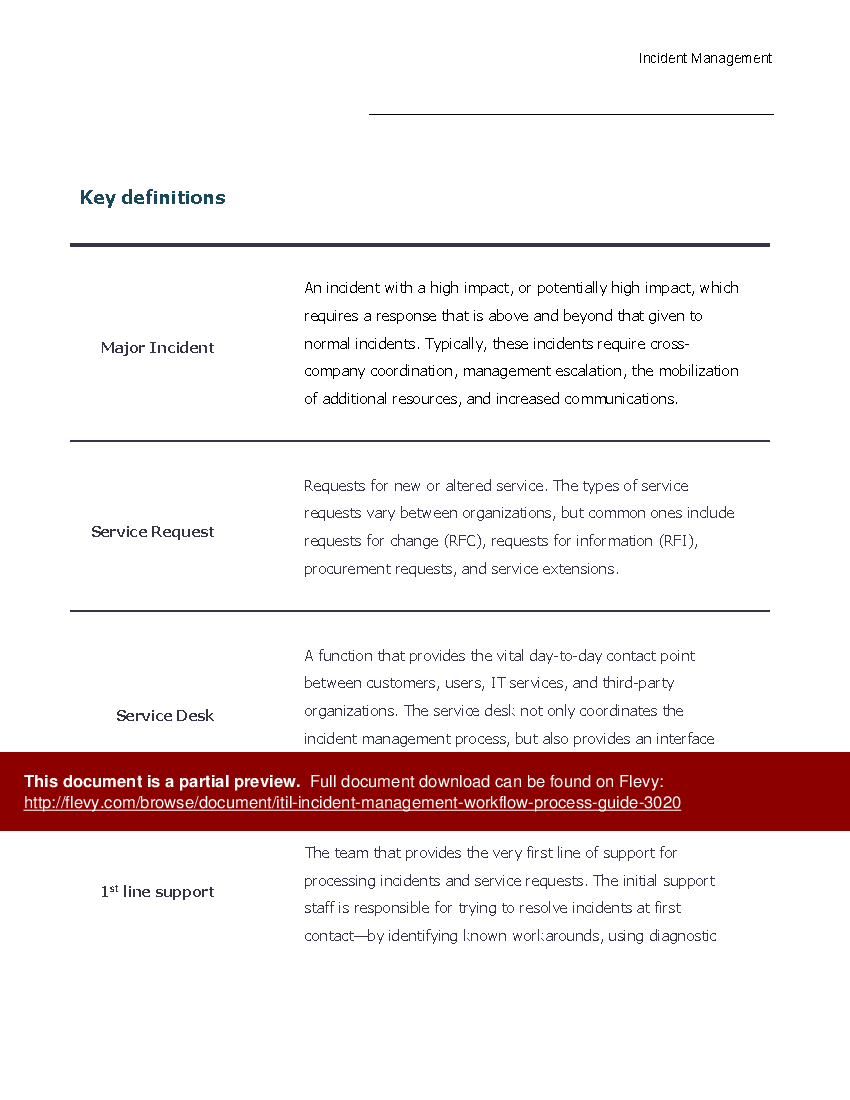
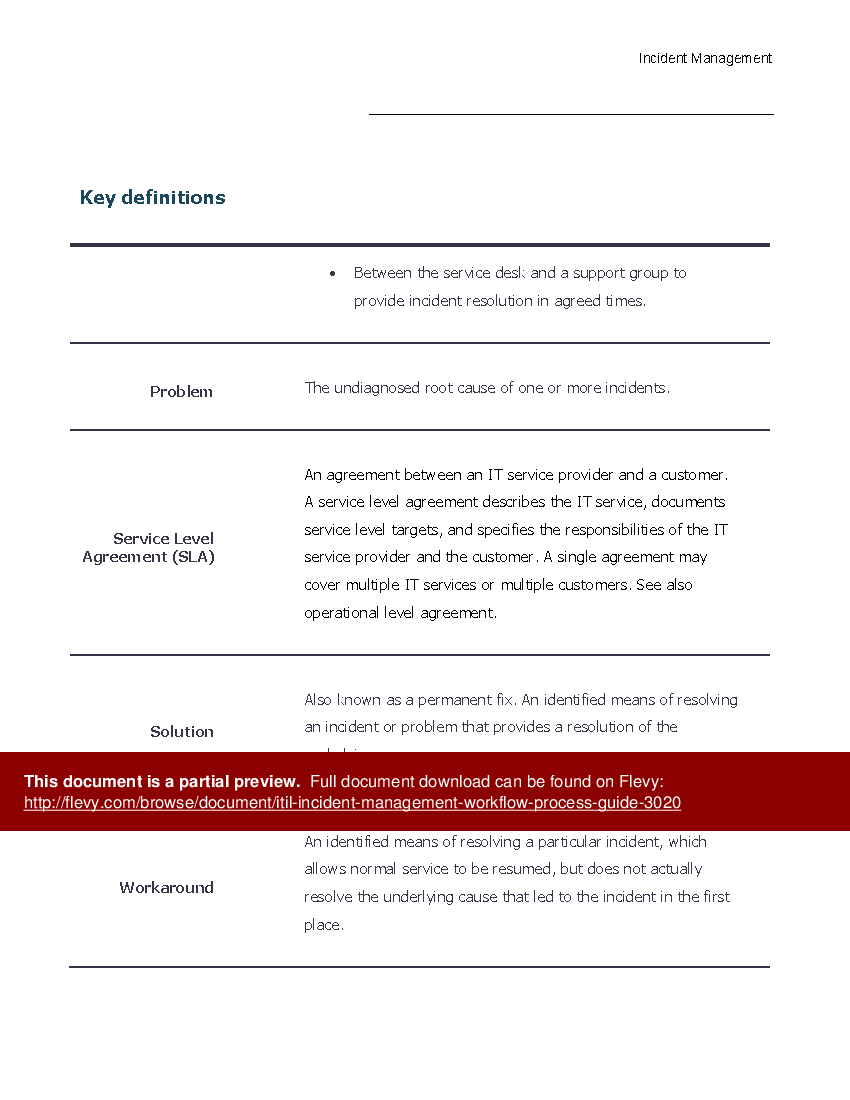
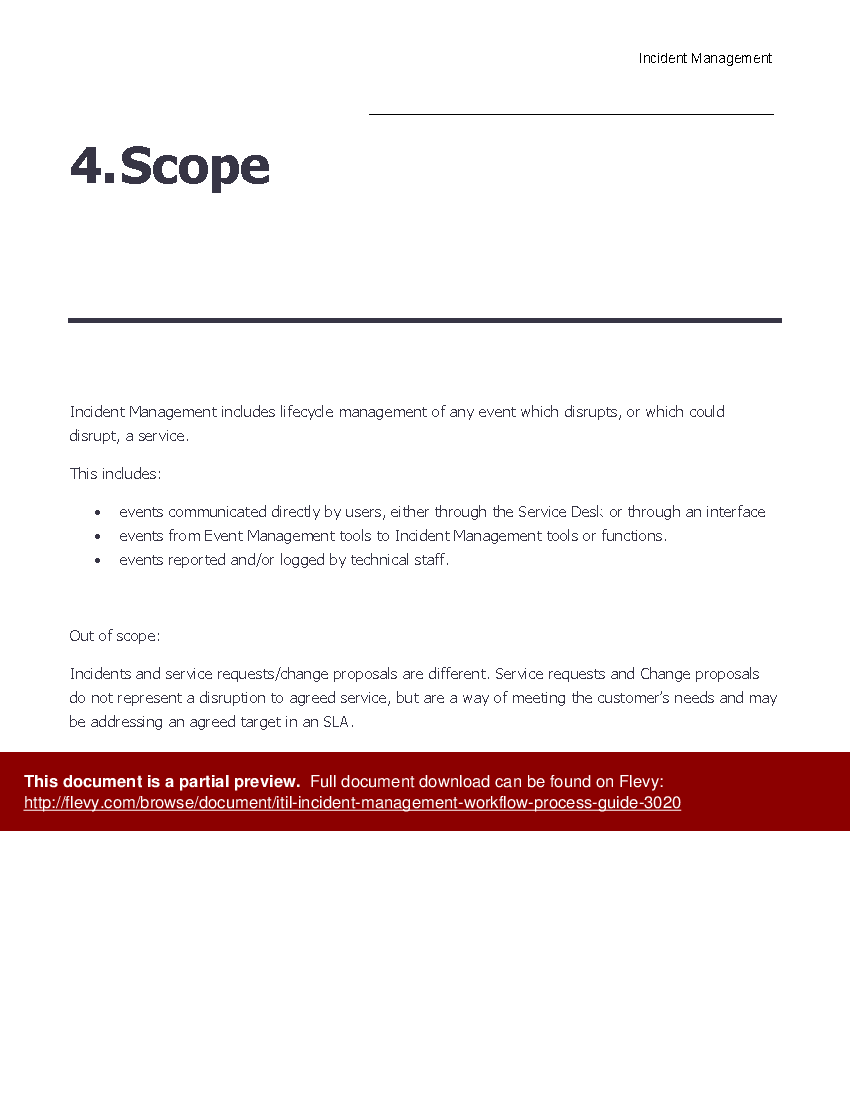
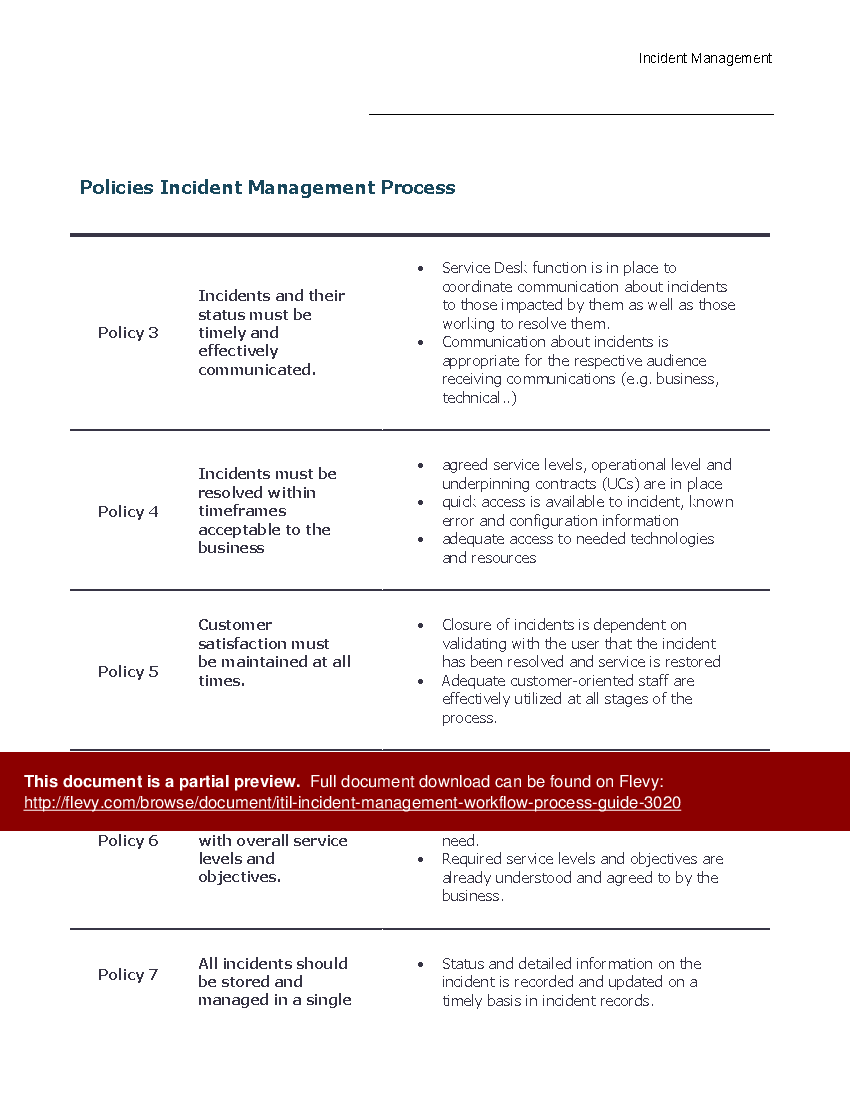
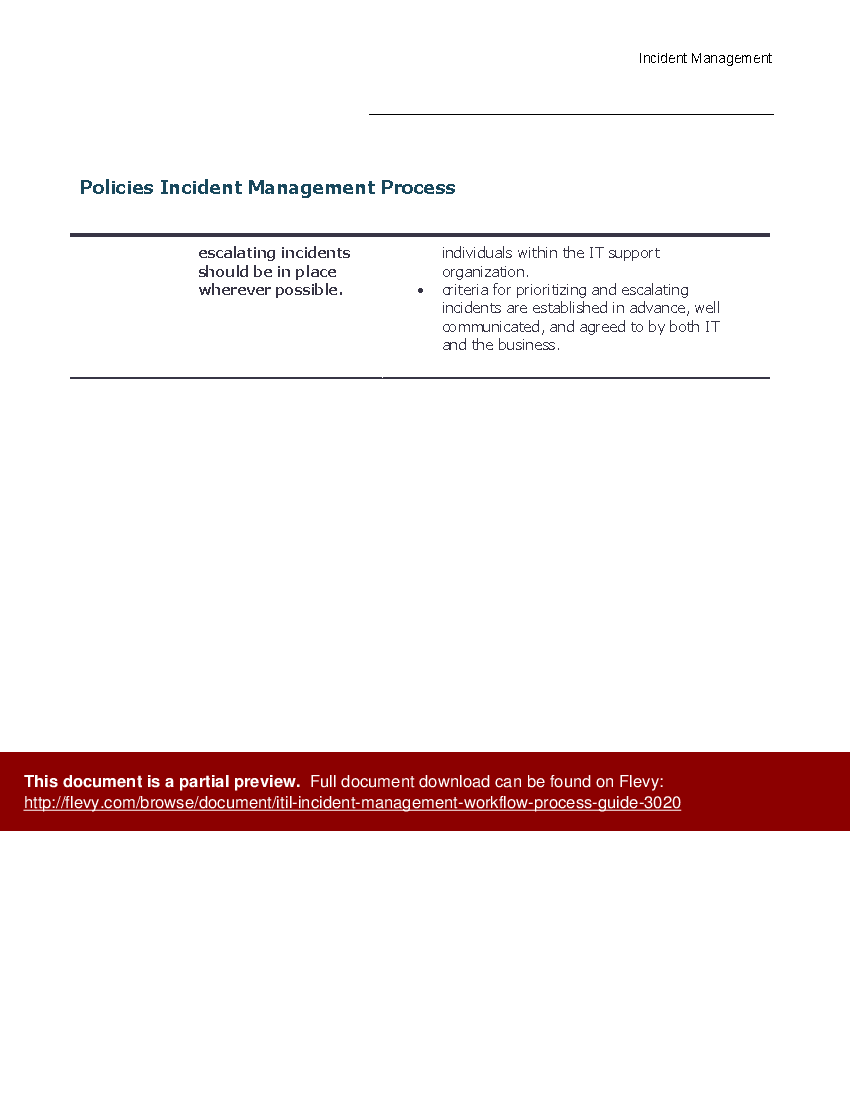
Key definitions are clearly outlined, including terms such as Major Incident, Service Request, and Service Desk, ensuring that all stakeholders have a common understanding of the terminology used. The Word document also covers the scope of incident management, detailing what is included and excluded, which helps in setting clear boundaries and expectations for the process. Policies related to incident management are specified, emphasizing the importance of timely communication, resolution within acceptable timeframes, and maintaining customer satisfaction.

The guide also includes a RACI matrix, which defines the roles and responsibilities of various stakeholders involved in the incident management process. This ensures accountability and clarity in task assignments. Additionally, the document provides sample KPIs for monitoring the effectiveness of the incident management process, which can be tailored to the specific needs of an organization. This level of detail makes the guide a practical and actionable resource for improving incident management practices.

Got a question about the product? Email us at support@flevy.com or ask the author directly by using the "Ask the Author a Question" form. If you cannot view the preview above this document description, go here to view the large preview instead.

MARCUS OVERVIEW

This synopsis was written by Marcus [?] based on the analysis of the full 68-slide presentation.


Executive Summary
The Incident Management Workflow Process Guide (DOCX) is an essential resource for organizations seeking to establish a robust incident management framework. This document outlines the comprehensive lifecycle of incident management, detailing workflows, roles, procedures, and policies necessary for effective service recovery. By adopting this guide, organizations can ensure timely resolution of incidents, minimize business disruption, and enhance user satisfaction. The guide serves as a living document, encouraging regular assessments for continuous improvement in incident management practices.

Who This Is For and When to Use
•  IT Service Managers overseeing incident management processes
•  Service Desk teams responsible for incident logging and resolution
•  Technical Support teams engaged in incident diagnosis and recovery
•  Business Continuity Managers focused on minimizing service disruptions
•  Quality Assurance teams monitoring incident management effectiveness

Best-fit moments to use this deck:
•  During the implementation of a new incident management system
•  When training staff on incident management processes and best practices
•  For conducting audits and assessments of existing incident management frameworks
•  In preparation for major incident scenarios requiring enhanced response protocols

Learning Objectives
•  Define the incident management process and its importance in IT service management
•  Establish workflows for incident identification, logging, categorization, and prioritization
•  Implement effective communication strategies for incident updates and resolutions
•  Develop skills for functional and hierarchical escalation of incidents
•  Analyze incident data to identify trends and areas for improvement
•  Ensure compliance with service level agreements (SLAs) and operational level agreements (OLAs)

Table of Contents
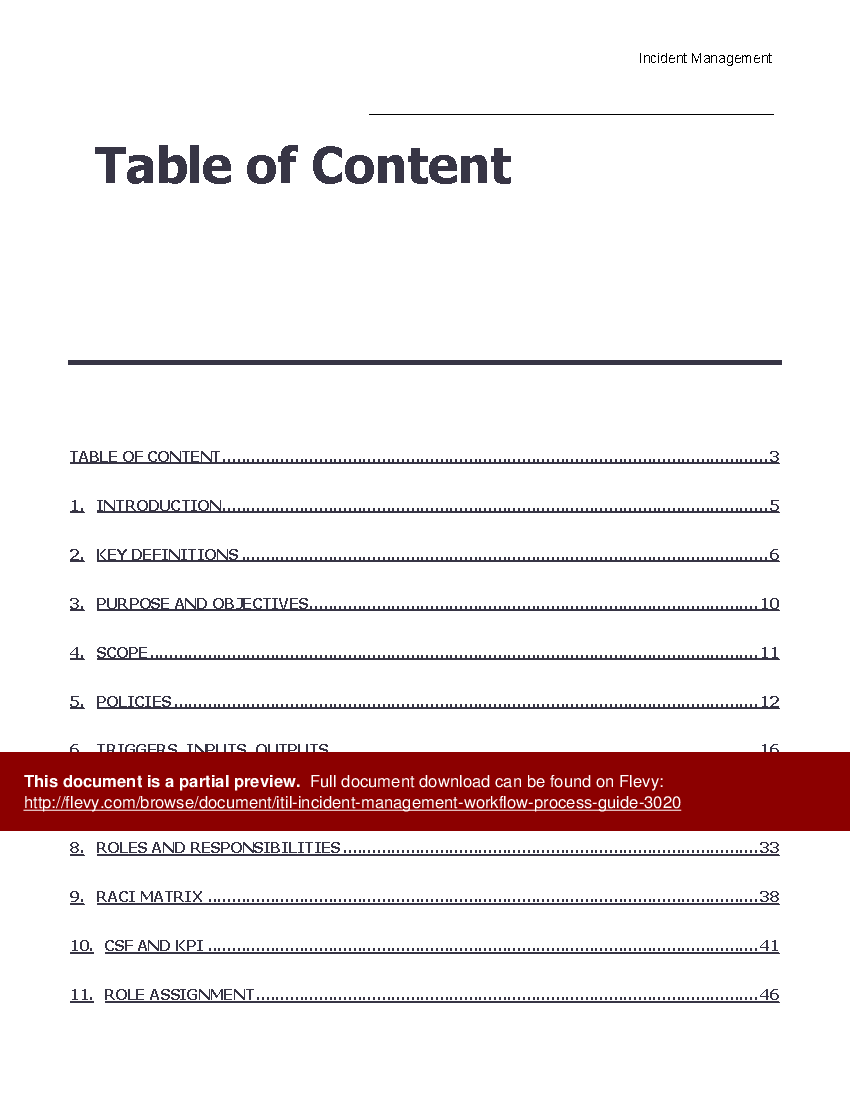
•  Introduction (page 5)
•  Key Definitions (page 6)
•  Purpose and Objectives (page 10)
•  Scope (page 11)
•  Policies (page 12)
•  Triggers, Inputs, Outputs (page 16)
•  Process Flow (page 18)
•  Roles and Responsibilities (page 33)
•  RACI Matrix (page 38)
•  CSF and KPI (page 41)
•  Role Assignment (page 46)
•  Incident Lifecycle (page 48)
•  Categorization (page 50)
•  Prioritization (page 52)
•  Closure Codes (page 58)
•  Sample Reporting (page 60)
•  Sample Major Incident Procedure (page 62)
•  Escalations (page 66)

Primary Topics Covered
•  Incident Management Process - A structured approach to managing the lifecycle of incidents to restore normal service operation as quickly as possible.
•  Incident Lifecycle - Detailed stages from identification to closure, ensuring all incidents are tracked and managed effectively.
•  Roles and Responsibilities - Defined roles within the incident management process, including Service Desk, Incident Manager, and Technical Support teams.
•  Categorization and Prioritization - Guidelines for classifying incidents based on impact and urgency to facilitate effective resolution.
•  Closure Codes - Standardized codes for documenting how incidents are resolved, enhancing reporting and analysis.
•  Escalation Procedures - Protocols for escalating incidents to ensure timely resolution and appropriate resource allocation.

Deliverables, Templates, and Tools
•  Incident logging template for capturing essential details of each incident
•  RACI matrix for defining roles and responsibilities in incident management
•  Incident categorization and prioritization frameworks for consistent handling
•  Closure codes template for documenting incident resolution methods
•  Reporting templates for tracking incident metrics and performance indicators
•  Major incident procedure outline for managing high-impact incidents effectively

Slide Highlights
•  Flowchart illustrating the incident management process from identification to closure
•  RACI matrix detailing roles and responsibilities for each stage of incident management
•  Sample escalation matrix outlining timelines and responsible parties for different incident priorities
•  Key performance indicators (KPIs) for measuring incident management effectiveness
•  Overview of closure codes and their significance in incident reporting

Potential Workshop Agenda
Incident Management Overview (60 minutes)
•  Introduction to the incident management process and its importance
•  Review of key definitions and objectives

Process Flow and Roles (90 minutes)
•  Detailed walkthrough of the incident management lifecycle
•  Discussion of roles and responsibilities within the process

Categorization and Prioritization (60 minutes)
•  Workshop on categorizing and prioritizing incidents effectively
•  Group exercise to practice using the categorization framework

Closure and Reporting (60 minutes)
•  Overview of closure codes and their application
•  Discussion on best practices for incident reporting and analysis

Customization Guidance
•  Adapt the incident logging template to align with specific organizational needs and tools
•  Modify the RACI matrix to reflect unique roles and responsibilities within your team
•  Tailor the categorization framework to include organization-specific incident types
•  Update escalation procedures to fit the organizational structure and communication protocols
•  Incorporate feedback mechanisms for continuous improvement in incident management practices

Secondary Topics Covered
•  Integration with problem management processes
•  Communication strategies for incident updates
•  User satisfaction measurement and feedback collection
•  Continuous improvement initiatives based on incident data analysis
•  Training and onboarding for new incident management staff

Topic FAQ

What are the typical stages of an incident management lifecycle?

Typical stages run from incident identification and logging through categorization, prioritization, diagnosis, escalation (functional or hierarchical), resolution, and closure. The Incident Management Workflow - Process Guide documents these lifecycle stages and provides flowcharts and stage definitions from identification to closure.

How should incidents be categorized and prioritized in practice?

Incidents should be categorized using customer-reported symptoms and related configuration items, and prioritized by assessing impact and urgency. The guide includes a categorization framework and a prioritization matrix to help teams apply consistent categories and priority levels across incidents.

What is a RACI matrix and how does it support incident handling?

A RACI matrix defines who is Responsible, Accountable, Consulted, and Informed for each process activity, reducing ambiguity in incident tasks and handoffs. The document contains a RACI matrix tailored to incident management to clarify roles across lifecycle stages and key activities.

How do closure codes improve incident reporting and future analysis?

Closure codes standardize how resolution outcomes are recorded, enabling accurate trend analysis, root-cause identification, and reporting consistency. The guide provides a closure codes template and examples so teams can classify resolution methods uniformly for reporting and KPI analysis.

What should a small IT team expect from a purchasable incident management template on a budget?

A purchasable template typically supplies process flow diagrams, role definitions, basic templates (logging, categorization), escalation matrices, and sample KPIs to accelerate implementation. For example, Flevy's Incident Management Workflow - Process Guide is a 68-page DOCX that bundles these elements and reporting templates.

How can I adapt incident templates to our organization’s tools and structure?

Adaptation involves customizing the incident logging fields to your ITSM tool, modifying the RACI matrix to match local roles, tailoring the categorization taxonomy to your services, and adjusting escalation timelines to your org structure. The guide explicitly offers customization guidance for RACI, categorization, and escalation procedures.

During a major outage, which procedural elements are most critical to include?

Critical elements include a clear major incident procedure outlining roles, communication protocols, an escalation matrix with timelines and responsible parties, and a single point of coordination (Incident Manager). The guide includes a sample major incident procedure and escalation matrix to support high-impact responses.

What metrics should we track to measure and improve incident management over time?

Track KPIs such as response times, resolution times, SLA compliance, and user satisfaction scores to monitor performance. Use reporting templates to analyze trends, feed continuous improvement, and inform training; the guide provides sample KPIs and reporting templates for these purposes.

Document FAQ
These are questions addressed within this presentation.

What is the purpose of the incident management process?
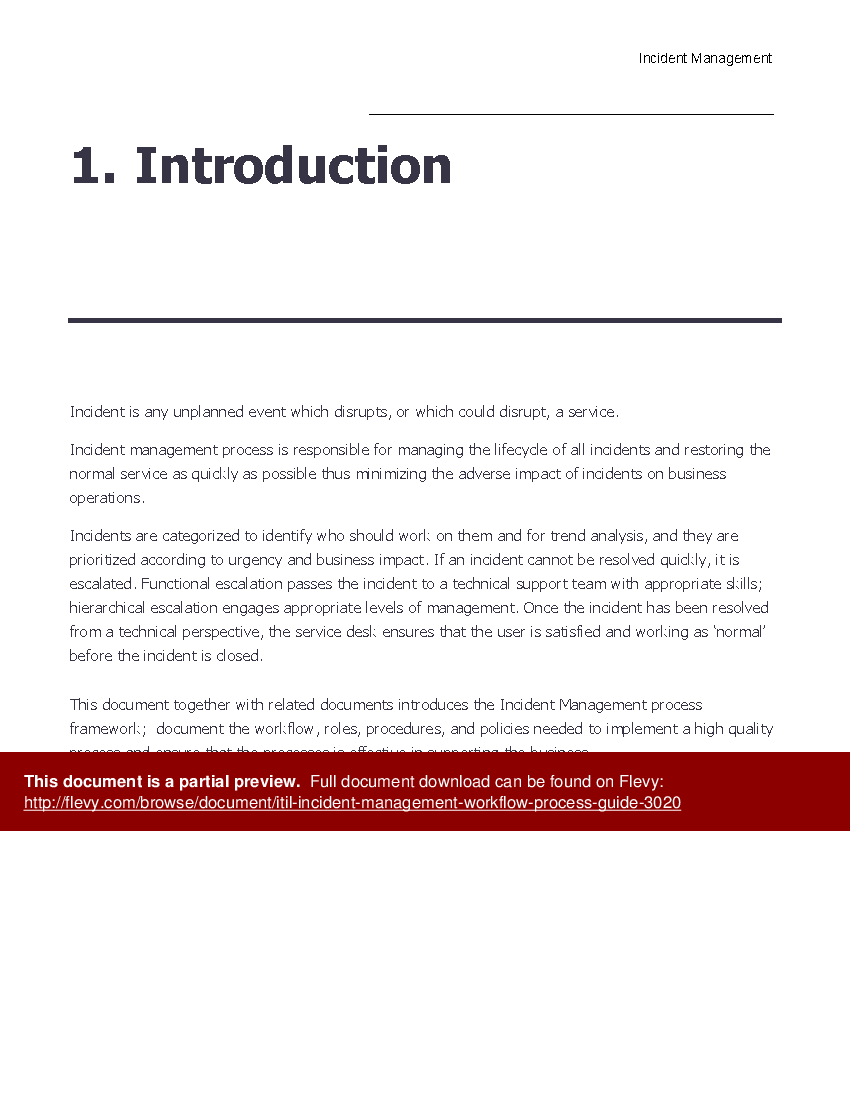
The incident management process aims to restore normal service operation as quickly as possible while minimizing the adverse impact on business operations.

How are incidents categorized?
Incidents are categorized based on customer-reported symptoms and associated configuration items, allowing for effective tracking and resolution.

What are closure codes, and why are they important?
Closure codes provide detailed information on how incidents were resolved, enhancing reporting accuracy and insights for future improvements.

What is the role of the Service Desk in incident management?
The Service Desk acts as the single point of contact for incident management, responsible for logging, tracking, and communicating the status of incidents.

How do escalation procedures work?
Escalation procedures define the process for transferring incidents to higher-level support teams when resolution is not possible at the current level.

What metrics should be monitored for incident management effectiveness?
Key performance indicators (KPIs) such as response times, resolution times, and user satisfaction scores should be monitored to assess incident management performance.

How often should the incident management process be reviewed?
The incident management process should be regularly reviewed and updated to ensure its effectiveness and alignment with business needs.

What is the difference between an incident and a service request?
An incident is an unplanned interruption to a service, while a service request is a request for a new or altered service that does not disrupt existing services.

How can organizations improve their incident management practices?
Organizations can improve incident management by analyzing incident data, implementing feedback mechanisms, and regularly training staff on best practices.

Glossary
•  Incident - An unplanned event that disrupts service or reduces service quality.
•  Service Desk - The primary point of contact for users to report incidents and request services.
•  Major Incident - An incident with significant impact requiring immediate response and resources beyond normal procedures.
•  Closure Code - A code indicating how an incident was resolved, used for reporting purposes.
•  Escalation - The process of transferring an incident to a higher level of support for resolution.
•  Categorization - The classification of incidents based on type and impact to facilitate management.
•  Prioritization - The process of determining the urgency and importance of incidents for resolution.
•  RACI Matrix - A tool used to define roles and responsibilities in processes.
•  KPI - Key Performance Indicator, a measurable value that demonstrates how effectively an organization is achieving key business objectives.
•  SLA - Service Level Agreement, a contract that defines the level of service expected from a service provider.
•  OLA - Operational Level Agreement, an agreement between different parts of the same organization to support service delivery.
•  Known Error - An incident or problem with a known root cause and an identified workaround.
•  Problem Management - The process of identifying and managing the root causes of incidents.
•  Configuration Item (CI) - Any component that needs to be managed in order to deliver an IT service.
•  User Satisfaction - A measure of how services meet or exceed user expectations.
•  Continuous Improvement - Ongoing efforts to improve products, services, or processes.
•  Feedback Mechanism - A process for collecting user feedback to inform improvements.
•  Service Request - A request from a user for information, advice, or a service.
•  Impact - The effect an incident has on business operations.
•  Urgency - The speed with which an incident needs to be resolved.

Source: Best Practices in ITIL, Incident Management, Workflow Word: Incident Management Workflow - Process Guide Word (DOCX) Document, ITSM Consulting


$45.00

Add to Cart
  

ABOUT THE AUTHOR

Additional documents from author: 44

Ask the Author a Question

You must be logged in to contact the author.

Click here to log in Click here register

Did you know?
The average daily rate of a McKinsey consultant is $6,625 (not including expenses). The average price of a Flevy document is $65.
Bundle and save! You can save up to % with bundles!

View bundle(s)


Trusted by over 10,000+ Client Organizations
Since 2012, we have provided business templates to over 10,000 businesses and organizations of all sizes, from startups and small businesses to the Fortune 100, in over 130 countries.
AT&T GE Cisco Intel IBM Coke Dell Toyota HP Nike Samsung Microsoft Astrazeneca JP Morgan KPMG Walgreens Walmart 3M Kaiser Oracle SAP Google E&Y Volvo Bosch Merck Fedex Shell Amgen Eli Lilly Roche AIG Abbott Amazon PwC T-Mobile Broadcom Bayer Pearson Titleist ConEd Pfizer NTT Data Schwab


Read Customer Testimonials

 
"One of the great discoveries that I have made for my business is the Flevy library of training materials.

As a Lean Transformation Expert, I am always making presentations to clients on a variety of topics: Training, Transformation, Total Productive Maintenance, Culture, Coaching, Tools, Leadership Behavior, etc. Flevy "

– Ed Kemmerling, Senior Lean Transformation Expert at PMG
 
"I have used FlevyPro for several business applications. It is a great complement to working with expensive consultants. The quality and effectiveness of the tools are of the highest standards."

– Moritz Bernhoerster, Global Sourcing Director at Fortune 500
 
"As a small business owner, the resource material available from FlevyPro has proven to be invaluable. The ability to search for material on demand based our project events and client requirements was great for me and proved very beneficial to my clients. Importantly, being able to easily edit and tailor "

– Michael Duff, Managing Director at Change Strategy (UK)
 
"The wide selection of frameworks is very useful to me as an independent consultant. In fact, it rivals what I had at my disposal at Big 4 Consulting firms in terms of efficacy and organization."

– Julia T., Consulting Firm Owner (Former Manager at Deloitte and Capgemini)
 
"[Flevy] produces some great work that has been/continues to be of immense help not only to myself, but as I seek to provide professional services to my clients, it gives me a large "tool box" of resources that are critical to provide them with the quality of service and outcomes they are expecting."

– Royston Knowles, Executive with 50+ Years of Board Level Experience
 
"As a young consulting firm, requests for input from clients vary and it's sometimes impossible to provide expert solutions across a broad spectrum of requirements. That was before I discovered Flevy.com.

Through subscription to this invaluable site of a plethora of topics that are key and crucial to consulting, I "

– Nishi Singh, Strategist and MD at NSP Consultants
 
"FlevyPro has been a brilliant resource for me, as an independent growth consultant, to access a vast knowledge bank of presentations to support my work with clients. In terms of RoI, the value I received from the very first presentation I downloaded paid for my subscription many times over! The "

– Roderick Cameron, Founding Partner at SGFE Ltd

 
"Flevy is now a part of my business routine. I visit Flevy at least 3 times each month.

Flevy has become my preferred learning source, because what it provides is practical, current, and useful in this era where the business world is being rewritten.

In today's environment where there are so "

– Omar Hernán Montes Parra, CEO at Quantum SFE


Save with Bundles

This document is available as part of the following discounted bundle(s):

Save %!
Service Operation - Process Guides (ITSM, IT Service Manage

This bundle contains 3 total documents. See all the documents to the right.

$120.00


Add Bundle & Save

Save %!
Incident Management ( PPT & Process Guide)

This bundle contains 2 total documents. See all the documents to the right.

$60.00


Add Bundle & Save


Customers Also Bought These Documents


Customers Also Like These Documents

Explore Templates on Related Management Topics


Your Recently Viewed Documents
Download our FREE Digital Transformation Templates

Download our free compilation of 50+ Digital Transformation slides and templates. DX concepts covered include Digital Leadership, Digital Maturity, Digital Value Chain, Customer Experience, Customer Journey, RPA, etc.








