
 Click main image to view in full screen.
Go-To-Market Strategy (PowerPoint PPTX Slide Deck)
PowerPoint (PPTX) 132 Slides


BENEFITS OF THIS POWERPOINT DOCUMENT
- Equips you with the foundational knowledge to develop a robust marketing strategy tailored to your unique business needs.
- Guides you through the critical elements of a go-to-market strategy, helping you optimize your product or service launch for maximum impact.
- Offers insights into key principles and market analysis techniques, empowering you to make data-driven decisions that drive success in today's competitive business landscape.
GO-TO-MARKET PPT DESCRIPTION
Curated by McKinsey-trained Executives
Unlock Success with the Complete Go-To-Market Strategy Business Toolkit
In the ever-evolving world of business, a solid go-to-market strategy is your secret weapon for thriving in competitive markets. From planning your marketing strategy to understanding market dynamics and optimizing your sales approach, our comprehensive 130+ slide PowerPoint deck is your all-in-one solution to success. Join us on a journey through the critical aspects of this toolkit and discover how it can help you achieve your business objectives.
CONTENT OVERVIEW:
• Planning Marketing Strategy
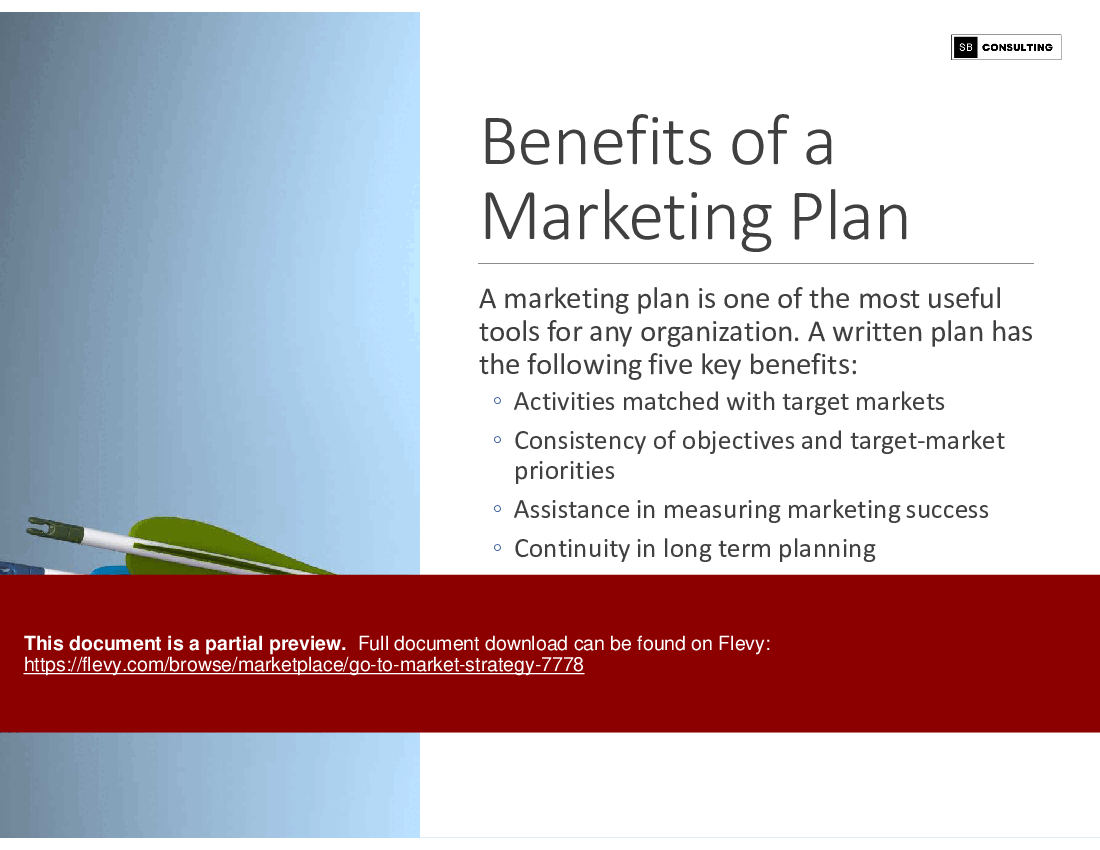
• Marketing Plan
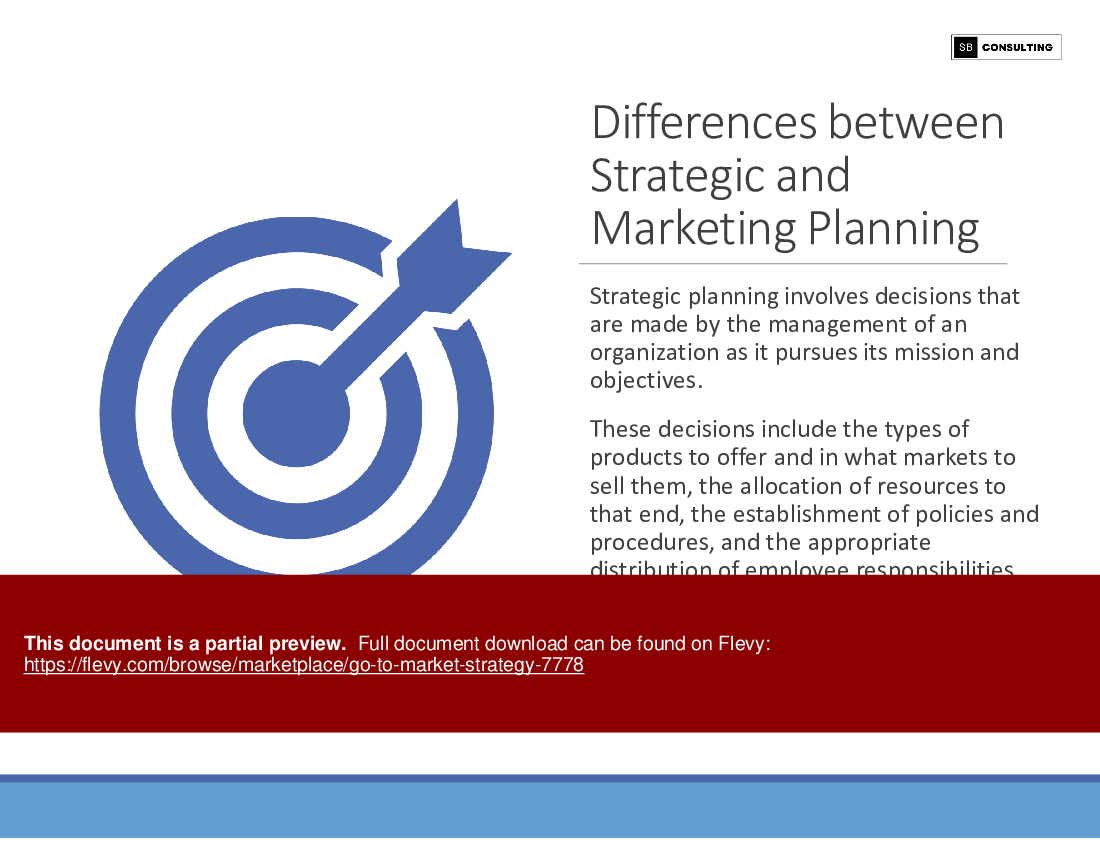
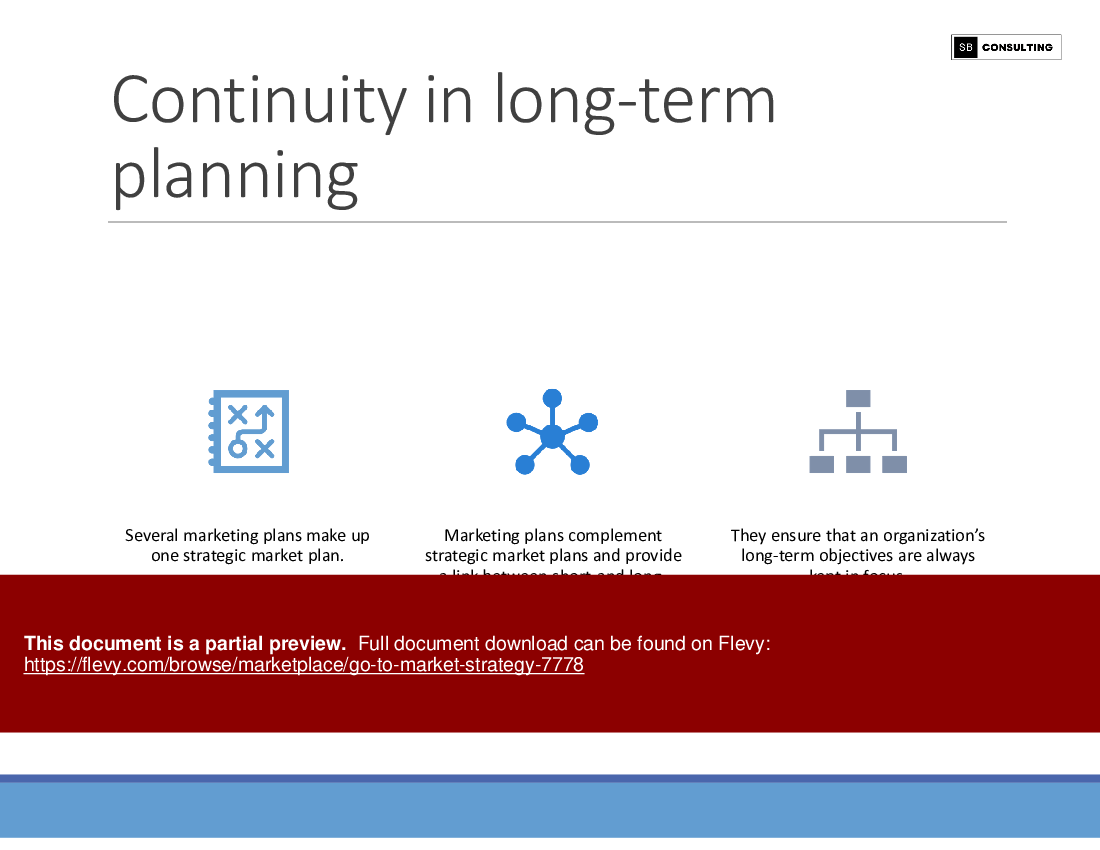
• Strategic Marketing and Marketing Planning
• Target Market Identification
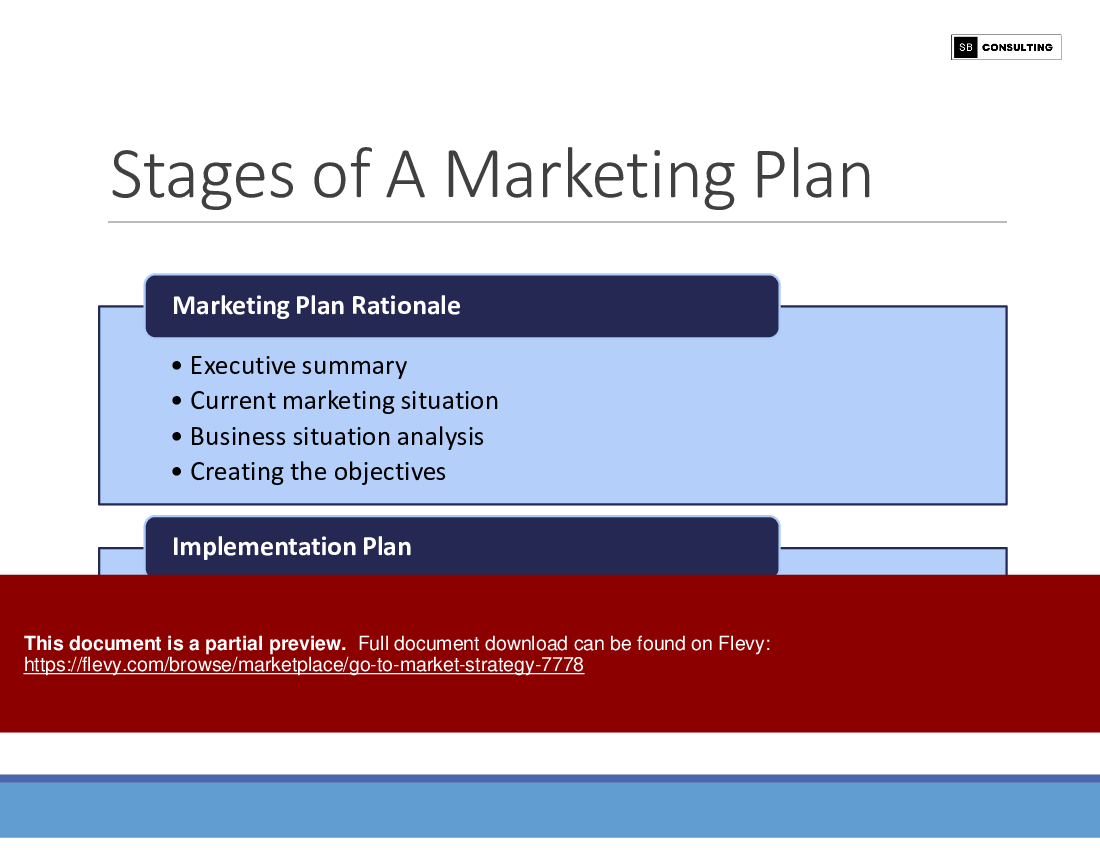
• Stages of a Marketing Plan
• Content of a Marketing Plan
• Business Situation Analysis
• Marketing Strategy
• Key Drivers of Marketing Strategy
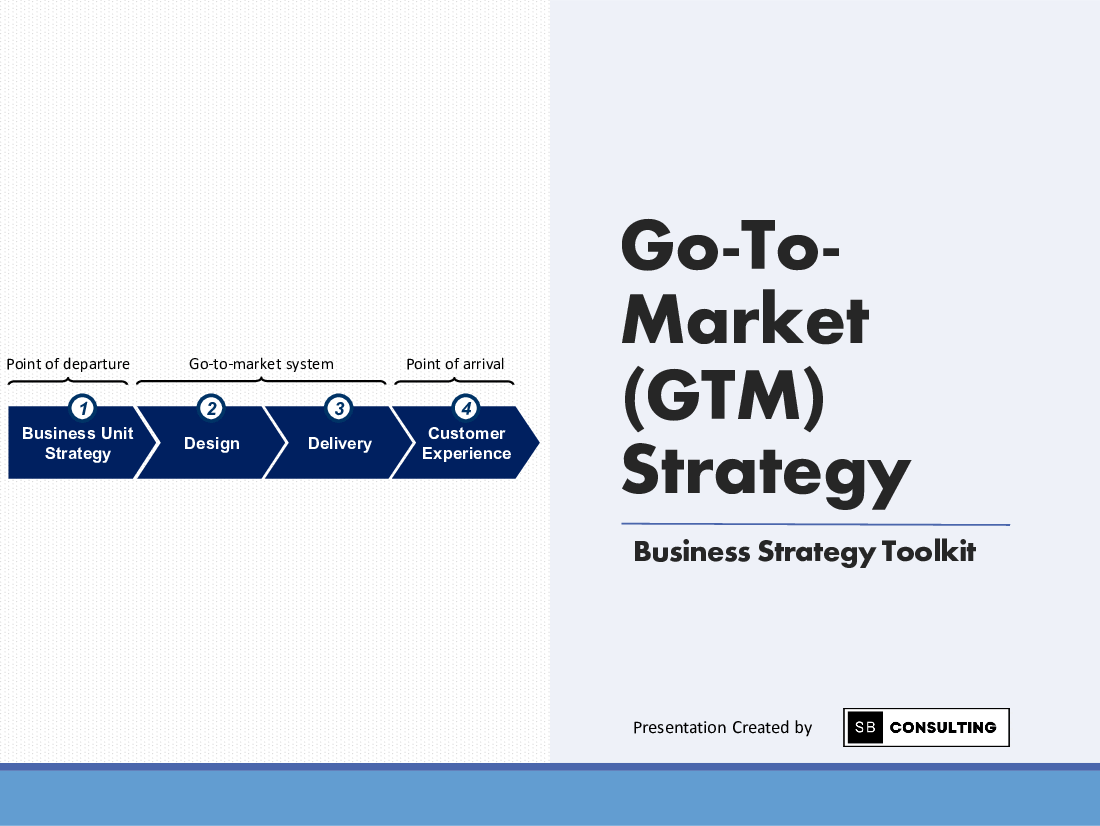
• Go-To-Market Strategy
• Elements of Go-To-Market Strategy
• Go-To-Market Strategy Development
• Principles of Go-To-Market Strategy
• Market Analysis
• Pricing Strategy
• Sales Strategy
• Market Segmentation
• Bain's Adaptive Go-To-Market System
Learning Objective 1: Planning Marketing Strategy
The Foundation of Success
Before diving into the complexities of marketing and sales, it's essential to set a solid foundation. The first section of our toolkit takes you through the basics of planning your marketing strategy. You'll learn how to define your business goals, identify your target audience, and set the stage for an effective marketing plan.
The Marketing Plan
With your goals in mind, you'll delve into the creation of a comprehensive marketing plan. This section outlines the key components of a successful marketing plan, including defining your value proposition, establishing clear KPIs, and understanding the competitive landscape.
Learning Objective 2: Strategic Marketing and Planning
Crafting a Strategy
Next, we'll guide you through the intricacies of strategic marketing and planning. You'll learn how to craft a strategy that aligns with your business objectives and delivers tangible results. Discover the tools and frameworks that can help you make informed decisions and stay ahead of the competition.
Target Market Identification
Understanding your target market is crucial to success. You'll explore various methods for identifying your ideal customers, creating detailed customer personas, and segmenting your audience effectively.
Learning Objective 3: Stages of a Marketing Plan
The Journey
A marketing plan isn't a one-size-fits-all solution. We'll walk you through the stages of a marketing plan, from initial research and data analysis to implementation and ongoing optimization. You'll learn how to adapt your strategy as market conditions change and customer preferences evolve.
Content of a Marketing Plan
Our toolkit will also delve into the nitty-gritty details of a marketing plan, including the content you should include, such as SWOT analysis, objectives, tactics, budgets, and timelines.
Learning Objective 4: Business Situation Analysis
A 360-Degree View
No successful marketing strategy is complete without a comprehensive business situation analysis. This section will teach you how to assess your internal and external environment, identify strengths and weaknesses, and leverage opportunities while mitigating threats.
Learning Objective 5: Marketing Strategy
The Heart of Your Plan
The marketing strategy section explores the core elements that define your marketing approach. You'll learn about positioning, branding, messaging, and how to create a strategy that resonates with your target audience and sets you apart from competitors.
Learning Objective 6: Key Drivers of Marketing Strategy
Driving Success
Understanding the key drivers behind a marketing strategy is essential. You'll explore market trends, customer behavior, and the role of technology in shaping your approach. Discover how to leverage these drivers to stay ahead of the curve.
Learning Objective 7: Go-To-Market Strategy
The Game Plan
Your go-to-market strategy is a critical aspect of your business toolkit. Learn how to take your products or services to market effectively, ensuring a smooth and successful launch that maximizes your market impact.
Learning Objective 8: Elements of Go-To-Market Strategy
The Building Blocks
This section breaks down the various elements of a go-to-market strategy. From sales channels and distribution to pricing and promotion, we'll provide you with a comprehensive understanding of what it takes to bring your offering to market.
Learning Objective 9: Go-To-Market Strategy Development
Crafting Your Unique Strategy
Learn how to develop a tailored go-to-market strategy that aligns with your specific business and product offerings. You'll explore the importance of adaptability and creating a flexible strategy that can evolve with market dynamics.
Learning Objective 10: Principles of Go-To-Market Strategy
Guiding Principles
Discover the fundamental principles that underpin successful go-to-market strategies. From product-market fit to customer-centricity, we'll equip you with the knowledge you need to make informed decisions.
Learning Objective 11: Market Analysis
Data-Driven Decision Making
Market analysis is at the core of every successful strategy. We'll guide you through the process of gathering and interpreting data, understanding market trends, and making data-driven decisions that give you a competitive edge.
Learning Objective 12: Pricing Strategy
Maximizing Profitability
Pricing strategy is a crucial component of your go-to-market plan. You'll learn how to set the right price point, maximize profitability, and stay competitive in your industry.
Learning Objective 13: Sales Strategy
Driving Revenue
Your sales strategy is the key to driving revenue. We'll provide insights into creating an effective sales strategy that aligns with your marketing efforts, utilizes the right sales channels, and nurtures customer relationships.
Learning Objective 14: Market Segmentation
Laser-Focused Targeting
Market segmentation is about understanding your customers on a deeper level. We'll explore how to segment your market effectively and tailor your marketing and sales approaches to different customer groups.
Learning Objective 15: Bain's Adaptive Go-To-Market System
Industry Insights
Finally, we'll introduce you to Bain's Adaptive Go-To-Market System, a renowned framework for business success. You'll gain insights into how this system can be applied to your unique business needs.
In conclusion, our Complete Go-To-Market Strategy Business Toolkit is a comprehensive resource that will empower you to create a robust marketing and sales strategy. Each learning objective is designed to provide you with the knowledge and tools needed to succeed in today's competitive business landscape. Whether you're launching a new product or revitalizing an existing business, this toolkit is your go-to resource for success. Don't miss out on the opportunity to elevate your business and drive results like never before. Get started with our toolkit today and unlock the potential for growth and prosperity.
Key Words:
Strategy & Transformation, Growth Strategy, Strategic Planning, Strategy Frameworks, Innovation Management, Pricing Strategy, Core Competencies, Strategy Development, Business Transformation, Marketing Plan Development, Product Strategy, Breakout Strategy, Competitive Advantage, Mission, Vision, Values, Strategy Deployment & Execution, Innovation, Vision Statement, Core Competencies Analysis, Corporate Strategy, Product Launch Strategy, BMI, Blue Ocean Strategy, Breakthrough Strategy, Business Model Innovation, Business Strategy Example, Corporate Transformation, Critical Success Factors, Customer Segmentation, Customer Value Proposition, Distinctive Capabilities, Enterprise Performance Management, KPI, Key Performance Indicators, Market Analysis, Market Entry Example, Market Entry Plan, Market Intelligence, Market Research, Market Segmentation, Market Sizing, Marketing, Michael Porter's Value Chain, Organizational Transformation, Performance Management, Performance Measurement, Platform Strategy, Product Go-to-Market Strategy, Reorganization, Restructuring, SWOT, SWOT Analysis, Service 4.0, Service Strategy, Service Transformation, Strategic Analysis, Strategic Plan Example, Strategy Deployment, Strategy Execution, Strategy Frameworks Compilation, Strategy Methodologies, Strategy Report Example, Value Chain, Value Chain Analysis, Value Innovation, Value Proposition, Vision Statement, Corporate Strategy, Business Development
NOTE:Our digital products are sold on an "as is" basis, making returns and refunds unavailable post-download. Please preview and inquire before purchasing. Please contact us before purchasing if you have any questions! This policy aligns with the standard Flevy Terms of Usage.
Leverage this toolkit to navigate the complexities of market entry and product launches with precision. Each slide is packed with actionable insights and frameworks that empower you to make data-driven decisions and optimize your go-to-market efforts effectively.
Got a question about the product? Email us at support@flevy.com or ask the author directly by using the "Ask the Author a Question" form. If you cannot view the preview above this document description, go here to view the large preview instead.
MARCUS OVERVIEW
This synopsis was written by Marcus [?] based on the analysis of the full 132-slide presentation.
Executive Summary
The Go-To-Market Strategy (GTM) toolkit is a comprehensive presentation designed to empower organizations in effectively launching products and services. Developed by experts from McKinsey, BCG, and Porsche Consulting, this toolkit provides a structured approach to understanding market dynamics, defining customer segments, and creating compelling value propositions. Users will gain insights into strategic planning, marketing execution, and performance monitoring, enabling them to adapt to market changes and enhance customer engagement.
Who This Is For and When to Use
• Marketing executives responsible for product launches and market penetration strategies
• Sales teams looking to align their efforts with marketing initiatives
• Product managers needing to define product positioning and messaging
• Business strategists focused on competitive analysis and market entry tactics
Best-fit moments to use this deck:
• During the planning phase of a new product launch
• When conducting market research and customer segmentation
• For developing a comprehensive marketing and sales strategy
• To align cross-functional teams on go-to-market initiatives
Learning Objectives
• Define the core components of a successful go-to-market strategy
• Build a comprehensive marketing plan that aligns with business objectives
• Establish effective pricing strategies based on market analysis
• Create targeted buyer personas to enhance customer engagement
• Develop a robust launch plan that includes risk assessment and mitigation strategies
• Monitor and evaluate marketing performance using key performance indicators (KPIs)
Table of Contents
• Executive Summary (page 22)
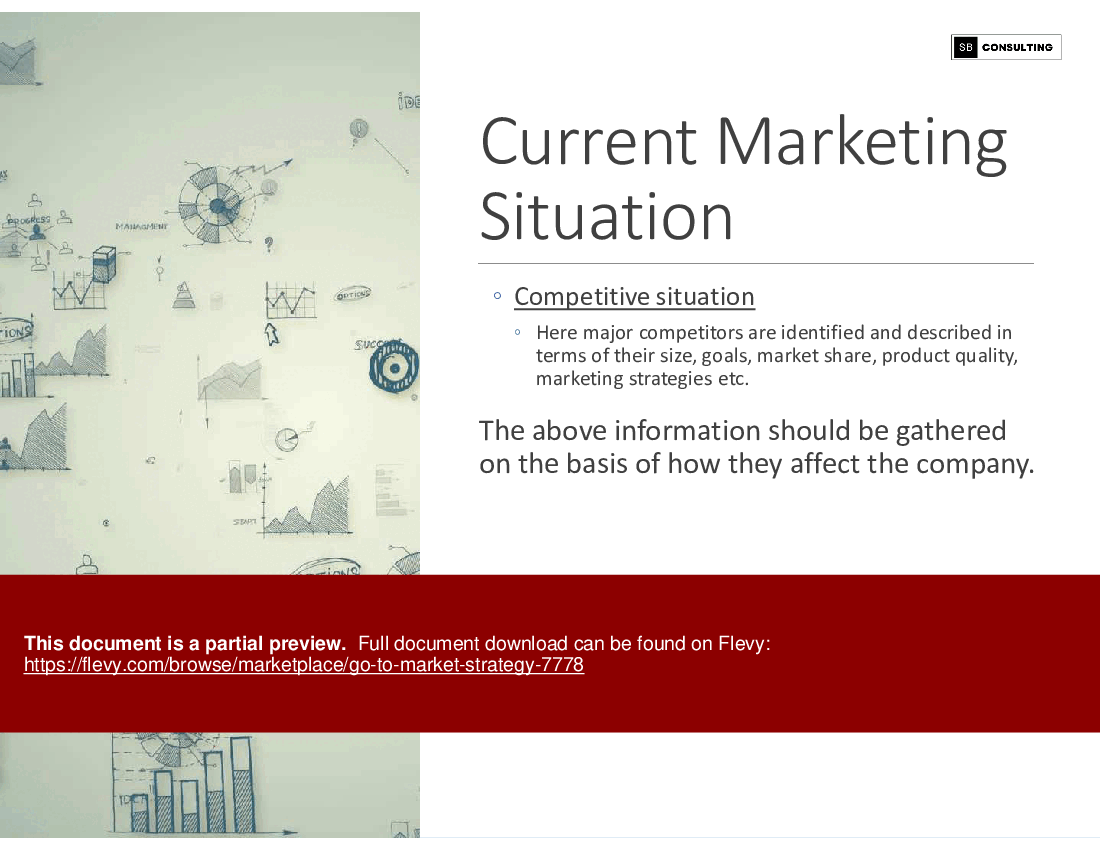
• Current Marketing Situation (page 23)
• Business Situation Analysis (page 26)
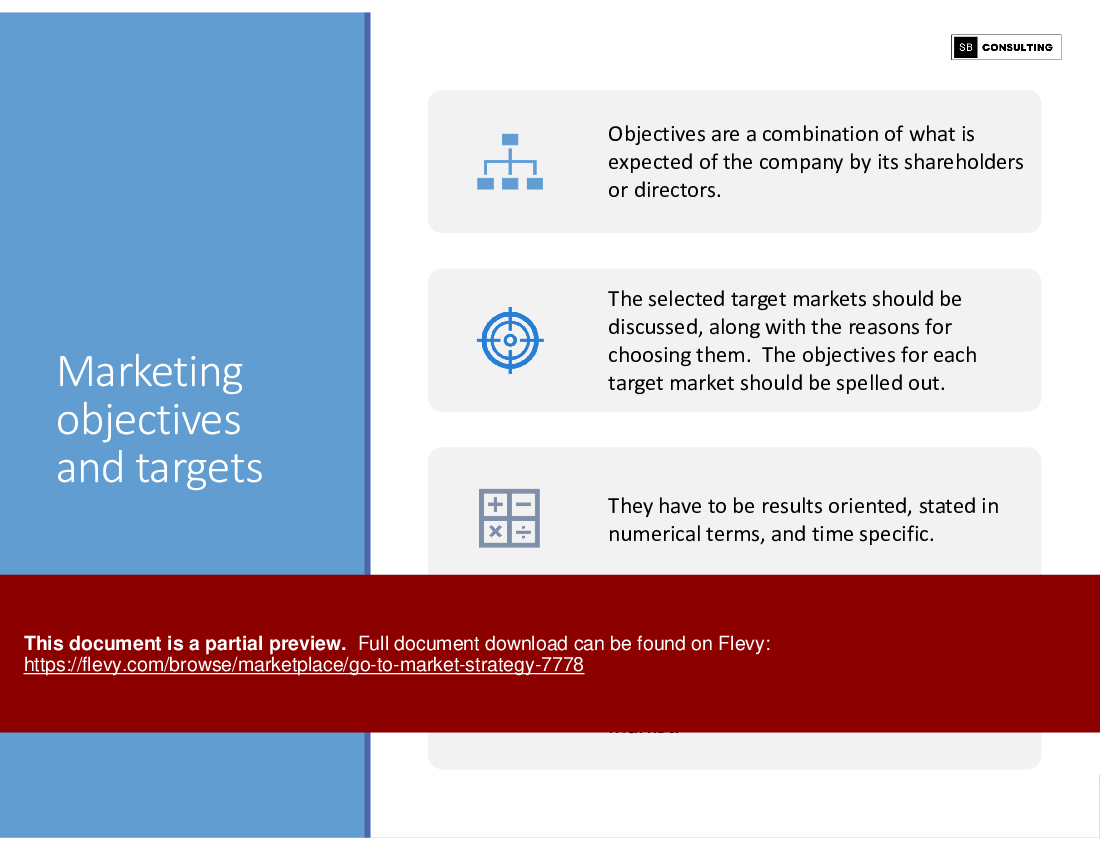
• Marketing Objectives and Targets (page 29)
• Marketing Strategy Formulation (page 30)
• Creating Marketing-Mix Programs (page 31)
• Monitoring and Evaluating the Plan (page 32)
• Launch Plan (page 93)
• Risk Analysis (page 99)
• Market Segmentation (page 104)
Primary Topics Covered
• Market Definition - Identifying which markets to target when selling products or services.
• Customer Segmentation - Understanding the demographic profile of target audiences to tailor marketing efforts.
• Sales Model - Outlining how products or services will be delivered to customers effectively.
• Value Proposition - Articulating the unique benefits of products or services compared to competitors.
• Pricing Strategy - Determining appropriate pricing models based on market conditions and customer willingness to pay.
• Launch Plan - Structuring the steps and timeline for introducing a product or service to the market.
Deliverables, Templates, and Tools
• Comprehensive marketing plan template for product launches
• Buyer persona templates to define target customer segments
• Pricing strategy framework to assess competitive positioning
• Risk analysis template for identifying and mitigating potential challenges
• Launch plan checklist to ensure readiness for market entry
• KPI dashboard for tracking marketing performance metrics
Slide Highlights
• Overview of the Go-To-Market Strategy framework emphasizing market focus and alignment
• Detailed breakdown of the marketing mix components and their relevance to customer engagement
• Visual representation of the launch plan timeline and key milestones
• Risk analysis framework outlining steps for identifying and addressing potential obstacles
• Customer segmentation strategies highlighting the importance of tailored marketing approaches
Potential Workshop Agenda
GTM Strategy Overview Session (60 minutes)
• Introduce the GTM framework and its importance
• Discuss the role of market research in strategy development
• Outline the components of a successful marketing plan
Market Segmentation and Buyer Personas Workshop (90 minutes)
• Conduct exercises to define target customer segments
• Develop detailed buyer personas based on market insights
• Align marketing strategies with identified customer needs
Launch Planning and Risk Assessment Session (120 minutes)
• Create a structured launch plan with timelines and responsibilities
• Identify potential risks and develop mitigation strategies
• Review KPIs for measuring launch success
Customization Guidance
• Tailor the marketing plan template to reflect specific organizational goals and objectives
• Adjust buyer persona details based on unique customer insights and market research
• Modify pricing strategies to align with competitive analysis and customer feedback
• Adapt the launch plan to include specific promotional activities and distribution channels relevant to the product
Secondary Topics Covered
• Digital marketing strategies for enhancing online visibility
• Sales enablement tools and techniques for effective customer engagement
• Competitive analysis frameworks for assessing market positioning
• Best practices for ongoing customer relationship management
• Techniques for measuring and optimizing marketing effectiveness
Topic FAQ
What are the core phases of a go-to-market strategy?
A typical go-to-market sequence begins with market definition and business situation analysis, then moves to customer segmentation and value proposition, followed by marketing strategy and marketing-mix programs, launch planning, and ongoing monitoring and evaluation. The toolkit maps these steps through its Market Definition to Monitoring and Evaluating the Plan sections, including page references such as page 32.How do I create buyer personas for targeting?
Build buyer personas from market research and customer data by documenting demographics, needs, pain points, decision criteria, and preferred channels. Use segmentation outputs to tailor messaging and offers. The toolkit supports this with a dedicated Market Segmentation section and ready-to-use buyer persona templates.What should a launch plan include for a new product?
A launch plan should define objectives, the target audience, core messaging, pricing approach, marketing activities, sales strategy, distribution logistics, roles and timeline, and risk mitigations. Flevy's Go-To-Market Strategy toolkit provides a structured Launch Plan section and a launch plan checklist to organize these elements.How should I set pricing strategies for a new product?
Pricing should be set by assessing market conditions, competitor positions, customer willingness to pay, and desired margins, then testing price points against demand scenarios. The toolkit provides a pricing strategy framework and guidance on aligning price with positioning and competitive analysis.How do I measure go-to-market success and which KPIs matter?
Measure success using KPIs tied to objectives such as conversion rates, customer acquisition cost, time-to-first-revenue, and overall sales growth; track leading indicators for launch activity performance. The toolkit includes a KPI dashboard template to capture and report these metrics.What should I look for when buying a go-to-market toolkit?
Evaluate slide depth and practical templates (marketing plan, buyer personas, pricing framework, launch checklist, KPI dashboard), the authors’ consulting pedigree, delivery format, and any purchase terms such as refund policy. Flevy's Go-To-Market Strategy toolkit lists those artifacts and is provided as a 132-slide digital download sold "as is."I need to launch quickly with limited resources — what should I prioritize?
Prioritize market definition, a concise customer segmentation, a clear value proposition, aligned sales model and channel decisions, a minimal launch timeline with essential marketing activities, and basic KPIs plus a risk checklist to manage major threats. Capture these priorities in a condensed launch plan timeline.What is Bain's Adaptive Go-To-Market System and how can it be applied?
Bain's Adaptive Go-To-Market System is presented in the toolkit as a referenced framework that guides adaptive segmentation, channel selection, and dynamic resource allocation to match market conditions. The deck introduces how to apply its principles to tailor an organization’s GTM approach using the Bain framework.Document FAQ
These are questions addressed within this presentation.
What is a Go-To-Market Strategy?
A Go-To-Market Strategy outlines how a company will engage with customers and deliver its products or services effectively, focusing on market positioning and competitive advantage.
Why is market segmentation important?
Market segmentation allows businesses to tailor their marketing efforts to specific customer groups, improving engagement and increasing the likelihood of successful conversions.
How do I create a value proposition?
A value proposition should clearly articulate the unique benefits of your product or service, addressing customer pain points and differentiating it from competitors.
What components should be included in a launch plan?
A launch plan should include objectives, target audience, messaging, pricing strategy, marketing activities, sales strategy, and distribution logistics.
How can I measure the success of my marketing efforts?
Success can be measured using key performance indicators (KPIs) such as conversion rates, customer acquisition costs, and overall sales growth.
What are some common risks in a Go-To-Market strategy?
Common risks include market changes, competitive pressures, production delays, and regulatory issues that can impact the effectiveness of the strategy.
How can I ensure alignment across departments during a product launch?
Regular communication, clearly defined roles, and collaborative planning sessions can help ensure that all departments are aligned on goals and responsibilities.
What is the role of customer feedback in a Go-To-Market strategy?
Customer feedback is crucial for refining products, improving marketing messages, and adapting strategies to better meet customer needs and preferences.
Glossary
• Go-To-Market Strategy - A plan for how a company will sell its products or services to customers.
• Market Segmentation - The process of dividing a market into distinct groups of buyers.
• Value Proposition - A statement that outlines the unique benefits of a product or service.
• Pricing Strategy - The method used to set prices for products or services.
• Launch Plan - A detailed outline of the steps and timeline for introducing a product to the market.
• KPI (Key Performance Indicator) - A measurable value that demonstrates how effectively a company is achieving key business objectives.
• Risk Analysis - The process of identifying and assessing potential risks that could impact a project or strategy.
• Buyer Persona - A semi-fictional representation of an ideal customer based on market research and real data about existing customers.
• Competitive Analysis - The assessment of competitors to understand their strengths and weaknesses in the market.
• Customer Feedback - Information provided by customers about their experience with a product or service.
• Sales Model - The approach used to sell products or services to customers.
• Marketing Mix - The combination of factors that can be controlled by a company to influence consumers' purchase decisions.
• SWOT Analysis - A framework for identifying the strengths, weaknesses, opportunities, and threats related to a business or project.
• Customer Acquisition Cost - The cost associated with acquiring a new customer.
• Customer Retention - The ability of a company to retain its customers over time.
• Conversion Rate - The percentage of users who take a desired action, such as making a purchase.
• Market Research - The process of gathering, analyzing, and interpreting information about a market.
• Distribution Channels - The paths through which products or services flow from the producer to the consumer.
• Promotional Activities - Marketing efforts aimed at increasing awareness and sales of a product or service.
• Sales Strategy - A plan for how a company will sell its products or services to customers.
Source: Best Practices in Go-to-Market PowerPoint Slides: Go-To-Market Strategy PowerPoint (PPTX) Presentation Slide Deck, SB Consulting
ABOUT THE AUTHOR
SB Consulting is dedicated to empowering businesses to communicate their ideas with impact. This consulting firm specializes in teaching organizations how to create effective corporate and management presentations. With training from top-tier global consulting firms, including McKinsey, BCG, and Porsche Consulting, extensive expertise in presentation design and ... [read more]
Ask the Author a Question
You must be logged in to contact the author.




























