This presentation is created by former McKinsey, BCG, Deloitte, EY, and Capgemini consultants. The 5 Stages of Growth framework is one of the most popular and effective Business Maturity Models used by Strategy Consultants.
Editor Summary
The Five Stages of Business Growth is a 25-slide PowerPoint presentation developed by LearnPPT Consulting and created by former McKinsey, BCG, Deloitte, EY, and Capgemini consultants, presenting a 5-stage business maturity model (Existence, Survival, Success, Take Off, Resource Maturity).
Read moreIncludes templates for cash flow forecasting and strategic planning, management-style guidelines, checklists, and case studies. Target users include small business owners, business consultants, entrepreneurs, and investors. Sold as a digital download on Flevy.
Use this deck when an organization needs to diagnose where it sits in the business life cycle—whether launching, stabilizing cash flows, scaling rapidly, or optimizing mature operations.
Small business owners running cash-flow planning and customer-acquisition activities to confirm they are in the Existence or Survival stage and use the cash forecast template.
Business consultants assessing client maturity and recommending management-team changes during Success or Take Off.
Entrepreneurs preparing financing and scaling plans tied to Take Off requirements for financing and management change.
Investors evaluating portfolio company risk by mapping owner capabilities and strategic planning maturity.
The 5-stage, stage-based diagnostic and critical-success-factor approach reflects the staged business maturity analysis used in strategy consulting at McKinsey and BCG.
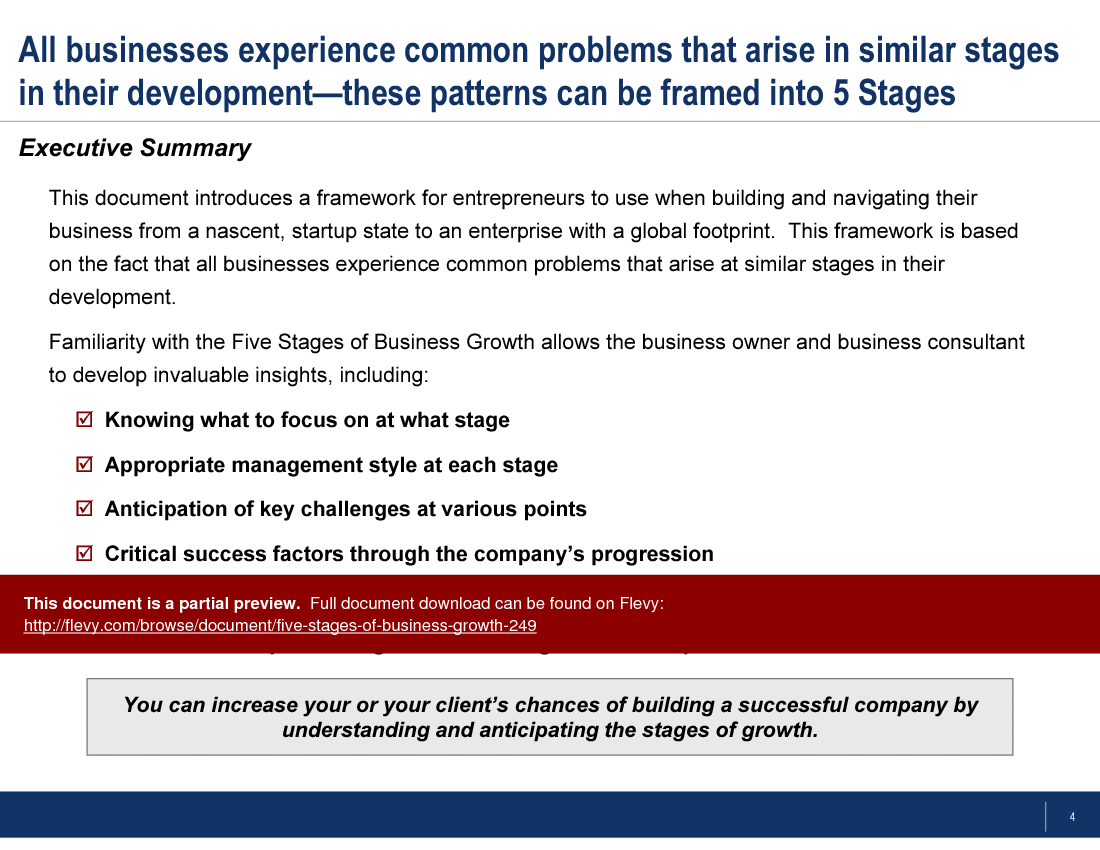
This presentation introduces a framework for entrepreneurs to use when building and navigating their business from a nascent, startup state to an enterprise with a global footprint. This framework, called the 5 Stages of Business Growth, is based on the fact that all businesses experience common problems that arise at similar stages in their development.
Familiarity with the Five Stages of Business Growth allows the business owner and business consultant to develop invaluable insights, including:
• Knowing what to focus on at what stage
• Appropriate management style at each stage
• Anticipation of key challenges at various points
• Critical success factors through the company's progression
• Involvement of owner at various stages
• Evaluation of impact from governmental regulations and policies
You can increase your organization's chances of building a successful enterprise by understanding and anticipating the stages of growth.
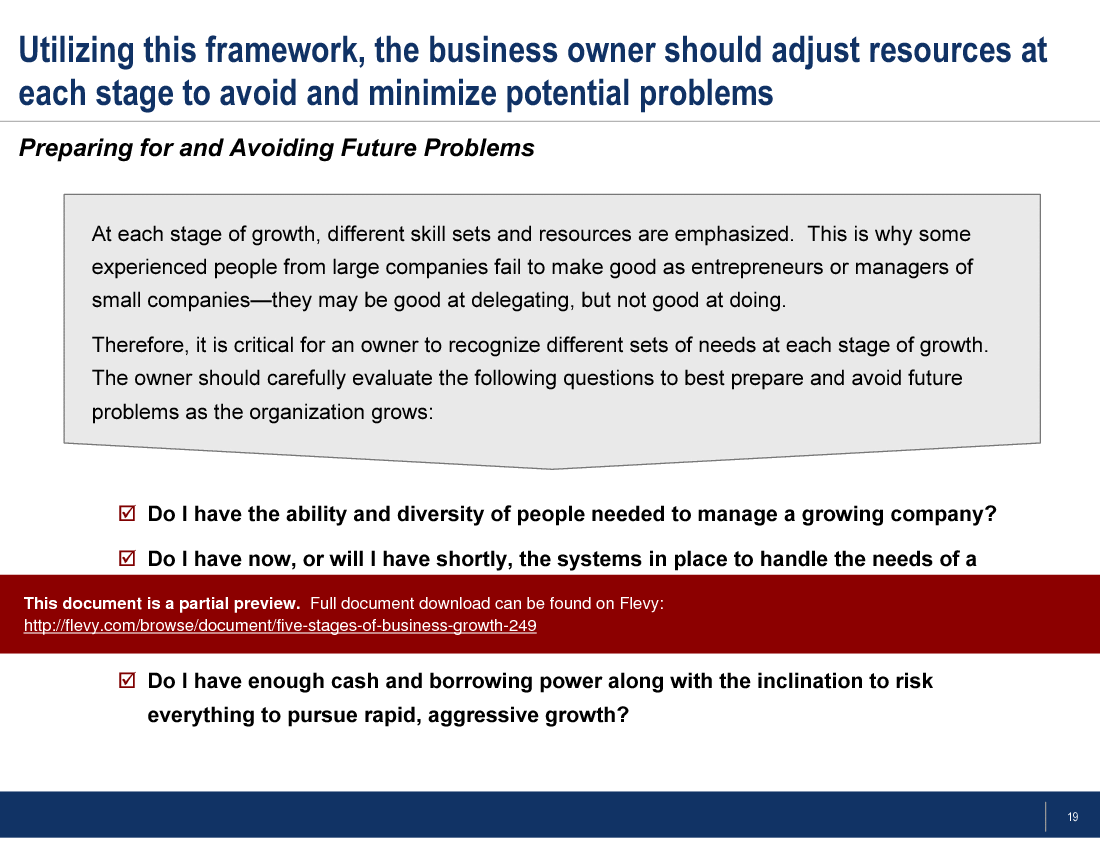
As each stage requires a different management style, it is common for the management team to also change as the company grows from small to enterprise. In fact, as a company evolves through each stage, it is critical for the owner to know when to give up control and delegate responsibilities. Failure to do this will result in the perpetual stagnation of the organization's growth and potential.
To elaborate on the above, this presentation also discusses Critical Success Factors (CSFs) around the areas of cash, the owner's abilities, strategic planning, and other key management factors
This PowerPoint presentation also includes case examples that illustrate how various organizations have evolved and matured through each stage, from Existence (Stage 1) to Resource Maturity (Stage 5).
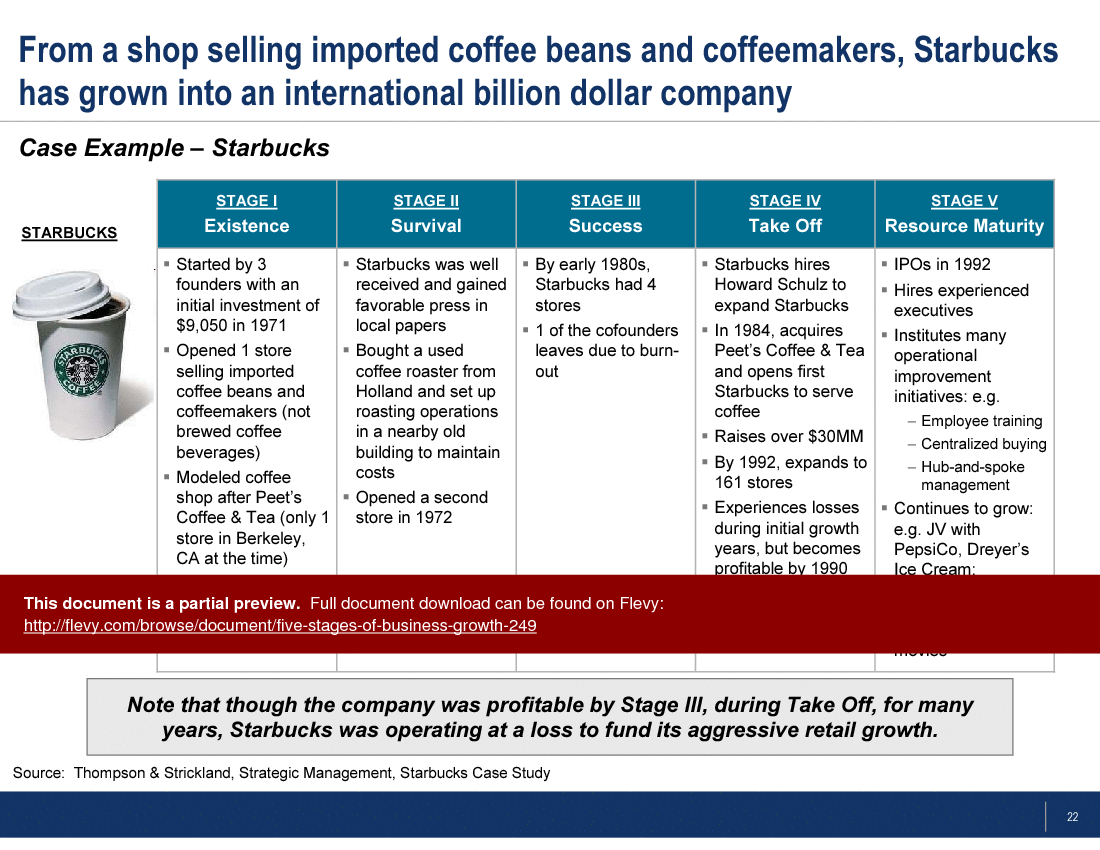
The presentation delves into the pivotal decisions business owners face at each stage, particularly during the Success and Take Off phases. Real-world case studies, such as Starbucks and web start-ups, provide concrete examples of how companies navigate these growth stages.
Got a question about the product? Email us at support@flevy.com or ask the author directly by using the "Ask the Author a Question" form. If you cannot view the preview above this document description, go here to view the large preview instead.
MARCUS OVERVIEW
This synopsis was written by Marcus [?] based on the analysis of the full 25-slide presentation.
Executive Summary
The Five Stages of Business Growth framework is a vital tool for entrepreneurs and business consultants, crafted by experts with backgrounds in McKinsey, BCG, Deloitte, EY, and Capgemini. This consulting-grade presentation outlines the common challenges businesses face at various developmental stages, providing insights that enhance the likelihood of success. By understanding these stages—from Existence to Resource Maturity—business owners can focus on critical areas, adopt appropriate management styles, anticipate challenges, and recognize the impact of external factors. This framework empowers users to navigate their business journey effectively, ensuring sustainable growth and operational efficiency.
Who This Is For and When to Use
• Small business owners seeking to understand growth dynamics
• Business consultants advising clients on scaling strategies
• Entrepreneurs in startup phases looking for structured guidance
• Investors assessing the maturity and potential of small businesses
Best-fit moments to use this deck:
• During strategic planning sessions to align on growth objectives
• When evaluating business performance at different growth stages
• For training workshops focused on business development and management
• In discussions about resource allocation and operational efficiency
Learning Objectives
• Define the Five Stages of Business Growth and their implications for business strategy
• Identify critical success factors at each stage of growth
• Develop strategies for overcoming challenges unique to each stage
• Recognize the importance of cash flow management in early stages
• Establish effective management styles tailored to each growth phase
• Evaluate the impact of external regulations on business operations
Table of Contents
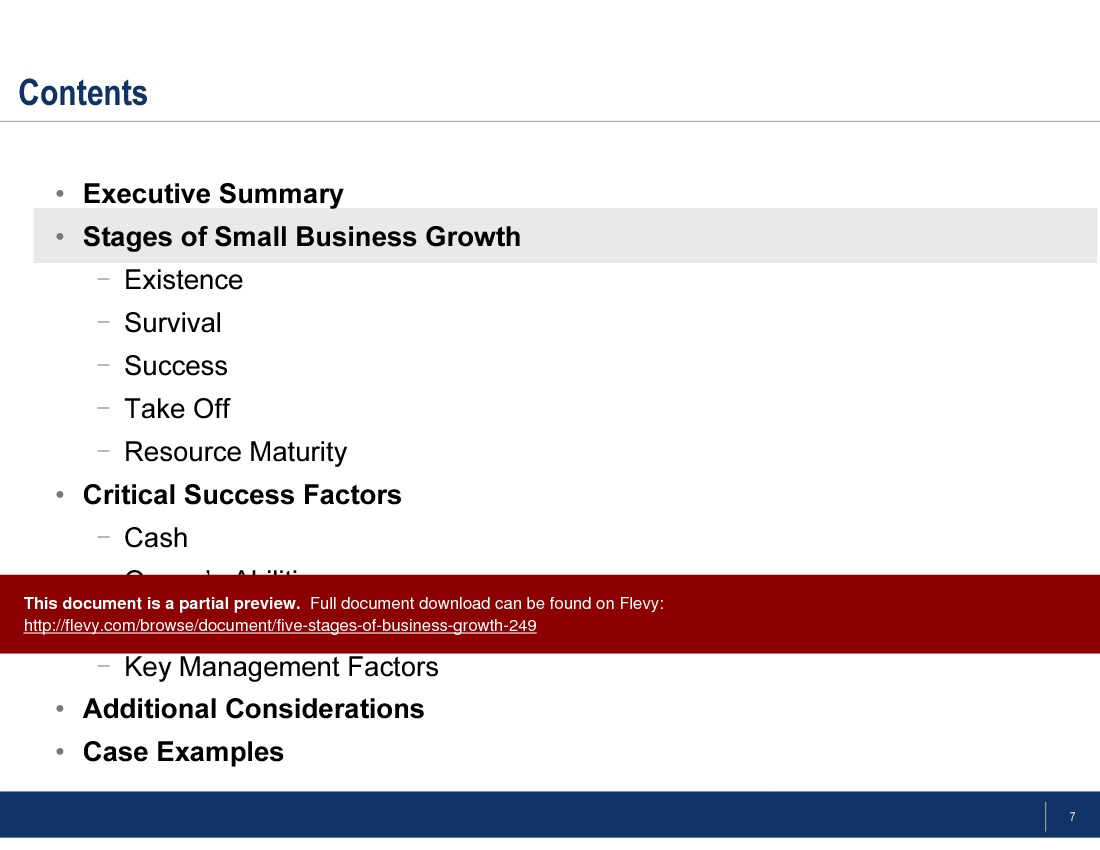
• Executive Summary (page 3)
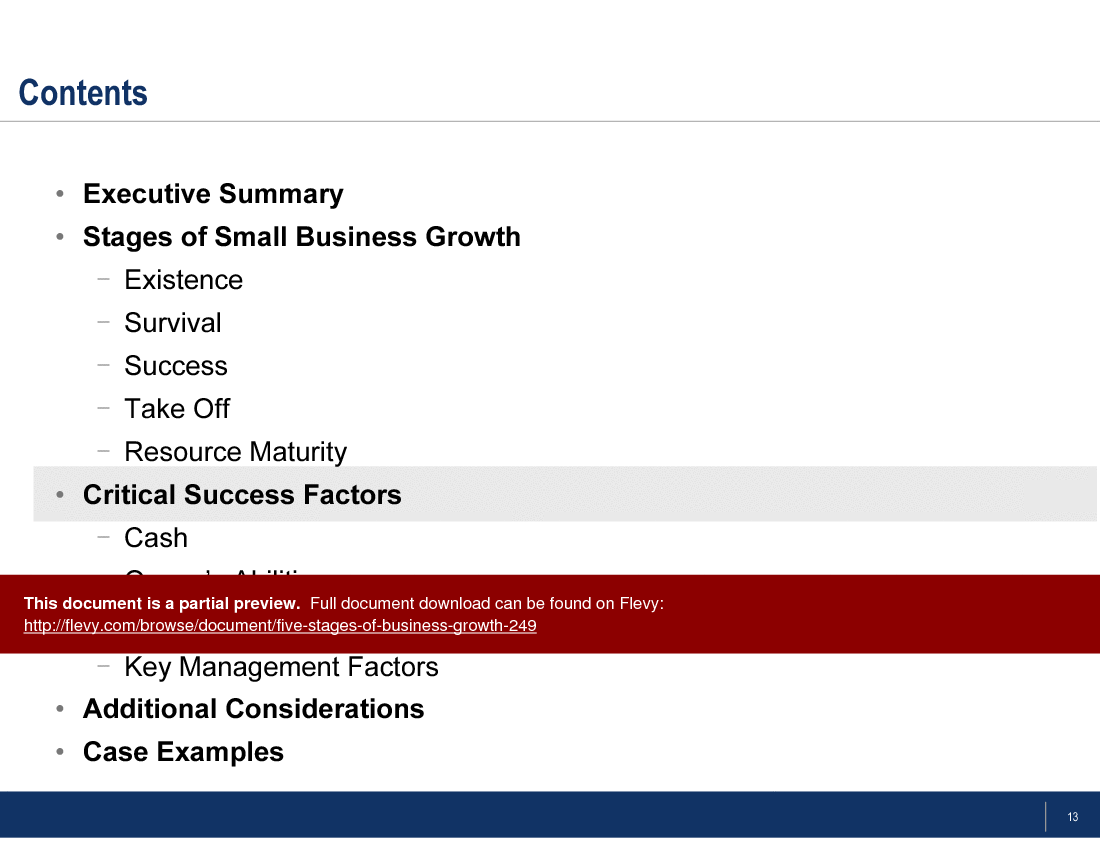
• Stages of Small Business Growth (page 7)
• Critical Success Factors (page 13)
• Additional Considerations (page 18)
• Case Examples (page 21)
Primary Topics Covered
• Existence Stage - Focuses on acquiring customers and delivering products or services effectively.
• Survival Stage - Centers on optimizing cash flow and establishing a viable business model.
• Success Stage - Offers options for growth or maintaining operations, emphasizing managerial development.
• Take Off Stage - Involves rapid growth and the need for significant financing and management changes.
• Resource Maturity Stage - Focuses on streamlining operations and enhancing efficiency post-growth.
• Critical Success Factors - Highlights essential elements like cash flow, owner capabilities, strategic planning, and management factors.
Deliverables, Templates, and Tools
• Framework for assessing business growth stages
• Templates for cash flow forecasting and strategic planning
• Guidelines for management style adaptation at each stage
• Checklists for evaluating critical success factors
• Case studies illustrating real-world applications of the framework
Slide Highlights
• Overview of the Five Stages of Business Growth, detailing characteristics and challenges
• Management style adaptations required at each growth stage
• Critical success factors that influence business viability and growth
• Case examples demonstrating successful navigation through the stages
• Visual representations of the evolution of small companies
Potential Workshop Agenda
Understanding the Five Stages of Growth (90 minutes)
• Introduce the Five Stages framework and its significance
• Discuss characteristics and challenges of each stage
• Explore case examples for practical insights
Critical Success Factors Deep Dive (60 minutes)
• Identify key success factors for each growth stage
• Discuss strategies for overcoming common challenges
• Develop action plans tailored to specific business contexts
Customization Guidance
• Adjust case examples to reflect industry-specific challenges and solutions
• Tailor management style recommendations based on organizational culture
• Incorporate local regulatory considerations into strategic planning discussions
Secondary Topics Covered
• The role of cash flow in business sustainability
• Owner’s abilities and their impact on business growth
• Strategic planning as a core competency in mature businesses
• Key management factors influencing operational success
Topic FAQ
What are the Five Stages of Business Growth and what does each stage focus on?
The Five Stages are Existence, Survival, Success, Take Off, and Resource Maturity. Existence focuses on acquiring customers and delivering products; Survival centers on cash-flow optimization; Success requires decisions on growth versus maintenance and managerial development; Take Off needs financing and management changes; Resource Maturity emphasizes operational efficiency. These are the 5 stages.
How should management style evolve as a company progresses through growth stages?
Management typically moves from direct, owner-led supervision in Existence toward more formalized delegation and decentralized control by Resource Maturity. The owner’s role shifts from hands-on execution to strategic oversight, and teams often change as scale increases, a progression described across the framework’s 5 stages.
How important is cash flow forecasting in early-stage businesses and where can I find templates?
Cash flow forecasting is critical in early stages to ensure the business can cover operations and invest; it’s identified as a core success factor for Survival. Practical cash flow forecasting templates and guidance are included in Flevy’s Five Stages of Business Growth deck as a deliverable.
What should I look for when choosing a business-growth framework or toolkit?
Select a toolkit that defines clear stages, identifies critical success factors, provides practical templates (cash flow, strategic planning), offers management-style guidance, and includes case examples for application. Flevy’s Five Stages of Business Growth lists these elements, including templates and case studies, in a 25-slide deck.
How can I judge the value of purchasing a growth-stage PowerPoint toolkit for my team?
Assess whether the toolkit helps your immediate needs: stage diagnostics, cash-flow templates, strategic-planning tools, management guidelines, and checklists for workshops. Value can be gauged by the toolkit’s scope and practical aids—Flevy’s Five Stages of Business Growth provides these items within a 25-slide presentation.
I need to reorganize after rapid expansion—which growth stages should I focus on?
For post-expansion reorganization focus on the Take Off stage (financing and major management changes) and Resource Maturity (streamlining operations and efficiency). Addressing these stages helps prioritize financing decisions, management restructuring, and operational integration as outlined in the stage descriptions for Take Off and Resource Maturity.
How can investors use a stage-based framework when assessing small businesses?
Investors can map a company to a stage to evaluate key risks: cash-flow vulnerability in Survival, owner capabilities in Success, financing needs in Take Off, and operational scalability in Resource Maturity. Flevy’s Five Stages of Business Growth is designed to support maturity assessment for investors across the 5 stages.
Are stage-based growth frameworks applicable to franchises and web startups?
Yes; the framework is adaptable to different business models and can highlight common challenges and management shifts even for franchises and web startups. The presentation explicitly notes adaptability and includes case studies such as Starbucks and web start-ups to illustrate applicability.
Document FAQ
These are questions addressed within this presentation.
What are the Five Stages of Business Growth?
The Five Stages include Existence, Survival, Success, Take Off, and Resource Maturity, each characterized by distinct challenges and management needs.
How can understanding these stages benefit my business?
Familiarity with these stages allows business owners to anticipate challenges, focus on critical success factors, and adapt management styles accordingly.
What is the significance of cash flow in the early stages?
Cash flow is crucial for survival and growth, as it ensures that the business can cover operational costs and invest in necessary resources.
How do management styles change across the stages?
Management styles evolve from direct supervision in the Existence stage to more decentralized approaches in the Resource Maturity stage, reflecting the growing complexity of the business.
What are critical success factors?
Critical success factors are essential elements that influence a business's ability to thrive, including cash management, owner capabilities, and strategic planning.
Can this framework be applied to franchises or web startups?
Yes, the framework is adaptable and can provide valuable insights for franchises and web startups, despite their unique challenges.
How do I know which stage my business is in?
Assess your business against the characteristics and challenges outlined in the framework to determine its current stage.
What happens if a business fails to transition through the stages?
Failure to transition can lead to stagnation or decline, often resulting in bankruptcy or the need to sell the business.
Glossary
• Existence Stage - The initial phase where the business focuses on customer acquisition and product delivery.
• Survival Stage - A phase characterized by the need to optimize cash flow and establish a viable business model.
• Success Stage - A stage where the business is profitable, and the owner must decide between growth or maintaining operations.
• Take Off Stage - A critical growth phase requiring significant management and financial adjustments.
• Resource Maturity Stage - The final stage focusing on operational efficiency and integration post-growth.
• Critical Success Factors - Key elements that determine a business's ability to succeed at each growth stage.
• Management Style - The approach taken by business leaders to manage teams and operations, which evolves with business growth.
• Cash Flow - The movement of money in and out of a business, critical for sustainability and growth.
• Strategic Planning - The process of defining a business's direction and making decisions on allocating resources.
• Owner’s Abilities - The skills and capabilities of the business owner that impact the company's growth and management.
• Key Management Factors - Elements that influence the effectiveness of management and operational success.
• Entrepreneurial Culture - The mindset and practices that promote innovation and adaptability within a business.
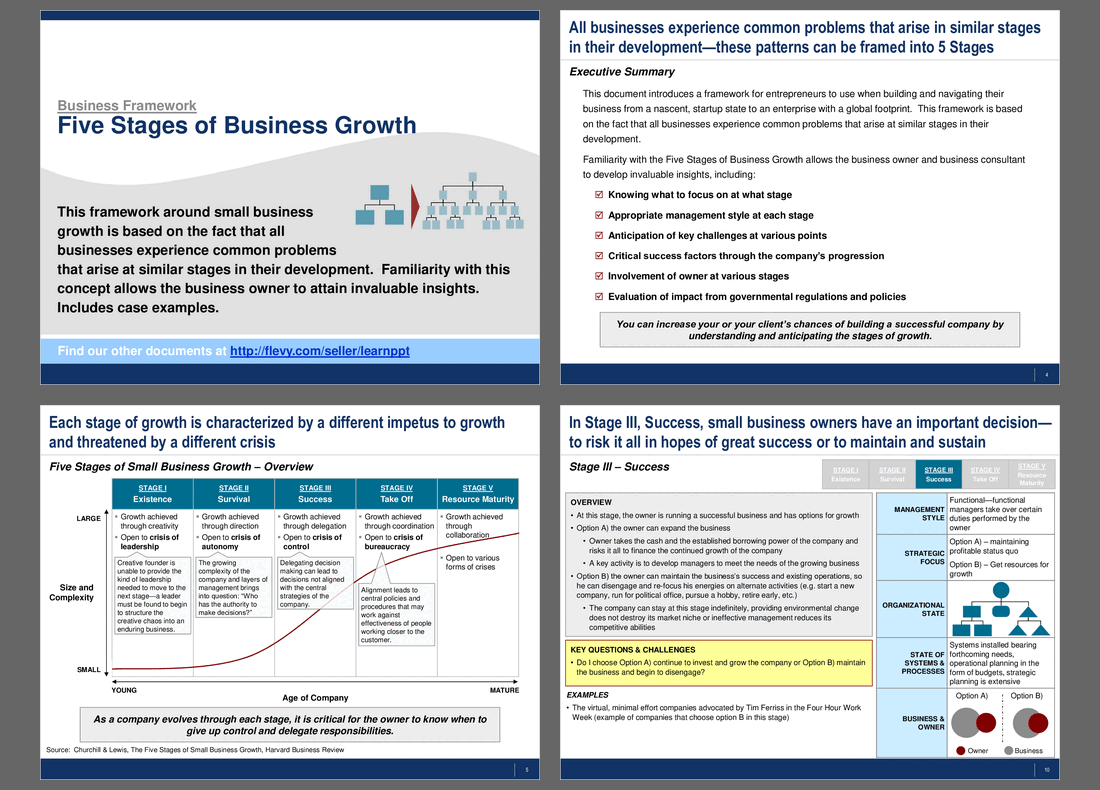
The framework outlines the 5 stages of small business growth:
1. Existence: Growth driven by creativity; crisis of leadership as founders struggle to transition to structured management.
2. Survival: Growth through direction; crisis of autonomy arises from increasing complexity and decision-making authority challenges.
3. Success: Growth via delegation; crisis of control occurs when decision-making misaligns with central strategies, hindering operations.
4. Take Off: Growth through coordination; crisis of bureaucracy emerges as established policies impede responsiveness and agility.
5. Resource Maturity: Growth through collaboration; mature organizations face various crises, highlighting the need for vigilance and adaptability.
This framework guides leaders in navigating critical transitions at each growth stage.
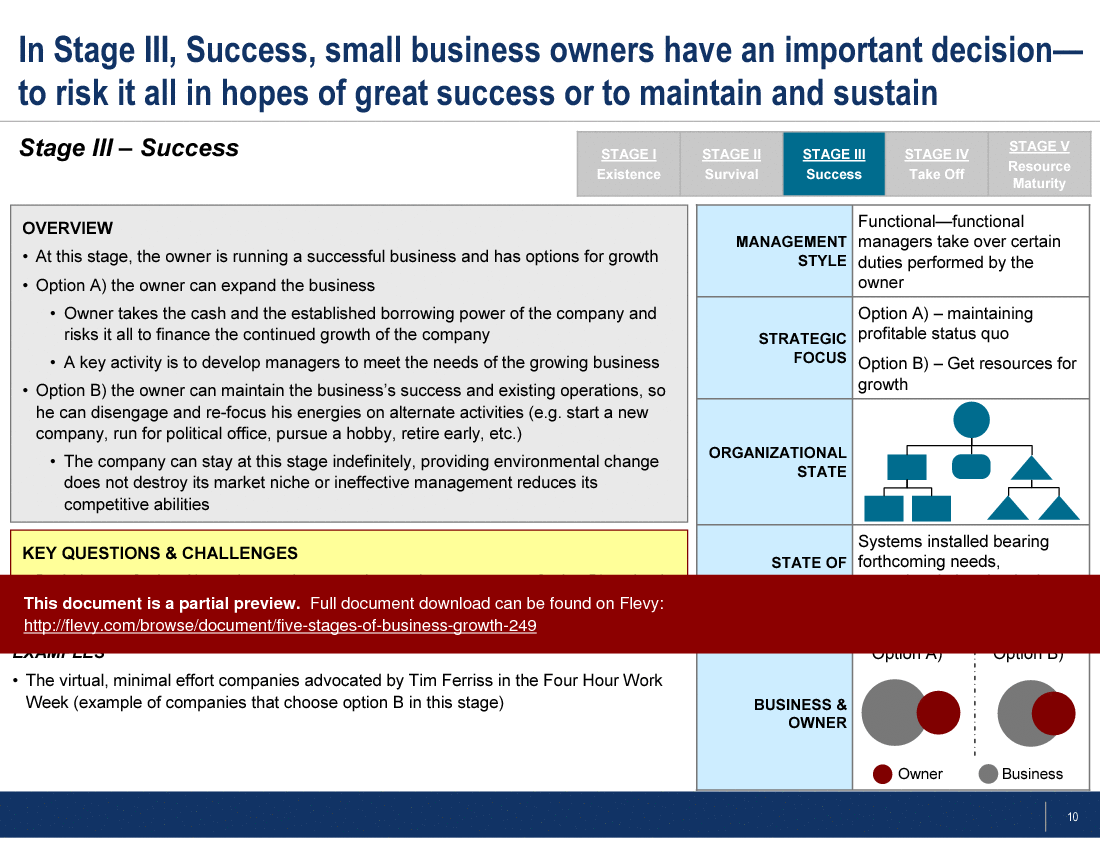
Stage III, labeled "Success," presents critical decisions for small business growth. Business owners can either expand operations or maintain the status quo. Option A focuses on leveraging cash flow and borrowing capacity for growth, emphasizing the development of managerial capabilities and strategic investments to sustain momentum. Option B allows owners to disengage from daily operations, redirecting focus to personal interests or new ventures, such as starting another business or pursuing hobbies. Businesses can remain in this stage indefinitely if they maintain market position and effective management. Key questions arise as owners weigh continued investment against disengagement, impacting long-term viability. Examples, like Tim Ferriss's advocacy for minimal effort companies, illustrate practical applications of these options.
This PPT slide outlines the 5 stages of business growth: Stage I: Existence focuses on establishing a business. Stage II: Survival involves navigating challenges to avoid bankruptcy, often requiring asset sales. Stage III: Success allows for profit generation,, but stagnation is a risk. Stage IV: Take Off presents growth opportunities, with potential regression if momentum is lost, emphasizing the need to sell at a profit. Stage V: Resource Maturity is the peak of growth, enabling sustainable operations and lucrative exit strategies like selling or merging, while warning of setbacks from market changes or disruptive technologies. Maintaining an entrepreneurial culture and continuous innovation is essential to avoid stagnation and bankruptcy.
This PPT slide outlines eight critical management factors categorized into company and owner factors. Company factors include financial resources, emphasizing capital availability and borrowing capacity; personnel resources, focusing on the quality and quantity of human capital; systems resources, which pertain to the sophistication of information and control systems for effective decision-making; and business resources, encompassing customer relations, market share, supplier interactions, and overall reputation. Owner factors include the owner's goals, which drive personal and business objectives; operational abilities, covering essential tasks like marketing and production; managerial ability, highlighting the capacity to delegate; and strategic abilities, focusing on aligning strengths and weaknesses with long-term goals. This framework aids in assessing organizational strengths and weaknesses for strategic planning.
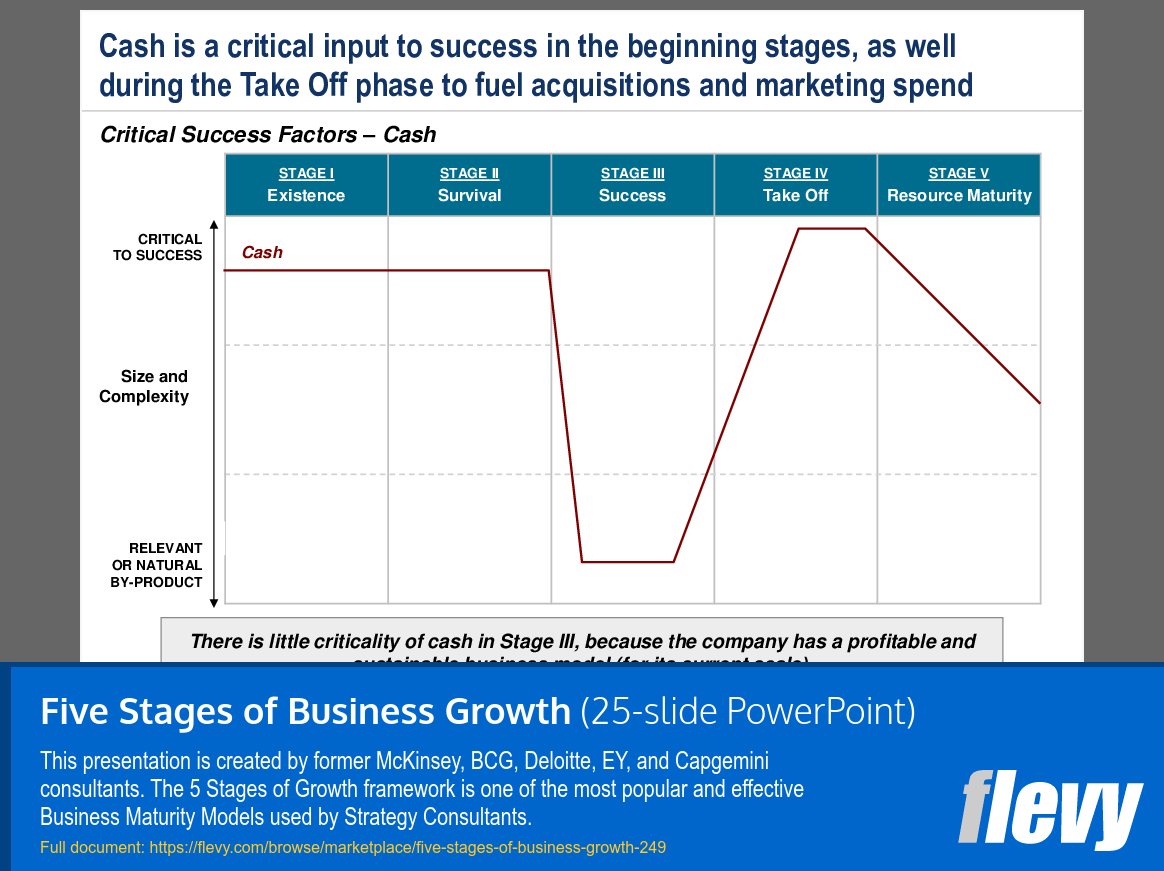
This PPT slide visualizes the critical role of cash across 5 business growth stages: Existence, Survival, Success, Take Off, and Resource Maturity. The y-axis represents cash importance, while the x-axis shows business size and complexity. In the Existence and Survival stages, cash is vital due to significant cash flow challenges faced by startups. As businesses enter the Success stage, cash necessity diminishes, indicating a viable business model. However, during the Take Off phase, cash importance resurges due to the need for investments in marketing and acquisitions. In the Resource Maturity stage, cash reliance declines, suggesting mature companies operate with greater stability. Understanding cash flow dynamics is essential for strategic financial planning and decision-making throughout the growth journey.
Source: Best Practices in Growth Strategy, Maturity Model, Entrepreneurship, Small Business PowerPoint Slides: Five Stages of Business Growth PowerPoint (PPT) Presentation Slide Deck, LearnPPT Consulting
This presentation is created by former McKinsey, BCG, Deloitte, EY, and Capgemini consultants. The 5 Stages of Growth framework is one of the most popular and effective Business Maturity Models used by Strategy Consultants.
We are a team of management consultants trained by top tier global consulting firms (including McKinsey, BCG, Deloitte, EY, Capgemini) with a collective experience of several decades. We specialize in business frameworks based on real-life consulting engagements.
We have served 100s of clients that range from Fortune 500 companies to tech startups to
... [read more] $1B+ private companies.
Utilize our consulting frameworks to apply structured thinking & analysis to address your business challenges, uncover strategic insights, and implement workable solutions. Our PowerPoint presentations follow traditional consulting slide design formats, starting with a clear slide headline. Easily customize and repurpose our slides for your own business presentations.
Beyond business frameworks & methodologies, we also offer PowerPoint templates and other business templates. Our templates are professionally designed and have been used in thousands of deliverables & work products across hundreds of clients.
Since 2012, we have provided business templates to over 10,000 businesses and organizations of all sizes, from startups and small businesses to the Fortune 100, in over 130 countries.
Read Customer Testimonials
"One of the great discoveries that I have made for my business is the Flevy library of training materials.
As a Lean Transformation Expert, I am always making presentations to clients on a variety of topics: Training, Transformation, Total Productive Maintenance, Culture, Coaching, Tools, Leadership Behavior, etc. Flevy
It is well worth the money to purchase these presentations. Sure, I have the knowledge and information to make my point. It is another thing to create a presentation that captures what I want to say. Flevy has saved me countless hours of preparation time that is much better spent with implementation that will actually save money for my clients.
"
– Ed Kemmerling, Senior Lean Transformation Expert at PMG
"As a consulting firm, we had been creating subject matter training materials for our people and found the excellent materials on Flevy, which saved us 100's of hours of re-creating what already exists on the Flevy materials we purchased."
– Michael Evans, Managing Director at Newport LLC
"As a niche strategic consulting firm, Flevy and FlevyPro frameworks and documents are an on-going reference to help us structure our findings and recommendations to our clients as well as improve their clarity, strength, and visual power. For us, it is an invaluable resource to increase our impact and value."
– David Coloma, Consulting Area Manager at Cynertia Consulting
"I have found Flevy to be an amazing resource and library of useful presentations for lean sigma, change management and so many other topics. This has reduced the time I need to spend on preparing for my performance consultation. The library is easily accessible and updates are regularly provided. A wealth of great information."

– Cynthia Howard RN, PhD, Executive Coach at Ei Leadership
"As a small business owner, the resource material available from FlevyPro has proven to be invaluable. The ability to search for material on demand based our project events and client requirements was great for me and proved very beneficial to my clients. Importantly, being able to easily edit and tailor
the material for specific purposes helped us to make presentations, knowledge sharing, and toolkit development, which formed part of the overall program collateral. While FlevyPro contains resource material that any consultancy, project or delivery firm must have, it is an essential part of a small firm or independent consultant's toolbox.
"
– Michael Duff, Managing Director at Change Strategy (UK)
"As an Independent Management Consultant, I find Flevy to add great value as a source of best practices, templates and information on new trends. Flevy has matured and the quality and quantity of the library is excellent. Lastly the price charged is reasonable, creating a win-win value for
the customer, Flevy and the various authors. This is truly a service that benefits the consulting industry and associated clients. Thanks for providing this service.
"
– Jim Schoen, Principal at FRC Group
"Flevy is our 'go to' resource for management material, at an affordable cost. The Flevy library is comprehensive and the content deep, and typically provides a great foundation for us to further develop and tailor our own service offer."
– Chris McCann, Founder at Resilient.World
"[Flevy] produces some great work that has been/continues to be of immense help not only to myself, but as I seek to provide professional services to my clients, it gives me a large "tool box" of resources that are critical to provide them with the quality of service and outcomes they are expecting."
– Royston Knowles, Executive with 50+ Years of Board Level Experience
Save with Bundles
This document is available as part of the following discounted bundle(s):
Download our free compilation of 50+ Strategy & Transformation slides and templates. Frameworks include McKinsey 7-S, Balanced Scorecard, Disruptive Innovation, BCG Curve, and many more.