 Click main image to view in full screen.
Design Thinking - Poster (printable in A0, A1, A2) – PDF
PDF document + Zip archive file (ZIP) 1 Pages


BENEFITS OF THIS DOWNLOADABLE PDF DOCUMENT
- Introduction to Design Thinking
- Introduction to Design Thinking project concept and some key Design Thinking tools
- One page - Learning material for Design Thinking approach
SERVICE DESIGN PDF DESCRIPTION
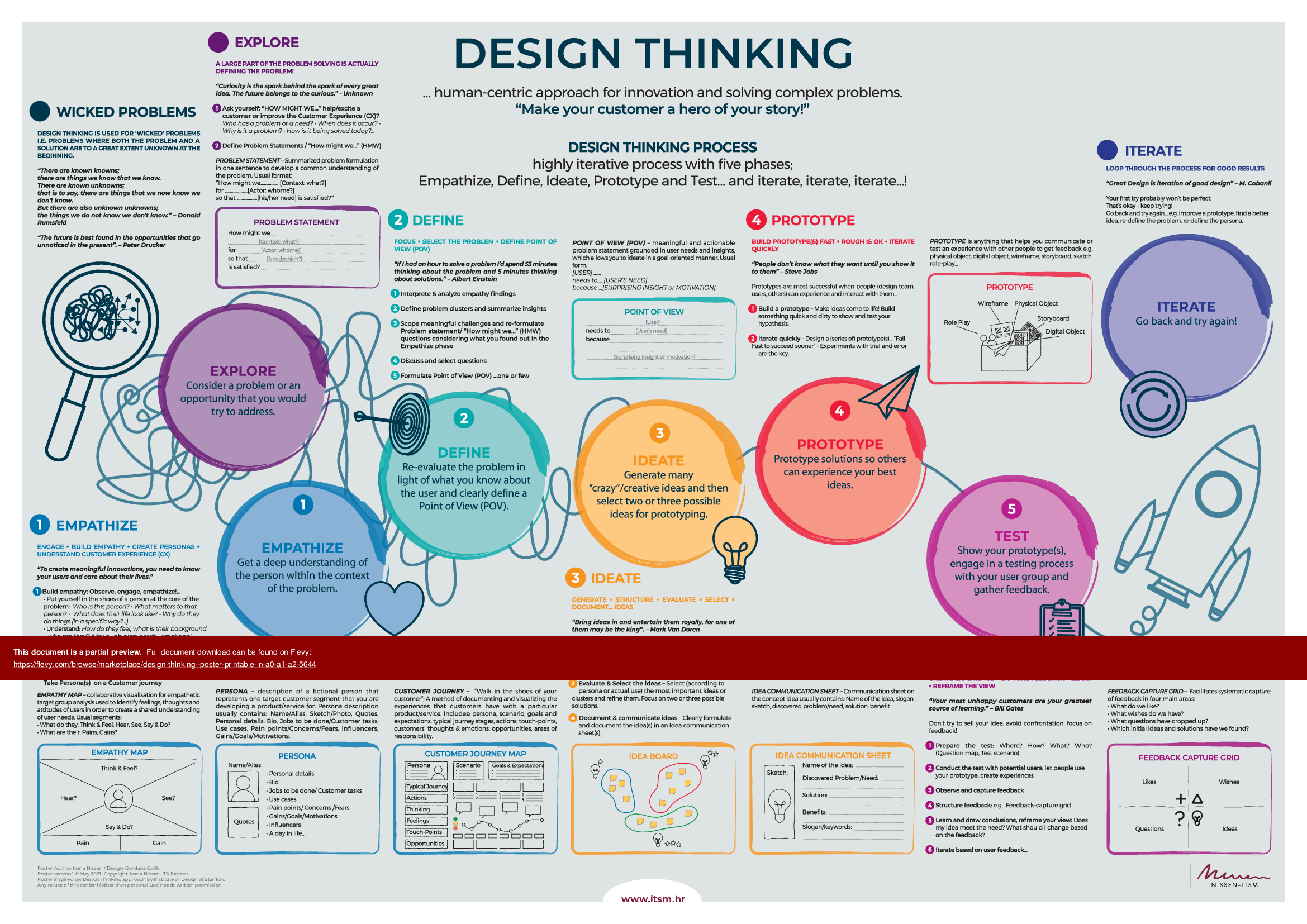
Design Thinking poster gives a detailed description of a Design Thinking process.
It is great as introduction to design thinking, an overview of a possible design thinking project, encouraging innovation and design thinking. Poster presents some typical tools for design thinking: Problem Statement / How might we (HMW), Empathy Map, Persona, Customer Journey, Point of View (POV) statement, Idea Communication Sheet, Feedback capture grid.
It is based on Stanford Design thinking model and describes steps:
(EXPLORE)
1. EMPATHIZE – Developing a deep understanding of the challenge and the audience for whom you are designing.
2. DEFINE Clearly articulating the problem you want to solve i.e. Point of View (POV)
3. IDEATE – Brainstorming potential solutions and selecting and developing your solution.
4. PROTOTYPE – Designing a (series of) prototype(s) to show to the stakeholders and test all or part of your solution.
5. TEST- Engaging in testing process with your original user group for feedback to refine and improve the solution.
(ITERATE)
Poster also gives sketches of some key Design Thinking tools and templates:
• Problem Statement / How might we (HMW)
• Empathy Map,
• Persona
• Customer Journey
• Point of View (POV) statement
• Idea Communication Sheet
• Feedback capture grid
DESIGN THINKING
is an approach to solving design problems by understanding users' needs and developing insights to solve those needs.
In addition to the poster you see in the preview above, this product also includes 2 alternate versions of the poster (in the secondary ZIP file).
This poster is not just a visual aid; it's a strategic tool for driving innovation. The preview images highlight its clear, step-by-step layout, making it an essential resource for any team looking to implement Design Thinking. The vibrant, easy-to-read graphics ensure that complex concepts are communicated effectively, fostering a culture of creativity and problem-solving. Ideal for workshops, brainstorming sessions, or as a reference in your workspace, this poster serves as a constant reminder of the principles and practices that can lead to breakthrough ideas.
Got a question about the product? Email us at support@flevy.com or ask the author directly by using the "Ask the Author a Question" form. If you cannot view the preview above this document description, go here to view the large preview instead.
TOPIC FAQ
What are the phases of the Stanford Design Thinking model?
The Stanford Design Thinking model is described as a sequence of 5 phases: Empathize (develop understanding of users), Define (articulate the problem/POV), Ideate (generate solution options), Prototype (create prototype(s) to demonstrate concepts), and Test (engage original users for feedback). These are the 5 steps.What tools are commonly used during a design thinking process?
Commonly used tools include a Problem Statement / How Might We (HMW) prompt, Empathy Map, Persona, Customer Journey map, Point of View (POV) statement, Idea Communication Sheet, and a Feedback capture grid. The poster sketches these 7 tools.How does prototyping and testing fit into the design thinking cycle?
Prototyping is used to design one or more artifacts that demonstrate parts of a solution to stakeholders; testing involves engaging the original user group to gather feedback and refine the solution. The poster describes prototyping iterations followed by testing with the original user group.How can I structure a design thinking workshop for beginners?
Structure workshops around the 5 Stanford steps: begin with Empathize activities (interviews, empathy maps), move to Define (POV and HMW), run Ideation sessions, allocate time for rapid Prototyping, and finish with Test sessions that capture feedback. The poster provides a one-page overview and sketches of the tools to guide each session.What should I look for when buying a printable design thinking poster?
Look for a clear depiction of the process steps, inclusion of typical tools (empathy map, persona, customer journey, POV), and available print sizes/formats. This product is provided as a PDF printable in A0, A1, A2 and includes a supplemental ZIP with 2 alternate poster versions.How should I compare cost versus value for downloadable design thinking templates?
Compare whether the asset includes practical artifacts you’ll use (process overview, tool sketches, printable sizes, and alternate versions) and the file formats provided. Flevy’s Design Thinking - Poster is delivered as a PDF with a supplemental ZIP that contains 2 alternate poster versions, which are included in the purchase.I need to introduce design thinking to my team — what's the simplest set of tools to start with?
Begin with foundational tools that support understanding and definition: an Empathy Map to capture user needs, a Persona to represent users, a How Might We / Problem Statement to frame the challenge, a Customer Journey to map key moments, and a Point of View statement to guide ideation.How can I capture feedback during prototype testing sessions?
Use a structured Feedback capture grid to record observations and user reactions, and pair it with an Idea Communication Sheet to document the prototype concept and test assumptions. The poster lists both the Idea Communication Sheet and a feedback capture grid as tools for this purpose.Source: Best Practices in Service Design, Design Thinking PDF: Design Thinking - Poster (printable in A0, A1, A2) PDF (PDF) Document, ITSM Consulting




























