 Click main image to view in full screen.
Empathy Map - Poster (A0, A1, A2) – PDF
PDF document 1 Pages


BENEFITS OF THIS DOWNLOADABLE PDF DOCUMENT
- Template for empathy mapping process
- Awareness tool for Empathy mapping
- Detailed user profiling
DESIGN THINKING PDF DESCRIPTION
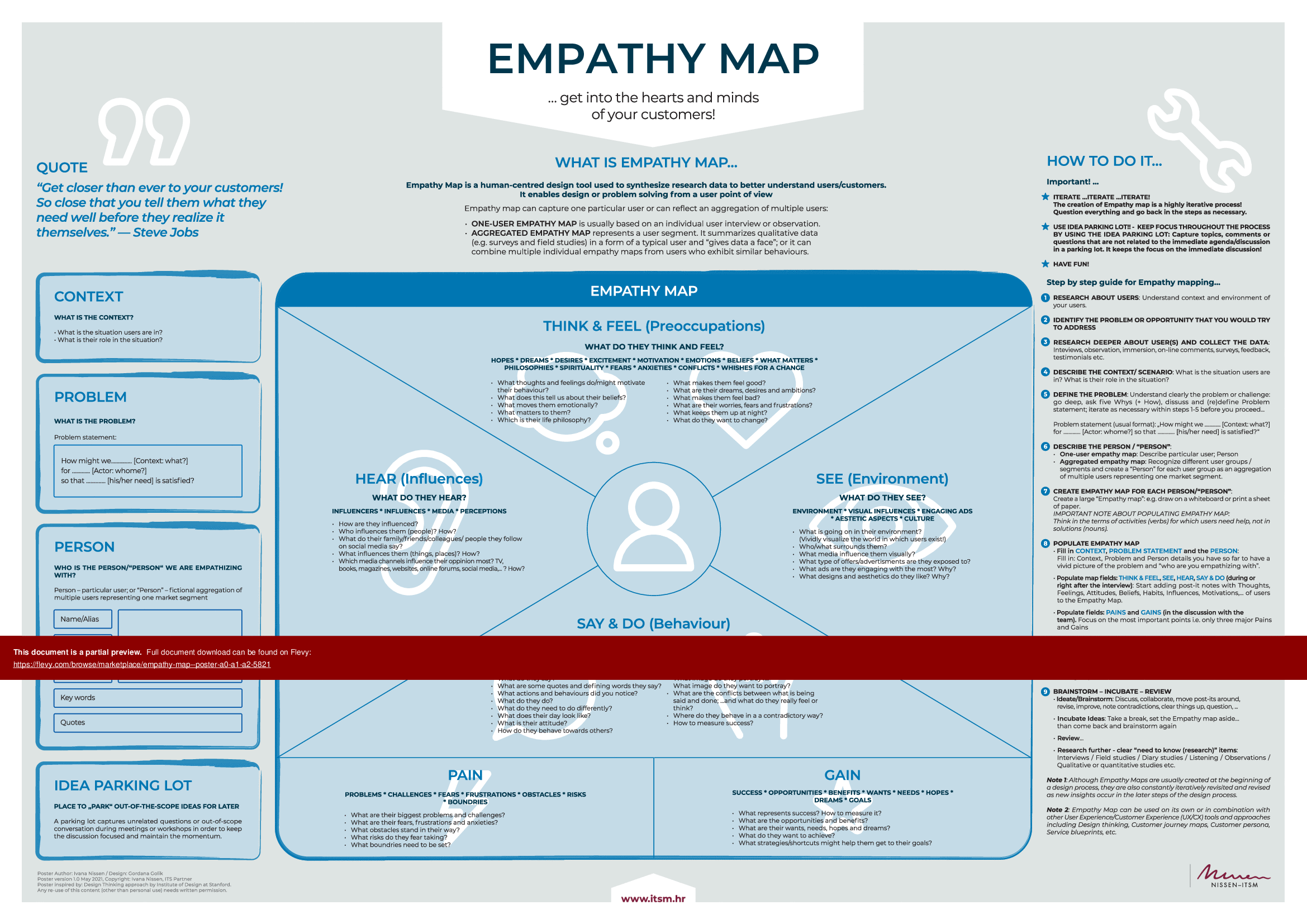
Empathy map poster gives a detailed description of a how to do empathy mapping.
It is based on Stanford Design thinking model and describes steps how to do empathy mapping.
Empathy Map is a human-centred design tool used to synthesize research data to better understand users/customers. It enables design or problem solving from a user point of view Empathy map can capture one particular user or can re?ect an aggregation of multiple users:
• ONE-USER EMPATHY MAP is usually based on an individual user interview or observation. ? – AGGREGATED EMPATHY MAP represents a user segment. It summarizes qualitative data (e.g. surveys and ?eld studies) in a form of a typical user and "gives data a face"; or it can combine multiple individual empathy maps from users who exhibit similar behaviours.
Poster also gives sketches of some key Design Thinking tools and templates:
? Problem Statement
? Empathy Map
? Persona
The Empathy Map – Poster (A0, A1, A2) is a visually engaging and practical tool designed for teams aiming to delve deep into user insights. The preview images showcase a meticulously crafted layout that simplifies the process of empathy mapping, making it accessible even for those new to the concept. The poster's large format ensures that it can be easily used in workshops or brainstorming sessions, allowing teams to collaborate effectively and capture nuanced user perspectives.
The poster includes clear sections for documenting user thoughts, feelings, and behaviors, providing a structured approach to understanding user experiences. The visual aids and templates embedded within the poster are not only intuitive, but also facilitate a seamless integration into any design thinking process. This PDF is an invaluable resource for any team looking to enhance their user-centered design practices and drive innovation through empathy.
Got a question about the product? Email us at support@flevy.com or ask the author directly by using the "Ask the Author a Question" form. If you cannot view the preview above this document description, go here to view the large preview instead.
TOPIC FAQ
What is an empathy map and when should I use one?
An empathy map is a human-centered design tool for synthesizing research data to better understand users from their point of view. It captures user thoughts, feelings, and behaviors and can represent a single interviewee or a summarized user segment, making it useful during post-research synthesis and workshop activities into one-user or aggregated empathy maps.How does a one-user empathy map differ from an aggregated empathy map?
A one-user empathy map is based on an individual interview or observation and preserves that person’s specific quotes and behaviors. An aggregated empathy map summarizes qualitative data from multiple sources or combines similar individual maps to represent a typical user or segment, often drawing on surveys and field studies as input.What elements should I include on an empathy map?
Empathy maps commonly include sections for documenting what a user says, thinks, feels, and does—capturing quotes, emotions, and observable behaviors. They can be paired with a Problem Statement and Persona to frame design work; the referenced poster explicitly includes sections for thoughts, feelings, and behaviors and templates for Problem Statement and Persona.How does empathy mapping fit within the Design Thinking process?
Within Design Thinking, empathy mapping is a synthesis activity that organizes qualitative research into user-centered insights to inform problem framing and subsequent ideation. The poster is based on the Stanford Design Thinking model and positions empathy mapping as a means to translate research into actionable user perspectives and problem statements.What should I look for when choosing an empathy map poster or template?
Seek clear sections for user thoughts, feelings, and behaviors, templates for Problem Statement and Persona, and formats suitable for workshop use. If you need large-format options and a Stanford Design Thinking alignment, consider the Empathy Map - Poster (A0, A1, A2), which is provided as a PDF in A0/A1/A2 sizes and includes those templates.Are printed posters or digital empathy map templates useful for workshop facilitation?
Large-format posters support in-room collaboration and visibility, helping teams capture nuanced perspectives during group synthesis. A digital PDF that’s printable in A0, A1, or A2 sizes enables both remote prep and physical workshop use; the product overview highlights suitability for workshops and brainstorming with A0/A1/A2 output.I have a set of interview notes—how do I create an aggregated empathy map?
Combine recurring themes, quotes, and behaviors across interviews to form a representative user profile. Summarize qualitative findings into common thoughts, feelings, and actions, and optionally merge multiple individual empathy maps from users with similar behaviors to produce a single aggregated empathy map representing that segment.Can an empathy map replace a persona in my research outputs?
An empathy map and a persona serve related, but distinct functions: empathy maps synthesize behaviors, thoughts, and feelings from specific research, while personas package broader demographic and motivational context. Empathy maps can feed persona development; the poster explicitly includes a Persona template alongside the Empathy Map and Problem Statement.Source: Best Practices in Design Thinking PDF: Empathy Map - Poster (A0, A1, A2) PDF (PDF) Document, ITSM Consulting




























