
Change Management Models   139-slide PPT PowerPoint presentation slide deck (PPTX)
$59.00

Change Management Models (139-slide PPT PowerPoint presentation slide deck (PPTX)) Preview Image
Log in to unlock full preview.
Change Management Models (139-slide PPT PowerPoint presentation slide deck (PPTX)) Preview Image
Arrow   Click main image to view in full screen.

Change Management Models (PowerPoint PPTX Slide Deck)

PowerPoint (PPTX) 139 Slides

Top 500 Best Practice $59.00
Developed by a Change Management Expert with a wealth of experience at industry giants like Microsoft, IBM and Panasonic, this collection serves as your guide to achieving transformative change and enhancing stakeholder satisfaction.
Add to Cart


Immediate download
Fully editable PowerPoint
Free lifetime updates

BENEFITS OF THIS POWERPOINT DOCUMENT

  1. Provides 25 different frameworks and methodologies for change management.
  2. Serves as rough orientation for business leaders, change managers and other experts.

CHANGE MANAGEMENT PPT DESCRIPTION

Editor Summary 139-slide PowerPoint presentation titled Change Management Models delivering 25 change management models and templates, developed by Operational Excellence Consulting and authored by a change expert with experience at Microsoft, IBM and Panasonic. Read more

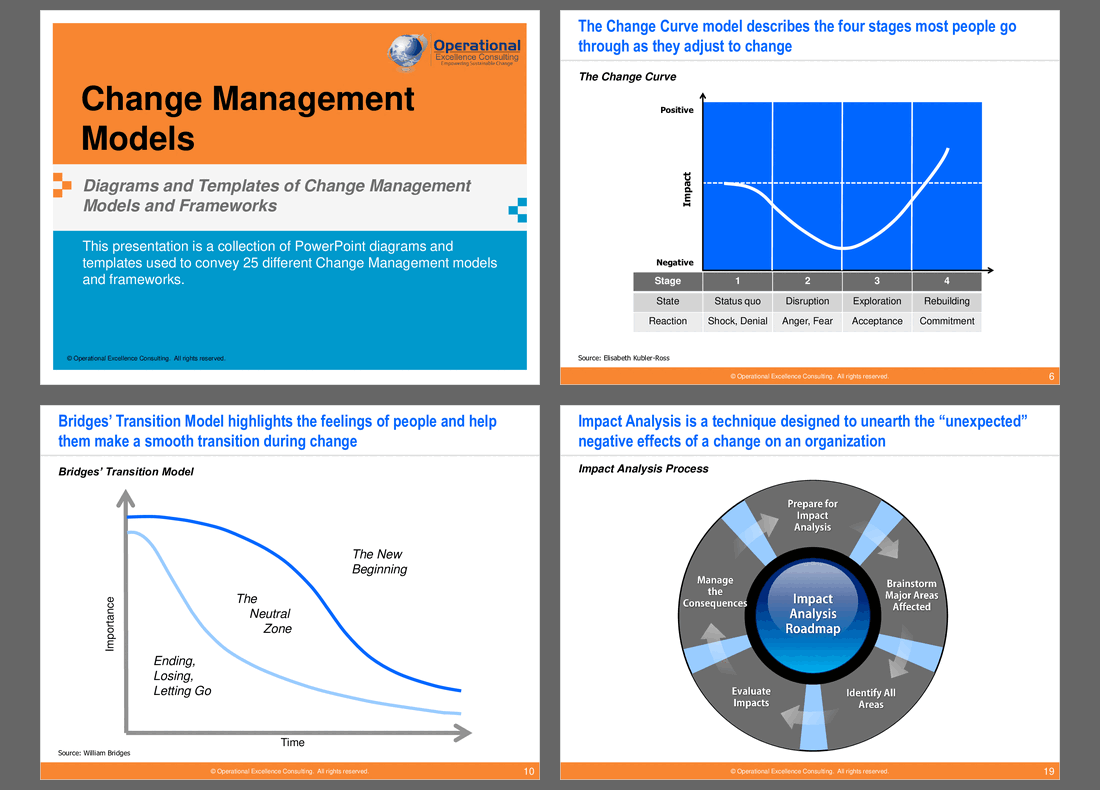
This presentation is a collection of PowerPoint diagrams and templates used to convey 25 different Change Management models and frameworks. (Please note that these are diagrams and charts that are to be used in your own business or classroom presentations. These are not instructional slides.)

INCLUDED MODELS/FRAMEWORKS:

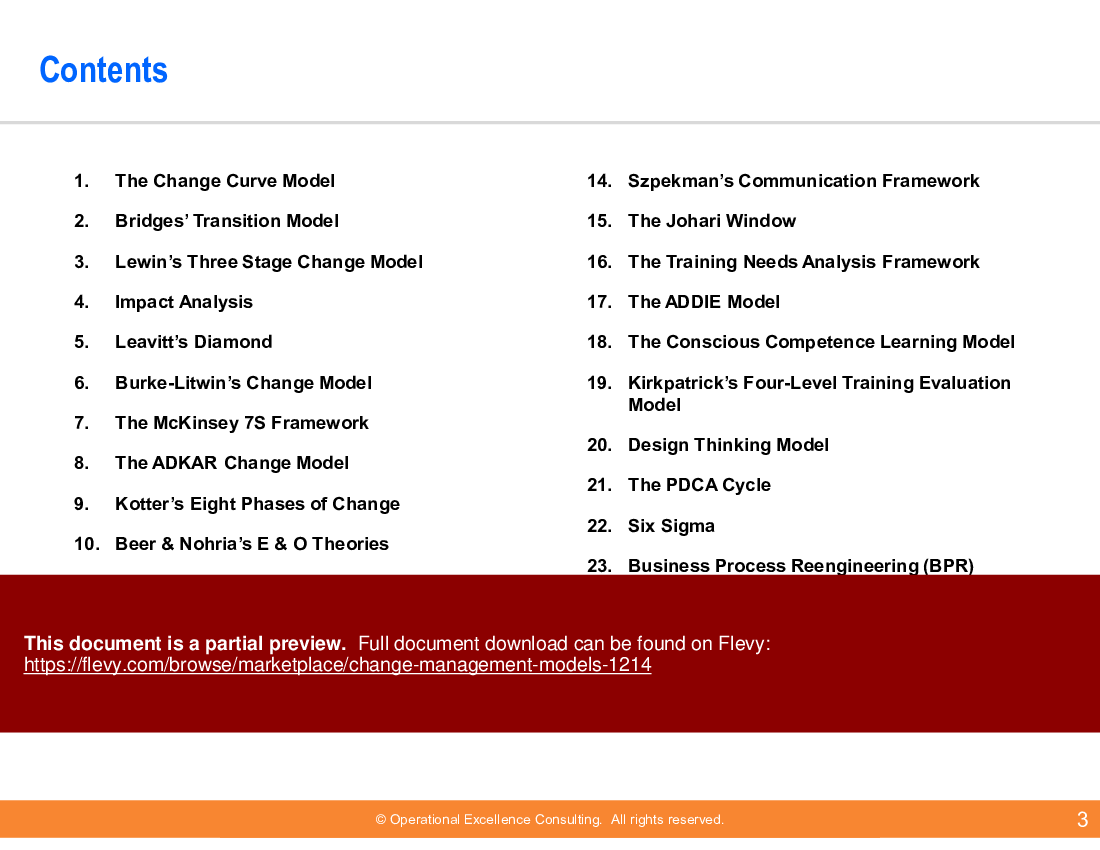
1. Kubler-Ross' Change Curve Model
2. Bridges' Transition Model
3. Lewin's Three Stage Change Model
4. Impact Analysis Process
5. Leavitt's Diamond
6. The Burke-Litwin Change Model
7. The McKinsey 7S Framework
8. The ADKAR Change Model
9. Kotter's Eight Phases of Change
10. Beer & Nohria's E & O Theories
11. Hofstede's Cultural Dimensions
12. The Power/Interest Grid for Stakeholder Prioritization
13. Osgood-Schramm's Communication Model
14. Szpekman's Communication Framework
15. The Johari Window
16. Blanchard & Thacker's Training Needs Analysis Framework
17. The ADDIE Model
18. Burch's Conscious Competence Learning Model
19. Kirkpatrick's Four-Level Training Evaluation Model
20. Design Thinking Model
21. The PDCA Cycle
22. Six Sigma
23. Business Process Redesign (BPR)
24. Project Management Body of Knowledge (PMBoK)
25. ISO 31000:2018 Risk Management

Concepts covered include: Eisabeth Kubler-Ross' Change Curve, William Bridges' Transition Model, Kurt Lewin's Change Model, Impact Analysis Process, Harold J. Leavitt's Diamond, Burke-Litwin Change Model, Osgood-Schramm's Model of Communication, Andy Szpekman's Communication Framework, Blanchard & Thacker's Training Needs Analysis, The Power/Interest Grid for Stakeholder Prioritization, Noel Burch's Conscious Competence Learning Model, McKinsey's 7S Framework, Prosci's ADKAR Change Model, Kotter's Eight-Step Change Process and Donald Kirkpatrick's Four-Level Training Evaluation Model.

This comprehensive deck features detailed templates and diagrams for each model, allowing you to seamlessly integrate them into your presentations. The visual aids are designed to enhance understanding and facilitate discussions on change management strategies. Whether you are leading a transformation initiative or educating your team, these slides provide the clarity and structure needed to drive impactful change. This resource is indispensable for professionals seeking to implement best practices in change management.

Got a question about the product? Email us at support@flevy.com or ask the author directly by using the "Ask the Author a Question" form. If you cannot view the preview above this document description, go here to view the large preview instead.

MARCUS OVERVIEW

This synopsis was written by Marcus [?] based on the analysis of the full 139-slide presentation.


Executive Summary
This presentation, titled Change Management Models, is a comprehensive collection of PowerPoint diagrams and templates that encapsulate 25 distinct change management models and frameworks. Developed by Operational Excellence Consulting, this resource serves as a vital tool for organizations aiming to navigate the complexities of change effectively. The models included, such as the Change Curve, Bridges’ Transition Model, and Kotter’s Eight Phases of Change, provide structured methodologies to facilitate successful organizational transformations. With ready-to-use templates, this presentation empowers leaders to enhance stakeholder engagement and drive sustainable change initiatives.

Who This Is For and When to Use
•  Change management consultants seeking structured frameworks for client engagements
•  Corporate executives leading organizational change initiatives
•  Project managers responsible for implementing change processes
•  HR professionals focused on employee transition and training during change
•  Training and development teams designing change management programs

Best-fit moments to use this deck:
•  During the planning phase of a significant organizational change
•  In workshops aimed at educating teams on change management principles
•  When developing training materials for employees affected by change
•  For stakeholder engagement sessions to communicate change strategies

Learning Objectives
•  Define key change management models and their applications in organizational contexts
•  Build a comprehensive understanding of the stages of change and transition
•  Establish effective communication strategies to manage stakeholder expectations
•  Identify potential resistance to change and develop mitigation strategies
•  Create actionable plans for implementing change initiatives using established frameworks
•  Evaluate the impact of change management efforts on organizational performance

Table of Contents
•  The Change Curve Model (page 6)
•  Bridges’ Transition Model (page 10)
•  Lewin’s Three Stage Change Model (page 14)
•  Impact Analysis (page 19)
•  Leavitt’s Diamond (page 22)
•  Burke-Litwin’s Change Model (page 25)
•  The McKinsey 7-S Framework (page 31)
•  The ADKAR Change Model (page 36)
•  Kotter’s Eight Phases of Change (page 45)
•  Beer & Nohria’s E & O Theories (page 50)
•  Hofstede’s Cultural Dimensions (page 54)
•  The Power/Interest Grid for Stakeholder Prioritization (page 61)
•  Osgood-Schramm’s Communication Model (page 65)
•  Szpekman’s Communication Framework (page 68)
•  The Johari Window (page 74)
•  The Training Needs Analysis Framework (page 84)
•  The ADDIE Model (page 87)
•  The Conscious Competence Learning Model (page 91)
•  Kirkpatrick’s Four-Level Training Evaluation Model (page 95)
•  Design Thinking Model (page 100)
•  The PDCA Cycle (page 104)
•  Six Sigma (page 107)
•  Business Process Reengineering (BPR) (page 117)
•  Project Management Body of Knowledge (PMBoK) (page 122)
•  ISO 31000:2018 Risk Management (page 131)

Primary Topics Covered
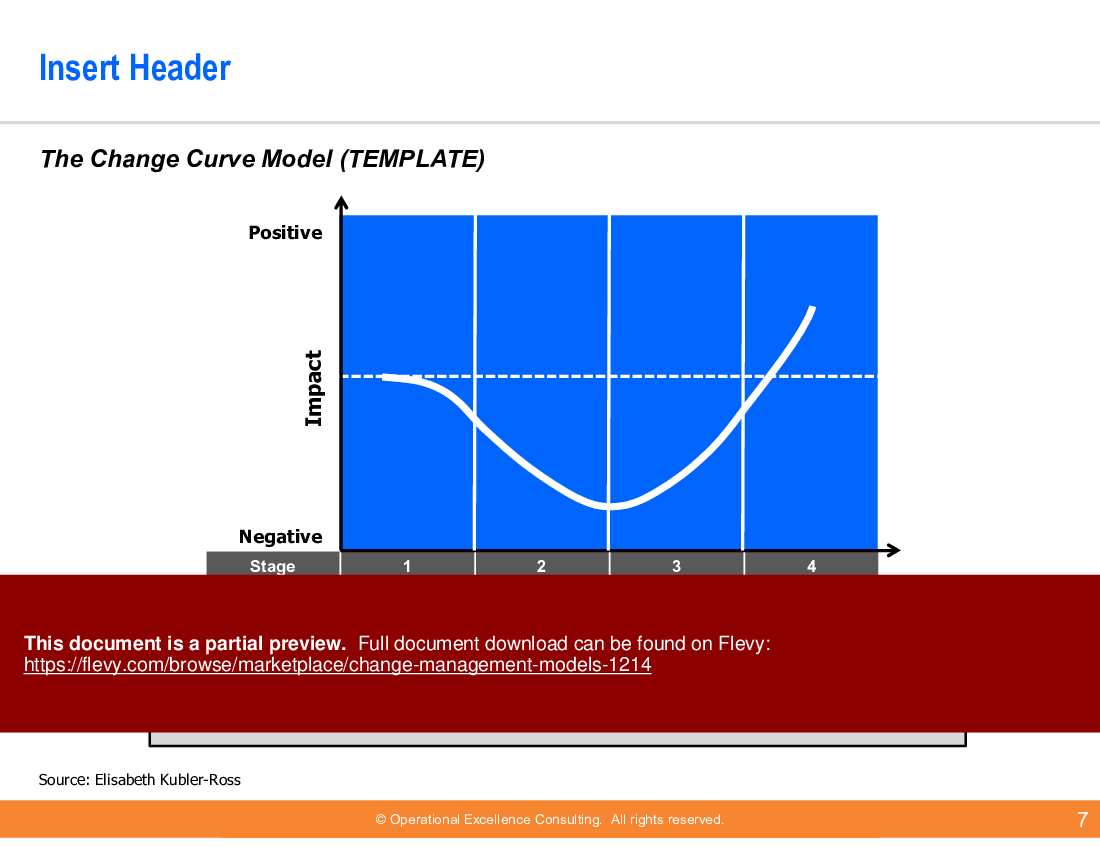
•  The Change Curve Model - Describes the emotional stages individuals experience during change, including shock, anger, acceptance, and commitment.
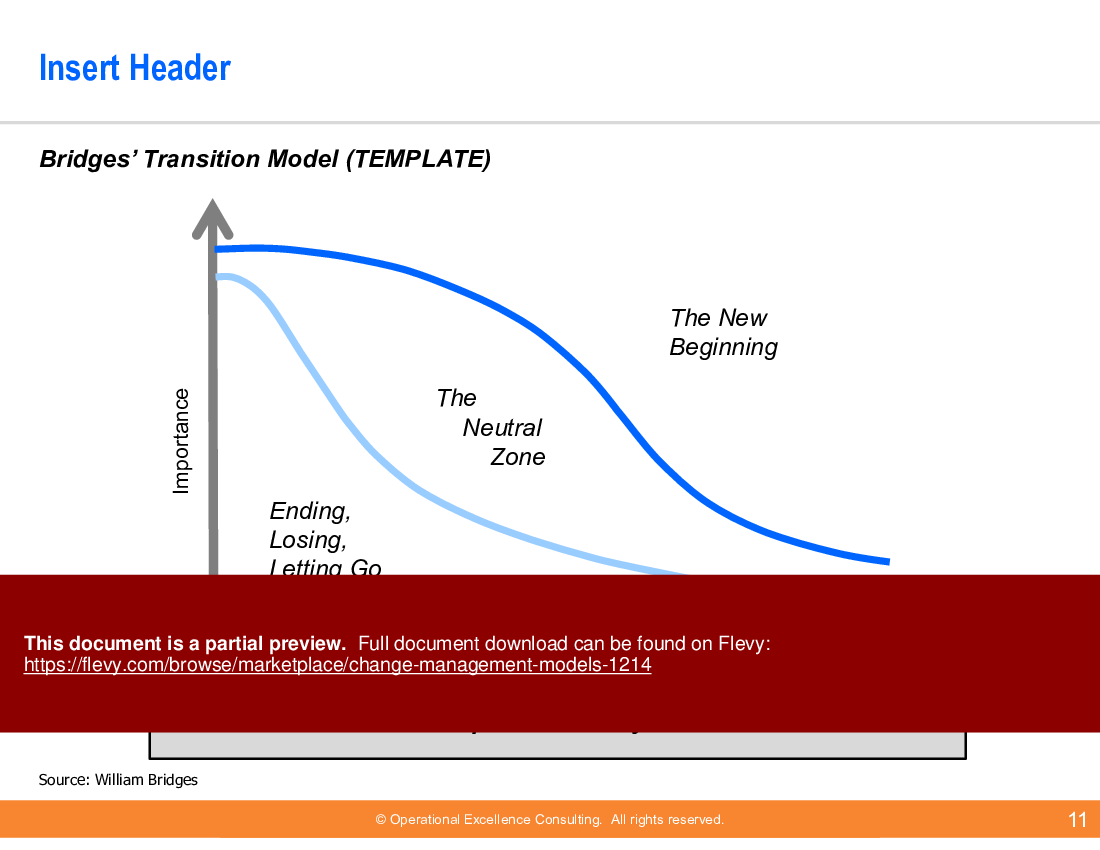
•  Bridges’ Transition Model - Focuses on the internal transition process individuals undergo during change, highlighting the importance of managing feelings and expectations.
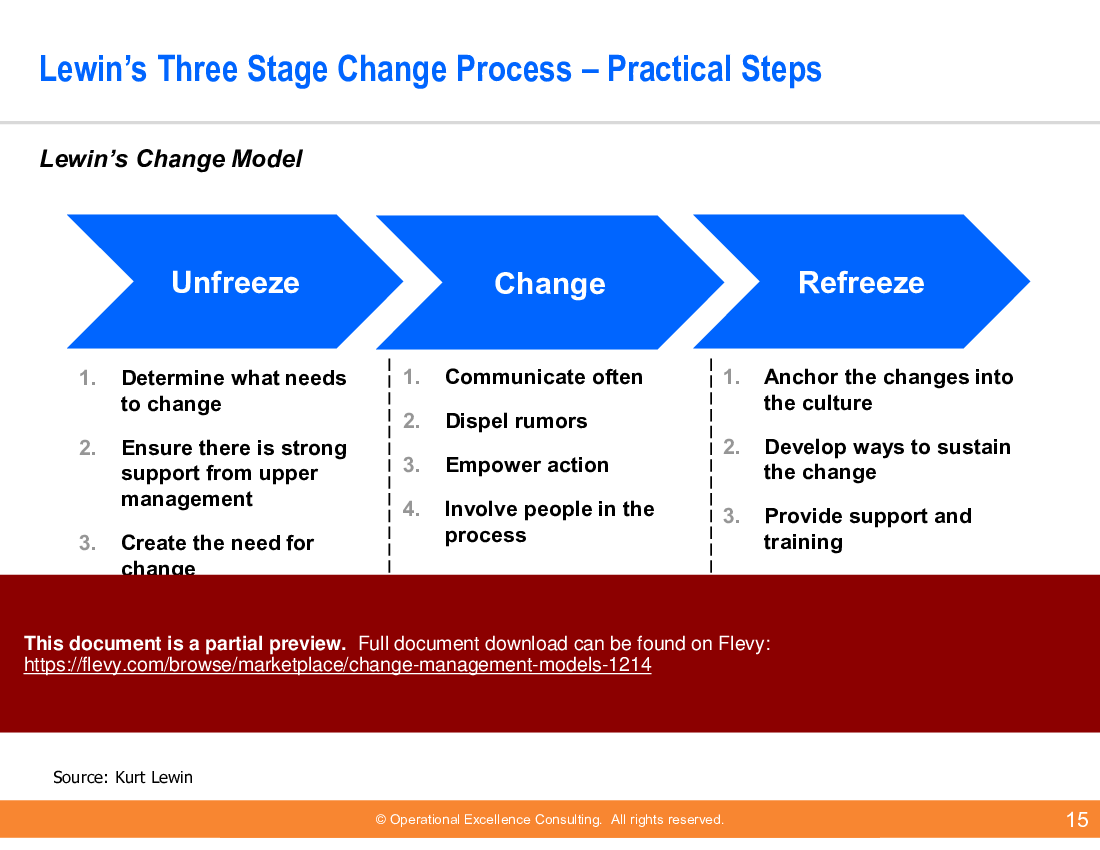
•  Lewin’s Three Stage Change Model - A straightforward framework outlining the phases of unfreezing, changing, and refreezing to ensure lasting change.
•  Impact Analysis - A technique to identify and assess the unexpected negative effects of change on an organization.
•  Leavitt’s Diamond - Illustrates the interdependence of people, tasks, structure, and technology in organizational change.
•  Burke-Litwin’s Change Model - Analyzes the causal relationships among key factors affecting organizational performance and change.

Deliverables, Templates, and Tools
•  Change management model templates for practical application
•  Diagrams illustrating various change management frameworks
•  Communication plans tailored for stakeholder engagement
•  Training needs analysis tools to identify skill gaps
•  Evaluation frameworks for assessing change impact
•  Project charters for Six Sigma and BPR initiatives

Slide Highlights
•  Visual representation of the Change Curve stages
•  Bridges’ Transition Model illustrating the emotional journey during change
•  Lewin’s model detailing the steps for effective change management
•  Burke-Litwin model showcasing factors influencing organizational performance
•  McKinsey 7-S Framework diagram emphasizing alignment of internal elements

Potential Workshop Agenda
Introduction to Change Management Models (30 minutes)
•  Overview of key change management concepts
•  Discussion on the importance of structured frameworks

Interactive Session on Change Curve and Bridges’ Model (60 minutes)
•  Group activities to explore emotional responses to change
•  Case studies on managing transitions effectively

Application of Lewin’s Model and Burke-Litwin Framework (45 minutes)
•  Breakout sessions to develop change management plans
•  Sharing insights and strategies among participants

Wrap-Up and Q&A Session (15 minutes)
•  Addressing participant questions
•  Discussing next steps for implementing learned concepts

Customization Guidance
•  Tailor the templates to reflect your organization’s specific change initiatives
•  Adjust terminology and frameworks to align with your company culture
•  Incorporate relevant case studies or examples from your industry
•  Modify communication strategies based on stakeholder analysis

Secondary Topics Covered
•  The ADKAR Change Model and its application in individual change
•  The role of communication in managing change effectively
•  Training frameworks such as ADDIE and Kirkpatrick’s evaluation model
•  Design Thinking as a method for innovative problem-solving
•  Six Sigma methodologies for process improvement

Topic FAQ

What are common change management models and how do they differ in purpose?

Common models include the Change Curve (emotional stages for individuals), Bridges’ Transition Model (internal psychological transition), Lewin’s Three Stage Model (unfreeze, change, refreeze), Kotter’s Eight Phases (stepwise organizational steps), and ADKAR (individual awareness to reinforcement); each addresses different levels such as individual emotions or organizational sequence, for example Lewin's 3 stages: unfreeze, change, refreeze.

How can I use the Power/Interest Grid to prioritize stakeholders during a change?

The Power/Interest Grid helps categorize stakeholders by their influence and interest to tailor engagement strategies; high-power/high-interest actors receive active management while low-power/low-interest require monitoring. The Change Management Models deck includes a Power/Interest Grid template to support prioritization and engagement planning using that tool.

Which frameworks help assess training effectiveness in a change program?

Training effectiveness can be assessed using Kirkpatrick’s Four-Level Training Evaluation Model (reaction, learning, behavior, results), supported by Training Needs Analysis and ADDIE for instructional design; the Change Management Models resource lists Kirkpatrick alongside Training Needs Analysis and ADDIE as evaluation and design frameworks, specifically Kirkpatrick’s Four-Level Training Evaluation Model.

What is the ADKAR model and when should I apply it?

ADKAR is an individual-focused change model that sequences Awareness, Desire, Knowledge, Ability, and Reinforcement to guide personal transitions; apply it when planning interventions that target individual adoption and sustaining behavior change using the ADKAR model.

What should I look for when buying a slide deck of change management models?

Buyers should look for breadth of models, ready-to-use templates (communication plans, training analysis, evaluation), diagram clarity, and adaptability for workshops or training; the Change Management Models PowerPoint lists 25 models and includes templates, diagrams, communication plans and training tools across 139 slides.

How can I judge the cost-effectiveness of purchasing change management templates?

Evaluate whether templates reduce prep time, cover likely use cases (workshops, training, stakeholder plans) and are editable for reuse; a deck that bundles diagrams, communication plans, training needs analysis tools and evaluation frameworks can be reused across programs, as found in Change Management Models with templates and diagrams across 139 slides.

I need to run a stakeholder engagement workshop—what frameworks should I prepare?

Prepare stakeholder prioritization and communication frameworks such as the Power/Interest Grid, Osgood‑Schramm and Szpekman communication models, plus the Johari Window for feedback and trust exercises; Flevy's Change Management Models includes the Power/Interest Grid and Osgood‑Schramm communication model for workshop use.

We’re mapping process improvement alongside organizational change—which models help link both areas?

Use process improvement frameworks like Six Sigma, the PDCA Cycle and Business Process Reengineering (BPR) alongside organizational change tools such as Leavitt’s Diamond and Burke‑Litwin to align people, tasks, structure and technology; relevant models include Six Sigma, PDCA, and BPR.

Document FAQ
These are questions addressed within this presentation.

What is the Change Curve Model?
The Change Curve Model outlines the emotional stages individuals experience during change, including shock, anger, acceptance, and commitment.

How can I apply the ADKAR model in my organization?
The ADKAR model can be applied by ensuring awareness of the need for change, fostering desire to support it, providing knowledge on how to change, enabling ability to implement new skills, and reinforcing the change to sustain it.

What is the significance of Bridges’ Transition Model?
Bridges’ Transition Model emphasizes the internal emotional journey individuals undergo during change, highlighting the need to manage feelings and expectations effectively.

How does Lewin’s model facilitate change?
Lewin’s model provides a structured approach to change through 3 stages: unfreezing the current state, implementing the change, and refreezing to solidify the new state.

What tools are available for stakeholder analysis?
The Power/Interest Grid is a useful tool for stakeholder analysis, helping to prioritize engagement strategies based on their level of power and interest in the change initiative.

How can I evaluate the effectiveness of training related to change management?
Kirkpatrick’s Four-Level Training Evaluation Model can be used to assess training effectiveness by measuring reaction, learning, behavior, and results.

What is the role of communication in change management?
Effective communication is crucial in change management as it helps to clarify the reasons for change, manage expectations, and engage stakeholders throughout the process.

How can I customize these models for my organization?
You can customize the models by tailoring templates to reflect your organization’s specific context, adjusting terminology, and incorporating relevant case studies or examples.

Glossary
•  Change Curve - A model describing the emotional stages individuals experience during change.
•  Bridges’ Transition Model - A framework highlighting the internal transition process during change.
•  Lewin’s Change Model - A three-stage model for managing organizational change.
•  Impact Analysis - A technique for assessing the negative effects of change.
•  Leavitt’s Diamond - A model illustrating the interdependence of organizational elements.
•  Burke-Litwin Model - A framework analyzing factors influencing organizational performance.
•  ADKAR Model - A change management model focusing on individual transitions.
•  Six Sigma - A data-driven approach for process improvement.
•  Kirkpatrick’s Model - A framework for evaluating training effectiveness.
•  Design Thinking - A human-centered approach to problem-solving.
•  Power/Interest Grid - A tool for stakeholder analysis in change management.
•  Training Needs Analysis (TNA) - A systematic approach to identify training gaps.
•  ADDIE Model - An instructional design framework comprising 5 phases.
•  Project Management Body of Knowledge (PMBoK) - A set of best practices for project management.
•  ISO 31000:2018 - An international standard for risk management.

Source: Best Practices in Change Management, Business Framework PowerPoint Diagrams PowerPoint Slides: Change Management Models PowerPoint (PPTX) Presentation Slide Deck, Operational Excellence Consulting


$59.00
Developed by a Change Management Expert with a wealth of experience at industry giants like Microsoft, IBM and Panasonic, this collection serves as your guide to achieving transformative change and enhancing stakeholder satisfaction.
Add to Cart
  

ABOUT THE AUTHOR

Author image
Additional documents from author: 257
Terms of usage (for all documents from this author)

Operational Excellence Consulting, founded in 2009 by Allan Ung, draws from extensive experience at Microsoft, IBM, and Underwriters Laboratories (UL). We specialize in strategy deployment, customer experience design, and operational excellence, applying Design Thinking, Lean, and Systems Thinking to maximize customer value and minimize waste.

Our ... [read more]

Ask the Author a Question

You must be logged in to contact the author.

Click here to log in Click here register

Did you know?
The average daily rate of a McKinsey consultant is $6,625 (not including expenses). The average price of a Flevy document is $65.

Bundle and save! You can save up to % with bundles!

View bundle(s)


Trusted by over 10,000+ Client Organizations
Since 2012, we have provided business templates to over 10,000 businesses and organizations of all sizes, from startups and small businesses to the Fortune 100, in over 130 countries.
AT&T GE Cisco Intel IBM Coke Dell Toyota HP Nike Samsung Microsoft Astrazeneca JP Morgan KPMG Walgreens Walmart 3M Kaiser Oracle SAP Google E&Y Volvo Bosch Merck Fedex Shell Amgen Eli Lilly Roche AIG Abbott Amazon PwC T-Mobile Broadcom Bayer Pearson Titleist ConEd Pfizer NTT Data Schwab


Read Customer Testimonials

 
"I am extremely grateful for the proactiveness and eagerness to help and I would gladly recommend the Flevy team if you are looking for data and toolkits to help you work through business solutions."

– Trevor Booth, Partner, Fast Forward Consulting
 
"I have found Flevy to be an amazing resource and library of useful presentations for lean sigma, change management and so many other topics. This has reduced the time I need to spend on preparing for my performance consultation. The library is easily accessible and updates are regularly provided. A wealth of great information."

– Cynthia Howard RN, PhD, Executive Coach at Ei Leadership
 
"[Flevy] produces some great work that has been/continues to be of immense help not only to myself, but as I seek to provide professional services to my clients, it gives me a large "tool box" of resources that are critical to provide them with the quality of service and outcomes they are expecting."

– Royston Knowles, Executive with 50+ Years of Board Level Experience
 
"FlevyPro provides business frameworks from many of the global giants in management consulting that allow you to provide best in class solutions for your clients."

– David Harris, Managing Director at Futures Strategy
 
"I have used FlevyPro for several business applications. It is a great complement to working with expensive consultants. The quality and effectiveness of the tools are of the highest standards."

– Moritz Bernhoerster, Global Sourcing Director at Fortune 500
 
"Last Sunday morning, I was diligently working on an important presentation for a client and found myself in need of additional content and suitable templates for various types of graphics. Flevy.com proved to be a treasure trove for both content and design at a reasonable price, considering the time I "

– M. E., Chief Commercial Officer, International Logistics Service Provider
 
"As a consulting firm, we had been creating subject matter training materials for our people and found the excellent materials on Flevy, which saved us 100's of hours of re-creating what already exists on the Flevy materials we purchased."

– Michael Evans, Managing Director at Newport LLC
 
"As an Independent Management Consultant, I find Flevy to add great value as a source of best practices, templates and information on new trends. Flevy has matured and the quality and quantity of the library is excellent. Lastly the price charged is reasonable, creating a win-win value for "

– Jim Schoen, Principal at FRC Group


Save with Bundles

This document is available as part of the following discounted bundle(s):

Save %!
Change Management Consultant Toolkit

This bundle contains 3 total documents. See all the documents to the right.

$159.00


Add Bundle & Save


Customers Also Bought These Documents


Customers Also Like These Documents

Explore Related Management Topics


Your Recently Viewed Documents
Download our FREE Organization, Change, & Culture, Templates

Download our free compilation of 50+ slides and templates on Organizational Design, Change Management, and Corporate Culture. Methodologies include ADKAR, Burke-Litwin Change Model, McKinsey 7-S, Competing Values Framework, etc.