
Agile Manager   27-slide PPT PowerPoint presentation slide deck (PPT)
$29.00

The Agile Manager (27-slide PPT PowerPoint presentation slide deck (PPT)) Preview Image
Log in to unlock full preview.
The Agile Manager (27-slide PPT PowerPoint presentation slide deck (PPT)) Preview Image
Arrow   Click main image to view in full screen.

Agile Manager (PowerPoint PPT Slide Deck)

PowerPoint (PPT) 27 Slides FlevyPro Document

$29.00
FlevyPro price: FREE (included in subscription)
This framework is developed by a team of former McKinsey and Big 4 consultants. The presentation follows the headline-body-bumper slide format used by global consulting firms.
Add to Cart


Immediate download
Free lifetime updates

AGILE PPT DESCRIPTION

Editor Summary Agile Manager is a 27-slide PowerPoint (PPT) presentation by LearnPPT Consulting that outlines a 4-element framework for Agile organizations: Organizational Paradigm Shift, Agile Mindset Shift, Dynamic Matrix Structure, and Agile Management Roles. Read more

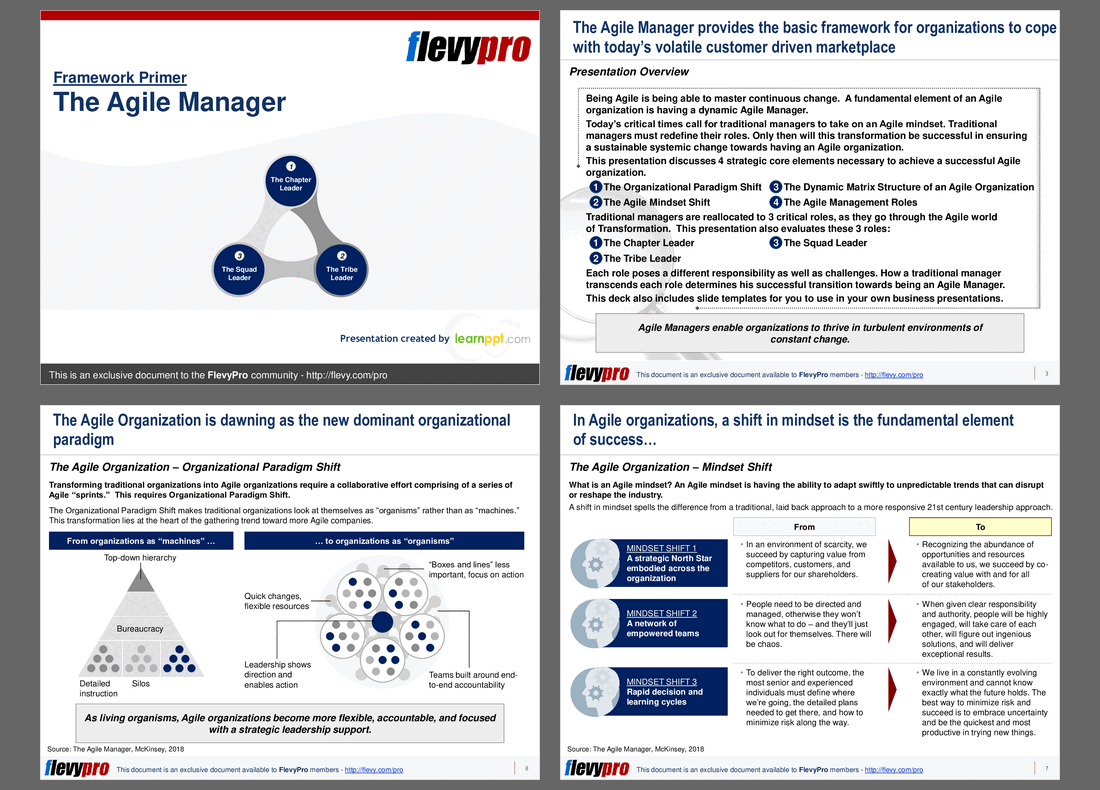
Being Agile is being able to master continuous change. A fundamental element of an Agile organization is having a dynamic Agile Manager.

Today's critical times call for traditional managers to take on an Agile mindset. Traditional managers must redefine their roles. Only then will this transformation be successful in ensuring a sustainable systemic change towards having an Agile organization.

This presentation discusses 4 strategic core elements necessary to achieve a successful Agile organization.

1. The Organizational Paradigm Shift
2. The Agile Mindset Shift
3. The Dynamic Matrix Structure of an Agile Organization
4. The Agile Management Roles

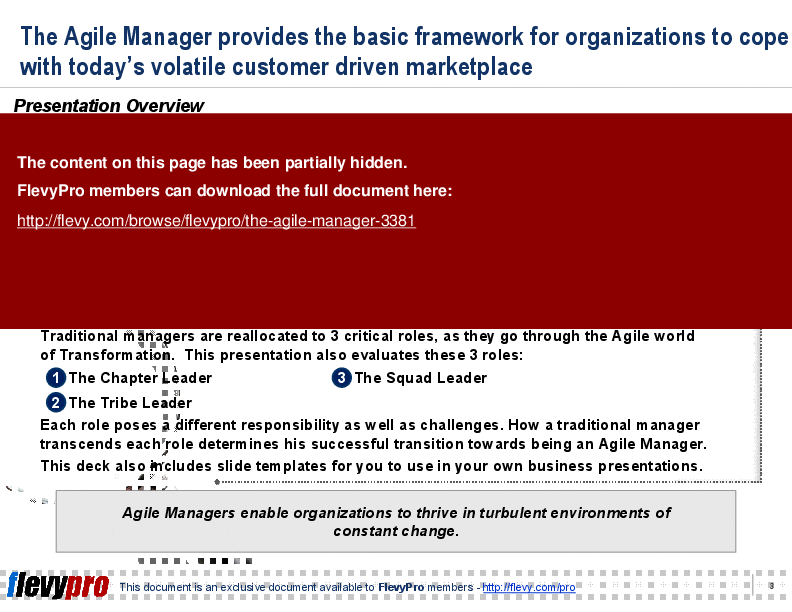
Traditional managers are reallocated to 3 critical roles, as they go through the Agile world of Transformation. This presentation also evaluates these 3 roles:

1. The Chapter Leader
2. The Tribe Leader
3. The Squad Leader

Each role poses a different responsibility as well as challenges. How a traditional manager transcends each role determines his successful transition towards being an Agile Manager. Agile Managers enable organizations to thrive in turbulent environments of constant change.

This deck also includes slide templates for you to use in your own business presentations.

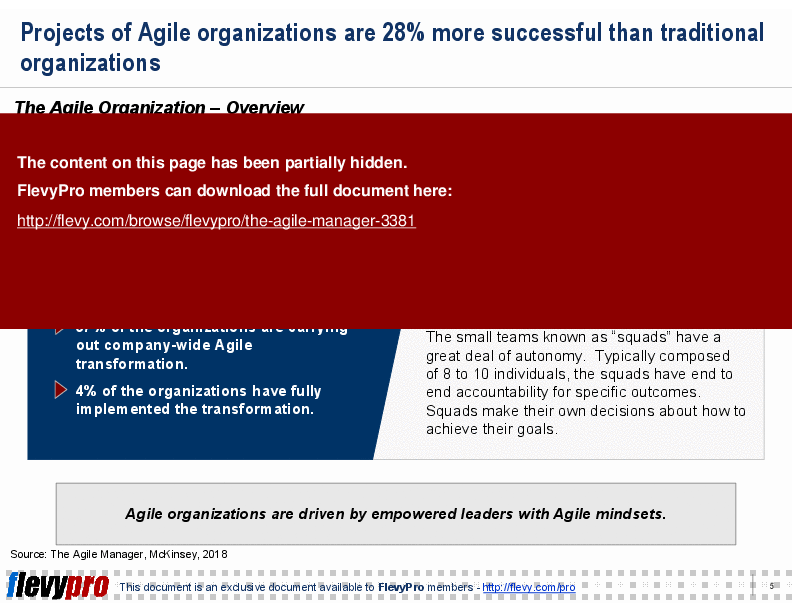
Agile organizations are 28% more successful than traditional ones. This PPT provides a comprehensive overview of the Agile Organizational Paradigm Shift, emphasizing the transition from rigid, top-down hierarchies to flexible, autonomous teams. It details the mindset shifts required for leaders to empower their teams, fostering rapid decision-making and continuous learning cycles.

The presentation also dives into the specific roles of Chapter Leaders, Tribe Leaders, and Squad Leaders, outlining their responsibilities and challenges. These roles are crucial in navigating the complexities of Agile transformation. The deck includes practical templates to help you implement these strategies in your organization, ensuring you stay ahead in today’s volatile market.

Got a question about this document? Email us at flevypro@flevy.com.

MARCUS OVERVIEW

This synopsis was written by Marcus [?] based on the analysis of the full 27-slide presentation.


Executive Summary
The Agile Manager presentation provides a structured framework for organizations to navigate today's volatile, customer-driven marketplace. It emphasizes the need for traditional managers to adopt an Agile mindset, transforming their roles to foster a culture of adaptability and responsiveness. This presentation outlines 4 core elements essential for achieving an Agile organization, including the Organizational Paradigm Shift, Agile Mindset Shift, the Dynamic Matrix Structure, and Agile Management Roles. By leveraging this framework, leaders can enhance their organizations' agility, ensuring sustainable success in a rapidly changing environment.

Who This Is For and When to Use
•  Corporate executives seeking to implement Agile methodologies within their organizations
•  Integration leaders responsible for guiding teams through Agile transformations
•  Managers and team leaders aiming to enhance their leadership capabilities in Agile settings
•  Consultants advising organizations on Agile practices and frameworks

Best-fit moments to use this deck:
•  During organizational transformation initiatives to establish Agile practices
•  In leadership training sessions focused on developing Agile management skills
•  When evaluating current management structures and identifying areas for Agile adoption

Learning Objectives
•  Define the core principles of an Agile organization and its significance in today’s business landscape
•  Identify the key roles within an Agile management structure and their responsibilities
•  Develop strategies to empower teams through an Agile mindset
•  Create a dynamic matrix structure that enhances collaboration and accountability
•  Implement effective practices for transitioning from traditional to Agile management

Table of Contents
•  Overview (page 3)
•  The Agile Organization (page 5)
•  Agile Management Roles (page 11)
•  Empowering the Agile Manager (page 16)
•  Templates (page 19)

Primary Topics Covered
•  Agile Organization Overview - An introduction to the principles and benefits of Agile organizations, highlighting their ability to respond to market changes.
•  Organizational Paradigm Shift - A discussion on transforming traditional organizations into Agile entities, emphasizing flexibility and accountability.
•  Agile Mindset Shift - Key mindset changes necessary for leaders to foster an Agile culture within their teams.
•  Agile Management Roles - An exploration of the 3 critical roles in Agile management: Chapter Leader, Tribe Leader, and Squad Leader.
•  Dynamic Matrix Structure - An overview of the matrix structure that supports Agile teams, focusing on collaboration and resource allocation.
•  Empowering the Agile Manager - Strategies for enabling managers to support autonomous teams effectively.

Deliverables, Templates, and Tools
•  Agile Management Role templates for defining responsibilities and expectations
•  Frameworks for the Organizational Paradigm Shift to guide transformation efforts
•  Mindset Shift templates to facilitate discussions on Agile principles
•  Stand-up meeting formats to enhance team communication and accountability
•  Performance tracking templates to measure Agile outcomes and team effectiveness

Slide Highlights
•  Overview of the Agile Organization and its benefits
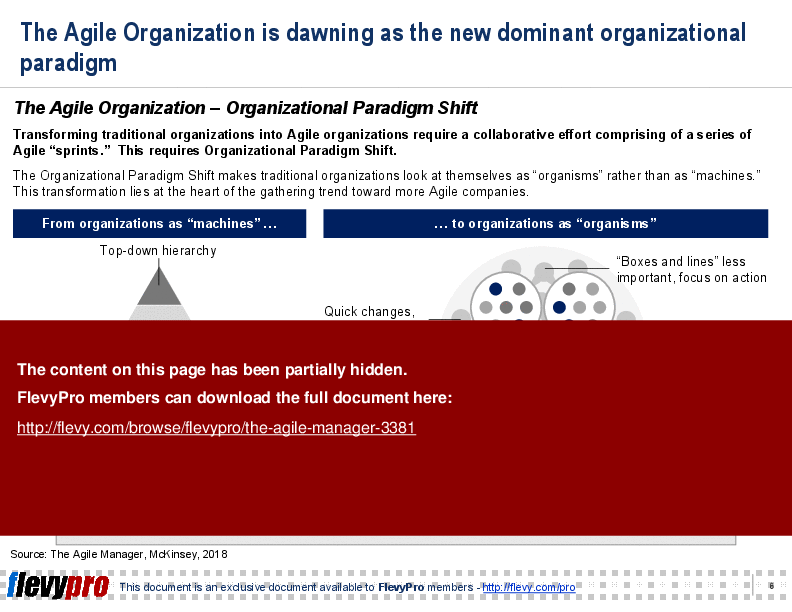
•  Visual representation of the Organizational Paradigm Shift from machines to organisms
•  Detailed breakdown of Agile Management Roles and their responsibilities
•  Key mindset shifts necessary for Agile transformation
•  Frameworks for empowering Agile Managers to lead effectively

Potential Workshop Agenda
Introduction to Agile Concepts (60 minutes)
•  Overview of Agile principles and benefits
•  Discussion on the need for an Agile mindset

Agile Management Roles (90 minutes)
•  Deep dive into the roles of Chapter, Tribe, and Squad Leaders
•  Group activities to define responsibilities and expectations

Empowering Teams (60 minutes)
•  Strategies for enabling team autonomy and accountability
•  Role-playing scenarios to practice stand-up meeting facilitation

Customization Guidance
•  Adjust the templates to reflect your organization’s specific Agile goals and objectives
•  Incorporate your company’s terminology and metrics into the Agile frameworks
•  Tailor the workshop agenda to fit the unique needs of your teams and leadership

Secondary Topics Covered
•  The role of technology in supporting Agile practices
•  Strategies for fostering collaboration across teams and departments
•  Best practices for measuring Agile success and performance
•  Challenges faced during Agile transformations and how to overcome them

Topic FAQ

What are the core elements I should include when describing an Agile organization?

An Agile organization description typically covers 4 strategic elements: an Organizational Paradigm Shift away from top-down hierarchies, an Agile Mindset Shift for leaders, a Dynamic Matrix Structure for flexible resource allocation, and defined Agile Management Roles. Together these form the 4 core elements.

What are the common management roles in Agile organizations and how do they differ?

Common Agile management roles include the Chapter Leader (capability building and coaching), the Tribe Leader (value creation and strategic direction), and the Squad Leader (team orchestration and collaboration). Each role carries distinct responsibilities for capability, value, and day-to-day team coordination across 3 roles.

How does a dynamic matrix structure support Agile teams in practice?

A Dynamic Matrix Structure enables flexible resource allocation and cross-team collaboration by allowing people to report along capability and delivery lines, matching skills to opportunities and enabling rapid reallocation of resources. This supports collaboration and resource matching in the Dynamic Matrix Structure.

What mindset changes do managers need to lead effectively in Agile environments?

Managers should shift from micromanagement to outcome orientation, emphasize team empowerment, encourage rapid decision-making, and support continuous learning cycles. Practical facilitation practices and Mindset Shift templates can be used to guide discussions and behavior change using Mindset Shift templates.

What should I look for when evaluating Agile management slide decks for internal use?

Look for decks that define the organizational paradigm and management roles, include change frameworks and customizable templates (role definitions, stand-up formats), and provide a workshop agenda for training managers. Useful deliverables include stand-up meeting formats and performance tracking templates.

How valuable are editable templates for accelerating Agile adoption and what types matter most?

Editable templates shorten preparation and help standardize practices; key types are role-definition templates, mindset discussion guides, stand-up meeting formats, and performance-tracking sheets. These template types are explicitly provided as Agile Management Role templates, Mindset Shift templates, stand-up formats, and performance tracking templates.

How long should a manager-focused Agile workshop be, and what topics should it cover?

A practical manager workshop can run from a half-day to a full day; a suggested agenda includes a 60-minute Agile concepts overview, a 90-minute deep dive into Chapter/Tribe/Squad roles, and a 60-minute session on empowering teams and practicing stand-up facilitation, reflecting a 60/90/60 minute structure.

Which Agile practices help during integrations or large organizational transformations?

During integrations, use an Organizational Paradigm Shift to redefine governance, apply a Dynamic Matrix Structure for flexible resource allocation, and reassign traditional managers into Chapter, Tribe, and Squad roles to maintain capability and delivery focus using the Organizational Paradigm Shift and the 3 Agile roles.

Document FAQ
These are questions addressed within this presentation.

What is the Agile Manager framework?
The Agile Manager framework provides a structured approach for organizations to adopt Agile practices, emphasizing the transformation of traditional management roles to enhance responsiveness and adaptability.

Who should use this presentation?
This presentation is designed for corporate executives, integration leaders, and managers who are looking to implement Agile methodologies within their organizations.

What are the key roles in Agile management?
The key roles in Agile management include the Chapter Leader, Tribe Leader, and Squad Leader, each with distinct responsibilities that contribute to the overall agility of the organization.

How can organizations empower their managers in an Agile environment?
Organizations can empower managers by providing training on Agile principles, encouraging participation in team meetings, and redefining their roles to focus on outcomes rather than micromanagement.

What is the significance of the Agile Mindset Shift?
The Agile Mindset Shift is crucial for fostering a culture of adaptability and responsiveness, enabling teams to thrive in a constantly changing business environment.

How does the Dynamic Matrix Structure support Agile teams?
The Dynamic Matrix Structure allows for flexible resource allocation and collaboration across teams, ensuring that the right capabilities are matched with the right opportunities.

What challenges might organizations face during Agile transformation?
Common challenges include resistance to change, difficulty in redefining roles, and the need for ongoing training and support for managers and teams.

How can the templates provided in this presentation be used?
The templates can be customized to fit your organization’s specific needs, serving as tools for defining roles, tracking performance, and facilitating Agile practices.

Glossary
•  Agile Organization - A flexible and responsive organizational structure that prioritizes adaptability.
•  Chapter Leader - A role focused on building capabilities and coaching team members.
•  Tribe Leader - A role responsible for value creation and strategic direction within Agile teams.
•  Squad Leader - A role that orchestrates team efforts and fosters collaboration.
•  Mindset Shift - A change in thinking necessary for adopting Agile practices.
•  Dynamic Matrix Structure - An organizational framework that supports Agile teams through flexible reporting lines.
•  Stand-up Meeting - A daily team meeting to discuss progress and challenges.
•  Empowerment - Granting teams the autonomy to make decisions and drive outcomes.
•  Agile Transformation - The process of transitioning from traditional management practices to Agile methodologies.
•  Performance Tracking - Measuring the effectiveness of Agile practices and team outcomes.
•  Collaboration - Working together across teams and departments to achieve common goals.
•  Technology Enabler - Tools and platforms that support Agile practices and enhance team performance.

AGILE PPT SLIDES

Defining the Tribe Leader's Role in Agile Management

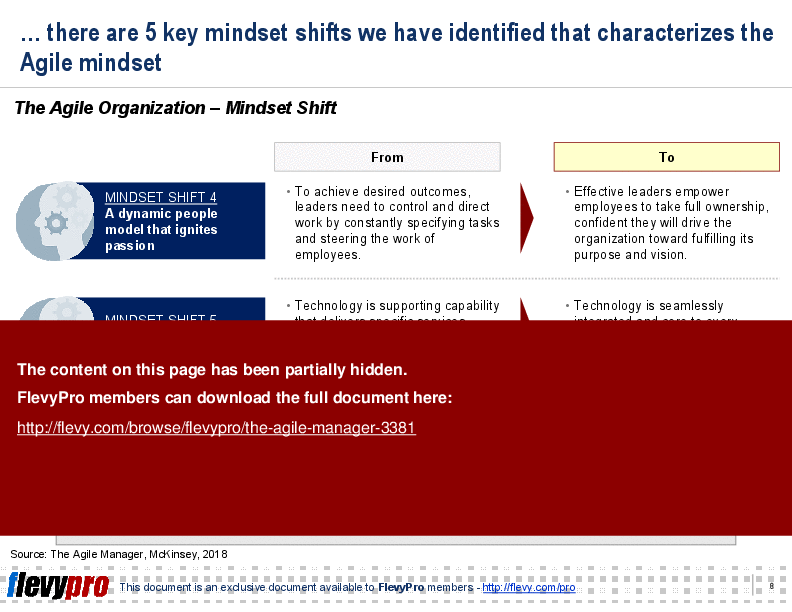
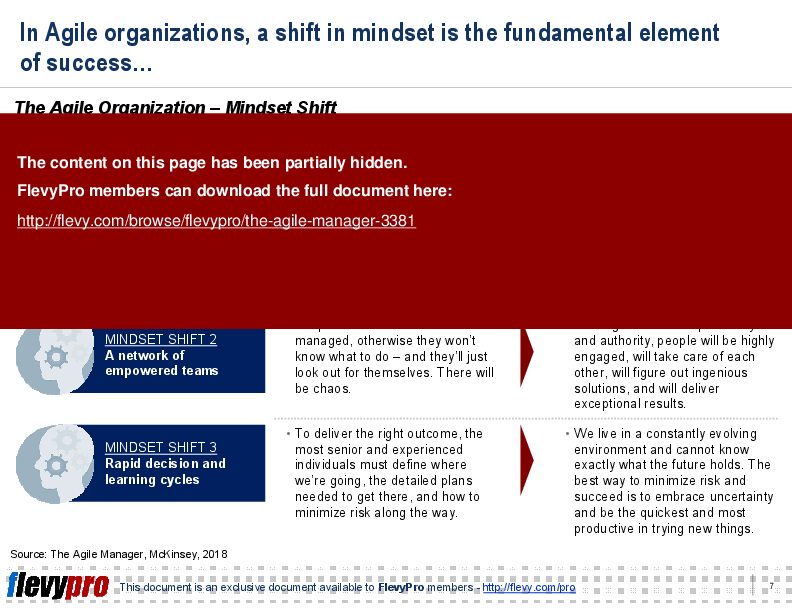
Transformative Mindset Shifts for Agile Organizations

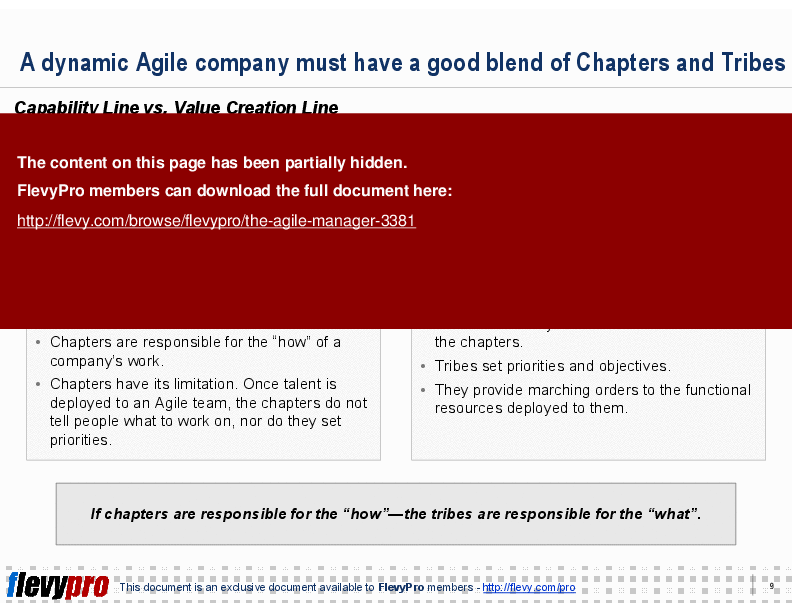
Balancing Capability and Value Creation in Agile Organizations

Transforming Management Roles for Agile Success

Empowering Agile Managers: Key Behavioral Strategies

Transforming Organizational Structures: From Machines to Organisms

Source: Best Practices in Leadership, Agile PowerPoint Slides: Agile Manager PowerPoint (PPT) Presentation Slide Deck, LearnPPT Consulting


$29.00
FlevyPro price: FREE (included in subscription)
This framework is developed by a team of former McKinsey and Big 4 consultants. The presentation follows the headline-body-bumper slide format used by global consulting firms.
Add to Cart
  

Did you need more documents?

Consider a FlevyPro subscription from $39/month. View plans here.

For $10.00 more, you can download this document plus 2 more FlevyPro documents. That's just $13 each.

ABOUT FLEVYPRO

This document is part of the FlevyPro Library, a curated knowledge base of documents for our FlevyPro subscribers.

FlevyPro is a subscription service for on-demand business frameworks and analysis tools. FlevyPro subscribers receive access to an exclusive library of curated business documents—business framework primers, presentation templates, Lean Six Sigma tools, and more—among other exclusive benefits.

Click here to learn more about FlevyPro and its benefits.

Did you know?
The average daily rate of a McKinsey consultant is $6,625 (not including expenses). The average price of a Flevy document is $65.


Trusted by over 10,000+ Client Organizations
Since 2012, we have provided business templates to over 10,000 businesses and organizations of all sizes, from startups and small businesses to the Fortune 100, in over 130 countries.
AT&T GE Cisco Intel IBM Coke Dell Toyota HP Nike Samsung Microsoft Astrazeneca JP Morgan KPMG Walgreens Walmart 3M Kaiser Oracle SAP Google E&Y Volvo Bosch Merck Fedex Shell Amgen Eli Lilly Roche AIG Abbott Amazon PwC T-Mobile Broadcom Bayer Pearson Titleist ConEd Pfizer NTT Data Schwab


Read Customer Testimonials

 
"Flevy is our 'go to' resource for management material, at an affordable cost. The Flevy library is comprehensive and the content deep, and typically provides a great foundation for us to further develop and tailor our own service offer."

– Chris McCann, Founder at Resilient.World
 
"If you are looking for great resources to save time with your business presentations, Flevy is truly a value-added resource. Flevy has done all the work for you and we will continue to utilize Flevy as a source to extract up-to-date information and data for our virtual and onsite presentations!"

– Debbi Saffo, President at The NiKhar Group
 
"I have used Flevy services for a number of years and have never, ever been disappointed. As a matter of fact, David and his team continue, time after time, to impress me with their willingness to assist and in the real sense of the word. I have concluded in fact "

– Roberto Pelliccia, Senior Executive in International Hospitality
 
"I have found Flevy to be an amazing resource and library of useful presentations for lean sigma, change management and so many other topics. This has reduced the time I need to spend on preparing for my performance consultation. The library is easily accessible and updates are regularly provided. A wealth of great information."

– Cynthia Howard RN, PhD, Executive Coach at Ei Leadership
 
"I have used FlevyPro for several business applications. It is a great complement to working with expensive consultants. The quality and effectiveness of the tools are of the highest standards."

– Moritz Bernhoerster, Global Sourcing Director at Fortune 500
 
"As a consulting firm, we had been creating subject matter training materials for our people and found the excellent materials on Flevy, which saved us 100's of hours of re-creating what already exists on the Flevy materials we purchased."

– Michael Evans, Managing Director at Newport LLC
 
"FlevyPro has been a brilliant resource for me, as an independent growth consultant, to access a vast knowledge bank of presentations to support my work with clients. In terms of RoI, the value I received from the very first presentation I downloaded paid for my subscription many times over! The "

– Roderick Cameron, Founding Partner at SGFE Ltd
 
"Flevy.com has proven to be an invaluable resource library to our Independent Management Consultancy, supporting and enabling us to better serve our enterprise clients.

The value derived from our [FlevyPro] subscription in terms of the business it has helped to gain far exceeds the investment made, making a subscription a no-brainer for any growing consultancy – or in-house strategy team."

– Dean Carlton, Chief Transformation Officer, Global Village Transformations Pty Ltd.


Customers Also Bought These Documents


Customers Also Like These Documents

Explore Templates on Related Management Topics


Your Recently Viewed Documents
Download our FREE Digital Transformation Templates

Download our free compilation of 50+ Digital Transformation slides and templates. DX concepts covered include Digital Leadership, Digital Maturity, Digital Value Chain, Customer Experience, Customer Journey, RPA, etc.