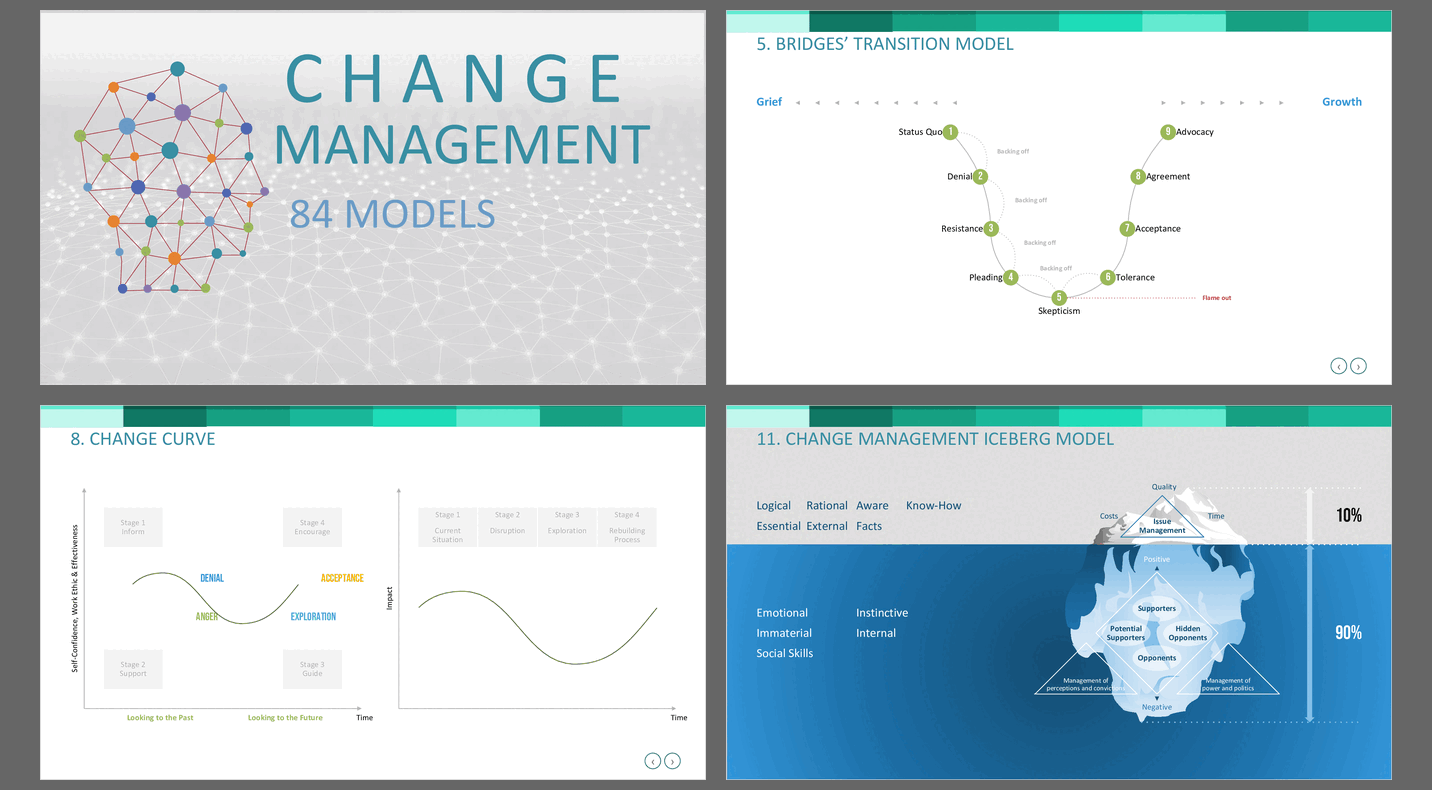

Change Management - 84 Models   104-slide PPT PowerPoint presentation slide deck (PPTX)
$45.00

Change Management - 84 Models (104-slide PPT PowerPoint presentation slide deck (PPTX)) Preview Image
Log in to unlock full preview.
Change Management - 84 Models (104-slide PPT PowerPoint presentation slide deck (PPTX)) Preview Image
Arrow   Click main image to view in full screen.

Change Management - 84 Models (PowerPoint PPTX Slide Deck)

PowerPoint (PPTX) 104 Slides

Top 1,000 Best Practice $45.00
Developed by a team of experts with global consulting experience at McKinsey, Deloitte, and Capgemini.
Add to Cart


Immediate download
Fully editable PowerPoint
Free lifetime updates

BENEFITS OF THIS POWERPOINT DOCUMENT

  1. Provides 84 models of change management
  2. Provides directions and ideas for change managers and experts

CHANGE MANAGEMENT PPT DESCRIPTION

Editor Summary Change Management - 84 Models is a 104-slide PowerPoint presentation containing 84 distinct change-management frameworks and graphics, including Kotter’s 8-Step, Prosci ADKAR and 3-Phase Process, Lewin’s 3-Stage, Kirkpatrick Model, ACMP Standard, and McKinsey 7S. Read more

Change Management (CM) is a collective term for all approaches to prepare, support, and help individuals, teams, and organizations in making organizational change. It includes methods that redirect or redefine the use of resources, business process, budget allocations, or other modes of operation that significantly change a company or organization.
This PowerPoint document is a collection of graphics and diagrams depicting 84 change management models, and explaining many concepts related to the change theory.
INCLUDED MODELS :
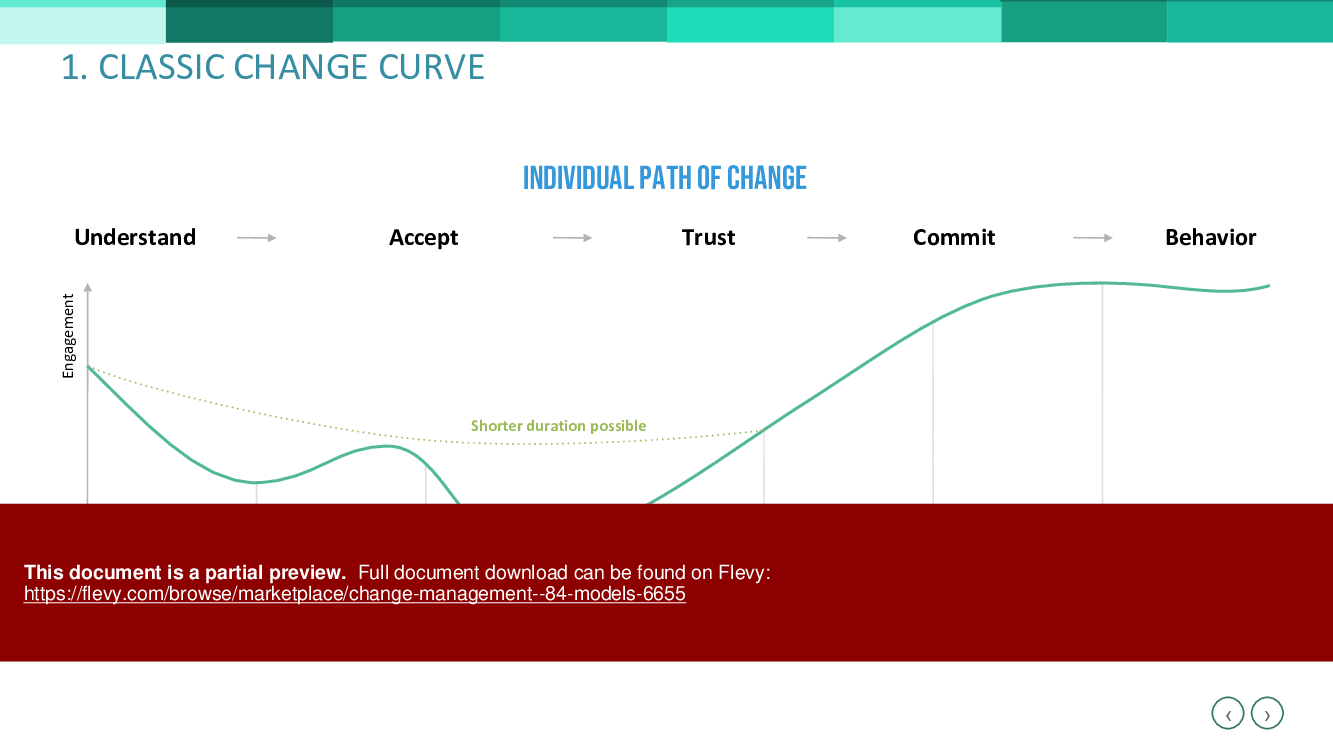
1.Classic Change Curve
2. ACMP Standard for Change Management
3. ADDIE Model
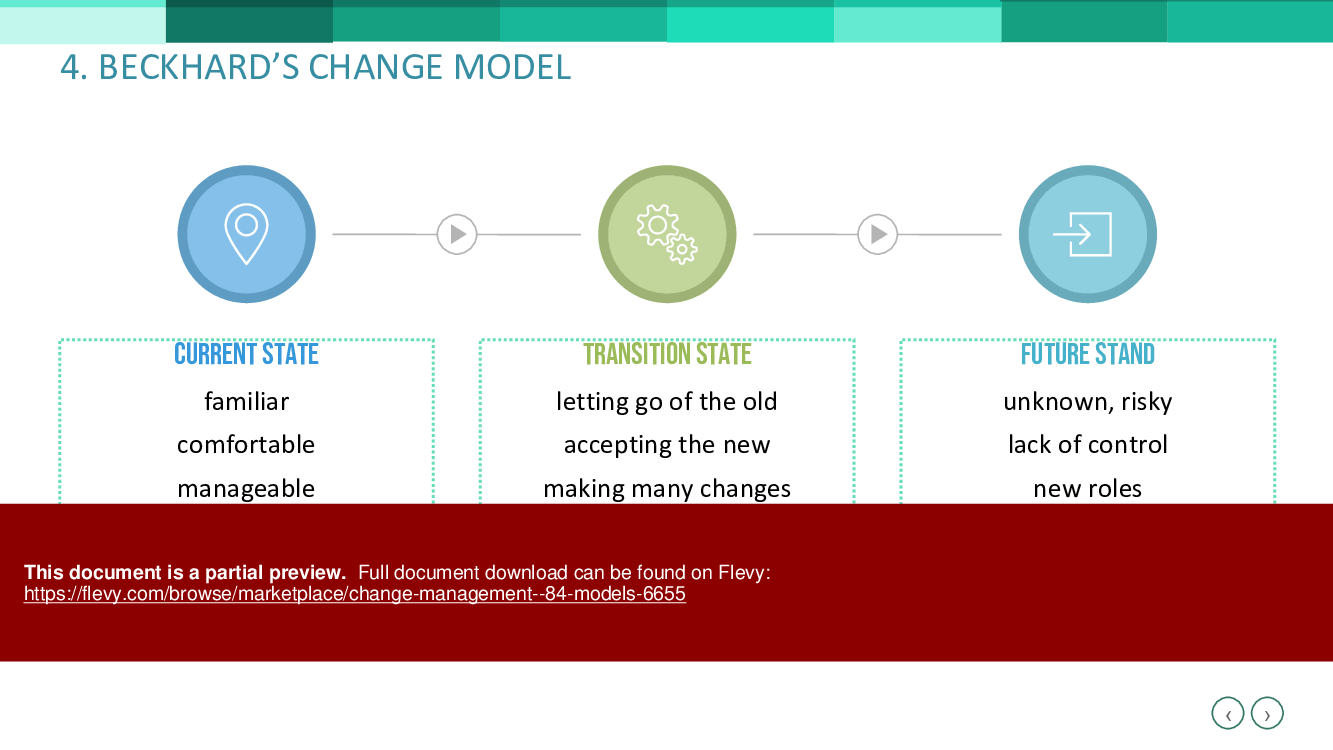
4. Beckhard's Change Model
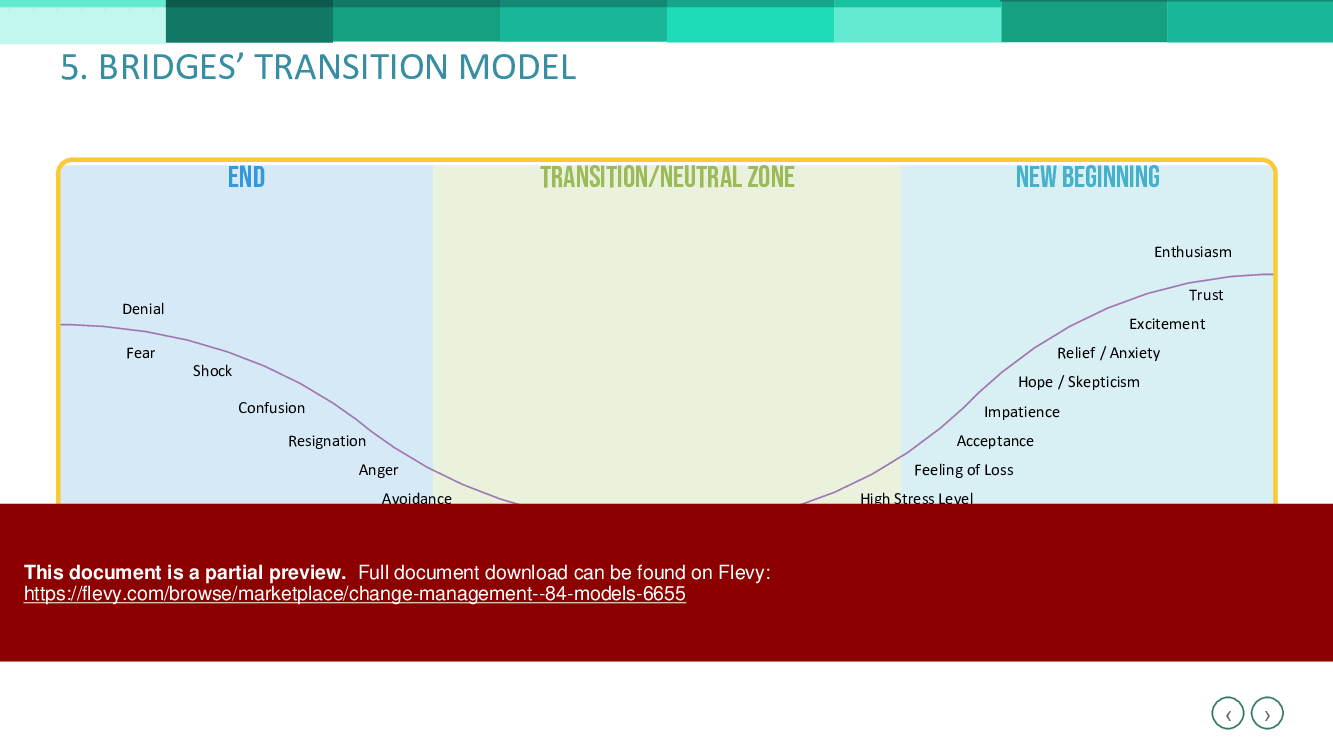
5. Bridges' Transition Model
6. Burke-Litwin Change Model
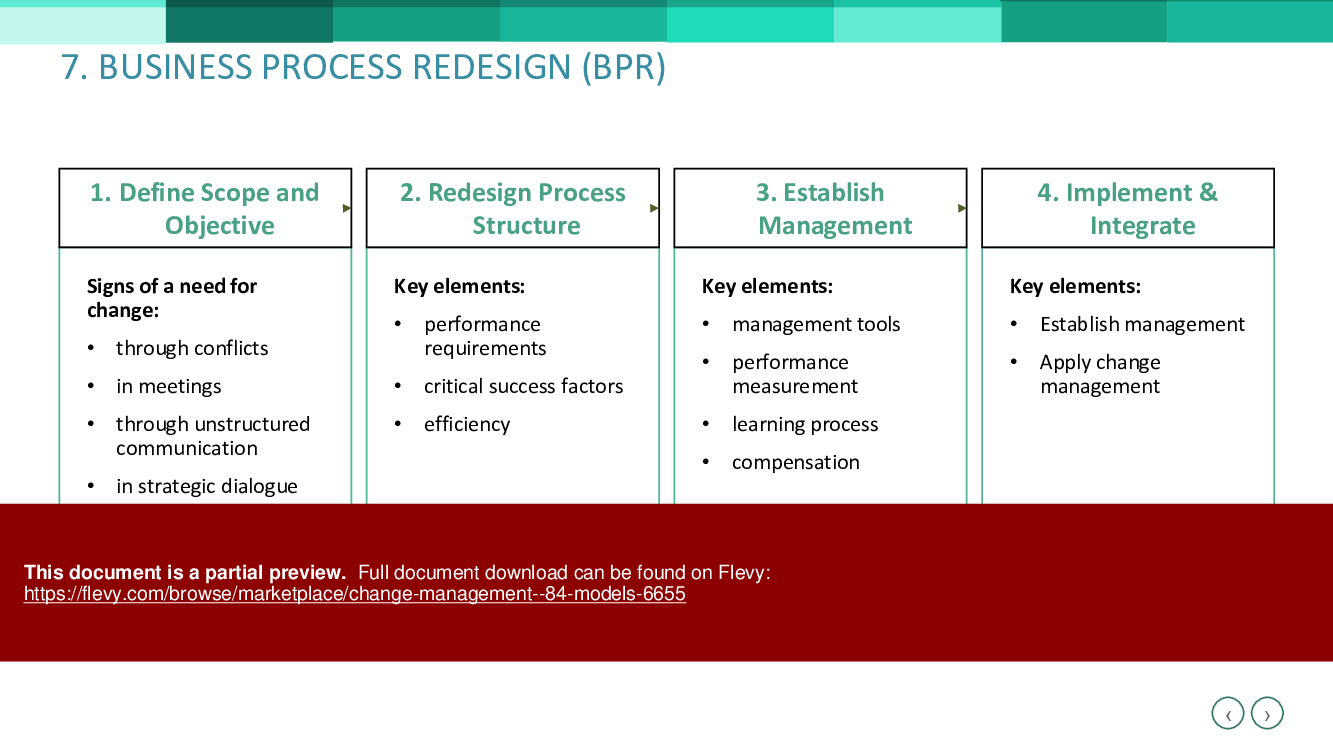
7. Business Process Redesign (BPR)
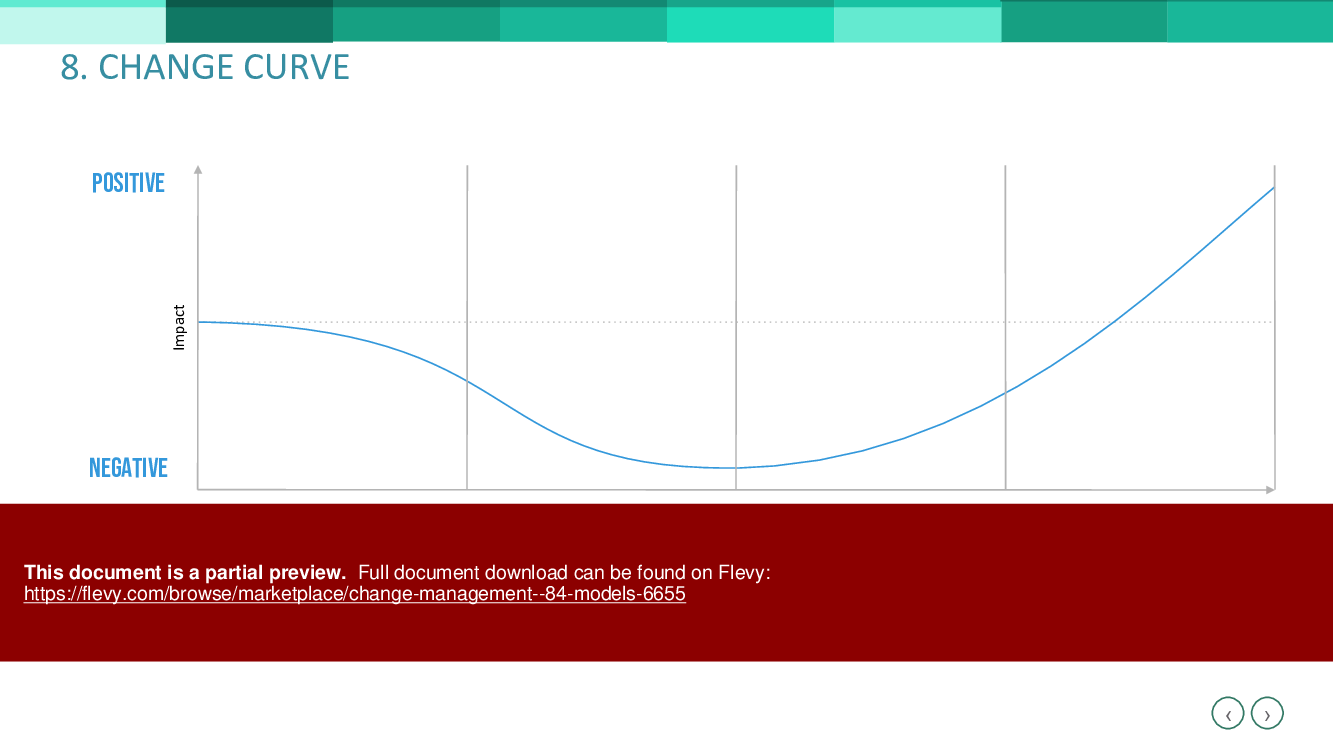
8. Change Curve
9. Clayton's Change Curve
10. Change Management Adoption Curve
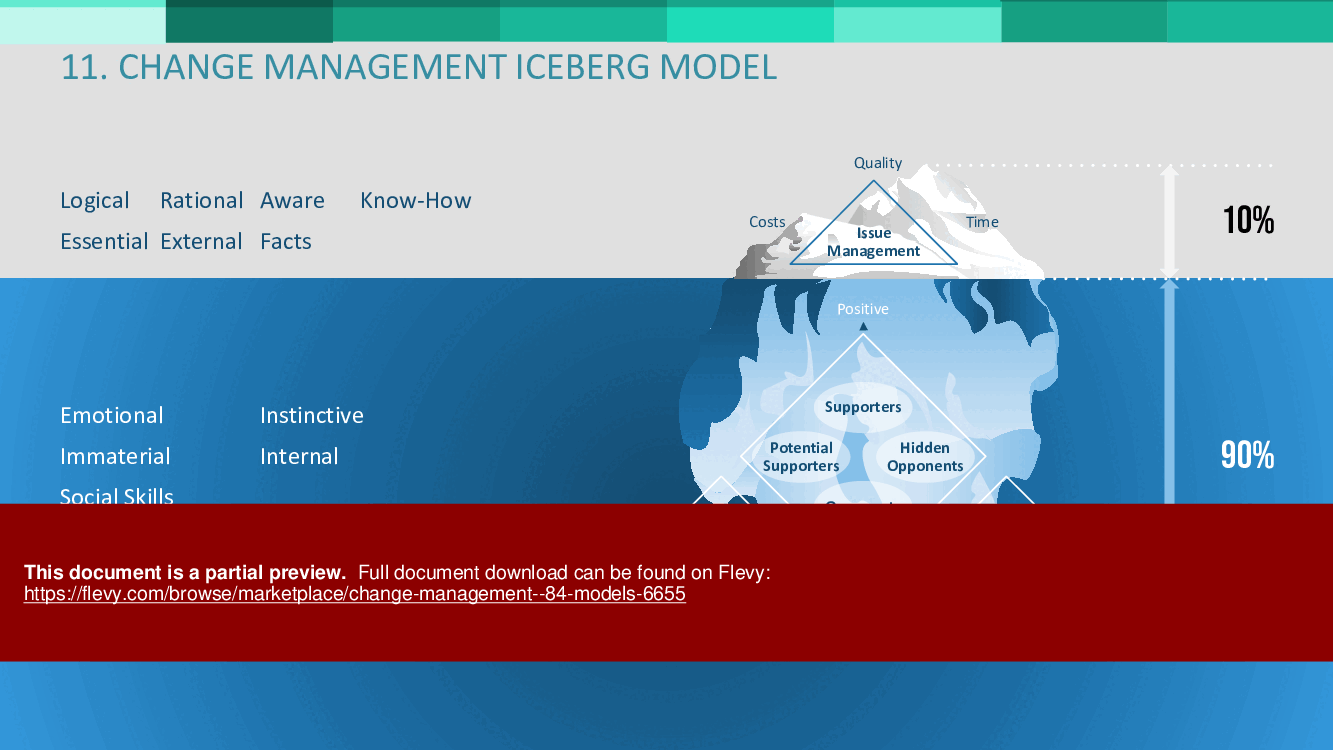
11. Change Management Iceberg Model
12. Drucker's Paradigm of Change Model
13. Johari Window
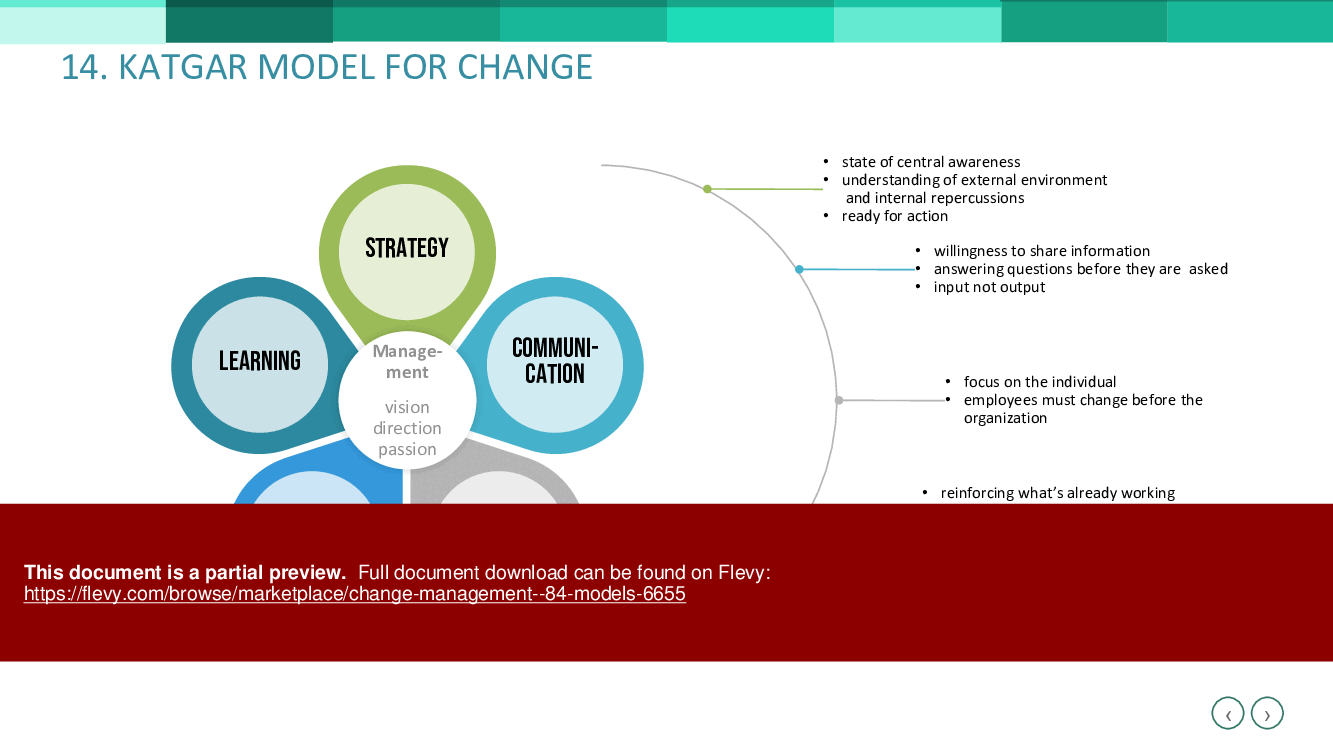
14. Katgar Model for Change
15. Kirkpatrick Model
16. Kotter's 8-Step Change Model
17. Leavitt's Diamond
18. Lewin's Force Field Analysis
19. Lewin's 3-Stage Model
20. Management of Risk (M_o_R)
21. Managing Successful Programmes (MSP)
22. Martec's Law of Disruption
23. 7S Framework (McKinsey)
24. Onion Model of Resistance
25. Iceberg Model of Organizational Culture
26. Organization Development 
Intervention Cycle
27. Osgood-Schramm Model of Communication
28. Deming Cycle/PDCA Cycle
29. PRINCE2 Project Management
30. Pritchett's Change Management Model
31. Project Management Body of Knowledge (PMBoK)
32. Prosci 3-Phase Change Management Process
33. Prosci ADKAR Model
34. Prosci Project Change Triangle (PCT)
35. Purpose, People and Process 
36. Revolutionary Change Cycle
37. Rogers' Tech Adoption Curve
38. John Shook's Change Management Model
39. Simon Sinek's Golden Circle
40. Six Sigma DMAIC Improvement Cycle
41. Transtheoretical Model
42. Szpekman's Communication Framework
43. Theory of Change
44. Training Needs Analysis Model
45. Xerox Benchmarking Model
46. Change Delta Framework
47. Beckhard & Harris' Change Management Process
48. Bullock & Batten's Planned Change Model
49. Carnall's Change Management Model
50. CHAMPS2 Business Change
51. Change Leader's Roadmap Methodology
52. Change Management Body of Knowledge
53. Conner Partners' Change Execution Methodology (CEM)
54. Cooperrider's Appreciative Inquiry
55. Cummings/Worley's Change Management Model
56. Delta V
57. Edwin Cornelius Model
58. EFQM Model
59. Galpin's Model
60. GE Change Acceleration Process
61. Judson's 5-Phase Model
62. LaMarsh Global Managed Change
63. Lipitt, Watson and Westley Model
64. Nadler/Tushman Congruence Model
65. People-Centered Implementation
66. PMI Change Life Cycle Framework
67. Senge's Five Disciplines
68. Viral Change Model
69. Teece's Dynamic Capabilities
70. Weisbord's Six Box Model
71. William Bridges' Model
72. Change Communication Huddle
73. Project Management Change Process
74. Nudge Theory
75. Stephen Covey's Model
76. Virginia Satir Change Management Model
77. Chip & Dan Heath's Switch Framework
78. Kübler-Ross Model
79. Stages of Change (MacDonald & Boyd Associates)
80. Personal Change Model
81. Otto Scharmer's Theory U
82. Spiral Dynamics Change State Indicator
83. Prochaska & DiClemente Model
84. Stages of Learning
This document is easily customizable, content can be removed. Plenty of graphics are included in order to get the holistic vision of the CM concepts.

This comprehensive PowerPoint serves as a vital toolkit for leaders navigating the complexities of change management. With 84 distinct models at your fingertips, you can effectively tailor strategies to meet the unique challenges your organization faces during transitions.

Got a question about the product? Email us at support@flevy.com or ask the author directly by using the "Ask the Author a Question" form. If you cannot view the preview above this document description, go here to view the large preview instead.

MARCUS OVERVIEW

This synopsis was written by Marcus [?] based on the analysis of the full 104-slide presentation.


Executive Summary
The "Change Management - 84 Models" presentation is a comprehensive resource designed to equip corporate executives, integration leaders, and consultants with a variety of proven frameworks for effective change management. Developed by experts with extensive consulting backgrounds at McKinsey, Deloitte, and Capgemini, this PPTX provides 84 distinct models that cover various aspects of change management. Users can leverage these frameworks to create impactful presentations, facilitate organizational change, and enhance team engagement during transitions. This document serves as a vital tool for anyone looking to implement structured change initiatives within their organizations.

Who This Is For and When to Use
•  Change management consultants seeking structured frameworks for client engagements
•  Corporate executives leading transformation initiatives
•  Integration leaders managing organizational change during mergers or acquisitions
•  HR professionals responsible for facilitating employee transitions
•  Project managers overseeing change-related projects

Best-fit moments to use this deck:
•  During strategic planning sessions to define change management approaches
•  In workshops aimed at building change readiness and resilience
•  When developing training programs to support new initiatives
•  For stakeholder presentations to communicate change strategies and frameworks

Learning Objectives
•  Define key change management concepts and their relevance to organizational success
•  Build a tailored change management strategy using proven models
•  Establish a clear communication plan to engage stakeholders during transitions
•  Identify and mitigate resistance to change within teams
•  Develop actionable plans to implement change initiatives effectively
•  Evaluate the impact of change management efforts on organizational performance

Table of Contents
•  Classic Change Curve (page 3)
•  ACMP Standard for Change Management (page 5)
•  ADDIE Model (page 7)
•  Beckhard’s Change Model (page 9)
•  Bridges’ Transition Model (page 11)
•  Burke-Litwin Change Model (page 13)
•  Business Process Redesign (BPR) (page 15)
•  Change Curve (page 17)
•  Clayton’s Change Curve (page 19)
•  Change Management Adoption Curve (page 21)
•  Change Management Iceberg Model (page 23)
•  Drucker’s Paradigm of Change Model (page 25)
•  Johari Window (page 27)
•  Katgar Model for Change (page 29)
•  Kirkpatrick Model (page 31)
•  Kotter’s 8-Step Change Model (page 33)
•  Leavitt’s Diamond (page 35)
•  Lewin’s Force Field Analysis (page 37)
•  Lewin’s 3-Stage Model (page 39)
•  Management of Risk (M_o_R) (page 41)
•  Managing Successful Programmes (MSP) (page 43)
•  Martec’s Law of Disruption (page 45)
•  7S Framework (McKinsey) (page 47)
•  Onion Model of Resistance (page 49)
•  Iceberg Model of Organizational Culture (page 51)
•  Organization Development Intervention Cycle (page 53)
•  Osgood-Schramm Model of Communication (page 55)
•  Deming Cycle/PDCA Cycle (page 57)
•  PRINCE2 Project Management (page 59)
•  Pritchett’s Change Management Model (page 61)
•  Project Management Body of Knowledge (PMBOK) (page 63)
•  Prosci 3-Phase Change Management Process (page 65)
•  Prosci ADKAR Model (page 67)
•  Prosci Project Change Triangle (PCT) (page 69)
•  Purpose, People and Process (page 71)
•  Revolutionary Change Cycle (page 73)
•  Rogers’ Tech Adoption Curve (page 75)
•  John Shook’s Change Management Model (page 77)
•  Simon Sinek’s Golden Circle (page 79)
•  Six Sigma DMAIC Improvement Cycle (page 81)
•  Transtheoretical Model (page 83)
•  Szpekman’s Communication Framework (page 85)
•  Theory of Change (page 87)
•  Training Needs Analysis Model (page 89)
•  Xerox Benchmarking Model (page 91)
•  Change Delta Framework (page 93)
•  Beckhard & Harris’ Change Management Process (page 95)
•  Bullock & Batten’s Planned Change Model (page 97)
•  Carnall’s Change Management Model (page 99)
•  CHAMPS2 Business Change (page 101)
•  Change Leader’s Roadmap Methodology (page 103)
•  Change Management Body of Knowledge (page 105)
•  Conner Partners’ Change Execution Methodology (CEM) (page 107)
•  Cooperrider’s Appreciative Inquiry (page 109)
•  Cummings/Worley’s Change Management Model (page 111)
•  Delta V (page 113)
•  Edwin Cornelius Model (page 115)
•  EFQM Model (page 117)
•  Galpin’s Model (page 119)
•  GE Change Acceleration Process (page 121)
•  Judson’s 5-Phase Model (page 123)
•  LaMarsh Global Managed Change (page 125)
•  Lipitt, Watson and Westley Model (page 127)
•  Nadler/Tushman Congruence Model (page 129)
•  People-Centered Implementation (page 131)
•  PMI Change Life Cycle Framework (page 133)
•  Senge’s Five Disciplines (page 135)
•  Viral Change Model (page 137)
•  Teece’s Dynamic Capabilities (page 139)
•  Weisbord’s Six Box Model (page 141)
•  William Bridges’ Model (page 143)
•  Change Communication Huddle (page 145)
•  Project Management Change Process (page 147)
•  Nudge Theory (page 149)
•  Stephen Covey’s Model (page 151)
•  Virginia Satir Change Management Model (page 153)
•  Chip & Dan Heath’s Switch Framework (page 155)
•  Kübler-Ross Model (page 157)
•  Stages of Change (MacDonald & Boyd Associates) (page 159)
•  Personal Change Model (page 161)
•  Otto Scharmer’s Theory U (page 163)
•  Spiral Dynamics Change State Indicator (page 165)
•  Prochaska & DiClemente Model (page 167)
•  4 Stages of Learning (page 169)

Primary Topics Covered
•  Classic Change Curve - A model illustrating the emotional journey individuals experience during change, from understanding to commitment.
•  ACMP Standard for Change Management - A comprehensive framework outlining the essential elements of effective change management practices.
•  ADDIE Model - A systematic approach for analyzing and designing performance solutions to bridge gaps in organizational performance.
•  Beckhard’s Change Model - A framework that delineates the transition from a familiar current state to an uncertain future state, highlighting emotional responses.
•  Bridges’ Transition Model - A model that emphasizes the psychological transition individuals undergo during change, including stages of denial and acceptance.
•  Burke-Litwin Change Model - A comprehensive model that connects external and internal factors influencing organizational change.
•  Business Process Redesign (BPR) - A structured approach to redefining business processes for improved efficiency and effectiveness.
•  Change Curve - A visual representation of the stages individuals go through during change, including denial, exploration, and acceptance.
•  Kotter’s 8-Step Change Model - A widely recognized framework for leading organizational change, emphasizing urgency, vision, and empowerment.
•  Kirkpatrick Model - A training evaluation framework assessing the effectiveness of training programs across 4 levels: reaction, learning, behavior, and results.

Deliverables, Templates, and Tools
•  Change management strategy template for outlining key initiatives and objectives
•  Communication plan template to engage stakeholders during transitions
•  Training needs analysis model to identify skill gaps and training requirements
•  Project management change process framework for monitoring and controlling change initiatives
•  Evaluation framework to assess the impact of change management efforts
•  Stakeholder engagement plan to ensure buy-in and support throughout the change process

Slide Highlights
•  Classic Change Curve illustrating the emotional journey during change
•  ACMP Standard for Change Management outlining best practices
•  Beckhard’s Change Model visualizing the transition states
•  Kotter’s 8-Step Change Model detailing the steps for effective change leadership
•  Kirkpatrick Model showcasing training evaluation levels

Potential Workshop Agenda
Change Management Overview Session (90 minutes)
•  Introduce key change management concepts and models
•  Discuss the importance of effective change management in organizations
•  Engage participants in identifying their change management challenges

Practical Application Workshop (120 minutes)
•  Break into groups to develop a change management strategy using selected models
•  Present group strategies and gather feedback from peers
•  Discuss best practices for communicating change to stakeholders

Evaluation and Feedback Session (60 minutes)
•  Review the effectiveness of change management strategies implemented
•  Gather participant feedback on the workshop and areas for improvement

Customization Guidance
•  Tailor the change management strategy template to align with organizational goals and culture
•  Adjust communication plans to reflect the specific needs and concerns of stakeholders
•  Incorporate relevant models that resonate with the organization’s change context
•  Update training needs analysis to reflect current skill gaps and future requirements
•  Adapt evaluation frameworks to measure success based on organizational metrics

Secondary Topics Covered
•  Change management frameworks and methodologies
•  Organizational culture and its impact on change
•  Resistance management strategies
•  Communication strategies for effective change management
•  Stakeholder engagement and management techniques

Topic FAQ

What are common phased approaches to leading organizational change?

Common phased approaches focus on preparing, implementing, and sustaining change using established models. The deck includes Lewin’s 3-Stage Model, Kotter’s 8-Step Change Model, and the Prosci 3-Phase Change Management Process as examples of phased approaches, specifically Lewin’s 3-stage, Kotter’s 8-Step, and Prosci 3-Phase.

How does the ADKAR model support individual adoption during change?

ADKAR frames individual adoption as a sequence of outcomes: Awareness of the need, Desire to participate, Knowledge of how, Ability to implement, and Reinforcement to sustain the change. The presentation lists Prosci ADKAR and defines these 5 elements as the individual-focused adoption sequence, Awareness through Reinforcement.

Which models help evaluate training effectiveness during a change program?

Training evaluation is addressed by the Kirkpatrick Model, which measures Reaction, Learning, Behavior, and Results, and by the included Training Needs Analysis Model for identifying gaps. The materials reference Kirkpatrick and the Training Needs Analysis Model as tools for evaluating training, Reaction through Results.

What should I check when choosing a slide-based change management model pack?

Buyers should verify the number and variety of models, presence of practical templates, consulting pedigree, and customization guidance. The product lists 84 models, includes templates such as a change management strategy template, communication plan, and training needs analysis model, and notes that content is easily customizable.

How much preparation time is realistic to adapt slide models for a client workshop?

The resource notes it is easily customizable and provides a sample workshop agenda with 3 sessions: a 90-minute overview, a 120-minute practical application workshop, and a 60-minute evaluation and feedback session. Use those agendas and the customizable slides to estimate prep and rehearsal time.

Which models are useful first when managing change after an acquisition?

For post-acquisition work, start with stakeholder engagement and communication planning, then apply models addressing individual and organizational transition. The materials cite a stakeholder engagement plan and communication plan templates plus models like Kotter’s 8-Step, Prosci ADKAR, and Beckhard’s Change Model as relevant starting points, and include those templates.

How can I measure the impact of a change management program?

Use an evaluation framework and established training and outcome measures. The presentation includes an evaluation framework and references the Kirkpatrick Model for training evaluation, allowing measurement from reaction and learning through behavior and results with the included Evaluation framework and Kirkpatrick Model.

What factors indicate good value in a slide model bundle for change management?

Value indicators include slide count, breadth of models, inclusion of practical templates, and customizability. This product provides 104 slides, 84 distinct models, templates for strategy, communication, and training needs analysis, plus guidance on tailoring content, making those features the concrete attributes to assess.

Document FAQ
These are questions addressed within this presentation.

What is the purpose of the Change Management - 84 Models presentation?
This presentation provides a comprehensive collection of change management frameworks and models to assist organizations in effectively managing change initiatives.

Who developed this presentation?
The presentation was developed by a team of experts with consulting experience at McKinsey, Deloitte, and Capgemini.

How can I use these models in my organization?
You can leverage these models to create structured change management strategies, facilitate workshops, and enhance communication with stakeholders during transitions.

What types of organizations can benefit from this presentation?
Any organization undergoing change, including corporate mergers, restructuring, or process improvements, can benefit from these models.

Are there templates included for practical application?
Yes, the presentation includes templates for change management strategies, communication plans, and training needs analysis.

How do I customize the models for my specific needs?
You can tailor the models by aligning them with your organizational goals, culture, and specific change contexts.

What is the significance of the Kotter’s 8-Step Change Model?
Kotter’s model provides a structured approach to leading change, emphasizing the importance of creating urgency, forming coalitions, and sustaining change.

Can these models be applied to both small and large organizations?
Yes, the models are versatile and can be adapted to fit the needs of both small and large organizations.

What are the key outcomes of implementing these change management frameworks?
Successful implementation can lead to improved employee engagement, smoother transitions, and enhanced organizational performance.

Is there a focus on training and development within these models?
Yes, several models emphasize the importance of training and development in facilitating successful change initiatives.

Glossary
•  Change Management - The process of planning, implementing, and monitoring changes within an organization.
•  Stakeholder - An individual or group with an interest in the outcome of a project or change initiative.
•  Resistance - The reluctance or opposition to change from individuals or groups within an organization.
•  ADKAR Model - A change management framework focusing on Awareness, Desire, Knowledge, Ability, and Reinforcement.
•  Kirkpatrick Model - A framework for evaluating training effectiveness across 4 levels: Reaction, Learning, Behavior, and Results.
•  Kotter’s 8-Step Model - A structured approach to leading change, consisting of eight sequential steps.
•  Bridges’ Transition Model - A model focusing on the psychological transition individuals experience during change.
•  Change Curve - A visual representation of the emotional stages individuals go through during change.
•  Communication Plan - A strategic outline for how information will be shared with stakeholders during a change initiative.
•  Training Needs Analysis - A systematic approach to identifying gaps in employee skills and knowledge required for change.
•  Project Management - The application of knowledge, skills, tools, and techniques to project activities to meet project requirements.
•  Organizational Culture - The shared values, beliefs, and practices that shape how members of an organization interact and work together.
•  Feedback Loop - A process where outputs of a system are circled back to influence inputs, often used to improve processes.
•  Change Adoption - The process of individuals or organizations accepting and integrating new changes into their operations.
•  Evaluation Framework - A structured approach to assessing the effectiveness of change initiatives and their impact on organizational performance.
•  Engagement - The level of involvement and commitment that employees have towards their work and the organization.
•  Facilitation - The act of guiding a group through a process to achieve a desired outcome, often used in workshops and meetings.
•  Implementation - The process of executing a plan or strategy to bring about change within an organization.
•  Transformation - A significant change that alters the fundamental nature of an organization or its operations.
•  Leadership Coalition - A group of influential individuals who support and drive change initiatives within an organization.
•  Vision Statement - A declaration of an organization's long-term goals and aspirations, guiding its strategic direction.

Source: Best Practices in Change Management, Business Framework PowerPoint Diagrams PowerPoint Slides: Change Management - 84 Models PowerPoint (PPTX) Presentation Slide Deck, RadVector Consulting


$45.00
Developed by a team of experts with global consulting experience at McKinsey, Deloitte, and Capgemini.
Add to Cart
  

ABOUT THE AUTHOR

Additional documents from author: 183

We are a group of aviation experts & specialists (PhDs, Engineers, Pilots, Navigators, ...), leaders in helping organizations to transform their business performance using Methodologies and Principles of Lean, Agile, Six Sigma, and Innovation.

Ask the Author a Question

You must be logged in to contact the author.

Click here to log in Click here register

Did you know?
The average daily rate of a McKinsey consultant is $6,625 (not including expenses). The average price of a Flevy document is $65.


Trusted by over 10,000+ Client Organizations
Since 2012, we have provided business templates to over 10,000 businesses and organizations of all sizes, from startups and small businesses to the Fortune 100, in over 130 countries.
AT&T GE Cisco Intel IBM Coke Dell Toyota HP Nike Samsung Microsoft Astrazeneca JP Morgan KPMG Walgreens Walmart 3M Kaiser Oracle SAP Google E&Y Volvo Bosch Merck Fedex Shell Amgen Eli Lilly Roche AIG Abbott Amazon PwC T-Mobile Broadcom Bayer Pearson Titleist ConEd Pfizer NTT Data Schwab


Read Customer Testimonials

 
"Flevy is our 'go to' resource for management material, at an affordable cost. The Flevy library is comprehensive and the content deep, and typically provides a great foundation for us to further develop and tailor our own service offer."

– Chris McCann, Founder at Resilient.World
 
"I have used FlevyPro for several business applications. It is a great complement to working with expensive consultants. The quality and effectiveness of the tools are of the highest standards."

– Moritz Bernhoerster, Global Sourcing Director at Fortune 500
 
"As an Independent Management Consultant, I find Flevy to add great value as a source of best practices, templates and information on new trends. Flevy has matured and the quality and quantity of the library is excellent. Lastly the price charged is reasonable, creating a win-win value for "

– Jim Schoen, Principal at FRC Group
 
"One of the great discoveries that I have made for my business is the Flevy library of training materials.

As a Lean Transformation Expert, I am always making presentations to clients on a variety of topics: Training, Transformation, Total Productive Maintenance, Culture, Coaching, Tools, Leadership Behavior, etc. Flevy "

– Ed Kemmerling, Senior Lean Transformation Expert at PMG
 
"My FlevyPro subscription provides me with the most popular frameworks and decks in demand in today’s market. They not only augment my existing consulting and coaching offerings and delivery, but also keep me abreast of the latest trends, inspire new products and service offerings for my practice, and educate me "

– Bill Branson, Founder at Strategic Business Architects
 
"I have found Flevy to be an amazing resource and library of useful presentations for lean sigma, change management and so many other topics. This has reduced the time I need to spend on preparing for my performance consultation. The library is easily accessible and updates are regularly provided. A wealth of great information."

– Cynthia Howard RN, PhD, Executive Coach at Ei Leadership
 
"Last Sunday morning, I was diligently working on an important presentation for a client and found myself in need of additional content and suitable templates for various types of graphics. Flevy.com proved to be a treasure trove for both content and design at a reasonable price, considering the time I "

– M. E., Chief Commercial Officer, International Logistics Service Provider
 
"As a consulting firm, we had been creating subject matter training materials for our people and found the excellent materials on Flevy, which saved us 100's of hours of re-creating what already exists on the Flevy materials we purchased."

– Michael Evans, Managing Director at Newport LLC


Customers Also Bought These Documents


Customers Also Like These Documents

Explore Related Management Topics


Your Recently Viewed Documents
Download our FREE Organization, Change, & Culture, Templates

Download our free compilation of 50+ slides and templates on Organizational Design, Change Management, and Corporate Culture. Methodologies include ADKAR, Burke-Litwin Change Model, McKinsey 7-S, Competing Values Framework, etc.








