
Developed by a Senior Executive and Operational Excellence Coach with experience at organizations including NOKIA, MICROVENTION, and MAGELLAN, this is a presentation and supporting templates about how to implement Balanced Scorecards.
helps the management team focus on the execution of their business strategy,
enables an organization to understand the relationship between measures and performance, and
strengthens and formalizes the project selection process to focus on key capabilities and enablers.
BALANCED SCORECARD PPT DESCRIPTION
Explore the Balanced Scorecard Deployment Process, crafted by a Senior Executive with experience at NOKIA and MICROVENTION. This module offers practical tools for strategic alignment. Balanced Scorecard Deployment is a 95-slide PPT PowerPoint presentation slide deck (PPTX) with a supplemental Excel document available for immediate download upon purchase.
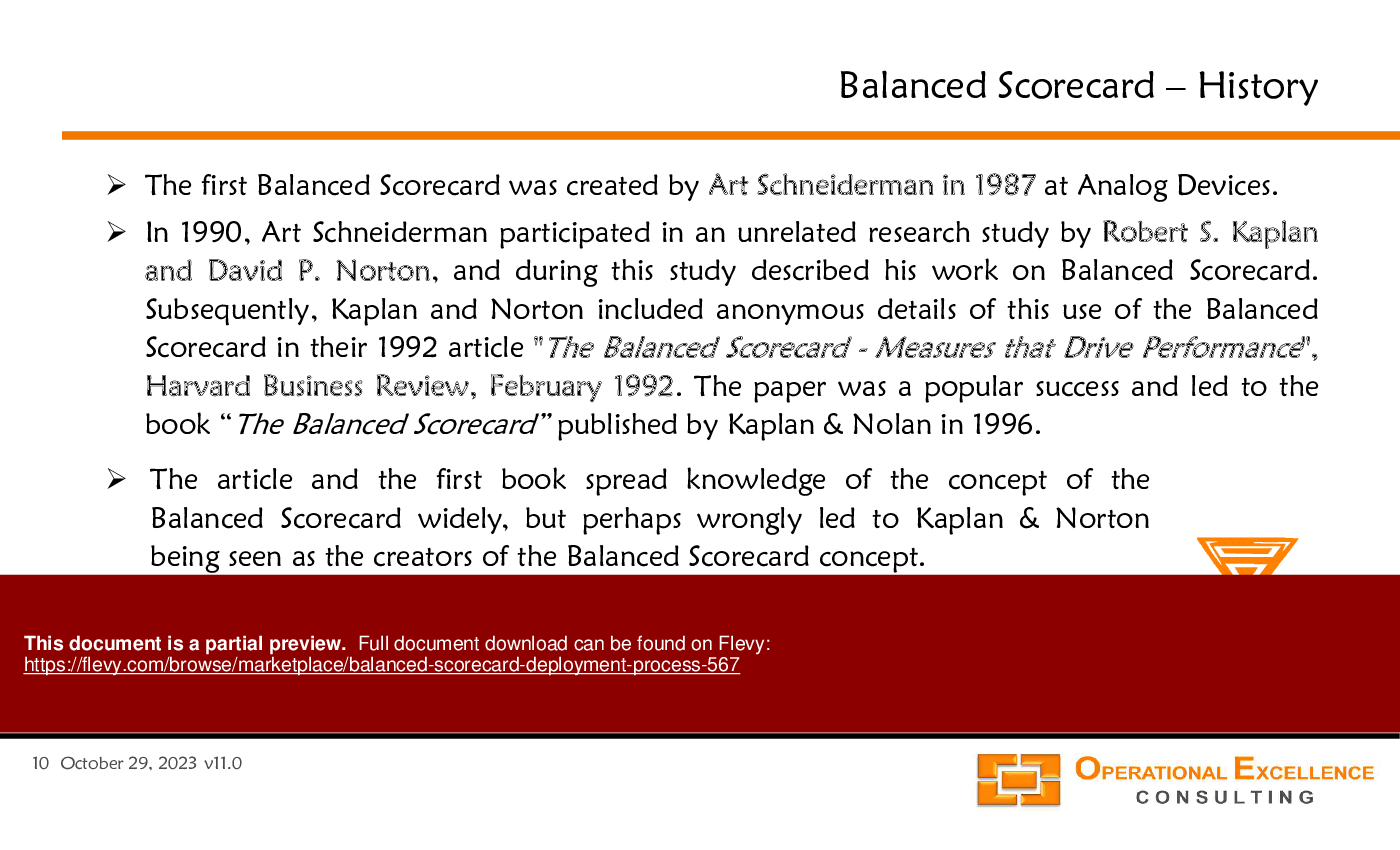
The Balanced Scorecard is a strategic performance management system that is used extensively in business, government, and nonprofit organizations to align business activities to the vision and strategy of the organization.
The Balanced Scorecard (BSC) Deployment Process Module includes:
1. MS PowerPoint Presentation including 90 slides covering
• Balanced Scorecard History & Benefits,
• Four Dimensions of a Balanced Scorecard,
• Balanced Scorecard Development & Deployment Process,
• Balanced Scorecard Deployment Challenges & Resolution Strategies,
• Balanced Scorecard Template & Instructions, and
• Project Evaluation & Selection Matrix.
2. MS Excel Balanced Scorecard Template and Example
3. MS Excel Project Evaluation & Selection Matrix to ensure alignment of Operational Excellence & Lean Six Sigma projects to the Balanced Scorecard
"After you have downloaded the training material, you can change any part of the training material and remove all logos and references to Operational Excellence Consulting. You can share the material with your colleagues and clients, and re-use it as you need. The only restriction is that you cannot publicly re-distribute, sell, rent or license the material as though it is your own. Thank you."
This comprehensive module delves into the intricacies of strategy deployment, highlighting the stark reality that only a small fraction of the workforce truly understands their company's strategy. It underscores the critical need for linking strategic objectives to operational measures, ensuring that all levels of the organization are aligned and moving in the same direction. The module also addresses common pitfalls in strategy implementation, providing actionable insights and resolution strategies to overcome these challenges.
The Balanced Scorecard Deployment Process is not just about theory; it offers practical tools and templates to facilitate the deployment process. From understanding the historical context and benefits to navigating the four dimensions of a balanced scorecard, this module equips you with the knowledge and tools to drive strategic alignment and operational excellence. The inclusion of real-world examples and a project evaluation matrix ensures that you can apply these concepts directly to your organization, enhancing both strategic clarity and execution.
Got a question about the product? Email us at support@flevy.com or ask the author directly by using the "Ask the Author a Question" form. If you cannot view the preview above this document description, go here to view the large preview instead.
MARCUS OVERVIEW
This synopsis was written by Marcus [?] based on the analysis of the full 95-slide presentation.
Executive Summary
The Balanced Scorecard Deployment Process presentation is a comprehensive guide designed to facilitate the effective implementation of Balanced Scorecards within organizations. Developed by Operational Excellence Consulting LLC, this resource provides a structured approach to align business strategy with execution through a series of defined phases. Users will gain insights into strategic alignment, performance management, and process excellence, enabling them to translate strategic objectives into measurable outcomes. This presentation is essential for organizations aiming to enhance operational efficiency and achieve sustained excellence.
Who This Is For and When to Use
• Corporate executives seeking to align strategy with operational performance
• Performance management teams responsible for developing and implementing KPIs
• Organizational development consultants focused on improving strategic execution
• Change management leaders looking to foster a culture of accountability and performance
Best-fit moments to use this deck:
• During strategic planning sessions to establish a clear vision and objectives
• When developing performance management systems to track progress against strategic goals
• In workshops aimed at cascading strategic initiatives throughout the organization
Learning Objectives
• Define the components of a Balanced Scorecard and its role in strategic management
• Build a strategic alignment framework that connects organizational vision to operational execution
• Establish key performance indicators (KPIs) that measure progress towards strategic objectives
• Identify and implement initiatives that drive organizational performance and efficiency
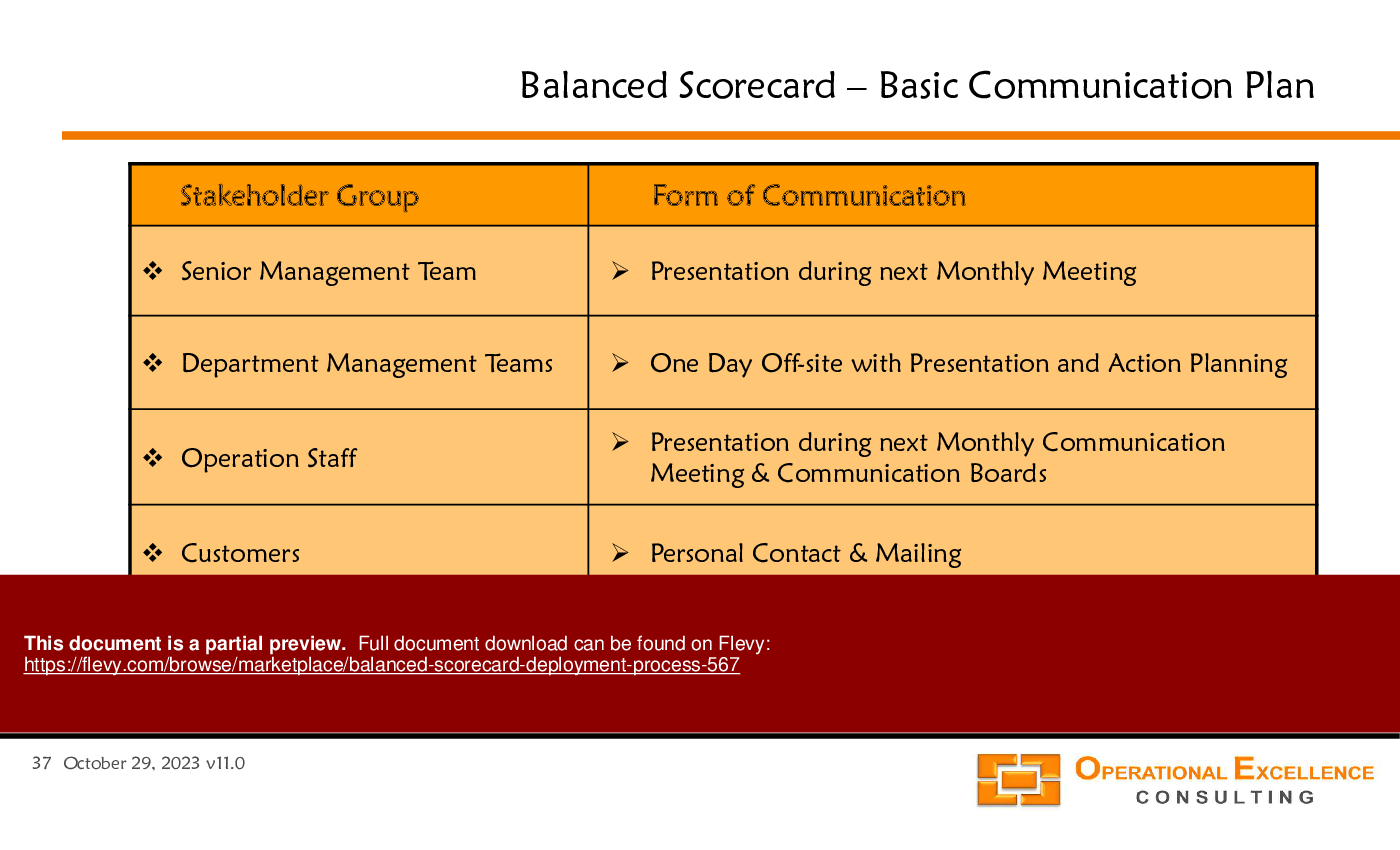
• Develop a communication plan to ensure stakeholder engagement and understanding of the Balanced Scorecard
• Manage the deployment process to integrate and cascade scorecards across all organizational levels
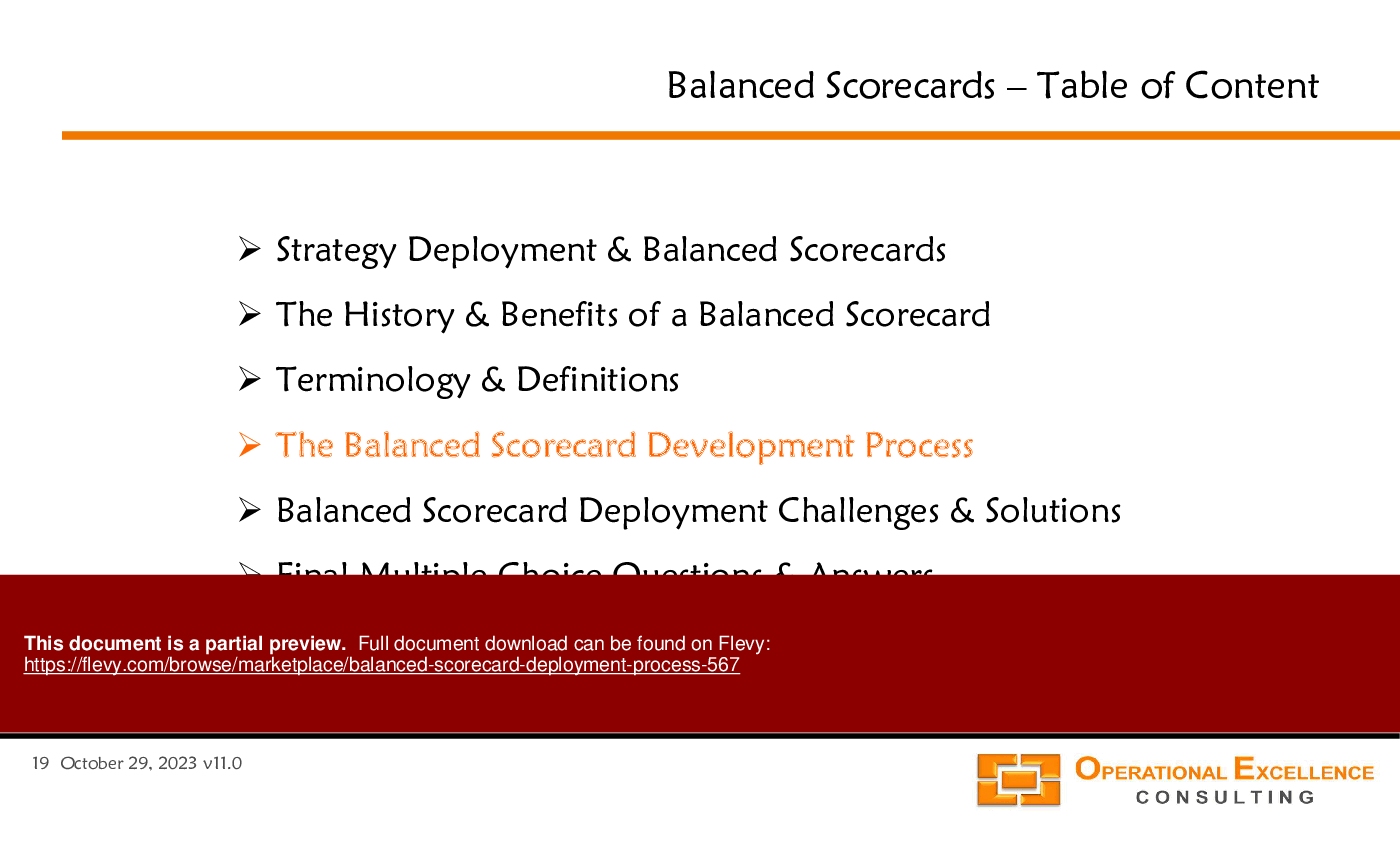
Table of Contents
• Strategy Deployment & Balanced Scorecards (page 4)
• The History & Benefits of a Balanced Scorecard (page 9)
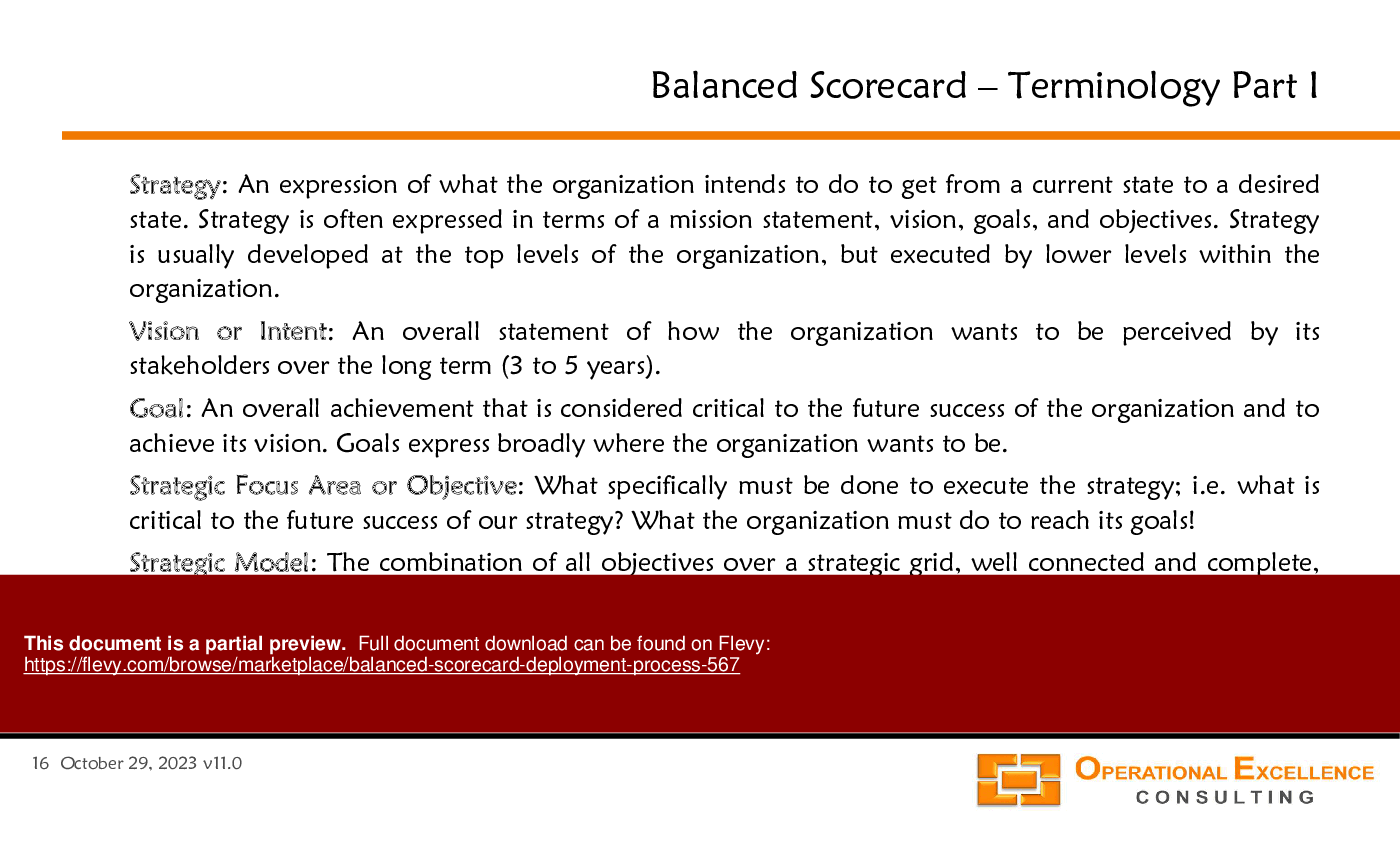
• Terminology & Definitions (page 16)
• The Balanced Scorecard Development Process (page 20)
• Balanced Scorecard Deployment Challenges & Solutions (page 75)
• Final Multiple Choice Questions & Answers (page 83)
Primary Topics Covered
• Strategy Deployment - The process of aligning and linking business strategy to execution, ensuring that all levels of the organization understand and work towards common goals.
• Performance Management - Translating strategic initiatives into measurable objectives and goals, enabling organizations to track progress effectively.
• Balanced Scorecard Development Process - A structured approach consisting of strategic alignment, key performance indicators, and initiatives that drive execution.
• Deployment Challenges - Identifying common barriers to successful implementation and strategies to overcome them, ensuring a smooth deployment process.
• Communication Strategies - Developing effective communication plans to engage stakeholders and promote understanding of the Balanced Scorecard framework.
• Integration and Management - Techniques for managing the Balanced Scorecard process, including periodic reviews and adjustments to maintain alignment with strategic objectives.
Deliverables, Templates, and Tools
• Balanced Scorecard templates for tracking KPIs and performance metrics
• Strategic grid models for visualizing the alignment of objectives across various dimensions
• Communication plans tailored for different stakeholder groups
• Project selection matrices to prioritize initiatives based on strategic impact
• Performance review frameworks to assess progress and adjust strategies as needed
• Training materials for workshops on Balanced Scorecard implementation
Slide Highlights
• Overview of the Balanced Scorecard framework and its importance in strategic management
• Visual representation of the strategic grid and its role in linking objectives
• Case studies demonstrating successful Balanced Scorecard implementations
• Charts illustrating the relationship between leading and lagging indicators
• Communication plan examples tailored for different organizational levels
Potential Workshop Agenda
Introduction to Balanced Scorecard (60 minutes)
• Overview of the Balanced Scorecard framework and its benefits
• Discussion on strategic alignment and performance management
KPI Development Session (90 minutes)
• Identify key performance indicators aligned with strategic objectives
• Develop a draft Balanced Scorecard for the organization
Deployment Planning (60 minutes)
• Create a communication plan for stakeholder engagement
• Discuss strategies for overcoming common deployment challenges
Customization Guidance
• Tailor the Balanced Scorecard templates to reflect specific organizational goals and metrics
• Adjust communication strategies based on stakeholder needs and preferences
• Modify the project selection matrix to prioritize initiatives relevant to the organization’s strategic focus
Secondary Topics Covered
• The history and evolution of the Balanced Scorecard concept
• Distinctions between Balanced Scorecards and dashboards in performance management
• Common pitfalls in Balanced Scorecard implementation and how to avoid them
• The role of organizational culture in supporting Balanced Scorecard initiatives
• Techniques for fostering cross-functional collaboration in performance measurement
FAQ What is a Balanced Scorecard?
A Balanced Scorecard is a strategic management tool that translates an organization’s vision and strategy into a coherent set of performance measures across multiple perspectives.
How do I implement a Balanced Scorecard?
Implementation involves defining strategic objectives, developing key performance indicators, and integrating the scorecard into the organization’s performance management processes.
What are the benefits of using a Balanced Scorecard?
Benefits include improved strategic alignment, enhanced communication of organizational priorities, and a clearer understanding of the relationship between performance measures and outcomes.
What challenges might I face during implementation?
Common challenges include resistance to change, lack of understanding of performance metrics, and difficulties in linking high-level goals to operational activities.
How often should I review the Balanced Scorecard?
Regular reviews, ideally on a monthly or quarterly basis, are recommended to ensure that KPIs remain relevant and aligned with strategic objectives.
Can the Balanced Scorecard be customized for different organizations?
Yes, the Balanced Scorecard can be tailored to fit the specific needs, goals, and culture of any organization.
What types of organizations can benefit from a Balanced Scorecard?
Any organization, including private sector businesses, non-profits, and government agencies, can benefit from implementing a Balanced Scorecard to enhance strategic execution.
How do I ensure stakeholder engagement in the Balanced Scorecard process?
Engagement can be fostered through effective communication plans, involving stakeholders in the development process, and regularly updating them on progress and outcomes.
Glossary
• Balanced Scorecard - A strategic management framework that translates vision and strategy into performance measures.
• Key Performance Indicators (KPIs) - Metrics used to evaluate the success of an organization in achieving its objectives.
• Strategic Alignment - The process of ensuring that all organizational activities are aligned with the overall strategy.
• Performance Management - The systematic process of improving organizational performance by developing the performance of individuals and teams.
• Strategic Grid - A visual representation of strategic objectives and their interconnections across different dimensions.
• Leading Indicators - Metrics that predict future performance and outcomes.
• Lagging Indicators - Metrics that reflect past performance and results.
• Project Selection Matrix - A tool used to prioritize projects based on their strategic impact and resource requirements.
• Communication Plan - A strategy for engaging stakeholders and disseminating information about the Balanced Scorecard process.
• Deployment Challenges - Common obstacles faced during the implementation of the Balanced Scorecard.
• Integration - The process of incorporating the Balanced Scorecard into existing organizational systems and processes.
• Cascading - The process of aligning and linking scorecards across different levels of the organization.
• Performance Review - A structured assessment of progress against the Balanced Scorecard metrics.
• Feedback Loop - A mechanism for using performance data to inform and adjust strategies and initiatives.
• SWOT Analysis - A strategic planning tool used to identify strengths, weaknesses, opportunities, and threats.
• Hoshin Planning - A strategic planning methodology that focuses on aligning goals across all levels of an organization.
• Operational Excellence - A philosophy that emphasizes continuous improvement and efficiency in organizational processes.
• Value Chain - The series of steps an organization takes to deliver a product or service to the market.
• Stakeholder Engagement - The process of involving individuals or groups who have an interest in the organization’s performance and outcomes.
This PPT slide presents a framework utilizing the Balanced Scorecard to enhance strategic focus on increasing shareholder value. The strategic focus area is defined as "Increase Shareholder Value," guiding the 4 key perspectives: Financials, Customers, Internal Processes, and Learning & Growth. The Financials perspective targets a 20% revenue growth by 2014, establishing a clear financial benchmark. The Customers perspective emphasizes customer acquisition as essential for driving revenue growth, linking it directly to financial performance. The Internal Processes perspective highlights the importance of operational efficiency and customer engagement through marketing and service programs. The Learning & Growth perspective focuses on developing support systems and personnel for long-term growth and innovation. Each perspective interconnects, illustrating how lower layers support the upper layer, which is critical for effective strategy execution.
This PPT slide outlines the rationale for performance measurement in organizations, highlighting 3 primary reasons. The first reason is learning and improvement, emphasizing the importance of internal development and continuous feedback loops. The second reason focuses on external reporting and compliance, underscoring the necessity for transparency and accountability to meet regulatory requirements and stakeholder expectations. The third reason addresses controlling and monitoring people, noting that excessive control can lead to a toxic environment, stifling innovation and morale. These reasons are visually represented in a triangular structure, with "Learning & Performance Improvement" at the top, followed by "External Reporting & Compliance" and "Controlling & Monitoring People," indicating a hierarchy of importance in performance measurement strategies.
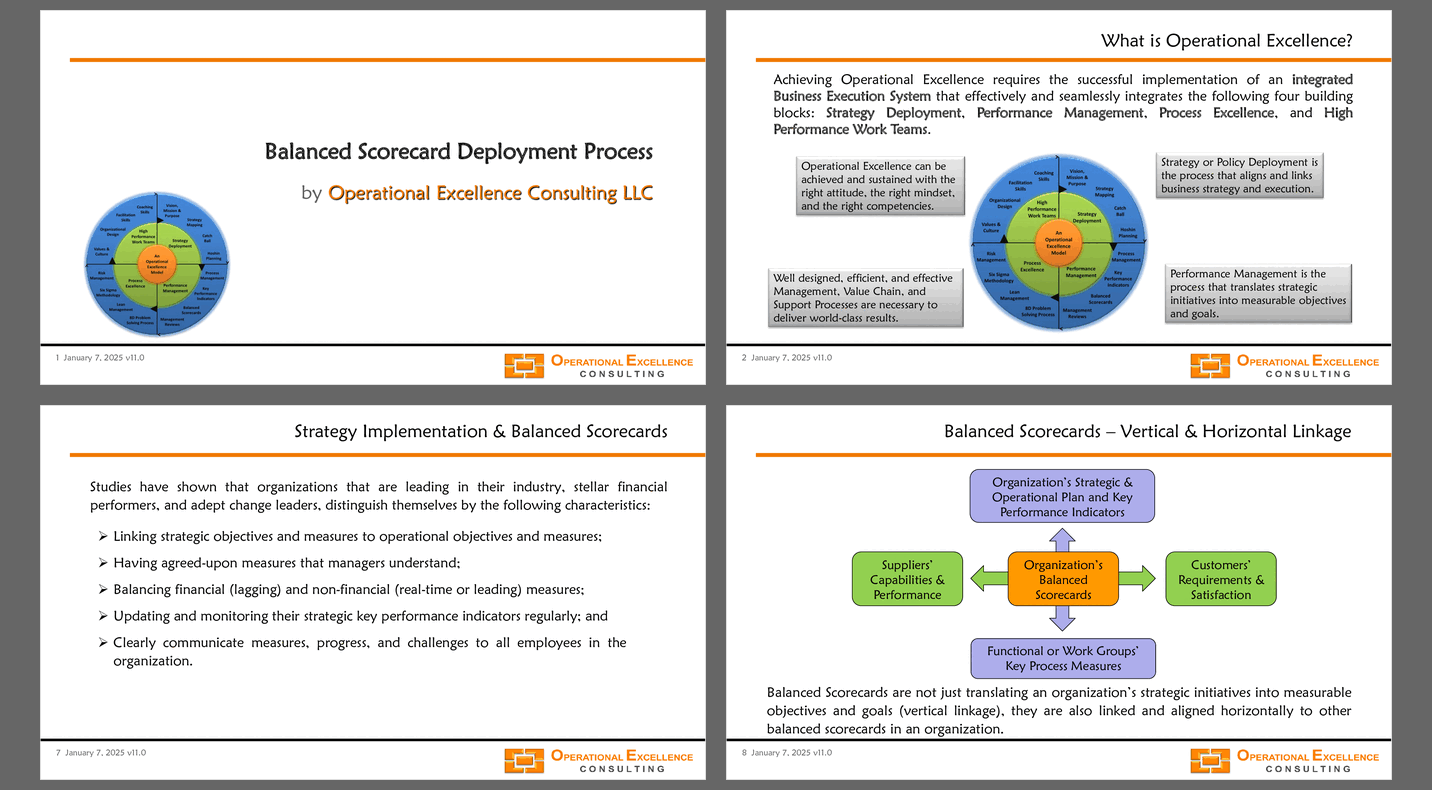
This PPT slide presents the Balanced Scorecard framework, highlighting vertical and horizontal linkages within an organization. The Balanced Scorecard translates strategic and operational plans into actionable performance indicators, connecting various organizational elements. "Suppliers’ Capabilities & Performance" emphasizes the integral role of supplier performance in organizational success, while "Customers’ Requirements & Satisfaction" stresses the alignment of goals with customer expectations. This dual focus illustrates the interconnected nature of performance metrics across supply chain and customer service. "Functional or Work Groups’ Key Process Measures" indicates that departmental metrics must align with broader objectives, fostering a cohesive operational environment. Balanced Scorecards require horizontal alignment across functions, essential for comprehensive performance management and achieving shared objectives.
This PPT slide distinguishes between functional and cross-functional performance measures. Functional measures often lead to departmental misalignment, while cross-functional measures foster collaboration towards common goals. The visual layout illustrates processes in Sales, Production, and a Distribution Center (DC), highlighting the flow of information and activities. A customer-centric approach is emphasized, aligning performance measures with customer needs to enhance operational efficiency and satisfaction. By adopting a cross-functional perspective, organizations can integrate efforts, improving performance and customer outcomes. The way success is measured significantly influences organizational dynamics and effectiveness.
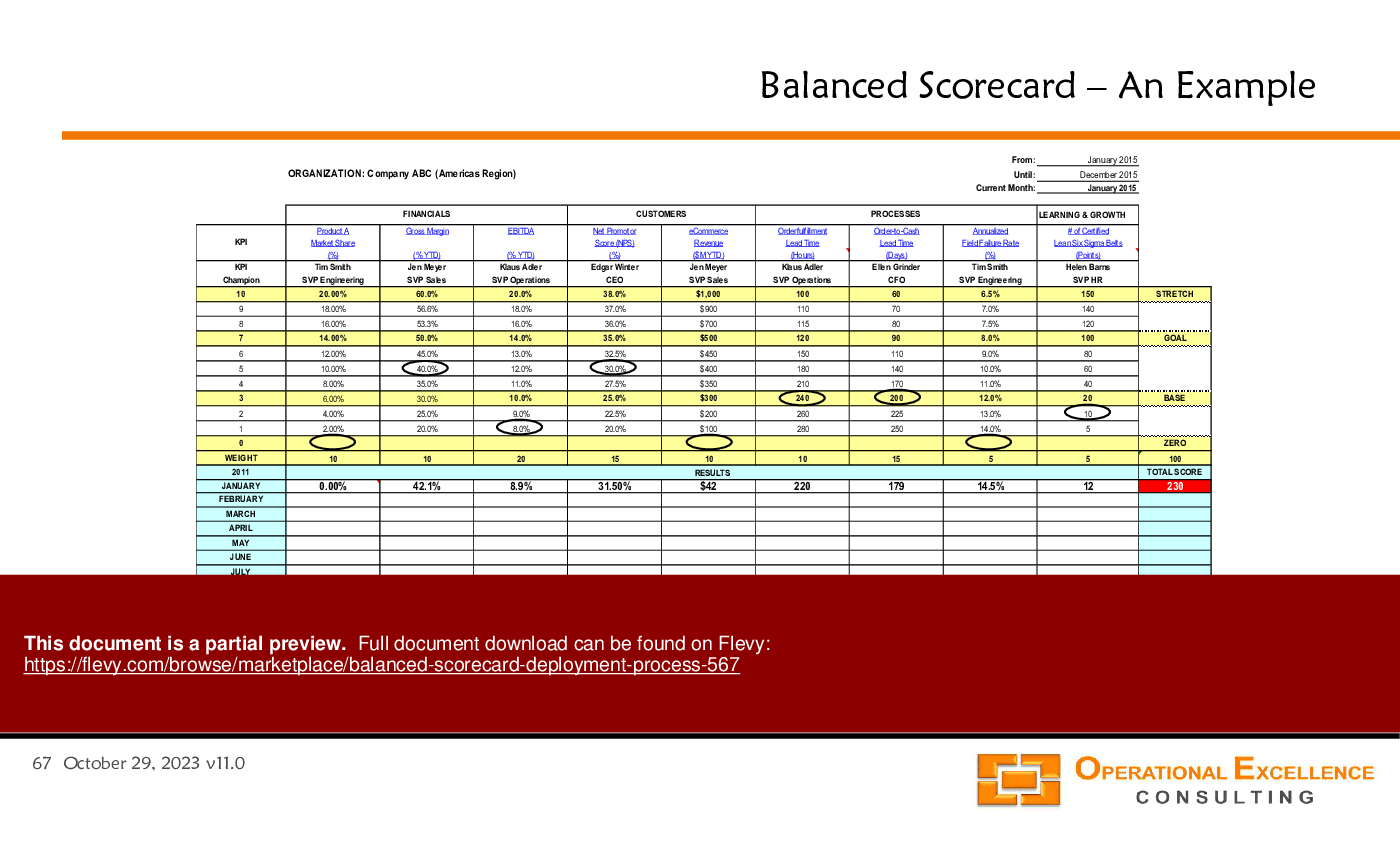
This PPT slide outlines a Balanced Scorecard implementation for Company ABC in the Americas, categorizing key performance indicators (KPIs) into 4 dimensions: Financials, Customers, Processes, and Learning & Growth. Financial metrics include Gross Margin and EBITDA with targets for 2011. Customer metrics feature Net Promoter Score (NPS) and eCommerce Revenue. The Processes dimension assesses operational metrics like cycle times and efficiency rates. Learning & Growth focuses on employee development and training metrics. Each KPI is weighted, and results are calculated to provide a comprehensive score reflecting organizational health and progress toward strategic objectives. A timeline tracks monthly performance from January to December 2015, summarizing overall performance across all categories. This Balanced Scorecard serves as a practical tool for enhancing performance management systems, emphasizing accountability and alignment with strategic objectives.
This PPT slide presents a framework for performance measurement, posing 2 critical questions: "Are we Doing the Things Right?" and "Are we Doing the Right Things?" This framework consists of 4 components: Input, Process, Output, and Outcome. "Input" refers to the necessary information and resources for effective planning. The "Process" encompasses activities that transform inputs into results. "Output" represents the products and services generated, while "Outcome" reflects the impact of those outputs, emphasizing the need for effectiveness measurement. Performance indicators visually connect outcomes to overall performance, highlighting the importance of tracking metrics to assess strategic objectives. This framework aids executives in aligning inputs, processes, outputs, and outcomes for organizational success.
The Deployment Phase of the Balanced Scorecard process includes Steps 7 through 9: Integrate, Cascade, and Manage. Inputs consist of the initial draft of the Balanced Scorecard, which includes key performance indicators (KPIs), definitions, measurement frequencies, and strategic initiatives. Key activities involve continuous review and validation, with monthly reviews ensuring KPIs remain relevant and targets are challenging yet achievable. Modifications based on these reviews are essential for adapting the Balanced Scorecard to organizational needs. Developing a Balanced Scorecard for each department and verifying the linkage between scorecards and targets at all levels are crucial. Outputs include minutes and action plans from monthly review meetings, an updated project selection matrix, and a prioritized list of improvement opportunities, facilitating alignment across departments and effective management of strategic initiatives.
This PPT slide outlines a structured approach to Balanced Scorecard development, divided into 3 phases.
Phase I establishes a strategic foundation through strategic alignment, identifying key focus areas and objectives, and introducing the strategic grid and model for visualizing priorities.
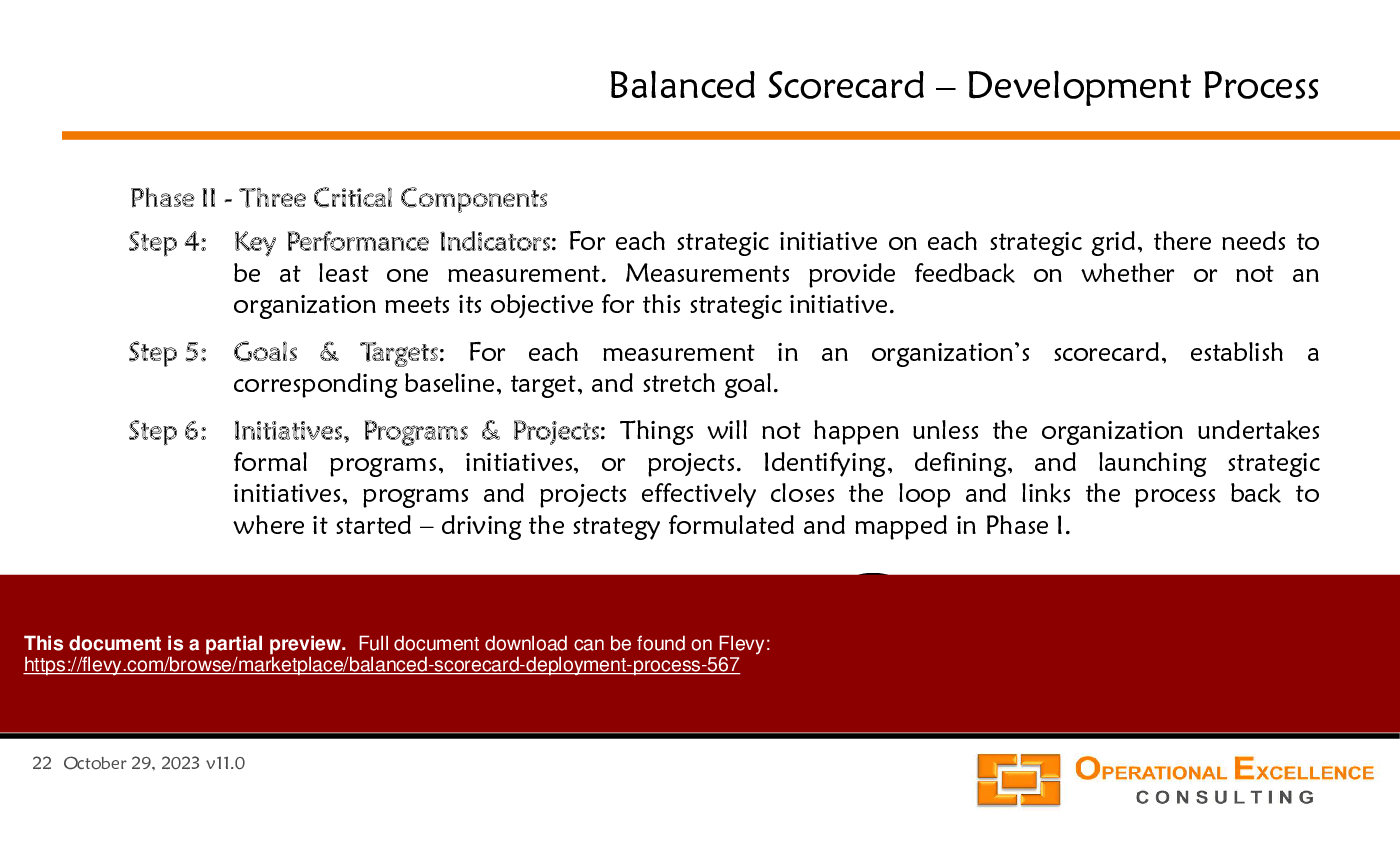
Phase II operationalizes the strategy by defining key performance indicators (KPIs), setting specific goals and targets, and outlining initiatives that drive the organization toward its strategic objectives.
Phase III focuses on deployment, integrating Balanced Scorecard components into the organizational framework, cascading the strategy throughout all levels, and managing implementation to sustain momentum and facilitate adjustments.
This roadmap is essential for effective strategy execution.
This PPT slide outlines the relationship between performance indicators and customer satisfaction, centered on the Net Promoter Score (NPS) as a metric for customer loyalty. Key areas include Order Management, measured by Order Confirmation Lead Time, which highlights the importance of timely communication. Production assesses customer satisfaction through Order Fulfillment Lead Time, emphasizing delivery efficiency. Customer Service effectiveness is gauged by First Call Resolution, crucial for resolving inquiries on first contact. Sales & Marketing performance is evaluated via 90-Days Forecast Accuracy, linking accurate forecasting to inventory management and satisfaction. Purchasing is connected through Material Replenishment Lead Time, underscoring the need for timely procurement to meet customer expectations. This interconnectedness illustrates the collective role of these functions in enhancing customer satisfaction.
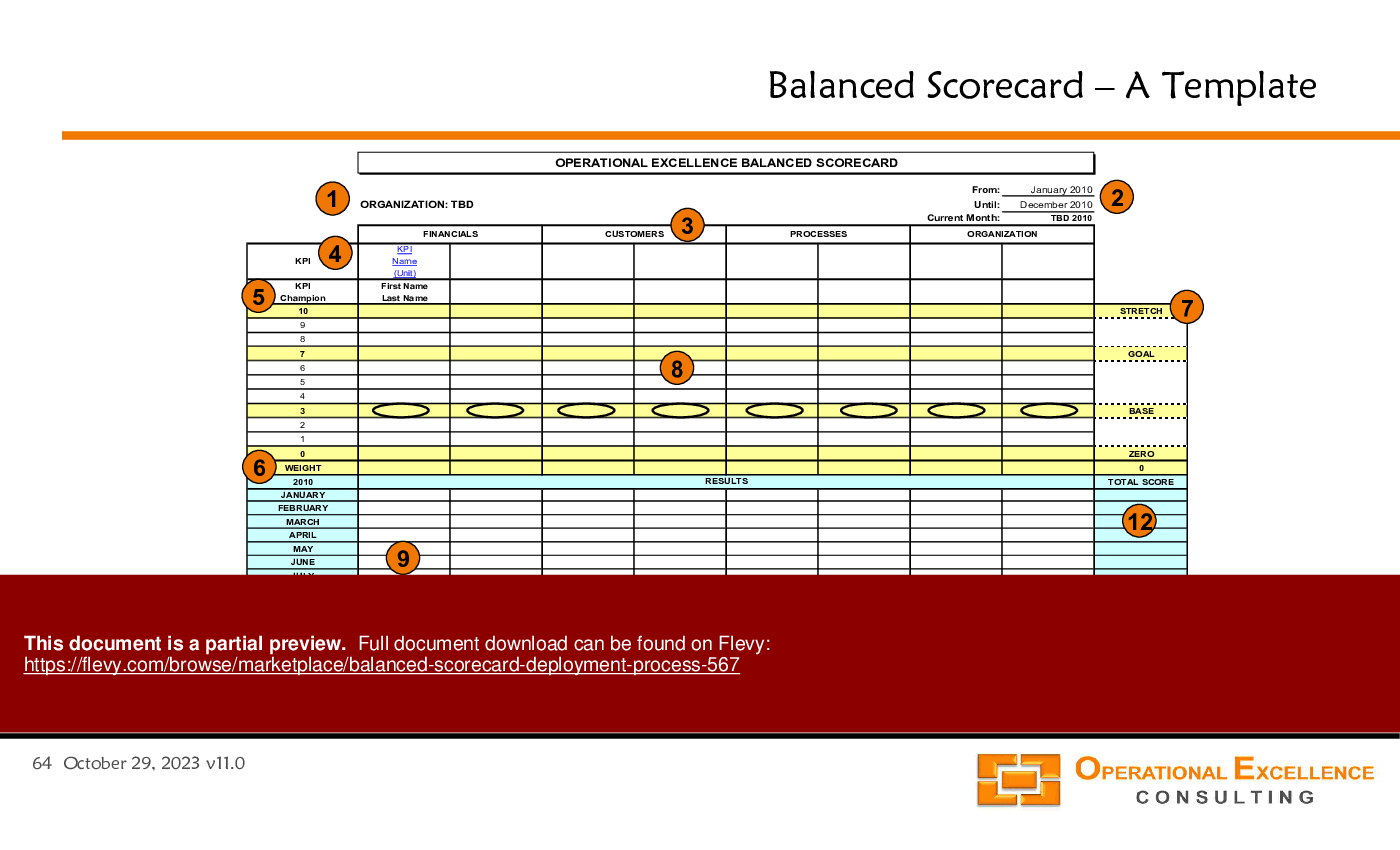
This PPT slide presents a template for an Operational Excellence Balanced Scorecard, segmented into Financials, Customers, Processes, and Organization. Each area includes key performance indicators (KPIs) defined for accountability, with KPI champions responsible for tracking metrics. The scoring system uses a scale from 0 to 10, with "Stretch," "Goal," and "Base" levels indicating performance expectations, promoting continuous improvement and strategic alignment. Monthly tracking allows for real-time adjustments and insights into performance trends, while a "Current Score" section provides an immediate performance snapshot for informed decision-making by C-level executives. This template is a practical tool for implementing a balanced scorecard approach, emphasizing structured performance measurement and accountability.
This PPT slide outlines the Balanced Scorecard framework, categorizing performance indicators into 4 groups: M1 for organizational level, M2 for process or functional level, M3 for sub-process or departmental level, and M4 for task or activity level. M1 focuses on executive scorecard indicators for strategic decision-making. M2 includes indicators for VPs and directors to assess departmental efficiency. M3 targets manager scorecard indicators for granular performance analysis, while M4 covers task-level indicators vital for monitoring daily operations. The flow of tasks from Task 1 to Task 5 illustrates how M3 and M4 indicators link to overall process outcomes, emphasizing the interconnectedness of tasks and performance indicators in achieving organizational goals.
The Development Phase of the Balanced Scorecard focuses on 3 critical components: Key Performance Indicators (KPIs), Goals and Targets, and Initiatives and Programs. Inputs include strategic focus areas, existing KPIs, and a strategy communication plan, ensuring alignment with organizational strategy. A thorough review of strategic grids and models contextualizes the KPIs. Key activities involve selecting KPIs that align with financial metrics, customer satisfaction, internal processes, and learning and growth, making them actionable. Establishing the Balanced Scorecard requires defining each KPI, including baseline, target, and stretch goals, which set performance measurement expectations. Outputs include the initial draft of the Balanced Scorecard, detailing KPIs and metrics, serving as a roadmap for strategic initiatives and projects, marking the transition from planning to execution.
The "Preparation Phase" of the Balanced Scorecard framework focuses on establishing a "Strategic Foundation" by aligning the organization’s vision with strategic objectives and operational tactics. Key inputs include the organization’s vision, strategic focus areas, existing key performance indicators (KPIs), customer expectations, supplier capabilities, and a SWOT analysis. This phase involves 3 main steps: Strategic Alignment, defining Strategic Focus Areas and Objectives, and developing Strategic Grids and Models. Activities include building strategic grids, defining initiatives and tactics, preparing communication materials, and organizing workshops for alignment. Outputs consist of Strategic Grids and Models, strategic initiatives and tactics, and a strategy communication plan, essential for translating strategic intent into operational reality and monitoring progress towards objectives.
This PPT slide outlines a structured approach within the "Financials" dimension of the Balanced Scorecard framework, focusing on the objective to "Increase Shareholder Value." Specific targets include a 20% revenue growth and a 15% reduction in operating costs by 2014, emphasizing financial performance and operational efficiency. The grid format visually represents the interconnectedness of strategic objectives, including identifying new revenue sources, increasing customer profitability, lowering operating costs, and ensuring high asset utilization. This methodical flow ensures alignment across the organization, linking all efforts to the overarching goal of enhancing shareholder value. Clear, measurable objectives are essential for driving financial performance and achieving long-term strategic goals.
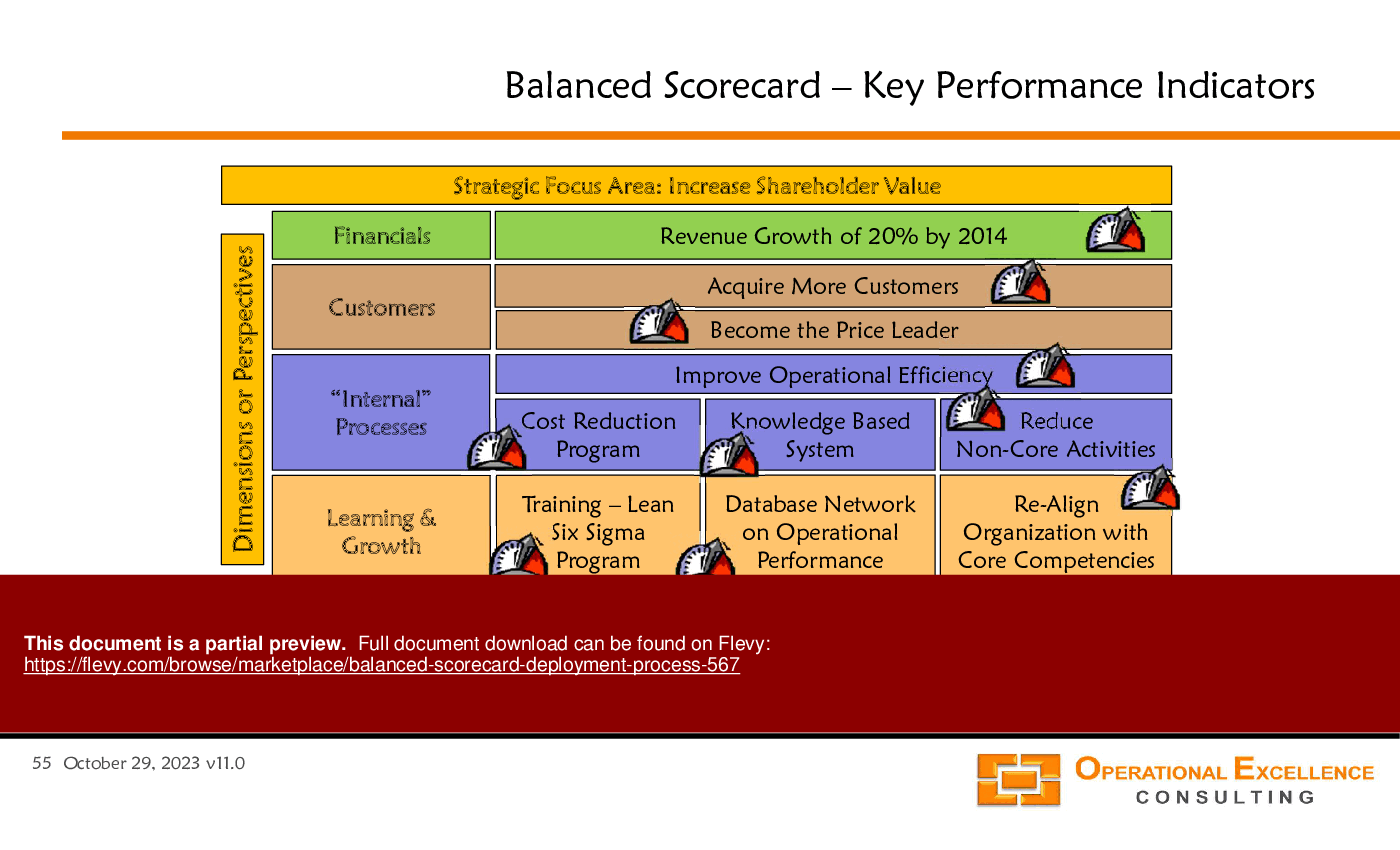
This PPT slide outlines strategic objectives aligned with the Balanced Scorecard framework to increase shareholder value, categorized into 4 dimensions: Financials, Customers, Internal Processes, and Learning & Growth. The Financials objective targets a 20% revenue growth by 2014. The Customers dimension focuses on acquiring more customers and achieving price leadership. Internal Processes emphasize operational efficiency through initiatives like cost reduction programs and knowledge-based systems. Learning & Growth includes training programs, specifically a Lean Six Sigma initiative, and a database network for operational performance. This structured approach supports alignment between strategic objectives and overall strategy, serving as a tool for implementing the Balanced Scorecard methodology.
This PPT slide outlines a Balanced Scorecard framework aimed at increasing shareholder value, categorizing key performance indicators (KPIs) into 4 dimensions: Financials, Customers, Internal Processes, and Learning & Growth. The Financials dimension focuses on achieving a 20% revenue growth by 2014. The Customers section emphasizes objectives for customer acquisition and pricing strategy. Internal Processes prioritize operational efficiency through cost reduction programs and knowledge-based systems. The Learning & Growth dimension highlights employee training via Lean Six Sigma programs. The slide also questions the necessity of performance indicators for each objective, prompting reflection on the importance of measurable outcomes for effective performance management systems.
Source: Best Practices in Balanced Scorecard PowerPoint Slides: Balanced Scorecard Deployment Process PowerPoint (PPTX) Presentation Slide Deck, Operational Excellence Consulting LLC
Developed by a Senior Executive and Operational Excellence Coach with experience at organizations including NOKIA, MICROVENTION, and MAGELLAN, this is a presentation and supporting templates about how to implement Balanced Scorecards.
Operational Excellence Consulting LLC provides assessments, training solutions, kaizen event facilitation, and implementation support to enable our clients to achieve superior performance through Operational Excellence - Strategy Deployment & Hoshin Planning, Performance Management & Balanced Scorecards, Process Excellence & Lean Six Sigma, and High
... [read more] Performance Work Teams.
Frank Adler co-founded OEC LLC in 2009 to follow his passion for Operational Excellence and to be able to work with individuals and organizations that share this passion.
He is an accomplished and recognized Operational Excellence, Lean Management, and Six Sigma coach, with over 20 years of domestic and international executive leadership experience in General Management, multi-site Operations & Supply Chain Management, and Quality & Customer Support Management.
Frank is a certified and experienced Lean Six Sigma Master Black Belt with a proven track record of implementing these methods, concepts, and tools in various organizations and industries.
He holds a Master of Science in Mathematics & Physics from the Freie University of Berlin (Germany) and a Doctor of Philosophy in Applied Mathematics & Industrial Economics from the Helsinki University of Technology (Finland).
Since 2012, we have provided business templates to over 10,000 businesses and organizations of all sizes, from startups and small businesses to the Fortune 100, in over 130 countries.
"Flevy is our 'go to' resource for management material, at an affordable cost. The Flevy library is comprehensive and the content deep, and typically provides a great foundation for us to further develop and tailor our own service offer."
– Chris McCann, Founder at Resilient.World
"One of the great discoveries that I have made for my business is the Flevy library of training materials.
As a Lean Transformation Expert, I am always making presentations to clients on a variety of topics: Training, Transformation, Total Productive Maintenance, Culture, Coaching, Tools, Leadership Behavior, etc. Flevy
It is well worth the money to purchase these presentations. Sure, I have the knowledge and information to make my point. It is another thing to create a presentation that captures what I want to say. Flevy has saved me countless hours of preparation time that is much better spent with implementation that will actually save money for my clients.
"
– Ed Kemmerling, Senior Lean Transformation Expert at PMG
"Flevy is now a part of my business routine. I visit Flevy at least 3 times each month.
Flevy has become my preferred learning source, because what it provides is practical, current, and useful in this era where the business world is being rewritten.
many challenges and there is the need to make the right decisions in a short time, with so much scattered information, we are fortunate to have Flevy. Flevy investigates, selects, and puts at our disposal the best of the best to help us be successful in our work.
"
– Omar Hernán Montes Parra, CEO at Quantum SFE
"I am extremely grateful for the proactiveness and eagerness to help and I would gladly recommend the Flevy team if you are looking for data and toolkits to help you work through business solutions."
– Trevor Booth, Partner, Fast Forward Consulting
"As an Independent Management Consultant, I find Flevy to add great value as a source of best practices, templates and information on new trends. Flevy has matured and the quality and quantity of the library is excellent. Lastly the price charged is reasonable, creating a win-win value for
the customer, Flevy and the various authors. This is truly a service that benefits the consulting industry and associated clients. Thanks for providing this service.
"
– Jim Schoen, Principal at FRC Group
"As a niche strategic consulting firm, Flevy and FlevyPro frameworks and documents are an on-going reference to help us structure our findings and recommendations to our clients as well as improve their clarity, strength, and visual power. For us, it is an invaluable resource to increase our impact and value."
– David Coloma, Consulting Area Manager at Cynertia Consulting
"As a young consulting firm, requests for input from clients vary and it's sometimes impossible to provide expert solutions across a broad spectrum of requirements. That was before I discovered Flevy.com.

Through subscription to this invaluable site of a plethora of topics that are key and crucial to consulting, I
have been able to exceed expectations and deliver quality advice and solutions to my clients. The quality and expertise of the authors are exemplary and gives me great confidence to use as part of my service offerings.
I highly recommend this company for any consultant wanting to apply international best practice standards in their service offerings.
"
– Nishi Singh, Strategist and MD at NSP Consultants
"FlevyPro provides business frameworks from many of the global giants in management consulting that allow you to provide best in class solutions for your clients."
– David Harris, Managing Director at Futures Strategy
Save with Bundles
This document is available as part of the following discounted bundle(s):
Receive our FREE presentation on Operational Excellence
This 50-slide presentation provides a high-level introduction to the 4 Building Blocks of Operational Excellence. Achieving OpEx requires the implementation of a Business Execution System that integrates these 4 building blocks.