
Balanced Scorecard   73-slide PPT PowerPoint presentation slide deck (PPTX)
$45.00

The Balanced Scorecard (73-slide PPT PowerPoint presentation slide deck (PPTX)) Preview Image
Log in to unlock full preview.
The Balanced Scorecard (73-slide PPT PowerPoint presentation slide deck (PPTX)) Preview Image
Arrow   Click main image to view in full screen.

Balanced Scorecard (PowerPoint PPTX Slide Deck)

PowerPoint (PPTX) 73 Slides

Top 1,000 Best Practice $45.00
Developed by a team of security experts with global consulting experience at McKinsey, Deloitte, and Capgemini.
Add to Cart


Immediate download
Fully editable PowerPoint
Free lifetime updates

BALANCED SCORECARD PPT DESCRIPTION

Editor Summary Balanced Scorecard is a 73-slide PPTX strategic management template developed by a team with experience at McKinsey, Deloitte, and Capgemini that structures performance measurement across 4 perspectives: financial, customer, internal processes, and learning & growth. Read more

The Balanced Scorecard is a strategic management framework that enables organizations to translate their vision and strategy into a comprehensive set of performance indicators across various dimensions. Developed by Robert S. Kaplan and David P. Norton in the early 1990s, the Balanced Scorecard goes beyond traditional financial metrics to include non-financial measures that are crucial for long-term success.

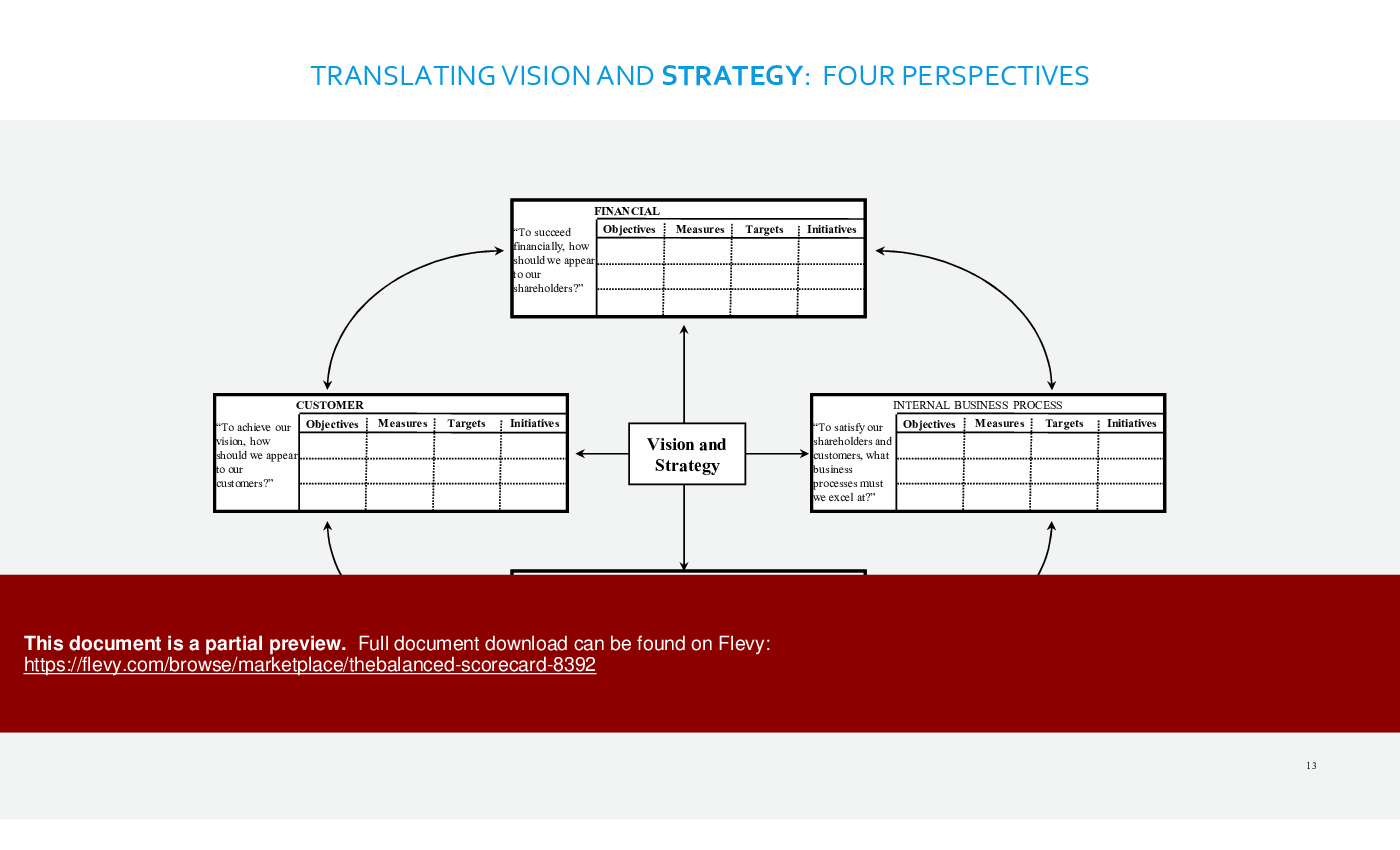
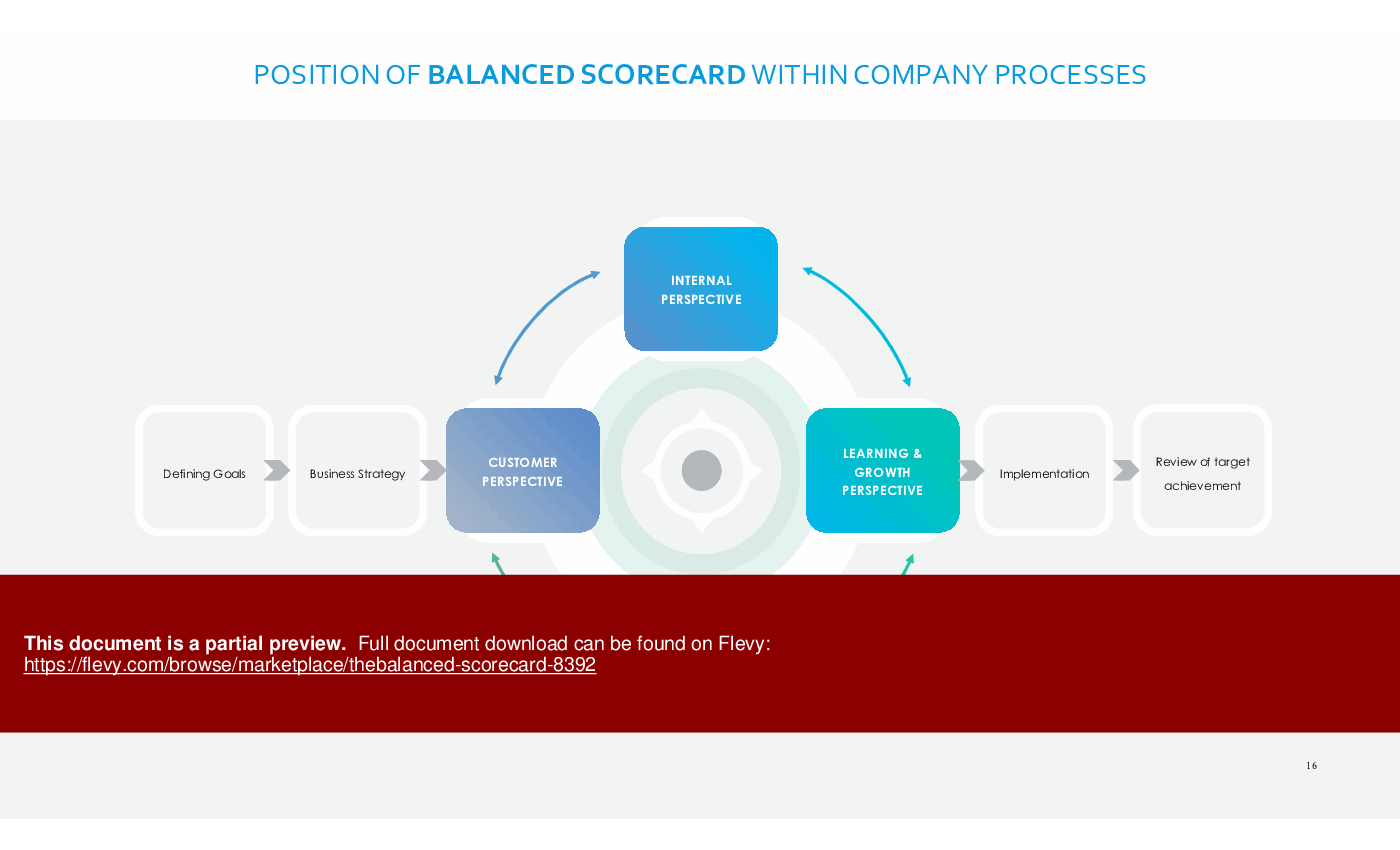
At its core, the Balanced Scorecard consists of four interrelated perspectives: financial, customer, internal processes, and learning and growth. Each perspective represents a different aspect of organizational performance, and together they provide a balanced view of the organization's overall health and progress.

The financial perspective focuses on traditional financial metrics such as revenue, profitability, and return on investment. These indicators help assess the organization's financial performance and its ability to achieve its financial goals.

The customer perspective evaluates how well the organization is meeting the needs and expectations of its customers. It includes measures such as customer satisfaction, retention rates, and market share, which are critical for driving customer loyalty and long-term success.

The internal processes perspective examines the organization's internal operations and processes. It identifies key processes and measures their efficiency, quality, and effectiveness to ensure alignment with strategic objectives and customer requirements.

The learning and growth perspective focuses on the organization's ability to innovate, adapt, and improve over time. It includes measures related to employee skills and capabilities, technology infrastructure, and organizational culture, which are essential for fostering continuous learning and driving future success.

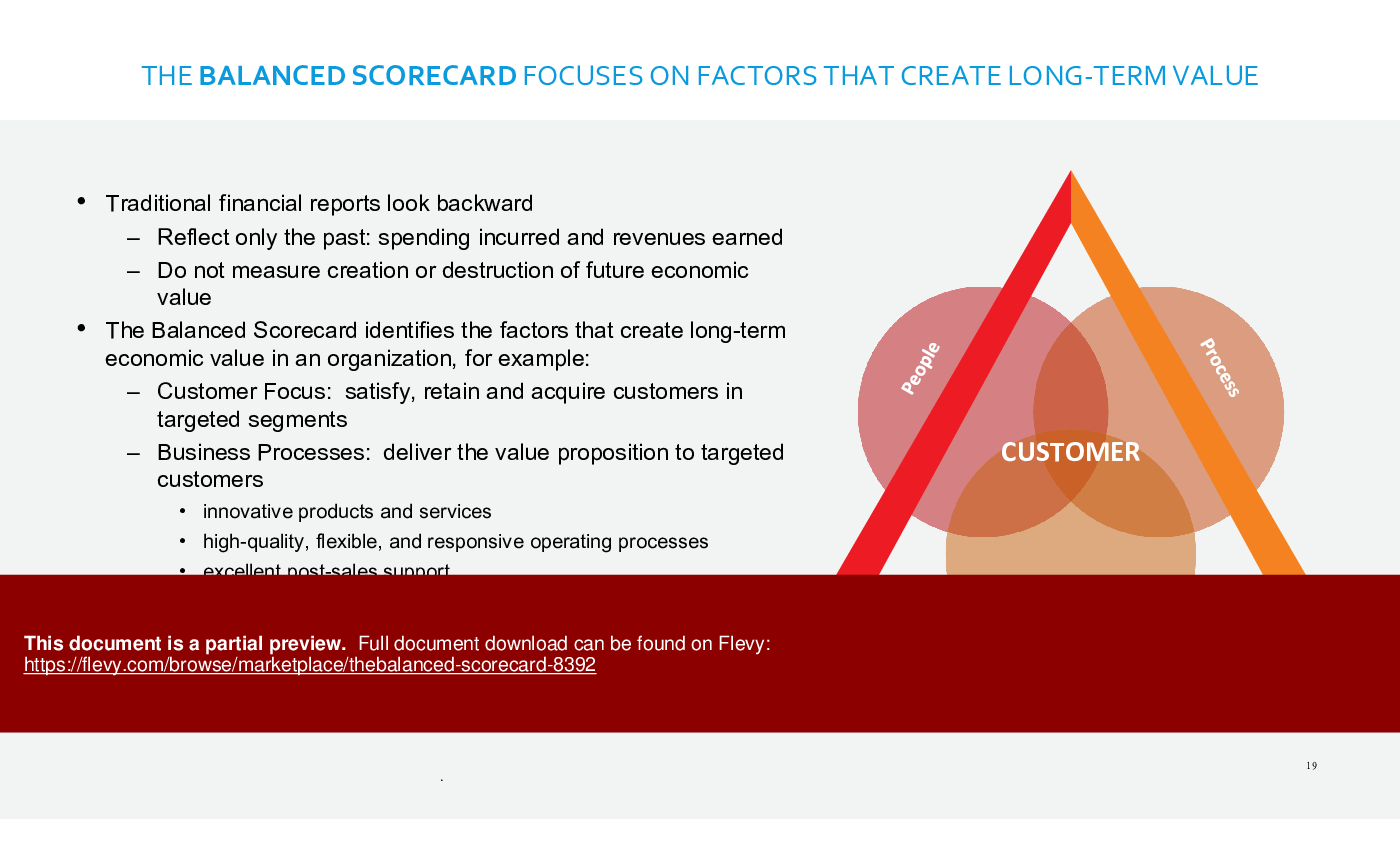
By incorporating metrics from these four perspectives, the Balanced Scorecard provides a comprehensive framework for strategic planning, performance management, and decision-making. It helps organizations align their activities with their strategic objectives, monitor progress towards their goals, and identify areas for improvement to drive sustainable growth and competitive advantage.

This comprehensive 73-slide document offers a thorough exploration of the Balanced Scorecard (BSC), providing a wide array of templates and examples. Through these resources, individuals can gain a comprehensive understanding of the BSC framework, its components, and its practical applications.

Got a question about the product? Email us at support@flevy.com or ask the author directly by using the "Ask the Author a Question" form. If you cannot view the preview above this document description, go here to view the large preview instead.

MARCUS OVERVIEW

This synopsis was written by Marcus [?] based on the analysis of the full 73-slide presentation.


Executive Summary
The Balanced Scorecard (BSC) presentation is a strategic management tool designed to align business activities with organizational vision and strategy. Developed by a team of experts with experience at McKinsey, Deloitte, and Capgemini, this PPTX template provides a comprehensive framework for performance measurement across 4 key perspectives: finance, customer, internal processes, and learning and growth. Users can leverage this template to establish clear objectives, set measurable targets, and implement actionable initiatives, ultimately driving improved organizational performance and customer satisfaction.

Who This Is For and When to Use
•  Corporate executives seeking to enhance strategic alignment across departments
•  Integration leaders responsible for implementing performance management systems
•  Consultants aiming to provide clients with structured frameworks for strategic planning
•  Business analysts focused on measuring and improving organizational performance

Best-fit moments to use this deck:
•  During strategic planning sessions to define organizational goals and objectives
•  When developing performance metrics to track progress against strategic initiatives
•  In workshops aimed at aligning team efforts with the company’s vision and mission

Learning Objectives
•  Define the Balanced Scorecard and its role in strategic management
•  Build a comprehensive performance measurement framework using the 4 perspectives
•  Establish clear objectives and measurable targets for organizational performance
•  Identify key initiatives that drive progress toward strategic goals
•  Implement a continuous feedback loop to monitor and adjust strategies as needed
•  Enhance communication and alignment across departments to achieve strategic objectives

Table of Contents
•  Introduction to the Balanced Scorecard (page 2)
•  Strategic Business System Overview (page 3)
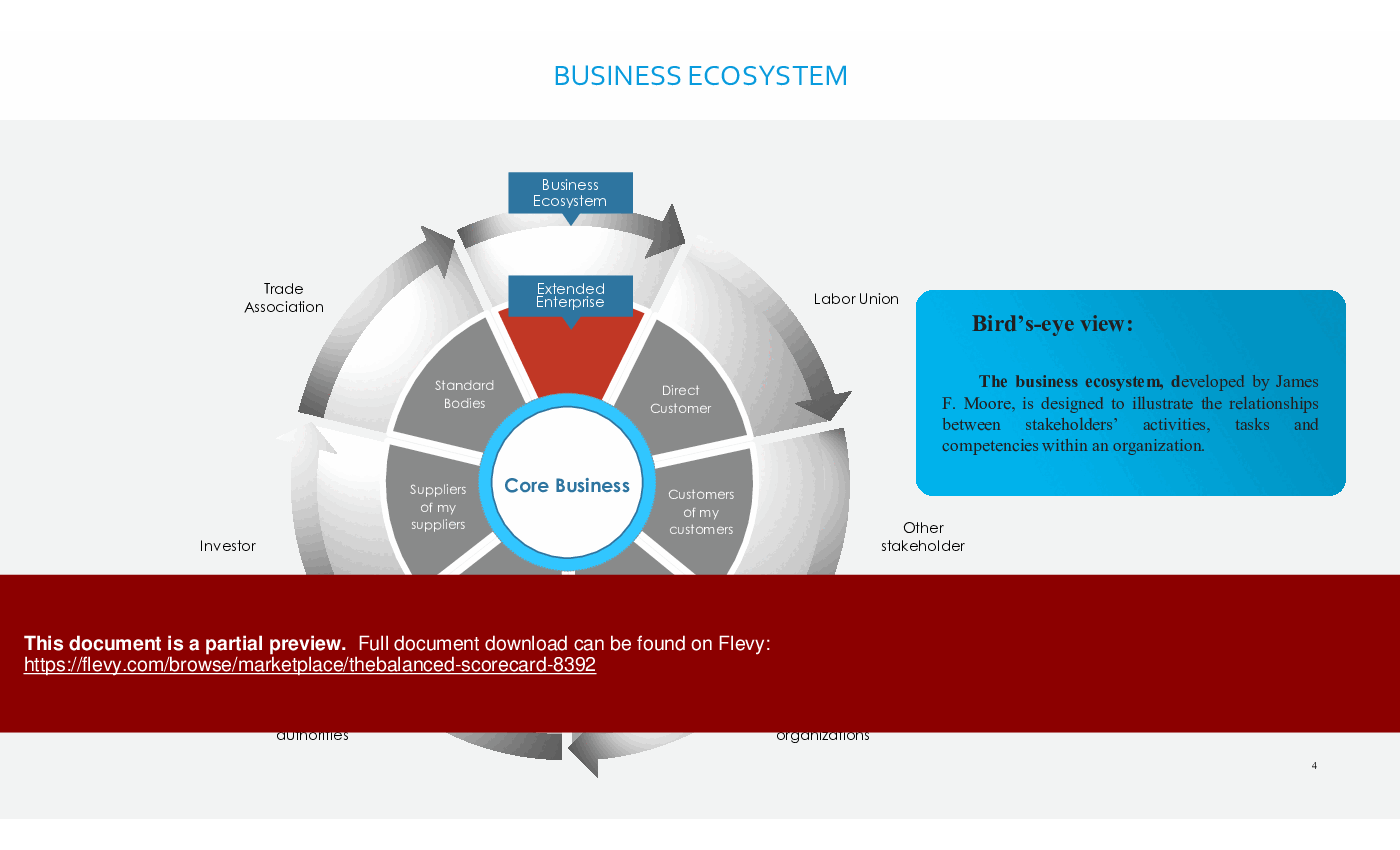
•  Business Ecosystem Analysis (page 4)
•  Strategic Alignment Matrix (page 5)
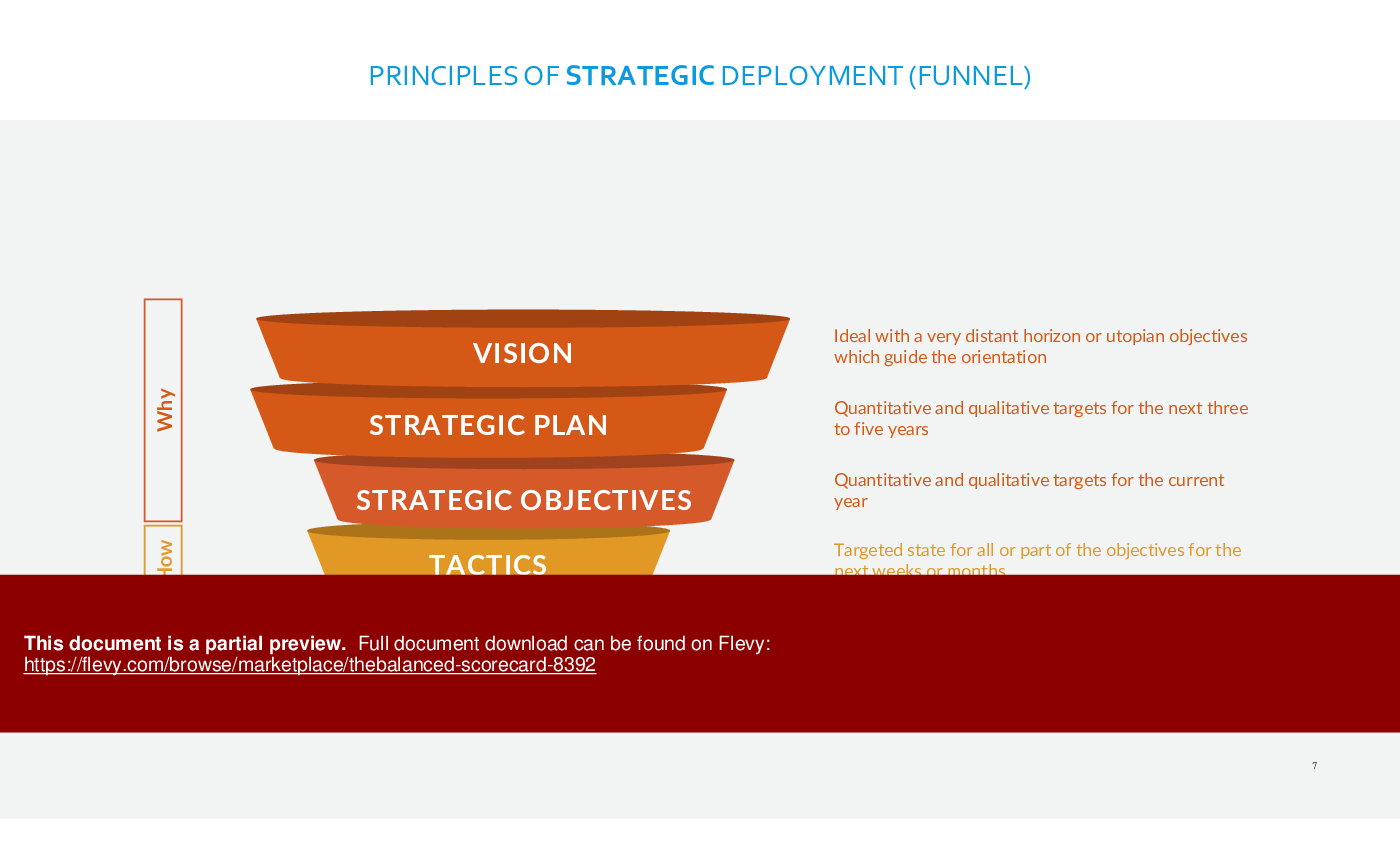
•  Principles of Strategic Deployment (page 7)
•  Balanced Scorecard Strategic Planning (page 8)
•  Four Perspectives of the Balanced Scorecard (page 14)
•  Implementation of Balanced Scorecard (page 16)
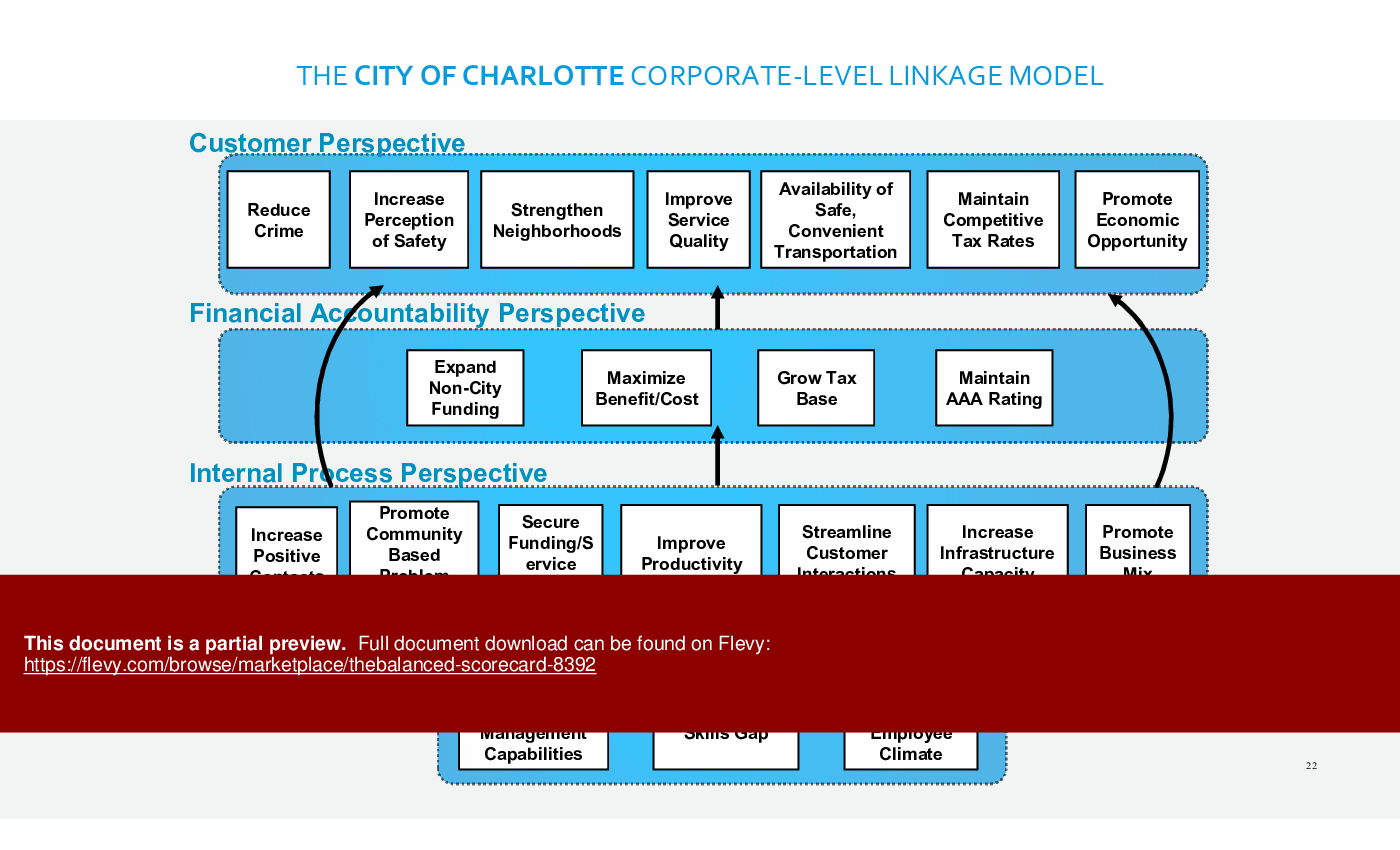
•  Examples of Balanced Scorecard Applications (page 52)
•  Key Pitfalls to Avoid in Implementation (page 34)

Primary Topics Covered
•  Balanced Scorecard Overview - A strategic planning and management method that aligns business activities with organizational vision and strategy.
•  Four Perspectives - Financial, customer, internal processes, and learning and growth perspectives that guide performance measurement.
•  Strategic Alignment - Techniques to ensure that organizational goals are aligned across departments for cohesive execution.
•  Performance Metrics - Identification of key performance indicators (KPIs) to measure success against strategic objectives.
•  Continuous Improvement - The importance of feedback loops in refining strategies and enhancing organizational performance.
•  Implementation Strategies - Practical steps for integrating the Balanced Scorecard into existing management systems.

Deliverables, Templates, and Tools
•  Balanced Scorecard framework template for strategic planning and performance measurement
•  Strategic alignment matrix for visualizing departmental goals and objectives
•  Performance metrics dashboard for tracking KPIs across the 4 perspectives
•  Action plan template to outline initiatives supporting strategic objectives
•  Continuous feedback loop model for monitoring and adjusting strategies

Slide Highlights
•  Overview of the Balanced Scorecard and its significance in strategic management
•  Visual representation of the strategic alignment matrix connecting various organizational goals
•  Detailed explanation of the 4 perspectives and their role in performance measurement
•  Examples of Balanced Scorecard applications across different industries
•  Key pitfalls to avoid when implementing the Balanced Scorecard in organizations

Potential Workshop Agenda
Introduction to the Balanced Scorecard (60 minutes)
•  Overview of the Balanced Scorecard framework
•  Discussion on the importance of strategic alignment
•  Group activity to identify organizational goals

Performance Metrics Development (90 minutes)
•  Workshop on defining KPIs for each perspective
•  Breakout sessions to create action plans for key initiatives
•  Presentation of group findings and feedback

Implementation Strategies (60 minutes)
•  Review of best practices for integrating the Balanced Scorecard
•  Discussion on common pitfalls and how to avoid them
•  Q&A session to address specific organizational challenges

Customization Guidance
•  Tailor the Balanced Scorecard framework to fit your organization’s specific strategic goals and objectives
•  Adjust performance metrics and KPIs to reflect industry standards and organizational priorities
•  Incorporate company-specific terminology and branding into the presentation template

Secondary Topics Covered
•  Role of leadership in driving strategic alignment
•  Importance of stakeholder engagement in the Balanced Scorecard process
•  Techniques for fostering a culture of continuous improvement
•  Case studies of successful Balanced Scorecard implementations

Topic FAQ

What are the core perspectives of a Balanced Scorecard and why are they used?

The Balanced Scorecard uses 4 interrelated perspectives—financial, customer, internal processes, and learning and growth—to provide a balanced view of organizational performance and avoid reliance on financial metrics alone. These perspectives together guide KPI selection and strategic alignment across the organization: financial, customer, internal processes, and learning and growth.

Which KPIs are commonly tracked in the customer perspective of a Balanced Scorecard?

Customer-perspective KPIs measure how well the organization meets customer needs and includes metrics such as customer satisfaction scores, retention or churn rates, and market share. These indicators help assess customer loyalty and competitive position, for example customer satisfaction, retention rates, and market share.

How does a strategic alignment matrix help link departmental goals to corporate strategy?

A strategic alignment matrix visually maps departmental objectives, KPIs, and initiatives against corporate strategy to ensure cohesive execution and identify gaps or overlaps. It supports cross-functional alignment and prioritization and is provided in the template as the Strategic Alignment Matrix on page 5.

What should I look for in an off-the-shelf Balanced Scorecard template for quick deployment?

Prioritize templates that include a ready Balanced Scorecard framework, strategic alignment matrix, a performance metrics dashboard, action plan templates, implementation guidance, examples, and customization notes. These deliverables support faster adoption and practical use, including a performance metrics dashboard and action plan template.

How often should a Balanced Scorecard be reviewed and updated in practice?

Regular reviews are recommended to assess progress and adjust strategies; the material suggests conducting reviews on a regular cadence to monitor progress, typically on a quarterly or bi-annual basis to keep KPIs and initiatives relevant.

How should I judge the cost versus value when buying a Balanced Scorecard template?

Evaluate value by the included deliverables (framework slides, alignment matrix, KPI dashboard, action-plan templates), customization guidance, and worked examples rather than price alone; for reference, Flevy’s Balanced Scorecard includes 73 slides, templates, examples, and implementation guidance.

What changes are needed to adapt a Balanced Scorecard for a non-profit organization?

Adaptation focuses on replacing or de-emphasizing traditional financial metrics with mission-driven objectives and outcomes, emphasizing measures of program impact, stakeholder engagement, and service delivery while retaining the 4 perspectives framework focused on mission-driven objectives rather than financial metrics.

How can I structure a workshop to build KPIs and action plans using the Balanced Scorecard?

A practical workshop structure includes an introductory session on the framework, breakout sessions to define KPIs for each perspective, and implementation discussions to create action plans and avoid pitfalls; the product suggests a sample agenda with 60-minute introduction, 90-minute metrics development, and a 60-minute implementation session.

Document FAQ
These are questions addressed within this presentation.

What is a Balanced Scorecard?
The Balanced Scorecard is a strategic planning and management tool that aligns business activities with organizational vision and strategy while monitoring performance against strategic goals.

How can the Balanced Scorecard improve organizational performance?
By providing a comprehensive framework for measuring performance across multiple perspectives, the Balanced Scorecard helps organizations identify strengths and weaknesses, align resources, and drive continuous improvement.

What are the 4 perspectives of the Balanced Scorecard?
The 4 perspectives are financial, customer, internal processes, and learning and growth, each focusing on different aspects of organizational performance.

How do I implement the Balanced Scorecard in my organization?
Start by defining your organizational vision and strategic objectives, then develop measurable KPIs for each perspective, and create an action plan to achieve these goals.

Can the Balanced Scorecard be adapted for non-profit organizations?
Yes, the Balanced Scorecard framework can be tailored to meet the needs of non-profit organizations by focusing on mission-driven objectives rather than financial metrics.

What are common pitfalls to avoid when implementing the Balanced Scorecard?
Common pitfalls include lack of executive support, insufficient communication, and failure to link performance metrics to strategic objectives.

How often should the Balanced Scorecard be reviewed?
Regular reviews should be conducted to assess progress against strategic goals, typically on a quarterly or bi-annual basis.

What role does leadership play in the Balanced Scorecard process?
Leadership is crucial for driving strategic alignment, fostering a culture of accountability, and ensuring that the Balanced Scorecard is integrated into everyday operations.

Glossary
•  Balanced Scorecard - A strategic planning and management tool that aligns business activities with organizational vision and strategy.
•  KPI (Key Performance Indicator) - A measurable value that demonstrates how effectively an organization is achieving key business objectives.
•  Strategic Alignment - The process of aligning organizational goals and objectives across departments to ensure cohesive execution.
•  Performance Metrics - Quantifiable measures used to evaluate the success of an organization in achieving its objectives.
•  Continuous Improvement - Ongoing efforts to enhance products, services, or processes to increase efficiency and effectiveness.
•  Stakeholder Engagement - The process of involving individuals or groups who have an interest in the organization's activities and outcomes.
•  Action Plan - A detailed plan outlining actions needed to achieve specific goals and objectives.
•  Vision - A clear and compelling description of what an organization aspires to achieve in the future.
•  Mission - The fundamental purpose of an organization, describing why it exists and what it aims to accomplish.
•  Organizational Learning - The process of creating, retaining, and transferring knowledge within an organization.
•  Feedback Loop - A system that allows for continuous monitoring and adjustment of strategies based on performance data.
•  SWOT Analysis - A strategic planning tool used to identify strengths, weaknesses, opportunities, and threats related to a business or project.
•  Strategic Objectives - Specific goals that an organization aims to achieve as part of its strategic plan.
•  Initiatives - Specific projects or actions undertaken to achieve strategic objectives.
•  Financial Perspective - One of the 4 perspectives of the Balanced Scorecard focusing on financial performance and metrics.
•  Customer Perspective - One of the 4 perspectives of the Balanced Scorecard focusing on customer satisfaction and engagement.
•  Internal Processes Perspective - One of the 4 perspectives of the Balanced Scorecard focusing on the efficiency and effectiveness of internal processes.
•  Learning and Growth Perspective - One of the 4 perspectives of the Balanced Scorecard focusing on organizational learning, employee development, and innovation.
•  Value Proposition - The promise of value to be delivered to customers, highlighting the benefits of a product or service.
•  Strategic Themes - Key areas of focus that guide an organization’s strategic planning and execution efforts.

Source: Best Practices in Balanced Scorecard PowerPoint Slides: Balanced Scorecard PowerPoint (PPTX) Presentation Slide Deck, RadVector Consulting


$45.00
Developed by a team of security experts with global consulting experience at McKinsey, Deloitte, and Capgemini.
Add to Cart
  

ABOUT THE AUTHOR

Additional documents from author: 182

We are a group of aviation experts & specialists (PhDs, Engineers, Pilots, Navigators, ...), leaders in helping organizations to transform their business performance using Methodologies and Principles of Lean, Agile, Six Sigma, and Innovation.

Ask the Author a Question

You must be logged in to contact the author.

Click here to log in Click here register

Did you know?
The average daily rate of a McKinsey consultant is $6,625 (not including expenses). The average price of a Flevy document is $65.


Trusted by over 10,000+ Client Organizations
Since 2012, we have provided business templates to over 10,000 businesses and organizations of all sizes, from startups and small businesses to the Fortune 100, in over 130 countries.
AT&T GE Cisco Intel IBM Coke Dell Toyota HP Nike Samsung Microsoft Astrazeneca JP Morgan KPMG Walgreens Walmart 3M Kaiser Oracle SAP Google E&Y Volvo Bosch Merck Fedex Shell Amgen Eli Lilly Roche AIG Abbott Amazon PwC T-Mobile Broadcom Bayer Pearson Titleist ConEd Pfizer NTT Data Schwab


Read Customer Testimonials

 
"FlevyPro has been a brilliant resource for me, as an independent growth consultant, to access a vast knowledge bank of presentations to support my work with clients. In terms of RoI, the value I received from the very first presentation I downloaded paid for my subscription many times over! The "

– Roderick Cameron, Founding Partner at SGFE Ltd
 
"[Flevy] produces some great work that has been/continues to be of immense help not only to myself, but as I seek to provide professional services to my clients, it gives me a large "tool box" of resources that are critical to provide them with the quality of service and outcomes they are expecting."

– Royston Knowles, Executive with 50+ Years of Board Level Experience
 
"Last Sunday morning, I was diligently working on an important presentation for a client and found myself in need of additional content and suitable templates for various types of graphics. Flevy.com proved to be a treasure trove for both content and design at a reasonable price, considering the time I "

– M. E., Chief Commercial Officer, International Logistics Service Provider
 
"As a small business owner, the resource material available from FlevyPro has proven to be invaluable. The ability to search for material on demand based our project events and client requirements was great for me and proved very beneficial to my clients. Importantly, being able to easily edit and tailor "

– Michael Duff, Managing Director at Change Strategy (UK)
 
"I like your product. I'm frequently designing PowerPoint presentations for my company and your product has given me so many great ideas on the use of charts, layouts, tools, and frameworks. I really think the templates are a valuable asset to the job."

– Roberto Fuentes Martinez, Senior Executive Director at Technology Transformation Advisory
 
"I have found Flevy to be an amazing resource and library of useful presentations for lean sigma, change management and so many other topics. This has reduced the time I need to spend on preparing for my performance consultation. The library is easily accessible and updates are regularly provided. A wealth of great information."

– Cynthia Howard RN, PhD, Executive Coach at Ei Leadership
 
"As a young consulting firm, requests for input from clients vary and it's sometimes impossible to provide expert solutions across a broad spectrum of requirements. That was before I discovered Flevy.com.

Through subscription to this invaluable site of a plethora of topics that are key and crucial to consulting, I "

– Nishi Singh, Strategist and MD at NSP Consultants
 
"As an Independent Management Consultant, I find Flevy to add great value as a source of best practices, templates and information on new trends. Flevy has matured and the quality and quantity of the library is excellent. Lastly the price charged is reasonable, creating a win-win value for "

– Jim Schoen, Principal at FRC Group


Customers Also Bought These Documents


Customers Also Like These Documents

Explore Templates on Related Management Topics


Your Recently Viewed Documents
Receive our FREE presentation on Operational Excellence

This 50-slide presentation provides a high-level introduction to the 4 Building Blocks of Operational Excellence. Achieving OpEx requires the implementation of a Business Execution System that integrates these 4 building blocks.










