
Tuckman's 5 Stages of Group Development   25-slide PPT PowerPoint presentation slide deck (PPTX)
$29.00

Tuckman's 5 Stages of Group Development (25-slide PPT PowerPoint presentation slide deck (PPTX)) Preview Image
Log in to unlock full preview.
Tuckman's 5 Stages of Group Development (25-slide PPT PowerPoint presentation slide deck (PPTX)) Preview Image
Arrow   Click main image to view in full screen.

Tuckman's 5 Stages of Group Development (PowerPoint PPTX Slide Deck)

PowerPoint (PPTX) 25 Slides FlevyPro Document

Top 1,000 Best Practice $29.00
FlevyPro price: FREE (included in subscription)
This framework is developed by a team of former McKinsey and Big 4 consultants. The presentation follows the headline-body-bumper slide format used by global consulting firms.
Add to Cart


Immediate download
Free lifetime updates

TEAM MANAGEMENT PPT DESCRIPTION

Editor Summary 25-slide PowerPoint presentation outlining Bruce Tuckman’s 5 Stages of Group Development (Forming, Storming, Norming, Performing, Adjourning) and delivering stage-by-stage templates, action plans, assessment tools, facilitation guidelines, and checklists. Read more

Studies on Team Motivation stem from the research carried out in Psychology and Sociology. Wilhelm Wundt (1832-1920), a Founder of Modern Psychology, is credited with conducting the 1st research on the subject.

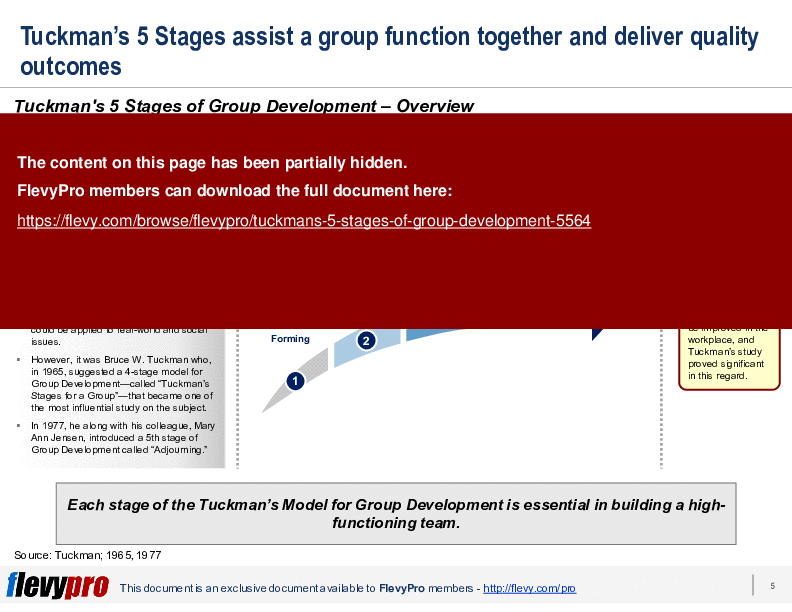
The Social Psychologist Kurt Lewin (1890-1947) is credited with introducing the term "Group Dynamics." The term defined the constructive and destructive forces within Groups of people. Lewin pioneered the Group Dynamics Research Center at the Massachusetts Institute of Technology, first of its kind dedicated to the study of Group Dynamics and how it could be applied to real-world and social issues.

This presentation provides a detailed overview of Bruce Tuckman's Model on Group Development that became one of the most influential study on the subject. Originally conducted in 1965, the Model was further improved by Bruce Tuckman and his colleague in 1977.

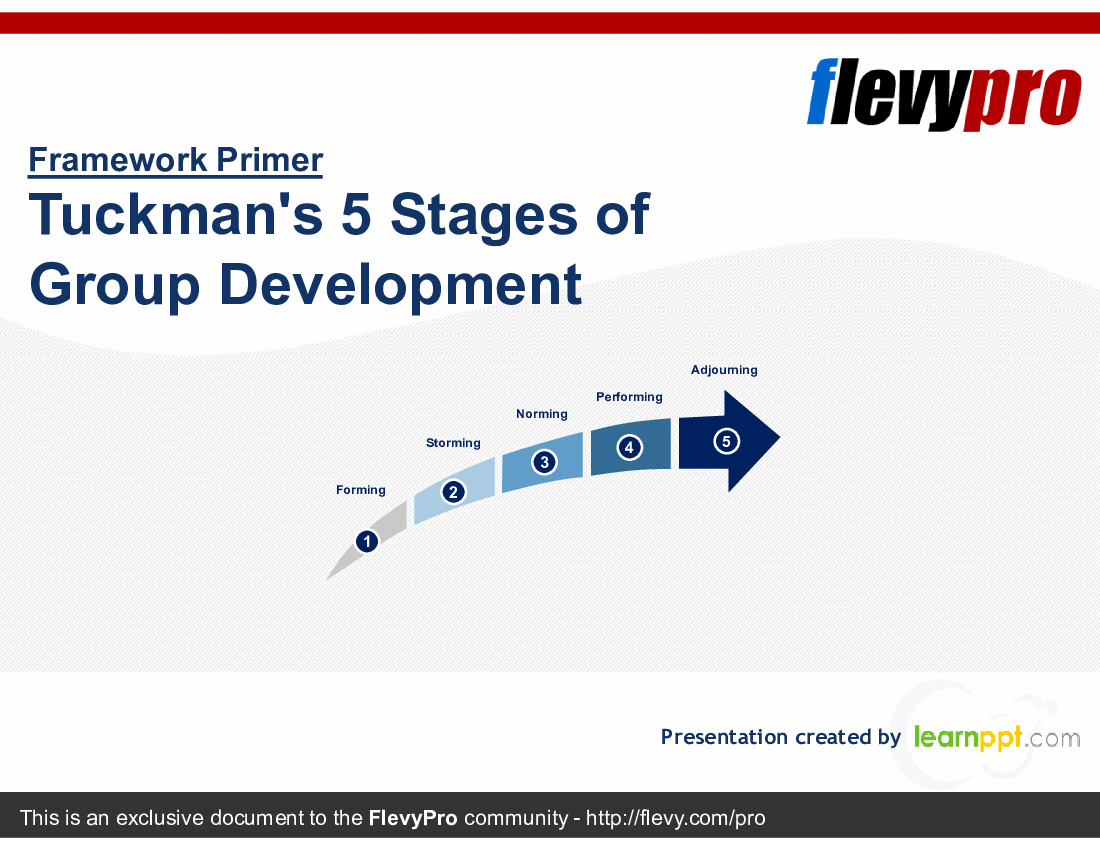
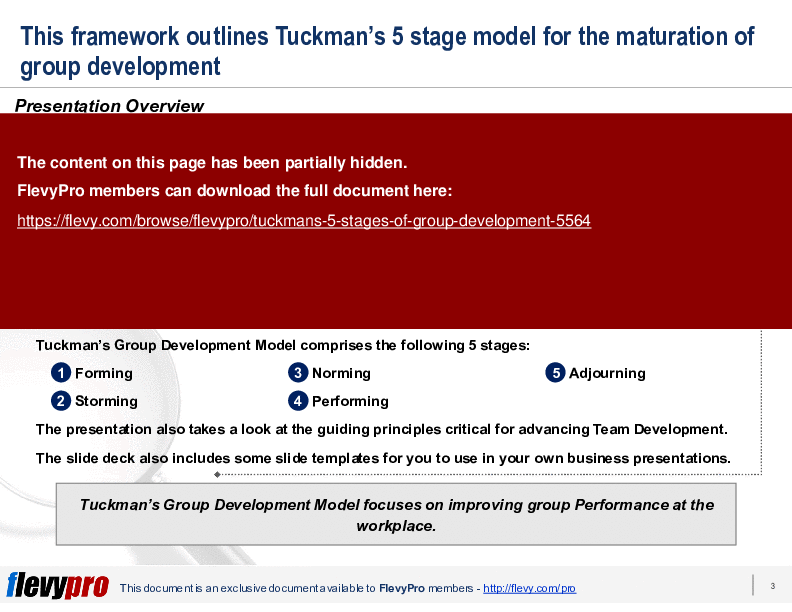
Tuckman's Group Development Model comprises the following 5 stages:

1. Forming
2. Storming
3. Norming
4. Performing
5. Adjourning

The presentation also takes a look at the guiding principles critical for advancing Team Development.

The slide deck also includes some slide templates for you to use in your own business presentations.

Tuckman's 5 Stages of Group Development framework is a must-have for any executive looking to optimize team performance. This presentation delves into the nuances of each stage, from Forming to Adjourning, providing actionable insights on managing team dynamics. The slide deck is packed with practical templates that can be seamlessly integrated into your business presentations, making it an invaluable resource for driving team effectiveness.

The PPT also emphasizes the critical role of leadership in team development. It outlines guiding principles that help leaders navigate through each stage, ensuring that teams not only perform, but excel. Whether you're dealing with a newly formed team or guiding a high-performing one, this presentation offers the tools and knowledge to foster a collaborative and productive work environment.

Got a question about this document? Email us at flevypro@flevy.com.

MARCUS OVERVIEW

This synopsis was written by Marcus [?] based on the analysis of the full 25-slide presentation.


Executive Summary
The "Tuckman's 5 Stages of Group Development" presentation provides a comprehensive framework for understanding team dynamics and enhancing group performance. Developed by Bruce Tuckman in 1965, this model outlines 5 critical stages—Forming, Storming, Norming, Performing, and Adjourning—each essential for a team's growth and effectiveness. This presentation, designed by former McKinsey and Big 4 consultants, equips leaders and teams with actionable insights and templates to navigate these stages effectively, fostering collaboration and delivering quality outcomes.

Who This Is For and When to Use
•  Team leaders and managers seeking to improve group dynamics
•  Human resources professionals focused on team development
•  Organizational development consultants working with client teams
•  Project managers overseeing team-based initiatives

Best-fit moments to use this deck:
•  During team formation to set clear expectations and goals
•  In conflict resolution scenarios to guide teams through the Storming phase
•  When assessing team performance and dynamics in ongoing projects
•  At project closure to reflect on successes and lessons learned

Learning Objectives
•  Define the 5 stages of Tuckman's Group Development Model
•  Identify key characteristics and dynamics of each stage
•  Develop strategies to facilitate movement through each stage
•  Implement guiding principles for effective team leadership
•  Create actionable plans for team development and performance improvement
•  Utilize templates for practical application in business settings

Table of Contents
•  Overview (page 3)
•  Tuckman’s 5 Stages of Group Development (page 5)
•  Stages of Group Development (page 8)
•  Guiding Principles (page 15)
•  Templates (page 19)

Primary Topics Covered
•  Overview of Tuckman’s Model - An introduction to the significance of Tuckman's 5 Stages in understanding team dynamics and improving performance.
•  Forming Stage - Characteristics of the initial stage where team members are introduced and roles are established.
•  Storming Stage - Dynamics of conflict and power struggles as team members assert their opinions and challenge each other.
•  Norming Stage - Development of cooperation and team cohesion as members settle differences and establish norms.
•  Performing Stage - High-functioning teams deliver optimal results with shared leadership and open communication.
•  Adjourning Stage - Reflection on team experiences and closure as the project concludes and members disband.

Deliverables, Templates, and Tools
•  Presentation templates for each stage of Tuckman's model
•  Action plans for navigating team dynamics
•  Assessment tools for measuring team effectiveness
•  Guidelines for facilitating team discussions and reflections
•  Checklists for managing transitions between stages

Slide Highlights
•  Visual representation of Tuckman’s 5 Stages illustrating team progression
•  Key characteristics and dynamics of each stage presented in a clear format
•  Manager’s role outlined for each stage to guide effective leadership
•  Charts depicting team effectiveness over time through the stages

Potential Workshop Agenda
Introduction to Tuckman’s Model (30 minutes)
•  Overview of the 5 Stages
•  Discussion on the importance of team dynamics

Navigating the Storming Stage (60 minutes)
•  Identifying common conflicts
•  Strategies for conflict resolution

Building a High-Performing Team (90 minutes)
•  Characteristics of the Performing Stage
•  Action planning for team development

Reflection and Closure (30 minutes)
•  Gathering lessons learned
•  Celebrating team successes

Customization Guidance
•  Adapt templates to reflect specific team goals and dynamics
•  Modify action plans based on team size and project complexity
•  Incorporate organizational values and culture into guiding principles
•  Use assessment tools tailored to specific team objectives

Secondary Topics Covered
•  The role of leadership in team development
•  Techniques for fostering open communication
•  Strategies for managing team conflict
•  Importance of reflection in team performance

Topic FAQ

What are the 5 stages of Tuckman’s Group Development model and what does each represent?

Tuckman’s model comprises Forming (team introduction and role definition), Storming (conflict and power struggles), Norming (establishing cooperation and norms), Performing (high-functioning delivery), and Adjourning (project closure and reflection), collectively described as the 5 stages of group development.

How can I diagnose which Tuckman stage my team is in during a retrospective?

Diagnose by mapping observed behaviors to stage characteristics (unclear roles for Forming, active conflicts for Storming, emerging norms for Norming, consistent delivery for Performing, closure activities for Adjourning) and use assessment tools and manager-role guidance to validate the diagnosis with evidence from team interactions and assessments.

What facilitation techniques help teams move through the Storming stage?

Use structured conflict-resolution techniques, guided discussion frameworks, clear role clarification, and targeted action plans to surface issues and set norms. The presentation includes facilitation guidelines and action-plan templates designed to address common Storming dynamics and guide resolution.

What should I look for when buying a slide deck on Tuckman’s model for internal workshops?

Prioritize decks that include stage-specific templates, assessment tools, manager-role guidance, sample workshop agendas, and customization guidance. The Flevy product "Tuckman's 5 Stages of Group Development" provides these elements and is delivered as a 25-slide PowerPoint.

How do I evaluate whether a commercial template set is worth purchasing for team development work?

Evaluate whether the set contains the assets you need: presentation templates for each stage, action plans, assessment tools, facilitation guidelines, and checklists that you can customize to your team’s size and objectives, such as the templates and action plans listed in the deliverables.

How can I structure a half-day workshop to help a newly formed team progress from Forming to Norming?

Run an introductory module on stage characteristics, guided role-clarification exercises, conflict anticipation and resolution practice, and action-planning for norms. Use stage-specific slides, facilitator notes, and the sample workshop agenda included in "Tuckman's 5 Stages of Group Development" to structure activities and timings.

Can Tuckman’s model be applied to remote teams, and what adjustments are recommended?

Yes; the model’s principles apply to virtual teams. Adjust facilitation to include explicit asynchronous norms, virtual checklists, and digital assessment tools, and use the presentation’s facilitation guidelines and checklists adapted for remote collaboration.

What measurement approaches assess team effectiveness across Tuckman’s stages?

Use qualitative stage-mapping against defined characteristics and quantitative assessment tools that track behaviors and outputs over time, supplemented by charts showing team effectiveness progression; the slide highlights mention charts depicting team effectiveness over time as an included asset.

Document FAQ
These are questions addressed within this presentation.

What are the 5 stages of Tuckman's Group Development Model?
The 5 stages are Forming, Storming, Norming, Performing, and Adjourning, each representing a phase in team development.

How can I apply this model to my team?
Utilize the templates and action plans provided in the presentation to assess your team's current stage and develop strategies for progression.

What is the significance of the Storming stage?
The Storming stage is crucial for addressing conflicts and establishing team dynamics; navigating this phase effectively can lead to stronger collaboration.

How can I measure team effectiveness?
Use the assessment tools included in the presentation to evaluate team performance and dynamics throughout the stages.

What role does the manager play in team development?
The manager facilitates communication, guides conflict resolution, and supports team members through each stage of development.

Can this model be applied to remote teams?
Yes, the principles of Tuckman's model are applicable to both in-person and remote teams; adjustments can be made to accommodate virtual collaboration.

What are some common challenges teams face in the Norming stage?
Teams may struggle with establishing norms and processes, leading to potential misunderstandings and conflicts.

How can I ensure a successful transition to the Performing stage?
Foster an environment of trust and open communication, and encourage shared leadership among team members.

Glossary
•  Forming - The initial stage where team members are introduced and roles are established.
•  Storming - The stage characterized by conflict and power struggles among team members.
•  Norming - The phase where cooperation develops and team norms are established.
•  Performing - The stage where teams function optimally and deliver results.
•  Adjourning - The final stage where the team reflects on experiences and disbands.
•  Team Dynamics - The behavioral relationships and interactions within a team.
•  Conflict Resolution - Strategies employed to address and resolve disagreements within a team.
•  Leadership Style - The approach a leader takes in guiding and managing a team.
•  Cohesion - The degree to which team members stick together and work collaboratively.
•  Performance Improvement - Efforts made to enhance team effectiveness and output.
•  Guiding Principles - Fundamental concepts that support effective team leadership and development.
•  Templates - Pre-designed formats for planning and assessing team dynamics.

TEAM MANAGEMENT PPT SLIDES

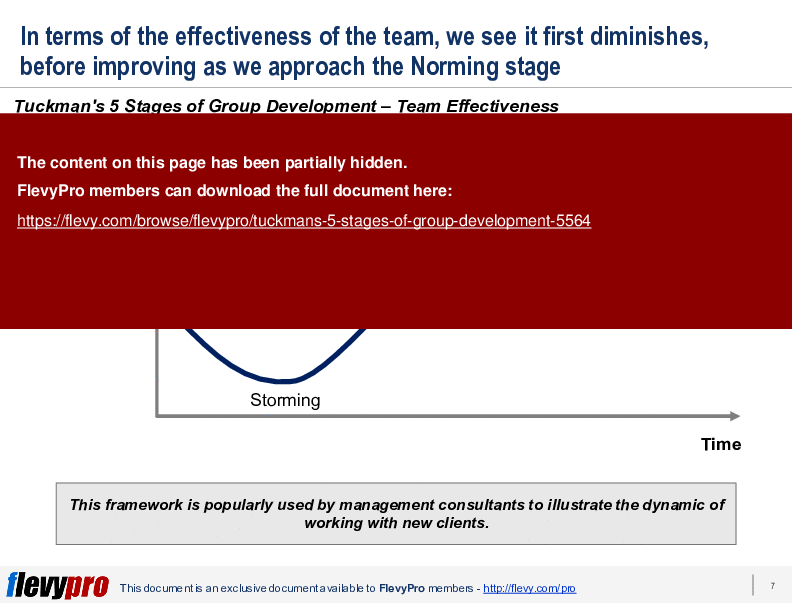
Understanding Team Effectiveness through Development Stages

Understanding the Forming Stage in Team Development

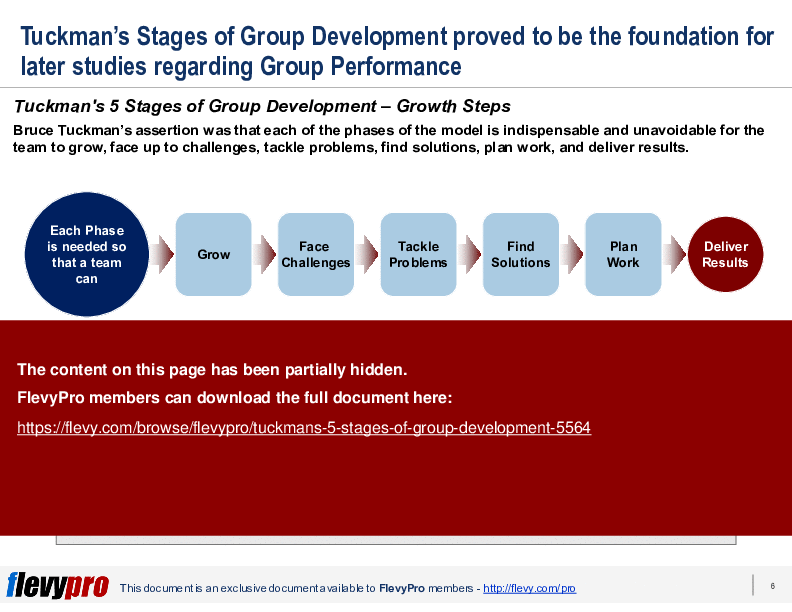
Understanding Tuckman’s Five Stages of Team Development

Understanding the Norming Stage of Team Development

Source: Best Practices in Team Building PowerPoint Slides: Tuckman's 5 Stages of Group Development PowerPoint (PPTX) Presentation Slide Deck, LearnPPT Consulting


$29.00
FlevyPro price: FREE (included in subscription)
This framework is developed by a team of former McKinsey and Big 4 consultants. The presentation follows the headline-body-bumper slide format used by global consulting firms.
Add to Cart
  

Did you need more documents?

Consider a FlevyPro subscription from $39/month. View plans here.

For $10.00 more, you can download this document plus 2 more FlevyPro documents. That's just $13 each.

ABOUT FLEVYPRO

This document is part of the FlevyPro Library, a curated knowledge base of documents for our FlevyPro subscribers.

FlevyPro is a subscription service for on-demand business frameworks and analysis tools. FlevyPro subscribers receive access to an exclusive library of curated business documents—business framework primers, presentation templates, Lean Six Sigma tools, and more—among other exclusive benefits.

Click here to learn more about FlevyPro and its benefits.

Did you know?
The average daily rate of a McKinsey consultant is $6,625 (not including expenses). The average price of a Flevy document is $65.


Trusted by over 10,000+ Client Organizations
Since 2012, we have provided business templates to over 10,000 businesses and organizations of all sizes, from startups and small businesses to the Fortune 100, in over 130 countries.
AT&T GE Cisco Intel IBM Coke Dell Toyota HP Nike Samsung Microsoft Astrazeneca JP Morgan KPMG Walgreens Walmart 3M Kaiser Oracle SAP Google E&Y Volvo Bosch Merck Fedex Shell Amgen Eli Lilly Roche AIG Abbott Amazon PwC T-Mobile Broadcom Bayer Pearson Titleist ConEd Pfizer NTT Data Schwab


Read Customer Testimonials

 
"Flevy is now a part of my business routine. I visit Flevy at least 3 times each month.

Flevy has become my preferred learning source, because what it provides is practical, current, and useful in this era where the business world is being rewritten.

In today's environment where there are so "

– Omar Hernán Montes Parra, CEO at Quantum SFE
 
"My FlevyPro subscription provides me with the most popular frameworks and decks in demand in today’s market. They not only augment my existing consulting and coaching offerings and delivery, but also keep me abreast of the latest trends, inspire new products and service offerings for my practice, and educate me "

– Bill Branson, Founder at Strategic Business Architects
 
"I have used FlevyPro for several business applications. It is a great complement to working with expensive consultants. The quality and effectiveness of the tools are of the highest standards."

– Moritz Bernhoerster, Global Sourcing Director at Fortune 500
 
"I have found Flevy to be an amazing resource and library of useful presentations for lean sigma, change management and so many other topics. This has reduced the time I need to spend on preparing for my performance consultation. The library is easily accessible and updates are regularly provided. A wealth of great information."

– Cynthia Howard RN, PhD, Executive Coach at Ei Leadership
 
"As a niche strategic consulting firm, Flevy and FlevyPro frameworks and documents are an on-going reference to help us structure our findings and recommendations to our clients as well as improve their clarity, strength, and visual power. For us, it is an invaluable resource to increase our impact and value."

– David Coloma, Consulting Area Manager at Cynertia Consulting
 
"If you are looking for great resources to save time with your business presentations, Flevy is truly a value-added resource. Flevy has done all the work for you and we will continue to utilize Flevy as a source to extract up-to-date information and data for our virtual and onsite presentations!"

– Debbi Saffo, President at The NiKhar Group
 
"I am extremely grateful for the proactiveness and eagerness to help and I would gladly recommend the Flevy team if you are looking for data and toolkits to help you work through business solutions."

– Trevor Booth, Partner, Fast Forward Consulting
 
"One of the great discoveries that I have made for my business is the Flevy library of training materials.

As a Lean Transformation Expert, I am always making presentations to clients on a variety of topics: Training, Transformation, Total Productive Maintenance, Culture, Coaching, Tools, Leadership Behavior, etc. Flevy "

– Ed Kemmerling, Senior Lean Transformation Expert at PMG


Customers Also Bought These Documents


Customers Also Like These Documents

Explore Templates on Related Management Topics


Your Recently Viewed Documents
Download our FREE Organization, Change, & Culture, Templates

Download our free compilation of 50+ slides and templates on Organizational Design, Change Management, and Corporate Culture. Methodologies include ADKAR, Burke-Litwin Change Model, McKinsey 7-S, Competing Values Framework, etc.