
Time-to-Value Management   24-slide PPT PowerPoint presentation slide deck (PPTX)
$29.00

Time-to-Value Management (24-slide PPT PowerPoint presentation slide deck (PPTX)) Preview Image
Log in to unlock full preview.
Time-to-Value Management (24-slide PPT PowerPoint presentation slide deck (PPTX)) Preview Image
Arrow   Click main image to view in full screen.

Time-to-Value Management (PowerPoint PPTX Slide Deck)

PowerPoint (PPTX) 24 Slides FlevyPro Document

Top 1,000 Best Practice $29.00
FlevyPro price: FREE (included in subscription)
This framework is developed by a team of former McKinsey and Big 4 consultants. The presentation follows the headline-body-bumper slide format used by global consulting firms.
Add to Cart


Immediate download
Free lifetime updates

LEADERSHIP PPT DESCRIPTION

Editor Summary Time-to-Value Management is a 24-slide PPTX PowerPoint framework by LearnPPT Consulting that presents a four-step Talent-to-Value approach: Define the Value Agenda; Clarify Critical Roles; Identify Talent for Roles; Operationalize and Mobilize. Read more

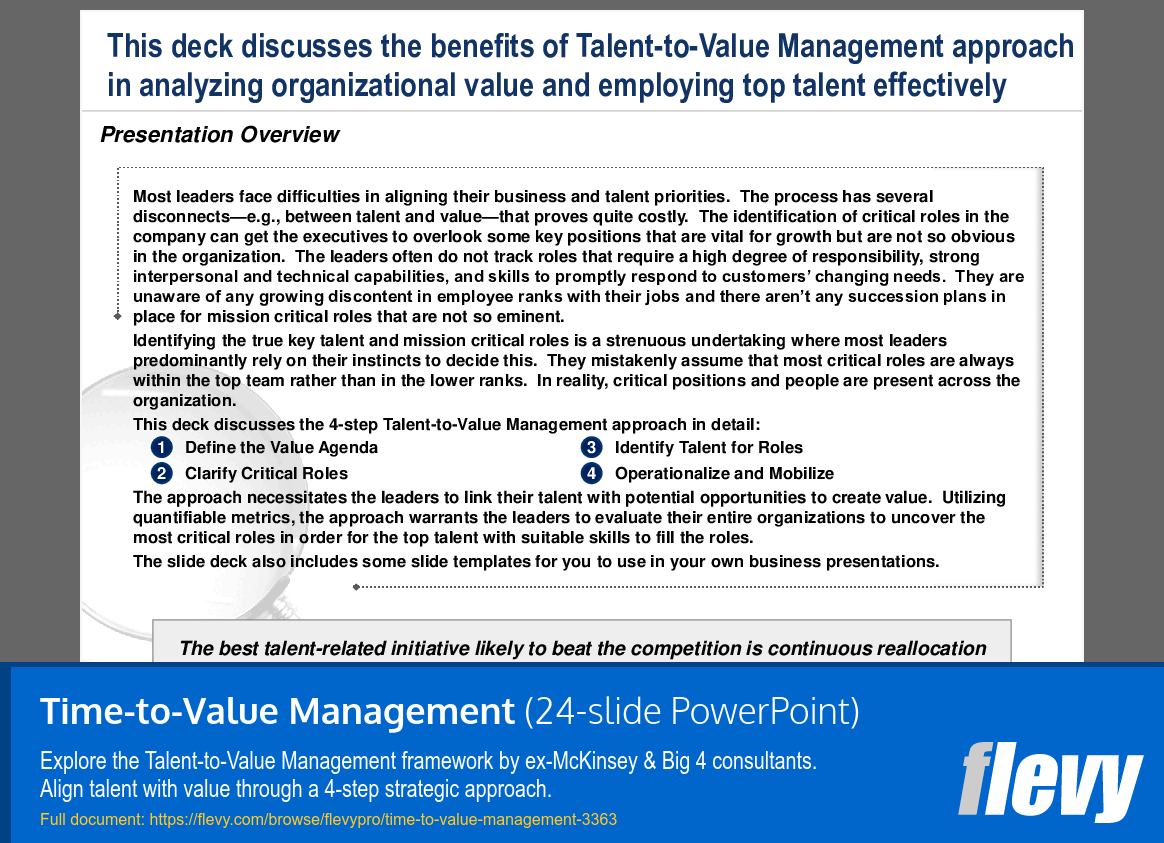
Most leaders face difficulties in aligning their business and talent priorities. The process has several disconnects—e.g., between talent and value—that proves quite costly. The identification of critical roles in the company can get the executives to overlook some key positions that are vital for growth but are not so obvious in the organization. The leaders often do not track roles that require a high degree of responsibility, strong interpersonal and technical capabilities, and skills to promptly respond to customers' changing needs. They are unaware of any growing discontent in employee ranks with their jobs and there aren’t any succession plans in place for mission critical roles that are not so eminent.

Identifying the true key talent and mission critical roles is a strenuous undertaking where most leaders predominantly rely on their instincts to decide this. They mistakenly assume that most critical roles are always within the top team rather than in the lower ranks. In reality, critical positions and people are present across the organization.

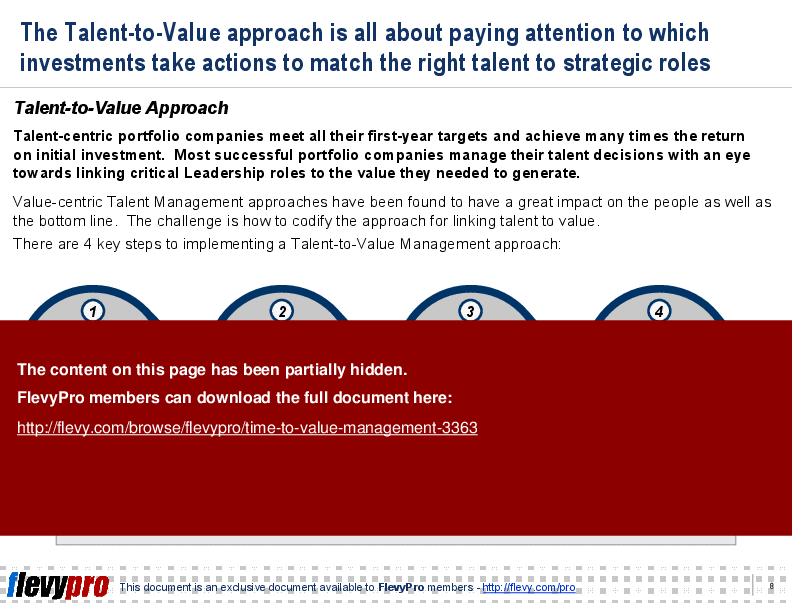
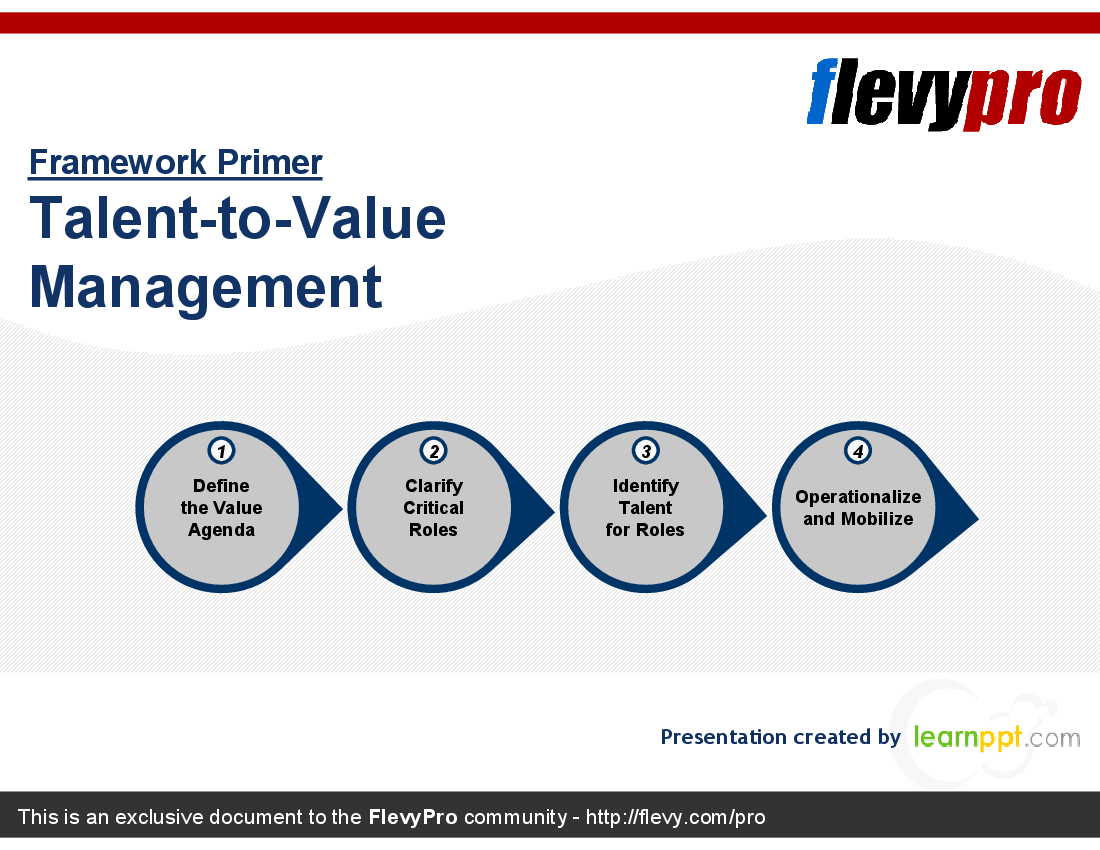
This deck discusses the 4-step Talent-to-Value Management approach in detail:

1. Define the Value Agenda
2. Clarify Critical Roles
3. Identify Talent for Roles
4. Operationalize and Mobilize

The approach necessitates the leaders to link their talent with potential opportunities to create value. Utilizing quantifiable metrics, the approach warrants the leaders to evaluate their entire organizations to uncover the most critical roles in order for the top talent with suitable skills to fill the roles.

The slide deck also includes some slide templates for you to use in your own business presentations.

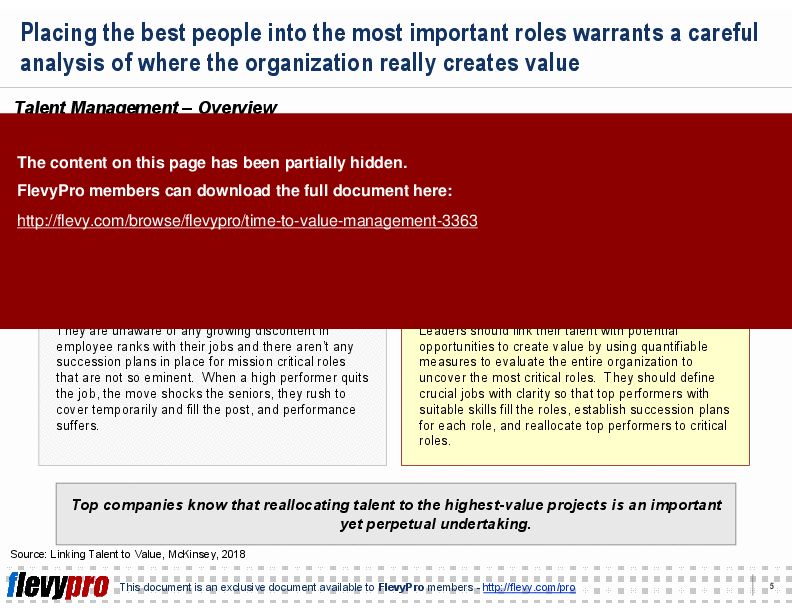
This presentation provides a comprehensive comparison between traditional Talent Management and the Talent-to-Value approach. It emphasizes the importance of reallocating high performers to critical strategic roles to stay competitive.

Got a question about this document? Email us at flevypro@flevy.com.

MARCUS OVERVIEW

This synopsis was written by Marcus [?] based on the analysis of the full 24-slide presentation.


Executive Summary
The Time-to-Value Management presentation provides a comprehensive framework for aligning talent with organizational value through a structured, four-step approach. Developed by former McKinsey and Big 4 consultants, this framework emphasizes the importance of reallocating top talent to critical strategic roles, thereby enhancing overall business performance. By utilizing quantifiable metrics, leaders can identify key roles that drive value and ensure that the right talent is mobilized to fill these positions. This presentation serves as a vital resource for executives aiming to optimize their talent management strategies and improve organizational effectiveness.

Who This Is For and When to Use
•  Corporate executives seeking to enhance talent alignment with business objectives
•  HR leaders responsible for talent management and organizational development
•  Integration leaders focusing on optimizing talent allocation during strategic initiatives
•  Consultants advising organizations on talent management best practices

Best-fit moments to use this deck:
•  During strategic planning sessions to align talent with business goals
•  When implementing new talent management initiatives or frameworks
•  In workshops aimed at identifying and mobilizing critical talent for key roles

Learning Objectives
•  Define the Talent-to-Value Management framework and its significance in organizational success
•  Analyze the value agenda to identify key roles that drive business performance
•  Clarify critical roles and the skills required to fulfill them
•  Identify suitable talent for strategic positions based on quantifiable metrics
•  Operationalize talent management practices to enhance organizational effectiveness
•  Mobilize top talent to critical roles and monitor performance against established KPIs

Table of Contents
•  Overview (page 1)
•  Talent Management (page 5)
•  Talent-to-Value Approach (page 8)
•  Define the Value Agenda (page 9)
•  Clarify Critical Roles (page 10)
•  Identify Talent for Roles (page 12)
•  Operationalize and Mobilize (page 14)
•  Templates (page 16)

Primary Topics Covered
•  Talent Management Overview - Discusses the importance of aligning talent with business priorities and the challenges organizations face in doing so.
•  Talent-to-Value Approach - Outlines the 4 key steps in linking talent to organizational value: defining the value agenda, clarifying critical roles, identifying talent, and operationalizing the process.
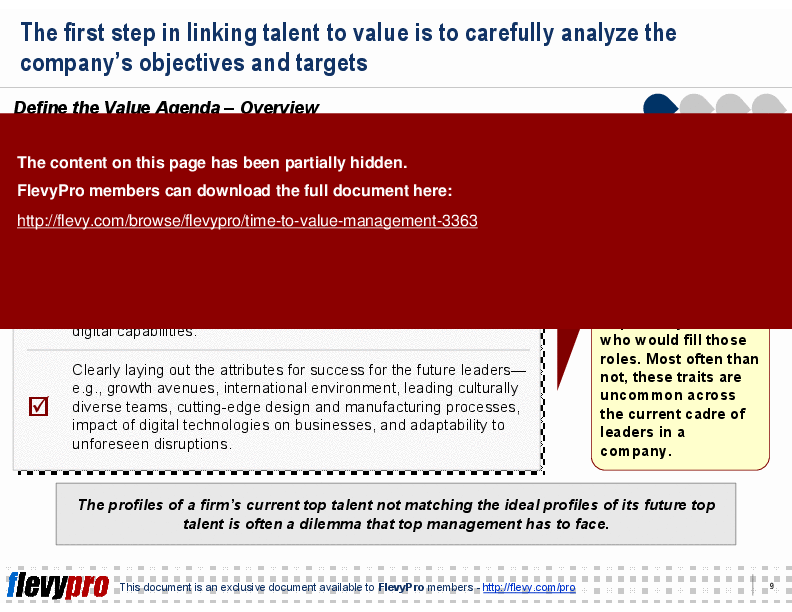
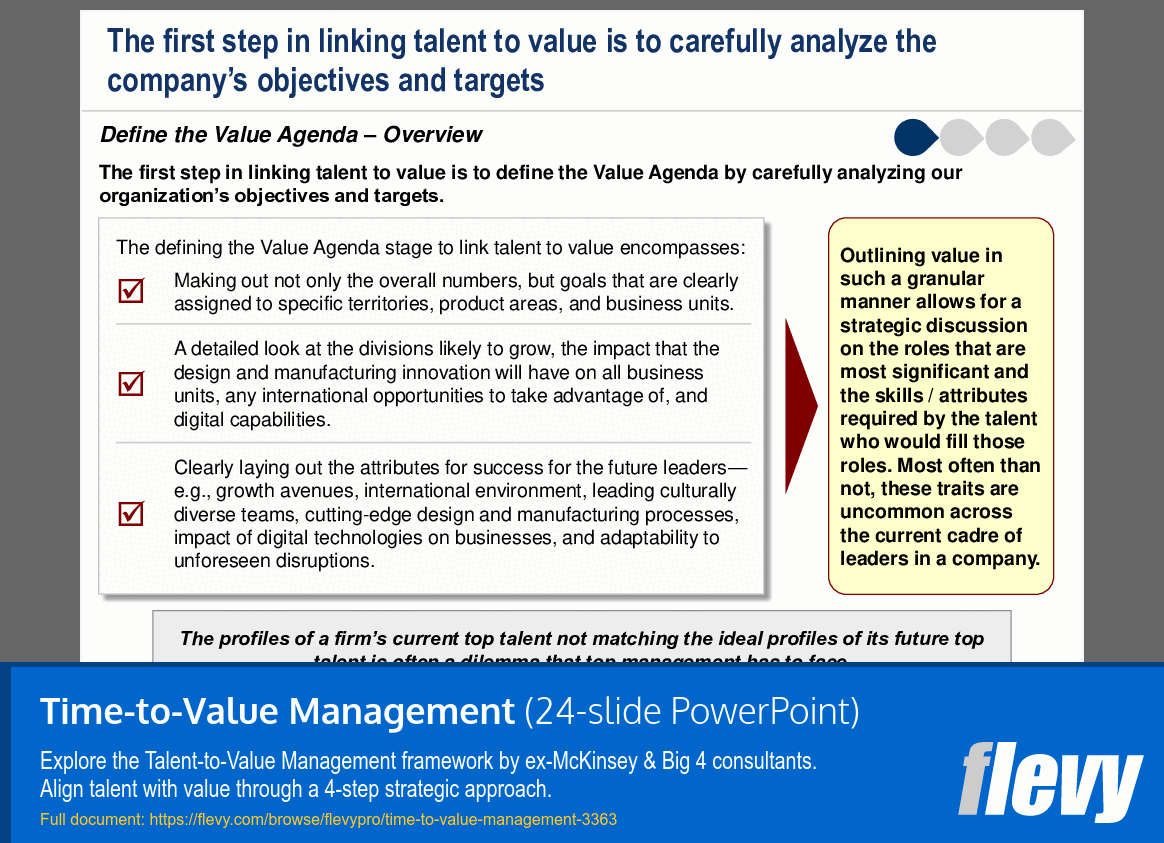
•  Define the Value Agenda - Emphasizes the need to analyze organizational objectives and targets to outline value clearly.
•  Clarify Critical Roles - Focuses on identifying key roles that drive value and the skills necessary for those roles.
•  Identify Talent for Roles - Discusses methods for objectively assessing candidates against clearly defined role requirements.
•  Operationalize and Mobilize - Highlights the importance of managing talent using specific metrics and regular performance evaluations.

Deliverables, Templates, and Tools
•  Talent-to-Value Management framework template for strategic planning
•  Role clarification templates to define critical roles and their requirements
•  Talent identification tools for assessing candidates against role requirements
•  Performance monitoring dashboards for tracking key metrics
•  Succession planning templates for critical roles
•  Communication frameworks for aligning talent management with organizational strategy

Slide Highlights
•  Overview of the Talent-to-Value Management framework
•  Comparison of traditional talent management vs. Talent-to-Value approach
•  Detailed breakdown of the 4 steps in the Talent-to-Value process
•  Visual representation of critical roles and their impact on value creation
•  Metrics for assessing talent performance and alignment with organizational goals

Potential Workshop Agenda
Defining the Value Agenda Session (60 minutes)
•  Discuss organizational objectives and targets
•  Identify key roles that drive value
•  Outline the skills required for future leaders

Clarifying Critical Roles Session (90 minutes)
•  Map potential financial value to critical roles
•  Develop role cards for high-value positions
•  Establish criteria for evaluating talent against role requirements

Identifying Talent for Roles Session (60 minutes)
•  Assess current talent against clearly defined role requirements
•  Identify gaps and potential candidates for critical roles
•  Discuss strategies for talent mobilization

Operationalizing Talent Management Session (60 minutes)
•  Review metrics for tracking talent performance
•  Discuss interventions to support underperforming individuals
•  Establish a cadence for regular talent reviews

Customization Guidance
•  Tailor the value agenda to reflect specific organizational goals and market conditions
•  Adjust role definitions and requirements based on evolving business strategies
•  Incorporate company-specific metrics for evaluating talent performance
•  Modify templates to align with organizational terminology and processes

Secondary Topics Covered
•  The role of HR in supporting talent management initiatives
•  Strategies for fostering a culture of continuous talent development
•  Best practices for succession planning in critical roles
•  The impact of organizational structure on talent allocation

Topic FAQ

What are the core steps in a Talent-to-Value Management approach?

The Talent-to-Value Management approach follows 4 core steps: Define the Value Agenda (align objectives and targets), Clarify Critical Roles (define mission and skills), Identify Talent for Roles (assess candidates against role requirements), and Operationalize and Mobilize (use metrics and reviews to move talent). The approach is organized into 4 steps.

How do you identify critical roles that actually drive business value?

Identify critical roles by analyzing where the greatest value is generated against organizational objectives, mapping potential financial or operational impact to positions, and creating role cards that specify mission, key tasks, and KPIs. The deck recommends mapping financial value to roles and developing role cards.

What metrics are commonly used to evaluate talent tied to value creation?

Useful metrics include operational KPIs, financial performance indicators, and training or competency outcomes. The presentation also recommends using performance-monitoring dashboards and regular reviews to track alignment between talent and business goals, emphasizing operational KPIs.

What should I look for when choosing a talent-to-value template or slide deck?

Look for explicit coverage of a structured framework (value agenda through mobilization), role-clarification templates, talent-identification tools, performance-monitoring dashboards, succession planning templates, customization guidance, and author pedigree such as ex-McKinsey/Big 4 experience; these attributes are present in a 24-slide PPTX.

How can I assess the cost versus value of buying prebuilt talent-management templates?

Assess whether the resource includes practical templates you will use (role cards, succession plans, dashboards), customization guidance for your industry, and metrics to measure impact; review the expected time-to-adapt and whether it supports regular talent reviews. Time-to-Value Management includes templates for role clarification and succession planning.

I need to reassign talent after a merger — which steps should I run first?

Start by aligning leadership on the Value Agenda to clarify strategic priorities, then clarify critical roles and develop role cards, assess current and potential talent against those requirements, and finally operationalize mobilization with KPIs and reviews. Begin with Defining the Value Agenda.

How often should talent reviews be conducted during implementation of a talent-to-value program?

The materials recommend conducting regular talent reviews at least quarterly to maintain alignment, address performance gaps, and update role assignments; these reviews should be supported by performance-monitoring dashboards and a defined cadence for follow-ups, at least quarterly.

What workshop sessions help operationalize a Talent-to-Value approach?

A practical workshop agenda includes a 60-minute Defining the Value Agenda session, a 90-minute Clarifying Critical Roles session (mapping financial value to roles and developing role cards), a 60-minute Identifying Talent session, and a 60-minute Operationalizing session to set metrics and review cadence, including a 90-minute Clarifying Critical Roles session.

Document FAQ
These are questions addressed within this presentation.

What is the Talent-to-Value Management framework?
The Talent-to-Value Management framework is a structured approach that aligns talent with organizational value through a four-step process: defining the value agenda, clarifying critical roles, identifying talent, and operationalizing the management of talent.

How can this framework benefit my organization?
By effectively linking talent to value, organizations can enhance performance, ensure the right people are in critical roles, and improve overall business outcomes.

What are the key steps in the Talent-to-Value approach?
The key steps include defining the value agenda, clarifying critical roles, identifying suitable talent for those roles, and operationalizing the management of talent using specific metrics.

How do I identify critical roles in my organization?
Critical roles can be identified by analyzing where the greatest value is generated within the organization and determining the skills required to realize that value.

What metrics should be used to evaluate talent performance?
Metrics may include operational KPIs, financial performance indicators, and specific training outcomes related to the roles.

How often should talent reviews be conducted?
Regular talent reviews should be conducted at least quarterly to ensure alignment with organizational goals and to address any performance issues promptly.

Can this framework be customized for different industries?
Yes, the framework can be tailored to fit the specific needs and terminology of different industries and organizations.

What tools are included in this presentation?
The presentation includes templates for role clarification, talent identification, and performance monitoring, among others.

How can I implement this framework in my organization?
Start by aligning your leadership team on the value agenda, then follow the steps outlined in the framework to systematically identify and mobilize talent.

Glossary
•  Talent-to-Value Management - A framework linking talent management to organizational value creation.
•  Value Agenda - A detailed outline of organizational objectives and targets.
•  Critical Roles - Positions within the organization that significantly contribute to value generation.
•  Value Creators - Individuals who directly generate revenue and enhance operational efficiency.
•  Enablers - Support roles that facilitate the work of value creators.
•  Role Cards - Documents outlining the mission, key tasks, and KPIs for critical roles.
•  Performance Metrics - Quantifiable measures used to assess talent effectiveness.
•  Succession Planning - The process of identifying and developing new leaders to fill key positions.
•  Talent Identification - The process of assessing and selecting individuals for specific roles based on defined criteria.
•  Operational KPIs - Key performance indicators that measure the effectiveness of operational processes.
•  Cultural Priorities - Values and behaviors that are emphasized within an organization to drive performance.
•  Talent Allocation - The process of assigning individuals to roles based on their skills and organizational needs.
•  HR Analytics - The use of data analysis to inform talent management decisions.
•  Leadership Development - Programs aimed at enhancing the skills and capabilities of future leaders.
•  Talent Mobilization - The process of moving individuals into roles where they can create the most value.

LEADERSHIP PPT SLIDES

Transforming Talent Management: Hierarchy vs. Value Creation

Defining Critical Roles for Strategic Talent Management

Framework for Aligning Talent with Strategic Value

Aligning Talent with Strategic Value Creation

Defining the Value Agenda for Talent Alignment

Integrating Talent Management with Strategic Planning

Source: Best Practices in Leadership, HR Strategy, Talent Management PowerPoint Slides: Time-to-Value Management PowerPoint (PPTX) Presentation Slide Deck, LearnPPT Consulting


$29.00
FlevyPro price: FREE (included in subscription)
This framework is developed by a team of former McKinsey and Big 4 consultants. The presentation follows the headline-body-bumper slide format used by global consulting firms.
Add to Cart
  

Did you need more documents?

Consider a FlevyPro subscription from $39/month. View plans here.

For $10.00 more, you can download this document plus 2 more FlevyPro documents. That's just $13 each.

ABOUT FLEVYPRO

This document is part of the FlevyPro Library, a curated knowledge base of documents for our FlevyPro subscribers.

FlevyPro is a subscription service for on-demand business frameworks and analysis tools. FlevyPro subscribers receive access to an exclusive library of curated business documents—business framework primers, presentation templates, Lean Six Sigma tools, and more—among other exclusive benefits.

Click here to learn more about FlevyPro and its benefits.

Did you know?
The average daily rate of a McKinsey consultant is $6,625 (not including expenses). The average price of a Flevy document is $65.


Trusted by over 10,000+ Client Organizations
Since 2012, we have provided business templates to over 10,000 businesses and organizations of all sizes, from startups and small businesses to the Fortune 100, in over 130 countries.
AT&T GE Cisco Intel IBM Coke Dell Toyota HP Nike Samsung Microsoft Astrazeneca JP Morgan KPMG Walgreens Walmart 3M Kaiser Oracle SAP Google E&Y Volvo Bosch Merck Fedex Shell Amgen Eli Lilly Roche AIG Abbott Amazon PwC T-Mobile Broadcom Bayer Pearson Titleist ConEd Pfizer NTT Data Schwab


Read Customer Testimonials

 
"I am extremely grateful for the proactiveness and eagerness to help and I would gladly recommend the Flevy team if you are looking for data and toolkits to help you work through business solutions."

– Trevor Booth, Partner, Fast Forward Consulting
 
"As a consulting firm, we had been creating subject matter training materials for our people and found the excellent materials on Flevy, which saved us 100's of hours of re-creating what already exists on the Flevy materials we purchased."

– Michael Evans, Managing Director at Newport LLC
 
"As a young consulting firm, requests for input from clients vary and it's sometimes impossible to provide expert solutions across a broad spectrum of requirements. That was before I discovered Flevy.com.

Through subscription to this invaluable site of a plethora of topics that are key and crucial to consulting, I "

– Nishi Singh, Strategist and MD at NSP Consultants
 
"If you are looking for great resources to save time with your business presentations, Flevy is truly a value-added resource. Flevy has done all the work for you and we will continue to utilize Flevy as a source to extract up-to-date information and data for our virtual and onsite presentations!"

– Debbi Saffo, President at The NiKhar Group
 
"My FlevyPro subscription provides me with the most popular frameworks and decks in demand in today’s market. They not only augment my existing consulting and coaching offerings and delivery, but also keep me abreast of the latest trends, inspire new products and service offerings for my practice, and educate me "

– Bill Branson, Founder at Strategic Business Architects
 
"Last Sunday morning, I was diligently working on an important presentation for a client and found myself in need of additional content and suitable templates for various types of graphics. Flevy.com proved to be a treasure trove for both content and design at a reasonable price, considering the time I "

– M. E., Chief Commercial Officer, International Logistics Service Provider
 
"FlevyPro provides business frameworks from many of the global giants in management consulting that allow you to provide best in class solutions for your clients."

– David Harris, Managing Director at Futures Strategy
 
"I have used FlevyPro for several business applications. It is a great complement to working with expensive consultants. The quality and effectiveness of the tools are of the highest standards."

– Moritz Bernhoerster, Global Sourcing Director at Fortune 500


Customers Also Bought These Documents


Customers Also Like These Documents

Explore Templates on Related Management Topics


Your Recently Viewed Documents
Download our FREE Organization, Change, & Culture, Templates

Download our free compilation of 50+ slides and templates on Organizational Design, Change Management, and Corporate Culture. Methodologies include ADKAR, Burke-Litwin Change Model, McKinsey 7-S, Competing Values Framework, etc.