
Forming a team takes time. Companies cannot expect a new team to perform well when it first comes together. Members often go through stages as they change from being a collection of strangers to a united group with common goals.
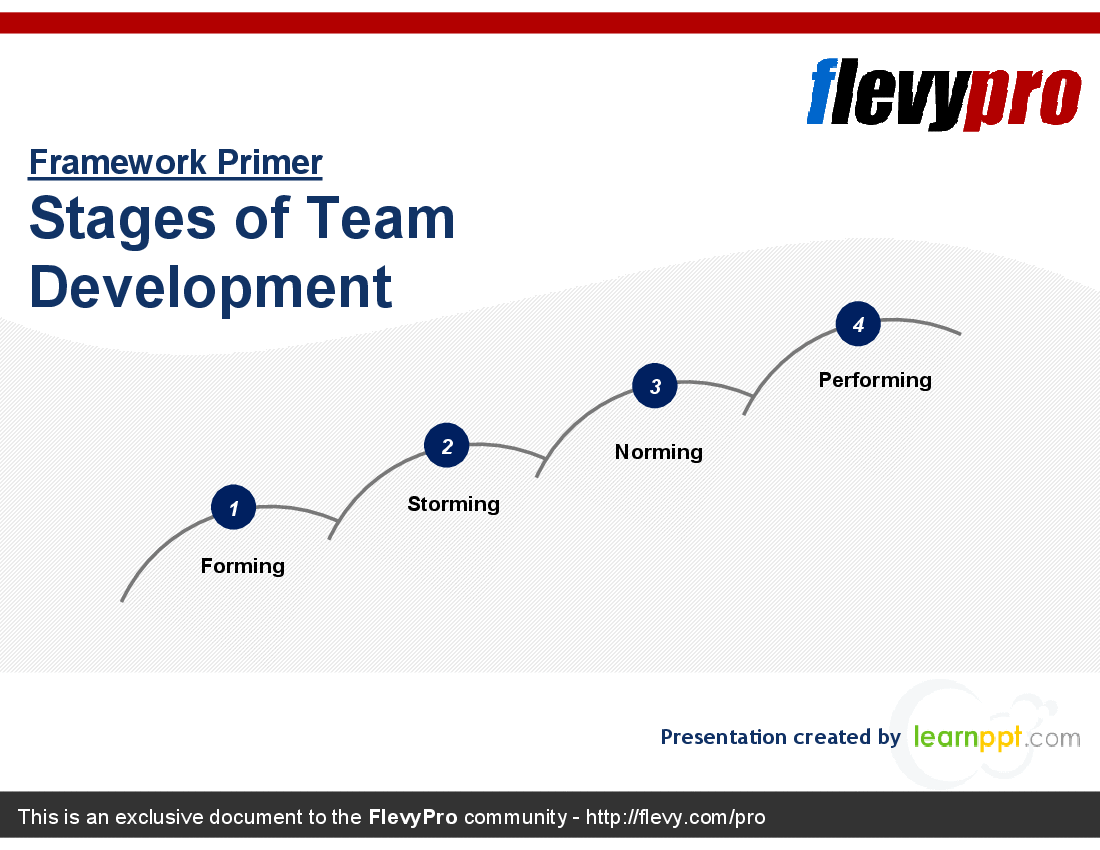
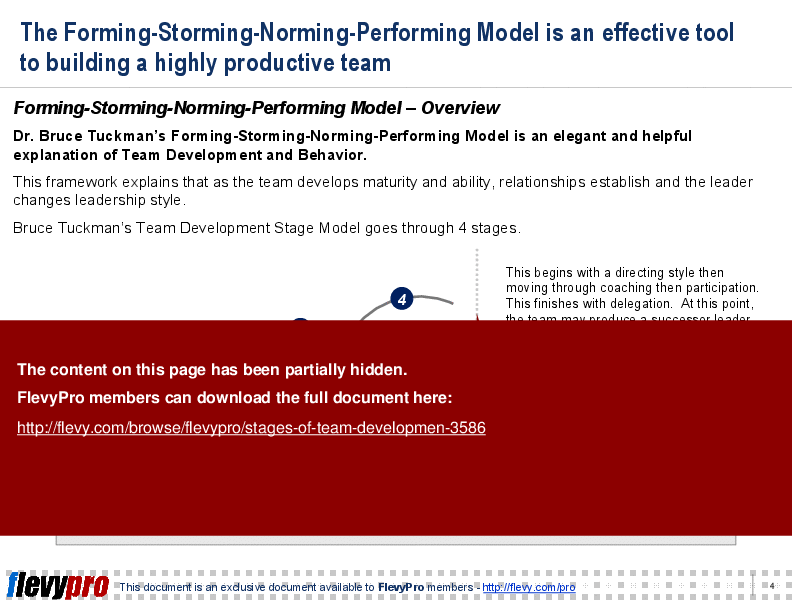
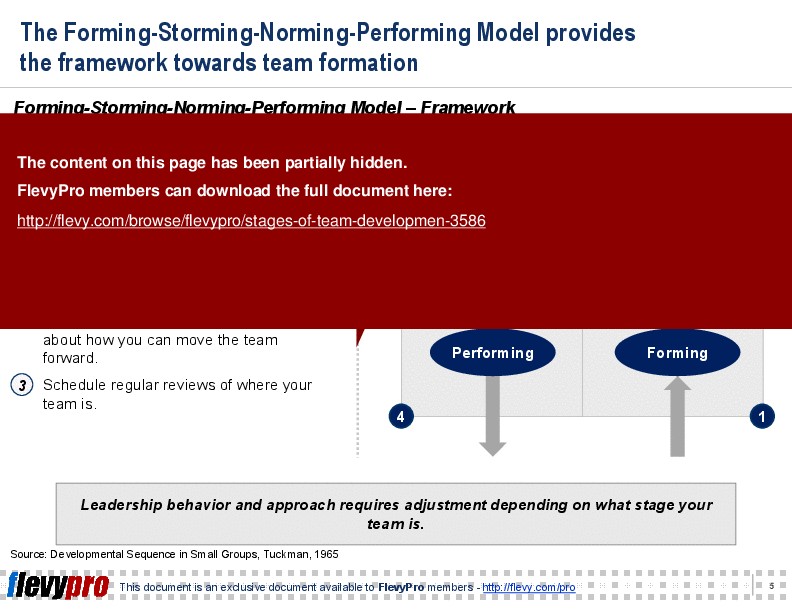
Team formation usually follows recognizable stages, known as "Forming-Storming-Norming-Performing." Dr. Bruck Tuckman, who created the memorable phrase, later added a 5th stage, "Adjourning (or Mourning)."
Using the Tuckman's Model will help teams reach their Performing stage as quickly as possible. In this stage, teams are now achieving their team's goals through hard work without friction.
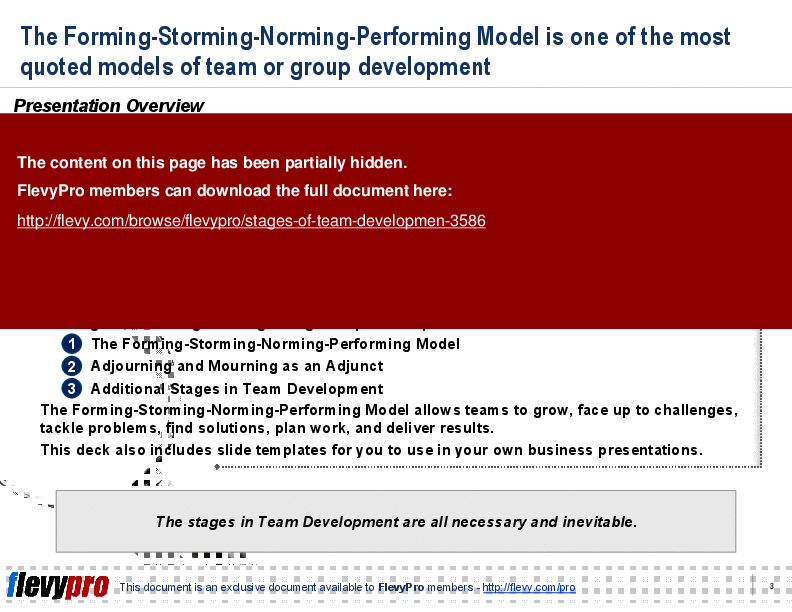
The Stages of Team Development is the focus of this Presentation. This provides the tools in building teams through strategic stages. Specific topics discussed include:
• The Forming-Storming-Norming-Performing Model
• Adjourning and Mourning as an Adjunct
• Additional Stages in Team Development
The Forming-Storming-Norming-Performing Model allows teams to grow, face up to challenges, tackle problems, find solutions, plan work, and deliver results.
This deck also includes slide templates for you to use in your own business presentations.
This presentation delves into the intricacies of each stage, providing actionable insights and practical activities for leaders to guide their teams effectively. The Forming stage emphasizes the leader's dominant role in setting the tone and direction, while the Storming stage addresses common pitfalls and strategies to overcome conflicts and power struggles. The Norming stage highlights the importance of fostering mutual respect and shared leadership within the team.
The Performing stage showcases how teams can achieve high levels of autonomy and strategic awareness. The deck also covers additional stages like Adjourning and Mourning, which focus on the emotional aspects of team dissolution, and the TPR Model, which simplifies the traditional stages into three key phases. This comprehensive guide is essential for any executive looking to optimize team performance and navigate the complexities of team dynamics.
Got a question about this document? Email us at flevypro@flevy.com.
Executive Summary
The "Stages of Team Development" presentation provides a comprehensive overview of the Forming-Storming-Norming-Performing model, developed by Dr. Bruce Tuckman. This framework is essential for understanding team dynamics and enhancing team performance. It outlines the sequential stages teams undergo as they evolve from a collection of individuals into a cohesive unit capable of achieving shared goals. The presentation also introduces the Adjourning stage, emphasizing the importance of recognizing team achievements and facilitating transitions. By leveraging this model, leaders can effectively guide their teams through challenges and foster a productive environment.
Who This Is For and When to Use
• Team leaders and managers aiming to enhance team dynamics and performance
• HR professionals involved in team development and training
• Consultants focusing on organizational behavior and team effectiveness
• Project managers overseeing cross-functional teams
Best-fit moments to use this deck:
• During team formation to set expectations and objectives
• In workshops aimed at resolving team conflicts or enhancing collaboration
• When assessing team performance and planning for future development
Learning Objectives
• Define the stages of team development and their significance
• Identify the characteristics and challenges of each stage
• Develop strategies to facilitate team progression through each stage
• Recognize the importance of the Adjourning stage in team dynamics
• Apply the Tuckman model to real-world team scenarios
• Enhance leadership skills to support team development
Table of Contents
• Overview (page 3)
• Stages of Team Development (page 4)
• Additional Stages (page 12)
• Templates (page 17)
Primary Topics Covered
• Forming Stage - This initial stage involves high dependence on the leader, unclear roles, and the establishment of team objectives.
• Storming Stage - Characterized by conflict and competition among team members as they establish their positions and roles.
• Norming Stage - Team members begin to resolve differences, leading to clearer roles and stronger commitment to team goals.
• Performing Stage - The team operates autonomously, achieving goals with minimal friction and high strategic awareness.
• Adjourning Stage - Focuses on the dissolution of the team after achieving its objectives, emphasizing the need for reflection and celebration of accomplishments.
• Norming and Re-norming - An additional stage highlighting the gradual improvement of team performance post-Forming.
Deliverables, Templates, and Tools
• Team development framework template for visualizing the stages
• Action plan template for addressing challenges in each stage
• Assessment tools for evaluating team dynamics and performance
• Communication guidelines for facilitating discussions during team transitions
• Reflection and feedback templates for the Adjourning stage
• Psychometric indicators to understand team member strengths and work styles
Slide Highlights
• Overview of the Forming-Storming-Norming-Performing model
• Detailed breakdown of each stage with features and activities
• Visual representations of the team development process
• Templates for practical application in team settings
Potential Workshop Agenda
Introduction to Team Development (30 minutes)
• Overview of Tuckman's model and its relevance
• Discussion on the importance of understanding team dynamics
Stage Analysis and Application (60 minutes)
• Breakout sessions to analyze team experiences in each stage
• Develop strategies to address challenges in the Storming stage
Reflection and Next Steps (30 minutes)
• Share insights from breakout sessions
• Plan actionable steps for team development moving forward
Customization Guidance
• Adapt the framework to reflect specific team dynamics and organizational context
• Incorporate team-specific goals and objectives into the templates
• Modify language and examples to resonate with your team's culture and experiences
• Schedule regular reviews to assess team progress through the stages
Secondary Topics Covered
• Leadership styles and their impact on team development
• The role of conflict resolution in the Storming stage
• Strategies for fostering collaboration and trust among team members
• The significance of celebrating achievements during the Adjourning stage
Topic FAQ
Document FAQ
These are questions addressed within this presentation.
What is the Forming-Storming-Norming-Performing model?
The model describes the stages teams go through as they develop, from initial formation to high performance.
Why is the Adjourning stage important?
It allows teams to reflect on their achievements and facilitates a smooth transition after project completion.
How can leaders support teams in the Storming stage?
Leaders should focus on building trust, establishing clear processes, and resolving conflicts swiftly.
What activities are recommended during the Norming stage?
Team-building events and collaborative decision-making processes are effective during this stage.
How can the Tuckman model be applied in real-world scenarios?
It can guide leaders in assessing team dynamics and implementing strategies to enhance performance.
What tools can help evaluate team performance?
Psychometric assessments and feedback templates can provide insights into team dynamics and individual contributions.
How can teams ensure they progress through each stage?
Regular reviews and open communication about challenges and successes are crucial for progression.
What are common pitfalls in the Storming stage?
Power struggles and unresolved conflicts can hinder team progress if not addressed promptly.
How does the Norming stage contribute to team success?
It fosters commitment and unity, enabling teams to work collaboratively towards shared goals.
Glossary
• Forming - The initial stage of team development characterized by dependence on the leader.
• Storming - The stage where conflict arises as team members establish their roles.
• Norming - The stage where team members resolve differences and build consensus.
• Performing - The stage where the team operates autonomously and achieves goals effectively.
• Adjourning - The final stage where the team disbands after completing its objectives.
• Re-norming - A phase of gradual performance improvement following the initial Norming stage.
• Psychometric Indicators - Tools used to assess individual work styles and strengths within a team context.
• Team Dynamics - The behavioral relationships and interactions among team members.
• Leadership Styles - Different approaches leaders use to guide and support their teams.
• Conflict Resolution - Strategies employed to address and resolve disputes within a team.
• Team Building - Activities designed to enhance collaboration and trust among team members.
• Feedback Templates - Tools for gathering reflections and insights from team members post-project.
Source: Best Practices in Leadership, Team Building PowerPoint Slides: Stages of Team Development PowerPoint (PPT) Presentation Slide Deck, LearnPPT Consulting
Did you need more documents?
Consider a FlevyPro subscription from $39/month. View plans here.
For $10.00 more, you can download this document plus 2 more FlevyPro documents. That's just $13 each.
|
Download our FREE Organization, Change, & Culture, Templates
Download our free compilation of 50+ slides and templates on Organizational Design, Change Management, and Corporate Culture. Methodologies include ADKAR, Burke-Litwin Change Model, McKinsey 7-S, Competing Values Framework, etc. |