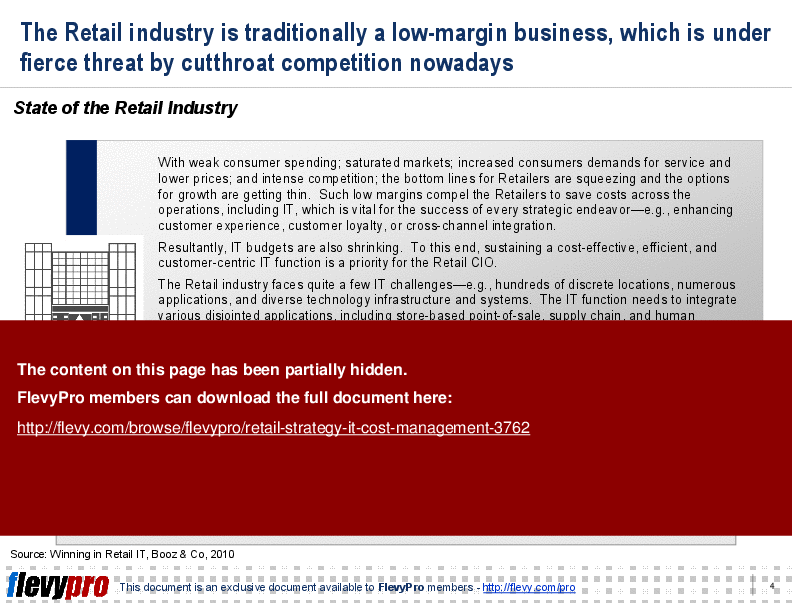

Weak consumer spending; saturated markets; increased consumers demands for service and lower prices; and intense competition has put significant strain on Retail bottom lines and growth avenues. Such low margins force the Retailers to save costs across the operations, including IT, which is vital for the success of every strategic endeavor—be it enhancing customer experience, customer loyalty, or cross-channel integration.
Reluctantly, IT budgets are also shrinking. Thus sustaining a cost-effective, efficient, and customer-centric IT function is a priority for every Retail leader.
The Retail industry faces quite a few IT challenges—e.g., hundreds of discrete locations, numerous applications, and diverse technology infrastructure and systems. The IT function needs to integrate various disjointed applications, including store-based point-of-sale, supply chain, and human resource management with their core systems. In these context, rational utilization of technology is important to achieve customer loyalty with clusters of customers across the store, online, and catalog channels.
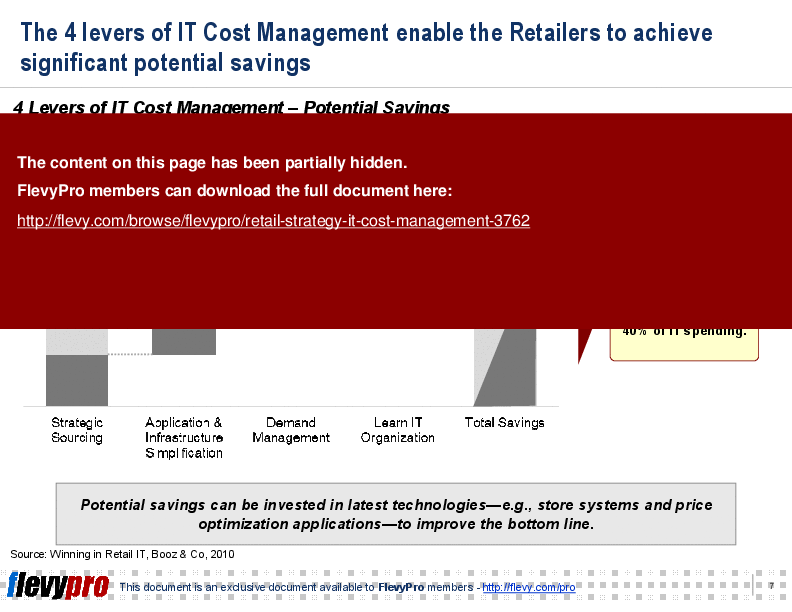
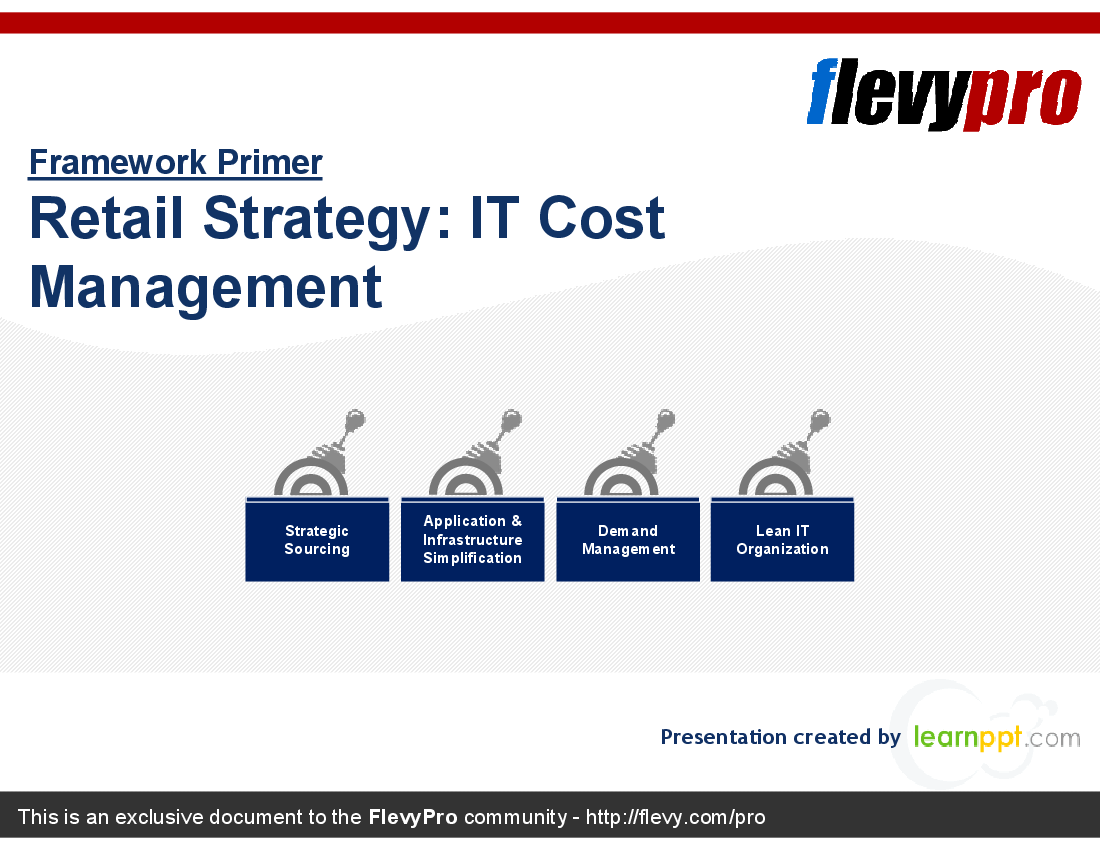
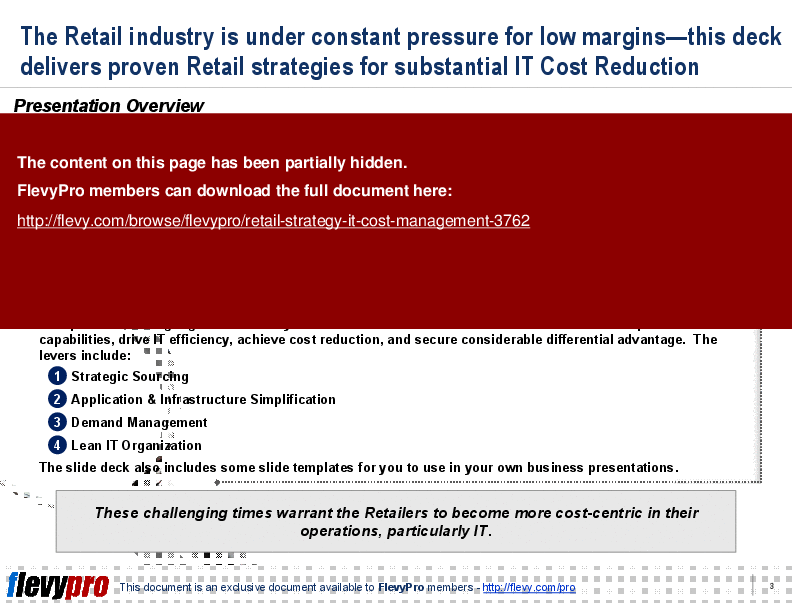
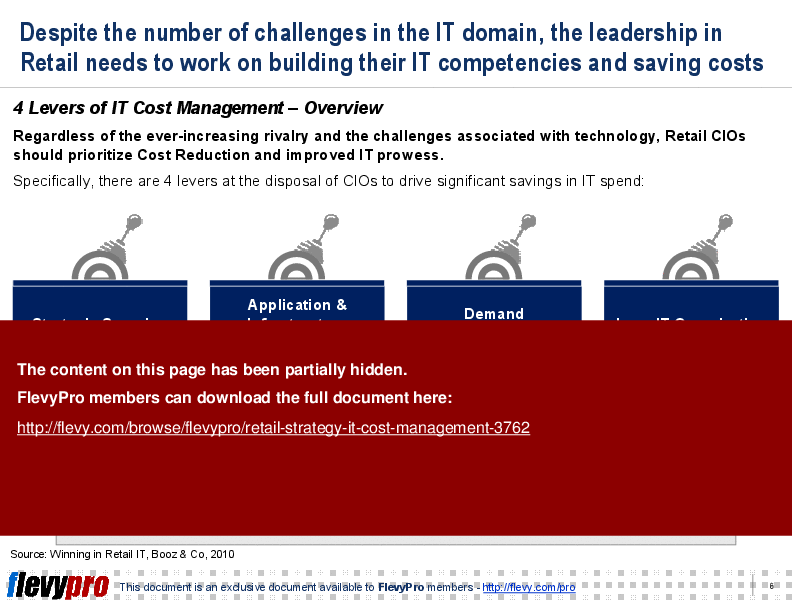
This presentation highlights 4 efficiency and effectiveness levers that Retail CIOs can use to improve IT capabilities, drive IT efficiency, achieve cost reduction, and secure considerable differential advantage. The levers include:
1. Strategic Sourcing
2. Application & Infrastructure Simplification
3. Demand Management
4. Lean IT Organization
The slide deck also includes some slide templates for you to use in your own business presentations.
This PPT provides a comprehensive approach to managing IT costs in the retail sector, addressing critical areas such as strategic sourcing, application and infrastructure simplification, demand management, and lean IT organization. It outlines practical steps and methodologies to streamline IT operations, reduce expenditures, and enhance overall efficiency. The presentation includes actionable insights and templates that can be customized for your specific business needs, making it an invaluable resource for retail CIOs aiming to optimize their IT budgets while maintaining high service levels.
Got a question about this document? Email us at flevypro@flevy.com.
Executive Summary
This presentation on Retail Strategy: IT Cost Management provides a robust framework for retail leaders to enhance their IT functions while managing costs effectively. Developed by experienced consultants, this deck outlines critical strategies for IT cost reduction, focusing on 4 key levers: Strategic Sourcing, Application & Infrastructure Simplification, Demand Management, and Lean IT Organization. By implementing these strategies, retail executives can optimize their IT budgets, improve operational efficiency, and ensure alignment with business objectives, ultimately driving customer loyalty and enhancing the overall customer experience.
Who This Is For and When to Use
• Retail CIOs and IT leaders aiming to streamline IT operations and reduce costs
• Financial executives responsible for managing IT budgets and expenditures
• Operations managers looking to enhance efficiency in IT processes
• Consultants advising retail clients on IT cost management strategies
Best-fit moments to use this deck:
• During strategic planning sessions focused on IT budget allocation
• When assessing current IT capabilities and identifying areas for improvement
• In workshops aimed at implementing cost-saving initiatives in IT
Learning Objectives
• Define the 4 levers of IT cost management and their significance in retail
• Build a strategic sourcing plan that aligns with business goals
• Establish a framework for application and infrastructure simplification
• Implement effective demand management processes to prioritize IT projects
• Develop a lean IT organization that maximizes efficiency and reduces costs
• Create a roadmap for achieving substantial IT cost reductions
Table of Contents
• Overview (page 3)
• IT Cost Management (page 3)
• Levers of IT Cost Management (page 6)
• Templates (page 17)
Primary Topics Covered
• Overview of IT Cost Management - An introduction to the challenges faced by the retail industry in managing IT costs and the need for strategic initiatives.
• Strategic Sourcing - A method for effectively outsourcing IT services to reduce costs while maintaining control over critical business functions.
• Application & Infrastructure Simplification - Strategies for rationalizing IT applications and infrastructure to minimize complexity and support costs.
• Demand Management - Processes for evaluating and prioritizing IT service demands to ensure alignment with business objectives.
• Lean IT Organization - Approaches to streamline IT operations and focus on high-value activities that drive business success.
Deliverables, Templates, and Tools
• Strategic sourcing plan template to guide outsourcing decisions
• Application rationalization framework for simplifying IT infrastructure
• Demand management scoring model for prioritizing IT projects
• Lean IT organizational structure template to enhance efficiency
Slide Highlights
• Overview slide detailing the current state of IT cost management in retail
• Strategic sourcing overview highlighting the benefits of outsourcing
• Application simplification framework illustrating the transition from legacy systems to modern solutions
• Demand management process flowchart for effective IT governance
• Lean IT organization model showcasing expertise-based roles
Potential Workshop Agenda
Strategic Sourcing Workshop (90 minutes)
• Discuss current sourcing strategies and identify areas for improvement
• Develop a strategic sourcing plan tailored to the organization’s needs
• Establish performance metrics for outsourcing partnerships
Application Simplification Session (60 minutes)
• Review existing applications and identify redundancies
• Create a roadmap for application rationalization
• Discuss integration strategies for new systems
Demand Management Alignment (90 minutes)
• Evaluate current demand management processes
• Develop a prioritization framework for IT projects
• Set up governance structures for ongoing demand evaluation
Customization Guidance
• Adjust the strategic sourcing plan to reflect specific business needs and market conditions
• Tailor the application simplification framework to include unique legacy systems
• Modify the demand management scoring model to align with organizational priorities
Secondary Topics Covered
• IT budget allocation strategies for optimizing discretionary spending
• Governance models for effective IT decision-making
• Best practices for managing vendor relationships in IT sourcing
Topic FAQ
Document FAQ
These are questions addressed within this presentation.
What are the key levers of IT cost management?
The key levers include Strategic Sourcing, Application & Infrastructure Simplification, Demand Management, and Lean IT Organization, each aimed at reducing costs while enhancing IT capabilities.
How can strategic sourcing benefit my organization?
Strategic sourcing allows organizations to leverage external expertise, reduce operational costs, and focus on core business functions while maintaining control over critical processes.
What is application simplification, and why is it important?
Application simplification involves rationalizing and consolidating IT applications to reduce complexity, lower support costs, and improve overall efficiency.
How does demand management impact IT budgeting?
Effective demand management ensures that IT resources are allocated to high-value projects, optimizing budget utilization and aligning IT initiatives with business goals.
What does a lean IT organization look like?
A lean IT organization focuses on expertise-based roles, streamlining operations to enhance efficiency and align IT with strategic business objectives.
How can I measure the success of IT cost management initiatives?
Success can be measured through metrics such as cost savings achieved, improvements in operational efficiency, and alignment of IT projects with business priorities.
What challenges might I face when implementing these strategies?
Common challenges include resistance to change, integration of new systems, and ensuring stakeholder buy-in for new processes.
How can I ensure ongoing improvement in IT cost management?
Establishing a continuous improvement framework that includes regular evaluations of IT performance and budget alignment can help sustain cost management efforts.
Glossary
• Strategic Sourcing - The process of identifying and engaging external service providers to optimize costs and improve service delivery.
• Application Simplification - The practice of reducing the number of applications and streamlining IT infrastructure to enhance efficiency.
• Demand Management - A framework for evaluating and prioritizing IT service requests to align with business objectives.
• Lean IT Organization - An organizational model that emphasizes efficiency and expertise-based roles within the IT function.
• Governance Model - A structured approach to decision-making and accountability in IT management.
• Cost Reduction - Strategies aimed at lowering expenses while maintaining or improving service quality.
• Operational Efficiency - The ability to deliver services effectively while minimizing waste and resource usage.
• IT Budget Allocation - The process of distributing financial resources across various IT projects and initiatives.
• Vendor Management - The practice of overseeing and optimizing relationships with external service providers.
• Performance Metrics - Quantitative measures used to assess the effectiveness of IT initiatives.
• Legacy Systems - Older IT systems that may be costly to maintain and integrate with new technologies.
• Customer Loyalty - The commitment of customers to continue purchasing from a specific retailer, influenced by IT capabilities.
• Cross-Channel Integration - The seamless operation of multiple sales channels (e.g., online, in-store) to enhance customer experience.
• IT Governance - The framework for ensuring that IT investments align with business goals and deliver value.
• Operational Costs - The expenses associated with running IT functions and maintaining systems.
• Service Level Agreements (SLAs) - Contracts that define the expected level of service between a service provider and a customer.
• Return on Investment (ROI) - A measure of the profitability of an investment relative to its cost.
• IT Transformation - The process of fundamentally changing how IT delivers value to the organization.
• Business Process Optimization - The practice of improving business processes to enhance efficiency and effectiveness.
• IT Capabilities - The skills, technologies, and resources available within the IT function to support business objectives.
• Operational Continuity - The ability to maintain essential functions during and after a disruption.
Source: Best Practices in IT Strategy, Cost Reduction, Cost Management, Retail Industry, Retail Strategy PowerPoint Slides: Retail Strategy: IT Cost Management PowerPoint (PPT) Presentation Slide Deck, LearnPPT Consulting
Did you need more documents?
Consider a FlevyPro subscription from $39/month. View plans here.
For $10.00 more, you can download this document plus 2 more FlevyPro documents. That's just $13 each.
|
Download our FREE Strategy & Transformation Framework Templates
Download our free compilation of 50+ Strategy & Transformation slides and templates. Frameworks include McKinsey 7-S, Balanced Scorecard, Disruptive Innovation, BCG Curve, and many more. |