
Restructuring: Redeployment Assessment Process & Methods   29-slide PPT PowerPoint presentation slide deck (PPTX)
$29.00

Restructuring: Redeployment Assessment Process & Methods (29-slide PPT PowerPoint presentation slide deck (PPTX)) Preview Image
Log in to unlock full preview.
Restructuring: Redeployment Assessment Process & Methods (29-slide PPT PowerPoint presentation slide deck (PPTX)) Preview Image
Arrow   Click main image to view in full screen.

Restructuring: Redeployment Assessment Process & Methods (PowerPoint PPTX Slide Deck)

PowerPoint (PPTX) 29 Slides FlevyPro Document

#3 in Restructuring $29.00
FlevyPro price: FREE (included in subscription)
This framework is developed by a team of former McKinsey and Big 4 consultants. The presentation follows the headline-body-bumper slide format used by global consulting firms.
Add to Cart


Immediate download
Free lifetime updates

RESTRUCTURING PPT DESCRIPTION

Editor Summary 29-slide PowerPoint presentation "Restructuring: Redeployment Assessment Process & Methods" outlines an employee redeployment assessment process and provides 6 assessment methods: Existing Performance Management Data, Line Manager Performance Ratings, Competency-Based Interviews, Personality Measures (OPQ), Simulation Exercises, and Pertinent Employee Data. Read more

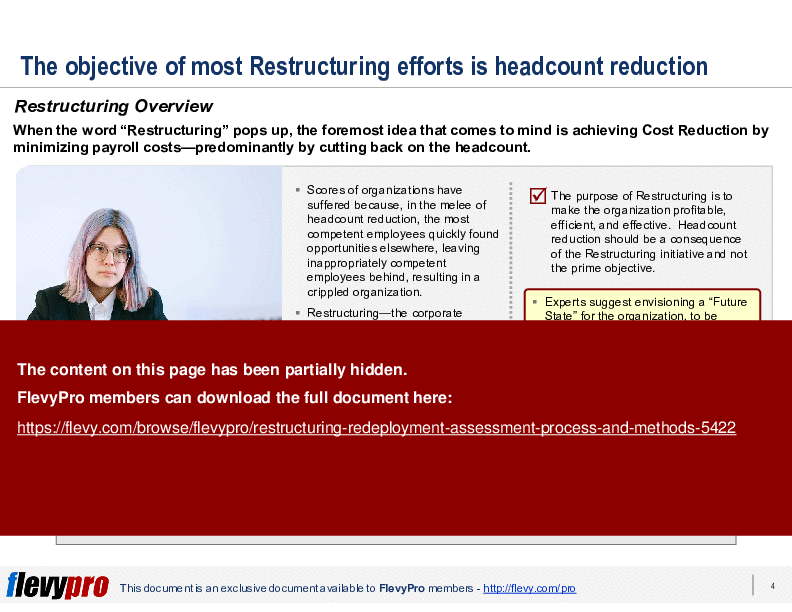
Organizations that have survived over time have had to reinvent themselves over and over with the changes in the environment. These reinventions almost always include Cost Reduction that tend to lean towards Headcount Reduction. Headcount Reduction is typically achieved using 2 approaches:

1. Downsizing
2. Restructuring

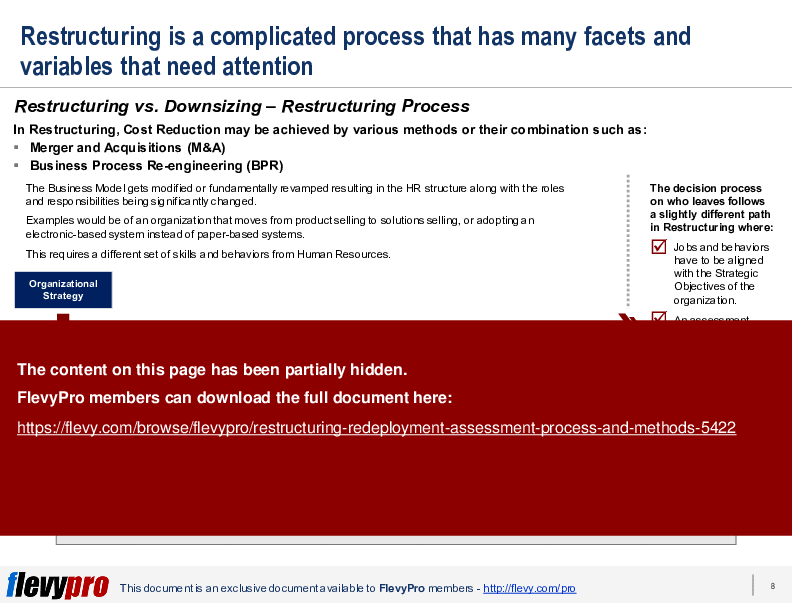
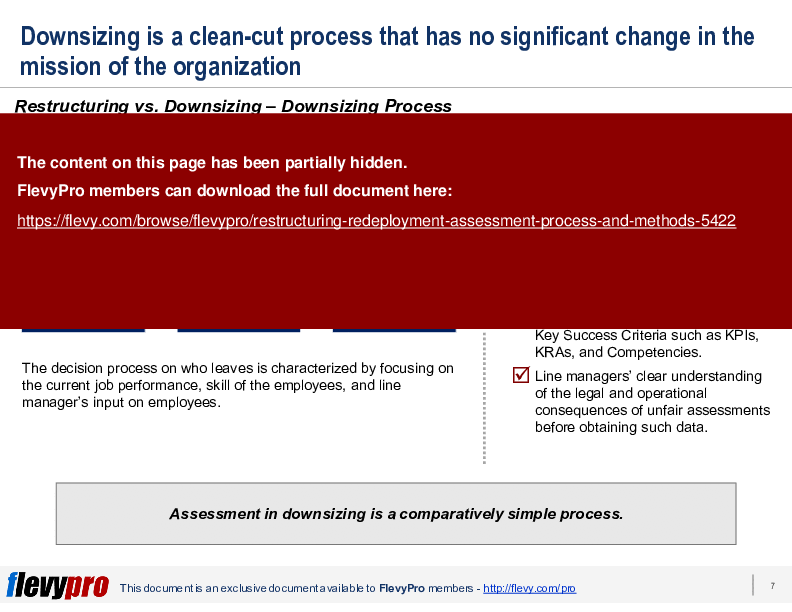
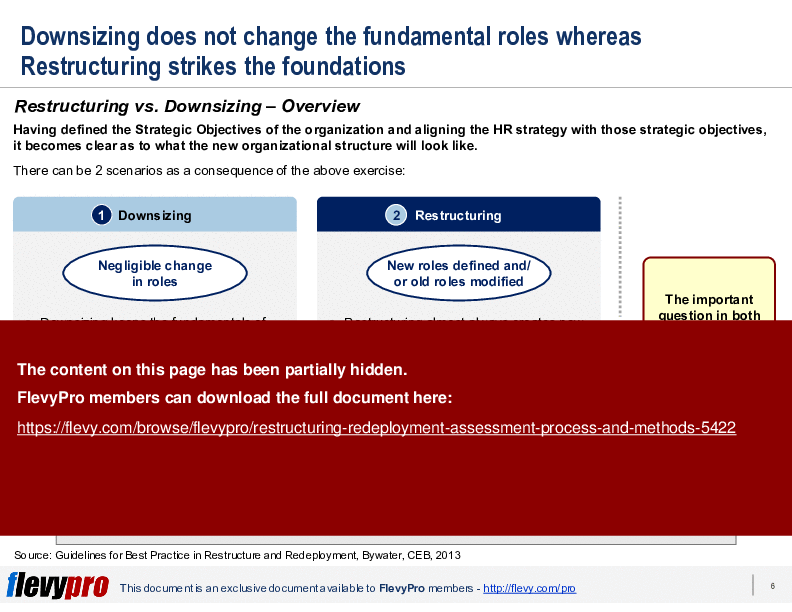
Downsizing keeps the fundamentals of the roles same with only fewer people performing those roles. Whereas, Restructuring creates new roles, as well as modify existing roles, requiring a new mix of skills or altogether new resources to perform them.

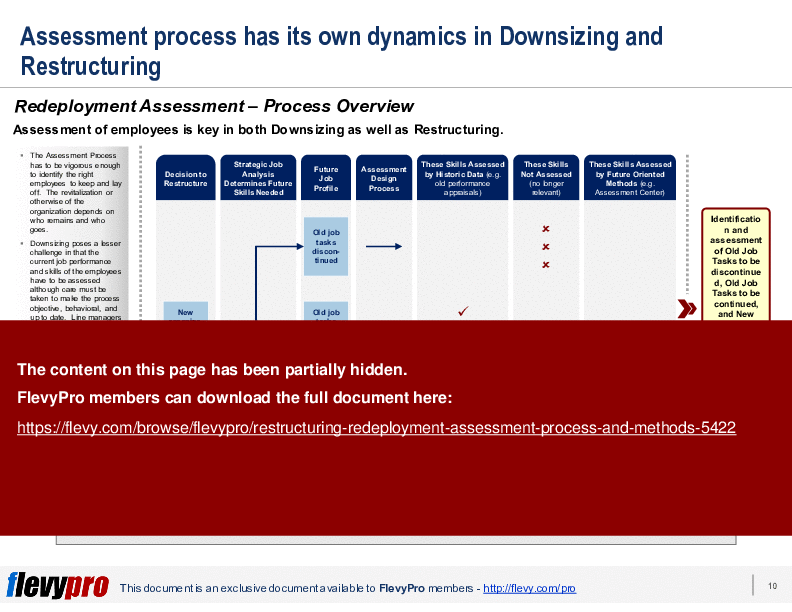
Restructuring presents a more challenging task in that a new mix of skills have to be identified for each role, an Assessment Process has to be set up to assess existing employees against new competencies, and Redeployment (placement of existing people in right positions or laid off) or new recruitment done.

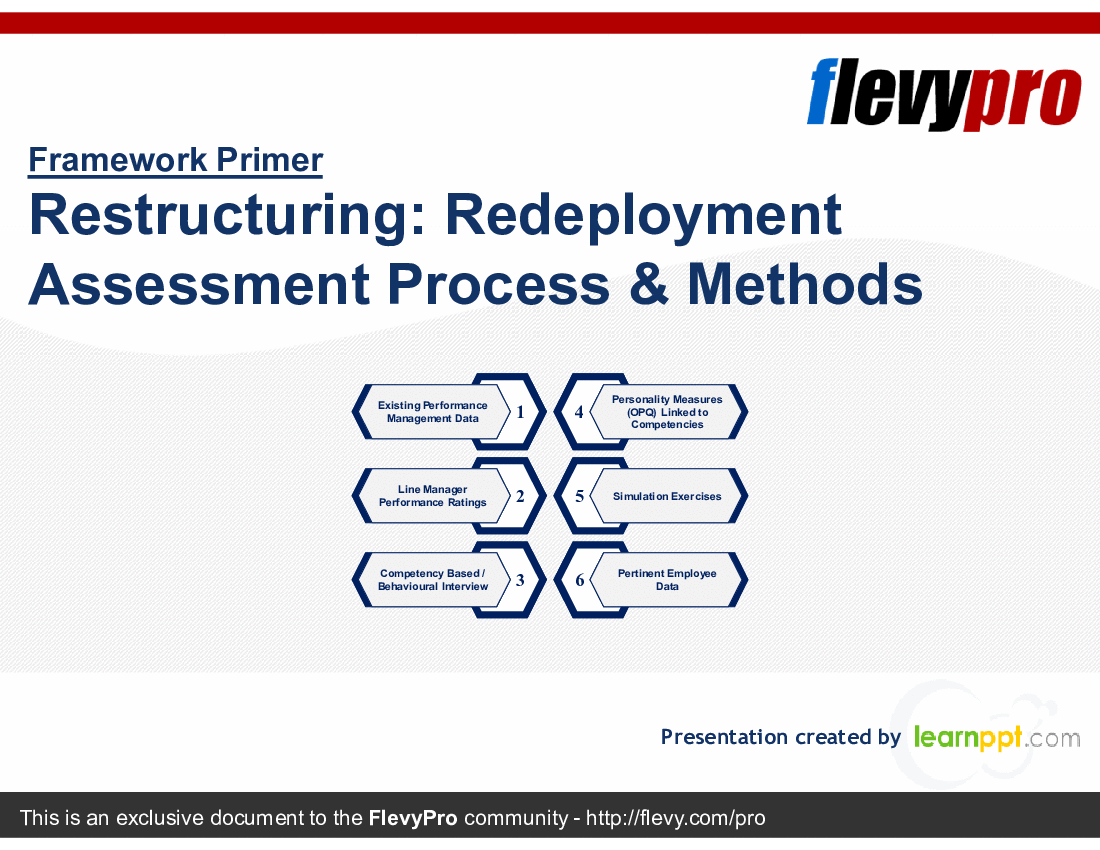
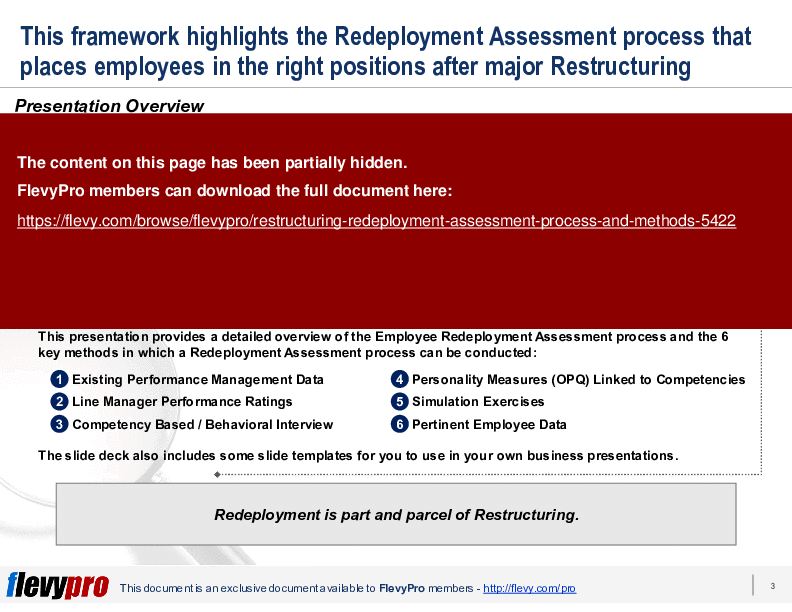
This presentation provides a detailed overview of the Employee Redeployment Assessment process and the 6 key methods in which a Redeployment Assessment process can be conducted:

1. Existing Performance Management Data
2. Line Manager Performance Ratings
3. Competency Based / Behavioral Interview
4. Personality Measures (OPQ) Linked to Competencies
5. Simulation Exercises
6. Pertinent Employee Data

The slide deck also includes some slide templates for you to use in your own business presentations.

The presentation meticulously outlines the distinctions between downsizing and restructuring, emphasizing the strategic importance of each approach. It delves into the nuances of redeployment assessment, highlighting the necessity of aligning employee skills with new organizational roles. The PPT also provides actionable insights into the assessment methods, ensuring a comprehensive understanding of the process. This resource is indispensable for executives aiming to navigate the complexities of workforce restructuring with precision and strategic foresight.

Got a question about this document? Email us at flevypro@flevy.com.

MARCUS OVERVIEW

This synopsis was written by Marcus [?] based on the analysis of the full 29-slide presentation.


Executive Summary
This presentation, "Restructuring: Redeployment Assessment Process & Methods," offers a thorough exploration of the employee redeployment assessment process essential for effective workforce restructuring. Crafted by seasoned consultants from McKinsey and Big 4 firms, this document outlines the critical differences between restructuring and downsizing, emphasizing the importance of placing employees in appropriate roles to enhance organizational efficiency. The presentation details 6 key assessment methods, providing templates and frameworks that facilitate the redeployment process, ensuring that organizations can adapt to changing environments while retaining top talent.

Who This Is For and When to Use
•  HR leaders managing workforce transitions during restructuring initiatives
•  Organizational development teams focused on employee placement and skill alignment
•  Change management consultants advising on workforce optimization
•  Business executives overseeing strategic realignment and cost reduction efforts

Best-fit moments to use this deck:
•  During pre-restructuring planning to establish assessment frameworks
•  When implementing redeployment strategies post-restructuring
•  In workshops aimed at aligning employee skills with new organizational roles

Learning Objectives
•  Define the differences between restructuring and downsizing in a corporate context
•  Identify the critical competencies required for new roles within the organization
•  Develop a structured assessment process for evaluating employee fit in new roles
•  Utilize various assessment methods to ensure fair and objective employee evaluations
•  Create templates for effective communication and documentation during the redeployment process
•  Implement best practices for managing employee transitions and maintaining morale

Table of Contents
•  Overview (page 3)
•  Restructuring vs. Downsizing (page 6)
•  Redeployment Assessment (page 9)
•  Redeployment Assessment Methods (page 15)
•  Templates (page 23)

Primary Topics Covered
•  Restructuring vs. Downsizing - Understanding the fundamental differences between restructuring, which involves creating new roles and modifying existing ones, and downsizing, which retains the same roles with fewer employees.
•  Redeployment Assessment Process - A comprehensive overview of the steps involved in assessing employees for new roles post-restructuring, ensuring the right fit for organizational needs.
•  Assessment Methods - Detailed descriptions of 6 key assessment methods: Existing Performance Management Data, Line Manager Performance Ratings, Competency-Based Interviews, Personality Measures (OPQ), Simulation Exercises, and Pertinent Employee Data.
•  Employee Data Utilization - Strategies for leveraging employee data to inform assessment decisions and ensure a fair evaluation process.
•  Assessment Criteria - Guidelines for evaluating the effectiveness of assessment methods based on coverage, accuracy, relevance, and freedom from bias.
•  Templates for Implementation - Ready-to-use templates that facilitate the assessment and redeployment process within organizations.

Deliverables, Templates, and Tools
•  Assessment process framework template for evaluating employee competencies
•  Redeployment assessment methods overview template
•  Performance management data collection template
•  Line manager performance rating guidelines
•  Competency-based interview structure template
•  Simulation exercise design template

Slide Highlights
•  Overview of the redeployment assessment process and its significance in restructuring
•  Comparison chart detailing the differences between restructuring and downsizing
•  Flowchart illustrating the steps in the redeployment assessment process
•  Summary of 6 key assessment methods with benefits and drawbacks
•  Template examples for practical application in organizational settings

Potential Workshop Agenda
Introduction to Redeployment Assessment (30 minutes)
•  Overview of the importance of redeployment in restructuring
•  Discussion on the differences between restructuring and downsizing

Assessment Method Deep Dive (60 minutes)
•  Review of each assessment method and its application
•  Group activity to evaluate the effectiveness of different methods

Implementation Planning (90 minutes)
•  Develop a customized redeployment assessment plan
•  Identify key roles and competencies for assessment

Customization Guidance
•  Tailor assessment templates to reflect specific organizational roles and competencies
•  Adjust the evaluation criteria based on industry standards and organizational goals
•  Incorporate company-specific terminology and metrics into the assessment process

Secondary Topics Covered
•  Change management strategies during workforce transitions
•  Legal considerations in employee assessments and layoffs
•  Communication strategies for maintaining employee morale during restructuring
•  Best practices for aligning HR strategies with organizational objectives

Topic FAQ

What are the most common methods for assessing employees for redeployment after restructuring?

Common methods combine historical and direct-assessment sources: Existing Performance Management Data, Line Manager Performance Ratings, Competency-Based (behavioral) Interviews, Personality Measures such as the OPQ, Simulation Exercises, and Pertinent Employee Data. These 6 methods are explicitly listed as options for building a redeployment assessment process.

How do competency-based interviews differ from personality measures like the OPQ in redeployment assessments?

Competency-based interviews probe past behaviors and situational examples to evaluate role-specific skills, while personality measures like the OPQ assess trait-level tendencies relevant to job performance. Both are presented as complementary inputs within a redeployment assessment, combining behavioral evidence and trait profiling.

What criteria should HR use to evaluate which assessment methods to include?

The presentation recommends judging assessment methods by coverage (how many competencies they assess), accuracy, relevance to the new role, and freedom from bias. These evaluation criteria are used to compare benefits and drawbacks of each method when designing the assessment mix.

How should organizations use existing performance management data in redeployment decisions?

Existing performance management data is positioned as tangible evidence to inform placement and identify skills or gaps when assessing fit for new roles. The deck includes a performance management data collection template to standardize and leverage historical performance metrics during assessments.

When buying a redeployment assessment toolkit, what features indicate it will support implementation?

Useful features include a clear assessment process framework, method overviews with benefits/drawbacks, ready-to-use templates (interview structures, simulation designs), line manager rating guidelines, and guidance on customization and legal/change-management considerations. These are the deliverables highlighted in the presentation.

How can I assess the value of redeployment templates before purchase?

Evaluate the number and type of templates, the range of assessment methods supported, and whether customization guidance and implementation agendas are included. Flevy's Restructuring: Redeployment Assessment Process & Methods lists templates such as an assessment framework, performance data collection, interview structure, and simulation exercise design.

I need to redeploy staff after a restructure while minimizing morale loss—what assessment mix should I use?

Use a mixed-method approach combining objective performance data, calibrated line manager ratings, competency-based interviews, OPQ personality measures, and job-relevant simulation exercises, supported by clear criteria and manager training to reduce bias. The presentation frames this as using all 6 assessment methods.

How do I structure a workshop to design a redeployment assessment process?

The deck proposes a three-part workshop: an Introduction to Redeployment Assessment (30 minutes), an Assessment Method Deep Dive with group evaluation exercises (60 minutes), and Implementation Planning to develop the redeployment assessment plan and identify competencies (90 minutes).

Document FAQ
These are questions addressed within this presentation.

What is the primary goal of the redeployment assessment process?
The primary goal is to ensure that employees are placed in roles that align with their skills and the organization's needs, enhancing overall efficiency and effectiveness.

How does restructuring differ from downsizing?
Restructuring involves creating new roles and modifying existing ones, while downsizing reduces headcount without altering the fundamental nature of the roles.

What are the 6 key assessment methods outlined in the presentation?
The 6 methods are Existing Performance Management Data, Line Manager Performance Ratings, Competency-Based Interviews, Personality Measures (OPQ), Simulation Exercises, and Pertinent Employee Data.

How can organizations ensure the assessment process is fair?
Organizations can ensure fairness by using a mix of assessment methods, providing training for line managers, and establishing clear criteria for evaluations.

What templates are included in the presentation?
The presentation includes templates for assessment frameworks, performance management data collection, interview structures, and simulation exercises.

What role does employee data play in the assessment process?
Employee data provides tangible metrics that inform decisions regarding employee placement and can help identify skills relevant to new roles.

How can organizations prepare for the redeployment assessment?
Organizations should define the new roles and competencies needed, gather relevant employee data, and establish a clear assessment framework.

What are the potential drawbacks of using line manager performance ratings?
Line manager ratings can be biased and may not reflect an employee's potential for new roles if not conducted objectively.

How can simulation exercises be effectively utilized?
Simulation exercises should be designed to reflect real job scenarios, allowing candidates to demonstrate their skills in a controlled environment.

What is the significance of personality measures in the assessment process?
Personality measures can reveal strengths and potential that may not be evident through traditional performance evaluations, especially for new roles.

Glossary
•  Redeployment - The process of placing employees in new roles within an organization following restructuring.
•  Assessment Process - A systematic approach to evaluating employee competencies and fit for new roles.
•  Performance Management Data - Historical data reflecting employee performance used in assessments.
•  Line Manager Ratings - Evaluations provided by direct supervisors regarding employee performance.
•  Competency-Based Interview - An interview method focusing on specific competencies required for a role.
•  Personality Measures (OPQ) - Tools used to assess personality traits relevant to job performance.
•  Simulation Exercises - Practical assessments designed to evaluate candidates in real-world scenarios.
•  Pertinent Employee Data - Relevant information about employees, including skills, qualifications, and attendance records.
•  Assessment Criteria - Standards used to evaluate the effectiveness and fairness of assessment methods.
•  Stakeholder Groups - Individuals or entities with an interest in the assessment process and outcomes.
•  Change Management - Strategies and practices aimed at managing organizational change effectively.
•  Legal Considerations - Legal factors that must be taken into account during employee assessments and layoffs.
•  Employee Morale - The overall attitude and satisfaction of employees within an organization.
•  HR Strategy - The approach taken by human resources to align workforce management with organizational goals.
•  Organizational Objectives - The goals set by an organization to guide its operations and strategies.
•  Competencies - Skills and behaviors required for effective job performance.
•  Assessment Framework - A structured approach for conducting assessments of employee competencies.
•  Evaluation Metrics - Criteria used to measure the success and effectiveness of the assessment process.
•  Workforce Transition - The process of moving employees from one role or structure to another within an organization.
•  Employee Stakeholder Groups - Groups that represent employee interests, such as unions or employee associations.
•  Bias in Assessment - The presence of unfair influences that can affect the outcomes of employee evaluations.

RESTRUCTURING PPT SLIDES

Strategic Downsizing: Process and Considerations

Framework for Effective Organizational Restructuring

Evaluating Employee Performance: Line Manager Ratings

Criteria for Effective Redeployment Assessment Tools

Criteria-Driven Assessment Methods for Role Evaluation

Evaluating Employee Data: Benefits and Risks

Distinguishing Downsizing from Restructuring: Key Insights

Source: Best Practices in Business Transformation, Restructuring, Redeployment PowerPoint Slides: Restructuring: Redeployment Assessment Process & Methods PowerPoint (PPTX) Presentation Slide Deck, LearnPPT Consulting


$29.00
FlevyPro price: FREE (included in subscription)
This framework is developed by a team of former McKinsey and Big 4 consultants. The presentation follows the headline-body-bumper slide format used by global consulting firms.
Add to Cart
  

Did you need more documents?

Consider a FlevyPro subscription from $39/month. View plans here.

For $10.00 more, you can download this document plus 2 more FlevyPro documents. That's just $13 each.

ABOUT FLEVYPRO

This document is part of the FlevyPro Library, a curated knowledge base of documents for our FlevyPro subscribers.

FlevyPro is a subscription service for on-demand business frameworks and analysis tools. FlevyPro subscribers receive access to an exclusive library of curated business documents—business framework primers, presentation templates, Lean Six Sigma tools, and more—among other exclusive benefits.

Click here to learn more about FlevyPro and its benefits.

Did you know?
The average daily rate of a McKinsey consultant is $6,625 (not including expenses). The average price of a Flevy document is $65.


Trusted by over 10,000+ Client Organizations
Since 2012, we have provided business templates to over 10,000 businesses and organizations of all sizes, from startups and small businesses to the Fortune 100, in over 130 countries.
AT&T GE Cisco Intel IBM Coke Dell Toyota HP Nike Samsung Microsoft Astrazeneca JP Morgan KPMG Walgreens Walmart 3M Kaiser Oracle SAP Google E&Y Volvo Bosch Merck Fedex Shell Amgen Eli Lilly Roche AIG Abbott Amazon PwC T-Mobile Broadcom Bayer Pearson Titleist ConEd Pfizer NTT Data Schwab


Read Customer Testimonials

 
"I am extremely grateful for the proactiveness and eagerness to help and I would gladly recommend the Flevy team if you are looking for data and toolkits to help you work through business solutions."

– Trevor Booth, Partner, Fast Forward Consulting
 
"As a consultant requiring up to date and professional material that will be of value and use to my clients, I find Flevy a very reliable resource.

The variety and quality of material available through Flevy offers a very useful and commanding source for information. Using Flevy saves me time, enhances my expertise and ends up being a good decision."

– Dennis Gershowitz, Principal at DG Associates
 
"FlevyPro has been a brilliant resource for me, as an independent growth consultant, to access a vast knowledge bank of presentations to support my work with clients. In terms of RoI, the value I received from the very first presentation I downloaded paid for my subscription many times over! The "

– Roderick Cameron, Founding Partner at SGFE Ltd
 
"[Flevy] produces some great work that has been/continues to be of immense help not only to myself, but as I seek to provide professional services to my clients, it gives me a large "tool box" of resources that are critical to provide them with the quality of service and outcomes they are expecting."

– Royston Knowles, Executive with 50+ Years of Board Level Experience
 
"As an Independent Management Consultant, I find Flevy to add great value as a source of best practices, templates and information on new trends. Flevy has matured and the quality and quantity of the library is excellent. Lastly the price charged is reasonable, creating a win-win value for "

– Jim Schoen, Principal at FRC Group
 
"Flevy is now a part of my business routine. I visit Flevy at least 3 times each month.

Flevy has become my preferred learning source, because what it provides is practical, current, and useful in this era where the business world is being rewritten.

In today's environment where there are so "

– Omar Hernán Montes Parra, CEO at Quantum SFE
 
"As a niche strategic consulting firm, Flevy and FlevyPro frameworks and documents are an on-going reference to help us structure our findings and recommendations to our clients as well as improve their clarity, strength, and visual power. For us, it is an invaluable resource to increase our impact and value."

– David Coloma, Consulting Area Manager at Cynertia Consulting
 
"I like your product. I'm frequently designing PowerPoint presentations for my company and your product has given me so many great ideas on the use of charts, layouts, tools, and frameworks. I really think the templates are a valuable asset to the job."

– Roberto Fuentes Martinez, Senior Executive Director at Technology Transformation Advisory


Customers Also Bought These Documents


Customers Also Like These Documents

Explore Templates on Related Management Topics


Your Recently Viewed Documents
Download our FREE Strategy & Transformation Framework Templates

Download our free compilation of 50+ Strategy & Transformation slides and templates. Frameworks include McKinsey 7-S, Balanced Scorecard, Disruptive Innovation, BCG Curve, and many more.