
This framework is developed by a team of former McKinsey and Big 4 consultants. The presentation follows the headline-body-bumper slide format used by global consulting firms.
Explore the Psychology of Market Entry Analysis, crafted by ex-McKinsey & Big 4 consultants. Gain insights on cognitive biases and strategic frameworks for informed decisions. Psychology of Market Entry Analysis is a 27-slide PPT PowerPoint presentation slide deck (PPT) available for immediate download upon purchase.
For every successful market entry, about market entry attempts end in failure. This failure is attributed to many factors—timing, scale, competition, capabilities, and particularly irrational decision making. The decision to successfully enter a market necessitates detailed analysis. These critical decisions, however, often get tainted by Cognitive Biases—the systematic errors in the way people process information. Cognitive Biases distort executives’ perception regarding their firm’s capabilities, potential market, and competition.
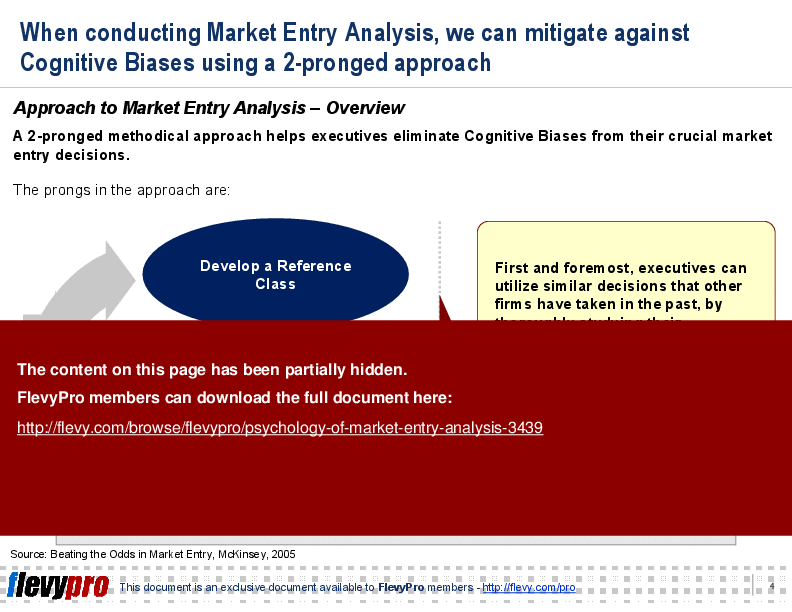
The presentation starts by highlighting a 2-pronged approach to Market Entry Analysis:
1. Develop a Reference Class
2. Remove Bias from Decisions
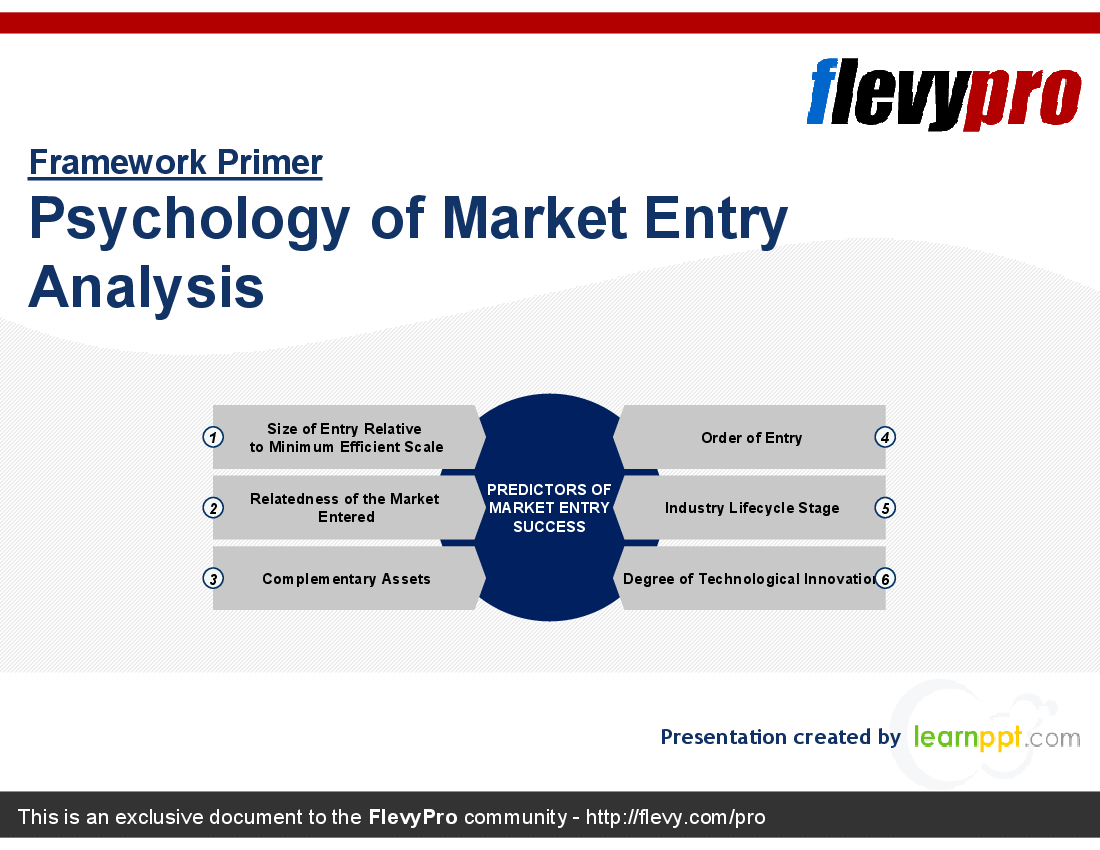
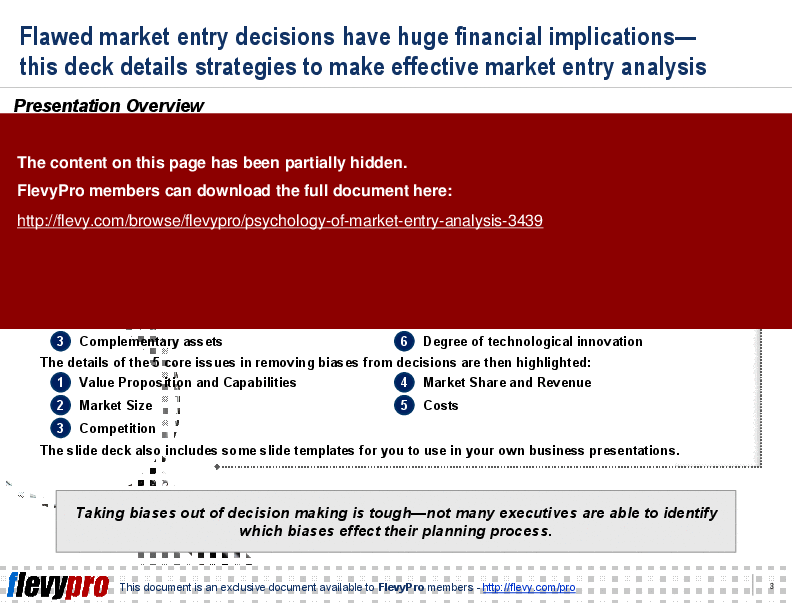
The deck then discusses the 6 key factors of market entry success:
1. Size of entry relative to minimum efficient scale
2. Relatedness of the market entered
3. Complementary assets
4. Order of entry
5. Industry lifecycle stage
6. Degree of technological innovation
The details of the 5 core issues in removing biases from decisions are then highlighted:
1. Value Proposition and Capabilities
2. Market Size
3. Competition
4. Market Share and Revenue
5. Costs
The slide deck also includes some slide templates for you to use in your own business presentations.
This PPT delves into the intricacies of cognitive biases and their impact on market entry decisions. It emphasizes the importance of developing a reference class to mitigate these biases and make informed decisions. The presentation also covers the nine most common cognitive biases that can distort decision-making, such as framing bias, conservatism bias, and availability bias.
Executives will find actionable insights on how to identify and counteract these biases, ensuring a more rational approach to market entry. The document also includes practical templates to facilitate the application of these concepts in real-world scenarios. This resource is essential for any executive looking to enhance their market entry strategy and avoid costly mistakes.
This PPT slide focuses on market size estimation and the need to mitigate cognitive biases that distort decision-making. Two common biases are the "Optimism" bias, which leads to overly optimistic market size estimates, and the "Anchoring and Adjustment" bias, where initial values unduly influence subsequent estimates, causing firms to overlook market dynamics. Recommendations for improving accuracy include avoiding assumptions based on current growth rates and conducting a thorough analysis of the business lifecycle stage. This understanding reveals limitations of current growth figures and aids in identifying realistic projections. Companies can also enhance estimates by using benchmarks from other market entrants, providing a grounded perspective for setting achievable targets. Addressing cognitive biases is essential for informed strategic decisions in market entry.
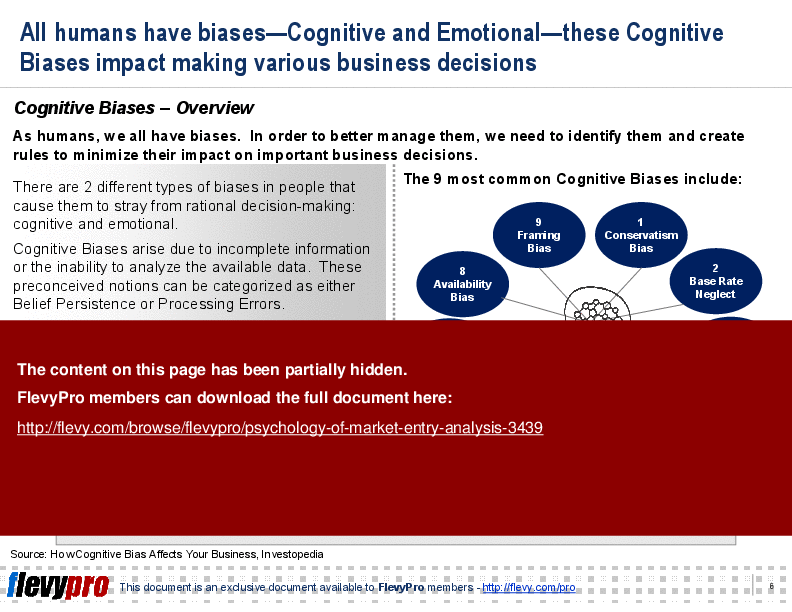
This PPT slide outlines cognitive biases affecting business decision-making, categorized into cognitive and emotional biases. Cognitive biases arise from incomplete information or ineffective data analysis. Key categories include Belief Persistence, where individuals reject contradictory information, and Processing Errors, which involve failures in data organization and analysis. The nine common cognitive biases include Framing Bias, Conservatism Bias, Base Rate Neglect, Confirmation Bias, Sample Size Neglect, Hindsight Bias, Anchoring and Adjustment, Mental Accounting, and Availability Bias. These biases can lead to suboptimal business outcomes. Recognizing and addressing these biases enables organizations to implement strategies that enhance decision-making processes and improve overall business strategies.
This PPT slide outlines 6 critical factors for successful market entry:
1. Size of Entry Relative to Minimum Efficient Scale: Entering closer to the minimum efficient scale increases success likelihood, while entering below this threshold may necessitate rapid scaling.
2. Relatedness of the Market Entered: Leveraging existing portfolios enhances success chances; companies must assess the relevance of current offerings to the new market.
3. Complementary Assets: Marketing and distribution capabilities often outweigh core assets, indicating that effective support systems are vital for market entry.
4. Order of Entry: Market timing is crucial; first movers may gain advantages,, but established players diversifying into new markets can outperform them.
5. Industry Lifecycle Stage: Entering early in the lifecycle boosts success likelihood; companies should align strategies with the lifecycle stage.
6. Degree of Technological Innovation: Industries needing significant inside knowledge favor incumbents, while new entrants may find niche opportunities requiring strategic differentiation.
This PPT slide addresses market entry strategy, focusing on anticipating market share and revenue expectations. It highlights the "brick wall effect," a cognitive bias where companies underestimate competitor reactions to new entrants, leading to unrealistic market dynamics and revenue assumptions. Firms often mistakenly believe competitors will not change pricing or strategies, blinding them to broader market shifts. To mitigate these biases, the slide recommends role-playing exercises to simulate competitor responses, fostering critical thinking about existing players' reactions. Additionally, using a reference class can help set realistic market share expectations, preventing overestimation of potential success. Understanding competitor behavior is essential for effective market entry, as neglecting this can lead to misjudged positions and unexpected challenges.
Cognitive biases impede executives' decision-making. This PPT slide identifies 5 critical areas affected by biases: Value Proposition and Capabilities, Market Size, Competition, Market Share and Revenue, and Costs. For example, overconfidence or anchoring can distort perceptions of market size, leading to flawed entry strategies. Organizations can enhance decision-making by educating leaders about biases and implementing rigorous decision-making processes to minimize their impact. Conducting thorough market analysis using data-driven insights rather than subjective perceptions is essential for rational decision-making. Addressing cognitive biases fosters a more rational organizational culture, improving overall decision-making success.
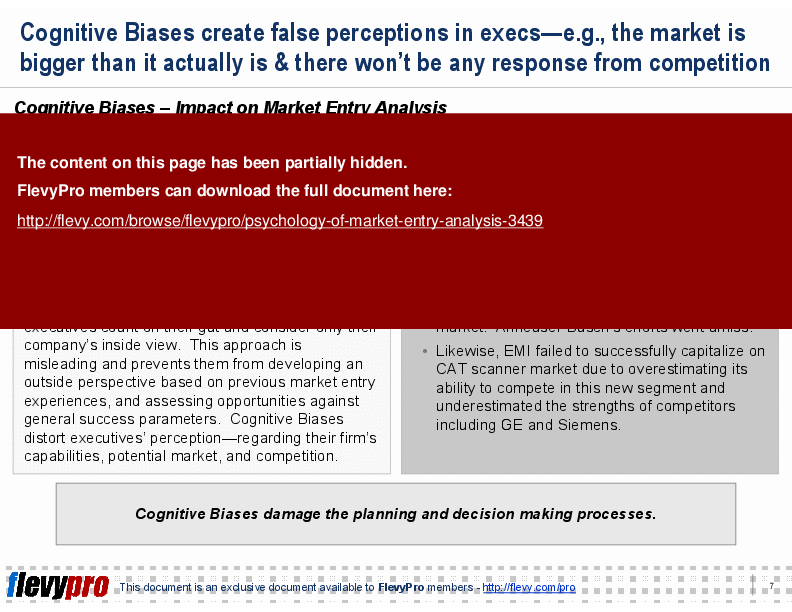
Cognitive biases significantly impact market entry decisions, with a ratio of 1 successful entry to 4 failures due to timing, scale, competition, and capabilities. These biases lead to systematic errors in executives' judgment, distorting perceptions of a firm's capabilities, potential market size, and competitive landscape. For example, Anheuser-Busch underestimated competition from Frito-Lay in the snack food market, resulting in failure. Similarly, EMI overestimated its competitiveness in the CAT scanner market against established players like GE and Siemens. These cases highlight the dangers of cognitive biases in strategic decision-making, urging executives to adopt a more analytical approach to market entry analysis. Recognizing and mitigating cognitive biases is essential for effective planning and decision-making.
Source: Best Practices in Market Analysis, Cognitive Bias, Market Entry PowerPoint Slides: Psychology of Market Entry Analysis PowerPoint (PPT) Presentation Slide Deck, LearnPPT Consulting
This framework is developed by a team of former McKinsey and Big 4 consultants. The presentation follows the headline-body-bumper slide format used by global consulting firms.
For $10.00 more, you can download this document plus 2 more FlevyPro documents. That's just $13 each.
ABOUT FLEVYPRO
This document is part of the FlevyPro Library, a curated knowledge base of documents for our FlevyPro subscribers.

FlevyPro is a subscription service for on-demand business frameworks and analysis tools. FlevyPro subscribers receive access to an exclusive library of curated business documents—business framework primers, presentation templates, Lean Six Sigma tools, and more—among other exclusive benefits.
The average daily rate of a McKinsey consultant is $6,625 (not including expenses). The average price of a Flevy document is $65.
Trusted by over 10,000+ Client Organizations
Since 2012, we have provided business templates to over 10,000 businesses and organizations of all sizes, from startups and small businesses to the Fortune 100, in over 130 countries.
"Flevy.com has proven to be an invaluable resource library to our Independent Management Consultancy, supporting and enabling us to better serve our enterprise clients.
The value derived from our [FlevyPro] subscription in terms of the business it has helped to gain far exceeds the investment made, making a subscription a no-brainer for any growing consultancy – or in-house strategy team."
– Dean Carlton, Chief Transformation Officer, Global Village Transformations Pty Ltd.
"As a young consulting firm, requests for input from clients vary and it's sometimes impossible to provide expert solutions across a broad spectrum of requirements. That was before I discovered Flevy.com.
Through subscription to this invaluable site of a plethora of topics that are key and crucial to consulting, I
have been able to exceed expectations and deliver quality advice and solutions to my clients. The quality and expertise of the authors are exemplary and gives me great confidence to use as part of my service offerings.
I highly recommend this company for any consultant wanting to apply international best practice standards in their service offerings.
"
– Nishi Singh, Strategist and MD at NSP Consultants
"FlevyPro provides business frameworks from many of the global giants in management consulting that allow you to provide best in class solutions for your clients."
– David Harris, Managing Director at Futures Strategy
"I have used FlevyPro for several business applications. It is a great complement to working with expensive consultants. The quality and effectiveness of the tools are of the highest standards."
– Moritz Bernhoerster, Global Sourcing Director at Fortune 500
"My FlevyPro subscription provides me with the most popular frameworks and decks in demand in today’s market. They not only augment my existing consulting and coaching offerings and delivery, but also keep me abreast of the latest trends, inspire new products and service offerings for my practice, and educate me
in a fraction of the time and money of other solutions. I strongly recommend FlevyPro to any consultant serious about success.
"
– Bill Branson, Founder at Strategic Business Architects
"I have used Flevy services for a number of years and have never, ever been disappointed. As a matter of fact, David and his team continue, time after time, to impress me with their willingness to assist and in the real sense of the word. I have concluded in fact
that it is not at all just a repository of documents/resources but, in the way that David and his team manage the firm, it is like dealing with consultants always ready to assist, advise and direct you to what you really need, and they always get it right.
I am an international hospitality accomplished senior executive who has worked and lived during the past 35 years in 23 countries in 5 continents and I can humbly say that I know what customer service is, trust me.
Aside from the great and professional service that Flevy's team provide, their wide variety of material is of utmost great quality, professionally put together and most current.
Well done Flevy, keep up the great work and I look forward to continue working with you in the future and to recommend you to a variety of colleagues around the world.
"
– Roberto Pelliccia, Senior Executive in International Hospitality
"I like your product. I'm frequently designing PowerPoint presentations for my company and your product has given me so many great ideas on the use of charts, layouts, tools, and frameworks. I really think the templates are a valuable asset to the job."
– Roberto Fuentes Martinez, Senior Executive Director at Technology Transformation Advisory
"As a niche strategic consulting firm, Flevy and FlevyPro frameworks and documents are an on-going reference to help us structure our findings and recommendations to our clients as well as improve their clarity, strength, and visual power. For us, it is an invaluable resource to increase our impact and value."
– David Coloma, Consulting Area Manager at Cynertia Consulting
Download our free compilation of 50+ Strategy & Transformation slides and templates. Frameworks include McKinsey 7-S, Balanced Scorecard, Disruptive Innovation, BCG Curve, and many more.