
This framework is developed by a team of former McKinsey and Big 4 consultants. The presentation follows the headline-body-bumper slide format used by global consulting firms.
Editor Summary
A 21-slide PowerPoint (PPT) presentation by LearnPPT Consulting focused on the role of psychology in change management, outlining 4 core conditions for changing mindsets: belief in a purpose, reinforcement systems, ability to change, and consistent role models.
Read moreThe deck covers application of Transpersonal Psychology, workshop design that creates emotional connection, and pre- and post-workshop survey insights showing shifts in organizational values. Includes customizable templates for presentation and workshop use; sold as a digital download on Flevy.
Use this deck when an organization is running a transformation or cultural change effort that requires shifting employee mindsets and behaviors to align with new strategic goals.
Senior leaders designing workshops to build belief in a new purpose and present role-model behaviors to employees.
HR or OD leads structuring pre/post survey measurement and reinforcement systems to track value shifts after interventions.
Change managers creating workshop agendas that use Transpersonal Psychology to foster emotional connection and behavioral commitment.
The emphasis on diagnosing mindset conditions, designing emotionally connected workshops, and measuring shifts reflects consulting practice of linking cultural diagnostics to implementation through measurement.
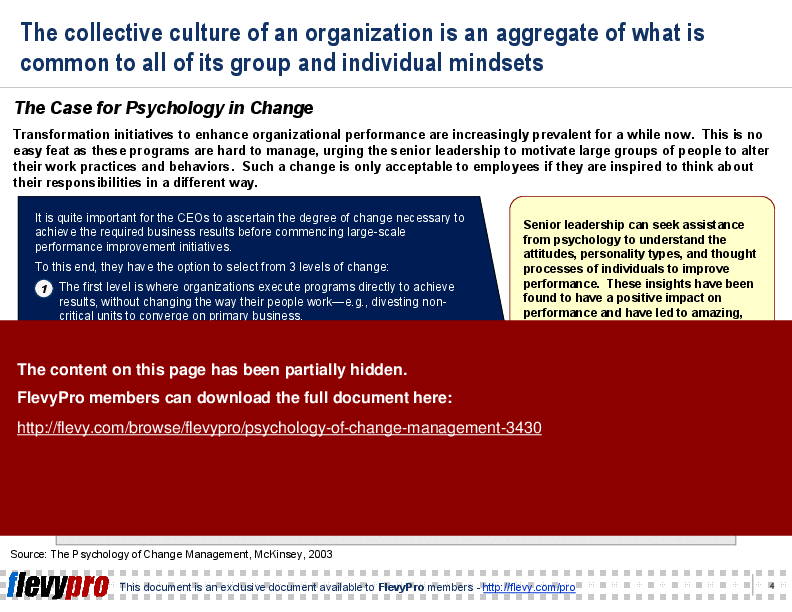
Transformation initiatives to enhance organizational performance are increasingly prevalent for a while now. This
This presentation delves into the critical role of psychology in driving successful change management. It highlights the importance of understanding the collective culture of an organization and how individual mindsets contribute to it. The PPT outlines core conditions necessary for changing mindsets, emphasizing belief in a purpose, reinforcement systems, ability to change, and consistent role models. These elements are essential for motivating employees to embrace new behaviors and align with organizational goals.
The deck also explores the application of Transpersonal Psychology in facilitating and sustaining cultural change. It includes insights from pre- and post-workshop surveys that reveal shifts in organizational values experienced by employees. The workshops are designed to create an emotional connection between employees and the new behaviors, fostering a deeper commitment to change. This approach ensures that the change is not only implemented, but also ingrained in the organizational culture.
Included in the presentation are templates that can be customized for your own business needs. These templates provide a structured approach to presenting the core conditions for changing mindsets and can be tailored to fit specific organizational contexts. The document is a valuable resource for senior leaders looking to leverage psychological principles to drive effective change management and achieve sustainable performance improvements.
What are the core psychological conditions needed to change mindsets in an organization?
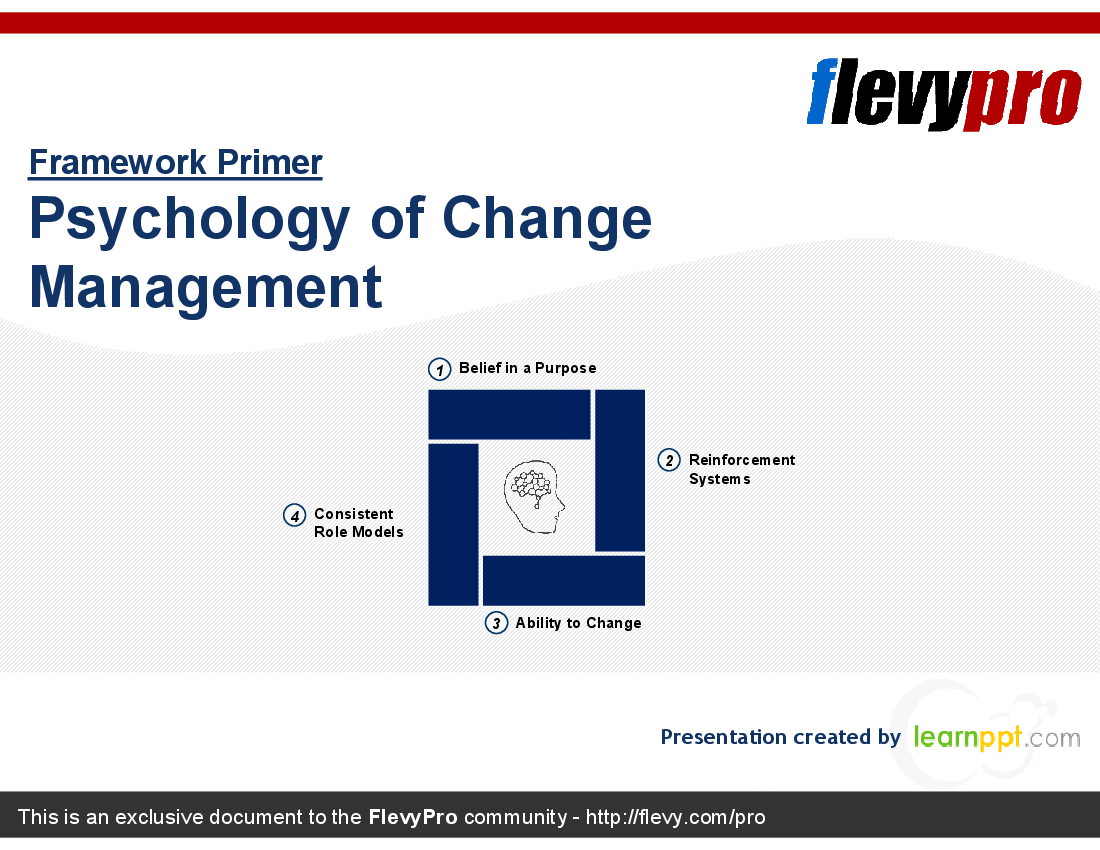
Successful mindset change typically requires 4 interdependent conditions: belief in a shared purpose, reinforcement systems that reward new behaviors, individuals’ perceived ability to change, and consistent role models demonstrating the desired behaviors; these are presented as 4 core conditions in the deck.
How can Transpersonal Psychology be applied to organizational change initiatives?
Transpersonal Psychology can be used to create deeper emotional engagement with new behaviors, informing workshop design and facilitation to sustain cultural shifts; the presentation describes applying Transpersonal Psychology in workshops and measuring effects with pre- and post-workshop surveys.
What methods can measure shifts in organizational values after a change intervention?
The document describes using pre- and post-workshop surveys to capture employee-reported shifts in values and mindsets, combined with observable reinforcement mechanisms and role-model behavior tracking as measurement approaches centered on survey insights.
What should I look for when buying a psychology-focused change management PowerPoint for senior leaders?
Prioritize decks that articulate mindset conditions, include workshop designs and measurement approaches, and provide customizable templates you can adapt to context; Flevy’s Psychology of Change Management presents these elements across a 21-slide PPT.
How do customizable templates support psychology-driven change programs?
Templates standardize how core conditions and workshop agendas are communicated, enabling consistent facilitation, stakeholder briefings, and measurement plans; the presentation explicitly includes customizable templates for presenting the 4 core conditions and workshop materials.
I need to shift employee behavior after a strategy change — which psychological levers should I prioritize?
Focus on building belief in the new purpose, establishing reinforcement systems, increasing individuals’ perceived ability to change, and ensuring visible, consistent role models; these 4 levers are identified as the core conditions for mindset change.
How should workshops be designed to create lasting commitment to new behaviors?
Workshops should create an emotional connection between employees and the behaviors, leverage Transpersonal Psychology techniques to deepen engagement, and be paired with reinforcement systems and role-modeling; the approach is measured using pre- and post-workshop surveys.
What evidence is useful to include in a change program presentation to demonstrate impact?
Include findings from pre- and post-workshop surveys showing shifts in values, clear articulation of mindset conditions, workshop outputs, and planned reinforcement mechanisms; the deck provides survey insights and workshop templates to document impact.
This PPT slide presents findings from a survey of 1,000 senior managers in an international energy company, focusing on organizational values prior to a transpersonal psychology workshop. Key values identified include "employee safety" (68%), "shareholder value" (35%), "professionalism" (30%), and "corporate growth" (29%), reflecting a strong emphasis on financial performance and professional standards in the energy sector. Conversely, limiting values included "bureaucracy" (46%), "caution" (31%), and "empire building" (28%), indicating concerns about rigid structures and self-serving behaviors hindering organizational effectiveness. These insights can guide leadership in shaping organizational culture and aligning goals with employee priorities.
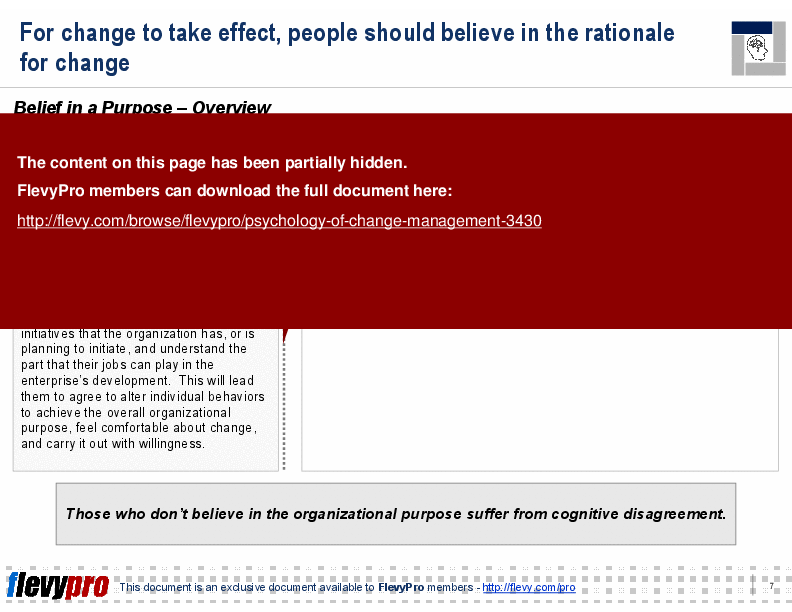
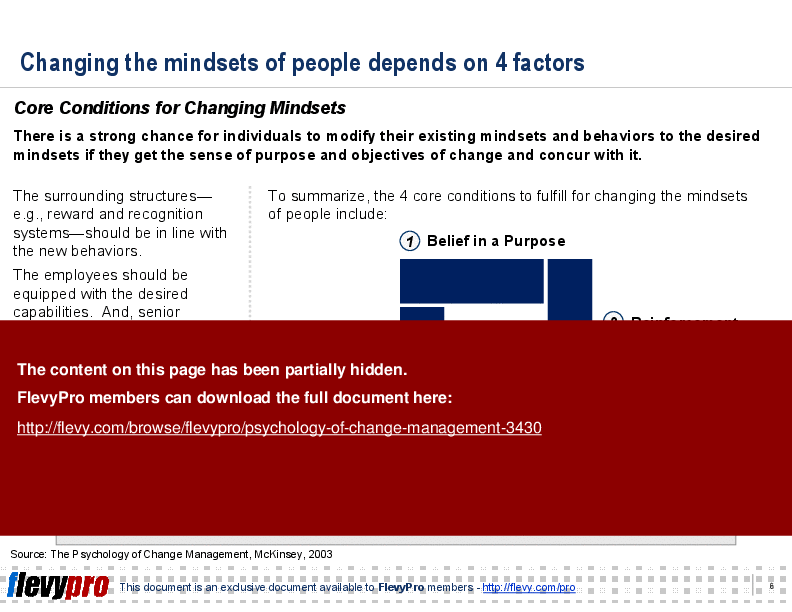
This PPT slide outlines 4 essential conditions for changing mindsets within an organization: "Belief in a Purpose," "Reinforcement Systems," "Ability to Change," and "Consistent Role Models." Belief in a Purpose emphasizes the necessity for individuals to understand and embrace the reasons behind change, acting as a catalyst for motivation. Reinforcement Systems refer to reward and recognition structures that support desired behaviors aligned with new expectations. Ability to Change indicates that employees must have the skills to implement new behaviors, highlighting the importance of training initiatives. Consistent Role Models require senior leaders to demonstrate desired behaviors, reinforcing the mindset shift. Addressing these conditions collectively creates a comprehensive framework for fostering sustainable organizational performance.
This PPT slide outlines reinforcement systems and their role in changing organizational mindsets, based on B.F. Skinner's theories of conditioning and positive reinforcement. Effective reinforcement systems can enhance employee motivation by aligning incentives with desired behaviors. Consistent reinforcement of organizational objectives is essential; without it, employees may not adopt new mindsets. Managers are more likely to coach junior staff when performance metrics include coaching as a key component. A common misconception is that positive reinforcement yields indefinite results; organizations must adapt their strategies to maintain high performance. Reinforcement systems alone are insufficient for fostering sustainable change; all 4 conditions for effective change management must be met for long-term success.
Effective change management requires training employees to adapt to new directives and behaviors. Senior leaders often expect behavior change without adequate training, particularly in instilling a "customer-centric" approach when prior focus was lacking. Leaders must equip employees with capabilities to adopt new behaviors. David Kolb's four-phase adult learning cycle illustrates that adults need time to comprehend, practice, and integrate new information. Peer teaching enhances learning, as individuals better digest and apply information when sharing experiences. Training should be structured into manageable parts, allowing time for reflection and application, leading to successful change initiatives.
Source: Best Practices in Change Management PowerPoint Slides: Psychology of Change Management PowerPoint (PPT) Presentation Slide Deck, LearnPPT Consulting
This framework is developed by a team of former McKinsey and Big 4 consultants. The presentation follows the headline-body-bumper slide format used by global consulting firms.
For $10.00 more, you can download this document plus 2 more FlevyPro documents. That's just $13 each.
ABOUT FLEVYPRO
This document is part of the FlevyPro Library, a curated knowledge base of documents for our FlevyPro subscribers.

FlevyPro is a subscription service for on-demand business frameworks and analysis tools. FlevyPro subscribers receive access to an exclusive library of curated business documents—business framework primers, presentation templates, Lean Six Sigma tools, and more—among other exclusive benefits.
The average daily rate of a McKinsey consultant is $6,625 (not including expenses). The average price of a Flevy document is $65.
Trusted by over 10,000+ Client Organizations
Since 2012, we have provided business templates to over 10,000 businesses and organizations of all sizes, from startups and small businesses to the Fortune 100, in over 130 countries.
"As an Independent Management Consultant, I find Flevy to add great value as a source of best practices, templates and information on new trends. Flevy has matured and the quality and quantity of the library is excellent. Lastly the price charged is reasonable, creating a win-win value for
the customer, Flevy and the various authors. This is truly a service that benefits the consulting industry and associated clients. Thanks for providing this service.
"
– Jim Schoen, Principal at FRC Group
"One of the great discoveries that I have made for my business is the Flevy library of training materials.
As a Lean Transformation Expert, I am always making presentations to clients on a variety of topics: Training, Transformation, Total Productive Maintenance, Culture, Coaching, Tools, Leadership Behavior, etc. Flevy
It is well worth the money to purchase these presentations. Sure, I have the knowledge and information to make my point. It is another thing to create a presentation that captures what I want to say. Flevy has saved me countless hours of preparation time that is much better spent with implementation that will actually save money for my clients.
"
– Ed Kemmerling, Senior Lean Transformation Expert at PMG
"[Flevy] produces some great work that has been/continues to be of immense help not only to myself, but as I seek to provide professional services to my clients, it gives me a large "tool box" of resources that are critical to provide them with the quality of service and outcomes they are expecting."
– Royston Knowles, Executive with 50+ Years of Board Level Experience
"I have found Flevy to be an amazing resource and library of useful presentations for lean sigma, change management and so many other topics. This has reduced the time I need to spend on preparing for my performance consultation. The library is easily accessible and updates are regularly provided. A wealth of great information."
– Cynthia Howard RN, PhD, Executive Coach at Ei Leadership
"As a young consulting firm, requests for input from clients vary and it's sometimes impossible to provide expert solutions across a broad spectrum of requirements. That was before I discovered Flevy.com.
Through subscription to this invaluable site of a plethora of topics that are key and crucial to consulting, I
have been able to exceed expectations and deliver quality advice and solutions to my clients. The quality and expertise of the authors are exemplary and gives me great confidence to use as part of my service offerings.
I highly recommend this company for any consultant wanting to apply international best practice standards in their service offerings.
"
– Nishi Singh, Strategist and MD at NSP Consultants
"As a consulting firm, we had been creating subject matter training materials for our people and found the excellent materials on Flevy, which saved us 100's of hours of re-creating what already exists on the Flevy materials we purchased."
– Michael Evans, Managing Director at Newport LLC
"Flevy.com has proven to be an invaluable resource library to our Independent Management Consultancy, supporting and enabling us to better serve our enterprise clients.
The value derived from our [FlevyPro] subscription in terms of the business it has helped to gain far exceeds the investment made, making a subscription a no-brainer for any growing consultancy – or in-house strategy team."
– Dean Carlton, Chief Transformation Officer, Global Village Transformations Pty Ltd.
"As a consultant requiring up to date and professional material that will be of value and use to my clients, I find Flevy a very reliable resource.
The variety and quality of material available through Flevy offers a very useful and commanding source for information. Using Flevy saves me time, enhances my expertise and ends up being a good decision."
Download our free compilation of 50+ slides and templates on Organizational Design, Change Management, and Corporate Culture. Methodologies include ADKAR, Burke-Litwin Change Model, McKinsey 7-S, Competing Values Framework, etc.