
This framework is developed by a team of former McKinsey and Big 4 consultants. The presentation follows the headline-body-bumper slide format used by global consulting firms.
Explore a strategic 4-phase framework for transforming from products to platforms, crafted by ex-McKinsey and Big 4 consultants. Enhance your business model today. Products to Platforms is a 22-slide PPT PowerPoint presentation slide deck (PPTX) available for immediate download upon purchase.
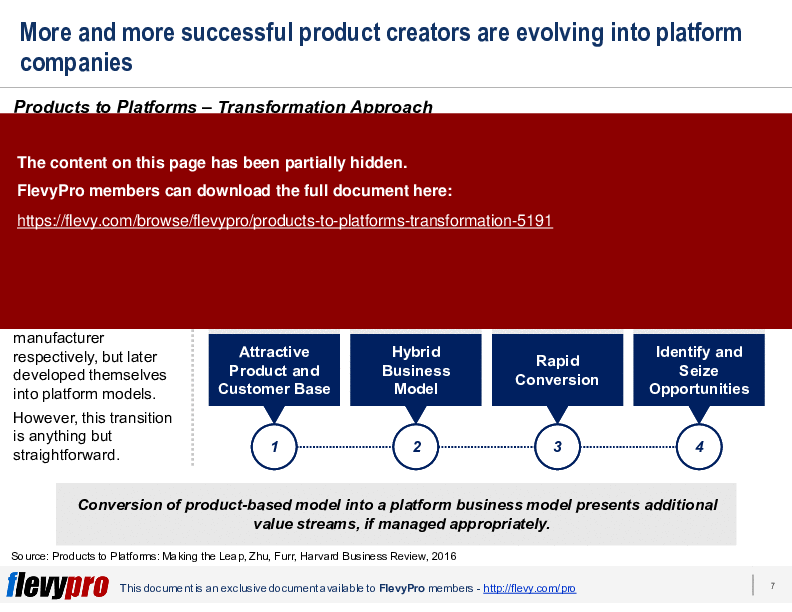
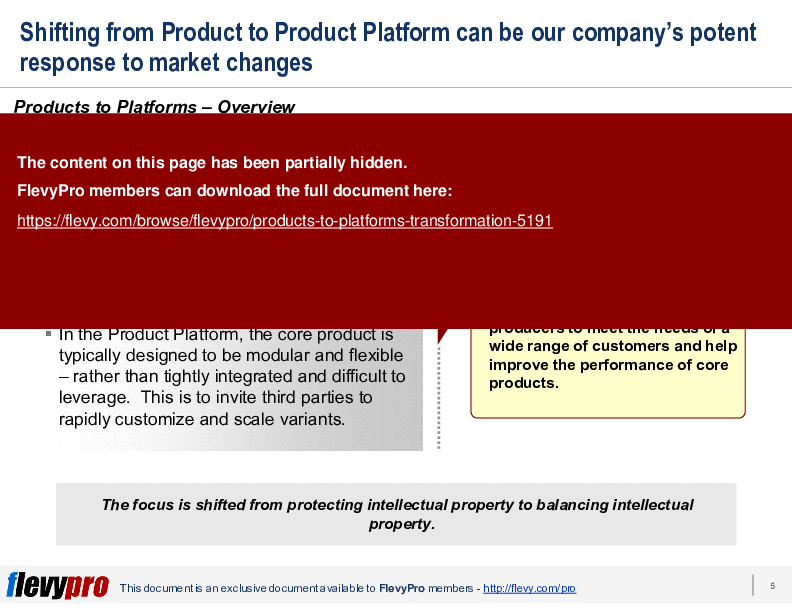
The shift from products to platforms is under evaluation—and being implemented—by many organizations. The drive behind such a shift is the huge success of platform companies—e.g., Amazon, Google, and Apple. These organizations started out as a retailer, search engine, and computer manufacturer, respectively, but later transformed into platform models.
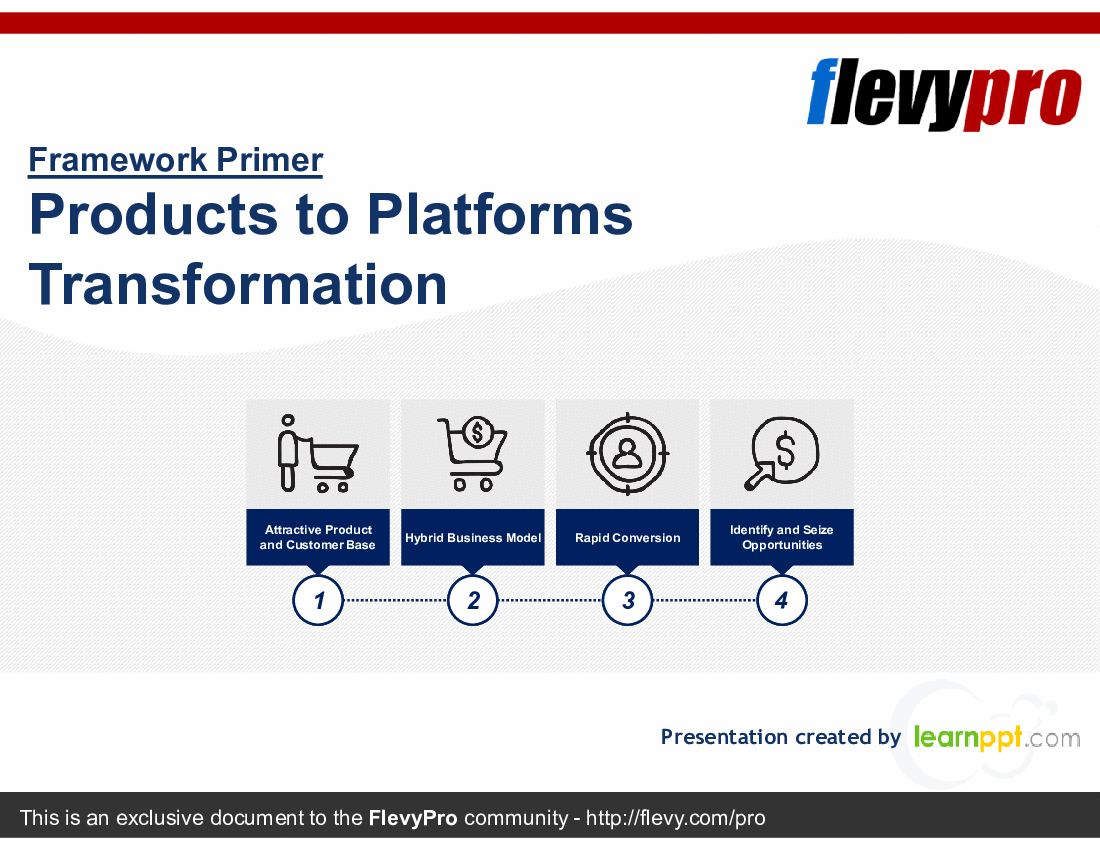
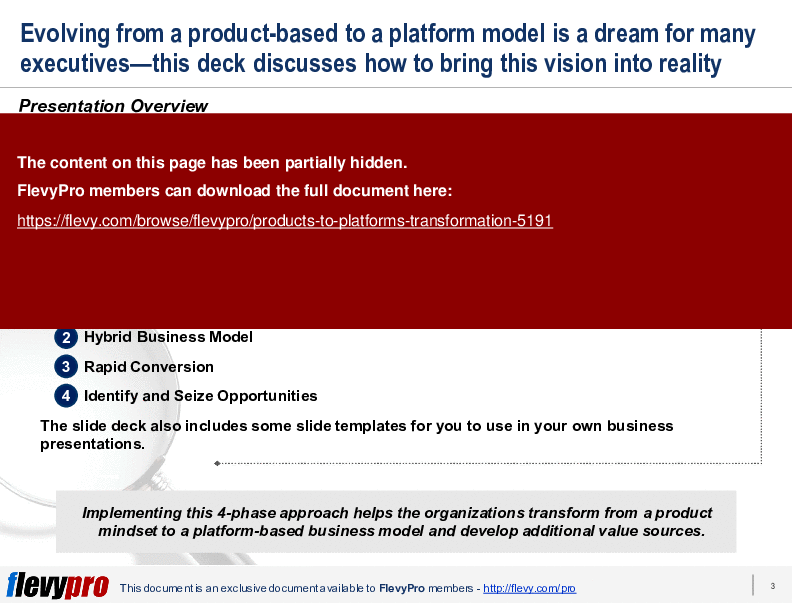
However, this transition is anything but straightforward. Research into successful platform businesses reveals that such a transformation necessitates a robust approach comprising the following 4 critical phases:
1. Attractive Product and Customer Base
2. Hybrid Business Model
3. Rapid Conversion
4. Identify and Seize Opportunities
Implementing this 4-phase approach helps the organizations transform from a product mindset to a platform-based business model and develop additional value sources.
The slide deck also includes some slide templates for you to use in your own business presentations.
Transitioning from a product-based to a platform-based business model is a strategic imperative for modern enterprises aiming to stay competitive. This PPT provides a comprehensive guide on how to navigate this complex transformation. It delves into the nuances of building an attractive product and customer base, essential for the initial phase of platform development. The focus is on creating modular and flexible core products that invite third-party collaborations, enhancing customization and scalability.
Understanding the market conditions, catalysts, and challenges is crucial for a successful transition. The document outlines the importance of identifying where and when these changes are occurring and the obstacles that may impede progress. This insight is vital for organizations to adapt and respond effectively to market dynamics. The guide emphasizes the need for a hybrid business model, blending product and platform strategies to create differentiated value propositions.
Rapid conversion of product users to platform users is another critical aspect covered in this document. It highlights the necessity of developing a value-delivering platform that attracts and retains users. The document also provides practical examples and case studies, illustrating how successful companies have navigated this transition. By following the outlined approach, organizations can unlock new revenue streams and achieve sustainable growth.
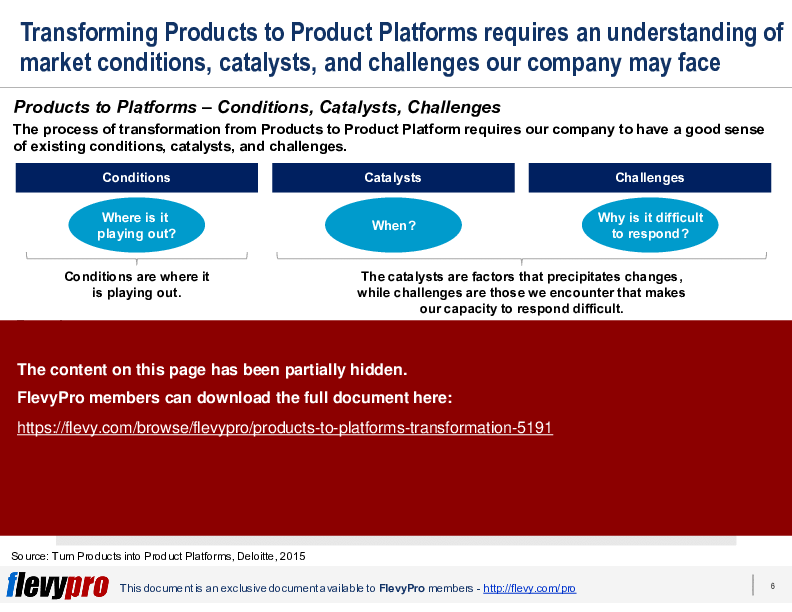
This PPT slide outlines the transformation from traditional products to product platforms, focusing on 3 key areas: Conditions, Catalysts, and Challenges. "Conditions" addresses market environments where transformation occurs, with examples like home appliances and automotive manufacturers. "Catalysts" identifies driving forces that trigger market changes, emphasizing the importance of timing in transformation. "Challenges" highlights obstacles companies face, stressing the need for strategies to enhance responsiveness. A visual representation shows vulnerability and resistance across sectors, indicating that industries like chemical products may be more resilient than commodities and food. This framework aids executives in evaluating market dynamics and internal capabilities for successful transformation.
Adopting a hybrid business model is essential for transitioning from a product-centric approach to a platform-based strategy. Companies often overlook the need to prioritize external products on their platform, limiting their ability to leverage a platform mindset. The case study of LEGO Mindstorms illustrates this transition, where a security breach prompted a shift from a defensive product focus to transforming their software into a platform, enhancing user engagement and sales. Similarly, Apple initially restricted third-party applications post-iPhone launch due to security concerns, but later embraced an open platform with the App Store, diversifying revenue streams and improving user experience. Hybrid models can create significant income opportunities, emphasizing the need for organizations to shift from a product to a platform mindset to unlock growth.
This PPT slide outlines the transformation of traditional product-based companies into platform-oriented businesses, highlighting examples like Amazon, Google, and Apple. This shift is driven by the scalability and customer engagement advantages of platform models. Organizations must navigate 4 critical phases:
1. Establishing an attractive product and customer base as a foundation for growth.
2. Creating a hybrid business model that integrates product and platform elements for operational flexibility.
3. Rapid conversion from a product-centric approach to a platform model to capitalize on market opportunities.
4. Identifying and seizing opportunities through a proactive approach to market dynamics.
While complex, this transition can be guided by insights from successful platform businesses.
This PPT slide outlines 3 critical elements for rapid conversion from product users to platform users. First, delivering adequate value is essential; platforms like SF Express demonstrate that insufficient value leads to minimal customer engagement. Second, launching connected products that align with brand values enhances platform adoption, as seen with Qihoo's virus-free app store, which resonated with security-conscious users and reinforced brand identity. Third, involving third parties in product upgrades is crucial for refining offerings; Minecraft's transformation into a platform through third-party developer contributions exemplifies how this fosters innovation and user engagement. These elements guide organizations transitioning to a platform model, emphasizing value delivery, brand consistency, and collaborative development.
This PPT slide outlines the platform model's role in enhancing product appeal and expanding the customer base. A platform model requires an attractive product to draw a substantial customer base, essential for customer retention and competition mitigation. Success hinges on defensible products that attract a critical mass of customers, enabling value creation and third-party engagement for growth. Without this foundational customer base, the platform's viability is compromised. For example, Qihoo 360 Technology leveraged free antivirus software to build a user base, gather feedback, and enhance trust, allowing for expanded offerings and new platforms. Developing attractive products and a substantial customer base is a strategic imperative for companies transitioning into platform models, fostering loyalty and innovation opportunities.
Source: Best Practices in Product Strategy, Platform Strategy PowerPoint Slides: Products to Platforms Transformation PowerPoint (PPTX) Presentation Slide Deck, LearnPPT Consulting
This framework is developed by a team of former McKinsey and Big 4 consultants. The presentation follows the headline-body-bumper slide format used by global consulting firms.
For $10.00 more, you can download this document plus 2 more FlevyPro documents. That's just $13 each.
ABOUT FLEVYPRO
This document is part of the FlevyPro Library, a curated knowledge base of documents for our FlevyPro subscribers.

FlevyPro is a subscription service for on-demand business frameworks and analysis tools. FlevyPro subscribers receive access to an exclusive library of curated business documents—business framework primers, presentation templates, Lean Six Sigma tools, and more—among other exclusive benefits.
The average daily rate of a McKinsey consultant is $6,625 (not including expenses). The average price of a Flevy document is $65.
Trusted by over 10,000+ Client Organizations
Since 2012, we have provided business templates to over 10,000 businesses and organizations of all sizes, from startups and small businesses to the Fortune 100, in over 130 countries.
"I like your product. I'm frequently designing PowerPoint presentations for my company and your product has given me so many great ideas on the use of charts, layouts, tools, and frameworks. I really think the templates are a valuable asset to the job."
– Roberto Fuentes Martinez, Senior Executive Director at Technology Transformation Advisory
"I am extremely grateful for the proactiveness and eagerness to help and I would gladly recommend the Flevy team if you are looking for data and toolkits to help you work through business solutions."
– Trevor Booth, Partner, Fast Forward Consulting
"The wide selection of frameworks is very useful to me as an independent consultant. In fact, it rivals what I had at my disposal at Big 4 Consulting firms in terms of efficacy and organization."
– Julia T., Consulting Firm Owner (Former Manager at Deloitte and Capgemini)
"[Flevy] produces some great work that has been/continues to be of immense help not only to myself, but as I seek to provide professional services to my clients, it gives me a large "tool box" of resources that are critical to provide them with the quality of service and outcomes they are expecting."
– Royston Knowles, Executive with 50+ Years of Board Level Experience
"As a consulting firm, we had been creating subject matter training materials for our people and found the excellent materials on Flevy, which saved us 100's of hours of re-creating what already exists on the Flevy materials we purchased."
– Michael Evans, Managing Director at Newport LLC
"My FlevyPro subscription provides me with the most popular frameworks and decks in demand in today’s market. They not only augment my existing consulting and coaching offerings and delivery, but also keep me abreast of the latest trends, inspire new products and service offerings for my practice, and educate me
in a fraction of the time and money of other solutions. I strongly recommend FlevyPro to any consultant serious about success.
"
– Bill Branson, Founder at Strategic Business Architects
"As an Independent Management Consultant, I find Flevy to add great value as a source of best practices, templates and information on new trends. Flevy has matured and the quality and quantity of the library is excellent. Lastly the price charged is reasonable, creating a win-win value for
the customer, Flevy and the various authors. This is truly a service that benefits the consulting industry and associated clients. Thanks for providing this service.
"
– Jim Schoen, Principal at FRC Group
"Flevy is our 'go to' resource for management material, at an affordable cost. The Flevy library is comprehensive and the content deep, and typically provides a great foundation for us to further develop and tailor our own service offer."
Download our free compilation of 50+ Strategy & Transformation slides and templates. Frameworks include McKinsey 7-S, Balanced Scorecard, Disruptive Innovation, BCG Curve, and many more.