
Price War Strategy   23-slide PPT PowerPoint presentation slide deck (PPTX)
$29.00

Price War Strategy (23-slide PPT PowerPoint presentation slide deck (PPTX)) Preview Image
Log in to unlock full preview.
Price War Strategy (23-slide PPT PowerPoint presentation slide deck (PPTX)) Preview Image
Arrow   Click main image to view in full screen.

Price War Strategy (PowerPoint PPTX Slide Deck)

PowerPoint (PPTX) 23 Slides FlevyPro Document

Top 1,000 Best Practice $29.00
FlevyPro price: FREE (included in subscription)
This framework is developed by a team of former McKinsey and Big 4 consultants. The presentation follows the headline-body-bumper slide format used by global consulting firms.
Add to Cart


Immediate download
Free lifetime updates

PRICING STRATEGY PPT DESCRIPTION

Editor Summary Price War Strategy is a 23-slide PowerPoint (PPTX) presentation developed by former consultants from McKinsey and the Big 4 that provides a framework for navigating competitive pricing dynamics. Read more

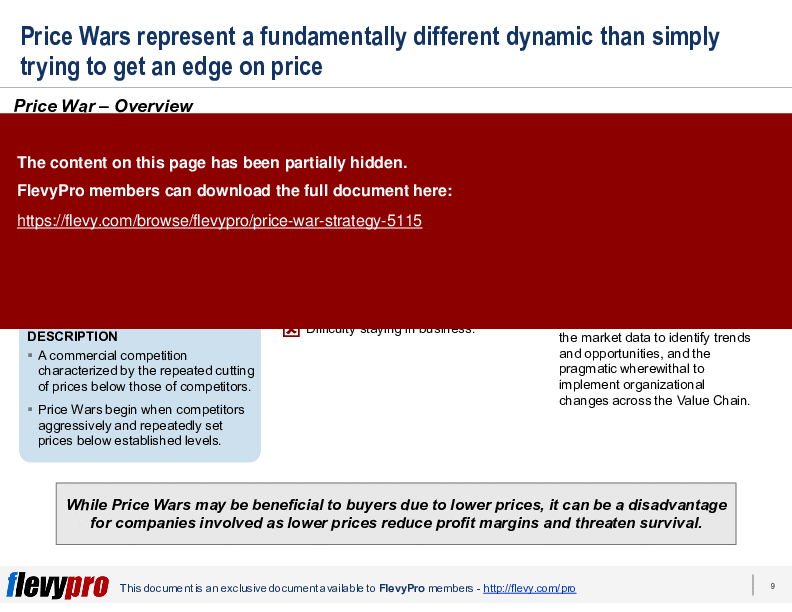
Many companies are competing on the basis of low prices. Yet, Price Wars represent a fundamentally different dynamic than simply trying to get an edge on price. These begin when competitors aggressively and repeatedly set prices below established levels. In many cases, companies that initiate Price Wars engage in self-destructive behavior, which can lead to downward pricing spirals.

Whenever Price Wars erupt, companies find themselves in commodity traps. Profits narrowed considerably and weak competitors had difficulty staying in business. It has been a common view that the way to winning a Price War is to have a superior cost structure. However, further studies showed that this is not the only way to gain the upper hand.

Under the right circumstances, it is possible for a company to win a Price War by leveraging specific set of strategic capabilities.

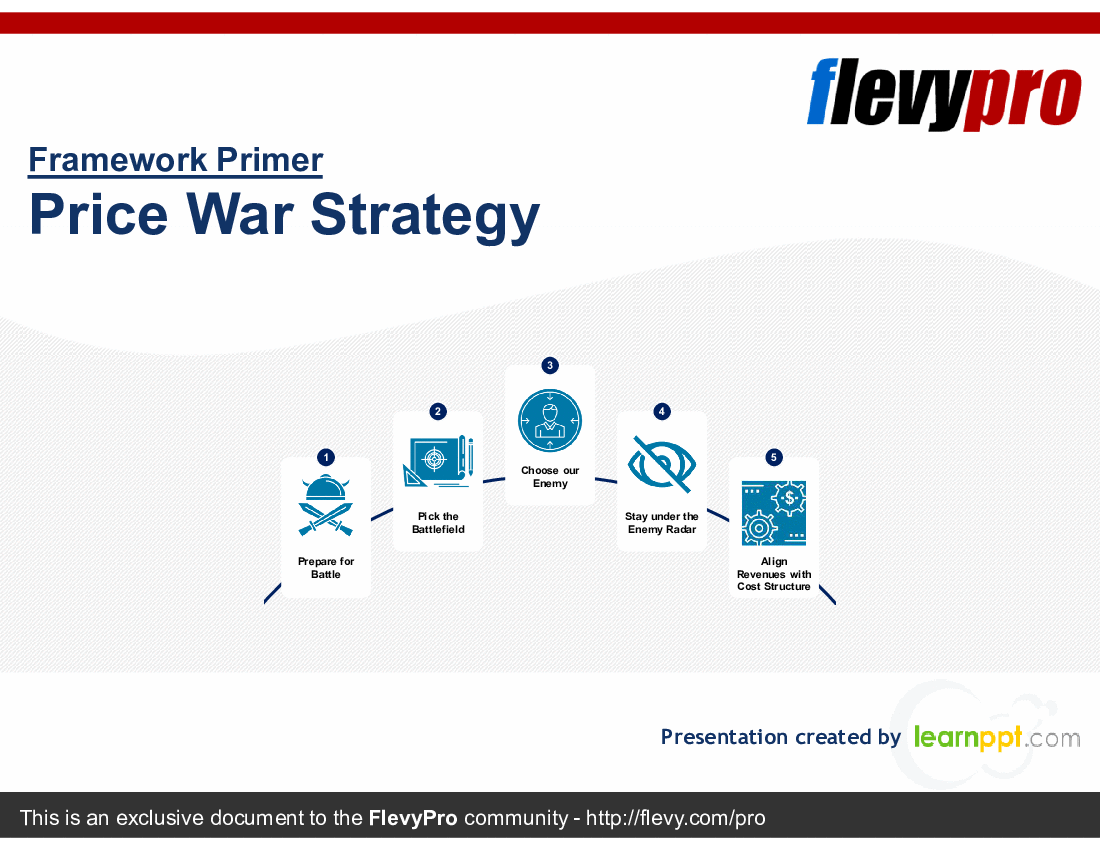
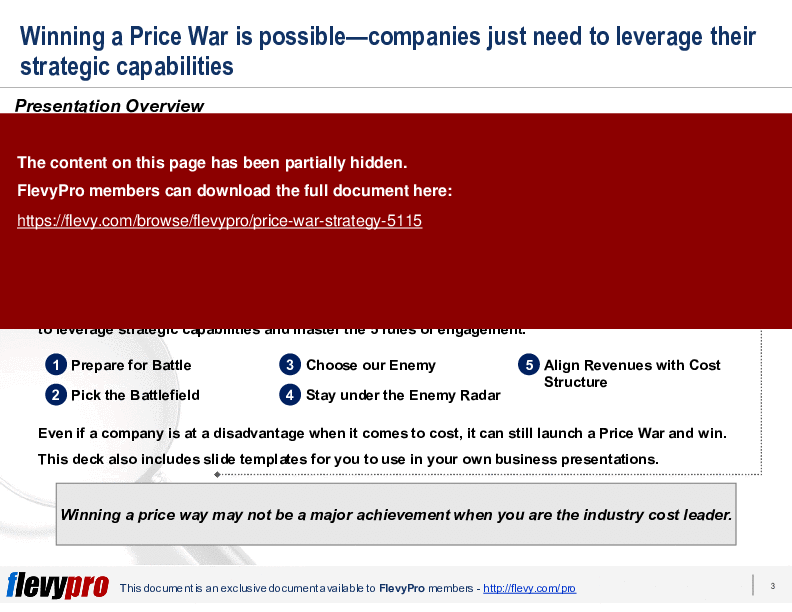
Winning a Price War is possible and even the weakest company can succeed. It just requires the ability to leverage strategic capabilities and master the 5 rules of engagement:

1. Prepare for Battle
2. Pick the Battlefield
3. Choose our Enemy
4. Stay under the Enemy Radar
5. Align Revenues with Cost Structure

Even if a company is at a disadvantage when it comes to cost, it can still launch a Price War and win.

This deck also includes slide templates for you to use in your own business presentations.

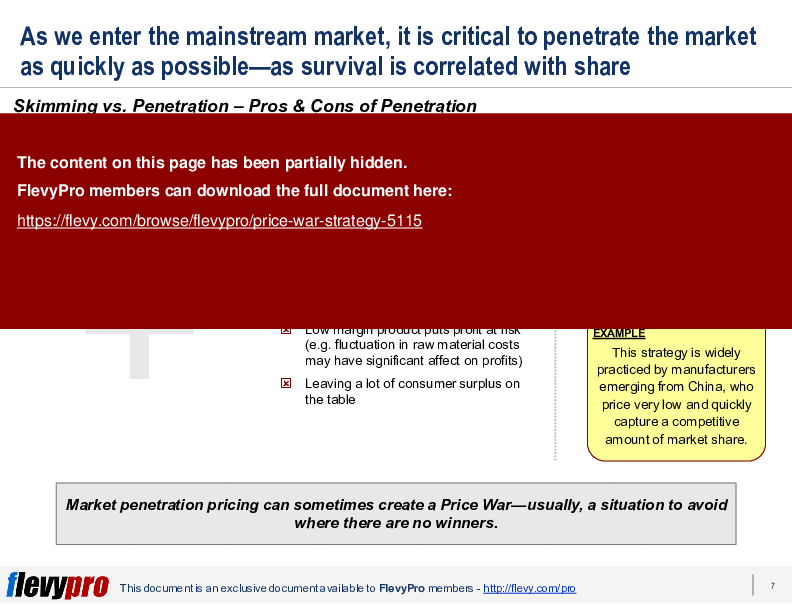
The Price War Strategy PPT delves into the critical decision-making process between skimming and penetration pricing strategies. It provides a detailed analysis of the pros and cons of each approach, helping executives understand how to capture consumer surplus and maximize margins. The deck emphasizes the importance of choosing the right battlefield and targeting specific competitors to gain a strategic advantage. It also highlights the necessity of aligning pricing decisions with the broader value chain and cost structures to ensure sustainable success. This comprehensive guide is essential for any company looking to navigate the complexities of price wars effectively.

Got a question about this document? Email us at flevypro@flevy.com.

MARCUS OVERVIEW

This synopsis was written by Marcus [?] based on the analysis of the full 23-slide presentation.


Executive Summary
The Price War Strategy presentation provides a comprehensive framework for navigating competitive pricing dynamics. Designed by former consultants from McKinsey and the Big 4, this deck equips corporate executives and consultants with the strategic capabilities necessary to engage in and win price wars. It emphasizes the importance of leveraging specific strategic capabilities rather than solely relying on cost advantages. The presentation outlines 5 essential rules of engagement that guide organizations in preparing for and executing effective pricing strategies, ultimately enhancing profitability and market positioning.

Who This Is For and When to Use
•  Pricing strategists and analysts focused on competitive positioning.
•  Marketing teams responsible for pricing decisions and market entry strategies.
•  Business development leaders aiming to capture market share through pricing tactics.
•  Executives in industries prone to price competition, such as retail and consumer goods.

Best-fit moments to use this deck:
•  During strategic planning sessions to align pricing strategies with business objectives.
•  When entering a new market or launching a new product to establish competitive pricing.
•  In response to competitive pressures that necessitate a reevaluation of pricing strategies.

Learning Objectives
•  Define the dynamics of price wars and their implications for market competition.
•  Build a strategic framework for engaging in price wars effectively.
•  Establish actionable steps for preparing an organization for potential price competition.
•  Identify and leverage strategic capabilities to navigate pricing challenges.
•  Align pricing strategies with overall business objectives and cost structures.
•  Develop templates for implementing pricing strategies in real-world scenarios.

Table of Contents
•  Overview (page 3)
•  Skimming vs. Penetration (page 5)
•  Price War (page 9)
•  Winning a Price War (page 11)
•  Templates (page 19)

Primary Topics Covered
•  Overview of Price Wars - Price wars are characterized by aggressive price reductions among competitors, often leading to diminished profits and market instability.
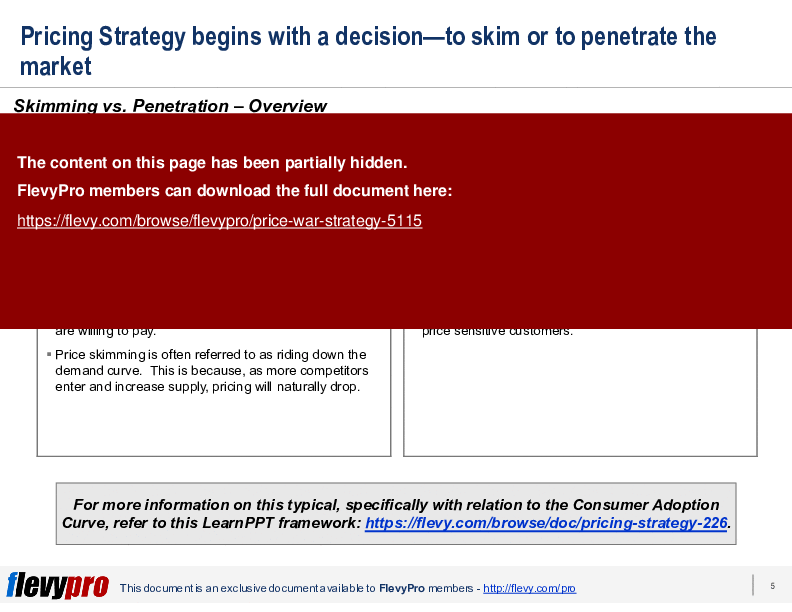
•  Skimming vs. Penetration - This section discusses 2 primary pricing strategies: skimming, which maximizes margins by starting with high prices, and penetration, which aims for rapid market share through low initial pricing.
•  Causes of Price Wars - Identifies factors that trigger price wars, including market conditions, competitor actions, and pricing strategies.
•  Winning a Price War - Outlines 5 rules of engagement that companies can follow to successfully navigate price wars.
•  Strategic Capabilities - Emphasizes the importance of leveraging strategic capabilities to maintain competitiveness in price-sensitive markets.

Deliverables, Templates, and Tools
•  Pricing strategy templates for skimming and penetration approaches.
•  Frameworks for analyzing market conditions and competitor pricing.
•  Action plans for preparing an organization for potential price wars.
•  Guidelines for aligning pricing strategies with cost structures and business objectives.

Slide Highlights
•  Overview of the 5 rules of engagement for winning a price war.
•  Comparative analysis of skimming vs. penetration pricing strategies.
•  Case study of Albert Heijn's successful price war strategy in the Netherlands.
•  Visual frameworks illustrating the dynamics of price wars and strategic responses.

Potential Workshop Agenda
Price War Strategy Overview (60 minutes)
•  Introduce the concept of price wars and their implications.
•  Discuss the importance of strategic capabilities in pricing decisions.

Skimming vs. Penetration Workshop (45 minutes)
•  Analyze the pros and cons of each pricing strategy.
•  Develop a pricing strategy based on market conditions.

Winning a Price War Session (90 minutes)
•  Review the 5 rules of engagement.
•  Create action plans for implementing pricing strategies.

Customization Guidance
•  Tailor the pricing strategy templates to reflect specific market conditions and organizational goals.
•  Adjust the case studies and examples to align with industry-specific challenges and competitors.
•  Incorporate internal data and metrics to enhance the relevance of the frameworks.

Secondary Topics Covered
•  The impact of pricing strategies on brand perception and market share.
•  The role of market analysis in shaping pricing decisions.
•  Strategies for managing customer expectations during price changes.

Topic FAQ

What typically causes price wars and how do they impact profitability?

Price wars are triggered by market conditions, competitor actions, and competing pricing strategies that lead firms to repeatedly lower prices. The resulting dynamic often produces market instability, narrowed profit margins, and difficulty for weaker competitors to remain in business, as described under the deck’s overview of price wars.

How do skimming and penetration pricing differ in objective and outcome?

Skimming sets high initial prices to capture consumer surplus and maximize margins, while penetration sets low initial prices to rapidly build market share. The presentation contrasts pros and cons of each approach and helps executives select between skimming and penetration based on margin versus market-share objectives.

Can a company win a price war without having the lowest cost structure?

Yes; firms can leverage strategic capabilities — such as market analysis, customer insights, and operational efficiency — to compete effectively even when not cost leaders. The deck emphasizes using capability-based strategies and mastering the 5 rules of engagement to improve chances of winning.

What features should I expect in a purchasable price-war strategy deck?

Look for templates for skimming and penetration pricing, frameworks for market and competitor analysis, action plans for organizational preparedness, customization guidance, and illustrative case studies. Flevy’s Price War Strategy specifically includes pricing templates, market-analysis frameworks, action plans, and a case study.

How much workshop time should I plan to cover price-war strategy topics?

The product suggests a modular agenda: a 60-minute overview on price wars, a 45-minute skimming vs. penetration workshop, and a 90-minute session on winning a price war and action planning, totaling 195 minutes if run sequentially and adaptable to shorter sessions.

For a new product in a price-sensitive segment, which pricing approach should I evaluate first?

Evaluate both skimming and penetration: skimming if your priority is margin and capturing consumer surplus; penetration if rapid share gains matter. Use the deck’s comparative analysis and the skimming vs. penetration templates (the section appears as Skimming vs. Penetration) to test scenarios and sensitivities.

How do the 5 rules of engagement guide tactical responses to competitor price cuts?

The rules — Prepare for Battle, Pick the Battlefield, Choose our Enemy, Stay under the Enemy Radar, Align Revenues with Cost Structure — frame preparation, selection of where and against whom to compete, stealth tactics, and revenue-cost alignment to maintain sustainability during competitive price moves.

What practical tools help implement a price war strategy in an organization?

Practical tools include pricing strategy templates for skimming and penetration, frameworks for analyzing market conditions and competitor pricing, action plans for organizational readiness, and guidance on aligning pricing with cost structures; these tool types are included in Flevy’s Price War Strategy.

Document FAQ
These are questions addressed within this presentation.

What is a price war?
A price war is a competitive situation where companies repeatedly lower prices to gain market share, often leading to reduced profit margins.

How can a company win a price war without being the cost leader?
By leveraging strategic capabilities such as market analysis, customer insights, and operational efficiencies, a company can effectively compete even without the lowest prices.

What are the 5 rules of engagement for winning a price war?
The rules include preparing for battle, picking the battlefield, choosing the enemy, staying under the enemy radar, and aligning revenues with cost structures.

What is the difference between skimming and penetration pricing?
Skimming involves setting high initial prices to maximize margins, while penetration pricing sets low initial prices to quickly capture market share.

How can this presentation be customized for my organization?
The templates and frameworks can be tailored to reflect your organization's specific market conditions, strategic goals, and competitive landscape.

What tools are included in the presentation?
The presentation includes templates for pricing strategies, frameworks for market analysis, and action plans for implementing pricing decisions.

How can I apply the insights from this presentation?
Use the frameworks and templates to guide your pricing strategy discussions, align your pricing with business objectives, and prepare for potential competitive pressures.

Glossary
•  Price War - A competitive scenario characterized by repeated price reductions among competitors.
•  Skimming Pricing - A strategy of setting high initial prices to maximize margins.
•  Penetration Pricing - A strategy of setting low initial prices to quickly capture market share.
•  Strategic Capabilities - The skills and resources that enable a company to effectively compete in the market.
•  Market Analysis - The process of assessing market conditions, competitor actions, and customer preferences.
•  Revenue Alignment - Ensuring that pricing strategies are consistent with organizational cost structures and financial goals.
•  Competitive Landscape - The overall market environment, including competitors, market share, and pricing strategies.
•  Customer Insights - Understanding customer preferences and behaviors to inform pricing decisions.
•  Operational Efficiency - The ability to deliver products or services in a cost-effective manner.
•  Brand Perception - How customers view a brand based on pricing, quality, and market positioning.
•  Market Share - The portion of a market controlled by a particular company or product.
•  Pricing Strategy - A plan for setting prices based on market conditions, competition, and business objectives.
•  Action Plan - A detailed outline of steps to implement a strategy or initiative.
•  Framework - A structured approach to analyzing and addressing business challenges.
•  Template - A pre-designed document that can be customized for specific needs.
•  Competitive Pricing - Setting prices based on the prices of competitors.
•  Customer Expectations - The anticipated level of service or quality that customers expect from a brand.
•  Cost Structure - The various costs associated with producing and delivering products or services.
•  Market Conditions - The economic and competitive factors that influence pricing and sales.
•  Strategic Intent - The overarching goals and objectives that guide a company's actions and decisions.
•  Value Chain - The series of steps a company takes to deliver a product or service to the market.

PRICING STRATEGY PPT SLIDES

Market Penetration Pricing: Pros and Cons Analysis

Strategic Framework for Navigating Price Wars

Aligning Pricing Strategies with Cost Structures

Strategic Preparedness for Price War Dynamics

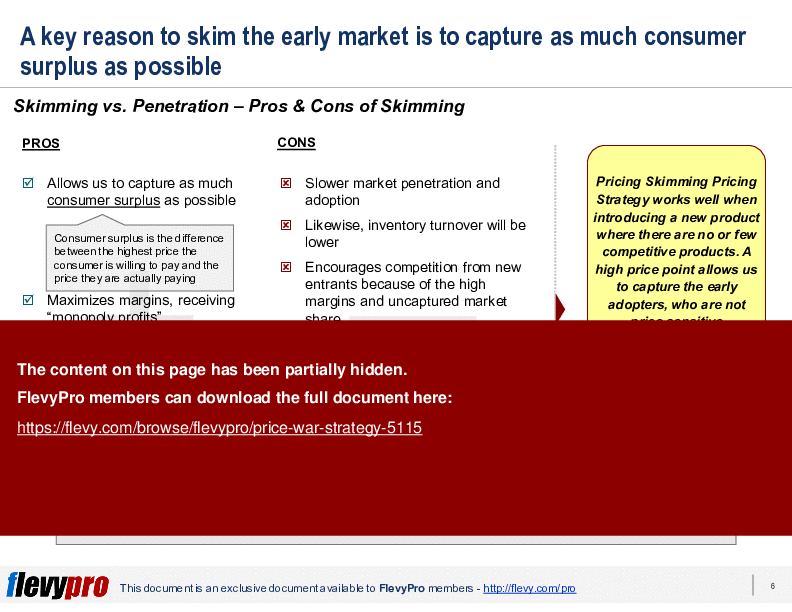
Evaluating Skimming Pricing Strategy: Benefits and Drawbacks

Strategic Insights on Navigating Price Wars

Source: Best Practices in Pricing Strategy PowerPoint Slides: Price War Strategy PowerPoint (PPTX) Presentation Slide Deck, LearnPPT Consulting


$29.00
FlevyPro price: FREE (included in subscription)
This framework is developed by a team of former McKinsey and Big 4 consultants. The presentation follows the headline-body-bumper slide format used by global consulting firms.
Add to Cart
  

Did you need more documents?

Consider a FlevyPro subscription from $39/month. View plans here.

For $10.00 more, you can download this document plus 2 more FlevyPro documents. That's just $13 each.

ABOUT FLEVYPRO

This document is part of the FlevyPro Library, a curated knowledge base of documents for our FlevyPro subscribers.

FlevyPro is a subscription service for on-demand business frameworks and analysis tools. FlevyPro subscribers receive access to an exclusive library of curated business documents—business framework primers, presentation templates, Lean Six Sigma tools, and more—among other exclusive benefits.

Click here to learn more about FlevyPro and its benefits.

Did you know?
The average daily rate of a McKinsey consultant is $6,625 (not including expenses). The average price of a Flevy document is $65.


Trusted by over 10,000+ Client Organizations
Since 2012, we have provided business templates to over 10,000 businesses and organizations of all sizes, from startups and small businesses to the Fortune 100, in over 130 countries.
AT&T GE Cisco Intel IBM Coke Dell Toyota HP Nike Samsung Microsoft Astrazeneca JP Morgan KPMG Walgreens Walmart 3M Kaiser Oracle SAP Google E&Y Volvo Bosch Merck Fedex Shell Amgen Eli Lilly Roche AIG Abbott Amazon PwC T-Mobile Broadcom Bayer Pearson Titleist ConEd Pfizer NTT Data Schwab


Read Customer Testimonials

 
"FlevyPro provides business frameworks from many of the global giants in management consulting that allow you to provide best in class solutions for your clients."

– David Harris, Managing Director at Futures Strategy
 
"As a consultant requiring up to date and professional material that will be of value and use to my clients, I find Flevy a very reliable resource.

The variety and quality of material available through Flevy offers a very useful and commanding source for information. Using Flevy saves me time, enhances my expertise and ends up being a good decision."

– Dennis Gershowitz, Principal at DG Associates
 
"My FlevyPro subscription provides me with the most popular frameworks and decks in demand in today’s market. They not only augment my existing consulting and coaching offerings and delivery, but also keep me abreast of the latest trends, inspire new products and service offerings for my practice, and educate me "

– Bill Branson, Founder at Strategic Business Architects
 
"The wide selection of frameworks is very useful to me as an independent consultant. In fact, it rivals what I had at my disposal at Big 4 Consulting firms in terms of efficacy and organization."

– Julia T., Consulting Firm Owner (Former Manager at Deloitte and Capgemini)
 
"I am extremely grateful for the proactiveness and eagerness to help and I would gladly recommend the Flevy team if you are looking for data and toolkits to help you work through business solutions."

– Trevor Booth, Partner, Fast Forward Consulting
 
"One of the great discoveries that I have made for my business is the Flevy library of training materials.

As a Lean Transformation Expert, I am always making presentations to clients on a variety of topics: Training, Transformation, Total Productive Maintenance, Culture, Coaching, Tools, Leadership Behavior, etc. Flevy "

– Ed Kemmerling, Senior Lean Transformation Expert at PMG
 
"Flevy is our 'go to' resource for management material, at an affordable cost. The Flevy library is comprehensive and the content deep, and typically provides a great foundation for us to further develop and tailor our own service offer."

– Chris McCann, Founder at Resilient.World
 
"[Flevy] produces some great work that has been/continues to be of immense help not only to myself, but as I seek to provide professional services to my clients, it gives me a large "tool box" of resources that are critical to provide them with the quality of service and outcomes they are expecting."

– Royston Knowles, Executive with 50+ Years of Board Level Experience


Customers Also Bought These Documents


Customers Also Like These Documents

Explore Templates on Related Management Topics


Your Recently Viewed Documents
Download our FREE Strategy & Transformation Framework Templates

Download our free compilation of 50+ Strategy & Transformation slides and templates. Frameworks include McKinsey 7-S, Balanced Scorecard, Disruptive Innovation, BCG Curve, and many more.