
This framework is developed by a team of former McKinsey and Big 4 consultants. The presentation follows the headline-body-bumper slide format used by global consulting firms.
Explore 6 PMI strategies for achieving revenue and cost synergies post-merger, crafted by ex-McKinsey and Big 4 consultants. Essential for M&A success. PMI: 6 Strategies for Synergies is a 25-slide PPT PowerPoint presentation slide deck (PPTX) available for immediate download upon purchase.
A significant number of Mergers remain unsuccessful, because companies do not employ a thorough and disciplined approach to realizing Synergies.
Senior leaders at these organizations fail to set realistic Synergy Targets. They also ignore the importance of taking into account ground realities and achieving targets with speed. Another false assumption on part of companies is that information cannot be available till closure; thus, targets cannot be set beforehand.
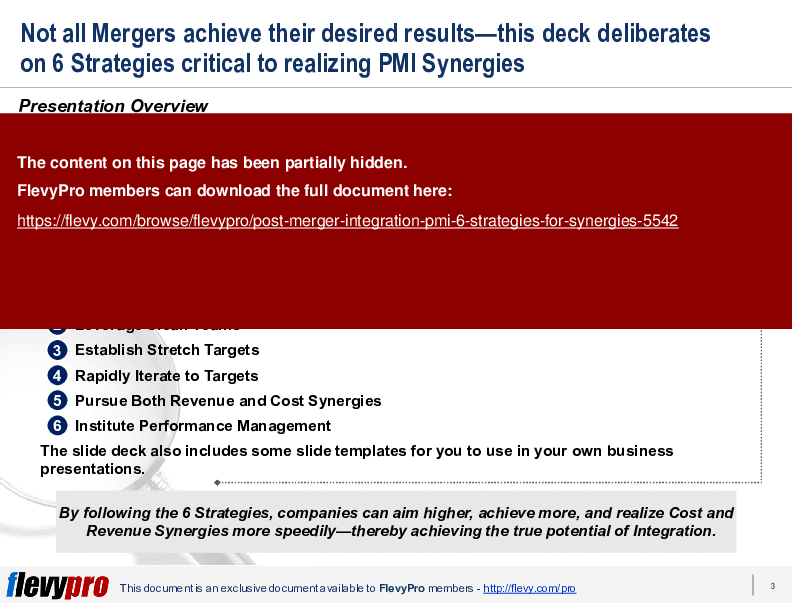
This presentation provides a detailed overview of the 6 Post-Merger Integration (PMI) Strategies essential to achieve successful Revenue and Cost Synergies. By following these 6 PMI Strategies, companies can aim higher, achieve more, and realize Cost and Revenue Synergies more speedily—thereby achieving the true potential of
This PPT dives into the critical elements that ensure M&A success, focusing on leveraging clean teams, establishing stretch targets, and rapidly iterating to targets. It emphasizes the importance of a disciplined approach to achieve desired synergies, highlighting the necessity of setting ambitious yet realistic targets and involving managers in the target-setting process. The presentation also outlines the benefits of using the "W" approach for ownership, accountability, and alignment across teams.
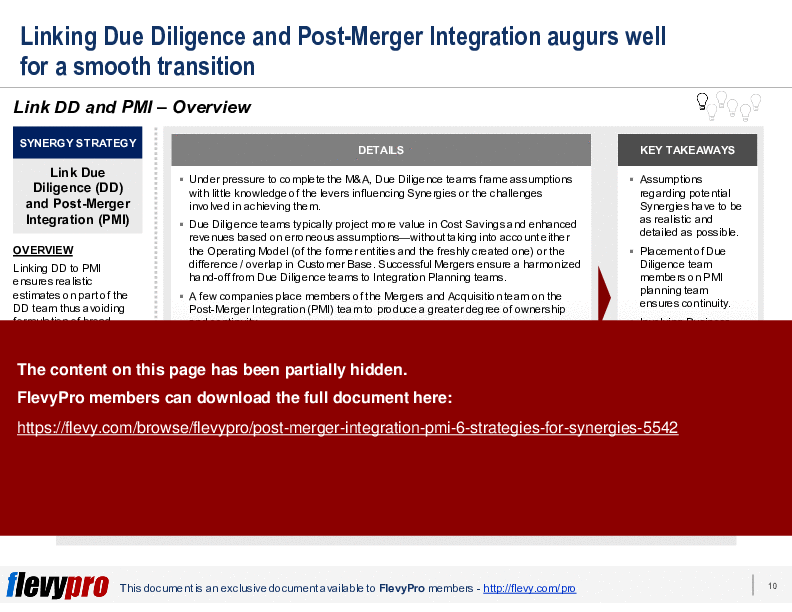
The presentation includes detailed insights into the role of due diligence in post-merger integration, stressing the need for accurate assumptions and seamless hand-offs between teams. It also covers the significance of performance management in tracking progress and ensuring that integration costs are systematically measured. By following these strategies, companies can avoid common pitfalls and achieve both revenue and cost synergies more effectively.
This deck is a must-have for executives looking to maximize the value of their M&A activities. It provides actionable templates and frameworks that can be directly applied to your business, ensuring a smoother transition and quicker realization of synergies. Whether you are in advanced electronics, aerospace, or automotive sectors, this guide offers industry-specific insights to help you stay ahead of the curve.
This PPT slide presents a case study of a software company's merger with a billion-dollar firm, focusing on revenue and cost synergies. The timeline details a structured approach from deal announcement to closing, emphasizing synergy target identification as the foundation for integration. The go-to-market model outlines post-merger customer engagement, while early organizational design addresses operational efficiency. The timeline includes phases: month one establishes synergy targets and the go-to-market model, followed by detailed planning and readiness for Day 1, critical for operational effectiveness. Communication and change management are vital for stakeholder alignment, reducing resistance during integration. The company achieved significant year-over-year revenue growth and substantial cost synergies in the first year, demonstrating how meticulous planning and execution lead to successful merger integration and value realization.
The Scale Curve technique estimates synergy value in mergers by triangulating data from industry peers, previous integrations, and proprietary databases. This method provides insights into potential cost benefits associated with increased volume. The chart illustrates unit cost reduction as volume increases, featuring 2 slopes: 90% and 70%. A 90% slope indicates a 10% decrease in unit costs with each volume doubling, while a 70% slope shows a 30% reduction for the same increase. As volume rises, unit costs decline according to the Scale Curve, demonstrating that higher operational scale can yield significant cost savings. This framework assists executives in evaluating potential synergies and setting realistic stretch targets, quantifying financial benefits from increased operational scale.
This PPT slide outlines a structured approach to target setting and validation during the merger integration process. It highlights the importance of both top-down and bottom-up methodologies to establish stretch targets that are ambitious yet achievable. The integration process is depicted as a cycle involving various management levels, starting from the Steering Committee to integration teams, with ten key steps illustrated. The integration committee sets synergy targets, while the integration leader and synergy platform teams design and assign stretch targets aligned with organizational goals. Validation through benchmarking and analysis refines these targets. Building detailed integration plans and a rigorous testing phase ensures feasibility. Approval of final plans and integration of targets into the budget align teams and accountability. Continuous tracking of progress against milestones, KPIs, and financial impacts is essential for successful integration outcomes. Rapid iteration and collaboration across management levels are vital for effective integration.
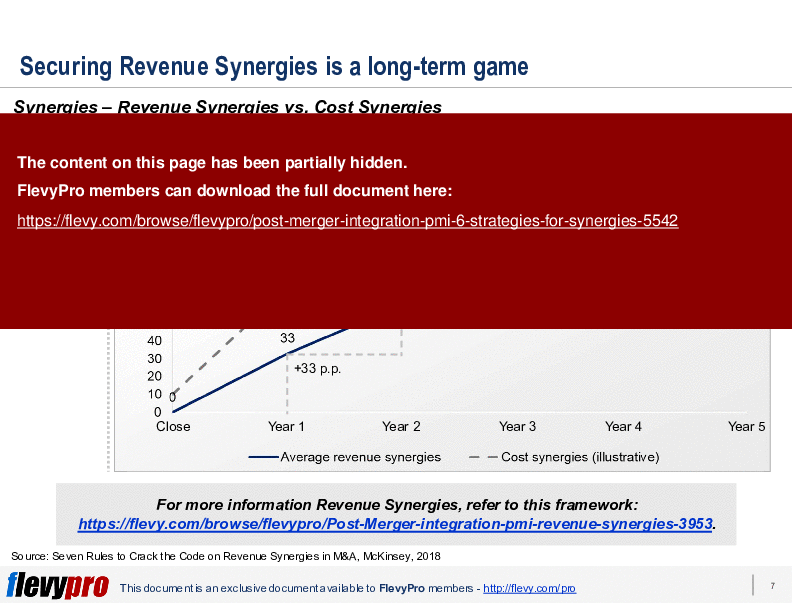
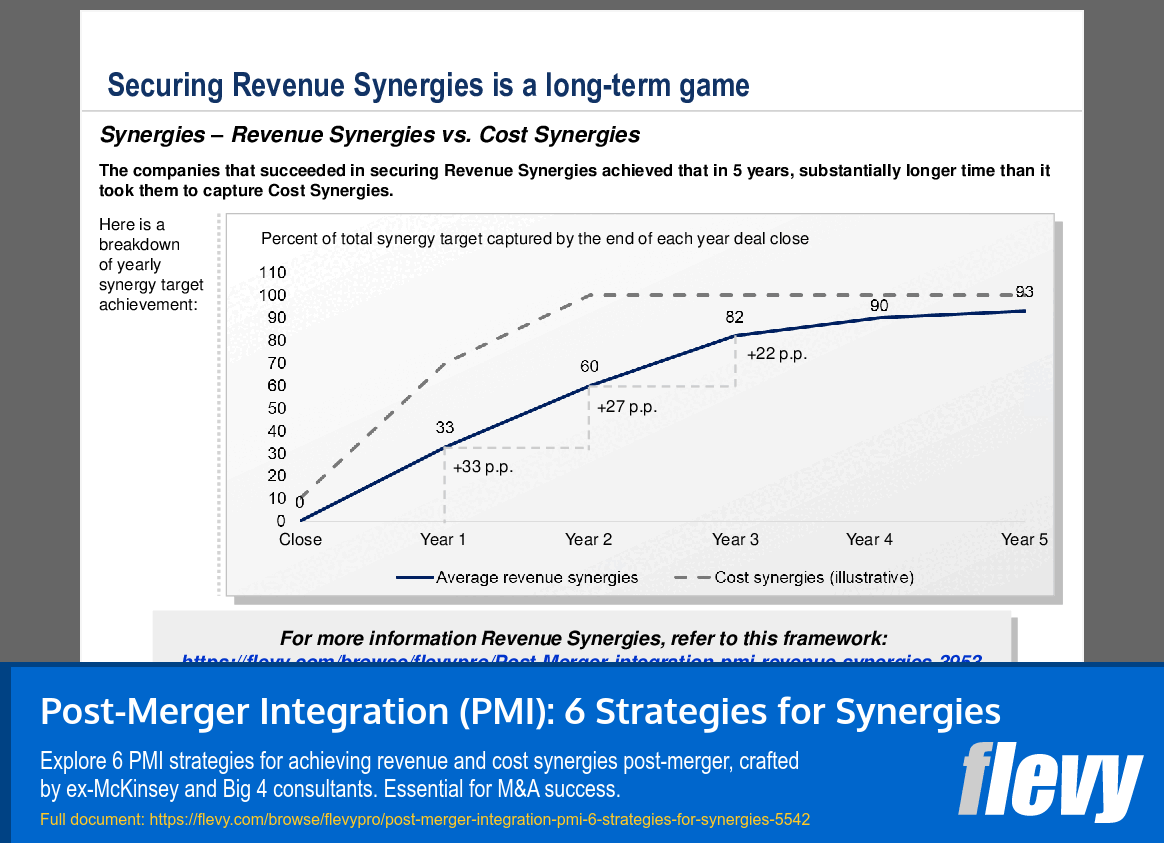
This PPT slide visually compares revenue synergies and cost synergies achieved over 5 years post-merger. Companies capture an initial 33% of synergy targets at deal close, increasing to 93% by year five. Incremental gains are 27 percentage points in year two, 22 in year three, and 22 in year four, highlighting the long-term nature of revenue synergies versus the quicker realization of cost synergies. The dashed line for cost synergies illustrates their immediate gains, while revenue synergies require sustained effort. This timeline is essential for strategic planning and resource allocation in post-merger integration.
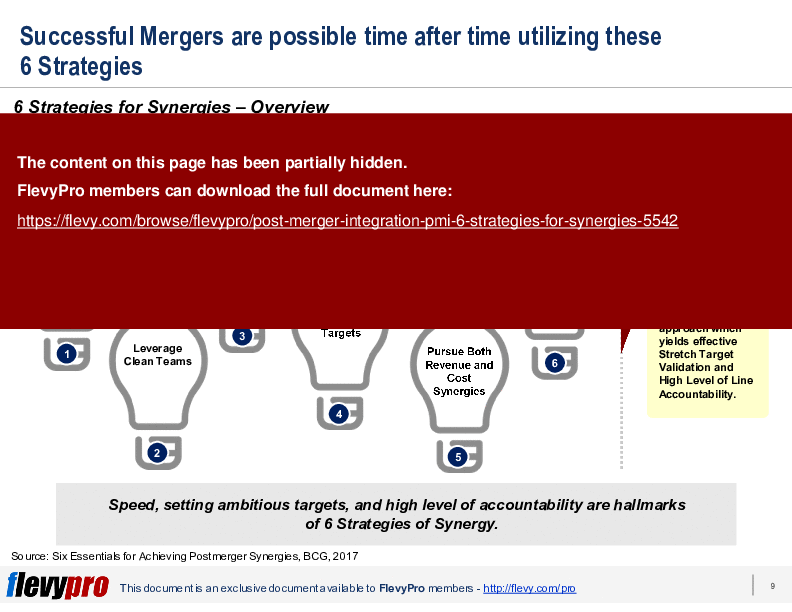
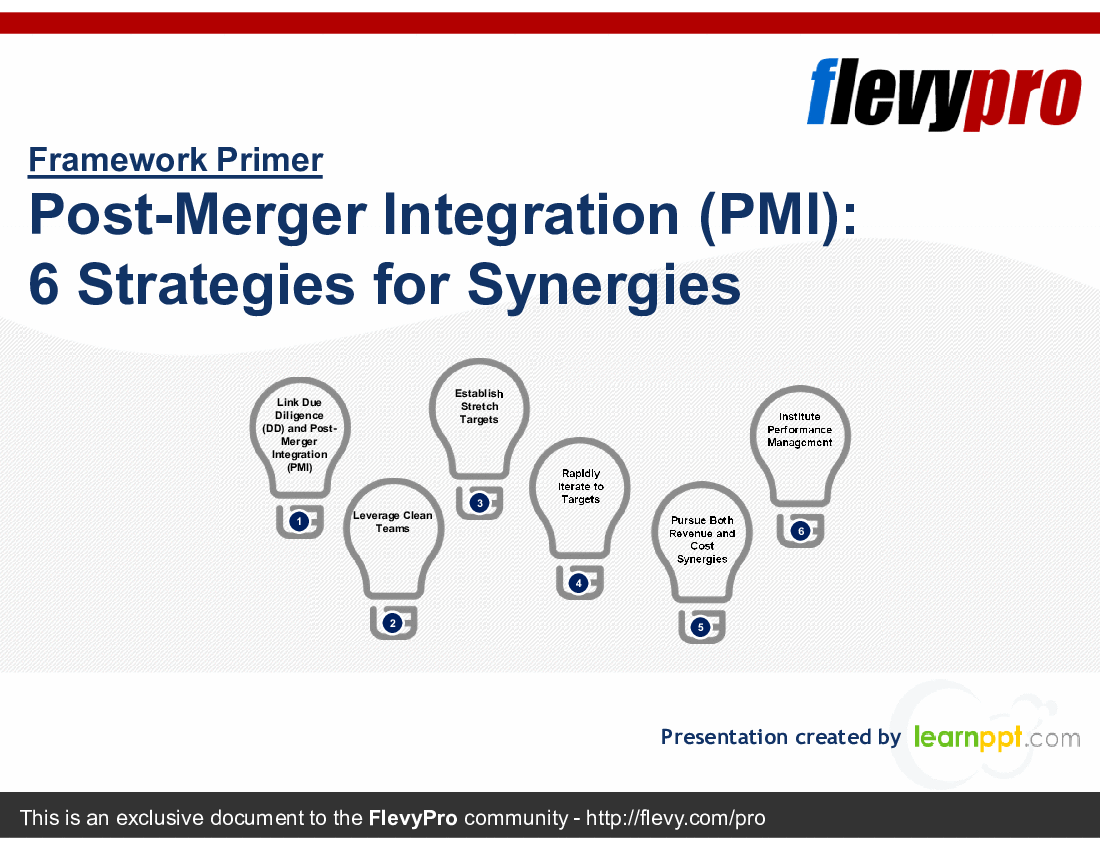
This PPT slide outlines 6 key strategies for achieving synergies in post-merger integration (PMI). "Link Due Diligence (DD) and PMI" emphasizes aligning due diligence with integration efforts to identify potential synergies early. "Leverage Clean Teams" advocates for dedicated teams to enhance collaboration and maintain confidentiality during integration. "Establish Stretch Targets" stresses setting ambitious goals that challenge the organization. "Rapidly Iterate to Targets" encourages refining targets based on real-time feedback. "Pursue Both Revenue and Cost Synergies" highlights the need to focus on both reducing costs and enhancing revenue streams for balanced integration outcomes. "Institute Performance Management" underscores the importance of a robust framework for monitoring progress and accountability in achieving targets. A high-engagement and rapid iteration approach is vital for validating targets and ensuring accountability, driving successful integration outcomes.
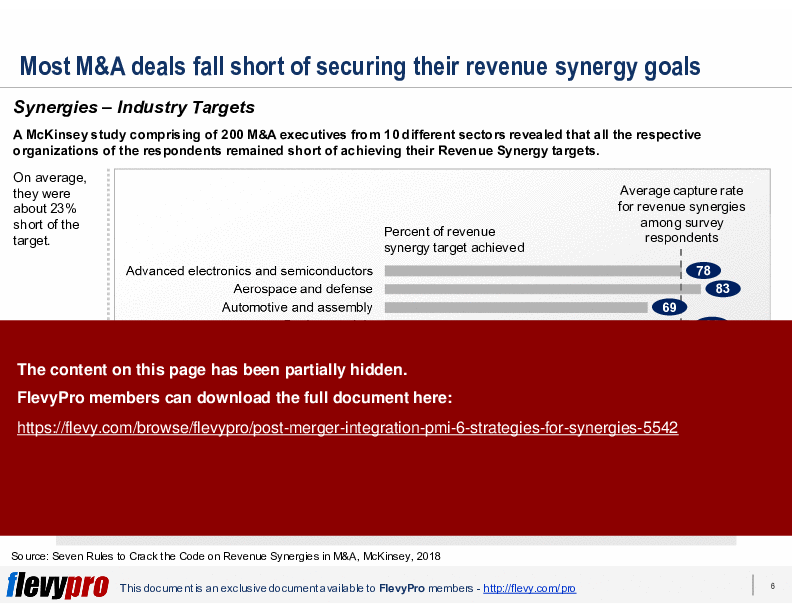
This PPT slide presents findings from a McKinsey study of 200 M&A executives across ten sectors, revealing that companies, on average, achieve only 77% of their revenue synergy targets post-merger, falling short by about 23%. Advanced electronics and semiconductors lead with an 83% achievement rate, followed by aerospace and defense at 78%. In contrast, telecom, media, software, pharmaceuticals, and medical products achieve only 69%. This disparity indicates that certain sectors possess inherent advantages or superior strategies for capturing synergies. The data underscores the need for tailored strategies to enhance synergy realization and improve post-merger integration processes, ultimately guiding organizations toward better outcomes and value creation.
Clean teams are independent groups in mergers and acquisitions that collect and analyze sensitive data from both merging companies. They assess risks and streamline synergies while operating under strict legal frameworks to ensure compliance with anti-trust laws and confidentiality agreements. This structure allows the acquiring company to gain insights into the target company without legal breaches. Clean teams may include third-party members or reassigned employees to minimize confidentiality risks. Key integration activities facilitated by clean teams include compiling baseline data, vetting synergy targets, and preparing decision-making options. They play a vital role in reducing confusion from overlapping client assignments and enhancing decision-making efficiency, positioning clean teams as essential for successful mergers.
Source: Best Practices in PMI, Synergy, Post-merger Integration PowerPoint Slides: Post-Merger Integration (PMI): 6 Strategies for Synergies PowerPoint (PPTX) Presentation Slide Deck, LearnPPT Consulting
This framework is developed by a team of former McKinsey and Big 4 consultants. The presentation follows the headline-body-bumper slide format used by global consulting firms.
For $10.00 more, you can download this document plus 2 more FlevyPro documents. That's just $13 each.
ABOUT FLEVYPRO
This document is part of the FlevyPro Library, a curated knowledge base of documents for our FlevyPro subscribers.
FlevyPro is a subscription service for on-demand business frameworks and analysis tools. FlevyPro subscribers receive access to an exclusive library of curated business documents—business framework primers, presentation templates, Lean Six Sigma tools, and more—among other exclusive benefits.
The average daily rate of a McKinsey consultant is $6,625 (not including expenses). The average price of a Flevy document is $65.
Trusted by over 10,000+ Client Organizations
Since 2012, we have provided business templates to over 10,000 businesses and organizations of all sizes, from startups and small businesses to the Fortune 100, in over 130 countries.
"FlevyPro provides business frameworks from many of the global giants in management consulting that allow you to provide best in class solutions for your clients."
– David Harris, Managing Director at Futures Strategy
"Last Sunday morning, I was diligently working on an important presentation for a client and found myself in need of additional content and suitable templates for various types of graphics. Flevy.com proved to be a treasure trove for both content and design at a reasonable price, considering the time I
saved. I encountered a download issue during the ordering process. However, a quick email to Flevy's support team, even on a Sunday (!!!), resulted in assistance within less than an hour, allowing me to download the content I needed. Fantastic job, Flevy! I give 5 stars for both content/price and customer service. Thank you!
"
– M. E., Chief Commercial Officer, International Logistics Service Provider
"One of the great discoveries that I have made for my business is the Flevy library of training materials.
As a Lean Transformation Expert, I am always making presentations to clients on a variety of topics: Training, Transformation, Total Productive Maintenance, Culture, Coaching, Tools, Leadership Behavior, etc. Flevy
It is well worth the money to purchase these presentations. Sure, I have the knowledge and information to make my point. It is another thing to create a presentation that captures what I want to say. Flevy has saved me countless hours of preparation time that is much better spent with implementation that will actually save money for my clients.
"
– Ed Kemmerling, Senior Lean Transformation Expert at PMG
"As a niche strategic consulting firm, Flevy and FlevyPro frameworks and documents are an on-going reference to help us structure our findings and recommendations to our clients as well as improve their clarity, strength, and visual power. For us, it is an invaluable resource to increase our impact and value."
– David Coloma, Consulting Area Manager at Cynertia Consulting
"I like your product. I'm frequently designing PowerPoint presentations for my company and your product has given me so many great ideas on the use of charts, layouts, tools, and frameworks. I really think the templates are a valuable asset to the job."
– Roberto Fuentes Martinez, Senior Executive Director at Technology Transformation Advisory
"As an Independent Management Consultant, I find Flevy to add great value as a source of best practices, templates and information on new trends. Flevy has matured and the quality and quantity of the library is excellent. Lastly the price charged is reasonable, creating a win-win value for
the customer, Flevy and the various authors. This is truly a service that benefits the consulting industry and associated clients. Thanks for providing this service.
"
– Jim Schoen, Principal at FRC Group
"Flevy is now a part of my business routine. I visit Flevy at least 3 times each month.
Flevy has become my preferred learning source, because what it provides is practical, current, and useful in this era where the business world is being rewritten.

many challenges and there is the need to make the right decisions in a short time, with so much scattered information, we are fortunate to have Flevy. Flevy investigates, selects, and puts at our disposal the best of the best to help us be successful in our work.
"
– Omar Hernán Montes Parra, CEO at Quantum SFE
"As a consultant requiring up to date and professional material that will be of value and use to my clients, I find Flevy a very reliable resource.
The variety and quality of material available through Flevy offers a very useful and commanding source for information. Using Flevy saves me time, enhances my expertise and ends up being a good decision."
Receive our FREE presentation on Operational Excellence
This 50-slide presentation provides a high-level introduction to the 4 Building Blocks of Operational Excellence. Achieving OpEx requires the implementation of a Business Execution System that integrates these 4 building blocks.