
This framework is developed by a team of former McKinsey and Big 4 consultants. The presentation follows the headline-body-bumper slide format used by global consulting firms.
Editor Summary
19-slide PowerPoint on Omnichannel Marketing by PPT Lab presenting a capability-based framework for transitioning traditional marketing models to omnichannel strategies.
Read moreCovers the importance of branded content, shopper experiences, and shifting marketing priorities toward consumer insights, content publishing, and digital platforms. Identifies 5 core capabilities: Sophisticated Insights, Content Marketing, Integrated Data & Analytics, Agile Development, and Integrated Partner Ecosystem, and includes presentation templates. Based on Booz&Co thought leadership and available on Flevy with immediate digital download.
Use this deck when an organization must redesign marketing to account for nonlinear customer behavior, fragmented touchpoints, and the need to align spend to cross-channel experiences.
Chief Marketing Officers aligning marketing spend and priorities toward branded content and shopper experience redesign.
Digital Marketing Managers building cross-platform content calendars and execution plans for mobile, social, and e-commerce channels.
Retail Marketing Managers mapping shopper journeys and standardizing experience quality across content sites and apps.
Marketing Operations leads integrating data flows and analytics to unify performance measurement across channels.
The approach emphasizes capability building across 5 areas, reflecting the Booz&Co-based capability framework in the deck.
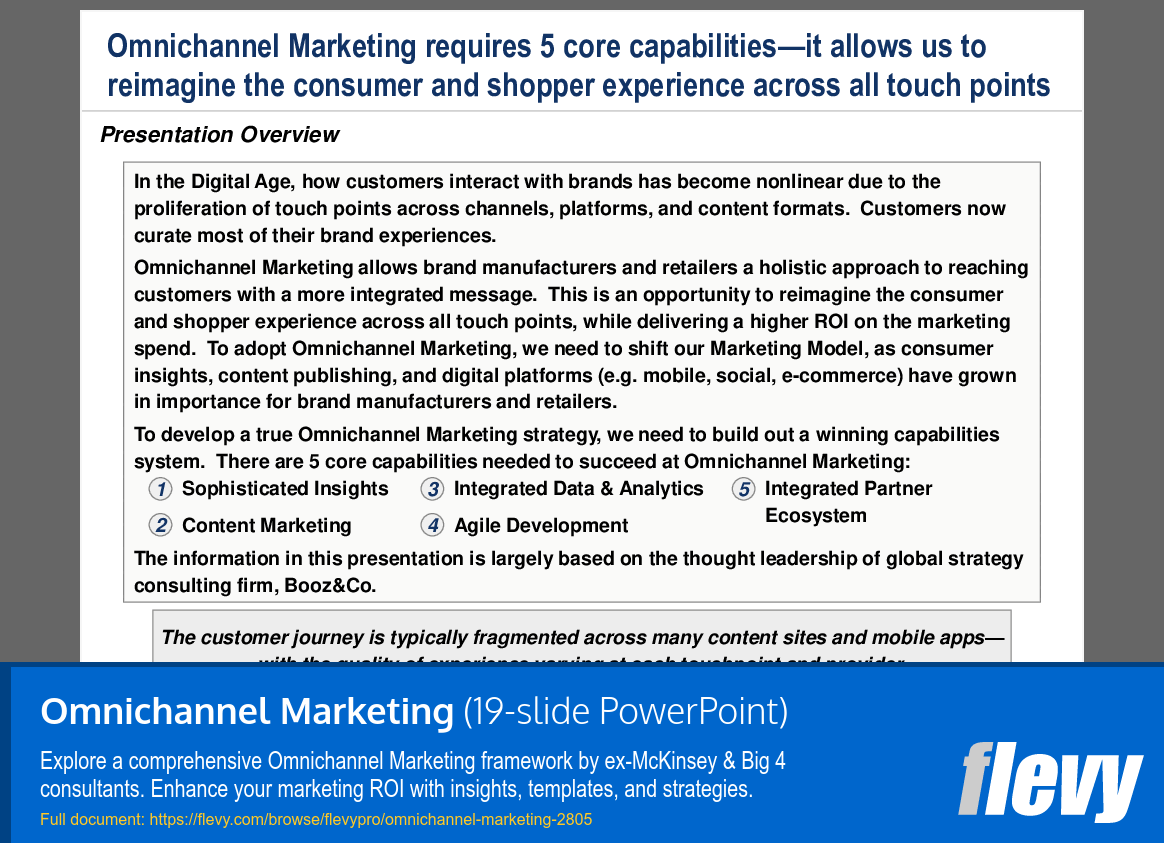
In the Digital Age, how customers interact with brands has become nonlinear due to the proliferation of touch points across channels, platforms, and content formats. Customers now curate most of their brand experiences.
Omnichannel Marketing allows brand manufacturers and retailers a holistic approach to reaching customers with a more integrated message. This is an opportunity to reimagine the consumer and shopper experience across all touch points, while delivering a higher ROI on the marketing spend. To adopt Omnichannel Marketing, we need to shift our Marketing Model, as consumer insights, content publishing, and digital platforms (e.g. mobile, social, e-commerce) have grown in importance for brand manufacturers and retailers. The customer journey is typically fragmented across many content sites and mobile apps—with the quality of experience varying at each touchpoint and provider.
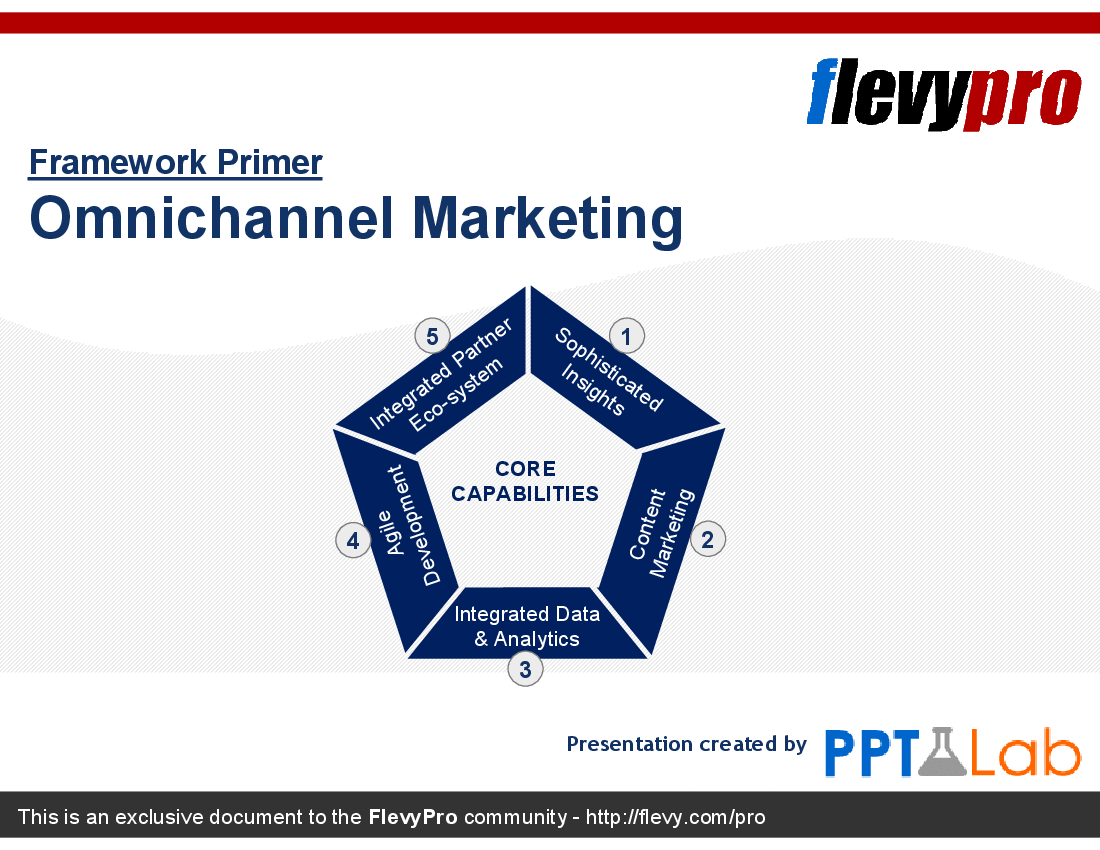
To develop a true Omnichannel Marketing strategy, we need to build out a winning capabilities system. There are 5 core capabilities needed to succeed at Omnichannel Marketing:
1. Sophisticated Insights
2. Content Marketing
3. Integrated Data & Analytics
4. Agile Development
5. Integrated Partner Ecosystem
This deck also includes templates for you to use in your own business presentations.
The information in this presentation is largely based on the thought leadership of global strategy consulting firm, Booz&Co.
This presentation provides a comprehensive framework for transforming traditional marketing models into omnichannel strategies. It covers the essential shift in marketing priorities and spend, emphasizing the importance of branded content and shopper experiences. The PPT includes detailed insights into the five core capabilities required for successful omnichannel marketing, along with practical templates to implement these strategies. It is an invaluable resource for executives looking to enhance their marketing ROI and adapt to the digital age.
What is omnichannel marketing and why has it become important for brands?
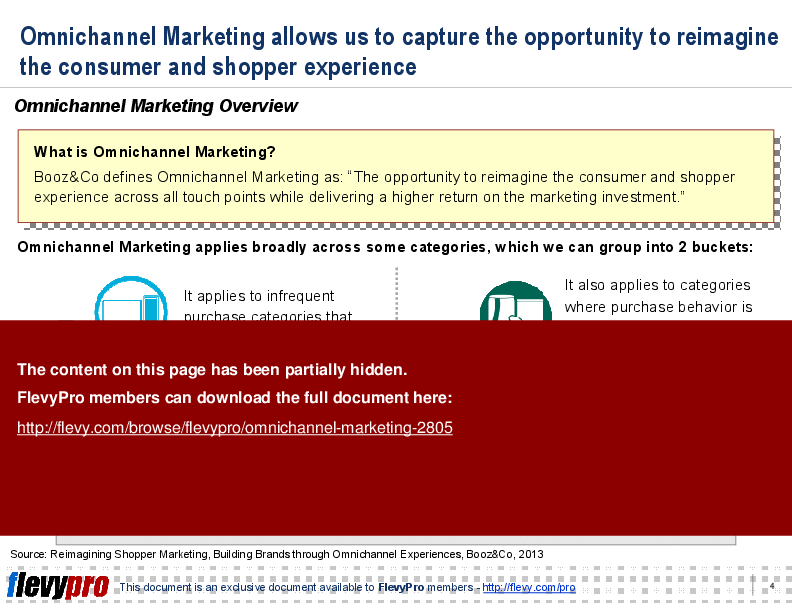
Omnichannel marketing is an approach that delivers a more integrated message across multiple channels as customers interact nonlinearly and curate their own brand experiences. It responds to the proliferation of touchpoints and aims to reimagine consumer and shopper experience to improve effectiveness, focusing on 5 core capabilities.
What core capabilities do companies need to succeed at omnichannel marketing?
Successful omnichannel programs require a capabilities system centered on Sophisticated Insights, Content Marketing, Integrated Data & Analytics, Agile Development, and an Integrated Partner Ecosystem, which together enable coordinated cross-channel messaging and execution across touchpoints.
How should companies change their marketing model to adopt omnichannel approaches?
Companies should shift priorities and spend toward consumer insights, content publishing, and digital platforms (mobile, social, e-commerce) to reflect where customers engage and curate experiences. The shift centers on building the 5 core capabilities highlighted in the framework.
How does a fragmented customer journey affect omnichannel planning?
Fragmentation across many content sites and mobile apps creates inconsistent experience quality and measurement gaps, requiring a strategy that standardizes experience design and measurement across touchpoints to improve ROI and shopper outcomes, addressing fragmentation across many content sites and mobile apps.
What should I look for when buying an omnichannel marketing toolkit for my team?
Prioritize toolkits that address capability-building (insights, content, data, agile, partner ecosystem), include practical templates for presentations, and explain shifts in marketing spend and execution. The deck’s coverage of the 5 core capabilities and inclusion of templates is one relevant attribute.
What formats and deliverables are typical in omnichannel marketing toolkits I can use internally?
Common deliverables include slide decks and templates for mapping journeys, capability assessments, and execution roadmaps. An example offering is Flevy's Omnichannel Marketing, delivered as a 19-slide PowerPoint with presentation templates.
If we’re a retailer losing conversions across channels, what initial steps should we take?
Begin with capability assessment and prioritize Sophisticated Insights and Integrated Data & Analytics to understand where journeys break down, then strengthen Content Marketing and partner integrations to improve consistency across touchpoints, guided by the 5 core capabilities.
Can omnichannel marketing increase marketing ROI for brand manufacturers?
An omnichannel approach aims to deliver higher ROI by reimagining the consumer and shopper experience across touchpoints and aligning spend to content and digital platforms, intended to yield improved return on marketing spend through integrated messaging and execution.
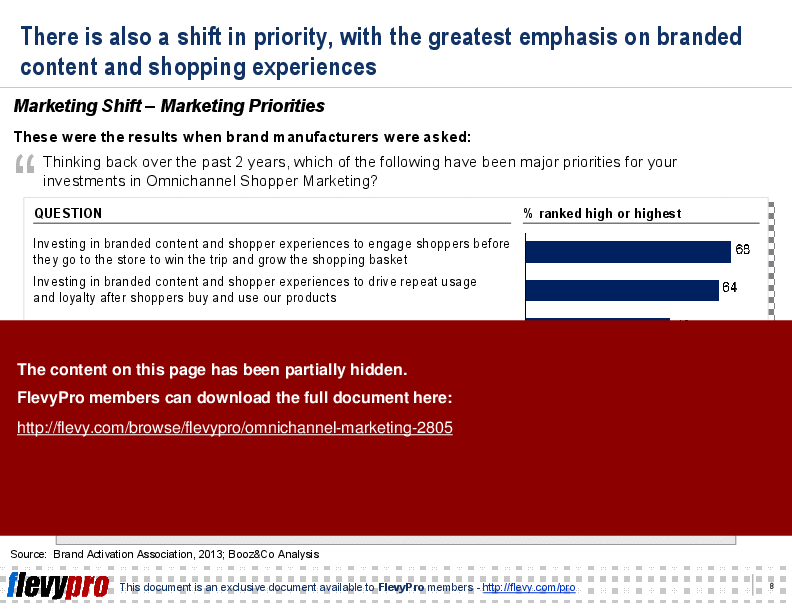
Brand manufacturers are increasingly prioritizing investments in omnichannel shopper marketing, focusing on branded content and enhancing shopping experiences. A survey reveals that 68% of respondents rank investing in branded content and shopper experiences as their top priority, aiming to engage consumers before they enter stores and increase basket size. Following this, 64% prioritize driving repeat usage and loyalty through similar strategies, highlighting the importance of customer retention. Additionally, 48% emphasize leveraging mobile technology to activate in-store shopper behavior, reflecting the integration of digital tools in physical shopping. Other notable priorities include developing branded content for retailer websites and utilizing user-generated content for e-commerce, each receiving 44% high rankings. These trends indicate a shift away from traditional trade promotions, necessitating a new marketing model aligned with evolving retail priorities.
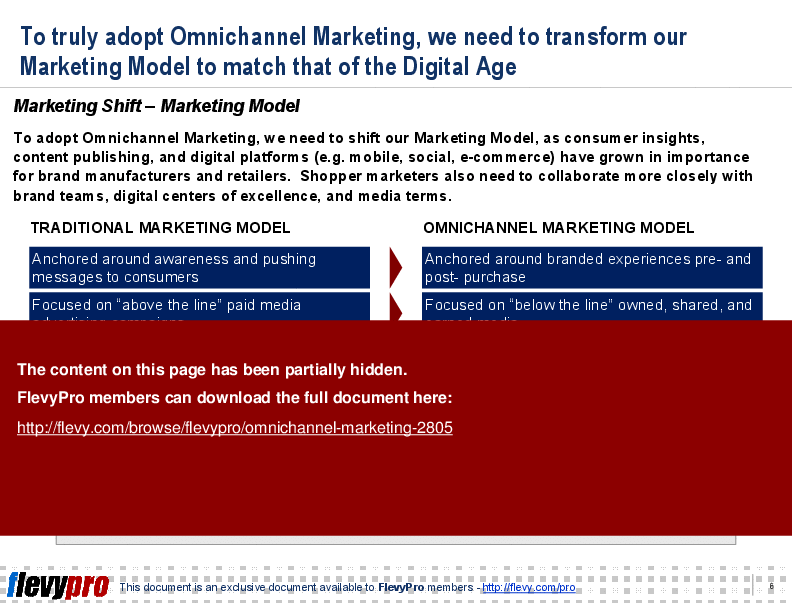
This PPT slide compares the Traditional Marketing Model and the Omnichannel Marketing Model. The Traditional Marketing Model focuses on consumer awareness through paid media campaigns, operates on fixed timelines, and maintains strict control over messaging, often adopting a siloed approach that limits collaboration. In contrast, the Omnichannel Marketing Model emphasizes creating branded experiences that engage consumers before and after purchase, prioritizing owned, shared, and earned media over traditional advertising. This model promotes continuous engagement and iteration based on consumer feedback, fostering community and driving commerce. It highlights the need for improved collaboration among brand manufacturers and retailers, leveraging digital insights for enhanced marketing effectiveness, requiring a fundamental shift in mindset and operational integration to meet modern consumer demands.
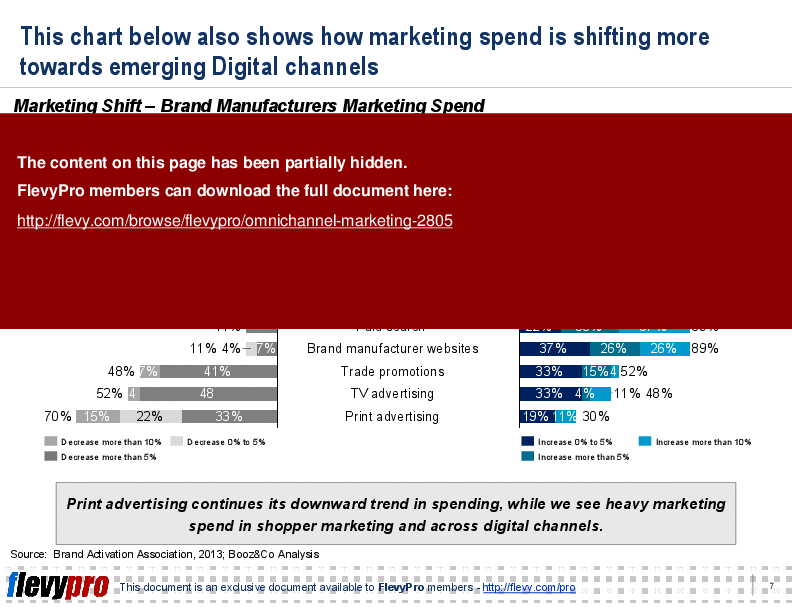
Brand manufacturers are reallocating marketing spend towards digital channels over the next 2 years. Mobile marketing is projected to increase significantly, with 44% of respondents planning to raise investment by over 10%. Social media and internet ads on retailer websites are also expected to grow, with 37% and 30% of respondents indicating similar increases. Conversely, traditional marketing methods like print and TV advertising are declining, with 48% and 52% of respondents planning to cut spending in these areas. Additionally, shopper marketing and paid search are on the rise, with 37% and 30% of respondents anticipating increases. This trend highlights the shift towards dynamic digital platforms and the importance of direct consumer engagement through brand manufacturer websites.
An Integrated Partner Ecosystem is essential for successful Omnichannel Marketing, requiring collaboration among retailers, agencies, media, and technology providers. This interconnectedness enables timely campaigns that adapt to rapid market changes in the Digital Age. The cyclical Customer Decision Journey emphasizes that the post-purchase experience informs future purchases, necessitating collaboration among brands, retailers, and agencies to understand customer behavior and preferences. Organizations must adopt a digital-first mindset, breaking down silos to foster integration. Core Capabilities such as Agile Development, Integrated Data & Analytics, Content Marketing, and Sophisticated Insights are fundamental for success in this collaborative environment. Embracing a holistic approach prioritizes collaboration and continuous feedback, enhancing marketing effectiveness in a digital landscape.
This PPT slide examines 2 key capabilities in Omnichannel Marketing: Sophisticated Insights and Content Marketing. Sophisticated Insights emphasizes the need for a comprehensive understanding of the consumer experience across the entire brand portfolio to identify pain points in the customer journey. Collaboration among brands, retailers, and partners is essential for maximizing Omnichannel Marketing value. Content Marketing stresses integrating curated experiences throughout the customer journey, prioritizing new content formats and activation platforms. It highlights the necessity for deeper analysis of consumer behavior across digital channels, including web, mobile, and social media. Effective collaboration requires flexibility in integrating these elements for a customized approach. The interconnectedness of insights and content marketing is crucial for driving effective Omnichannel strategies. Organizations must evolve marketing practices to better engage consumers, leveraging partnerships and innovative content strategies for enhanced impact.
This framework is developed by a team of former McKinsey and Big 4 consultants. The presentation follows the headline-body-bumper slide format used by global consulting firms.
For $10.00 more, you can download this document plus 2 more FlevyPro documents. That's just $13 each.
ABOUT FLEVYPRO
This document is part of the FlevyPro Library, a curated knowledge base of documents for our FlevyPro subscribers.

FlevyPro is a subscription service for on-demand business frameworks and analysis tools. FlevyPro subscribers receive access to an exclusive library of curated business documents—business framework primers, presentation templates, Lean Six Sigma tools, and more—among other exclusive benefits.
The average daily rate of a McKinsey consultant is $6,625 (not including expenses). The average price of a Flevy document is $65.
Trusted by over 10,000+ Client Organizations
Since 2012, we have provided business templates to over 10,000 businesses and organizations of all sizes, from startups and small businesses to the Fortune 100, in over 130 countries.
"I like your product. I'm frequently designing PowerPoint presentations for my company and your product has given me so many great ideas on the use of charts, layouts, tools, and frameworks. I really think the templates are a valuable asset to the job."
– Roberto Fuentes Martinez, Senior Executive Director at Technology Transformation Advisory
"The wide selection of frameworks is very useful to me as an independent consultant. In fact, it rivals what I had at my disposal at Big 4 Consulting firms in terms of efficacy and organization."
– Julia T., Consulting Firm Owner (Former Manager at Deloitte and Capgemini)
"FlevyPro has been a brilliant resource for me, as an independent growth consultant, to access a vast knowledge bank of presentations to support my work with clients. In terms of RoI, the value I received from the very first presentation I downloaded paid for my subscription many times over! The
quality of the decks available allows me to punch way above my weight – it's like having the resources of a Big 4 consultancy at your fingertips at a microscopic fraction of the overhead.
"
– Roderick Cameron, Founding Partner at SGFE Ltd
"[Flevy] produces some great work that has been/continues to be of immense help not only to myself, but as I seek to provide professional services to my clients, it gives me a large "tool box" of resources that are critical to provide them with the quality of service and outcomes they are expecting."
– Royston Knowles, Executive with 50+ Years of Board Level Experience
"One of the great discoveries that I have made for my business is the Flevy library of training materials.
As a Lean Transformation Expert, I am always making presentations to clients on a variety of topics: Training, Transformation, Total Productive Maintenance, Culture, Coaching, Tools, Leadership Behavior, etc. Flevy
It is well worth the money to purchase these presentations. Sure, I have the knowledge and information to make my point. It is another thing to create a presentation that captures what I want to say. Flevy has saved me countless hours of preparation time that is much better spent with implementation that will actually save money for my clients.
"
– Ed Kemmerling, Senior Lean Transformation Expert at PMG
"Flevy is our 'go to' resource for management material, at an affordable cost. The Flevy library is comprehensive and the content deep, and typically provides a great foundation for us to further develop and tailor our own service offer."
– Chris McCann, Founder at Resilient.World
"As an Independent Management Consultant, I find Flevy to add great value as a source of best practices, templates and information on new trends. Flevy has matured and the quality and quantity of the library is excellent. Lastly the price charged is reasonable, creating a win-win value for
the customer, Flevy and the various authors. This is truly a service that benefits the consulting industry and associated clients. Thanks for providing this service.
"
– Jim Schoen, Principal at FRC Group
"As a consulting firm, we had been creating subject matter training materials for our people and found the excellent materials on Flevy, which saved us 100's of hours of re-creating what already exists on the Flevy materials we purchased."
Download our FREE Digital Transformation Templates
Download our free compilation of 50+ Digital Transformation slides and templates. DX concepts covered include Digital Leadership, Digital Maturity, Digital Value Chain, Customer Experience, Customer Journey, RPA, etc.