
BENEFITS OF THIS POWERPOINT DOCUMENT
- Provides clear and Implementable steps to Improve and Increase B2B Sales
- Provides a framework to make B2B revenue predictable and continuous

- Provides key tips and tricks to improve Prospect to Order cycle in B2B Sales
SALES PPT DESCRIPTION
Editor Summary
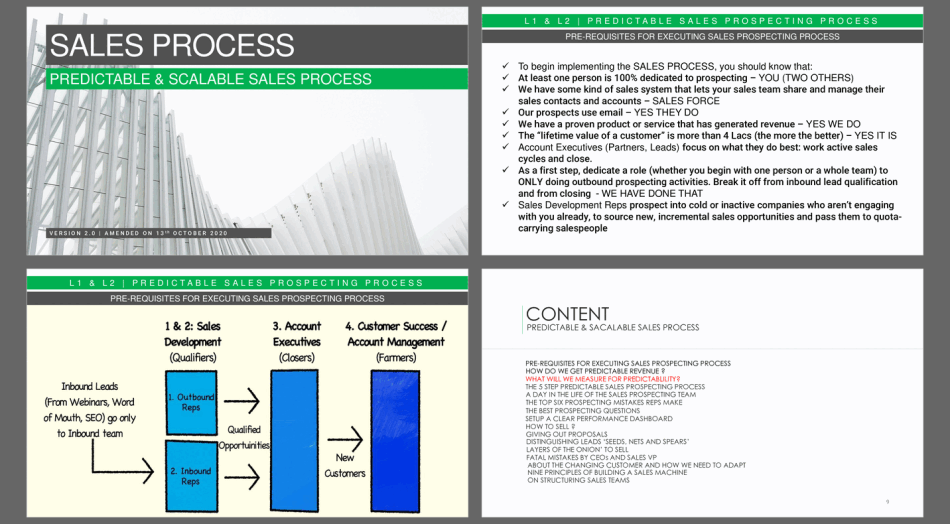
Predictable and Scalable Sales Process for B2B Business is a 131-slide PowerPoint framework offering a five-step sales prospecting methodology to build a reliable B2B pipeline, reflecting McKinsey, Bain, or BCG-quality rigor (not affiliated).
Read more
Includes deliverables such as an ideal customer profile template, performance dashboard example, email campaign templates, handoff process guidelines, training materials, and a prospecting mistakes checklist. Targeted at sales executives, sales development teams, marketing leaders, and business owners; sold as a digital download on Flevy.
Use this deck when a B2B organization needs to create a repeatable outbound prospecting engine — for example when launching new campaigns, training teams, or preparing quarterly strategy reviews.
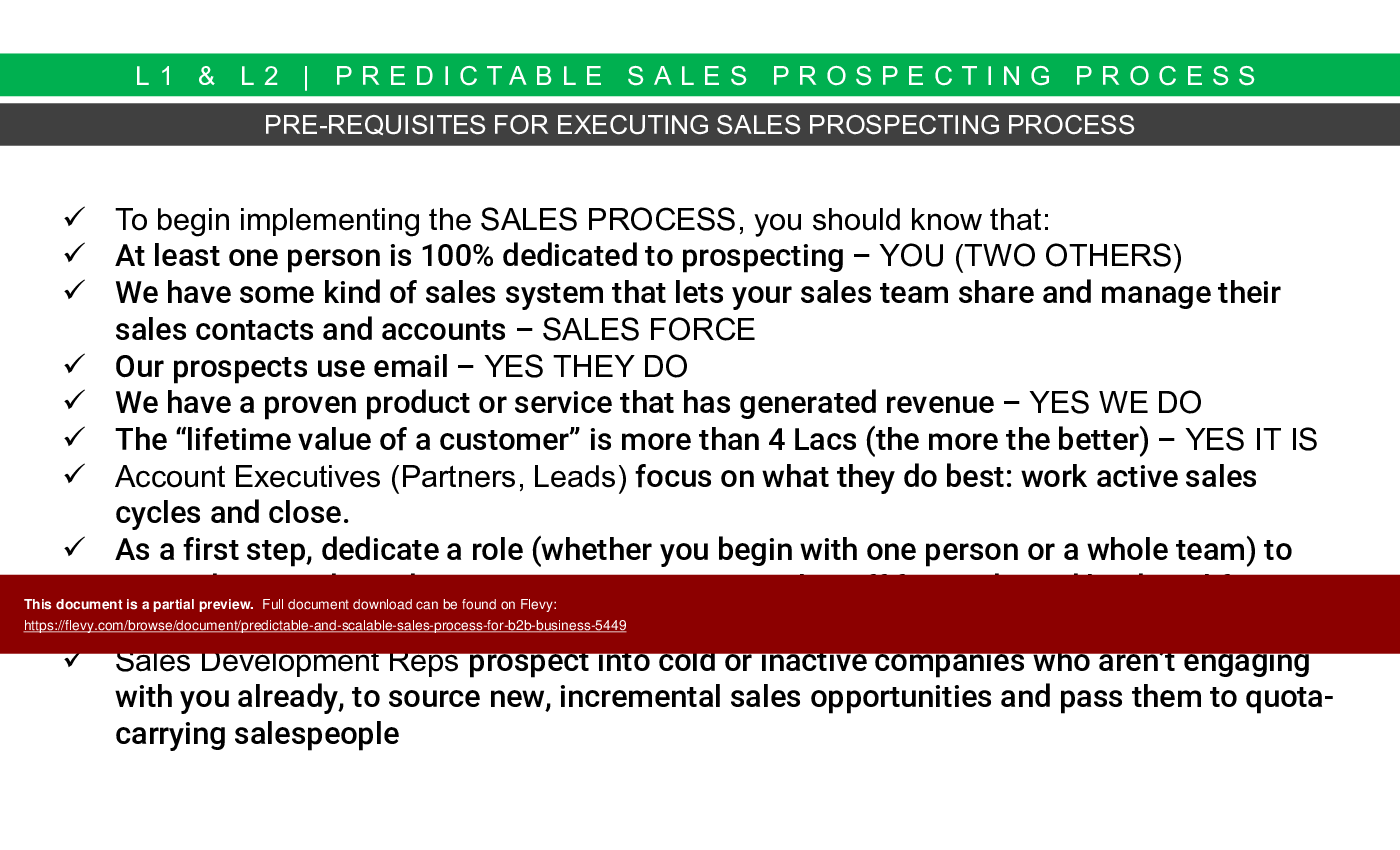
Sales executives designing a five-step prospecting process and performance metrics for predictable revenue.
Sales development reps building targeted lists and executing email campaigns to generate qualified leads.
Marketing leaders aligning campaign messaging and lead scoring to sales KPIs for better handoffs.
Business owners defining an ideal customer profile and sales team roles to scale beyond founder-driven selling.
The emphasis on a structured five-step process, role specialization, and metric-driven dashboards reflects the analytical, structured approach associated with McKinsey, Bain, and BCG.
Problem Statement – For B2B Sales
Predictable and Scalable Sales Process for Businesses is the single most difficult task to carry out especially when selling B2B Software's and Services such as Consulting etc. Many Businesses with great software or consulting products are unable to scale up their sales team. Businesses continue to remain dependent on the CEO or a few key executives who carry out the sales and force the business to remain small and dependent. Most businesses either continue to focus on execution and sustaining existing client with no clear way of predicting and scaling revenue in the future.
Solution – In the Document
The documents provides a new and innovative method with appropriate templates to create and implement a scalable sales prospecting process including key tips and tricks to make a predictable pipeline of leads for your B2B business. It provides detailed and implementable steps that will help guide you on how you can create a constant flow of leads and build a strong sales prospecting team. The document also provides a clear method of how to setup the sales team to help execute the process and key aspects that need to considered when executing this model. The Model also includes common mistakes that must be avoided when training your team as they adopt to this process.
This PPT dives deep into the mechanics of a predictable sales process, offering a structured approach to mapping your ideal customer profile, building targeted lists, and executing effective email campaigns. It emphasizes the importance of dedicated roles within the sales team, ensuring each member focuses on their strengths to maximize efficiency. The guide also provides practical tips for avoiding common prospecting mistakes and includes a detailed day-in-the-life schedule for sales development reps. This resource is essential for any B2B business looking to establish a robust and scalable sales pipeline.
Got a question about the product? Email us at support@flevy.com or ask the author directly by using the "Ask the Author a Question" form. If you cannot view the preview above this document description, go here to view the large preview instead.
MARCUS OVERVIEW
This synopsis was written by Marcus
[?] based on the analysis of the full 131-slide presentation.
Executive Summary
The "Predictable and Scalable Sales Process" presentation is designed to empower B2B organizations to achieve consistent revenue growth through a structured sales prospecting framework. This consulting-grade PPT, reflecting McKinsey, Bain, or BCG-quality rigor (not affiliated), provides actionable insights and methodologies for establishing a reliable sales pipeline. Users will learn to implement a five-step prospecting process, optimize team roles, and utilize performance metrics to drive accountability and results.
Who This Is For and When to Use
• Sales executives seeking to enhance their prospecting strategies
• Sales development teams focused on generating qualified leads
• Marketing leaders aiming to align efforts with sales objectives
• Business owners looking for a structured approach to sales growth
Best-fit moments to use this deck:
• When launching a new sales initiative or campaign
• During team training sessions to align on best practices
• For quarterly reviews to assess and refine sales strategies
Learning Objectives
• Define the five-step predictable sales prospecting process
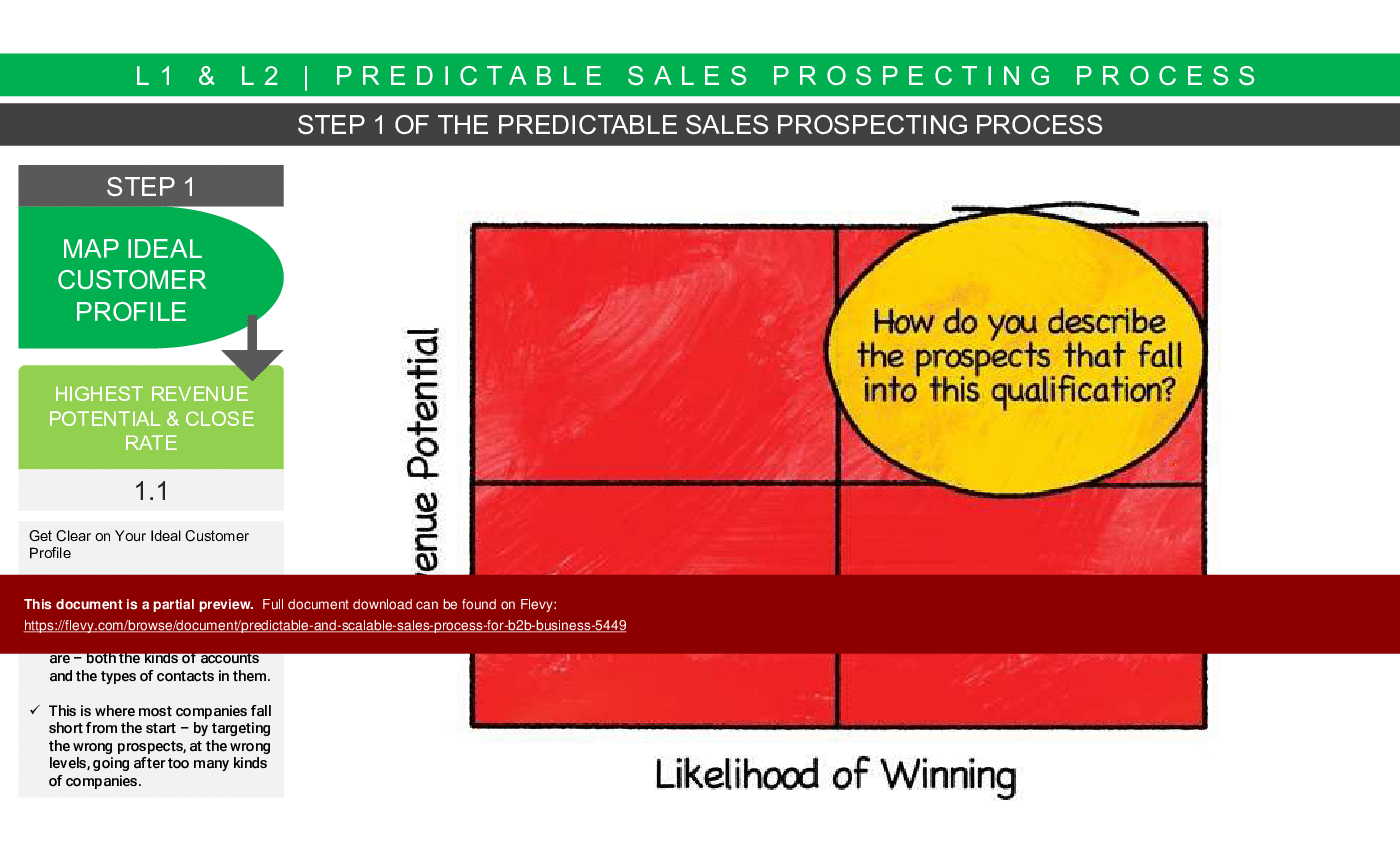
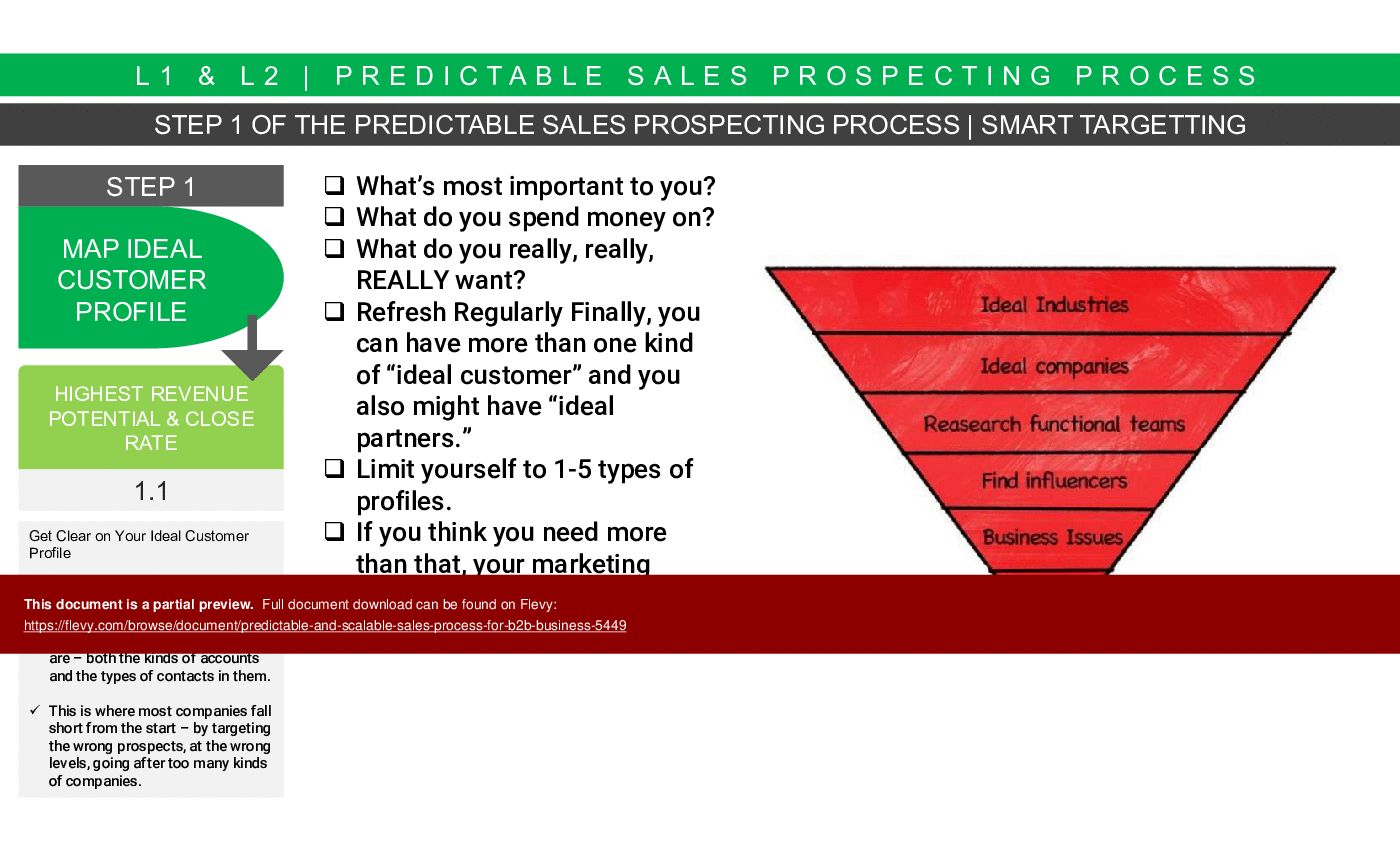
• Build a clear ideal customer profile to target effectively
• Establish a performance dashboard to track sales activities
• Identify and avoid common prospecting mistakes
• Develop effective outreach strategies through email campaigns
• Implement a seamless handoff process between sales roles
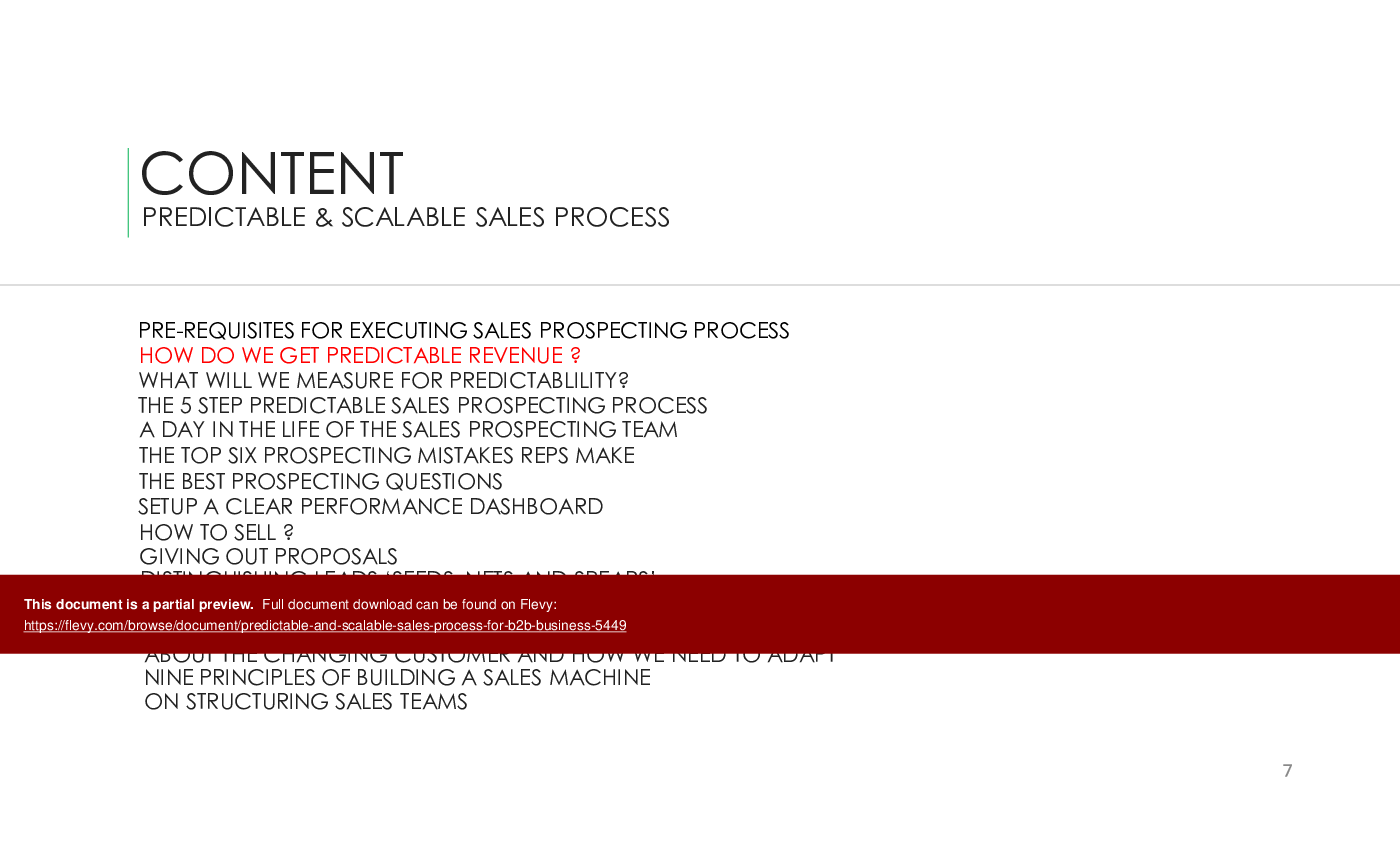
Table of Contents
• How Do We Get Predictable Revenue? (page 3)
• What Will We Measure for Predictability? (page 5)
• The 5 Step Predictable Sales Prospecting Process (page 7)
• A Day in the Life of the Sales Prospecting Team (page 10)
• The Top Six Prospecting Mistakes Reps Make (page 12)
• The Best Prospecting Questions (page 15)
• Setup a Clear Performance Dashboard (page 18)
• Giving Out Proposals (page 20)
• How to Sell? (page 22)
• Distinguishing Leads: ‘Seeds, Nets and Spears’ (page 25)
• Layers of the Onion to Sell (page 28)
• About the Changing Customer and How We Need to Adapt (page 30)
• Fatal Mistakes by CEOs and Sales VPs (page 33)
• Nine Principles of Building a Sales Machine (page 36)
• On Structuring Sales Teams (page 39)
Primary Topics Covered
• Predictable Revenue - Establishing a reliable lead generation process through outbound sales prospecting.
• Sales Prospecting Process - A structured five-step approach to identify and qualify leads effectively.
• Performance Metrics - Key performance indicators to measure sales activities and outcomes.
• Ideal Customer Profile - Defining target customers based on specific criteria for better alignment.
• Common Mistakes - Identifying and avoiding frequent pitfalls in sales prospecting.
• Customer Success - Emphasizing the importance of ongoing support for client satisfaction and retention.
Deliverables, Templates, and Tools
• Ideal customer profile template for targeted prospecting
• Performance dashboard example to track key metrics
• Email campaign templates for outreach
• Handoff process guidelines between sales development reps and account executives
• Training materials for onboarding new sales team members
• Checklist for common prospecting mistakes to avoid
Slide Highlights
• Overview of the five-step predictable sales prospecting process
• Visual representation of the ideal customer profile and its significance
• Performance dashboard example highlighting key metrics
• Common prospecting mistakes with actionable solutions
• Framework for distinguishing between different types of leads
Potential Workshop Agenda
Sales Process Overview (60 minutes)
• Introduce the five-step sales prospecting process
• Discuss the importance of defining an ideal customer profile
• Review common prospecting mistakes and solutions
Hands-On Activity (90 minutes)
• Breakout sessions to create ideal customer profiles
• Develop email templates for outreach campaigns
• Role-playing to practice effective prospecting questions
Performance Metrics Discussion (60 minutes)
• Review key performance indicators for sales success
• Set up individual performance dashboards
• Discuss ongoing customer success strategies
Customization Guidance
• Tailor the ideal customer profile based on specific market segments
• Adjust email templates to reflect company voice and branding
• Modify performance metrics to align with organizational goals
• Update training materials to incorporate company-specific products and services
Secondary Topics Covered
• The impact of changing customer behaviors on sales strategies
• Strategies for effective team collaboration in sales
• The importance of continuous learning and adaptation in sales processes
• Best practices for leveraging technology in sales prospecting
• Insights on building a customer-centric sales culture
Topic FAQ
What are the phases of a predictable B2B sales prospecting process?
A predictable B2B prospecting process, as described in the product, follows 5 steps: defining the ideal customer profile, building a targeted list, running email campaigns, selling the vision, and passing qualified leads to account executives, summarized as a five-step process.
How do I build an Ideal Customer Profile (ICP) for B2B software sales?
An ICP is built by specifying firmographic, technographic, and behavioral criteria that indicate best-fit buyers; the deck provides a structured template and visual representation to capture those attributes, delivered as an ideal customer profile template.
Which performance metrics indicate whether my revenue is predictable?
Predictability is measured through funnel metrics such as number of leads generated, conversion rates, average deal size, time-to-close, and total dollar value of new opportunities; the presentation includes a performance dashboard example illustrating these metrics.
What common prospecting mistakes should I train my team to avoid?
Frequent errors include failing to qualify leads properly, not following up consistently, and using generic, non-personalized outreach; the material lists these mistakes and provides mitigation steps alongside a checklist for reps to use, ending with a prospecting mistakes checklist.
What should I look for when choosing a sales process template for outbound prospecting?
Evaluate whether a template includes an ICP tool, targeted list-building guidance, email campaign examples, role handoff procedures, and performance metrics that can be customized to your market; Predictable and Scalable Sales Process for B2B Business includes these elements and training materials.
How long does it take to run an initial implementation workshop for a new prospecting process?
The resource maps a practicable workshop agenda that fits a single-day format: a 60-minute sales process overview, a 90-minute hands-on session for ICPs and templates, and a 60-minute performance metrics discussion, supporting an initial implementation in one day.
How should I restructure my sales team to support scalable outbound prospecting?
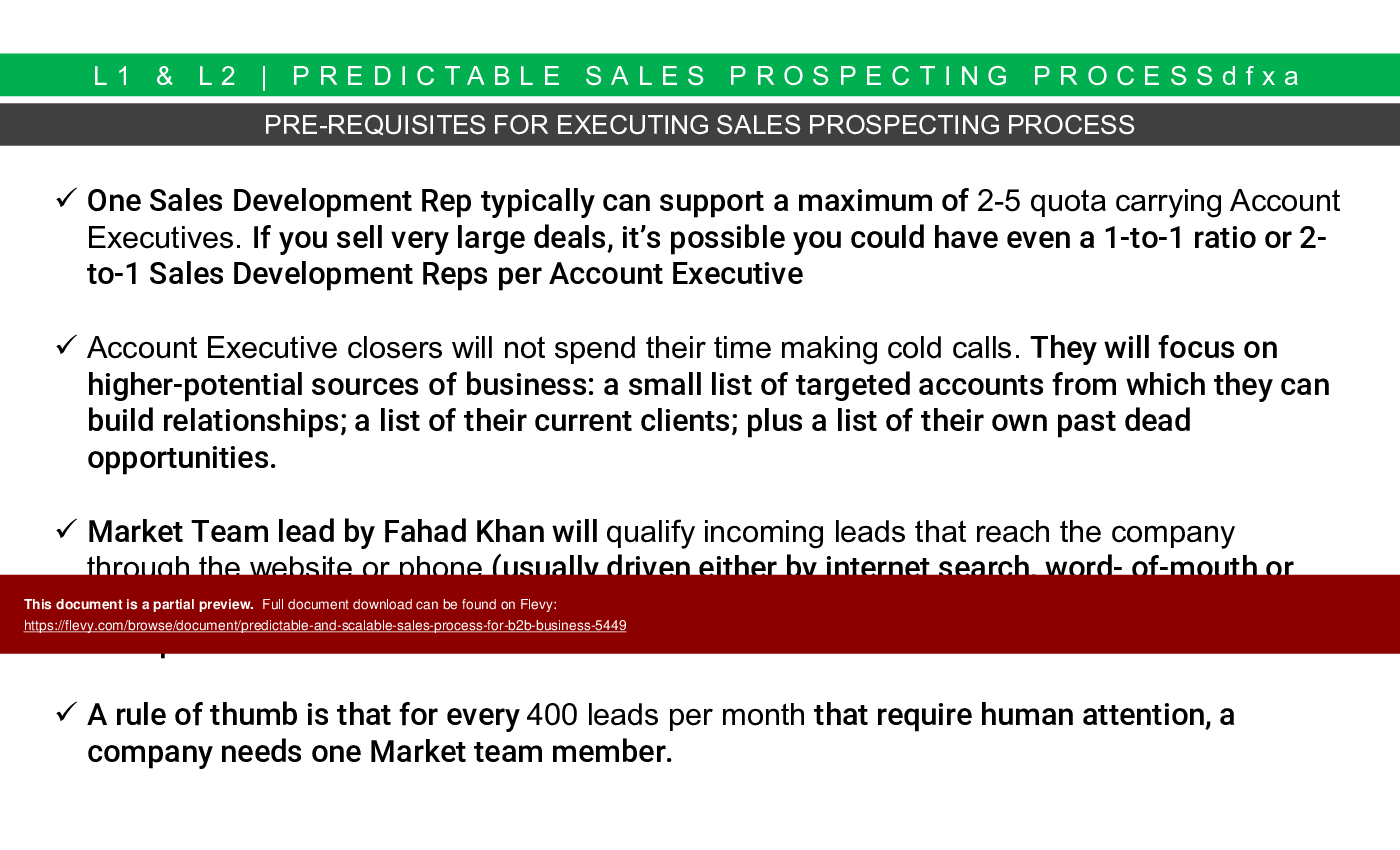
The guidance recommends role specialization—separating inbound qualification, outbound prospecting (SDRs), and account executives—with clear handoff protocols, day-in-the-life schedules, and team setup advice provided in the Predictable and Scalable Sales Process for B2B Business, including handoff process guidelines.
What are best practices for using email campaigns in outbound prospecting?
Best practices include targeting lists based on your ICP, personalizing messages to avoid generic outreach, sequencing campaigns to nurture interest, and tracking responses through a performance dashboard; the materials supply email campaign templates to operationalize these practices.
Document FAQ
These are questions addressed within this presentation.
What is the five-step predictable sales prospecting process?
The process includes defining the ideal customer profile, building a targeted list, running email campaigns, selling the vision, and passing leads to account executives.
How can I measure the predictability of my sales revenue?
Revenue predictability can be assessed through metrics such as the sales funnel, average deal size, and the time taken to close deals.
What are common mistakes sales reps make in prospecting?
Common mistakes include not qualifying leads properly, failing to follow up, and sending generic outreach emails without personalization.
How can I effectively set up a performance dashboard?
A performance dashboard should include metrics such as the number of leads generated, conversion rates, and the total dollar amount of new opportunities.
What should I do if a prospect is not interested?
If a prospect expresses disinterest, inquire about their reasons to understand if it’s a temporary objection or a fundamental mismatch.
How do I distinguish between different types of leads?
Leads can be categorized into 'seeds' (organic growth), 'nets' (broad marketing efforts), and 'spears' (targeted outbound efforts).
What is the importance of customer success in the sales process?
Customer success ensures that clients achieve their desired outcomes, leading to higher retention rates and potential upsell opportunities.
How can I adapt my sales strategy to changing customer behaviors?
Stay informed about market trends, solicit customer feedback, and be flexible in adjusting your approach to meet evolving needs.
What are the nine principles of building a sales machine?
These principles emphasize patience, experimentation, specialization, and focusing on results rather than activity.
How should I structure my sales team for maximum effectiveness?
Consider creating specialized roles for inbound lead qualification, outbound prospecting, and account management to enhance focus and efficiency.
Glossary
•
Ideal Customer Profile - A detailed description of the type of customer that would benefit most from your product or service.
•
Sales Development Rep (SDR) - A sales role focused on generating qualified leads through outbound prospecting.
•
Account Executive (AE) - A sales role responsible for closing deals and managing customer relationships.
•
Lead - A potential customer who has shown interest in your product or service.
•
Opportunity - A qualified lead that has the potential to convert into a sale.
•
Customer Success - The ongoing process of ensuring customers achieve their desired outcomes while using your product or service.
•
Sales Funnel - A visual representation of the customer journey from awareness to purchase.
•
Conversion Rate - The percentage of leads that convert into opportunities or sales.
•
Performance Metrics - Key indicators used to measure the effectiveness of sales activities.
•
Sales Force Automation (SFA) - Software tools designed to streamline and automate sales processes.
•
Cold Calling - The practice of contacting potential customers who have not previously expressed interest in your product or service.
•
Email Campaign - A series of targeted emails sent to prospects to generate interest and engagement.
•
Sales Pipeline - The stages a potential sale goes through from initial contact to closing.
•
Nurture - The process of developing relationships with prospects over time to convert them into customers.
•
Referral - A recommendation from an existing customer or contact that leads to a new prospect.
•
Follow-Up - The act of reaching out to a prospect after initial contact to maintain engagement and move towards closing.
•
Sales Metrics - Quantitative measures used to assess sales performance and effectiveness.
•
Sales Process - A defined series of steps that a sales team follows to convert leads into customers.
•
Sales Training - Programs designed to improve the skills and effectiveness of sales personnel.
•
Sales Strategy - A plan outlining how a company will sell its products or services to achieve business goals.
•
Prospecting - The process of identifying and reaching out to potential customers.
Source: Best Practices in Sales, B2B PowerPoint Slides: Predictable and Scalable Sales Process for B2B Business PowerPoint (PPT) Presentation Slide Deck, Shaleen Sinha









