
This framework is developed by a team of former McKinsey and Big 4 consultants. The presentation follows the headline-body-bumper slide format used by global consulting firms.
Editor Summary
A 26-slide PowerPoint titled Mobile Customer Journey and Experience Design by LearnPPT Consulting, presenting a 4-phase Altimeter-based framework: Map the Journey; Design the Mobile Experience; Measure and Optimize; Create Organizational Alignment.
Read moreIncludes concepts such as the Altimeter Dynamic Customer Journey, Mobile Customer Profiling, Mobile Customer KPIs, and presentation templates for reuse. Targeted at UX designers, mobile product managers, digital marketers, and CX leaders. Sold as a digital download on Flevy with immediate digital download.
Use this presentation when customer behavior is increasingly cross-channel and you need to reduce channel-hopping by designing cohesive mobile experiences across smartphone, tablet, and wearable platforms.
Mobile product managers mapping cross-device customer touchpoints to identify pain points and opportunities during the Map the Journey phase.
UX designers creating device-specific interaction flows and moment-of-truth experiences in the Design the Mobile Experience phase.
Digital marketers defining and tracking mobile KPIs to measure campaign impact on satisfaction and retention in the Measure and Optimize phase.
CX or transformation leaders aligning teams and processes to deliver mobile initiatives in the Create Organizational Alignment phase.
The 4-phase approach follows a structured, journey-based methodology promoted by Altimeter, organized into 4 phases.
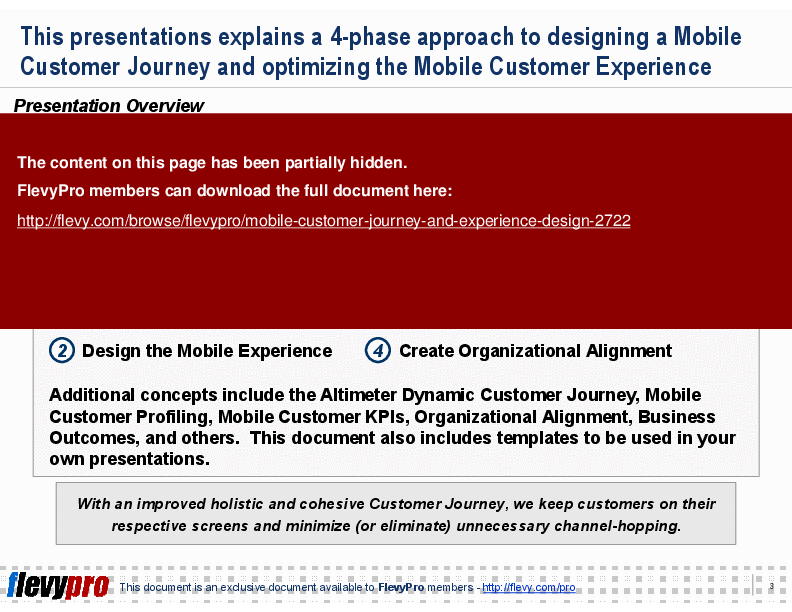
Mobile currently represents one of the greatest opportunities to drive Customer Experience Innovation and Disruption. As customer behavior increasingly becomes more cross-channel, the usage of various mobile platforms (e.g. smartphone, tablet, smart watch, etc.) is growing. With an improved holistic and cohesive Customer Journey, we keep customers on their respective screens and minimize (or eliminate) unnecessary channel-hopping.
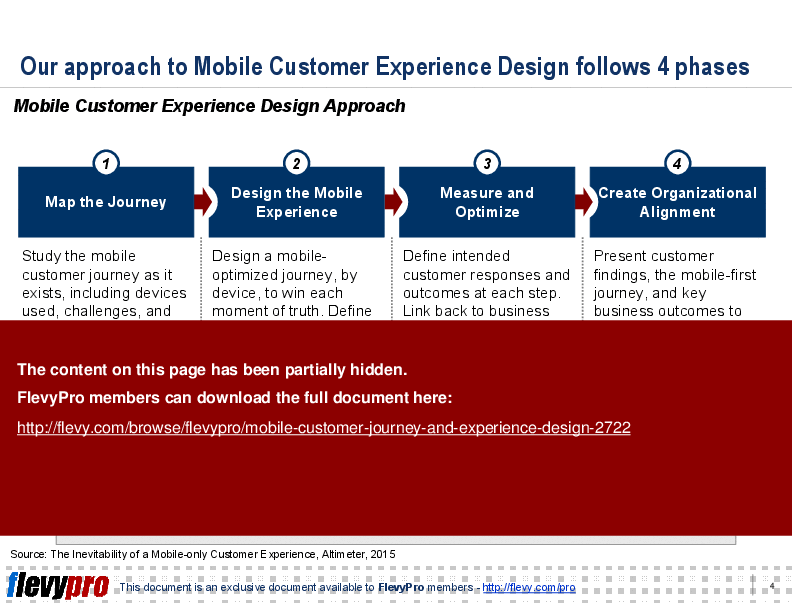
This presentation discusses a 4-phase approach to designing a Mobile Customer Experience, based on a framework developed by Altimeter:
1. Map the Journey
2. Design the Mobile Experience
3. Measure and Optimize
4. Create Organizational Alignment
Additional concepts include the Altimeter Dynamic Customer Journey, Mobile Customer Profiling, Mobile Customer KPIs, Organizational Alignment, Business Outcomes, and others. This document also includes templates to be used in your own presentations.
This PPT provides a detailed breakdown of each phase in the Mobile Customer Experience Design process. It starts with mapping the journey, focusing on understanding customer touchpoints and behaviors across various mobile devices. The insights gathered here are crucial for identifying pain points and opportunities for improvement, ensuring a seamless customer experience.
In the second phase, the document emphasizes designing the mobile experience tailored to specific devices and customer needs. This involves creating user-centric designs that cater to different mobile platforms, ensuring consistency and engagement at every touchpoint. The goal is to win each moment of truth by providing a superior mobile experience that meets customer expectations.
The third phase is about measuring and optimizing the mobile experience. It outlines key performance indicators (KPIs) to track, such as customer satisfaction and retention rates. By continuously monitoring these metrics, businesses can make data-driven decisions to enhance their mobile strategies. This phase ensures that the mobile experience aligns with broader business objectives and drives tangible outcomes.
What are the core phases of a mobile customer experience design process?
The Altimeter-based process described uses 4 core phases: Map the Journey, Design the Mobile Experience, Measure and Optimize, and Create Organizational Alignment. These phases structure work from initial touchpoint mapping through device-specific design, KPI measurement, and organizational change across 4 phases.
How does mapping the customer journey improve mobile experience planning?
Mapping the journey focuses on understanding customer touchpoints and behaviors across mobile devices to identify pain points and opportunities. That insight is used to reduce unnecessary channel-hopping and prioritize moments of truth, as emphasized in the Map the Journey phase.
Which KPIs are commonly tracked for mobile customer experience?
The presentation highlights tracking customer-centric KPIs that reflect satisfaction and retention, linking mobile metrics to business outcomes. Examples specifically mentioned include customer satisfaction and retention rates as part of Mobile Customer KPIs.
What is Mobile Customer Profiling and why is it included in mobile CX work?
Mobile Customer Profiling is presented as a conceptual element to inform design and measurement; the document lists it among key topics alongside journey mapping and KPIs. The overview identifies Mobile Customer Profiling as a named component in the toolkit.
What deliverables should I expect from a mobile journey presentation or template pack?
Expect slide-based deliverables covering journey maps, device-specific experience design guidance, measurement approaches with KPIs, organizational alignment material, and reusable templates suitable for presentation. The Flevy product Mobile Customer Journey and Experience Design contains 26 slides and templates.
How should I evaluate whether a mobile CX toolkit fits my team’s timeline and budget?
Evaluate whether the toolkit covers the 4 phases you need (mapping, design, measurement, alignment), provides templates you can adapt, and addresses device-specific guidance; these attributes indicate practical applicability. The referenced approach is organized into 4 phases.
I need to improve mobile retention—what practical steps does a journey-based approach suggest?
A journey-based approach recommends mapping cross-device touchpoints to find friction, designing device-specific experiences for key moments, then measuring relevant KPIs and iterating. The Measure and Optimize phase specifically ties measurement (for example, retention rates) to improvement actions.
How can an organization align internally to support better mobile experiences?
Organizational alignment is treated as a distinct phase—Create Organizational Alignment—addressing structure, roles, and processes needed to deliver mobile initiatives and link them to business outcomes. The document lists Create Organizational Alignment as one of its 4 phases.
This PPT slide outlines the development of a Performance Management model for measuring and optimizing Key Performance Indicators (KPIs) related to Mobile Customer Experience. It emphasizes defining intended customer responses and desired outcomes throughout the Mobile Customer Journey, enabling the creation of relevant KPIs that enhance engagement at every touchpoint. Key business outcomes include Customer Acquisition, Customer Retention, and Customer Efficiency, which are essential metrics for evaluating mobile strategy effectiveness. The slide also highlights negative metrics such as Negative Customer Sentiment, Sales Loss, and Reduced Customer Lifetime Value (LTV) to understand the implications of mobile strategy decisions. Mobile initiatives must align with the Digital Transformation Strategy to integrate mobile efforts into broader business objectives, providing a comprehensive view of mobile experience impact.
This PPT slide analyzes key performance indicators (KPIs) for mobile touchpoints in the customer journey, divided into Pre-Commerce and Commerce sections. In Pre-Commerce, positive KPIs include increased sales leads, customer acquisition, pages per visit, and reduced shopping cart abandonment, indicating that optimizing mobile touchpoints enhances user engagement. Negative trends include device orientation changes and decreased foot traffic, highlighting areas for improvement. The Commerce section focuses on conversion rates and order metrics, with positive trends like higher conversion rates and larger order sizes impacting revenue generation. Negative indicators such as bounce rates and back-button usage suggest user frustration, emphasizing the need for optimization of the mobile experience.
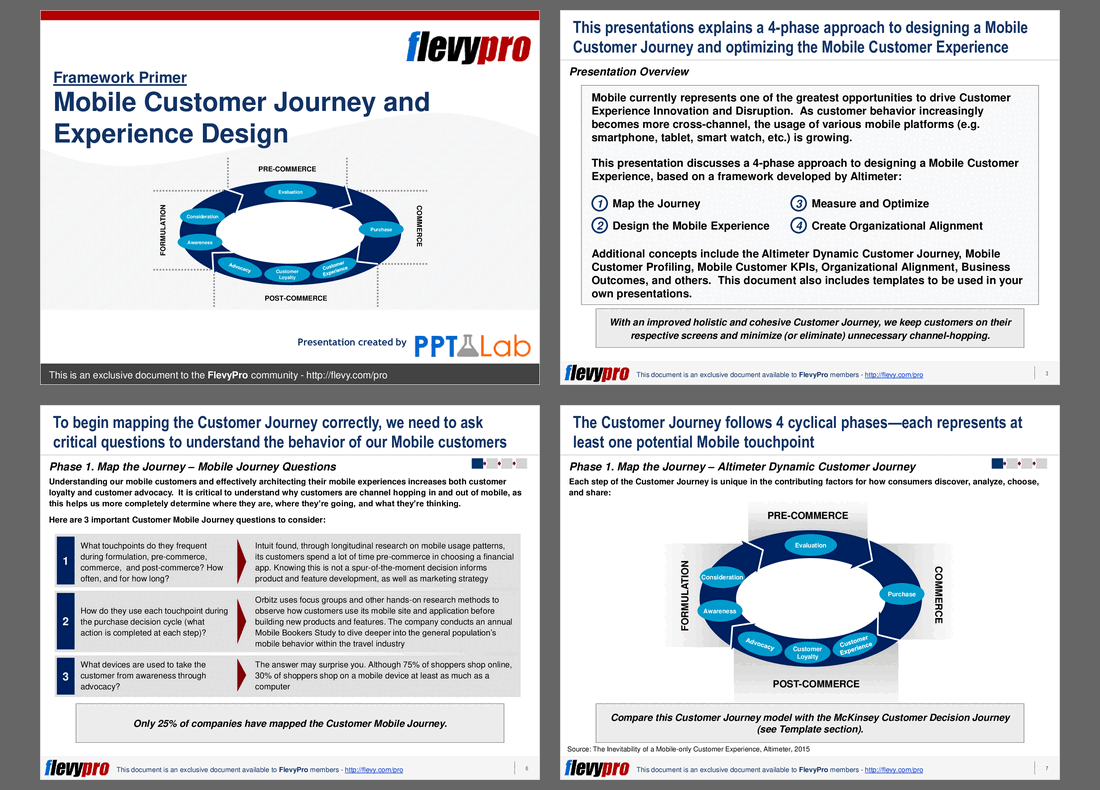
The Mobile Customer Journey framework is segmented into 4 phases: Pre-Commerce, Commerce, and Post-Commerce, focusing on the Formulation phase. The Formulation phase includes 3 steps: Awareness, Consideration, and Advocacy, illustrating how consumers become aware of products, evaluate options, and advocate for choices. The Pre-Commerce phase emphasizes Evaluation, a pivotal moment impacting conversion rates. The Commerce phase centers on the Purchase decision, culminating the previous phases. Post-Commerce focuses on Customer Experience and Customer Loyalty, highlighting the ongoing relationship brands maintain with customers post-purchase. This PPT slide compares this framework with the McKinsey Customer Decision Journey, providing a strategic tool for enhancing mobile engagement strategies by identifying critical touchpoints throughout the customer journey.
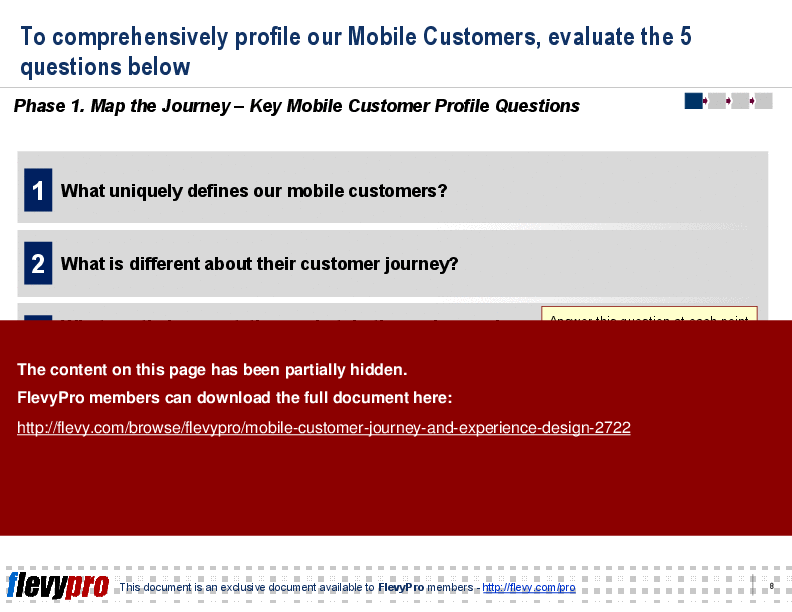
This PPT slide focuses on mapping the mobile customer journey to enhance loyalty and advocacy. It poses 3 critical questions for analysis. The first question examines customer touchpoints throughout their journey, emphasizing the frequency and duration of interactions. For example, Intuit's longitudinal research shows significant time spent in pre-commerce stages, informing product development and marketing strategies. The second question investigates customer actions at each touchpoint during the purchase decision cycle, with Orbitz using focus groups to refine product offerings based on mobile usage patterns. The third question analyzes the devices customers use from awareness to advocacy, revealing that many shoppers use mobile devices comparably to computers. Notably, only 25% of companies have mapped their customer mobile journey, highlighting the need for organizations to prioritize this process.
Source: Best Practices in Digital Transformation, Customer Experience, Customer Decision Journey, Customer Journey, Mobile Strategy PowerPoint Slides: Mobile Customer Journey and Experience Design PowerPoint (PPT) Presentation Slide Deck, LearnPPT Consulting
This framework is developed by a team of former McKinsey and Big 4 consultants. The presentation follows the headline-body-bumper slide format used by global consulting firms.
For $10.00 more, you can download this document plus 2 more FlevyPro documents. That's just $13 each.
ABOUT FLEVYPRO
This document is part of the FlevyPro Library, a curated knowledge base of documents for our FlevyPro subscribers.

FlevyPro is a subscription service for on-demand business frameworks and analysis tools. FlevyPro subscribers receive access to an exclusive library of curated business documents—business framework primers, presentation templates, Lean Six Sigma tools, and more—among other exclusive benefits.
The average daily rate of a McKinsey consultant is $6,625 (not including expenses). The average price of a Flevy document is $65.
Trusted by over 10,000+ Client Organizations
Since 2012, we have provided business templates to over 10,000 businesses and organizations of all sizes, from startups and small businesses to the Fortune 100, in over 130 countries.
"FlevyPro provides business frameworks from many of the global giants in management consulting that allow you to provide best in class solutions for your clients."
– David Harris, Managing Director at Futures Strategy
"I have used FlevyPro for several business applications. It is a great complement to working with expensive consultants. The quality and effectiveness of the tools are of the highest standards."
– Moritz Bernhoerster, Global Sourcing Director at Fortune 500
"The wide selection of frameworks is very useful to me as an independent consultant. In fact, it rivals what I had at my disposal at Big 4 Consulting firms in terms of efficacy and organization."
– Julia T., Consulting Firm Owner (Former Manager at Deloitte and Capgemini)
"As a consulting firm, we had been creating subject matter training materials for our people and found the excellent materials on Flevy, which saved us 100's of hours of re-creating what already exists on the Flevy materials we purchased."
– Michael Evans, Managing Director at Newport LLC
"I have used Flevy services for a number of years and have never, ever been disappointed. As a matter of fact, David and his team continue, time after time, to impress me with their willingness to assist and in the real sense of the word. I have concluded in fact
that it is not at all just a repository of documents/resources but, in the way that David and his team manage the firm, it is like dealing with consultants always ready to assist, advise and direct you to what you really need, and they always get it right.
I am an international hospitality accomplished senior executive who has worked and lived during the past 35 years in 23 countries in 5 continents and I can humbly say that I know what customer service is, trust me.
Aside from the great and professional service that Flevy's team provide, their wide variety of material is of utmost great quality, professionally put together and most current.
Well done Flevy, keep up the great work and I look forward to continue working with you in the future and to recommend you to a variety of colleagues around the world.
"
– Roberto Pelliccia, Senior Executive in International Hospitality
"I am extremely grateful for the proactiveness and eagerness to help and I would gladly recommend the Flevy team if you are looking for data and toolkits to help you work through business solutions."
– Trevor Booth, Partner, Fast Forward Consulting
"As a consultant requiring up to date and professional material that will be of value and use to my clients, I find Flevy a very reliable resource.
The variety and quality of material available through Flevy offers a very useful and commanding source for information. Using Flevy saves me time, enhances my expertise and ends up being a good decision."
– Dennis Gershowitz, Principal at DG Associates
"One of the great discoveries that I have made for my business is the Flevy library of training materials.
As a Lean Transformation Expert, I am always making presentations to clients on a variety of topics: Training, Transformation, Total Productive Maintenance, Culture, Coaching, Tools, Leadership Behavior, etc. Flevy
It is well worth the money to purchase these presentations. Sure, I have the knowledge and information to make my point. It is another thing to create a presentation that captures what I want to say. Flevy has saved me countless hours of preparation time that is much better spent with implementation that will actually save money for my clients.
"
– Ed Kemmerling, Senior Lean Transformation Expert at PMG
Download our FREE Digital Transformation Templates
Download our free compilation of 50+ Digital Transformation slides and templates. DX concepts covered include Digital Leadership, Digital Maturity, Digital Value Chain, Customer Experience, Customer Journey, RPA, etc.