
This framework is developed by a team of former McKinsey and Big 4 consultants. The presentation follows the headline-body-bumper slide format used by global consulting firms.
Editor Summary
Marketing Automation: Customer Lifetime Value is a 20-slide PowerPoint deck by LearnPPT Consulting that presents a three-phase framework to shift marketing toward customer lifetime value (LTV).
Read moreThe deck covers Phase 1: Segment Customers; Phase 2: Connect with Customers; and Phase 3: Develop Informed Hypotheses, and includes 6 templates/tools (customer segmentation template, touchpoints analysis template, hypothesis development framework, ROI measurement tools, data analysis models, and a marketing automation implementation checklist). Sold as a digital download on Flevy with immediate digital download.
Use this deck when an organization needs to refocus marketing investment on long-term customer value—during strategy planning, new engagement launches, or team training on LTV metrics.
Marketing executives building budget allocation and campaign plans that prioritize high-LTV segments and channel investments.
Data analysts creating segmentation models using demographics, purchase frequency, and average purchase size to identify high-value cohorts.
Business development teams designing acquisition and retention tactics informed by touchpoint analysis and ROI assessment.
Consultants facilitating workshops to develop and test marketing hypotheses and implementation checklists.
The 3-phase approach—segment, connect, develop hypotheses—follows a phased, data-driven consulting workflow common in client engagements.
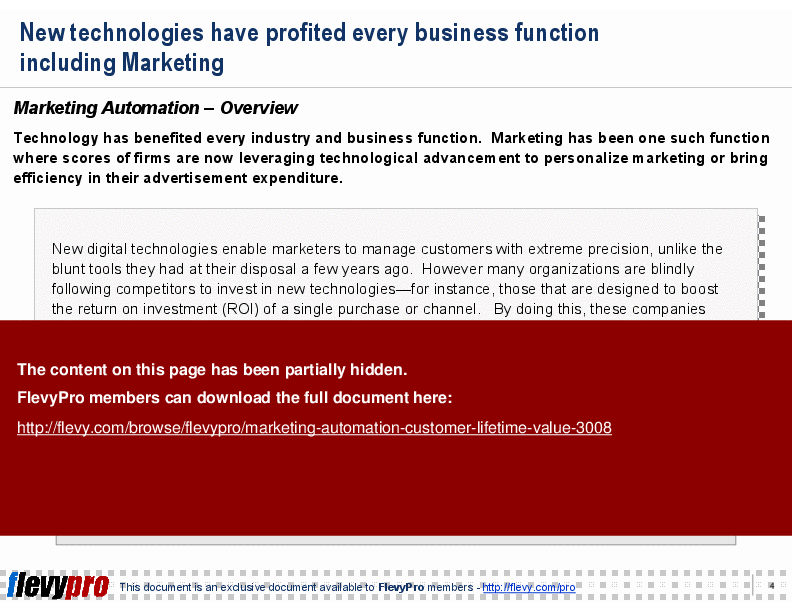
Technology has promoted every industry and occupation. Marketing has been one such function where scores of firms are now leveraging technological advancement to personalize marketing or bring efficiency in their advertisement expenditure—leading to the rise of Marketing Automation.
With more and more innovative tools becoming available to the marketers—such as Artificial Intelligence (AI) tools for one-to-one or segment marketing—they will have to focus those tools and ROI metrics on strengthening customer relationships. More and more organizations are turning to automation and advanced tools to optimize their marketing endeavours.
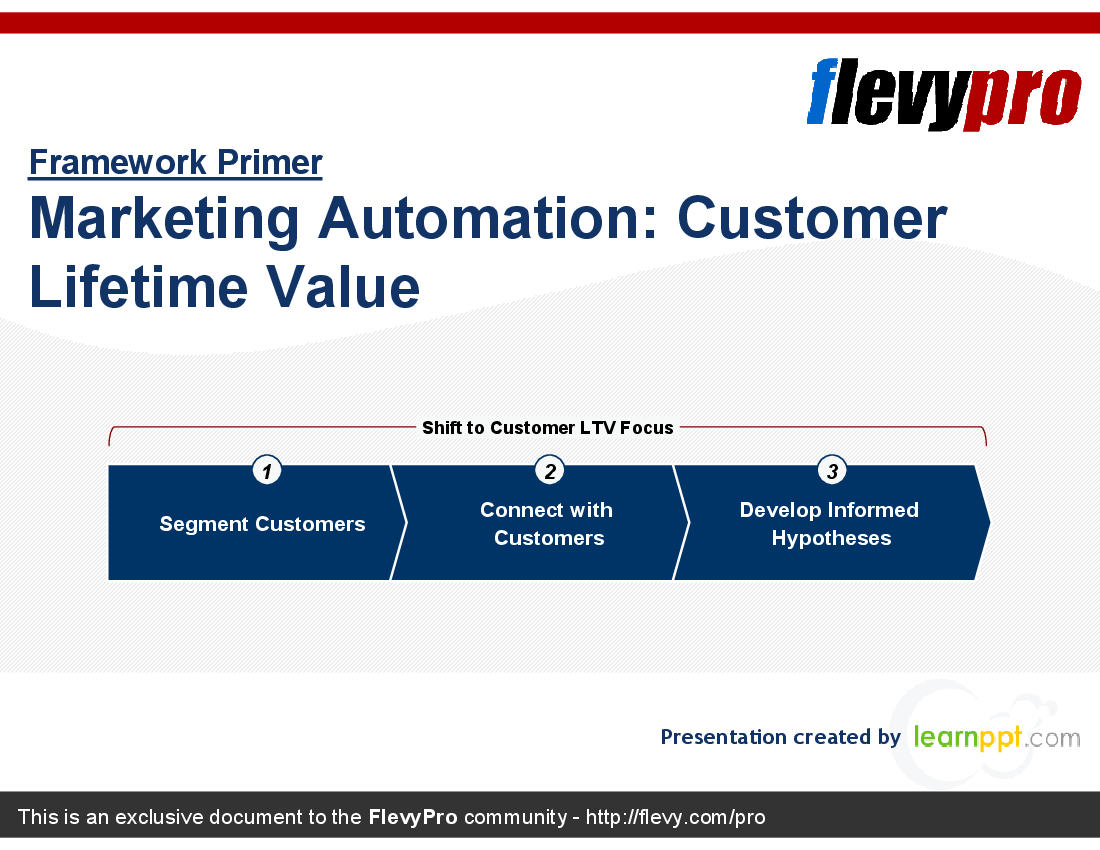
Leading marketers today are not only aware of the importance of customer lifetime value (LTV), they actually direct focus of their budget and resources accordingly. This deck discusses a 3-phase approach to shift to a customer LTV focus:
Other subjects touched upon in the slide deck include Segmenting Customers, Role of Automation in optimizing the Marketing function, Connecting with Customers, and Developing Informed Hypotheses.
The presentation deck also includes some slide templates for you to use in your own business presentations.
This PPT provides a comprehensive roadmap for shifting your marketing strategy towards a customer lifetime value (LTV) focus. It breaks down the process into three actionable phases, enabling you to segment customers, connect with them effectively, and develop informed hypotheses. Each phase is designed to maximize the value derived from each customer, ensuring that your marketing efforts are both efficient and impactful.
The deck also includes practical slide templates that you can adapt for your own presentations. These templates are particularly useful for visualizing data and strategies, making it easier to communicate your marketing plans to stakeholders. By leveraging the insights and tools provided in this document, you can enhance your marketing automation efforts and drive long-term customer loyalty.
This synopsis was written by Marcus [?] based on the analysis of the full 20-slide presentation.
Executive Summary
This presentation, titled "Marketing Automation: Customer Lifetime Value," provides a strategic framework for leveraging marketing automation to enhance customer lifetime value (LTV). Crafted by experienced consultants from top firms, this deck outlines a three-phase approach to shift marketing focus towards LTV, enabling organizations to optimize their marketing investments. By segmenting customers, connecting with them effectively, and developing informed hypotheses, businesses can foster stronger customer relationships and improve overall marketing ROI.
Who This Is For and When to Use
• Marketing executives looking to enhance customer engagement strategies
• Data analysts focused on customer segmentation and behavior analysis
• Business development teams aiming to improve customer acquisition and retention
• Consultants advising organizations on marketing automation strategies
Best-fit moments to use this deck:
• During strategic planning sessions focused on marketing automation
• When launching new customer engagement initiatives
• In workshops aimed at training teams on customer LTV metrics
Learning Objectives
• Define customer lifetime value and its significance in marketing automation
• Build effective customer segmentation strategies based on LTV
• Establish methods to connect with high-value customers across various touchpoints
• Develop informed hypotheses to optimize marketing efforts and resource allocation
• Analyze customer behavior to enhance marketing effectiveness
• Leverage technology to track and measure marketing ROI
Primary Topics Covered
• Overview of Marketing Automation - Discusses the role of marketing automation in enhancing customer relationships and optimizing marketing expenditures.
• Phase 1: Segment Customers - Focuses on identifying customer segments based on demographics, purchase frequency, and average purchase size to allocate marketing resources effectively.
• Phase 2: Connect with Customers - Emphasizes the importance of understanding customer touchpoints and preferences to enhance engagement and satisfaction.
• Phase 3: Develop Informed Hypotheses - Guides marketers in creating data-informed hypotheses to test and prioritize marketing strategies for acquiring and retaining customers.
• Role of Technology in Marketing - Explores how technological advancements can aid in understanding customer behavior and improving marketing strategies.
• Customer Lifetime Value Focus - Highlights the significance of prioritizing customer relationships over immediate sales metrics.
Deliverables, Templates, and Tools
• Customer segmentation template for identifying high-value customer groups
• Customer touchpoints analysis template to track engagement across channels
• Hypothesis development framework for testing marketing strategies
• ROI measurement tools to assess the effectiveness of marketing campaigns
• Data analysis models for evaluating customer behavior and preferences
• Marketing automation implementation checklist to streamline processes
Slide Highlights
• Overview slide illustrating the shift towards customer LTV focus
• Phase 1 slide detailing customer segmentation strategies
• Phase 2 slide showcasing customer touchpoints and engagement methods
• Phase 3 slide outlining the hypothesis development process
• Technology integration slide emphasizing the role of data in marketing decisions
Potential Workshop Agenda
Customer Segmentation Workshop (90 minutes)
• Discuss the importance of customer segmentation
• Identify key customer segments based on LTV
• Develop a segmentation strategy for marketing efforts
Customer Engagement Strategy Session (60 minutes)
• Review customer touchpoints and engagement methods
• Brainstorm ways to enhance customer interactions
• Create an action plan for implementing engagement strategies
Hypothesis Development and Testing (90 minutes)
• Define the process for developing informed hypotheses
• Identify key metrics for testing marketing strategies
• Plan for data collection and analysis
Customization Guidance
• Tailor customer segmentation criteria to align with specific business goals
• Adjust engagement strategies based on customer feedback and preferences
• Modify templates to reflect your organization's branding and messaging
• Incorporate specific metrics relevant to your marketing objectives
• Update case studies and examples to reflect industry-specific insights
Secondary Topics Covered
• The impact of marketing automation on customer retention
• Strategies for measuring customer satisfaction and loyalty
• Best practices for integrating technology into marketing efforts
• The importance of data privacy and compliance in marketing automation
• Trends in customer behavior and preferences in the digital age
Topic FAQ
What are the core phases to shift a marketing function toward customer lifetime value?
A common three-phase approach consists of: (1) Segment Customers to identify high-value cohorts, (2) Connect with Customers by mapping touchpoints and preferences, and (3) Develop Informed Hypotheses to test prioritized strategies. These are presented as Phase 1, Phase 2, and Phase 3 in the deck.
What criteria should I use to segment customers for LTV-focused marketing?
Segmentation for LTV typically uses customer demographics, purchase frequency, and average purchase size to allocate resources toward higher-value groups. The Marketing Automation: Customer Lifetime Value deck includes a customer segmentation template to operationalize these criteria.
Which metrics are most relevant for measuring changes in customer lifetime value?
Relevant metrics include average purchase size, purchase frequency, retention rate, and campaign ROI to track revenue per customer and program effectiveness. The deck references ROI measurement tools alongside segmentation and behavioral analysis.
How does marketing automation help increase customer LTV?
Marketing automation enables personalized communications, targeted campaigns, and behavior tracking, which support improved engagement and retention and feed data into segmentation and hypothesis testing processes. The document links automation use to touchpoint analysis and data-driven testing.
What should I look for when purchasing LTV-focused marketing templates or decks?
Look for materials that provide segmentation templates, touchpoint analysis tools, a hypothesis development framework, ROI measurement capabilities, data analysis models, and an implementation checklist to support planning and execution—features included in this slide deck.
Can slide decks and templates be used directly in workshops or strategic planning sessions?
Yes; decks that include workshop agendas, ready-to-use templates, and session timings can structure planning and training. The product outlines suggested sessions such as a 90-minute Customer Segmentation Workshop for hands-on segmentation work.
I need to improve retention after recent campaigns—what practical framework should I follow?
Use a sequence of segmentation to identify at-risk or high-value groups, touchpoint mapping to improve engagement channels, and hypothesis-driven experiments to test retention tactics; the touchpoints analysis template and hypothesis development framework support this approach.
How do I build a test-and-learn plan to grow customer LTV?
Define hypotheses based on segmented cohorts, select metrics for measurement, plan data collection and analysis, and measure ROI to iterate. The deck supplies a hypothesis development framework and ROI measurement tools to structure tests and evaluations.
Document FAQ
These are questions addressed within this presentation.
What is customer lifetime value (LTV)?
Customer lifetime value is the total revenue a business can expect from a single customer account throughout the business relationship.
How can marketing automation improve customer relationships?
Marketing automation allows for personalized communication and targeted campaigns, enhancing customer engagement and satisfaction.
What are the phases of shifting to a customer LTV focus?
The phases include segmenting customers, connecting with them effectively, and developing informed hypotheses for marketing strategies.
What role does technology play in marketing automation?
Technology aids in tracking customer behavior, analyzing data, and optimizing marketing efforts for better ROI.
How can I measure the effectiveness of my marketing campaigns?
Use ROI metrics and customer feedback to assess the impact of marketing initiatives on customer engagement and sales.
What types of templates are included in the deck?
Templates for customer segmentation, touchpoint analysis, and hypothesis development are included to facilitate implementation.
How can I customize the provided templates?
Templates can be tailored to reflect your organization's branding, specific metrics, and customer insights.
What industries can benefit from this approach?
Any industry focused on customer engagement and retention can benefit, including retail, education, and service sectors.
Glossary
• Customer Lifetime Value (LTV) - The total revenue expected from a customer over their relationship with a business.
• Marketing Automation - Technology that streamlines marketing tasks and workflows.
• Segmentation - The process of dividing customers into groups based on shared characteristics.
• Touchpoints - Interactions between a customer and a brand across various channels.
• ROI (Return on Investment) - A measure of the profitability of an investment.
• Data-Driven Marketing - Marketing strategies based on data analysis and insights.
• Customer Engagement - The interaction between a brand and its customers.
• Hypothesis Testing - The process of making predictions and testing them through data analysis.
• Customer Insights - Information about customer preferences and behaviors.
• Personalization - Tailoring marketing messages to individual customer preferences.
• Behavioral Analysis - The study of customer actions to inform marketing strategies.
• CRM (Customer Relationship Management) - Systems for managing a company's interactions with current and potential customers.
• Marketing Metrics - Quantifiable measures used to evaluate marketing performance.
• Customer Feedback - Insights gathered from customers regarding their experiences and satisfaction.
• Digital Marketing - Marketing efforts that use the internet and digital devices.
• Lead Generation - The process of attracting and converting prospects into customers.
• Customer Retention - Strategies aimed at keeping existing customers engaged and satisfied.
• Market Segmentation - The practice of dividing a market into distinct groups of buyers.
• Predictive Analytics - Techniques that use statistical algorithms to identify the likelihood of future outcomes.
• Brand Loyalty - The tendency of consumers to continue buying the same brand over time.
• Customer Journey - The complete experience a customer has with a brand, from awareness to purchase and beyond.
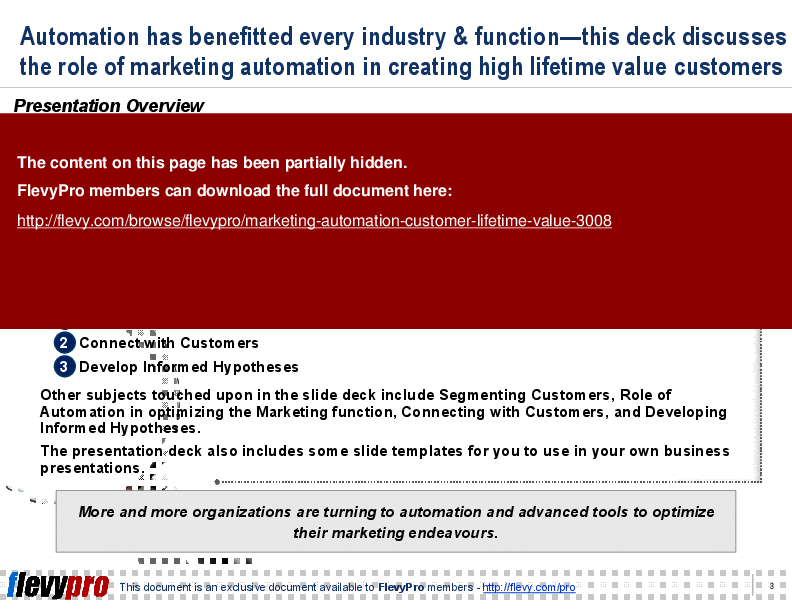
This PPT slide outlines a strategic shift towards enhancing Customer Lifetime Value (LTV) to improve financial performance. It introduces a three-phased strategy:
1. Segment Customers - Targeted segmentation based on customer value to identify high-value segments for tailored marketing strategies.
2. Connect with Customers - Utilizing technology to understand customer priorities and enhance interactions, fostering loyalty and customer value.
3. Develop Informed Hypotheses - Emphasizing data-driven insights regarding technology usage to guide customer acquisition and retention efforts.
Implementing these phases can create a more engaged customer base and drive financial success.
This PPT slide analyzes the limitations of relying solely on digital data and analytics tools in marketing. While technology offers benefits, it cannot replace essential human interactions for building effective customer relationships. Three case studies illustrate this point: the Carlson School of Management achieved a 28% increase in student applications through strategic human engagement, a major clothing retailer saw only a 3% increase in marketing ROI from data analytics alone, and a consumer packaged goods campaign realized a 34% sales lift by integrating human insights with data. This underscores the necessity of blending technology with human expertise in marketing strategies for meaningful customer engagement and growth.
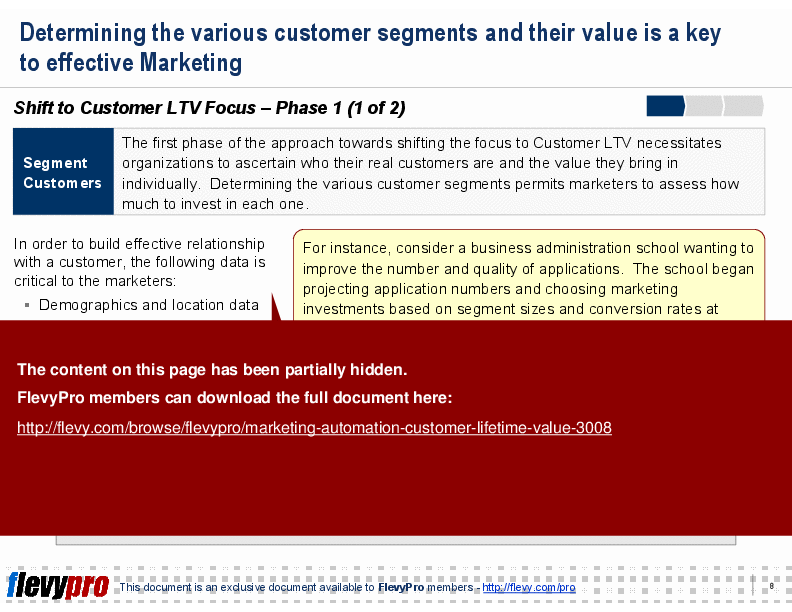
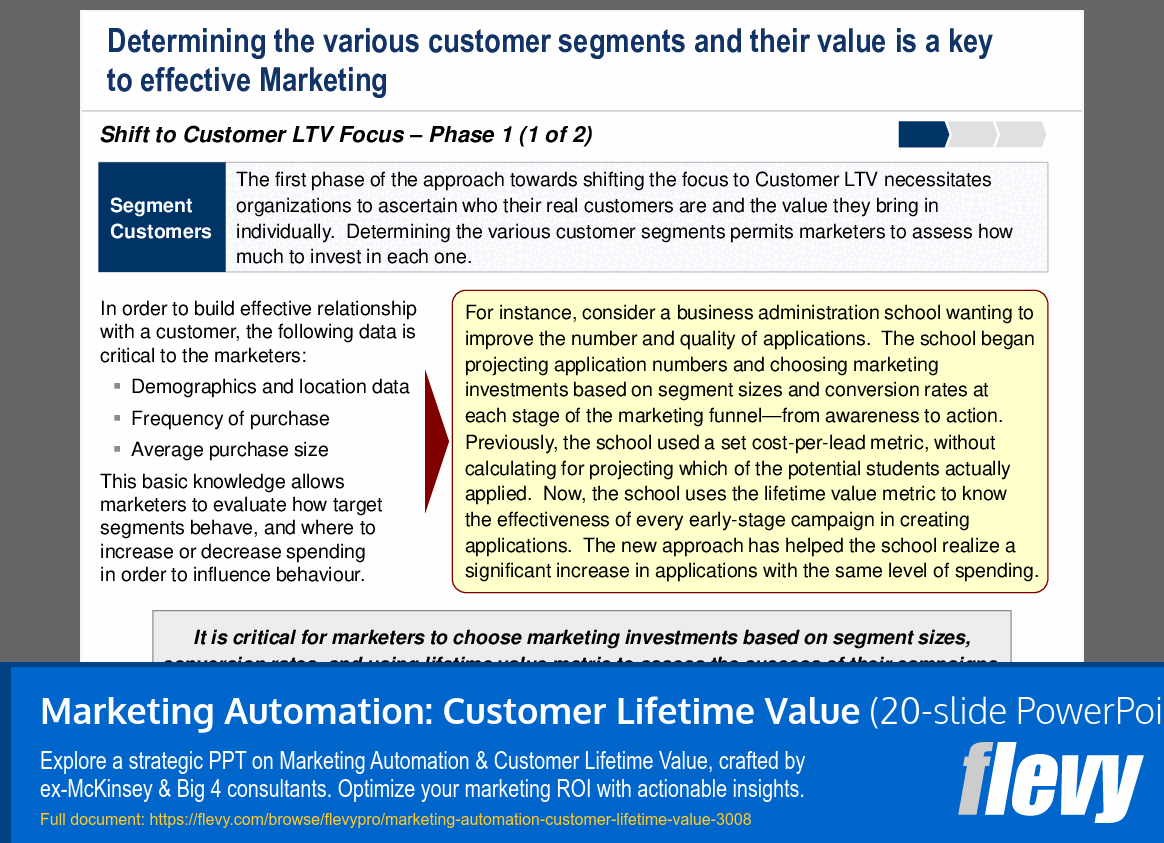
This PPT slide focuses on the strategic shift towards prioritizing Customer Lifetime Value (LTV) in marketing. Understanding customer segments—demographics, location, purchase frequency, and average purchase size—enables informed investment decisions. A business administration school transitioned from a cost-per-lead approach to a strategy that considers segment sizes and conversion rates, enhancing marketing resource allocation. By employing the LTV metric, organizations can assess marketing campaign effectiveness. The school achieved a significant increase in applications while maintaining expenditure, demonstrating that a focus on customer segments and their values improves marketing efficiency. Marketers are encouraged to adopt a data-driven approach to optimize resource allocation and drive meaningful results.
This PPT slide outlines the second phase of the Customer Lifetime Value (LTV) approach, focusing on connecting with high-value customers through identification and segmentation. Key statistics reveal that U.S. consumers access mobile devices approximately 200 times daily, with 69% making weekly purchases via mobile platforms, highlighting a reliance on mobile for shopping. Additionally, 40% of smartphone users who research on their devices complete purchases on desktops, illustrating a multi-device consumer journey. Notably, 87% of consumers conduct online research before visiting physical stores, yet 90% of sales occur in-store, emphasizing the need for businesses to bridge online and offline experiences. Marketers must adapt to customer needs throughout their journey, recognizing information sources, desired outcomes, and touchpoints to enhance engagement and drive sales.
Source: Best Practices in Marketing Automation, Customer Lifetime Value PowerPoint Slides: Marketing Automation: Customer Lifetime Value PowerPoint (PPT) Presentation Slide Deck, LearnPPT Consulting
This framework is developed by a team of former McKinsey and Big 4 consultants. The presentation follows the headline-body-bumper slide format used by global consulting firms.
For $10.00 more, you can download this document plus 2 more FlevyPro documents. That's just $13 each.
ABOUT FLEVYPRO
This document is part of the FlevyPro Library, a curated knowledge base of documents for our FlevyPro subscribers.
FlevyPro is a subscription service for on-demand business frameworks and analysis tools. FlevyPro subscribers receive access to an exclusive library of curated business documents—business framework primers, presentation templates, Lean Six Sigma tools, and more—among other exclusive benefits.
The average daily rate of a McKinsey consultant is $6,625 (not including expenses). The average price of a Flevy document is $65.
Trusted by over 10,000+ Client Organizations
Since 2012, we have provided business templates to over 10,000 businesses and organizations of all sizes, from startups and small businesses to the Fortune 100, in over 130 countries.
"Flevy is our 'go to' resource for management material, at an affordable cost. The Flevy library is comprehensive and the content deep, and typically provides a great foundation for us to further develop and tailor our own service offer."
– Chris McCann, Founder at Resilient.World
"Flevy is now a part of my business routine. I visit Flevy at least 3 times each month.
Flevy has become my preferred learning source, because what it provides is practical, current, and useful in this era where the business world is being rewritten.

many challenges and there is the need to make the right decisions in a short time, with so much scattered information, we are fortunate to have Flevy. Flevy investigates, selects, and puts at our disposal the best of the best to help us be successful in our work.
"
– Omar Hernán Montes Parra, CEO at Quantum SFE
"I have found Flevy to be an amazing resource and library of useful presentations for lean sigma, change management and so many other topics. This has reduced the time I need to spend on preparing for my performance consultation. The library is easily accessible and updates are regularly provided. A wealth of great information."
– Cynthia Howard RN, PhD, Executive Coach at Ei Leadership
"FlevyPro has been a brilliant resource for me, as an independent growth consultant, to access a vast knowledge bank of presentations to support my work with clients. In terms of RoI, the value I received from the very first presentation I downloaded paid for my subscription many times over! The
quality of the decks available allows me to punch way above my weight – it's like having the resources of a Big 4 consultancy at your fingertips at a microscopic fraction of the overhead.
"
– Roderick Cameron, Founding Partner at SGFE Ltd
"I have used FlevyPro for several business applications. It is a great complement to working with expensive consultants. The quality and effectiveness of the tools are of the highest standards."
– Moritz Bernhoerster, Global Sourcing Director at Fortune 500
"[Flevy] produces some great work that has been/continues to be of immense help not only to myself, but as I seek to provide professional services to my clients, it gives me a large "tool box" of resources that are critical to provide them with the quality of service and outcomes they are expecting."
– Royston Knowles, Executive with 50+ Years of Board Level Experience
"The wide selection of frameworks is very useful to me as an independent consultant. In fact, it rivals what I had at my disposal at Big 4 Consulting firms in terms of efficacy and organization."
– Julia T., Consulting Firm Owner (Former Manager at Deloitte and Capgemini)
"FlevyPro provides business frameworks from many of the global giants in management consulting that allow you to provide best in class solutions for your clients."
– David Harris, Managing Director at Futures Strategy
Download our free compilation of 50+ Strategy & Transformation slides and templates. Frameworks include McKinsey 7-S, Balanced Scorecard, Disruptive Innovation, BCG Curve, and many more.