
This framework is developed by a team of former McKinsey and Big 4 consultants. The presentation follows the headline-body-bumper slide format used by global consulting firms.
Job leveling template PPT: Download this HR Strategy Job Leveling matrix and framework to design clear job roles, levels, and compensation structures. Get it now. HR Strategy: Job Leveling is a 26-slide PPT PowerPoint presentation slide deck (PPTX) available for immediate download upon purchase.
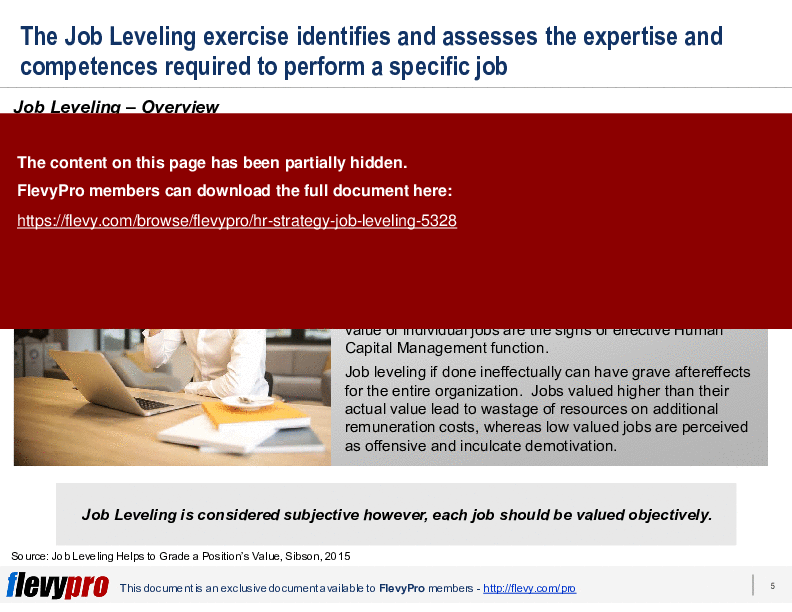
Job Leveling is a disciplined approach to gauge the value of work for individual positions across the organization. It entails ascertaining the nature of work done by each position, authority levels, and the effect of each job on business results.
Jobs that are configured inadequately bread disputes, negative beliefs, inequality, and frustration; whereas structured jobs, appropriate distribution of work, justified authority levels, and correct estimation of value of individual jobs are the signs of effective Human Capital Management function.
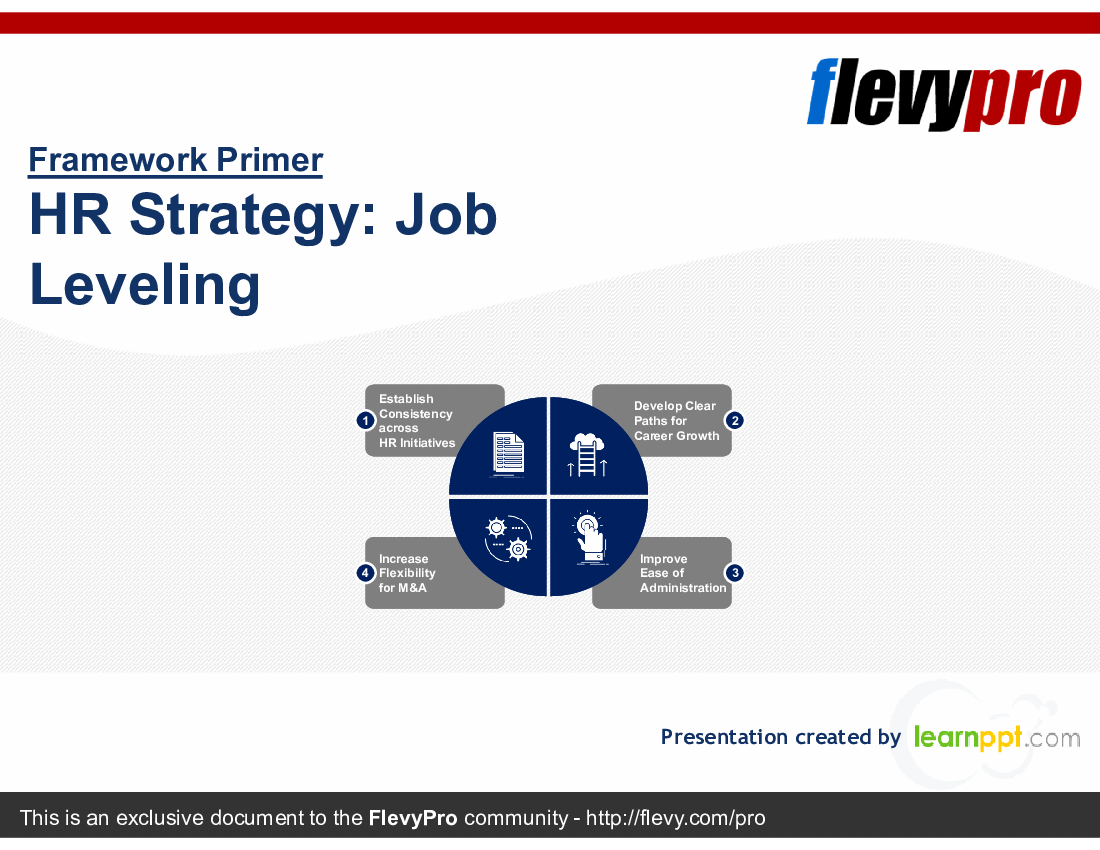
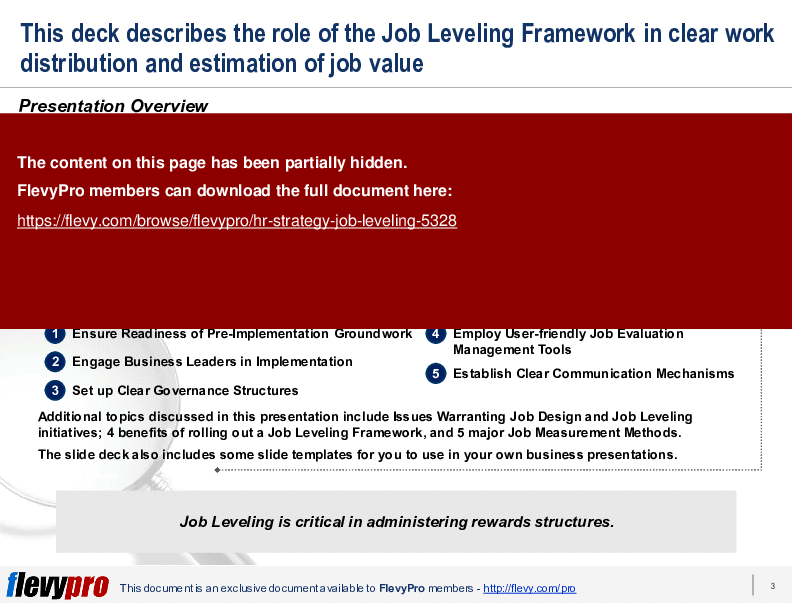
This presentation provides a detailed overview of the Job Leveling Framework and the key phases to implement flexible job levels. The Job Leveling Framework facilitates in methodically benchmarking the value of all jobs, creating consistency across the HR, and develop distinct career growth paths for the employees.
The 5 key phases of Job Leveling Implementation include:
1. Ensure Readiness of Pre-Implementation Groundwork
2. Engage Business Leaders in Implementation
3. Set up Clear Governance Structures
4. Employ User-friendly Job Evaluation Management Tools
5. Establish Clear Communication Mechanisms
Additional topics discussed in this presentation include Issues Warranting Job Design and Job Leveling initiatives; 4 benefits of rolling out a Job Leveling Framework, and 5 major Job Measurement Methods.
The slide deck also includes some slide templates for you to use in your own business presentations.
This PPT delves into the intricacies of job leveling, highlighting its critical role in aligning employee roles with organizational goals. It outlines the importance of establishing clear governance structures and employing user-friendly job evaluation tools to streamline the process. The presentation also emphasizes the need for effective communication mechanisms to ensure transparency and buy-in from all stakeholders. With detailed templates and practical insights, this guide is an invaluable resource for HR professionals aiming to implement a robust job leveling framework in their organizations.
This PPT slide outlines 5 primary methods for job leveling: Slotting, Whole Job Ranking, Factor Comparison, Point-factor Rating System, and External Market Pricing. Slotting defines essential job characteristics across salary grades, emphasizing job responsibilities for effective categorization. Whole Job Ranking groups and benchmarks jobs against each other, creating a comparative framework. Factor Comparison ranks jobs based on specific criteria, enhancing understanding of job value and complexity. The Point-factor Rating System assigns numerical values to job elements, facilitating categorization based on total points. External Market Pricing benchmarks jobs against market roles, aligning internal compensation with competitive rates. Each method provides a unique perspective on job evaluation, addressing organizational needs and market conditions.
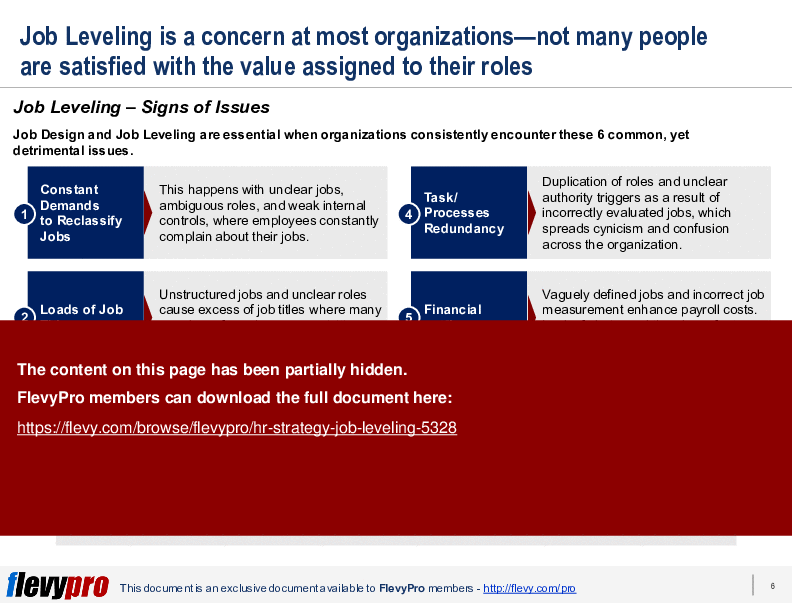
This PPT slide addresses critical issues in job leveling within organizations, highlighting 6 signs of ineffective job design. First, constant demands for reclassifying jobs arise from unclear job descriptions, leading to employee dissatisfaction due to undefined responsibilities. Second, an abundance of job titles creates confusion about roles and hierarchies. Third, widespread dissatisfaction with remuneration stems from inaccurate job evaluations, impacting morale and retention. Fourth, task and process redundancy results in inefficiencies and cynicism among staff. Fifth, financial outflow refers to inflated payroll costs due to poorly defined jobs, complicating budgeting. Lastly, staffing imbalances indicate a top-heavy structure that prioritizes senior management, leading to flawed promotion practices. Addressing these issues can enhance employee satisfaction and organizational effectiveness.
Organizations must adapt job leveling methods to meet modern digital demands. Traditional rigid points-based systems are inadequate; a shift to transparent, flexible factor-based job leveling is recommended. This approach includes career levels, job slottings, and job mapping for a nuanced understanding of roles.
Five key phases are essential for implementation: First, assess current practices and identify gaps for readiness. Second, establish clear governance structures for oversight and accountability. Third, engage business leaders for collaboration and alignment with organizational goals. Fourth, employ user-friendly job evaluation management tools for efficient role assessment. Finally, establish clear communication mechanisms to maintain transparency and ensure employee understanding of new processes. This strategic shift enhances organizational effectiveness and adaptability.
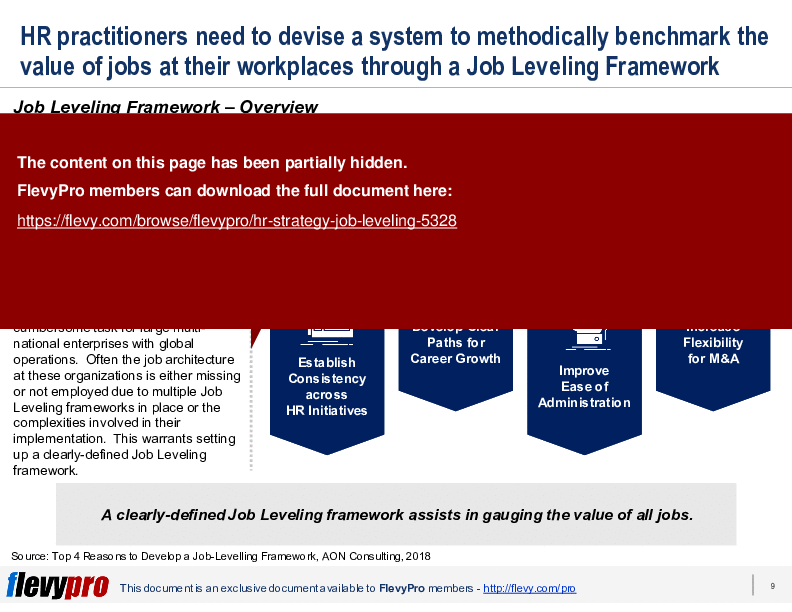
This PPT slide outlines a Job Leveling Framework essential for workforce planners in organizations, particularly multinational enterprises. It emphasizes the need for a systematic approach to benchmark job value by analyzing activities, required competencies, and business impact. Many organizations face challenges with job architecture, often lacking a cohesive framework, highlighting the necessity of a defined Job Leveling framework to streamline processes. Key benefits include establishing consistency across HR initiatives for fair evaluations, creating clear career growth paths to enhance retention, simplifying HR administration for easier management of job roles, and increasing flexibility for mergers and acquisitions (M&A) to adapt to market changes. A well-structured Job Leveling framework supports organizational goals by enhancing HR efficiency and employee satisfaction.
Business leadership is critical in the implementation of job leveling, particularly in Phase 2. Active involvement from senior leaders is essential to secure agreement and support, which is foundational for success. Their participation in calibrating key roles solidifies commitment and provides necessary backing during execution. Coaching line managers is vital for clarifying their roles in job evaluation sessions, ensuring a smooth implementation process. Engaging key employees during the design phase is crucial for eliminating doubts and resistance, fostering collaboration, and enhancing the effectiveness of the job leveling initiative. Leadership engagement is essential for overcoming challenges and achieving desired outcomes.
This framework is developed by a team of former McKinsey and Big 4 consultants. The presentation follows the headline-body-bumper slide format used by global consulting firms.
For $10.00 more, you can download this document plus 2 more FlevyPro documents. That's just $13 each.
ABOUT FLEVYPRO
This document is part of the FlevyPro Library, a curated knowledge base of documents for our FlevyPro subscribers.

FlevyPro is a subscription service for on-demand business frameworks and analysis tools. FlevyPro subscribers receive access to an exclusive library of curated business documents—business framework primers, presentation templates, Lean Six Sigma tools, and more—among other exclusive benefits.
The average daily rate of a McKinsey consultant is $6,625 (not including expenses). The average price of a Flevy document is $65.
Trusted by over 10,000+ Client Organizations
Since 2012, we have provided business templates to over 10,000 businesses and organizations of all sizes, from startups and small businesses to the Fortune 100, in over 130 countries.
"As a consulting firm, we had been creating subject matter training materials for our people and found the excellent materials on Flevy, which saved us 100's of hours of re-creating what already exists on the Flevy materials we purchased."
– Michael Evans, Managing Director at Newport LLC
"FlevyPro provides business frameworks from many of the global giants in management consulting that allow you to provide best in class solutions for your clients."
– David Harris, Managing Director at Futures Strategy
"As a niche strategic consulting firm, Flevy and FlevyPro frameworks and documents are an on-going reference to help us structure our findings and recommendations to our clients as well as improve their clarity, strength, and visual power. For us, it is an invaluable resource to increase our impact and value."
– David Coloma, Consulting Area Manager at Cynertia Consulting
"As a young consulting firm, requests for input from clients vary and it's sometimes impossible to provide expert solutions across a broad spectrum of requirements. That was before I discovered Flevy.com.
Through subscription to this invaluable site of a plethora of topics that are key and crucial to consulting, I
have been able to exceed expectations and deliver quality advice and solutions to my clients. The quality and expertise of the authors are exemplary and gives me great confidence to use as part of my service offerings.
I highly recommend this company for any consultant wanting to apply international best practice standards in their service offerings.
"
– Nishi Singh, Strategist and MD at NSP Consultants
"As a small business owner, the resource material available from FlevyPro has proven to be invaluable. The ability to search for material on demand based our project events and client requirements was great for me and proved very beneficial to my clients. Importantly, being able to easily edit and tailor
the material for specific purposes helped us to make presentations, knowledge sharing, and toolkit development, which formed part of the overall program collateral. While FlevyPro contains resource material that any consultancy, project or delivery firm must have, it is an essential part of a small firm or independent consultant's toolbox.
"
– Michael Duff, Managing Director at Change Strategy (UK)
"I have used Flevy services for a number of years and have never, ever been disappointed. As a matter of fact, David and his team continue, time after time, to impress me with their willingness to assist and in the real sense of the word. I have concluded in fact
that it is not at all just a repository of documents/resources but, in the way that David and his team manage the firm, it is like dealing with consultants always ready to assist, advise and direct you to what you really need, and they always get it right.
I am an international hospitality accomplished senior executive who has worked and lived during the past 35 years in 23 countries in 5 continents and I can humbly say that I know what customer service is, trust me.
Aside from the great and professional service that Flevy's team provide, their wide variety of material is of utmost great quality, professionally put together and most current.
Well done Flevy, keep up the great work and I look forward to continue working with you in the future and to recommend you to a variety of colleagues around the world.
"
– Roberto Pelliccia, Senior Executive in International Hospitality
"I have found Flevy to be an amazing resource and library of useful presentations for lean sigma, change management and so many other topics. This has reduced the time I need to spend on preparing for my performance consultation. The library is easily accessible and updates are regularly provided. A wealth of great information."
– Cynthia Howard RN, PhD, Executive Coach at Ei Leadership
"As an Independent Management Consultant, I find Flevy to add great value as a source of best practices, templates and information on new trends. Flevy has matured and the quality and quantity of the library is excellent. Lastly the price charged is reasonable, creating a win-win value for
the customer, Flevy and the various authors. This is truly a service that benefits the consulting industry and associated clients. Thanks for providing this service.
Download our free compilation of 50+ slides and templates on Organizational Design, Change Management, and Corporate Culture. Methodologies include ADKAR, Burke-Litwin Change Model, McKinsey 7-S, Competing Values Framework, etc.