
10 Principles of Culture   30-slide PPT PowerPoint presentation slide deck (PPTX)
$29.00

10 Principles of Culture (30-slide PPT PowerPoint presentation slide deck (PPTX)) Preview Image
Log in to unlock full preview.
10 Principles of Culture (30-slide PPT PowerPoint presentation slide deck (PPTX)) Preview Image
Arrow   Click main image to view in full screen.

10 Principles of Culture (PowerPoint PPTX Slide Deck)

PowerPoint (PPTX) 30 Slides FlevyPro Document

Top 1,000 Best Practice $29.00
FlevyPro price: FREE (included in subscription)
This framework is developed by a team of former McKinsey and Big 4 consultants. The presentation follows the headline-body-bumper slide format used by global consulting firms.
Add to Cart


Immediate download
Free lifetime updates

CORPORATE CULTURE PPT DESCRIPTION

Editor Summary 30-slide PowerPoint presentation titled "10 Principles of Culture" presenting a strategic framework and implementation materials for aligning corporate culture with business objectives. Read more

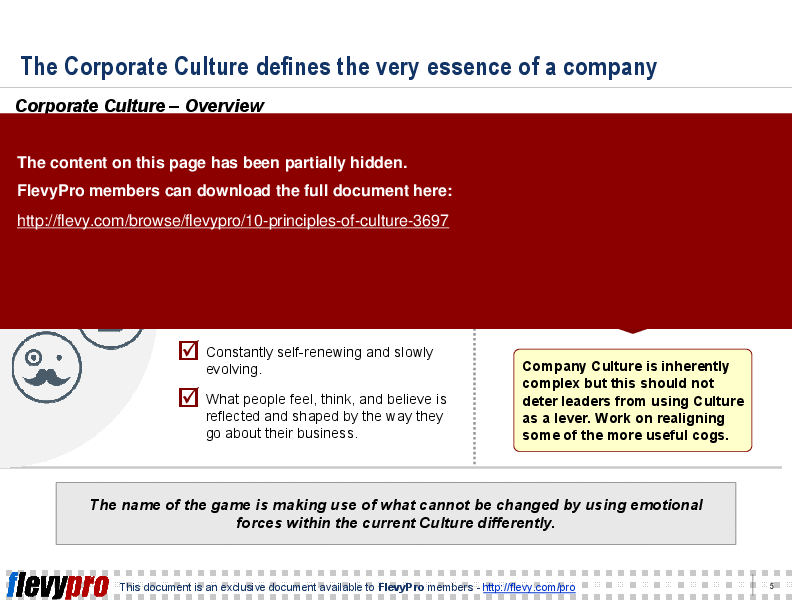
A company's cultural situation is challenging, multidimensional, and difficult to deal with. It constitutes a powerful set of emotional resources. To a degree, Culture can be compared to natural forces such as winds and tides. These elements are there in the background, sometimes unnoticed, sometimes obvious. Endowed with immense power, they can waylay plans and inhibit progress.

Natural forces can't really be tamed or fundamentally altered. But if you respect them and understand how to make the most of them, they can become a source of energy and provide powerful assistance. This is the same with our company's Corporate Culture. Hence, it is incumbent upon leaders to strive to get the most value out a company's Culture. This can be done if we work with them and tap into their hidden powers.

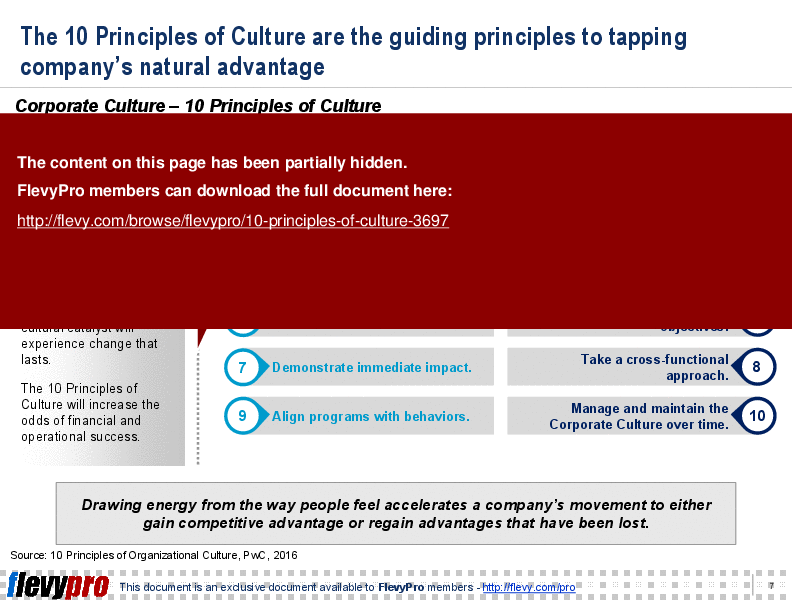
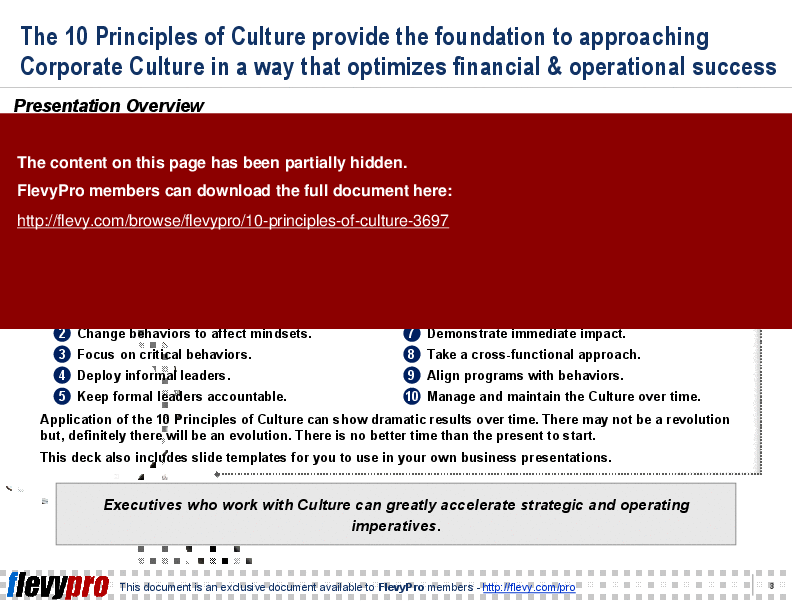
This frameworks provides the 10 essential principles of Corporate Culture organizations must master to accelerate competitive momentum.

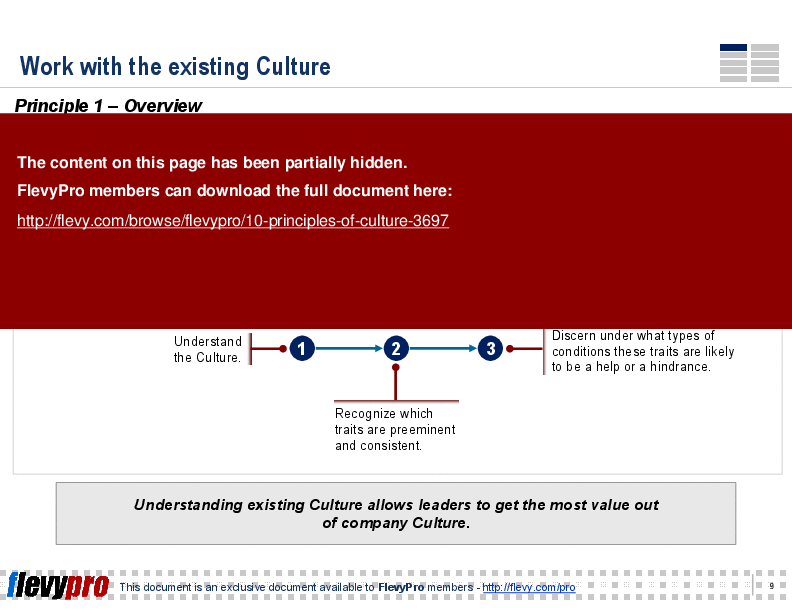
1. Work with the existing Culture.
2. Change behaviors to affect mindsets.
3. Focus on critical behaviors.
4. Deploy informal leaders.
5. Keep formal leaders accountable.
6. Link behaviors with business objectives.
7. Demonstrate immediate impact.
8. Take a cross-functional approach.
9. Align programs with behaviors.
10. Manage and maintain the Culture over time.

Application of the 10 Principles of Culture can show dramatic results over time. There may not be a revolution but, definitely there will be an evolution. There is no better time than the present to start.

This deck also includes slide templates for you to use in your own business presentations.

Executives who leverage these principles can significantly enhance strategic alignment and operational efficiency. The PPT outlines how to harness the inherent power of your company's culture to drive performance and achieve business goals. It emphasizes the importance of behavior as the primary driver of cultural change and provides actionable insights for aligning behaviors with business objectives. This resource is essential for leaders aiming to cultivate a high-performing organizational culture.

Got a question about this document? Email us at flevypro@flevy.com.

MARCUS OVERVIEW

This synopsis was written by Marcus [?] based on the analysis of the full 30-slide presentation.


Executive Summary
The "10 Principles of Culture" presentation offers a strategic framework for understanding and optimizing corporate culture to enhance financial and operational success. This deck is designed for executives and leaders who aim to leverage cultural dynamics to drive organizational change and improve performance. By applying these principles, leaders can harness the emotional energy within their organizations, fostering a culture that aligns with business objectives and accelerates strategic imperatives. The presentation includes actionable templates, making it a practical resource for immediate implementation.

Who This Is For and When to Use
•  Corporate executives looking to enhance organizational culture.
•  Change management leaders focused on cultural transformation.
•  HR professionals aiming to align culture with business strategy.
•  Consultants advising organizations on cultural initiatives.

Best-fit moments to use this deck:
•  During strategic planning sessions to integrate culture into business objectives.
•  In workshops focused on leadership development and employee engagement.
•  When assessing the impact of cultural initiatives on organizational performance.

Learning Objectives
•  Define the role of corporate culture in achieving strategic goals.
•  Identify key behaviors that influence cultural dynamics.
•  Develop actionable strategies to align culture with business objectives.
•  Implement frameworks for managing and evolving corporate culture over time.
•  Engage informal leaders to drive cultural change.
•  Measure the impact of cultural initiatives on organizational performance.

Table of Contents
•  Overview (page 3)
•  Corporate Culture (page 5)
•  Principles of Culture (page 7)
•  Templates (page 20)

Primary Topics Covered
•  Corporate Culture Overview - Understanding the essence of corporate culture as the personality of an organization and its impact on operations.
•  10 Principles of Culture - A framework outlining essential principles to optimize corporate culture for strategic success.
•  Behavioral Change - The significance of changing behaviors to influence mindsets and drive cultural transformation.
•  Informal Leaders - The role of informal leaders in shaping and influencing corporate culture.
•  Linking Culture to Business Objectives - Strategies to connect cultural initiatives with measurable business outcomes.
•  Managing Culture Over Time - Approaches for sustaining and evolving corporate culture to meet changing business needs.

Deliverables, Templates, and Tools
•  Framework for assessing and aligning corporate culture with business objectives.
•  Templates for implementing the 10 Principles of Culture in organizational settings.
•  Guidelines for identifying and engaging informal leaders within the organization.
•  Tools for measuring the impact of cultural initiatives on performance.
•  Action plans for managing and evolving corporate culture over time.

Slide Highlights
•  Overview of the 10 Principles of Culture, emphasizing their importance in organizational success.
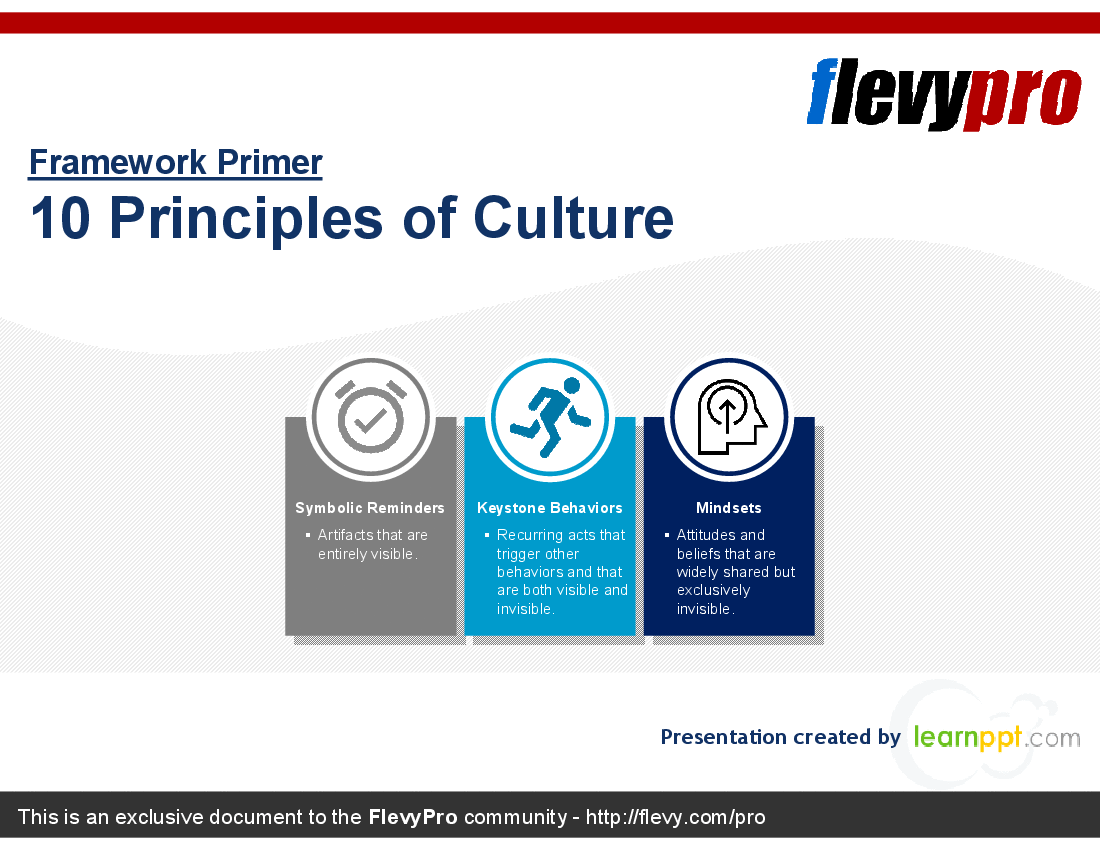
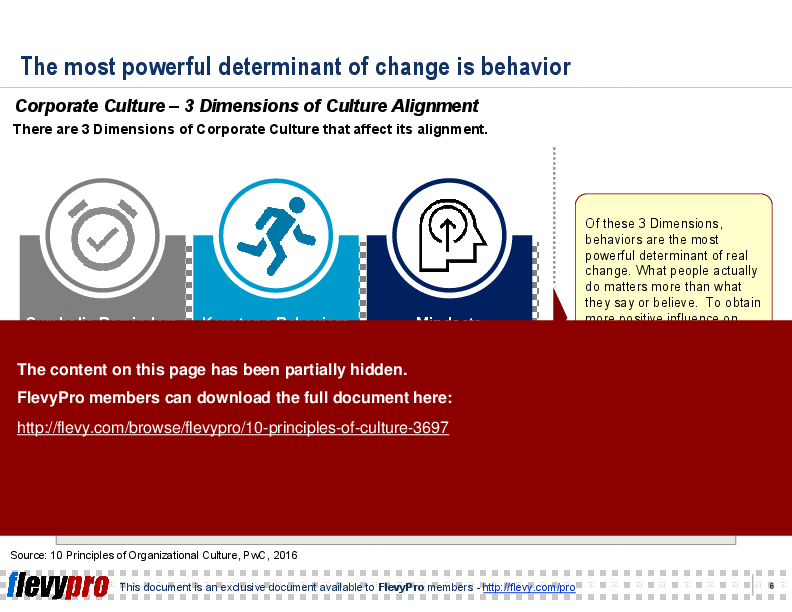
•  Visual representation of the 3 dimensions of culture alignment: Symbolic Reminders, Keystone Behaviors, and Mindsets.
•  Case studies showcasing the impact of cultural initiatives on business performance.
•  Templates for practical application of the principles in real-world scenarios.

Potential Workshop Agenda
Introduction to Corporate Culture (30 minutes)
•  Overview of corporate culture and its significance.
•  Discussion on current cultural challenges within the organization.

Principles of Culture Deep Dive (60 minutes)
•  Review of the 10 Principles of Culture.
•  Group activities to identify critical behaviors within the organization.

Action Planning Session (60 minutes)
•  Develop action plans for implementing cultural initiatives.
•  Assign roles and responsibilities for driving cultural change.

Customization Guidance
•  Tailor the presentation templates to reflect your organization’s specific cultural attributes and challenges.
•  Adjust examples and case studies to align with your industry context.
•  Incorporate internal metrics and KPIs to measure the success of cultural initiatives.

Secondary Topics Covered
•  Emotional intelligence in leadership and its impact on culture.
•  The relationship between corporate culture and employee engagement.
•  Strategies for communicating cultural values across the organization.
•  Best practices for sustaining cultural change over time.

Topic FAQ

What are the common guiding principles used to change corporate culture?

Common guiding principles focus on working with existing culture, changing behaviors to affect mindsets, prioritizing critical or keystone behaviors, deploying informal leaders, keeping formal leaders accountable, linking behaviors to business objectives, demonstrating immediate impact, taking a cross-functional approach, aligning programs with behaviors, and managing culture over time—a set of 10 principles.

How does changing behaviors influence employee mindsets in cultural initiatives?

Behavioral change creates repeatable actions that, when reinforced, shift perceptions and norms; targeting keystone behaviors produces cascading effects across teams and stabilizes new mindsets through reinforcement, visible leadership accountability, and aligned programs, with emphasis placed on identifying and sustaining those keystone behaviors.

What role do informal leaders play in shaping organizational culture?

Informal leaders influence peers without formal authority, acting as catalysts for adoption by modeling desired behaviors, legitimizing change, and spreading norms; engaging them involves identification, targeted coaching, and role assignment as part of a deployment plan outlined in available implementation guidelines.

What should I look for in a culture toolkit before purchasing templates?

Evaluate whether the toolkit provides a principles-based framework, practical implementation templates, measurement tools, workshop agendas, and guidance for informal- and formal-leader roles; presence of implementation templates, measurement tools, and a 30-slide deck indicates practical applicability for short workshops and executive sessions.

How should I assess the value of culture templates for my organization?

Assess value by the templates’ ability to link behaviors to measurable business outcomes, provide tools for engagement and measurement, support cross-functional rollout, and offer reusable slide and workshop content; concrete indicators include built-in measurement approaches using employee engagement scores and performance indicators.

How long will it typically take to run a leadership workshop using ready-made culture materials?

A focused workshop can be structured as a 2.5-hour session using the sample agenda: a 30-minute introduction to culture, a 60-minute principles deep dive, and a 60-minute action-planning session; slide templates and group activities support this 150-minute format in Flevy's 10 Principles of Culture.

After a merger, how do I prioritize which behaviors to change first?

Prioritize behaviors that directly enable strategic objectives and have cascading effects (keystone behaviors), seek cross-functional consensus, deploy informal leaders in impacted groups, and start with actions that demonstrate immediate impact; Flevy's 10 Principles of Culture provides templates to identify and prioritize critical behaviors.

What metrics are most useful for measuring the impact of cultural initiatives?

Useful metrics include employee engagement scores, targeted performance indicators tied to business objectives, and feedback survey results; combining qualitative feedback with quantitative performance measures and using the included measurement tools helps track change over time with employee engagement scores and performance indicators.

Document FAQ
These are questions addressed within this presentation.

What are the 10 Principles of Culture?
The 10 Principles of Culture are foundational guidelines for optimizing corporate culture, including working with existing culture, changing behaviors, and linking culture to business objectives.

How can I measure the impact of cultural initiatives?
Utilize metrics such as employee engagement scores, performance indicators, and feedback surveys to assess the effectiveness of cultural initiatives.

What role do informal leaders play in shaping culture?
Informal leaders can influence behaviors and attitudes within the organization, often acting as catalysts for cultural change without formal authority.

How can I align culture with business objectives?
Identify specific behaviors that support business goals and communicate how cultural initiatives can enhance performance and outcomes.

What is the significance of managing culture over time?
Continuous management of culture ensures that it evolves with the organization, adapting to changes in strategy, workforce, and market conditions.

Can these principles be applied in any industry?
Yes, the principles are adaptable and can be tailored to fit the unique cultural dynamics of any industry.

How do I engage employees in cultural initiatives?
Involve employees in the development and implementation of cultural initiatives, ensuring their voices are heard and their contributions valued.

What are some common challenges in changing corporate culture?
Resistance to change, lack of leadership support, and misalignment between culture and strategy are common challenges that organizations face.

Glossary
•  Corporate Culture - The shared values, beliefs, and behaviors that shape how an organization operates.
•  Keystone Behaviors - Actions that trigger other behaviors within the organization.
•  Informal Leaders - Individuals who influence others without formal authority.
•  Cultural Initiatives - Programs or actions aimed at improving or changing the organizational culture.
•  Emotional Commitment - The emotional investment employees have in their organization and its culture.
•  Behavioral Change - Modifications in actions that can lead to shifts in organizational culture.
•  Cultural Alignment - The degree to which an organization’s culture supports its strategic objectives.
•  Employee Engagement - The level of commitment and involvement an employee has towards their organization.
•  Cultural Assessment - The process of evaluating the current state of an organization’s culture.
•  Performance Metrics - Measurements used to assess the effectiveness of cultural initiatives.
•  Change Management - The approach to transitioning individuals, teams, and organizations to a desired future state.
•  Strategic Priorities - Key areas of focus that drive an organization’s strategy and objectives.

CORPORATE CULTURE PPT SLIDES

Types of Informal Leaders and Their Impact

Framework for Sustaining Organizational Culture Over Time

Cross-Functional Change Process for Organizational Culture

Dimensions of Corporate Culture and Behavioral Change

Streamlined Approach to Behavioral Change in Organizations

Leveraging Cultural Principles for Strategic Success

Source: Best Practices in Corporate Culture PowerPoint Slides: 10 Principles of Culture PowerPoint (PPTX) Presentation Slide Deck, LearnPPT Consulting


$29.00
FlevyPro price: FREE (included in subscription)
This framework is developed by a team of former McKinsey and Big 4 consultants. The presentation follows the headline-body-bumper slide format used by global consulting firms.
Add to Cart
  

Did you need more documents?

Consider a FlevyPro subscription from $39/month. View plans here.

For $10.00 more, you can download this document plus 2 more FlevyPro documents. That's just $13 each.

ABOUT FLEVYPRO

This document is part of the FlevyPro Library, a curated knowledge base of documents for our FlevyPro subscribers.

FlevyPro is a subscription service for on-demand business frameworks and analysis tools. FlevyPro subscribers receive access to an exclusive library of curated business documents—business framework primers, presentation templates, Lean Six Sigma tools, and more—among other exclusive benefits.

Click here to learn more about FlevyPro and its benefits.

Did you know?
The average daily rate of a McKinsey consultant is $6,625 (not including expenses). The average price of a Flevy document is $65.


Trusted by over 10,000+ Client Organizations
Since 2012, we have provided business templates to over 10,000 businesses and organizations of all sizes, from startups and small businesses to the Fortune 100, in over 130 countries.
AT&T GE Cisco Intel IBM Coke Dell Toyota HP Nike Samsung Microsoft Astrazeneca JP Morgan KPMG Walgreens Walmart 3M Kaiser Oracle SAP Google E&Y Volvo Bosch Merck Fedex Shell Amgen Eli Lilly Roche AIG Abbott Amazon PwC T-Mobile Broadcom Bayer Pearson Titleist ConEd Pfizer NTT Data Schwab


Read Customer Testimonials

 
"Flevy is now a part of my business routine. I visit Flevy at least 3 times each month.

Flevy has become my preferred learning source, because what it provides is practical, current, and useful in this era where the business world is being rewritten.

In today's environment where there are so "

– Omar Hernán Montes Parra, CEO at Quantum SFE
 
"[Flevy] produces some great work that has been/continues to be of immense help not only to myself, but as I seek to provide professional services to my clients, it gives me a large "tool box" of resources that are critical to provide them with the quality of service and outcomes they are expecting."

– Royston Knowles, Executive with 50+ Years of Board Level Experience
 
"I am extremely grateful for the proactiveness and eagerness to help and I would gladly recommend the Flevy team if you are looking for data and toolkits to help you work through business solutions."

– Trevor Booth, Partner, Fast Forward Consulting
 
"FlevyPro has been a brilliant resource for me, as an independent growth consultant, to access a vast knowledge bank of presentations to support my work with clients. In terms of RoI, the value I received from the very first presentation I downloaded paid for my subscription many times over! The "

– Roderick Cameron, Founding Partner at SGFE Ltd
 
"The wide selection of frameworks is very useful to me as an independent consultant. In fact, it rivals what I had at my disposal at Big 4 Consulting firms in terms of efficacy and organization."

– Julia T., Consulting Firm Owner (Former Manager at Deloitte and Capgemini)
 
"Last Sunday morning, I was diligently working on an important presentation for a client and found myself in need of additional content and suitable templates for various types of graphics. Flevy.com proved to be a treasure trove for both content and design at a reasonable price, considering the time I "

– M. E., Chief Commercial Officer, International Logistics Service Provider
 
"I have used FlevyPro for several business applications. It is a great complement to working with expensive consultants. The quality and effectiveness of the tools are of the highest standards."

– Moritz Bernhoerster, Global Sourcing Director at Fortune 500
 
"As a consultant requiring up to date and professional material that will be of value and use to my clients, I find Flevy a very reliable resource.

The variety and quality of material available through Flevy offers a very useful and commanding source for information. Using Flevy saves me time, enhances my expertise and ends up being a good decision."

– Dennis Gershowitz, Principal at DG Associates


Customers Also Bought These Documents


Customers Also Like These Documents

Explore Templates on Related Management Topics


Your Recently Viewed Documents
Download our FREE Organization, Change, & Culture, Templates

Download our free compilation of 50+ slides and templates on Organizational Design, Change Management, and Corporate Culture. Methodologies include ADKAR, Burke-Litwin Change Model, McKinsey 7-S, Competing Values Framework, etc.