
This framework is developed by a team of former McKinsey and Big 4 consultants. The presentation follows the headline-body-bumper slide format used by global consulting firms.
Editor Summary
A 26-slide PowerPoint from LearnPPT Consulting, Five Dimensions of Marketing Organizations outlines 5 core ways to structure marketing: segment-, product-, channel-, geography-, and function-centric.
Read moreEach dimension includes an overview, pros and cons, recommended usage scenarios, and a representative organizational chart, plus customizable slide templates. Targeted at C-level executives and marketing leaders for aligning marketing structure with business objectives. Sold as a digital download on Flevy with immediate digital download.
Use this deck when you need to choose or redesign a marketing organization to align structure with overall business objectives, or to compare alternative structural approaches across business scenarios.
C-suite marketing leaders evaluating which structural dimension should be dominant, using pros/cons and recommended scenarios to decide.
HR or talent leads drafting role maps and reporting lines, using the representative organizational charts and slide templates to model changes.
Strategy or transformation managers comparing segment, product, channel, geography, and function trade-offs for a planned reorganization.
The slide-by-slide comparison and scenario-based recommendations reflect a structured diagnostic-and-design consulting approach to organizational design.
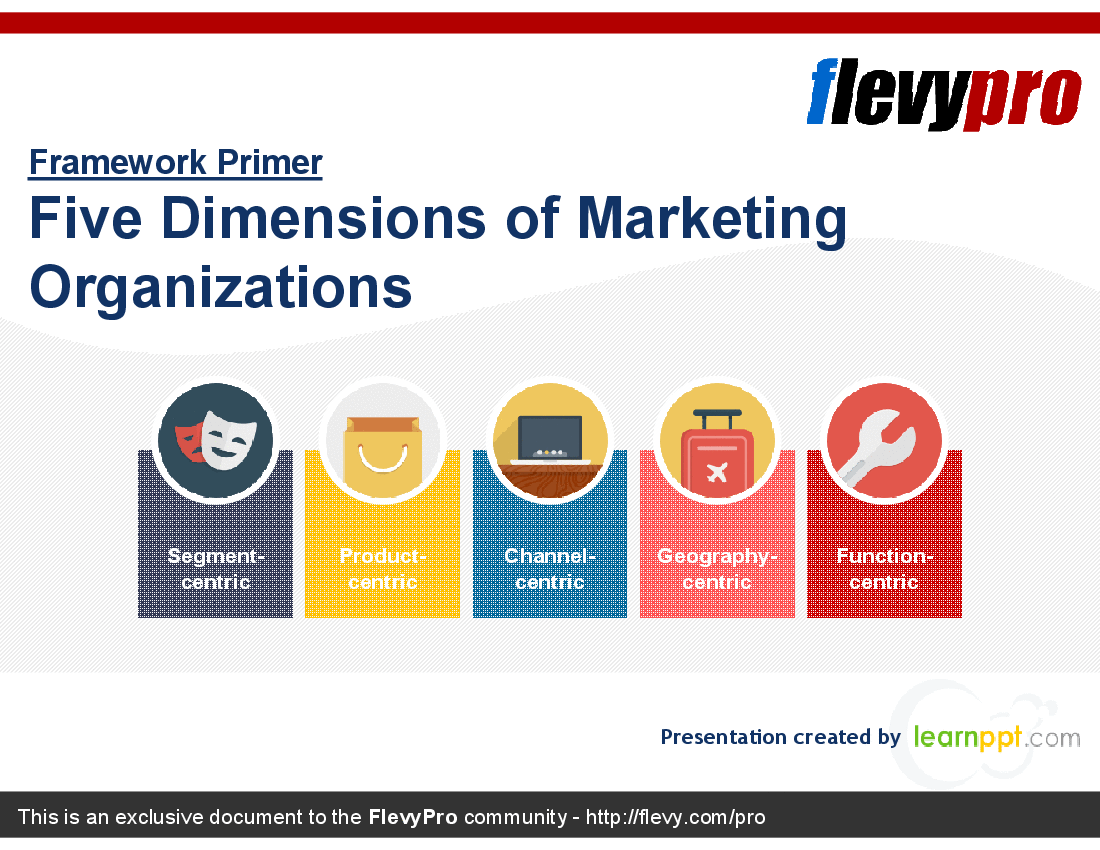
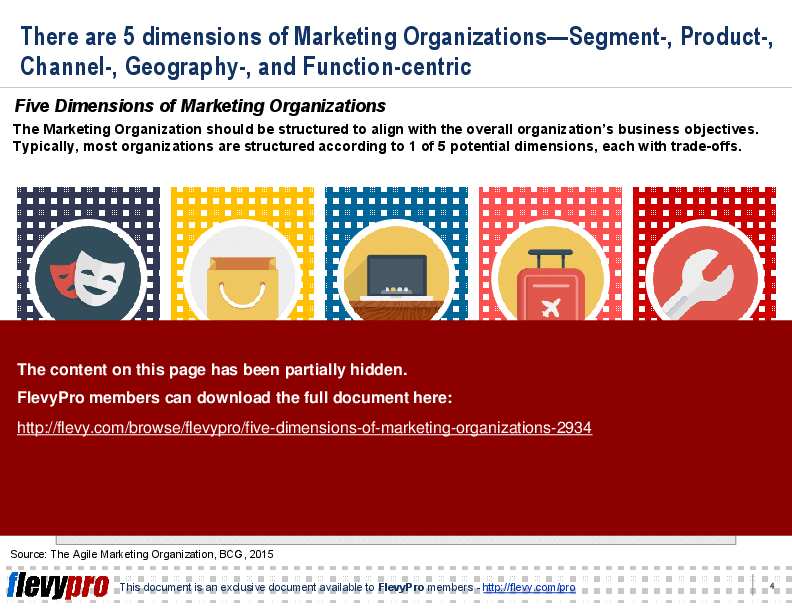
The Marketing Organization should be structured to align with the overall organization’s business objectives. There are 5 dimensions of Marketing Organizations:
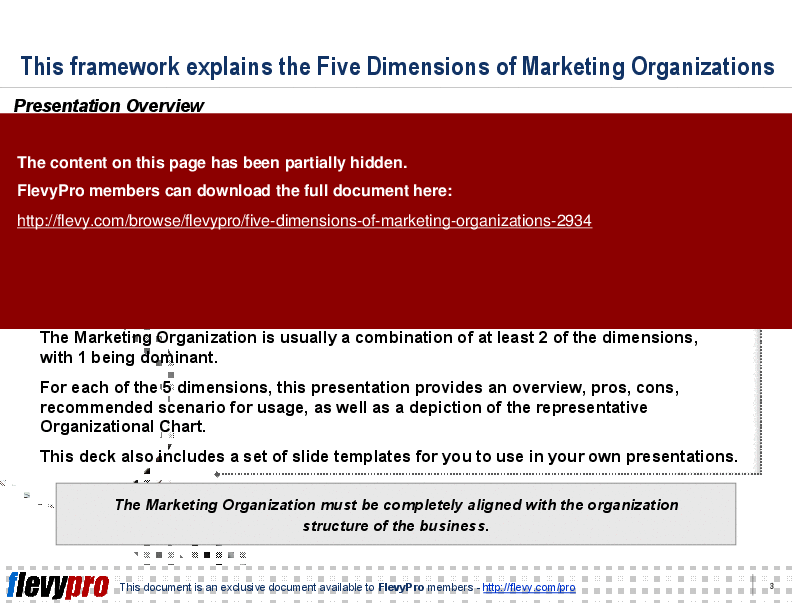
The Marketing Organization is usually a combination of at least 2 of the dimensions, with 1 being dominant. The Marketing Organization must be completely aligned with the organization structure of the business.
For each of the 5 dimensions, this presentation provides an overview, pros, cons, recommended scenario for usage, as well as a depiction of the representative Organizational Chart.
This deck also includes a set of slide templates for you to use in your own presentations.
This comprehensive presentation delves into the intricacies of each marketing dimension, providing a detailed analysis of their respective advantages and drawbacks. It offers actionable insights into when and how to implement each structure, ensuring alignment with your overarching business strategy. The PPT is designed to be a practical tool for C-level executives seeking to optimize their marketing organization for maximum efficiency and effectiveness.
The deck includes illustrative organizational charts for each dimension, showcasing real-world applications and potential configurations. These visual aids are invaluable for understanding the practical implications of each structure and for facilitating discussions with your leadership team. The presentation also highlights emerging trends and best practices in marketing organization design, making it a forward-looking resource for strategic planning.
Included in the package are customizable slide templates that can be seamlessly integrated into your own presentations. These templates are designed to save you time and effort, allowing you to focus on strategic decision-making. By leveraging this document, you will be equipped with the knowledge and tools to restructure your marketing organization in a way that drives business growth and enhances operational efficiency.
What are the common ways to structure a marketing organization?
Marketing organizations are commonly structured around 5 dimensions: segment-centric, product-centric, channel-centric, geography-centric, and function-centric. Organizations often combine 2 or more dimensions with one dominant approach, so practitioners typically assess each option before selecting a dominant structure, covering 5 dimensions.
How should I decide which marketing structure best fits our business?
Decide by aligning the marketing structure with your overall business objectives, evaluating the pros and cons and recommended usage scenarios for each dimension, and testing representative organizational charts against your operating model. Frameworks that compare scenarios and pros/cons across all 5 dimensions help inform the choice, such as the Five Dimensions of Marketing Organizations deck.
What trade-offs exist between segment-centric and product-centric models?
Trade-offs typically involve customer focus versus product specialization and coordination complexity; segment-centric prioritizes customer/market needs while product-centric emphasizes product expertise. Assessments that list pros and cons for each option can clarify trade-offs, with comparison matrices applicable across the 5 dimensions.
What organizational chart models should I prepare when proposing a new marketing structure?
Prepare representative organizational charts that reflect each candidate dimension—segment, product, channel, geography, and function—and models showing combinations with a dominant dimension. Visual depictions help leadership evaluate reporting lines and span-of-control, using representative organizational charts for each of the 5 dimensions.
What should I look for in a marketing organization design toolkit before buying one?
Look for a toolkit that describes each structural dimension, lists pros and cons, recommends scenarios for use, and provides representative organizational charts plus customizable slide templates to present options. A useful package includes scenario guidance and organizational chart templates and slide templates.
How can slide templates and example org charts speed up an internal redesign process?
Ready-made slide templates and example organizational charts reduce time spent formatting and enable clearer comparison of options, letting teams focus on analysis and stakeholder alignment. A packaged PowerPoint that includes templates and charts—such as a 26-slide deck—can accelerate presentation-ready outputs.
We are expanding into new countries; which structure should we evaluate first?
For international expansion, evaluate the geography-centric dimension to balance local responsiveness and central coordination, and consider hybrid combinations if product or channel responsibilities require centralized control. Scenario-based recommendations for geography-centric usage help guide decisions, focusing on the geography-centric dimension.
After adding several new product lines, should marketing move to a product-centric model?
Moving toward a product-centric model is a common option when product specialization and lifecycle management become primary priorities,, but you should evaluate pros/cons and alignment with overall business structure. Comparative guidance and recommended scenarios for the product-centric dimension inform that decision.
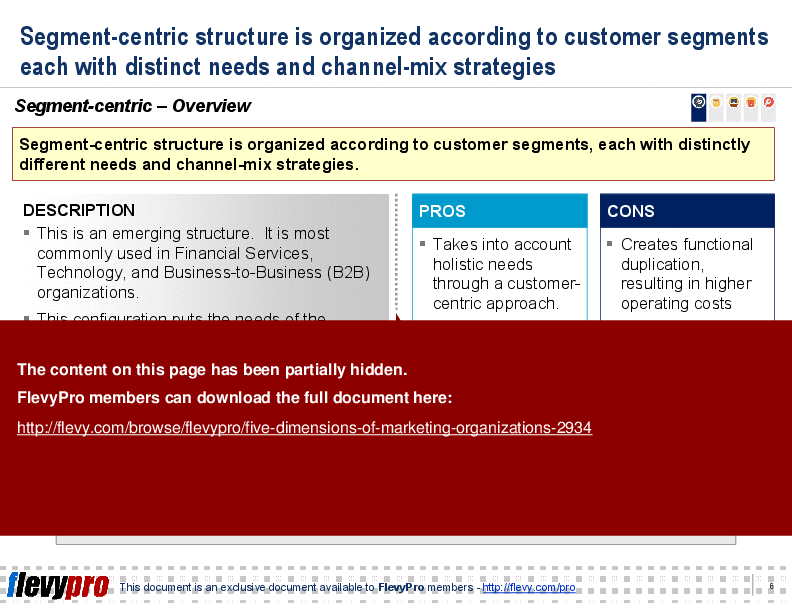
This PPT slide outlines a segment-centric organizational structure tailored to customer segments with unique needs and channel strategies, prevalent in Financial Services, Technology, and B2B sectors. Prioritizing customer requirements enhances multi-channel integration, fostering cross-selling and up-selling opportunities. This structure leads to a more tailored service experience by focusing on holistic customer needs. However, potential drawbacks include functional duplication, which can increase operational costs and strain resources due to the need for distinct customer segment catering. While beneficial, this model may not suit all organizations, particularly where customer segments do not exhibit significantly different needs.
This PPT slide provides an overview of a product-centric organizational structure in the Consumer Goods sector, designed around distinct products or product lines to meet varying customer needs. Key advantages include enhanced integration with product innovation, leading to effective product development and marketing strategies. However, this structure may overlook holistic client needs, resulting in a fragmented customer experience and hindering cross-selling and upselling opportunities. Strengths include fostering product marketing expertise and creating robust feedback loops for product improvement based on consumer insights. Conversely, potential pitfalls involve missing broader client needs, which can negatively impact customer satisfaction and loyalty. Organizations focused on product development should weigh these benefits against the risks of alienating customers who prefer a more integrated approach.
This PPT slide outlines the geography-centric organizational structure used by global and multinational companies, designed to enhance responsiveness to regional markets. While it effectively addresses local needs, this model may lack expertise in specific channels or products, leading to brand inconsistencies. Centralized functions, such as Centers of Excellence, are necessary to drive efficiencies and maintain a cohesive strategy across markets. The geography-centric approach allows for tailored offerings that resonate with local consumers, improving customer satisfaction and loyalty. However, it poses a risk of brand inconsistencies on a global scale, potentially confusing customers and diluting brand identity, which undermines marketing effectiveness.
Source: Best Practices in Organizational Design, Agile Marketing PowerPoint Slides: Five Dimensions of Marketing Organizations PowerPoint (PPT) Presentation Slide Deck, LearnPPT Consulting
This framework is developed by a team of former McKinsey and Big 4 consultants. The presentation follows the headline-body-bumper slide format used by global consulting firms.
For $10.00 more, you can download this document plus 2 more FlevyPro documents. That's just $13 each.
ABOUT FLEVYPRO
This document is part of the FlevyPro Library, a curated knowledge base of documents for our FlevyPro subscribers.

FlevyPro is a subscription service for on-demand business frameworks and analysis tools. FlevyPro subscribers receive access to an exclusive library of curated business documents—business framework primers, presentation templates, Lean Six Sigma tools, and more—among other exclusive benefits.
The average daily rate of a McKinsey consultant is $6,625 (not including expenses). The average price of a Flevy document is $65.
Trusted by over 10,000+ Client Organizations
Since 2012, we have provided business templates to over 10,000 businesses and organizations of all sizes, from startups and small businesses to the Fortune 100, in over 130 countries.
"As a niche strategic consulting firm, Flevy and FlevyPro frameworks and documents are an on-going reference to help us structure our findings and recommendations to our clients as well as improve their clarity, strength, and visual power. For us, it is an invaluable resource to increase our impact and value."
– David Coloma, Consulting Area Manager at Cynertia Consulting
"The wide selection of frameworks is very useful to me as an independent consultant. In fact, it rivals what I had at my disposal at Big 4 Consulting firms in terms of efficacy and organization."
– Julia T., Consulting Firm Owner (Former Manager at Deloitte and Capgemini)
"I have used FlevyPro for several business applications. It is a great complement to working with expensive consultants. The quality and effectiveness of the tools are of the highest standards."
– Moritz Bernhoerster, Global Sourcing Director at Fortune 500
"FlevyPro has been a brilliant resource for me, as an independent growth consultant, to access a vast knowledge bank of presentations to support my work with clients. In terms of RoI, the value I received from the very first presentation I downloaded paid for my subscription many times over! The
quality of the decks available allows me to punch way above my weight – it's like having the resources of a Big 4 consultancy at your fingertips at a microscopic fraction of the overhead.
"
– Roderick Cameron, Founding Partner at SGFE Ltd
"I have found Flevy to be an amazing resource and library of useful presentations for lean sigma, change management and so many other topics. This has reduced the time I need to spend on preparing for my performance consultation. The library is easily accessible and updates are regularly provided. A wealth of great information."
– Cynthia Howard RN, PhD, Executive Coach at Ei Leadership
"My FlevyPro subscription provides me with the most popular frameworks and decks in demand in today’s market. They not only augment my existing consulting and coaching offerings and delivery, but also keep me abreast of the latest trends, inspire new products and service offerings for my practice, and educate me
in a fraction of the time and money of other solutions. I strongly recommend FlevyPro to any consultant serious about success.
"
– Bill Branson, Founder at Strategic Business Architects
"As a consultant requiring up to date and professional material that will be of value and use to my clients, I find Flevy a very reliable resource.
The variety and quality of material available through Flevy offers a very useful and commanding source for information. Using Flevy saves me time, enhances my expertise and ends up being a good decision."
– Dennis Gershowitz, Principal at DG Associates
"Last Sunday morning, I was diligently working on an important presentation for a client and found myself in need of additional content and suitable templates for various types of graphics. Flevy.com proved to be a treasure trove for both content and design at a reasonable price, considering the time I
saved. I encountered a download issue during the ordering process. However, a quick email to Flevy's support team, even on a Sunday (!!!), resulted in assistance within less than an hour, allowing me to download the content I needed. Fantastic job, Flevy! I give 5 stars for both content/price and customer service. Thank you!
"
– M. E., Chief Commercial Officer, International Logistics Service Provider
Download our free compilation of 50+ slides and templates on Organizational Design, Change Management, and Corporate Culture. Methodologies include ADKAR, Burke-Litwin Change Model, McKinsey 7-S, Competing Values Framework, etc.









