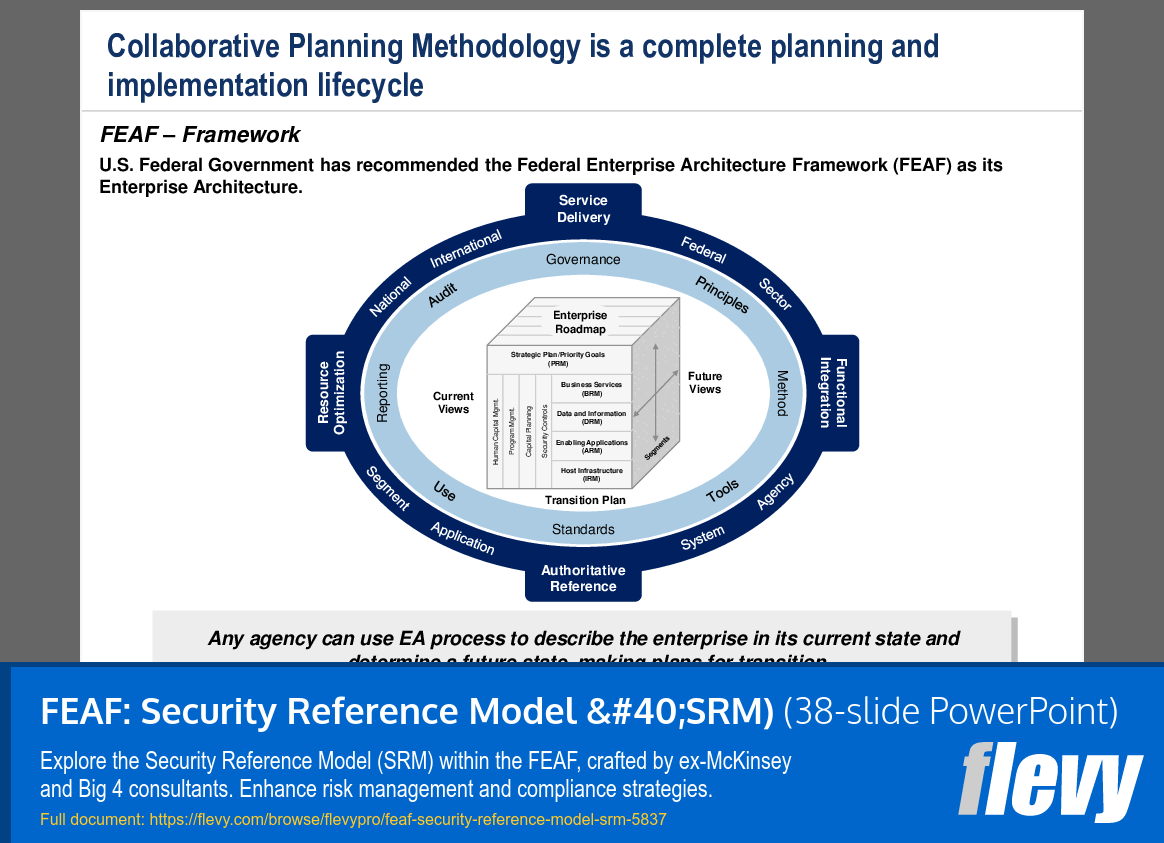

This framework is developed by a team of former McKinsey and Big 4 consultants. The presentation follows the headline-body-bumper slide format used by global consulting firms.
Explore the Security Reference Model (SRM) within the FEAF, crafted by ex-McKinsey and Big 4 consultants. Enhance risk management and compliance strategies. FEAF: Security Reference Model (SRM) is a 38-slide PPT PowerPoint presentation slide deck (PPTX) available for immediate download upon purchase.
Enterprise Architecture (EA) denotes management best practice for lining up business and technology resources to realize strategic results, expand upon Organizational Performance and steer departments to achieve their core missions more successfully.
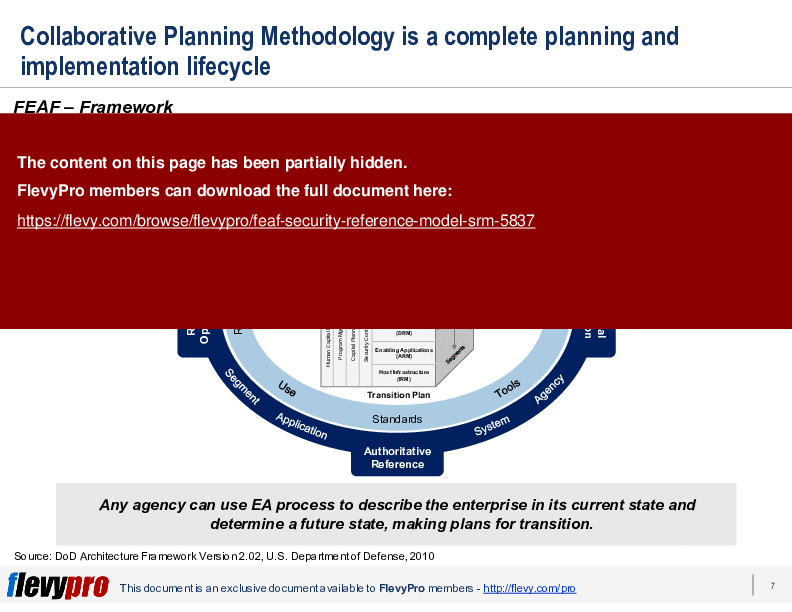
Federal Enterprise Architecture Framework (FEAF) assists any agency of the Federal government achieve this through documentation and information that conveys a summarized outlook of an enterprise at various tiers of scope and detail.
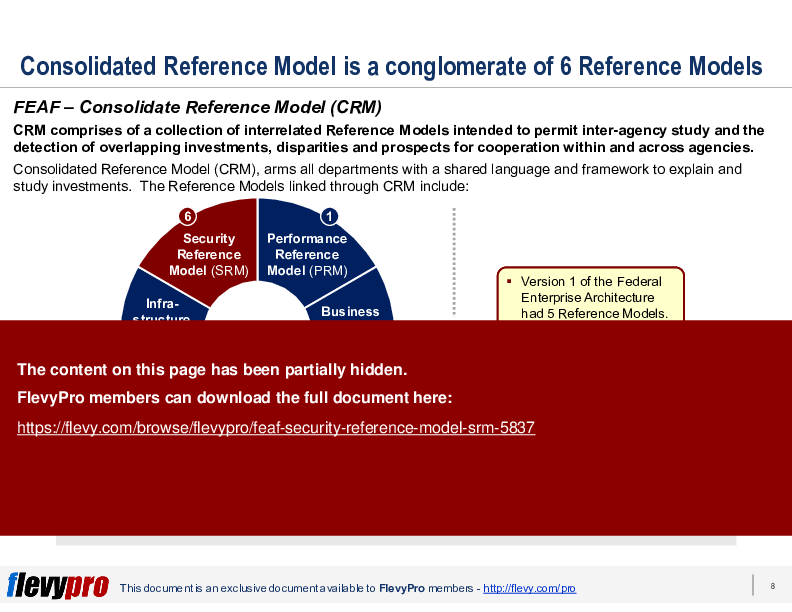
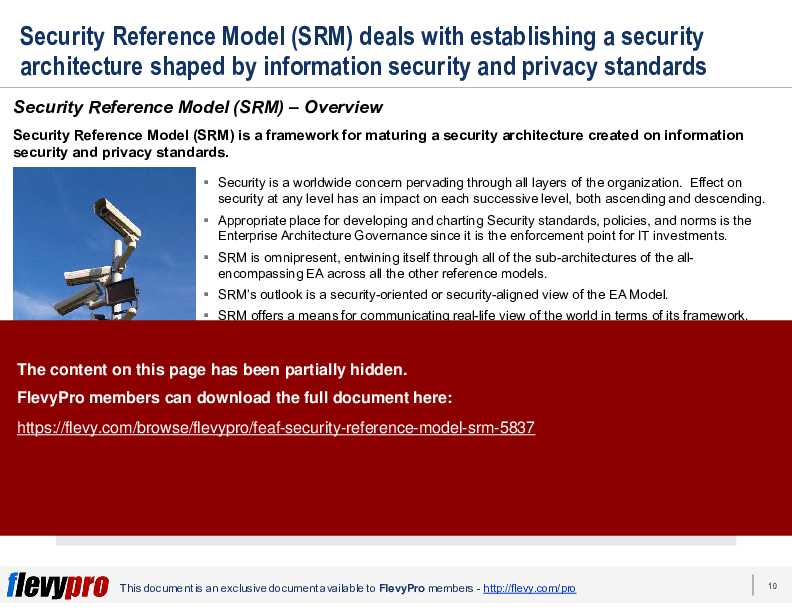
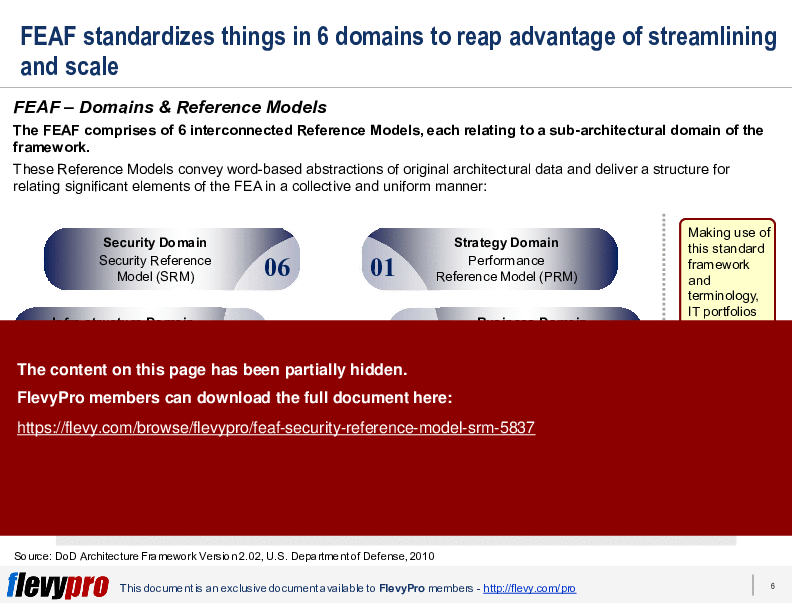
This presentation discusses 1 of the 6 reference models of the Federal Enterprise Architecture Framework—the Security Reference Model (SRM).
The slide deck explains SRM's Risk Reduction approach, Risk Management Framework, Touchpoints with Other Reference Models, Design Compliance for Architectural Layers, SRM structure, and SRM Controls & Metrics.
The slide deck also includes some slide templates for you to use in your own business presentations.
The Security Reference Model (SRM) is integral to the Federal Enterprise Architecture Framework (FEAF), providing a structured approach to managing and mitigating security risks across all layers of an organization. This PPT outlines the SRM's comprehensive methodology, including its alignment with regulatory requirements and its integration with other reference models within the FEAF. The SRM's focus on risk reduction, compliance, and metrics ensures that security measures are not only implemented, but also continuously monitored and improved.
The presentation delves into the SRM's design compliance for architectural layers, detailing how standards and policies are applied at the enterprise, segment, and system levels. It emphasizes the importance of utilizing existing controls and aligning them with organizational objectives to create a robust security posture. The document also highlights the role of the Risk Management Framework (RMF) in embedding security processes into the Systems Development Life Cycle (SDLC), ensuring that security considerations are addressed at every stage of system development and operation.
Additionally, the SRM's controls and metrics section provides valuable insights into measuring the effectiveness of security controls and their impact on risk reduction. It discusses the need for a balanced approach to applying controls and the importance of performance-based metrics in evaluating security outcomes. The document includes practical templates and examples to help organizations implement and tailor the SRM to their specific needs, making it a valuable resource for any agency looking to enhance its security architecture.
This PPT slide outlines a framework for consolidating controls across an organization to manage risk effectively. It integrates controls both vertically and horizontally, employing a layered approach to system deployments. Key phases include: Plan, Prepare, Operate, Monitor, Improve, and Effectiveness & Measure.
In the "Plan" phase, activities involve defining requirements, designing infrastructure, and preparing staff to establish a solid foundation for control mechanisms. The "Operate" phase focuses on tracking performance and identifying deviations through activities like scoring and managing operations.
The "Effectiveness & Measure" phase emphasizes assessing the value proposition and systematically addressing problems, allowing organizations to prioritize issues for informed decision-making. This integrated approach fosters continuous risk management and enhances operational resilience.
This PPT slide outlines a framework for assessing security metrics maturity, categorizing it into 4 areas: Processes, Operating Procedures, Data Availability, and Collection Automation. Each area progresses from "Non-existent" to "Full," indicating increasing sophistication in security management. For example, Processes can range from "Evolving," where processes are being defined, to "Well established," where they are documented and operational. Operating Procedures transition from "Being defined" to "Institutionalized," reflecting formalization as maturity increases. Data Availability improves from "Can be collected" to "Available," while Collection Automation evolves from "Low" to "High." This structured approach aligns security metrics with IT security goals and business impact, emphasizing the importance of maturity in enhancing security posture.
The Risk Management Framework (RMF) is a structured six-step cycle designed to enhance organizational risk management. The first step involves categorizing information systems, which establishes a foundation for selecting and implementing security controls, assessing their effectiveness, authorizing systems, and continuously monitoring controls. Each step is interconnected, creating a repeatable process that allows for necessary adjustments. The RMF incorporates organizational inputs such as laws, policy directives, strategic goals, and supply chain considerations, ensuring alignment with broader objectives and compliance requirements. Key components include architecture reference models and information system boundaries, essential for understanding the context of risk management processes. The RMF encourages organizations to view risk management as an ongoing process, vital for enhancing strategies and ensuring compliance with evolving regulations.
This PPT slide outlines the critical role of controls in managing risks within an organizational framework. It illustrates the interaction between threat sources, attack vectors, assets, and vulnerabilities in a risk ecosystem. The "Bad guys" and "Good guys" dichotomy highlights contrasting forces, while the "Threat source" and "Attack vector" sections identify risk origins and manifestations. Key components of risk—threat, impact, and risk management—are defined to understand the overall risk profile. Risk assessment and management strategies include training, technical controls, and ongoing monitoring, essential for effective incident response. Incident management is referenced with NIST categories, suggesting a structured approach. Methods to address risks encompass risk mitigation, avoidance, transfer, and acceptance, emphasizing proactive measures and continuous monitoring to safeguard assets.
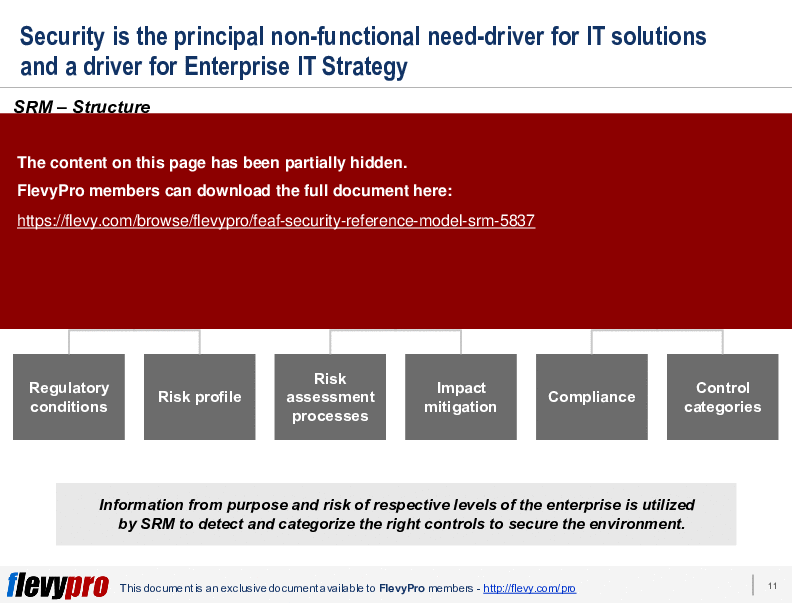
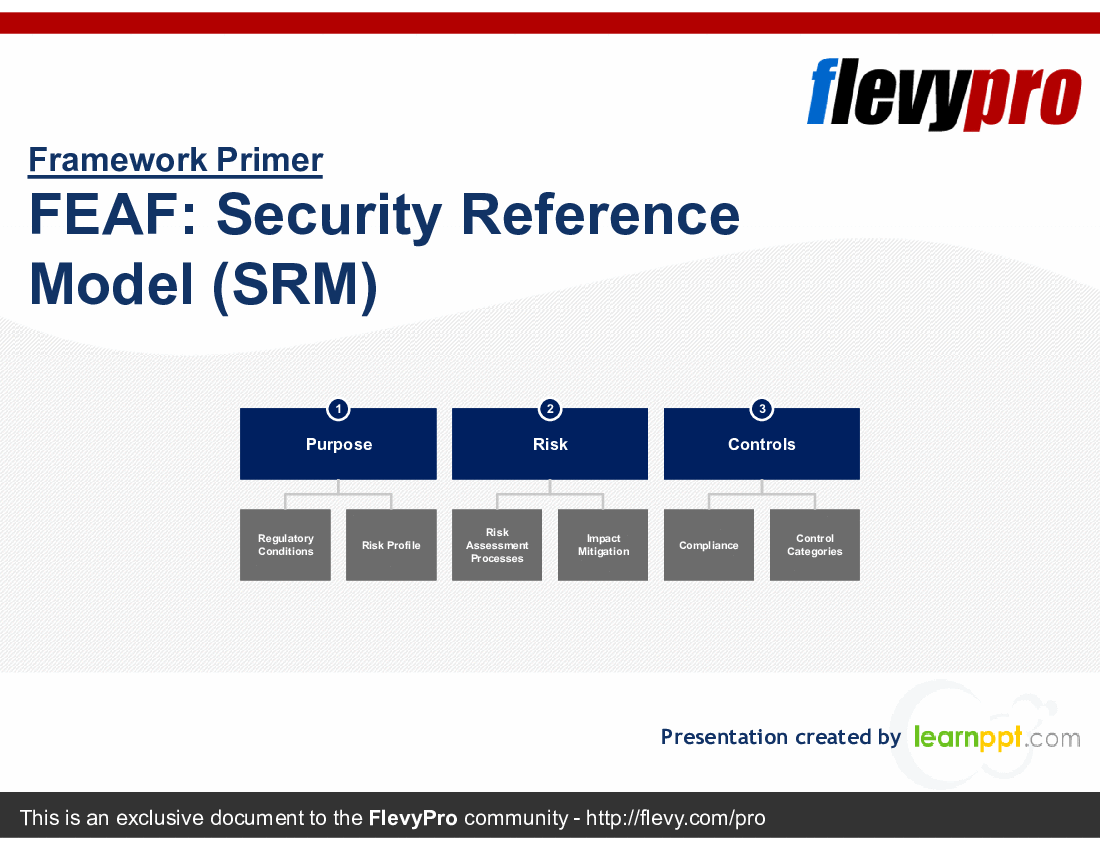
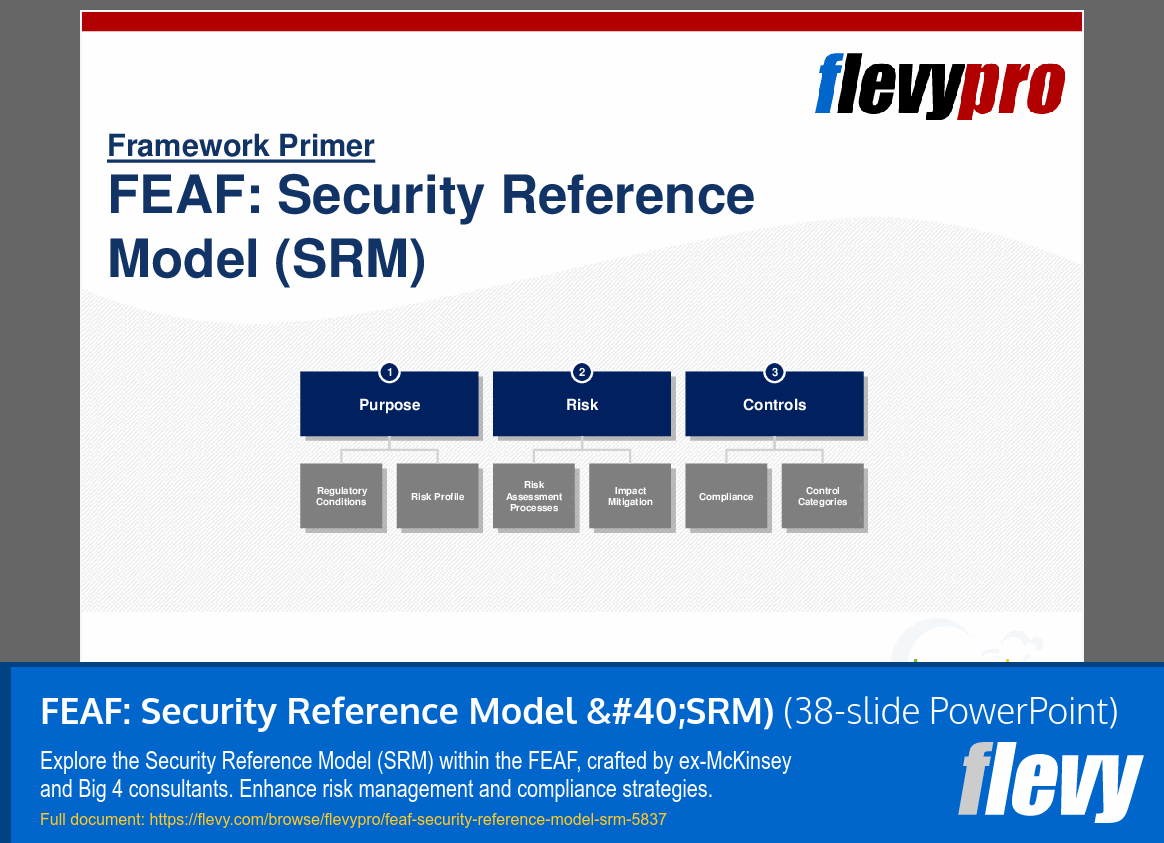
The Security Reference Model (SRM) framework categorizes security architecture into 3 areas: Purpose, Risk, and Controls. The "Purpose" section emphasizes understanding regulatory conditions, risk profiles, and risk assessment processes for comprehensive security strategy development. The "Risk" area focuses on identifying and mitigating threats through risk assessment processes, impact mitigation strategies, and compliance measures, highlighting proactive risk management. The "Controls" category outlines measures to enforce security policies, establishing a robust security framework to manage identified risks. By addressing these areas, organizations can enhance their IT security posture, ensure compliance, and foster a culture of security awareness.
Source: Best Practices in Risk Management, Enterprise Architecture, Business Architecture, Security PowerPoint Slides: FEAF: Security Reference Model (SRM) PowerPoint (PPTX) Presentation Slide Deck, LearnPPT Consulting
This framework is developed by a team of former McKinsey and Big 4 consultants. The presentation follows the headline-body-bumper slide format used by global consulting firms.
For $10.00 more, you can download this document plus 2 more FlevyPro documents. That's just $13 each.
ABOUT FLEVYPRO
This document is part of the FlevyPro Library, a curated knowledge base of documents for our FlevyPro subscribers.

FlevyPro is a subscription service for on-demand business frameworks and analysis tools. FlevyPro subscribers receive access to an exclusive library of curated business documents—business framework primers, presentation templates, Lean Six Sigma tools, and more—among other exclusive benefits.
Since 2012, we have provided business templates to over 10,000 businesses and organizations of all sizes, from startups and small businesses to the Fortune 100, in over 130 countries.
"I have found Flevy to be an amazing resource and library of useful presentations for lean sigma, change management and so many other topics. This has reduced the time I need to spend on preparing for my performance consultation. The library is easily accessible and updates are regularly provided. A wealth of great information."
– Cynthia Howard RN, PhD, Executive Coach at Ei Leadership
"[Flevy] produces some great work that has been/continues to be of immense help not only to myself, but as I seek to provide professional services to my clients, it gives me a large "tool box" of resources that are critical to provide them with the quality of service and outcomes they are expecting."
– Royston Knowles, Executive with 50+ Years of Board Level Experience
"I have used FlevyPro for several business applications. It is a great complement to working with expensive consultants. The quality and effectiveness of the tools are of the highest standards."
– Moritz Bernhoerster, Global Sourcing Director at Fortune 500
"As a niche strategic consulting firm, Flevy and FlevyPro frameworks and documents are an on-going reference to help us structure our findings and recommendations to our clients as well as improve their clarity, strength, and visual power. For us, it is an invaluable resource to increase our impact and value."
– David Coloma, Consulting Area Manager at Cynertia Consulting
"As a consultant requiring up to date and professional material that will be of value and use to my clients, I find Flevy a very reliable resource.
The variety and quality of material available through Flevy offers a very useful and commanding source for information. Using Flevy saves me time, enhances my expertise and ends up being a good decision."
– Dennis Gershowitz, Principal at DG Associates
"As an Independent Management Consultant, I find Flevy to add great value as a source of best practices, templates and information on new trends. Flevy has matured and the quality and quantity of the library is excellent. Lastly the price charged is reasonable, creating a win-win value for
the customer, Flevy and the various authors. This is truly a service that benefits the consulting industry and associated clients. Thanks for providing this service.
"
– Jim Schoen, Principal at FRC Group
"The wide selection of frameworks is very useful to me as an independent consultant. In fact, it rivals what I had at my disposal at Big 4 Consulting firms in terms of efficacy and organization."
– Julia T., Consulting Firm Owner (Former Manager at Deloitte and Capgemini)
"I have used Flevy services for a number of years and have never, ever been disappointed. As a matter of fact, David and his team continue, time after time, to impress me with their willingness to assist and in the real sense of the word. I have concluded in fact
that it is not at all just a repository of documents/resources but, in the way that David and his team manage the firm, it is like dealing with consultants always ready to assist, advise and direct you to what you really need, and they always get it right.
I am an international hospitality accomplished senior executive who has worked and lived during the past 35 years in 23 countries in 5 continents and I can humbly say that I know what customer service is, trust me.
Aside from the great and professional service that Flevy's team provide, their wide variety of material is of utmost great quality, professionally put together and most current.
Well done Flevy, keep up the great work and I look forward to continue working with you in the future and to recommend you to a variety of colleagues around the world.
"
– Roberto Pelliccia, Senior Executive in International Hospitality
Save with Bundles
This document is available as part of the following discounted bundle(s):
Receive our FREE presentation on Operational Excellence
This 50-slide presentation provides a high-level introduction to the 4 Building Blocks of Operational Excellence. Achieving OpEx requires the implementation of a Business Execution System that integrates these 4 building blocks.