
FEAF: Security Reference Model (SRM)   38-slide PPT PowerPoint presentation slide deck (PPTX)
$29.00

FEAF: Security Reference Model (SRM) (38-slide PPT PowerPoint presentation slide deck (PPTX)) Preview Image
Log in to unlock full preview.
FEAF: Security Reference Model (SRM) (38-slide PPT PowerPoint presentation slide deck (PPTX)) Preview Image
Arrow   Click main image to view in full screen.

FEAF: Security Reference Model (SRM) (PowerPoint PPTX Slide Deck)

PowerPoint (PPTX) 38 Slides FlevyPro Document

$29.00
FlevyPro price: FREE (included in subscription)
This framework is developed by a team of former McKinsey and Big 4 consultants. The presentation follows the headline-body-bumper slide format used by global consulting firms.
Add to Cart


Immediate download
Free lifetime updates

RISK MANAGEMENT PPT DESCRIPTION

Editor Summary 38-slide PowerPoint presentation describing the FEAF: Security Reference Model (SRM) and a security architecture framework that integrates information security and privacy standards. Read more

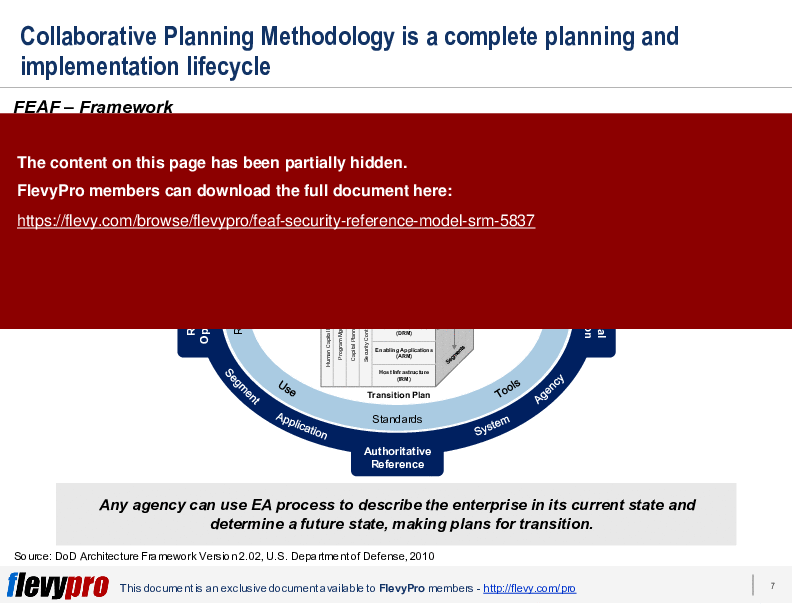
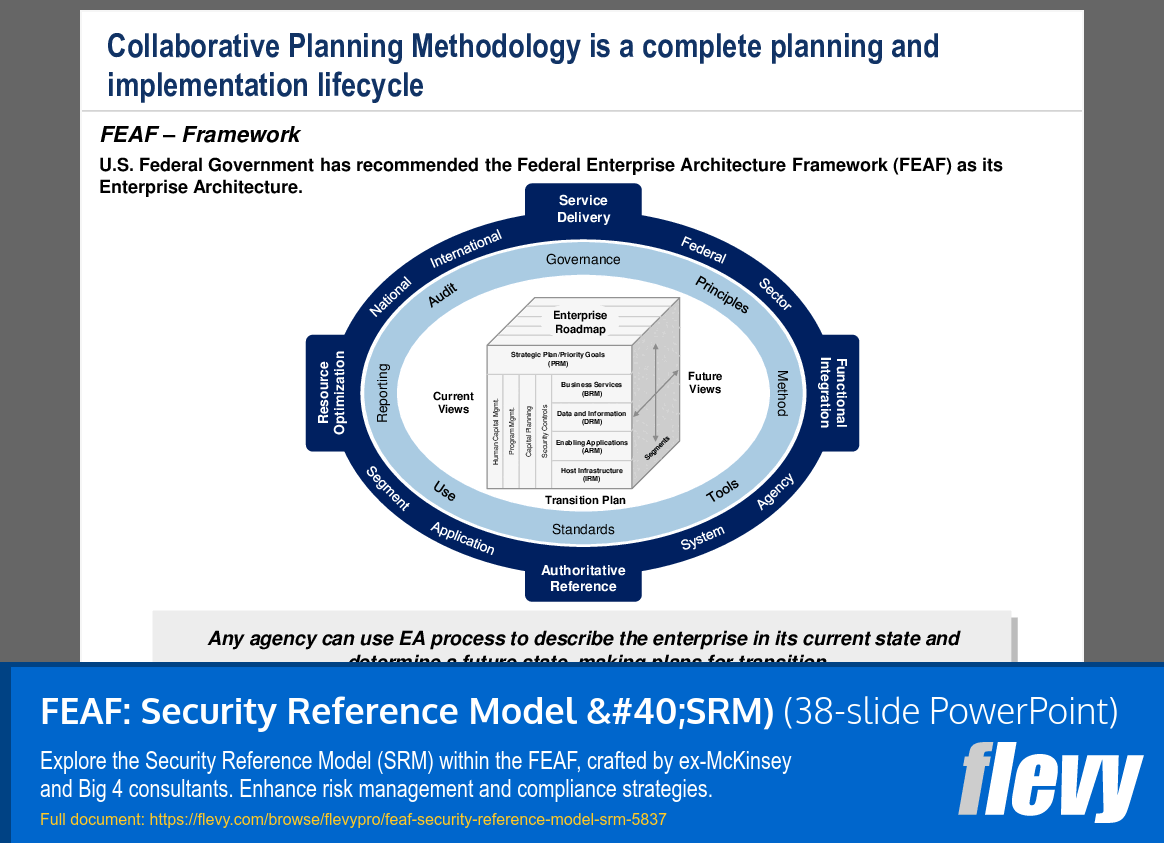
Enterprise Architecture (EA) denotes management best practice for lining up business and technology resources to realize strategic results, expand upon Organizational Performance and steer departments to achieve their core missions more successfully.

Federal Enterprise Architecture Framework (FEAF) assists any agency of the Federal government achieve this through documentation and information that conveys a summarized outlook of an enterprise at various tiers of scope and detail.

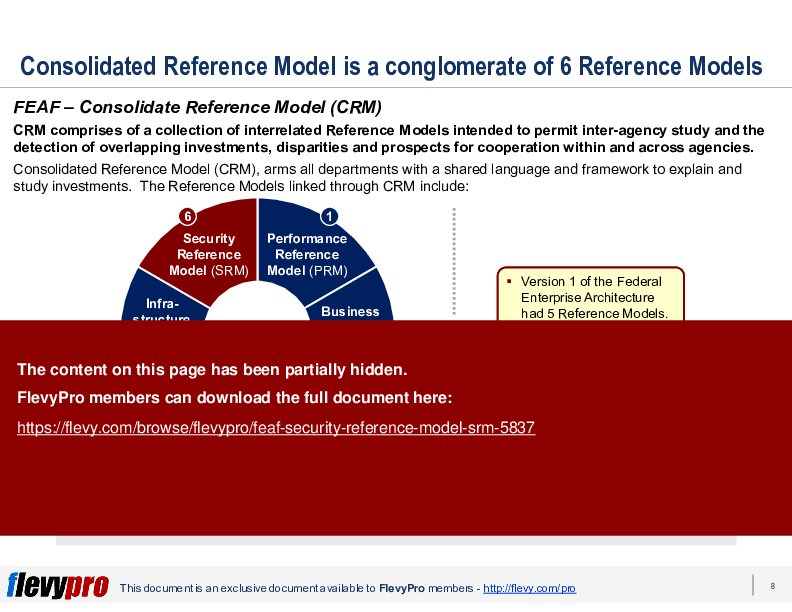
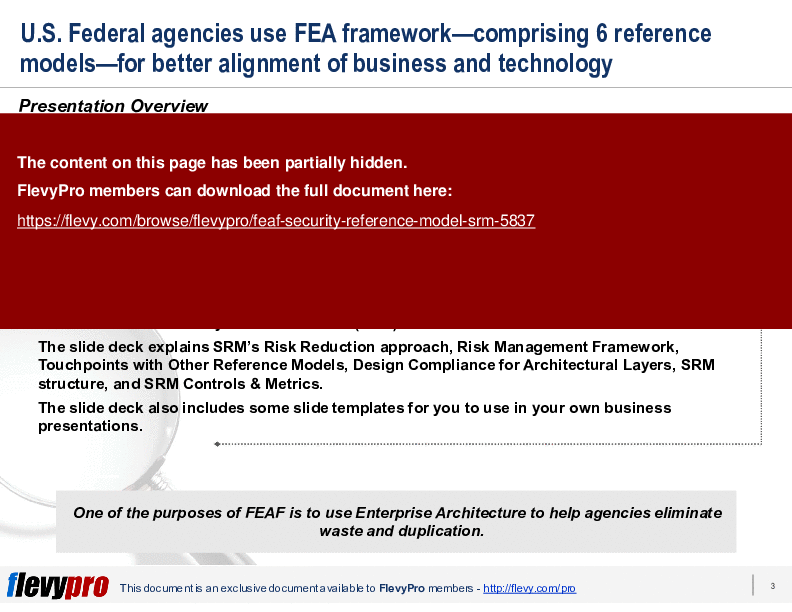
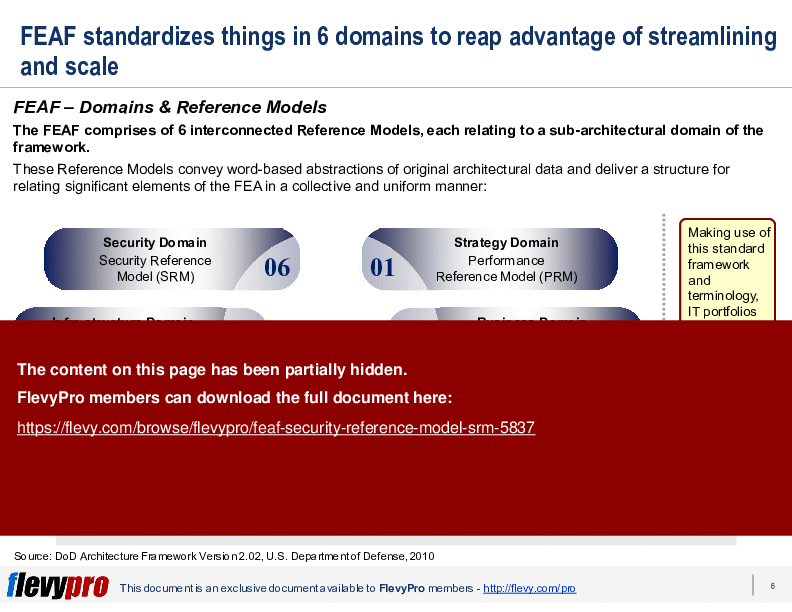
This presentation discusses 1 of the 6 reference models of the Federal Enterprise Architecture Framework—the Security Reference Model (SRM).

The slide deck explains SRM's Risk Reduction approach, Risk Management Framework, Touchpoints with Other Reference Models, Design Compliance for Architectural Layers, SRM structure, and SRM Controls & Metrics.

The slide deck also includes some slide templates for you to use in your own business presentations.

The Security Reference Model (SRM) is integral to the Federal Enterprise Architecture Framework (FEAF), providing a structured approach to managing and mitigating security risks across all layers of an organization. This PPT outlines the SRM's comprehensive methodology, including its alignment with regulatory requirements and its integration with other reference models within the FEAF. The SRM's focus on risk reduction, compliance, and metrics ensures that security measures are not only implemented, but also continuously monitored and improved.

The presentation delves into the SRM's design compliance for architectural layers, detailing how standards and policies are applied at the enterprise, segment, and system levels. It emphasizes the importance of utilizing existing controls and aligning them with organizational objectives to create a robust security posture. The document also highlights the role of the Risk Management Framework (RMF) in embedding security processes into the Systems Development Life Cycle (SDLC), ensuring that security considerations are addressed at every stage of system development and operation.

Additionally, the SRM's controls and metrics section provides valuable insights into measuring the effectiveness of security controls and their impact on risk reduction. It discusses the need for a balanced approach to applying controls and the importance of performance-based metrics in evaluating security outcomes. The document includes practical templates and examples to help organizations implement and tailor the SRM to their specific needs, making it a valuable resource for any agency looking to enhance its security architecture.

Got a question about this document? Email us at flevypro@flevy.com.

MARCUS OVERVIEW

This synopsis was written by Marcus [?] based on the analysis of the full 38-slide presentation.


Executive Summary
The FEAF: Security Reference Model (SRM) presentation provides a comprehensive framework for establishing a robust security architecture aligned with information security and privacy standards. Designed for federal agencies, this model enhances risk management and compliance strategies by integrating security controls into the Systems Development Life Cycle (SDLC). The presentation outlines the SRM's structure, risk reduction methodologies, and compliance metrics, enabling organizations to effectively mitigate risks while ensuring adherence to regulatory requirements.

Who This Is For and When to Use

•  Federal agency executives overseeing IT security and compliance
•  Risk management professionals developing security frameworks
•  IT architects and solution designers implementing security measures
•  Compliance officers ensuring adherence to federal regulations

Best-fit moments to use this deck:
•  During the development of security architecture for federal IT systems
•  When assessing and enhancing existing risk management frameworks
•  For training sessions on integrating security into the SDLC
•  In workshops focused on compliance with federal security standards

Learning Objectives

•  Define the components and significance of the Security Reference Model (SRM)
•  Build a comprehensive risk management framework that integrates security controls
•  Establish compliance metrics aligned with federal regulations
•  Identify and categorize risks at the organizational, mission, and system levels
•  Develop a structured approach for implementing security measures across various layers
•  Communicate effectively about security needs and controls with stakeholders

Table of Contents

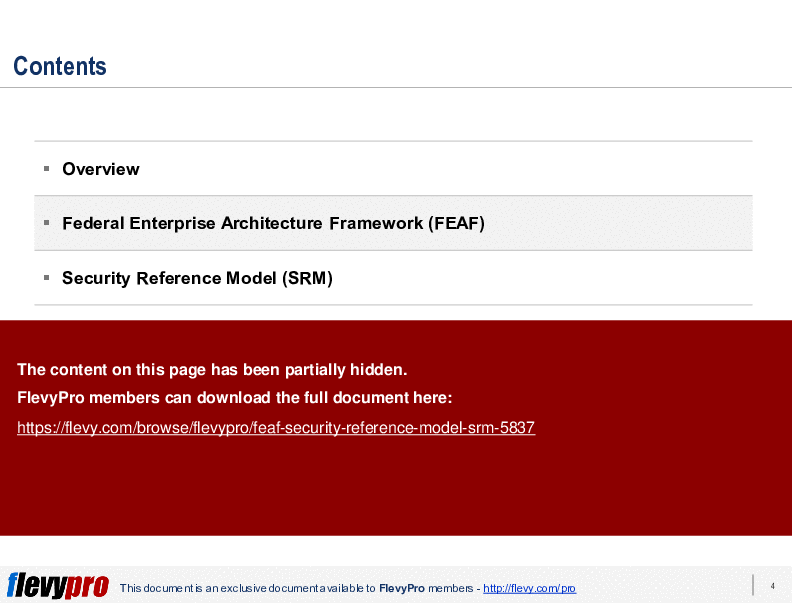
•  Overview (page 3)
•  Federal Enterprise Architecture Framework (FEAF) (page 5)
•  Security Reference Model (SRM) (page 10)
•  SRM Design Compliance for Architectural Layers (page 16)
•  SRM Risk Reduction (page 20)
•  SRM Controls & Metrics (page 24)
•  Templates (page 32)

Primary Topics Covered

•  Overview of FEAF - The Federal Enterprise Architecture Framework (FEAF) provides a structured approach for aligning business and technology resources within federal agencies.
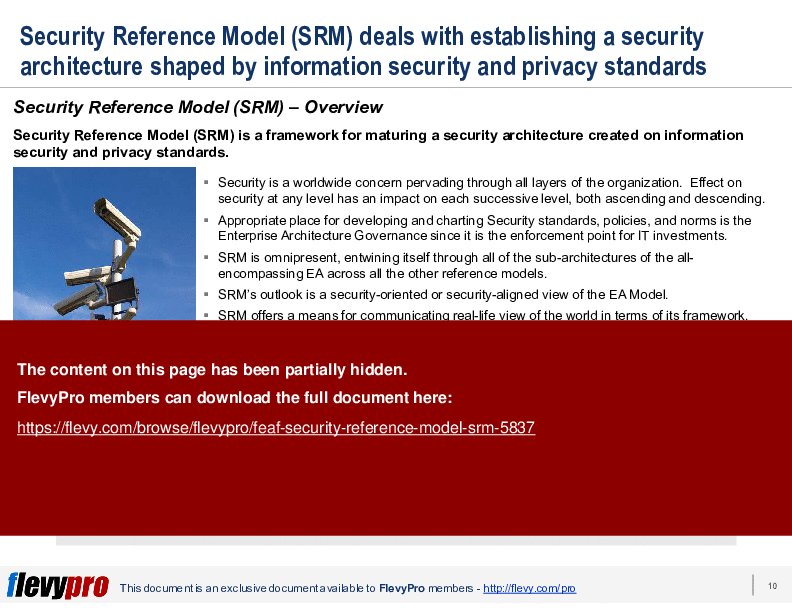
•  Security Reference Model (SRM) - The SRM is a framework for establishing a security architecture that integrates information security and privacy standards across all organizational levels.
•  Risk Management Framework - The SRM incorporates a Risk Management Framework that integrates security controls into the SDLC, ensuring effective risk management.
•  Compliance and Metrics - The SRM outlines compliance requirements and metrics for assessing the effectiveness of security controls in federal agencies.
•  Touchpoints with Other Reference Models - The SRM connects with other reference models, ensuring comprehensive security and privacy considerations across all agency operations.
•  Templates for Implementation - The presentation includes templates to assist agencies in implementing the SRM in their security architecture.

Deliverables, Templates, and Tools

•  Security architecture framework template for documenting security standards
•  Risk management framework template for integrating security controls into the SDLC
•  Compliance metrics template for assessing adherence to federal regulations
•  Touchpoint mapping template for aligning SRM with other reference models
•  Implementation guide for deploying the SRM across organizational layers
•  Training materials for educating staff on security best practices

Slide Highlights

•  Overview of the Security Reference Model and its significance in federal IT security
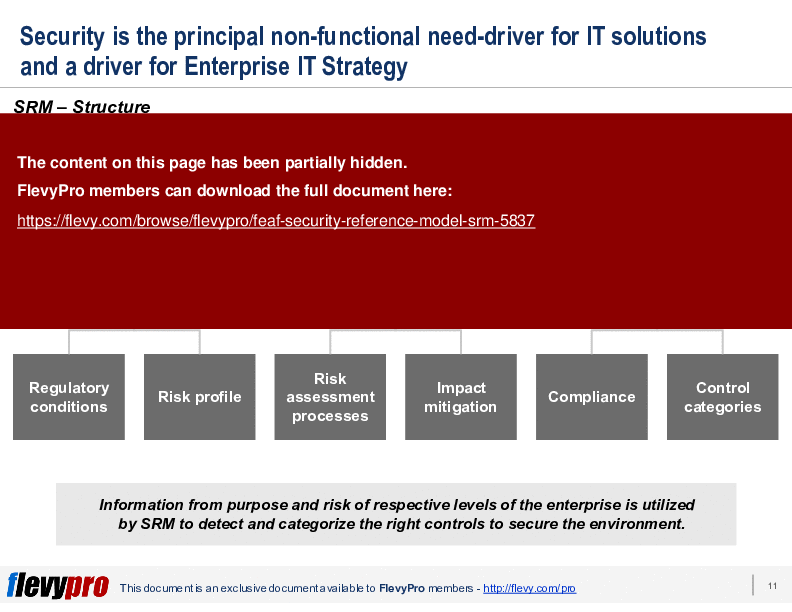
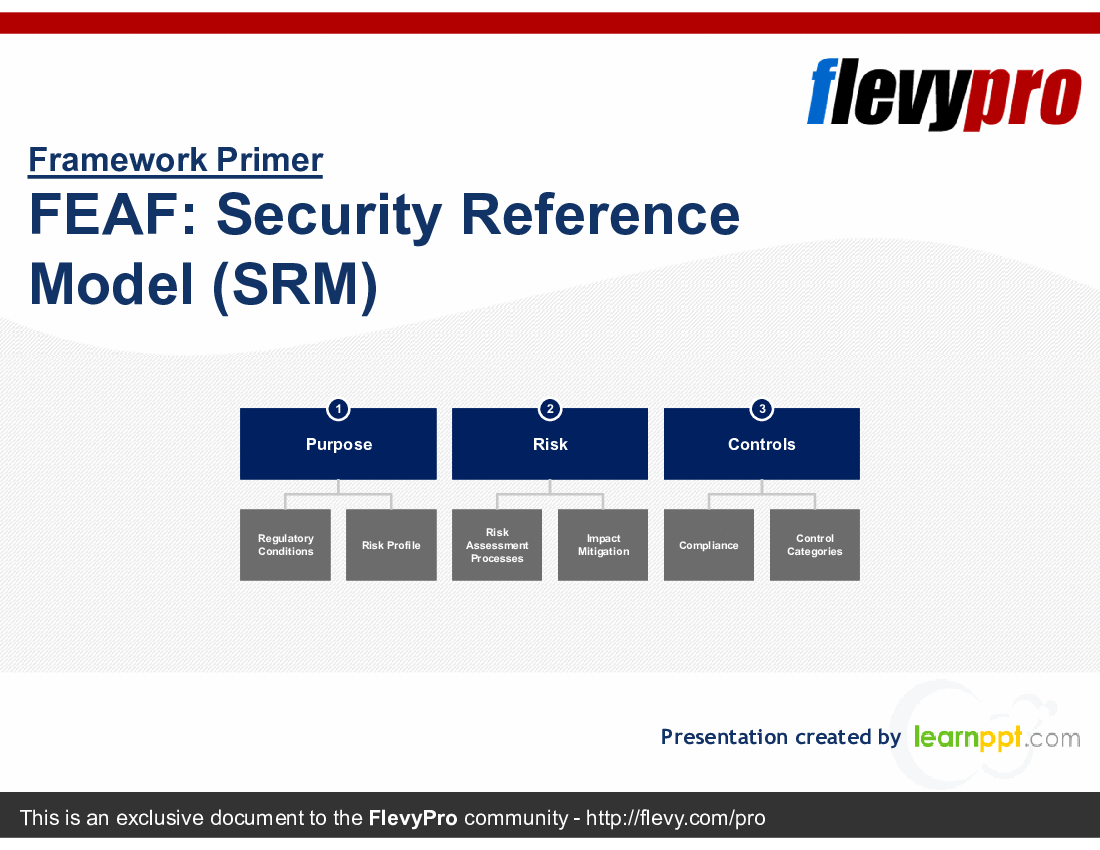
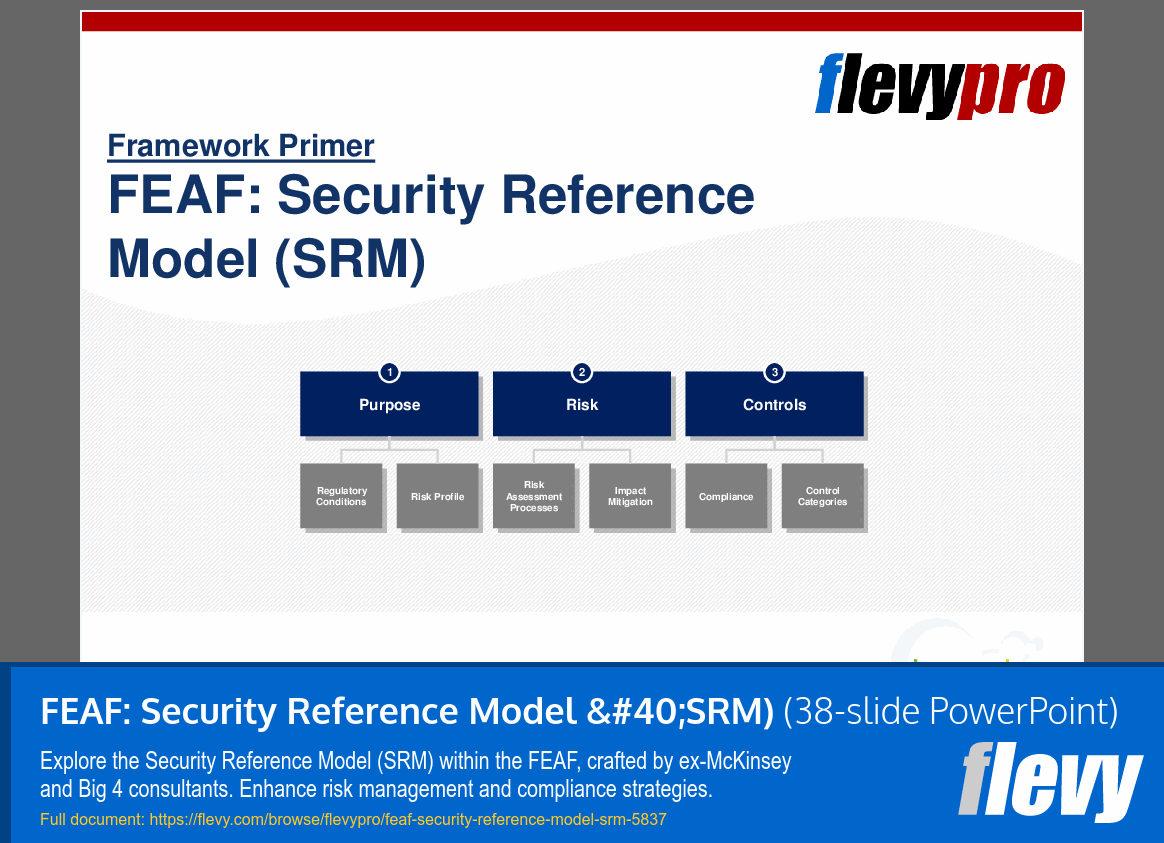
•  Detailed breakdown of the SRM structure, including Purpose, Risk, and Controls
•  Visual representation of the Risk Management Framework and its six-step process
•  Mapping of the SRM's touchpoints with other reference models for comprehensive security
•  Templates provided for practical application of the SRM in organizational contexts

Potential Workshop Agenda

Introduction to SRM and FEAF (30 minutes)
•  Overview of the Security Reference Model and its relevance
•  Discussion on the Federal Enterprise Architecture Framework

Risk Management Framework Overview (60 minutes)
•  Detailed explanation of the six-step Risk Management Framework
•  Group exercise on categorizing risks and selecting security controls

Compliance and Metrics Session (45 minutes)
•  Review of compliance requirements for federal agencies
•  Workshop on developing compliance metrics and assessment tools

Implementation Planning (60 minutes)
•  Collaborative session to create action plans for integrating SRM
•  Discussion on utilizing templates for effective implementation

Customization Guidance

•  Adjust templates to reflect specific organizational policies and procedures
•  Tailor risk assessment processes to align with agency-specific risk profiles
•  Modify compliance metrics to meet unique regulatory requirements
•  Incorporate agency-specific terminology and governance structures into the framework
•  Update training materials to reflect current security practices and technologies

Secondary Topics Covered

•  Overview of the Federal Information Security Management Act (FISMA)
•  Discussion on the importance of integrating security into the SDLC
•  Examination of regulatory conditions impacting federal IT security
•  Insights into the role of enterprise architecture governance in security management
•  Exploration of best practices for risk assessment and mitigation

Topic FAQ

What is the Security Reference Model (SRM) and how does it relate to FEAF?

The SRM is the FEAF reference model focused on security and privacy; it establishes a security architecture aligned with information security and privacy standards across organizational, mission, and system levels. The SRM is one of the 6 FEAF reference models and maps security touchpoints across those models, one of the 6 FEAF reference models.

What are the steps in the Risk Management Framework used in SRM work?

The SRM’s Risk Management Framework consists of 6 steps: system categorization, selection of security controls, control implementation, control assessment, system authorization, and continuous monitoring. These steps are presented to integrate security controls into the SDLC and support ongoing risk management, 6 steps.

How should I integrate security into the Systems Development Life Cycle (SDLC)?

Integrate security by embedding RMF activities into each SDLC phase: categorize systems early, select and implement controls during design and build, assess controls before authorization, and maintain continuous monitoring during operations. The SRM frames this approach around the six-step RMF for SDLC integration, six-step RMF.

What should I look for in a packaged SRM toolkit for federal agencies?

Prioritize toolkits that include SRM structure and design-compliance guidance, coverage of an RMF that integrates with the SDLC, controls and compliance metrics, touchpoint mapping with other FEAF models, and practical templates or implementation guides, such as a compliance metrics template.

How can I evaluate the cost versus value of SRM templates and decks?

Evaluate whether the resource supplies practical artifacts you’ll reuse: security architecture and RMF templates, compliance metrics and touchpoint mapping, an implementation guide, and train-the-team materials. Value is driven by reuse and alignment to federal requirements like FISMA and available templates such as the compliance metrics template.

I need to assess and improve an existing risk management framework—what practical steps should I follow?

Begin by categorizing systems, review current control selections and implementations, conduct control assessments, and update authorization and monitoring practices; map gaps to enterprise and system layers. A reference deck like Flevy’s FEAF: Security Reference Model (SRM) provides RMF guidance and templates in a 38-slide deck.

How do I measure whether security controls are effective across my agency?

Use defined compliance metrics, perform regular control assessments, and maintain continuous monitoring to measure control performance and risk reduction. The SRM emphasizes performance-based metrics and control assessment as core activities, exemplified by the compliance metrics approach.

How can an SRM be customized for a specific federal agency’s requirements?

Tailor templates to reflect agency policy and governance, adapt risk assessment processes to the agency’s risk profile, modify compliance metrics to match regulatory needs, and incorporate agency terminology into implementation and training materials; use the included implementation guide for practical adaptation.

Document FAQ
These are questions addressed within this presentation.


What is the Security Reference Model (SRM)?
The SRM is a framework designed to establish a security architecture that integrates information security and privacy standards across all levels of an organization.

How does the SRM relate to the Federal Enterprise Architecture Framework (FEAF)?
The SRM is one of the 6 reference models within the FEAF, focusing specifically on security and privacy considerations in federal IT systems.

What are the key components of the Risk Management Framework (RMF)?
The RMF consists of 6 steps: system categorization, selection of security controls, control implementation, control assessment, system authorization, and continuous monitoring.

How can agencies ensure compliance with federal regulations?
Agencies can utilize the compliance metrics outlined in the SRM to assess adherence to federal regulations and ensure that security controls are effectively implemented.

What templates are included in the presentation?
The presentation includes templates for security architecture, risk management, compliance metrics, and implementation guides tailored for federal agencies.

How can the SRM be customized for specific agency needs?
Agencies can adjust templates, modify risk assessment processes, and incorporate agency-specific terminology and governance structures to tailor the SRM to their unique requirements.

What is the importance of integrating security into the Systems Development Life Cycle (SDLC)?
Integrating security into the SDLC ensures that security controls are embedded from the outset, reducing vulnerabilities and enhancing overall system security.

What role does enterprise architecture governance play in security management?
Enterprise architecture governance provides the framework for establishing security standards, policies, and norms, ensuring that security considerations are integrated into all IT investments.

Glossary

•  Security Reference Model (SRM) - A framework for establishing a security architecture aligned with information security and privacy standards.
•  Federal Enterprise Architecture Framework (FEAF) - A structured approach for aligning business and technology resources within federal agencies.
•  Risk Management Framework (RMF) - A process that integrates security controls into the Systems Development Life Cycle (SDLC).
•  Compliance Metrics - Measurements used to assess adherence to federal regulations regarding security and privacy.
•  Touchpoints - Connections between the SRM and other reference models within the FEAF.
•  Systems Development Life Cycle (SDLC) - A structured process for developing and managing IT systems.
•  Federal Information Security Management Act (FISMA) - A federal law that requires agencies to secure information systems.
•  Risk Assessment - The process of identifying and evaluating risks to an organization's information systems.
•  Security Controls - Measures implemented to mitigate risks and protect information systems.
•  Enterprise Architecture Governance - The framework for establishing and enforcing security standards and policies within an organization.
•  Information Security - The practice of protecting information by mitigating information risks.
•  Privacy Standards - Regulations governing the handling of personal and sensitive information.
•  Regulatory Compliance - Adherence to laws, regulations, and guidelines relevant to information security and privacy.
•  Risk Mitigation - Strategies implemented to reduce the impact or likelihood of risks.
•  Vulnerability - A weakness in a system that can be exploited by threats to gain unauthorized access or cause harm.
•  Threat Source - Any circumstance or entity that poses a risk to an organization's information systems.
•  Incident Management - The process of identifying, managing, and resolving security incidents.
•  Asset Inventory - A comprehensive list of all assets that need protection within an organization.
•  Control Assessment - The evaluation of security controls to determine their effectiveness in mitigating risks.
•  System Authorization - The process of formally accepting the risk associated with an information system.
•  Continuous Monitoring - Ongoing assessment of security controls and risks to ensure effective protection of information systems.

RISK MANAGEMENT PPT SLIDES

Framework for Security Metrics Maturity Stages

Integrated Control Framework for Risk Management

Comprehensive Overview of Risk Management Framework Steps

Framework for Risk Management and Control Implementation

Framework for Structuring IT Security Solutions

Source: Best Practices in Risk Management, Enterprise Architecture, Business Architecture, Security PowerPoint Slides: FEAF: Security Reference Model (SRM) PowerPoint (PPTX) Presentation Slide Deck, LearnPPT Consulting


$29.00
FlevyPro price: FREE (included in subscription)
This framework is developed by a team of former McKinsey and Big 4 consultants. The presentation follows the headline-body-bumper slide format used by global consulting firms.
Add to Cart
  

Did you need more documents?

Consider a FlevyPro subscription from $39/month. View plans here.

For $10.00 more, you can download this document plus 2 more FlevyPro documents. That's just $13 each.

ABOUT FLEVYPRO

This document is part of the FlevyPro Library, a curated knowledge base of documents for our FlevyPro subscribers.

FlevyPro is a subscription service for on-demand business frameworks and analysis tools. FlevyPro subscribers receive access to an exclusive library of curated business documents—business framework primers, presentation templates, Lean Six Sigma tools, and more—among other exclusive benefits.

Click here to learn more about FlevyPro and its benefits.

Did you know?
The average daily rate of a McKinsey consultant is $6,625 (not including expenses). The average price of a Flevy document is $65.
Bundle and save! You can save up to % with bundles!

View bundle(s)


Trusted by over 10,000+ Client Organizations
Since 2012, we have provided business templates to over 10,000 businesses and organizations of all sizes, from startups and small businesses to the Fortune 100, in over 130 countries.
AT&T GE Cisco Intel IBM Coke Dell Toyota HP Nike Samsung Microsoft Astrazeneca JP Morgan KPMG Walgreens Walmart 3M Kaiser Oracle SAP Google E&Y Volvo Bosch Merck Fedex Shell Amgen Eli Lilly Roche AIG Abbott Amazon PwC T-Mobile Broadcom Bayer Pearson Titleist ConEd Pfizer NTT Data Schwab


Read Customer Testimonials

 
"As a consultant requiring up to date and professional material that will be of value and use to my clients, I find Flevy a very reliable resource.

The variety and quality of material available through Flevy offers a very useful and commanding source for information. Using Flevy saves me time, enhances my expertise and ends up being a good decision."

– Dennis Gershowitz, Principal at DG Associates
 
"As a small business owner, the resource material available from FlevyPro has proven to be invaluable. The ability to search for material on demand based our project events and client requirements was great for me and proved very beneficial to my clients. Importantly, being able to easily edit and tailor "

– Michael Duff, Managing Director at Change Strategy (UK)
 
"I have used Flevy services for a number of years and have never, ever been disappointed. As a matter of fact, David and his team continue, time after time, to impress me with their willingness to assist and in the real sense of the word. I have concluded in fact "

– Roberto Pelliccia, Senior Executive in International Hospitality
 
"Flevy is our 'go to' resource for management material, at an affordable cost. The Flevy library is comprehensive and the content deep, and typically provides a great foundation for us to further develop and tailor our own service offer."

– Chris McCann, Founder at Resilient.World
 
"FlevyPro has been a brilliant resource for me, as an independent growth consultant, to access a vast knowledge bank of presentations to support my work with clients. In terms of RoI, the value I received from the very first presentation I downloaded paid for my subscription many times over! The "

– Roderick Cameron, Founding Partner at SGFE Ltd
 
"The wide selection of frameworks is very useful to me as an independent consultant. In fact, it rivals what I had at my disposal at Big 4 Consulting firms in terms of efficacy and organization."

– Julia T., Consulting Firm Owner (Former Manager at Deloitte and Capgemini)
 
"As a young consulting firm, requests for input from clients vary and it's sometimes impossible to provide expert solutions across a broad spectrum of requirements. That was before I discovered Flevy.com.

Through subscription to this invaluable site of a plethora of topics that are key and crucial to consulting, I "

– Nishi Singh, Strategist and MD at NSP Consultants
 
"FlevyPro provides business frameworks from many of the global giants in management consulting that allow you to provide best in class solutions for your clients."

– David Harris, Managing Director at Futures Strategy


Save with Bundles

This document is available as part of the following discounted bundle(s):

Save %!
Federal Enterprise Architecture Framework (FEAF) - Full Series

This bundle contains 6 total documents. See all the documents to the right.

$89.00


Add Bundle & Save


Customers Also Bought These Documents


Customers Also Like These Documents

Explore Templates on Related Management Topics


Your Recently Viewed Documents
Receive our FREE presentation on Operational Excellence

This 50-slide presentation provides a high-level introduction to the 4 Building Blocks of Operational Excellence. Achieving OpEx requires the implementation of a Business Execution System that integrates these 4 building blocks.