Explore best practices in Project Portfolio Management (PPM) with insights from Affinity Consulting Partnership experts. Optimize resources and align projects with strategic goals. Example of Client Implementation of Best Practice Portfolio is a 18-slide PPT PowerPoint presentation template (PPTX) available for immediate download upon purchase.
Project portfolio management (PPM) is the ongoing analysis and optimization of the numerous project "investments" and organization makes. In this example, the best practices of PPM are applied to a banking client, PPM covering dimensions of the costs, resources, technologies and processes for all the projects and programs within the banks project portfolio.
The primary objective of PPM is to make sure alignment of project investments with the strategic goals and business objectives of the organization. The portfolio manager or PMO does this through business analysis, reviewing budgets and forecasting while minimizing risk and managing stakeholder expectations. Often this is done via dedicated PPM tools or via a set of bespoke desktop tools.
To understand where project portfolio management and project management differ, we must first define each and explore the areas where they diverge.
Project management is, quite simply, the management of a project. A project is a temporary endeavor that results in a product or service. It has a beginning and an end. Project goals are defined, and tasks are broken down into a schedule. Cost and budgets are set; resources are assigned, and stakeholders are reported to.
Project portfolio management, on the other hand, is a higher level approach that orchestrates, prioritizes and analyzes the potential value of many projects and programs in a portfolio to manage them simultaneously and optimize resource management. The goal of the portfolio management process is to manage and leverage the life cycle of investments, initiatives, programs, projects and outcomes to best reach the overall goals and objectives of an organization. Therefore, project management is a subset of project portfolio management. It leads to the ultimate objective, which is meeting the strategic goals of the organization.
Although this example does not advocate any particular portfolio management software, it does provide a view of the requirements of such as system from a best practice process perspective that should be provided by leading packages.
Typical PPM software offerings are also used for portfolio optimization to better achieve the financial goals of the organization.
Got a question about the product? Email us at support@flevy.com or ask the author directly by using the "Ask the Author a Question" form. If you cannot view the preview above this document description, go here to view the large preview instead.
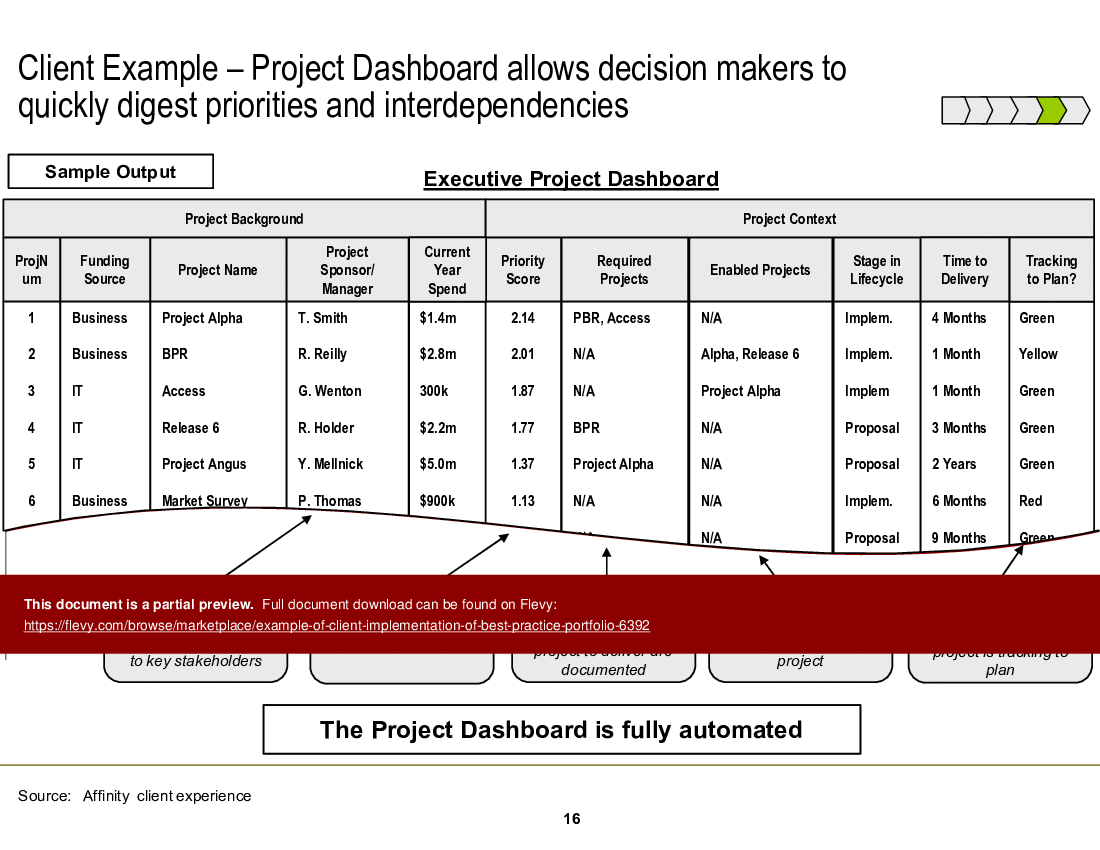
The Executive Project Dashboard categorizes projects by funding source, project name, sponsor, current year spend, priority score, required and enabled projects, lifecycle stage, estimated time to delivery, and tracking status. It highlights 6 projects with varying funding primarily from business and IT, each assigned a project manager for accountability. The priority score ranks projects, with Project Alpha, managed by T. Smith, having the highest score of 2.14, indicating its critical importance. The "Required Projects" and "Enabled Projects" columns show dependencies essential for resource allocation and identifying potential bottlenecks. The lifecycle stage indicates whether projects are in implementation or proposal phases. Time to delivery ranges from one month to 2 years, reflecting urgency levels, while tracking status uses color coding to indicate project health, facilitating quick decision-making.
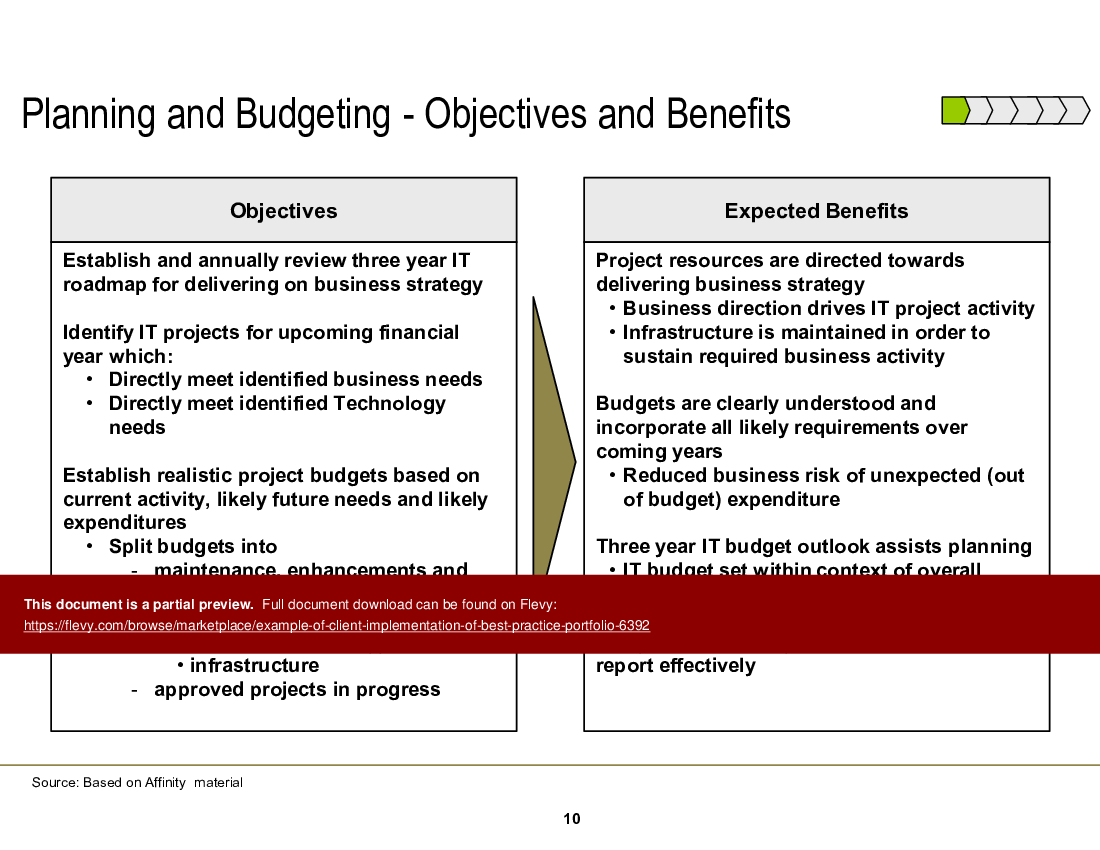
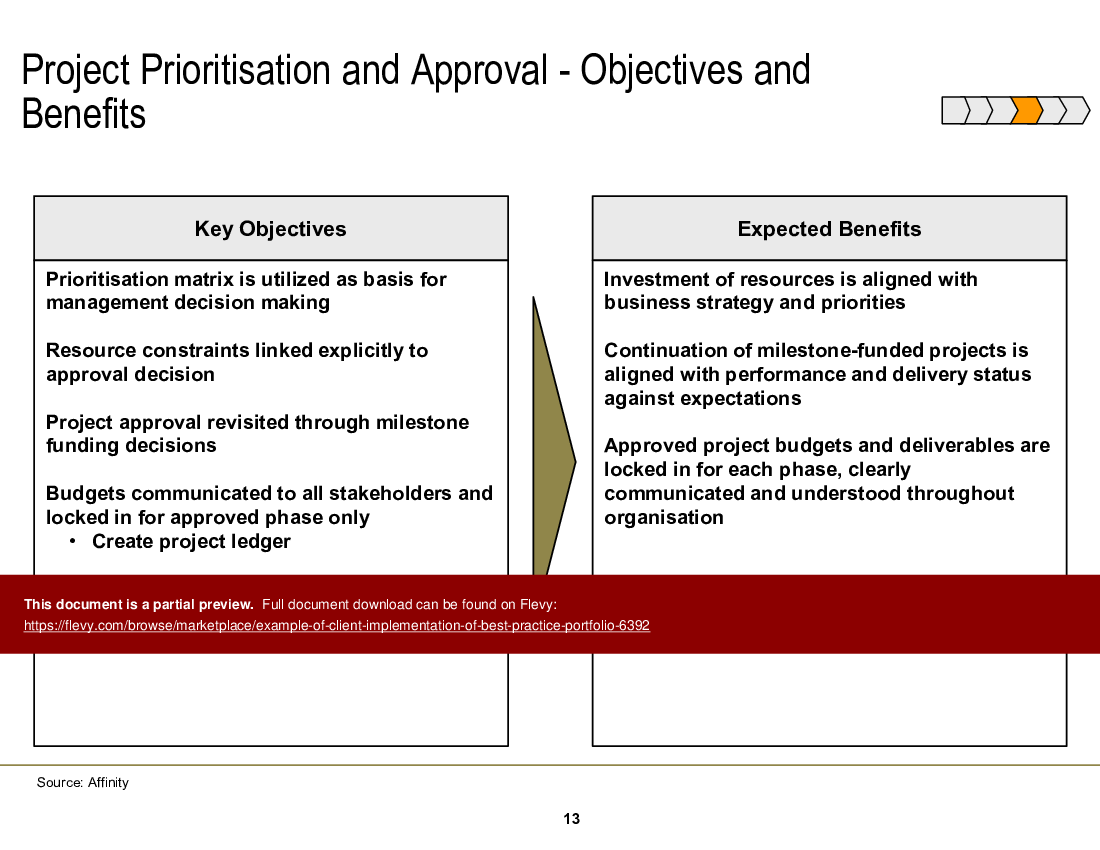
This PPT slide template outlines objectives and benefits of a structured IT planning and budgeting approach over 3 years. Key objectives include establishing an IT roadmap aligned with business strategy, identifying IT projects that meet both business and technology needs, and creating realistic project budgets. Budgets should be categorized into maintenance, enhancements, operations, new projects, business technology, infrastructure, and ongoing projects for better financial management. Expected benefits include alignment of IT initiatives with organizational goals, reduced risk of unexpected costs, and improved transparency in budgeting. A three-year outlook enhances planning within the business's cost structure, fostering accountability and strategic alignment. This framework aims to improve operational efficiency and strategic execution.
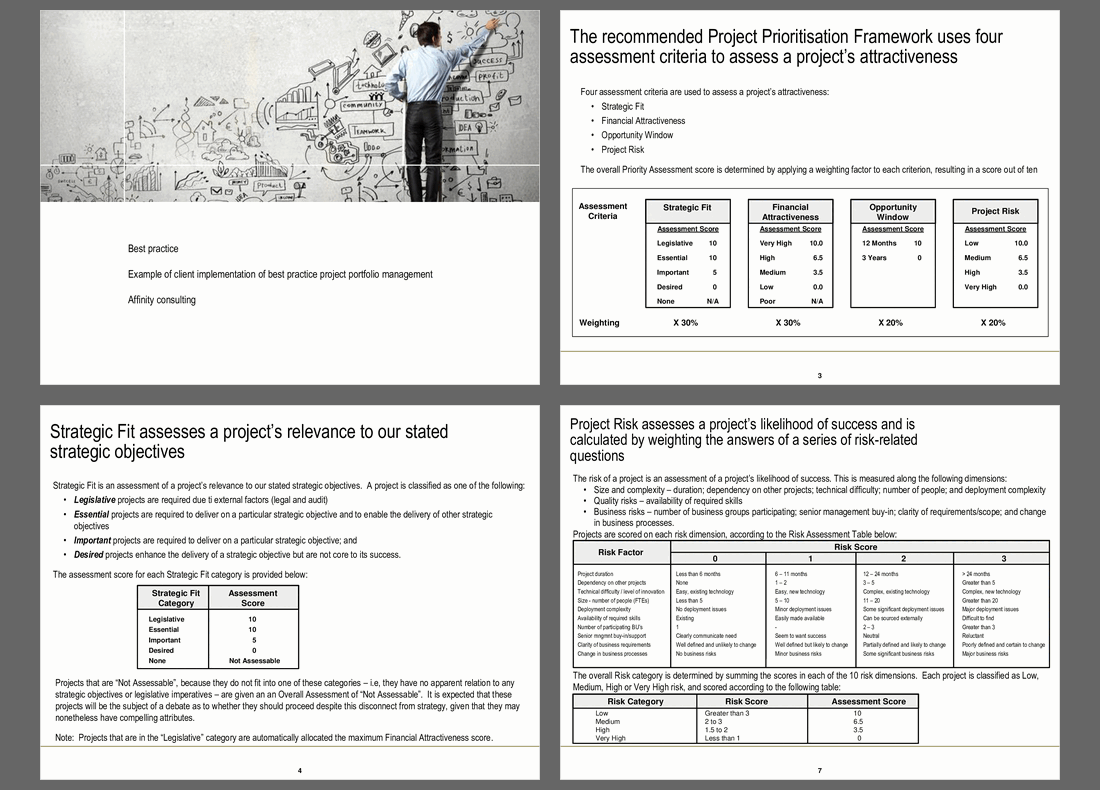
This PPT slide template outlines a project prioritization framework based on 4 key assessment criteria: Strategic Fit, Financial Attractiveness, Opportunity Window, and Project Risk. Each criterion contributes to an overall Priority Assessment score. Strategic Fit, weighted at 30%, aligns projects with organizational goals, scoring from 10 for 'Legislative' and 'Essential' projects to 0 for 'Desired' and 'None.' Financial Attractiveness, also at 30%, evaluates financial viability, with scores ranging from 10 for 'Very High' returns to 0 for 'Poor.' The Opportunity Window, weighted at 20%, assesses timing, awarding 10 for a 12-month window and 0 for a 3-year horizon. Project Risk, also at 20%, evaluates potential risks, scoring from 10 for 'Low' risk to 0 for 'Very High' risk. This framework enables informed decision-making by balancing strategic alignment, financial potential, timing, and risk factors.
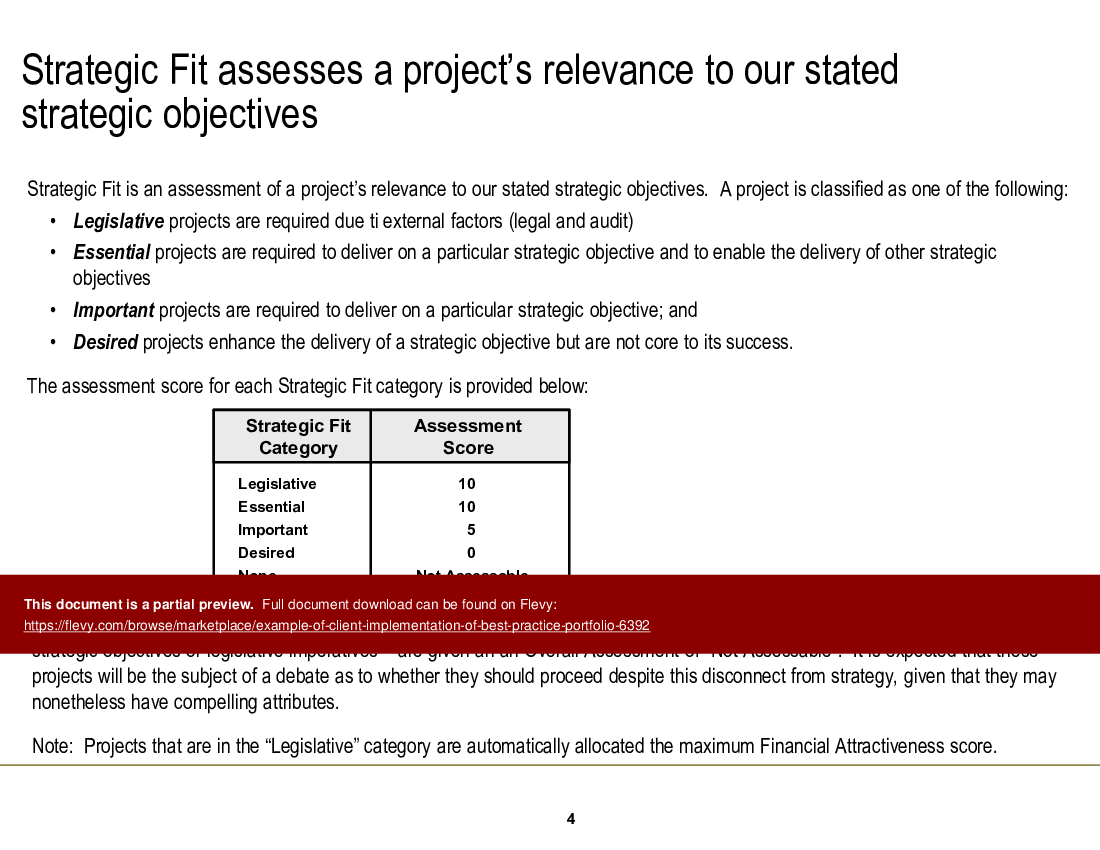
This PPT slide template presents the "Strategic Fit" framework for evaluating project alignment with strategic objectives, categorizing projects into 4 types: Legislative, Essential, Important, and Desired. Legislative projects are prioritized due to external mandates like legal requirements. Essential projects are foundational for achieving strategic goals, while Important projects support specific objectives. Desired projects, though beneficial, are the lowest priority. A scoring system assigns values: Legislative and Essential projects score 10, Important projects score 5, and Desired projects score 0. Projects labeled "Not Assessable" indicate a disconnect from strategic priorities. This framework aids decision-makers in resource allocation and ensures alignment with overarching goals.
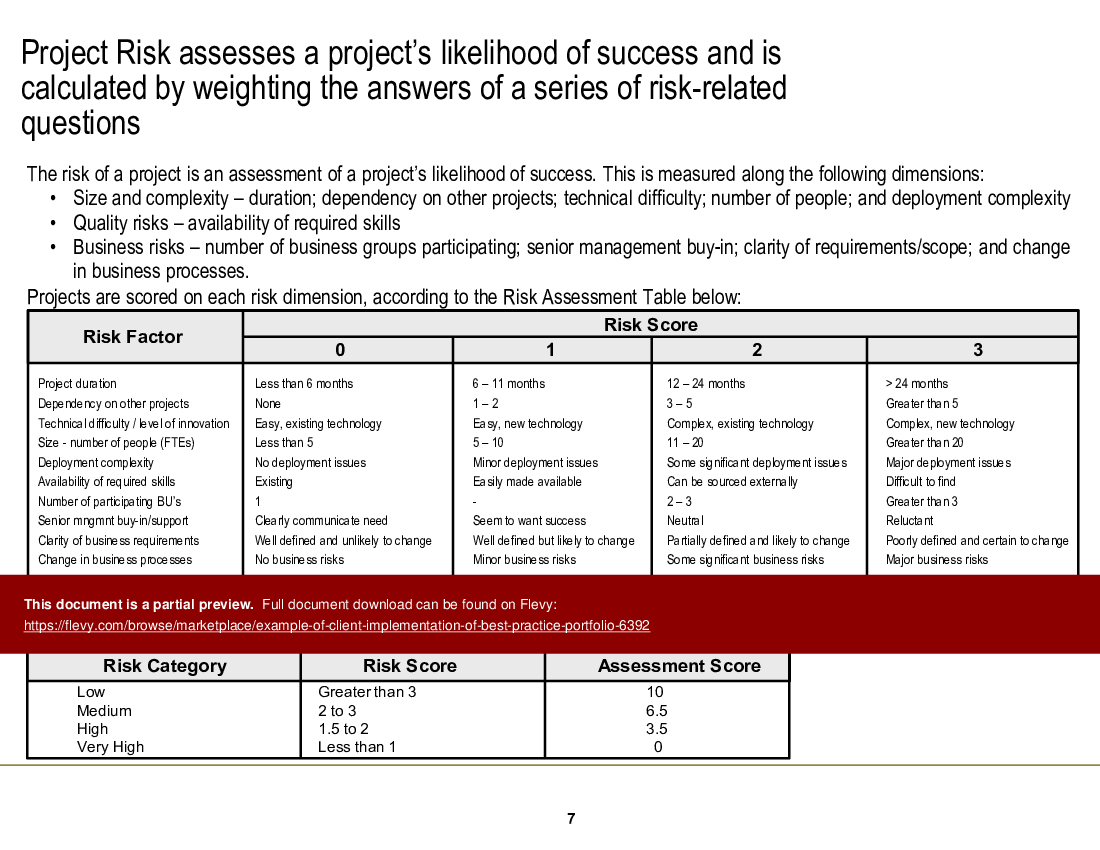
This PPT slide template outlines a structured approach to project risk assessment, focusing on factors influencing project success. Key dimensions include project duration, dependency on other projects, technical difficulty, team size, and deployment complexity, each scored from 0 to 3 based on risk severity. For example, a project duration of less than 6 months scores 0, while over 24 months scores 3. The overall risk category, classified as Low, Medium, High, or Very High, is determined by summing scores across ten dimensions. This systematic evaluation enables stakeholders to proactively manage risks and identify potential pitfalls early in the project lifecycle, enhancing decision-making regarding project investments.
The Executive Project Dashboard categorizes projects by funding source, project name, sponsor, current year spend, priority score, required and enabled projects, lifecycle stage, estimated time to delivery, and tracking status. It highlights 6 projects with varying funding primarily from business and IT, each assigned a project manager for accountability. The priority score ranks projects, with Project Alpha, managed by T. Smith, having the highest score of 2.14, indicating its critical importance. The "Required Projects" and "Enabled Projects" columns show dependencies essential for resource allocation and identifying potential bottlenecks. The lifecycle stage indicates whether projects are in implementation or proposal phases. Time to delivery ranges from one month to 2 years, reflecting urgency levels, while tracking status uses color coding to indicate project health, facilitating quick decision-making.
This PPT slide template outlines objectives and benefits of a structured IT planning and budgeting approach over 3 years. Key objectives include establishing an IT roadmap aligned with business strategy, identifying IT projects that meet both business and technology needs, and creating realistic project budgets. Budgets should be categorized into maintenance, enhancements, operations, new projects, business technology, infrastructure, and ongoing projects for better financial management. Expected benefits include alignment of IT initiatives with organizational goals, reduced risk of unexpected costs, and improved transparency in budgeting. A three-year outlook enhances planning within the business's cost structure, fostering accountability and strategic alignment. This framework aims to improve operational efficiency and strategic execution.
This PPT slide template outlines a project prioritization framework based on 4 key assessment criteria: Strategic Fit, Financial Attractiveness, Opportunity Window, and Project Risk. Each criterion contributes to an overall Priority Assessment score. Strategic Fit, weighted at 30%, aligns projects with organizational goals, scoring from 10 for 'Legislative' and 'Essential' projects to 0 for 'Desired' and 'None.' Financial Attractiveness, also at 30%, evaluates financial viability, with scores ranging from 10 for 'Very High' returns to 0 for 'Poor.' The Opportunity Window, weighted at 20%, assesses timing, awarding 10 for a 12-month window and 0 for a 3-year horizon. Project Risk, also at 20%, evaluates potential risks, scoring from 10 for 'Low' risk to 0 for 'Very High' risk. This framework enables informed decision-making by balancing strategic alignment, financial potential, timing, and risk factors.
This PPT slide template presents the "Strategic Fit" framework for evaluating project alignment with strategic objectives, categorizing projects into 4 types: Legislative, Essential, Important, and Desired. Legislative projects are prioritized due to external mandates like legal requirements. Essential projects are foundational for achieving strategic goals, while Important projects support specific objectives. Desired projects, though beneficial, are the lowest priority. A scoring system assigns values: Legislative and Essential projects score 10, Important projects score 5, and Desired projects score 0. Projects labeled "Not Assessable" indicate a disconnect from strategic priorities. This framework aids decision-makers in resource allocation and ensures alignment with overarching goals.
This PPT slide template outlines a structured approach to project risk assessment, focusing on factors influencing project success. Key dimensions include project duration, dependency on other projects, technical difficulty, team size, and deployment complexity, each scored from 0 to 3 based on risk severity. For example, a project duration of less than 6 months scores 0, while over 24 months scores 3. The overall risk category, classified as Low, Medium, High, or Very High, is determined by summing scores across ten dimensions. This systematic evaluation enables stakeholders to proactively manage risks and identify potential pitfalls early in the project lifecycle, enhancing decision-making regarding project investments.
Source: Best Practices in PMO, Consulting Project Management, Project Risk PowerPoint Slides: Example of Client Implementation of Best Practice Portfolio PowerPoint (PPTX) Presentation Slide Deck, Affinity Consulting Partners
The Affinity Consulting Partnership is a global powerhouse of experienced consultants, specializing in technology and digital-driven change.
Our team is comprised of individuals across the globe who have extensive expertise and a proven track record in guiding large corporations across the globe through complex business transformations. Our partners were all at some stage senior consulting
... [read more] professionals at tier 1 global consulting firms over half our staff have been equity partners in the past at these firms.
With a combined experience of over 120 years, our partners bring a wealth of knowledge and insights to the table. Each member of our team has a distinguished background, having served as a top-level executive and trusted advisor to the C-suite of major corporations. Our partners have honed their skills and expertise through years of hands-on experience, leading successful consulting engagements across a wide range of industries, including finance, healthcare, retail, manufacturing, and more.
Our partners have a keen eye for identifying emerging trends and disruptions in the business landscape and are adept at developing innovative strategies to help our clients stay ahead of the curve.

As a team, we are dedicated to driving meaningful results for our clients, helping them navigate the complexities of technology and digital-driven change, and unlocking new opportunities for growth and success. Our partners are trusted advisors and thought leaders in the industry, and we are committed to providing exceptional service and creating lasting partnerships with our clients.

Since 2012, we have provided business templates to over 10,000 businesses and organizations of all sizes, from startups and small businesses to the Fortune 100, in over 130 countries.
"Flevy is now a part of my business routine. I visit Flevy at least 3 times each month.
Flevy has become my preferred learning source, because what it provides is practical, current, and useful in this era where the business world is being rewritten.
many challenges and there is the need to make the right decisions in a short time, with so much scattered information, we are fortunate to have Flevy. Flevy investigates, selects, and puts at our disposal the best of the best to help us be successful in our work.
"
– Omar Hernán Montes Parra, CEO at Quantum SFE
"As an Independent Management Consultant, I find Flevy to add great value as a source of best practices, templates and information on new trends. Flevy has matured and the quality and quantity of the library is excellent. Lastly the price charged is reasonable, creating a win-win value for
the customer, Flevy and the various authors. This is truly a service that benefits the consulting industry and associated clients. Thanks for providing this service.
"
– Jim Schoen, Principal at FRC Group
"Flevy is our 'go to' resource for management material, at an affordable cost. The Flevy library is comprehensive and the content deep, and typically provides a great foundation for us to further develop and tailor our own service offer."
– Chris McCann, Founder at Resilient.World
"My FlevyPro subscription provides me with the most popular frameworks and decks in demand in today’s market. They not only augment my existing consulting and coaching offerings and delivery, but also keep me abreast of the latest trends, inspire new products and service offerings for my practice, and educate me
in a fraction of the time and money of other solutions. I strongly recommend FlevyPro to any consultant serious about success.
"
– Bill Branson, Founder at Strategic Business Architects
"FlevyPro has been a brilliant resource for me, as an independent growth consultant, to access a vast knowledge bank of presentations to support my work with clients. In terms of RoI, the value I received from the very first presentation I downloaded paid for my subscription many times over! The
quality of the decks available allows me to punch way above my weight – it's like having the resources of a Big 4 consultancy at your fingertips at a microscopic fraction of the overhead.
"
– Roderick Cameron, Founding Partner at SGFE Ltd
"I have used Flevy services for a number of years and have never, ever been disappointed. As a matter of fact, David and his team continue, time after time, to impress me with their willingness to assist and in the real sense of the word. I have concluded in fact
that it is not at all just a repository of documents/resources but, in the way that David and his team manage the firm, it is like dealing with consultants always ready to assist, advise and direct you to what you really need, and they always get it right.
I am an international hospitality accomplished senior executive who has worked and lived during the past 35 years in 23 countries in 5 continents and I can humbly say that I know what customer service is, trust me.
Aside from the great and professional service that Flevy's team provide, their wide variety of material is of utmost great quality, professionally put together and most current.
Well done Flevy, keep up the great work and I look forward to continue working with you in the future and to recommend you to a variety of colleagues around the world.
"
– Roberto Pelliccia, Senior Executive in International Hospitality
"As a small business owner, the resource material available from FlevyPro has proven to be invaluable. The ability to search for material on demand based our project events and client requirements was great for me and proved very beneficial to my clients. Importantly, being able to easily edit and tailor
the material for specific purposes helped us to make presentations, knowledge sharing, and toolkit development, which formed part of the overall program collateral. While FlevyPro contains resource material that any consultancy, project or delivery firm must have, it is an essential part of a small firm or independent consultant's toolbox.
"
– Michael Duff, Managing Director at Change Strategy (UK)
"If you are looking for great resources to save time with your business presentations, Flevy is truly a value-added resource. Flevy has done all the work for you and we will continue to utilize Flevy as a source to extract up-to-date information and data for our virtual and onsite presentations!"
– Debbi Saffo, President at The NiKhar Group
Save with Bundles
This document is available as part of the following discounted bundle(s):
Receive our FREE presentation on Operational Excellence
This 50-slide presentation provides a high-level introduction to the 4 Building Blocks of Operational Excellence. Achieving OpEx requires the implementation of a Business Execution System that integrates these 4 building blocks.
Receive our FREE presentation on Operational Excellence
Get Our FREE Product.
This 50-slide presentation provides a high-level introduction to the 4 Building Blocks of Operational Excellence. Achieving OpEx requires the implementation of a Business Execution System that integrates these 4 building blocks.








