
Driver-Based Budgeting and Rolling Financial Forecasts   28-slide PPT PowerPoint presentation slide deck (PPT)
$49.00

Driver-Based Budgeting and Rolling Financial Forecasts (28-slide PPT PowerPoint presentation slide deck (PPT)) Preview Image
Log in to unlock full preview.
Driver-Based Budgeting and Rolling Financial Forecasts (28-slide PPT PowerPoint presentation slide deck (PPT)) Preview Image
Arrow   Click main image to view in full screen.

Driver-Based Budgeting and Rolling Financial Forecasts (PowerPoint PPT Slide Deck)

PowerPoint (PPT) + supplemental PDF 28 Slides

#2 in Management Accounting $49.00
This presentation is developed a former consultant at Deloitte, KPMG, HP, and SAS, who is an internationally recognized EPM/CPM expert, speaker, and Wiley & Sons published author with almost 50 years of experience.
Add to Cart


Immediate download
Fully editable PowerPoint
Free lifetime updates

BENEFITS OF THIS POWERPOINT DOCUMENT

  1. Understand the deficiencies with the traditional annual budget process.
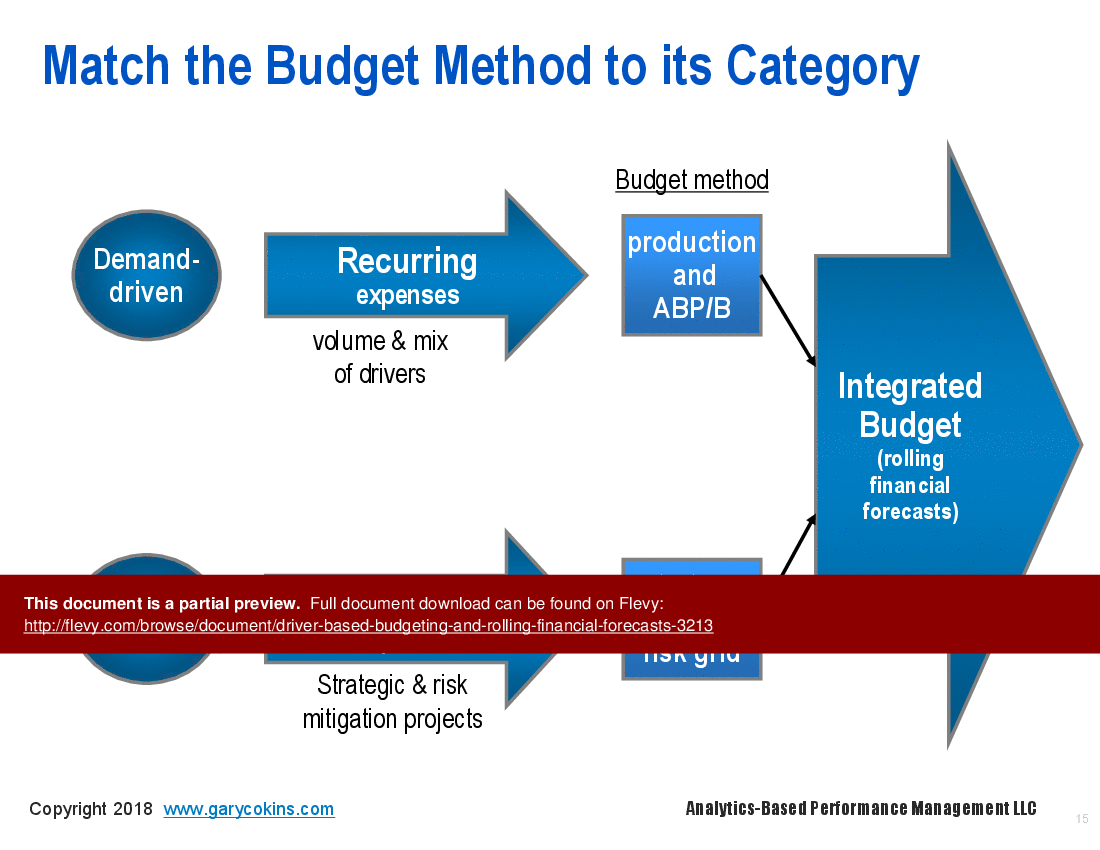
  2. Learn how to apply unit-level cost consumption rates with sales demand forecasts to project operational expenses and to include strategic and risk mitigation projects in expense projections.
  3. Learn how to shift from bottom-up general ledger cost center consolidations to top down financial modeling.

BUDGETING & FORECASTING PPT DESCRIPTION

Explore driver-based budgeting and rolling forecasts in this expert PPT by a former Deloitte, KPMG, and HP consultant. Enhance EPM strategies for sustainable value. Driver-Based Budgeting & Forecasts is a 28-slide PPT PowerPoint presentation slide deck (PPT) with a supplemental PDF document available for immediate download upon purchase.

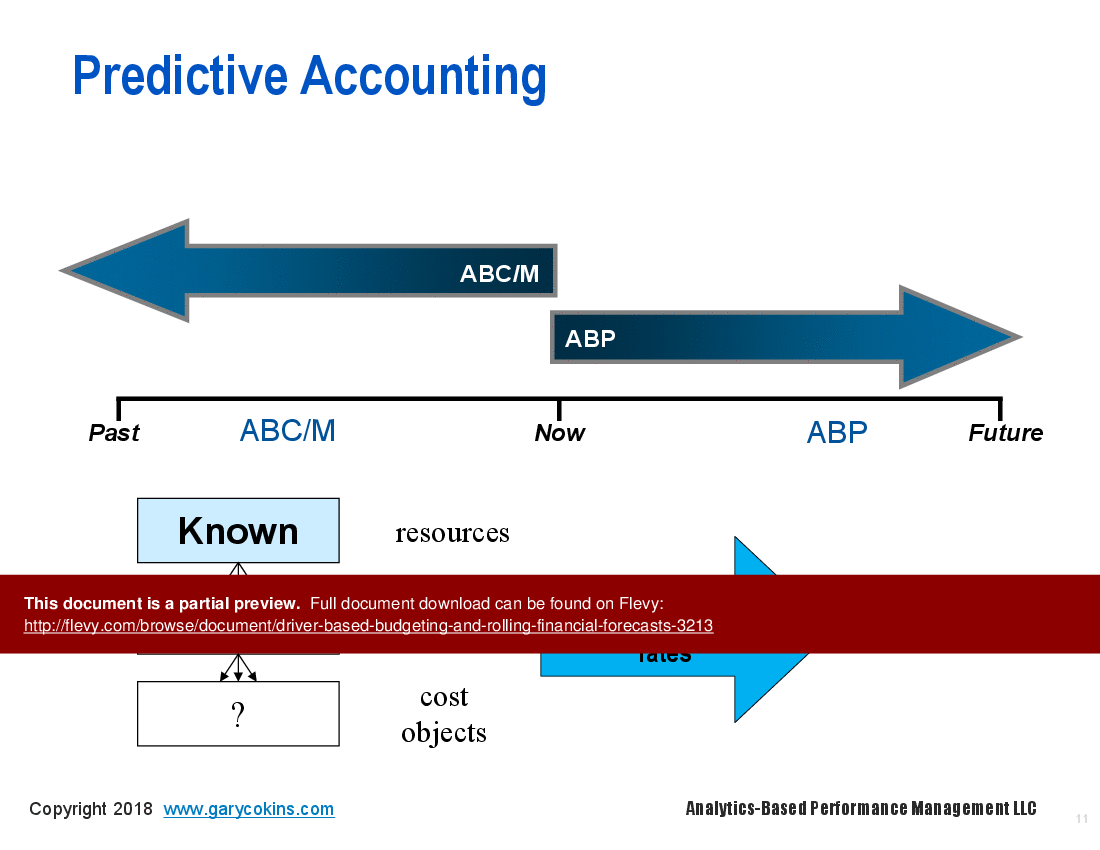
There is a shift in emphasis from historical reporting to predictive costing such as capacity-sensitive driver-based rolling financial forecasts, what-if analysis, and marginal cost analysis (e.g., pricing).

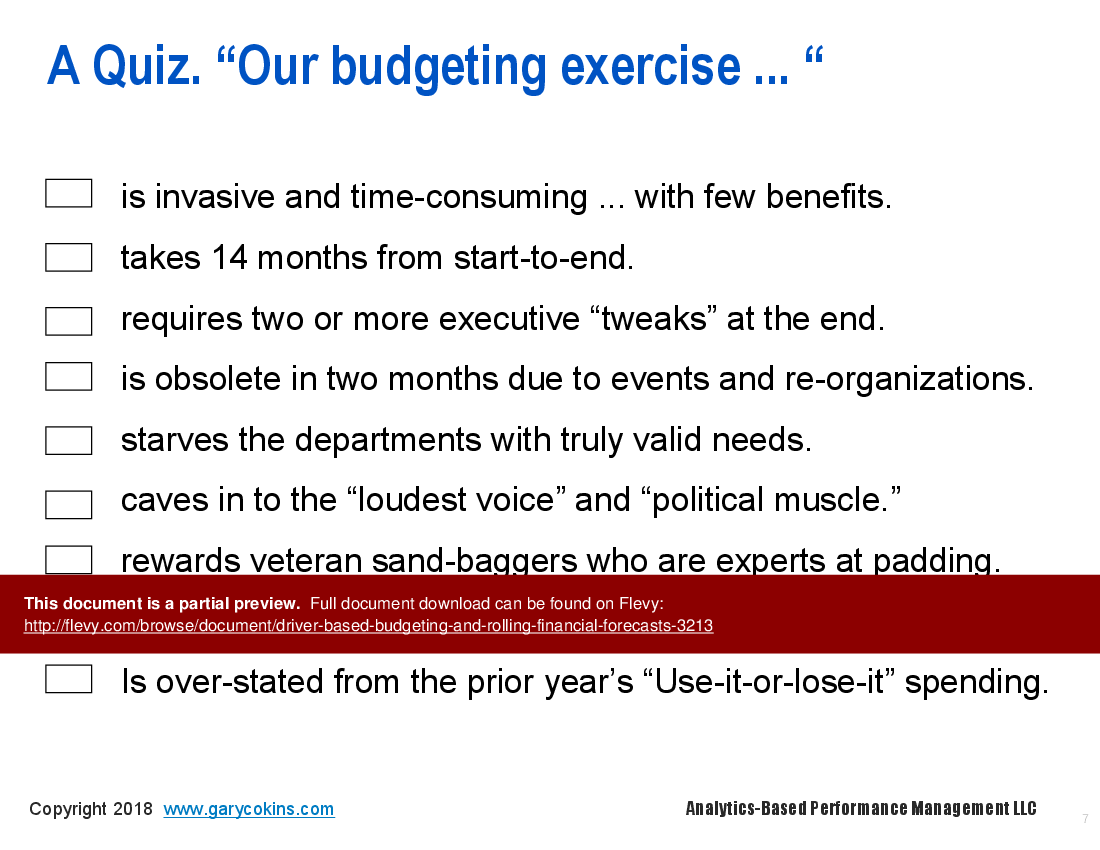
The annual budgeting process is being criticized as obsolete soon after it is published, prone to gamesmanship, cumbersome to consolidate cost center spreadsheets, not being volume sensitive, and disconnected from the strategy. The challenge is how to resolve these deficiencies. It can be done through driver based expense projections also useful for decision analysis.

The annual budget is often perceived as a fiscal exercise done by the accountants that is: (1) disconnected from the executive team's strategy, and (2) does not adequately reflect future volume drivers. The budget exercise is often scorned as being obsolete soon after it is produced, and biased toward politically muscled managers who know how to overstate and "pad" their budget request. To complicate matters, traditional budgets are typically incremented or decremented by a small percent change from each cost center's prior year's spending level. This "use it or lose it" behavior by managers in the last few months of the fiscal year unnecessarily pumps up their prior year's costs and consequently confuses analysis of who really needs how much budget in the coming year.

Today organizations are shifting to rolling financial forecasts, but these projections may include similarly flawed assumptions that produce the same sarcasm about the annual budgeting process.

What is the solution to these poor budgeting and rolling financial forecast methods?

Entrepreneurs know the age-old adage, "You need to spend money to make money." Excessively tightening the belt on an organization's spending can jeopardize its success. Rather than evaluating where costs can be cut, it is more prudent to change views and ask where and how the organization should wisely spend money to increase its long-term, sustained value. This involves planning for future expenses, but the annual budgeting and rolling financial forecast process has deficiencies.

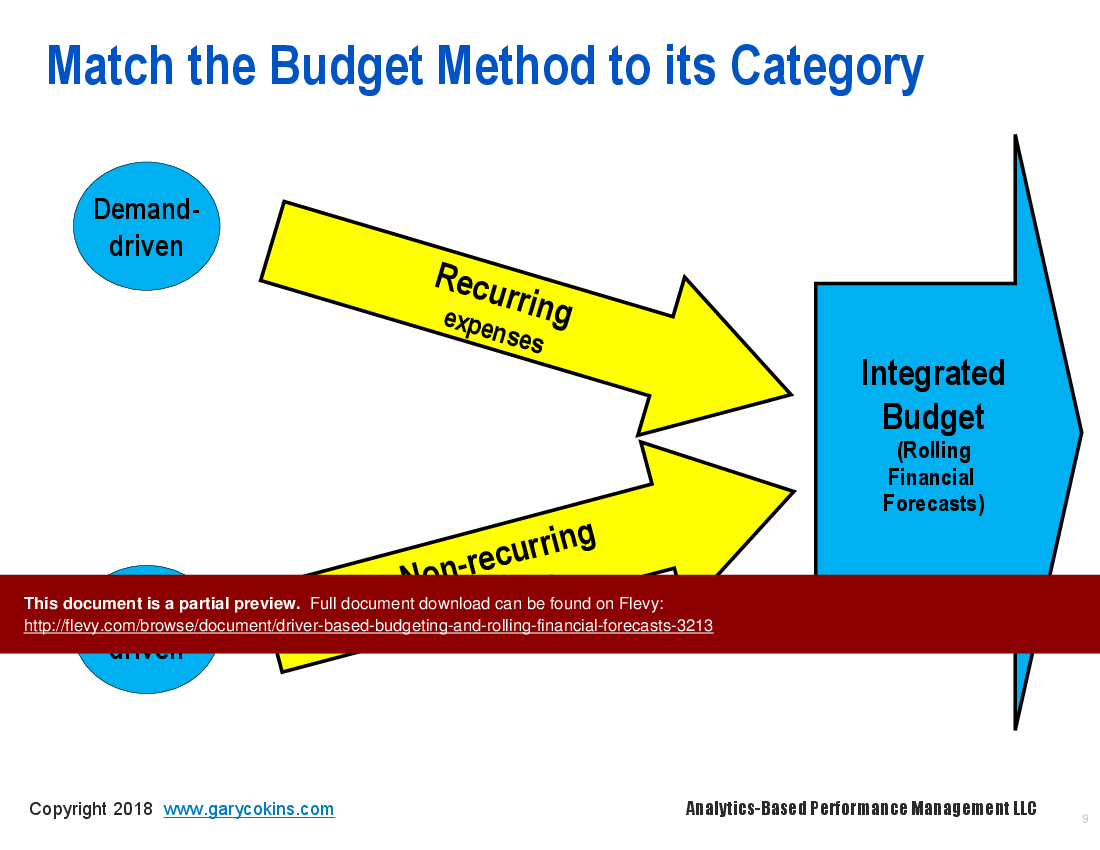
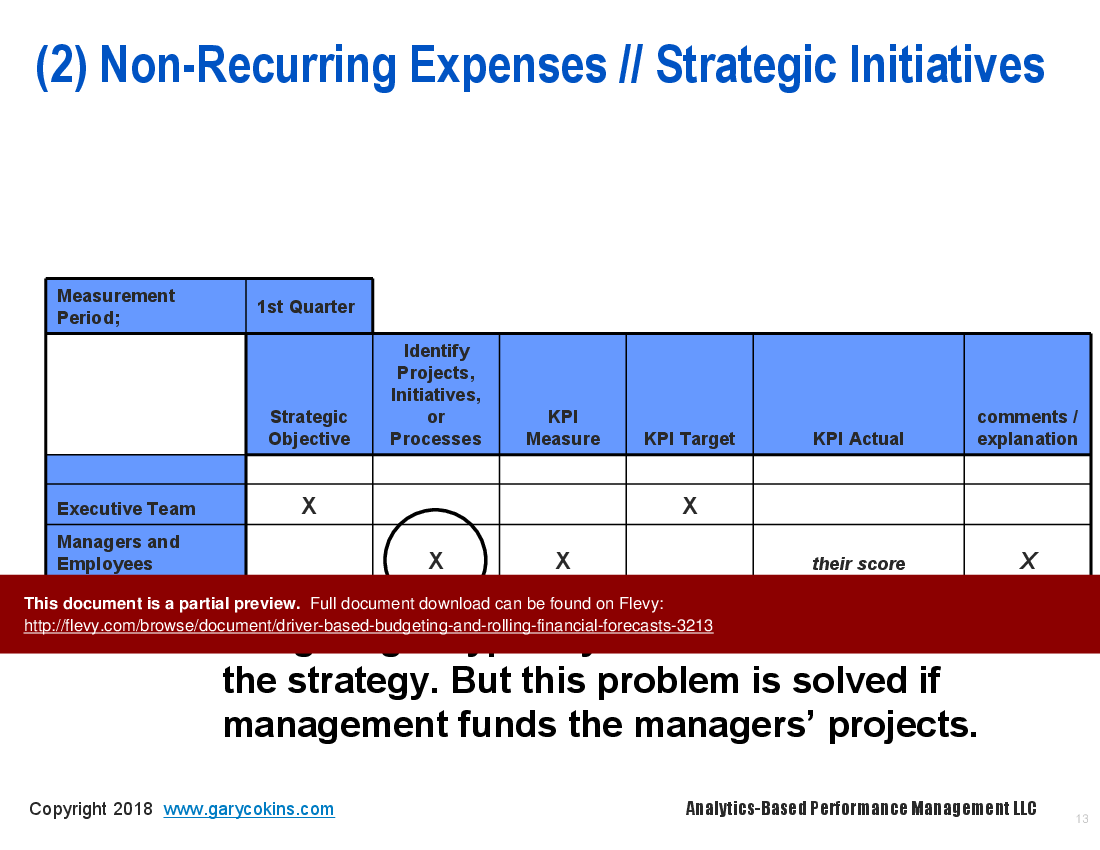
Four components of the enterprise performance management (EPM) framework can be drawn on to resolve these limitations. They are a strategy map, a risk management matrix, capital projects, and activity-based costing principles. The first three are project-based and the last for recurring operational expense projections. Ideally, the correct and valid amount of future spending for capacity and consumed expenses should be derived from two broad streams of workload that cause the need for spending – demand driven and project driven. Demand-driven expenses are operational and recurring from day to day. Their requirements are typically from customers. In contrast, project-driven spending (e.g., strategy initiatives, risk mitigation) is nonrecurring and can be from days to years in time duration. How are these two demands on an organization's workload integrated into a budget?

Most executive teams request frequent updates and revisions to the financial budget. These are referred to as rolling financial forecasts because the projection's planning horizon may be as much as 18 months to two years beyond the fiscal year-end date. Imagine if you are a CFO or financial controller required to re-process the budget as a rolling forecast quarterly (or even monthly). There are not enough spreadsheets to do it! Only computer automation that integrates several of the methods of the enterprise performance management (EPM) framework, including good predictive analytics, allows an organization to produce valid capacity-sensitive driver-based rolling financial forecasts.

Organizations with a formal strategy-execution process dramatically outperform organizations without formal processes. Building a core competency in strategy execution creates a competitive advantage for commercial organizations and increases value for constituents of public sector organizations. You can learn to manage strategy. It is important to include and protect planned spending for strategic and risk projects in capacity-sensitive driver-based budgets and rolling financial forecasts. Those projects lead to long-term, sustainable value creation.

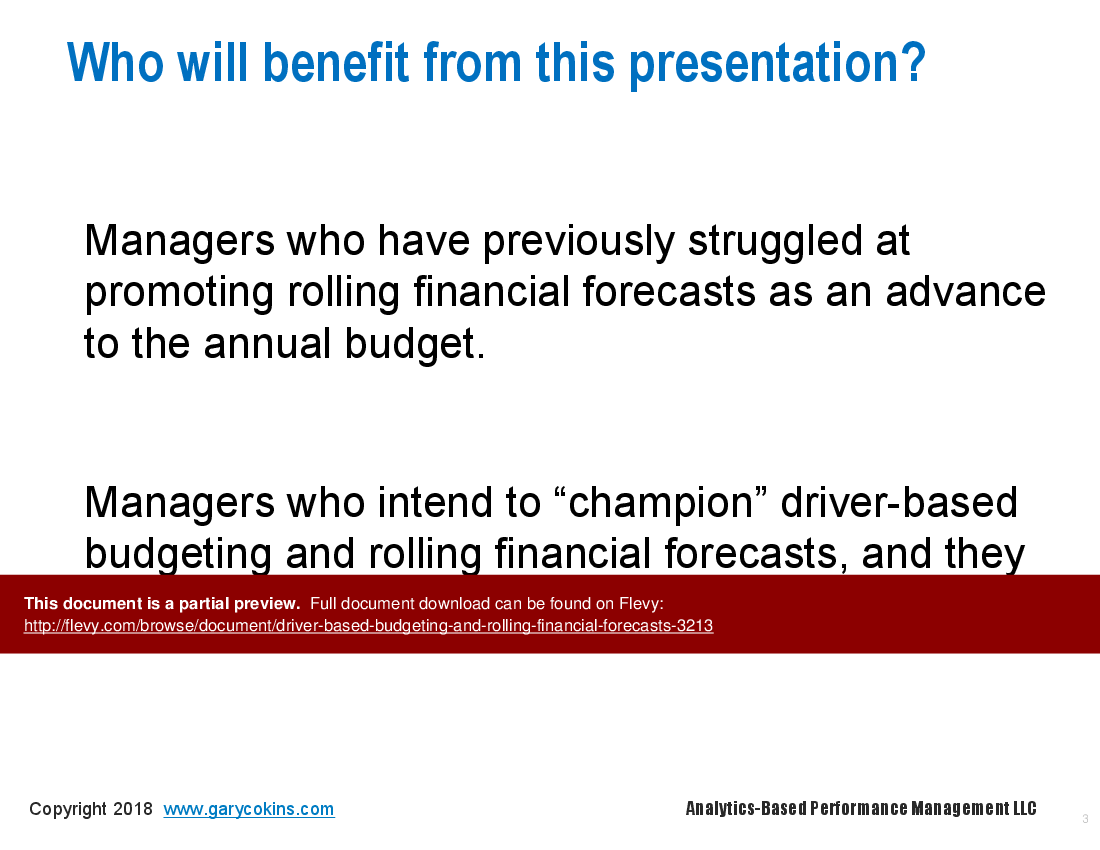
This presentation is ideal for managers who have struggled to advocate for rolling financial forecasts over traditional budgeting. It also serves those looking to champion driver-based budgeting and rolling forecasts within their organizations.

Got a question about the product? Email us at support@flevy.com or ask the author directly by using the "Ask the Author a Question" form. If you cannot view the preview above this document description, go here to view the large preview instead.

MARCUS OVERVIEW

This synopsis was written by Marcus [?] based on the analysis of the full 28-slide presentation.


Executive Summary
This presentation on Driver-Based Budgeting and Rolling Financial Forecasts, developed by Gary Cokins, a recognized expert in enterprise performance management, addresses the limitations of traditional budgeting processes. It emphasizes the need for a shift towards rolling financial forecasts that align with strategic objectives and enhance decision-making. Executives and managers will gain insights into implementing driver-based budgeting to improve financial accuracy and responsiveness, ultimately fostering a more agile financial planning environment.

Who This Is For and When to Use
•  Financial executives and managers seeking to improve budgeting practices
•  Performance management professionals advocating for advanced forecasting methods
•  Strategic planners aiming to align financial resources with organizational goals
•  Consultants and advisors focused on enhancing client budgeting processes

Best-fit moments to use this deck:
•  During strategic planning sessions to discuss budgeting improvements
•  In workshops aimed at training teams on rolling financial forecasts
•  When presenting to stakeholders about the benefits of driver-based budgeting

Learning Objectives
•  Define the shortcomings of traditional budgeting processes
•  Build a framework for implementing rolling financial forecasts
•  Establish a connection between budgeting and strategic objectives
•  Identify key performance indicators (KPIs) for effective financial monitoring
•  Analyze resource capacity planning in the context of budgeting
•  Develop a roadmap for transitioning to driver-based budgeting

Table of Contents
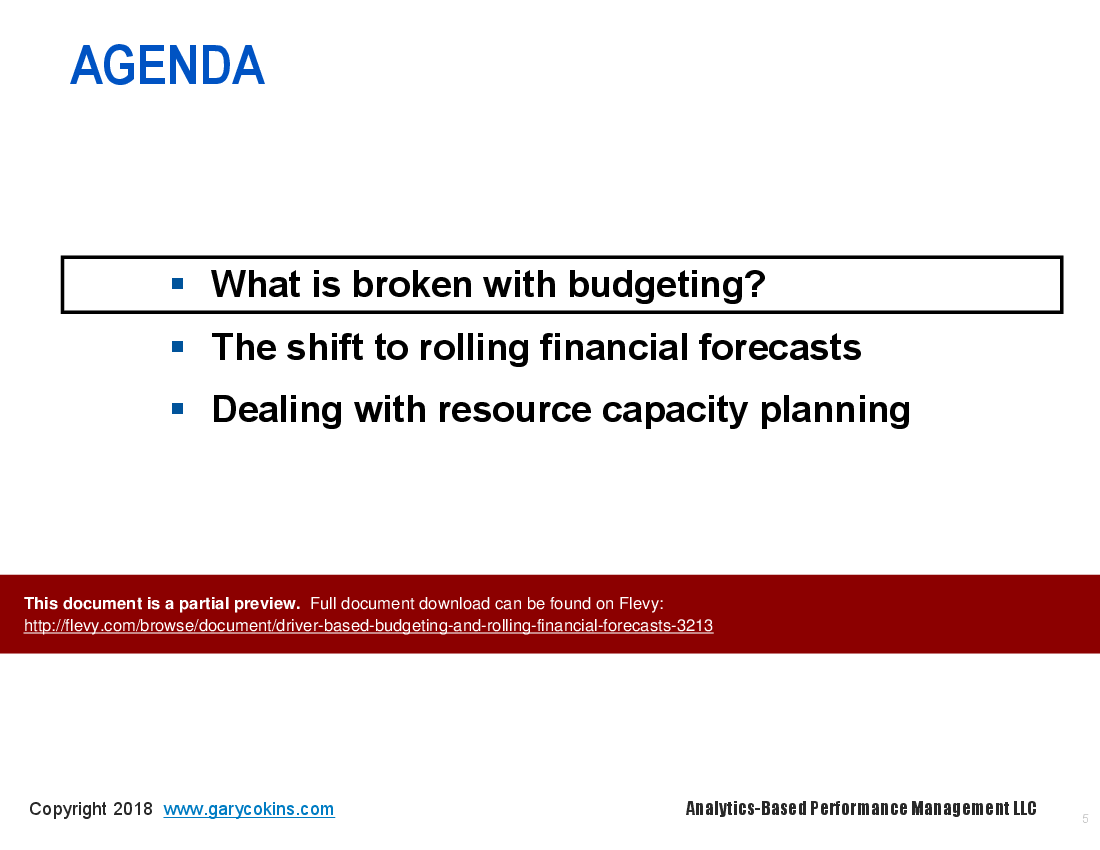
•  What Is Broken with Budgeting? (page 6)
•  The Shift to Rolling Financial Forecasts (page 8)
•  Dealing with Resource Capacity Planning (page 18)
•  Predictive Accounting (page 10)
•  Linking Strategy and Risk to the Budget (page 16)
•  Costing Continuum / Levels of Maturity (page 26)

Primary Topics Covered
•  Budgeting Limitations - Traditional budgeting processes often disconnect from strategic goals and fail to adapt to changing conditions, leading to inefficiencies.
•  Rolling Financial Forecasts - This approach allows organizations to continuously update financial projections based on real-time data, enhancing accuracy and responsiveness.
•  Resource Capacity Planning - Effective budgeting requires understanding resource capacities and aligning them with forecasted demand to optimize operational efficiency.
•  Predictive Accounting - Utilizing predictive analytics to inform budgeting decisions helps organizations anticipate future financial conditions and adjust strategies accordingly.
•  Strategic Alignment - Linking budgeting processes to strategic initiatives ensures that financial resources are allocated effectively to support organizational objectives.
•  Costing Maturity Model - Understanding the levels of maturity in costing practices helps organizations identify areas for improvement in their budgeting processes.

Deliverables, Templates, and Tools
•  Driver-based budgeting framework template for aligning financial plans with strategic goals
•  Rolling financial forecast model to facilitate continuous financial planning
•  Resource capacity planning tool to assess and adjust resource allocations
•  Predictive accounting guidelines for implementing data-driven budgeting decisions
•  Costing maturity assessment checklist to evaluate current budgeting practices
•  KPI dashboard template for tracking financial performance against strategic objectives

Slide Highlights
•  A visual representation of the budgeting limitations and their impact on organizational performance
•  Flowchart illustrating the process of transitioning from traditional budgeting to rolling financial forecasts
•  Graph demonstrating the accuracy improvements achieved through more frequent forecasting intervals
•  Risk assessment grid to evaluate the impact of non-recurring expenses on budgeting decisions
•  Overview of the costing continuum and its relevance to budgeting maturity

Potential Workshop Agenda
Introduction to Driver-Based Budgeting (60 minutes)
•  Overview of traditional budgeting limitations
•  Discussion on the need for rolling financial forecasts
•  Interactive Q&A session

Implementing Rolling Financial Forecasts (90 minutes)
•  Step-by-step guide to transitioning to rolling forecasts
•  Case studies showcasing successful implementations
•  Group activity to draft initial rolling forecast plans

Resource Capacity Planning Strategies (60 minutes)
•  Identifying key resource constraints
•  Aligning capacity planning with financial forecasts
•  Tools and techniques for effective resource management

Customization Guidance
•  Tailor the budgeting framework template to reflect your organization's specific strategic objectives
•  Adjust the rolling financial forecast model to incorporate unique business drivers and KPIs
•  Modify resource capacity planning tools to align with departmental needs and operational realities
•  Update predictive accounting guidelines based on industry-specific financial practices

Secondary Topics Covered
•  The role of managerial accounting in effective budgeting
•  Techniques for integrating non-financial data into budgeting processes
•  Best practices for stakeholder engagement during budgeting cycles
•  Strategies for overcoming resistance to change in budgeting practices

FAQ
What are the main issues with traditional budgeting?
Traditional budgeting is often disconnected from strategic goals, time-consuming, and quickly becomes obsolete due to changing conditions.

How do rolling financial forecasts improve budgeting?
Rolling forecasts allow for continuous updates based on real-time data, enhancing accuracy and enabling organizations to respond more effectively to changes.

What is predictive accounting?
Predictive accounting involves using data analytics to inform budgeting decisions, helping organizations anticipate future financial conditions and adjust strategies accordingly.

How can we assess our current budgeting maturity?
Utilize a costing maturity assessment checklist to evaluate your organization's budgeting practices against established levels of maturity.

What tools can help with resource capacity planning?
Resource capacity planning tools can help assess and adjust resource allocations based on forecasted demand and operational needs.

How can we ensure alignment between budgeting and strategy?
Link budgeting processes to strategic initiatives by identifying key performance indicators (KPIs) that reflect organizational goals.

What are the benefits of driver-based budgeting?
Driver-based budgeting aligns financial plans with operational drivers, improving accuracy and enabling more effective resource allocation.

How often should we refresh our financial forecasts?
More frequent updates to financial forecasts are recommended to ensure accuracy and responsiveness to changing conditions.

Glossary
•  Driver-Based Budgeting - A budgeting approach that aligns financial plans with operational drivers and strategic goals.
•  Rolling Financial Forecasts - Continuous updates to financial projections based on real-time data.
•  Predictive Accounting - The use of data analytics to inform budgeting decisions and anticipate future financial conditions.
•  Resource Capacity Planning - The process of assessing and adjusting resource allocations to meet forecasted demand.
•  Costing Maturity Model - A framework for evaluating the maturity of an organization's costing practices.
•  Key Performance Indicators (KPIs) - Metrics used to measure financial performance against strategic objectives.
•  Strategic Alignment - The process of ensuring that budgeting practices support organizational goals.
•  Non-Recurring Expenses - One-time costs that do not occur regularly in the budgeting cycle.
•  Capacity Sensitivity - The ability to adjust resource capacities based on forecasted demand.
•  Financial Modeling - The process of creating representations of an organization's financial performance.
•  Activity-Based Costing (ABC) - A costing method that assigns costs to activities based on their use of resources.
•  Managerial Accounting - The practice of analyzing financial information to aid in decision-making and performance management.

Source: Best Practices in Budgeting & Forecasting, Management Accounting PowerPoint Slides: Driver-Based Budgeting and Rolling Financial Forecasts PowerPoint (PPT) Presentation Slide Deck, Gary Cokins


$49.00
This presentation is developed a former consultant at Deloitte, KPMG, HP, and SAS, who is an internationally recognized EPM/CPM expert, speaker, and Wiley & Sons published author with almost 50 years of experience.
Add to Cart
  

ABOUT THE AUTHOR

Author image
Author: Gary Cokins
Additional documents from author: 6

Gary Cokins is an internationally recognized expert, speaker, and author in business analytics enterprise and corporate performance management (EPM/CPM) improvement methods (e.g., strategy map and its balanced scorecard; product, channel, customer profitability reporting usinf activity-based costing; driver-based rolling financial forecasts).

He is the founder of Analytics-Based ... [read more]

Ask the Author a Question

You must be logged in to contact the author.

Click here to log in Click here register

Did you know?
The average daily rate of a McKinsey consultant is $6,625 (not including expenses). The average price of a Flevy document is $65.

Bundle and save! You can save up to % with bundles!

View bundle(s)


Trusted by over 10,000+ Client Organizations
Since 2012, we have provided business templates to over 10,000 businesses and organizations of all sizes, from startups and small businesses to the Fortune 100, in over 130 countries.
AT&T GE Cisco Intel IBM Coke Dell Toyota HP Nike Samsung Microsoft Astrazeneca JP Morgan KPMG Walgreens Walmart 3M Kaiser Oracle SAP Google E&Y Volvo Bosch Merck Fedex Shell Amgen Eli Lilly Roche AIG Abbott Amazon PwC T-Mobile Broadcom Bayer Pearson Titleist ConEd Pfizer NTT Data Schwab


Read Customer Testimonials

 
"If you are looking for great resources to save time with your business presentations, Flevy is truly a value-added resource. Flevy has done all the work for you and we will continue to utilize Flevy as a source to extract up-to-date information and data for our virtual and onsite presentations!"

– Debbi Saffo, President at The NiKhar Group
 
"FlevyPro has been a brilliant resource for me, as an independent growth consultant, to access a vast knowledge bank of presentations to support my work with clients. In terms of RoI, the value I received from the very first presentation I downloaded paid for my subscription many times over! The "

– Roderick Cameron, Founding Partner at SGFE Ltd
 
"FlevyPro provides business frameworks from many of the global giants in management consulting that allow you to provide best in class solutions for your clients."

– David Harris, Managing Director at Futures Strategy
 
"The wide selection of frameworks is very useful to me as an independent consultant. In fact, it rivals what I had at my disposal at Big 4 Consulting firms in terms of efficacy and organization."

– Julia T., Consulting Firm Owner (Former Manager at Deloitte and Capgemini)
 
"I like your product. I'm frequently designing PowerPoint presentations for my company and your product has given me so many great ideas on the use of charts, layouts, tools, and frameworks. I really think the templates are a valuable asset to the job."

– Roberto Fuentes Martinez, Senior Executive Director at Technology Transformation Advisory
 
"Last Sunday morning, I was diligently working on an important presentation for a client and found myself in need of additional content and suitable templates for various types of graphics. Flevy.com proved to be a treasure trove for both content and design at a reasonable price, considering the time I "

– M. E., Chief Commercial Officer, International Logistics Service Provider
 
"Flevy is our 'go to' resource for management material, at an affordable cost. The Flevy library is comprehensive and the content deep, and typically provides a great foundation for us to further develop and tailor our own service offer."

– Chris McCann, Founder at Resilient.World
 
"I am extremely grateful for the proactiveness and eagerness to help and I would gladly recommend the Flevy team if you are looking for data and toolkits to help you work through business solutions."

– Trevor Booth, Partner, Fast Forward Consulting


Save with Bundles

This document is available as part of the following discounted bundle(s):

Save %!
Analytics-Based Enterprise and Corporate Performance Management

This bundle contains 5 total documents. See all the documents to the right.

$179.00


Add Bundle & Save


Customers Also Bought These Documents


Customers Also Like These Documents

Explore Related Management Topics

CFO


Your Recently Viewed Documents
Download our FREE Strategy & Transformation Framework Templates

Download our free compilation of 50+ Strategy & Transformation slides and templates. Frameworks include McKinsey 7-S Strategy Model, Balanced Scorecard, Disruptive Innovation, BCG Experience Curve, and many more.