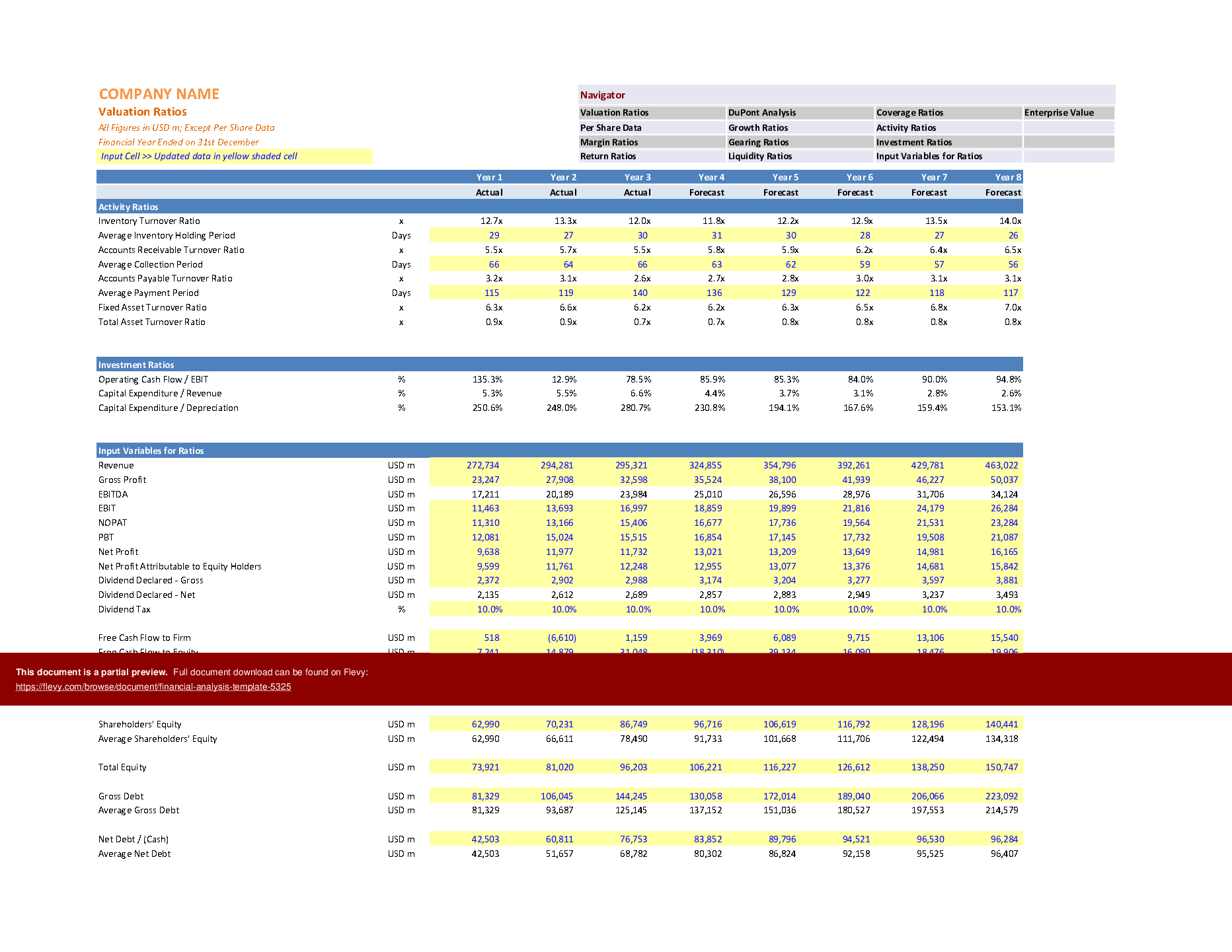
 Click main image to view in full screen.


BENEFITS OF THIS DOWNLOADABLE EXCEL DOCUMENT
- Generate over 70 Financial Ratios grouped under 12 heads
- Conducts ratio analysis by looking at past performance and expected future performance as investment indicators
- Indicators include a company's overall financial health, analysis of financial statements, and other individual indicators of corporate performance over time
FINANCIAL ANALYSIS EXCEL DESCRIPTION
Financial Analysis Template
Financial analysis is used to evaluate economic trends, set financial policy, build long-term plans for business activity, and identify projects or companies for investment. This is done through the synthesis of financial numbers and data.
The template uses a bottom-up approach. It helps the user to look at a specific company and conducts ratio analysis by looking at past performance and expected future performance as investment indicators. These indicators include a company's overall financial health, analysis of financial statements, and other individual indicators of corporate performance over time.
This a user-friendly template where user can input certain financial data of a company and can generate over 70 Financial Ratios grouped under 12 heads :
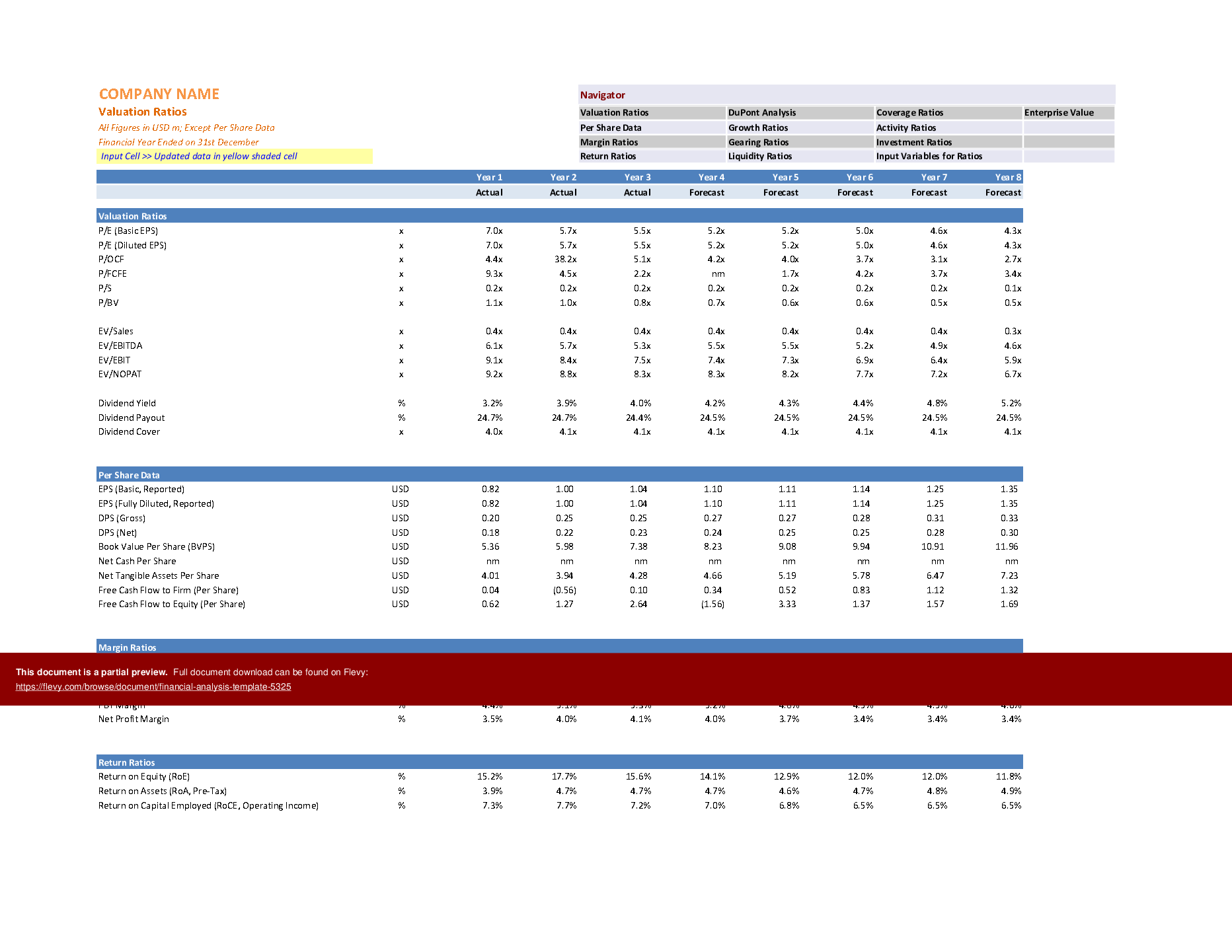
1. Valuation Ratios (P/E, P/FCFF, P/BV, EV/EBITDA, EV/EBIT & more)
2. Per Share Data (EPS, BPS, DPS, FCFF, FCFE & more)
3. Margin Ratios (Gross, EBITDA, EBIT, PBT & PAT)
4. Return Ratios (RoCE, RoE, RoA)
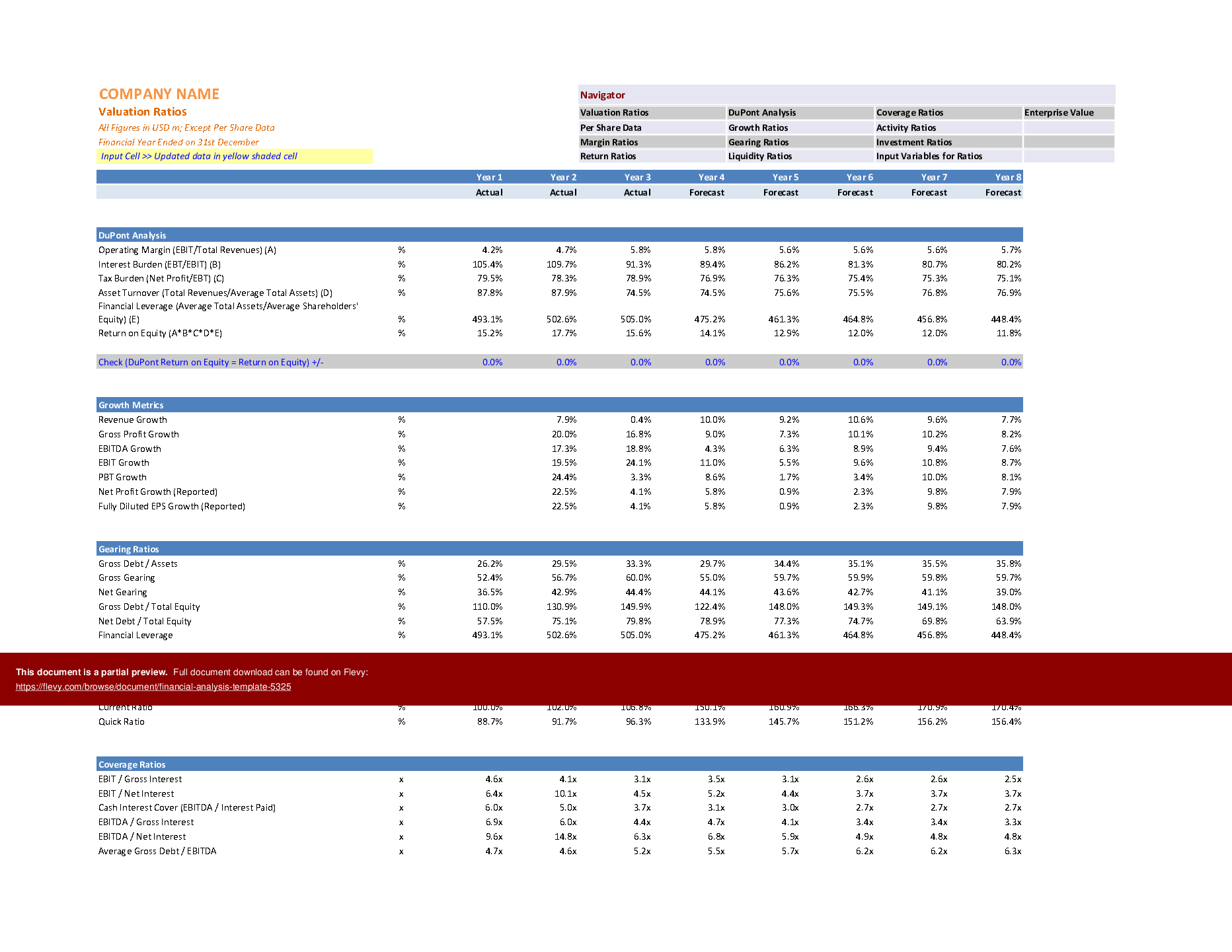
5. DuPont Analysis
6. Growth Metrics (Revenue Growth, EBITDA Growth, EBIT Growth & More)
7. Gearing Ratios (Gross Debt/Assets, Gross & Net Gearing, Financial Leverage & More)
8. Liquidity Ratios (Cash, Current & Quick Ratio)
9. Coverage Ratios (EBIT / Gross Interest, Cash Interest Cover (EBITDA / Interest Paid), Average Gross Debt / EBITDA, EBITDA / Net Interest & More)
10. Activity Ratios (Inventory Turnover, Receivables Turnover & Payable Turnover)
11. Investment Ratios (Operating Cash Flow / EBIT, Capital Expenditure / Revenue and Capital Expenditure / Depreciation)
12. Enterprise Value
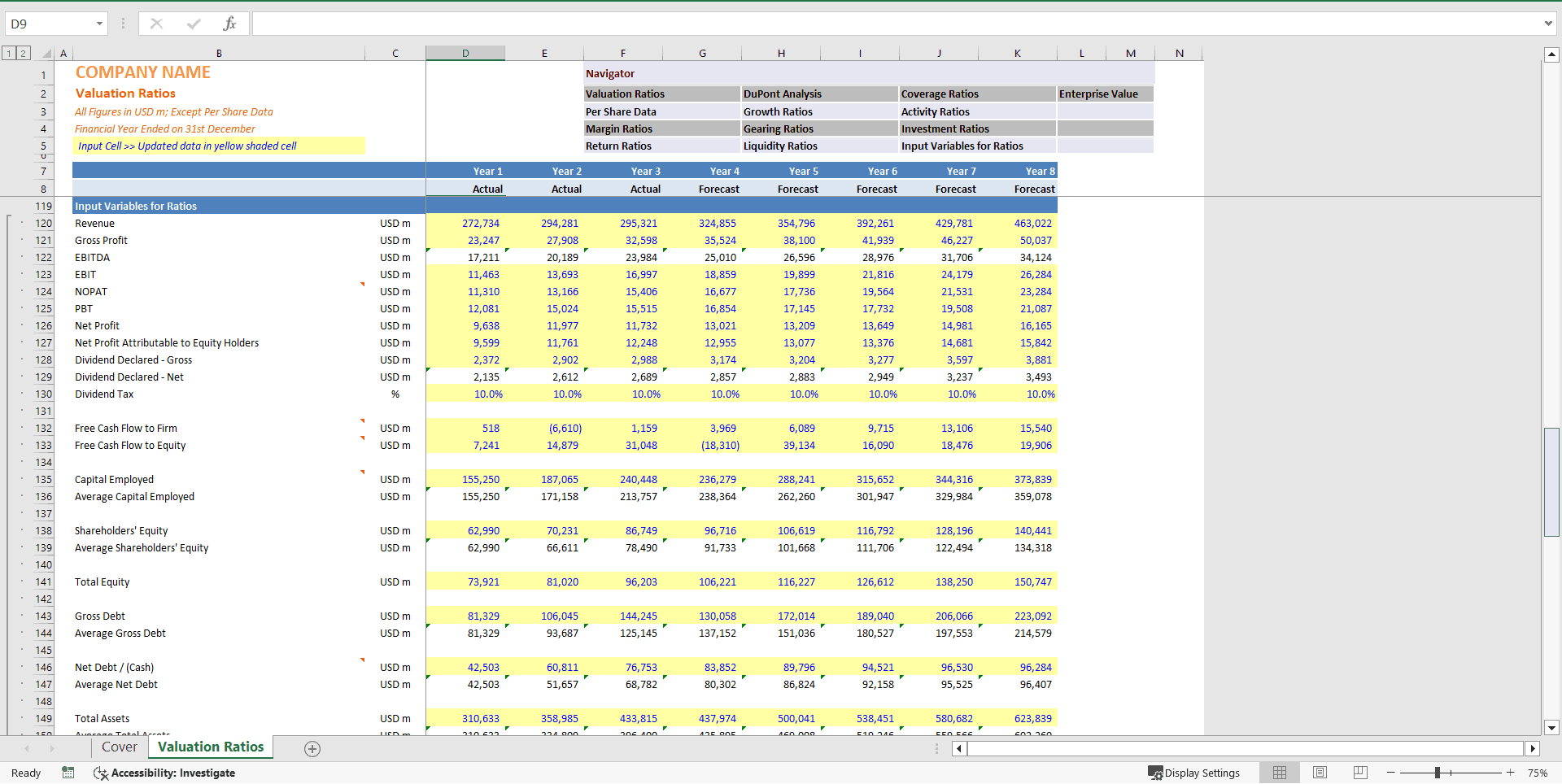
This template is designed with a clear and intuitive layout, ensuring ease of use for financial professionals. The input cells are highlighted for quick data entry, and the comprehensive navigator allows seamless access to various ratio categories. The template also includes forecast columns for up to eight years, enabling robust financial projections and strategic planning. This tool is indispensable for those looking to conduct in-depth financial analysis with precision and efficiency.
Got a question about the product? Email us at support@flevy.com or ask the author directly by using the "Ask the Author a Question" form. If you cannot view the preview above this document description, go here to view the large preview instead.
TOPIC FAQ
What does a bottom-up approach mean in company financial analysis?
A bottom-up approach focuses on company-level data and builds analysis from historical financial statements to forward projections. In this context it means conducting ratio analysis on past and expected future performance as investment indicators, producing over 70 ratios grouped across 12 heads.What core ratio categories should a comprehensive financial analysis include?
A comprehensive analysis typically covers valuation ratios, per-share metrics, margin ratios, return ratios, DuPont analysis, growth metrics, gearing, liquidity, coverage, activity ratios, investment ratios, and enterprise value — 12 ratio groups in this template.How is DuPont analysis represented in ratio toolkits?
DuPont analysis is provided as one of the 12 ratio heads in the template, included alongside other return and margin measures to support company-level performance assessment; DuPont Analysis is one of the named ratio groups.What features should I prioritize when choosing an Excel financial analysis template?
Prioritize clear input layout, highlighted input cells, ease of navigation across ratio categories, breadth of ratio coverage, and multi-year forecast capability; this template highlights inputs, includes a navigator, and offers forecast columns for up to eight years.How should I assess the cost versus value of purchasing a financial analysis template?
Assess value by checking ratio coverage, forecast horizon, ease of data entry, and whether it supports your use cases; for example, Flevy's Financial Analysis Template provides over 70 ratios and forecasting across up to eight years as concrete value attributes.How can ratio analysis support company valuation for investment decisions?
Ratio analysis helps compare valuation and performance indicators over time and versus peers using valuation multiples (P/E, EV/EBITDA) and per-share metrics; this template explicitly includes valuation ratios like P/E and EV/EBITDA among its coverage.Can I use a ratio template to forecast cash flow and capital expenditure needs?
Yes—by entering historical data and projecting forward in the template’s forecast columns, you can derive investment ratios such as Operating Cash Flow / EBIT, Capital Expenditure / Revenue, and Capital Expenditure / Depreciation, with forecasts up to eight years.What per-share and per-statement metrics do typical financial templates provide?
Typical templates include per-share metrics such as EPS, BPS, DPS, FCFF, and FCFE, and link these to margin and return measures; Flevy's Financial Analysis Template lists Per Share Data including EPS, BPS, DPS, FCFF, and FCFE.Source: Best Practices in Financial Analysis Excel: Financial Analysis Template Excel (XLSX) Spreadsheet, Fin-Wiser Advisory
ABOUT THE AUTHOR

Fin-wiser is a specialist advisory boutique focused on providing financial modelling, financial analysis, business transformation and business research services.
Our mission is to deliver high-quality Financial Models, Financial Analysis, Operational Transformation and Data Analytics which are custom made as per the business requirements. These solutions can integrate elements of business,
... [read more]
Ask the Author a Question
You must be logged in to contact the author.




























