
This framework is developed by a team of former McKinsey and Big 4 consultants. The presentation follows the headline-body-bumper slide format used by global consulting firms.
Explore 3 advanced Decision Making Models by ex-McKinsey and Big 4 consultants. Enhance your strategic choices with insights on Thinking, Seeing, and Doing. Decision Making Models Guide is a 22-slide PPT PowerPoint presentation slide deck (PPTX) available for immediate download upon purchase.
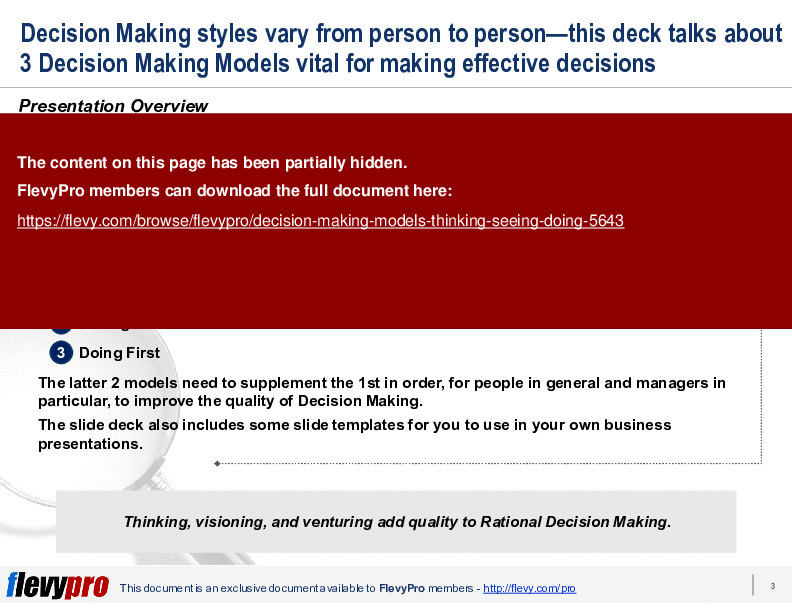
How do people make decisions? Do they always follow a rational linear process to come to a conclusion?
Studies have suggested that the traditional Decision Making model—commonly known as the Rational Decision Making Model—does not explain the whole ambit of Decision Making.
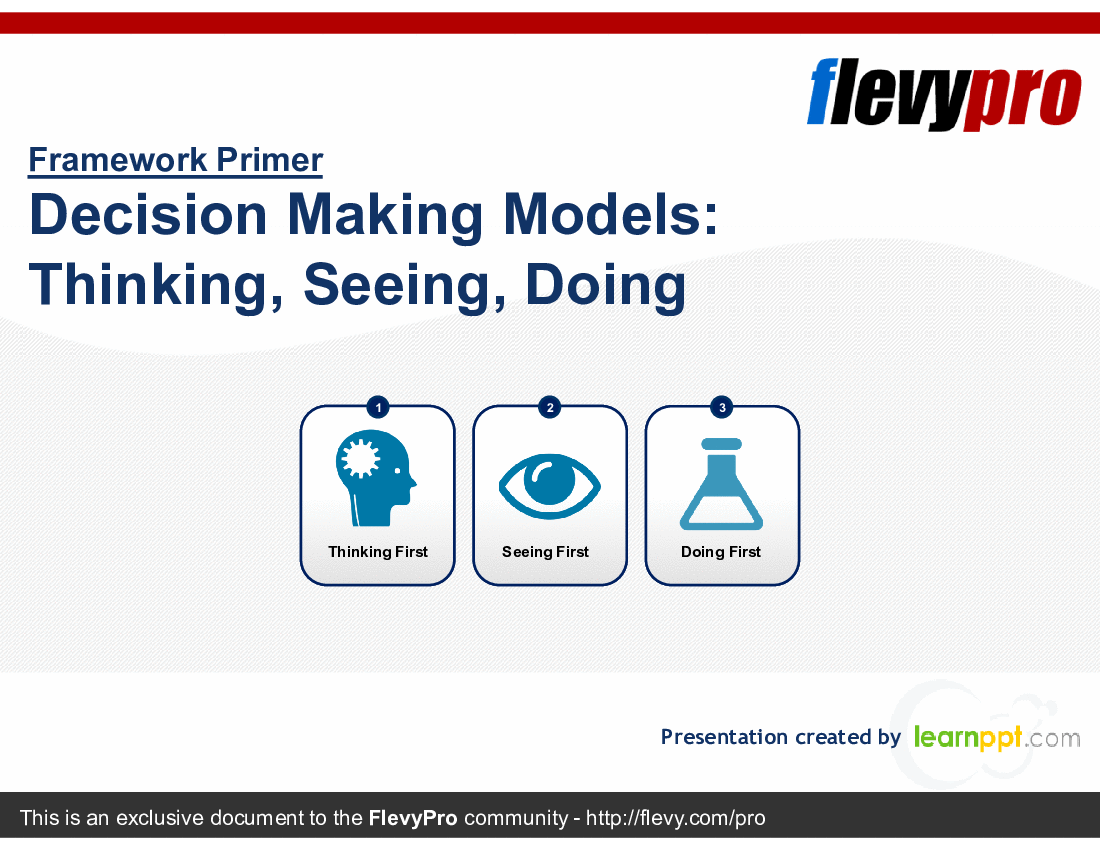
This presentation discusses 3 Decision Making Models that, experts suggest, are used by people to reach quality decisions.
1. Thinking First
2. Seeing First
3. Doing First
The latter 2 models need to supplement the 1st in order, for people in general and managers in particular, to improve the quality of Decision Making.
The slide deck also includes some slide templates for you to use in your own business presentations.
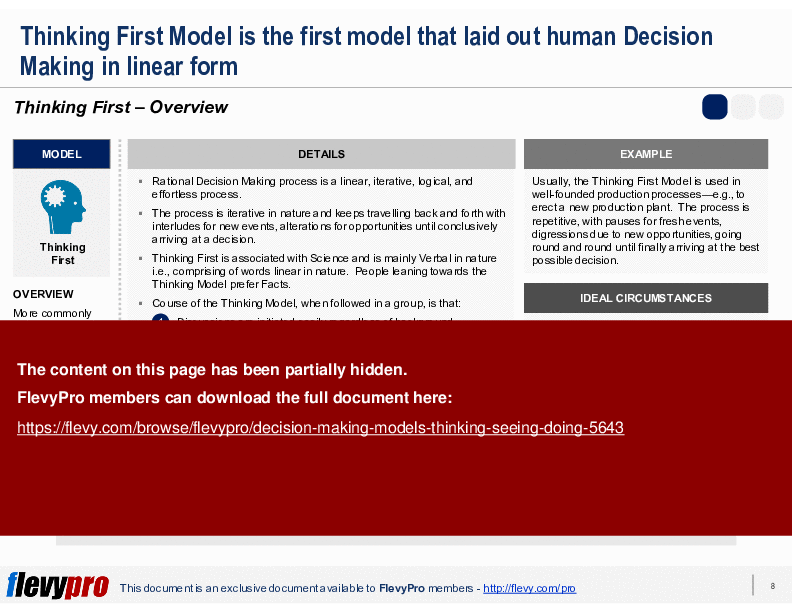
This presentation delves into the intricacies of the Thinking First model, which is grounded in rational decision-making. It outlines a linear, iterative process that is logical and methodical. The model is particularly effective in structured environments like production processes, where decisions are made through a series of well-defined steps. However, it also acknowledges the limitations of this approach, highlighting that real-life decision-making is often more chaotic and less linear.
The Seeing First model emphasizes the importance of visualization and insight in decision-making. This approach is ideal for situations requiring creative solutions and innovation. It involves a process of conceptualization, followed by an "Ah-ha" moment of illumination, often occurring after a period of rest or disengagement from the problem. This model is particularly useful in scenarios where multiple elements need to be integrated into a cohesive solution, and where communication and commitment are crucial.
The Doing First model focuses on action-oriented decision-making, where practical experimentation and trial-and-error are key. This approach is beneficial in unique, complex situations where traditional analysis may not be feasible. It involves diving headfirst into the problem, learning from the outcomes, and iterating based on experience. This model is effective in dynamic environments where quick, adaptive responses are necessary to navigate uncharted territories.
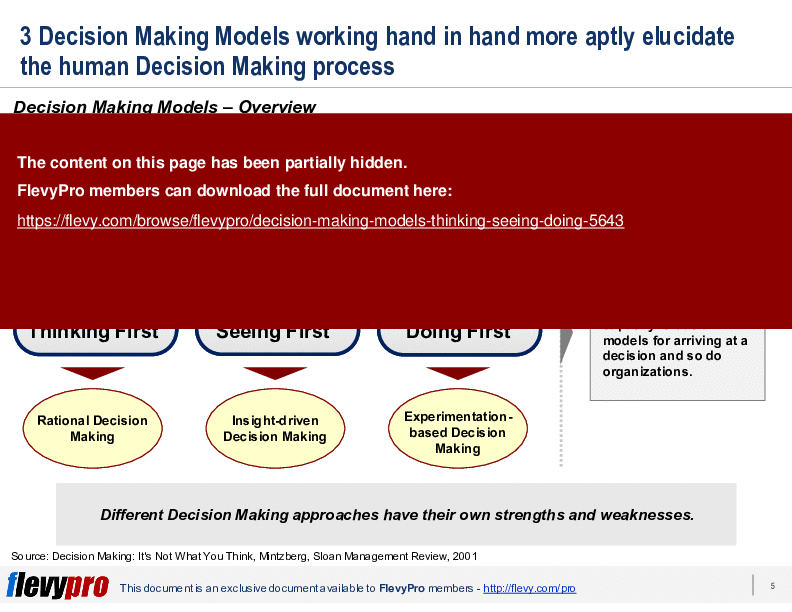
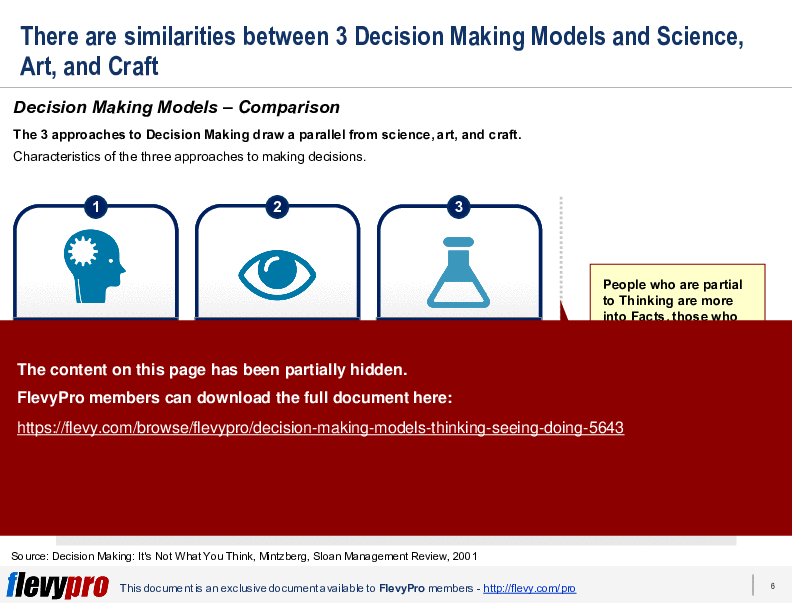
This PPT slide analyzes 3 decision-making models: "Thinking first," "Seeing first," and "Doing first." The "Thinking first" model emphasizes logical reasoning, structured analysis, and fact-based decision-making, appealing to those who prioritize planning and programming. The "Seeing first" model aligns with creativity and conceptual thinking, focusing on visioning and visual representation of ideas. In contrast, the "Doing first" model relates to experiential learning, encouraging hands-on engagement and practical applications. Individuals gravitate toward these models based on preferences: "Thinking" types are fact-oriented, "Seeing" individuals value ideas, and "Doing" types prioritize experiences. Understanding these diverse decision-making styles can enhance collaboration and improve organizational performance.
The Rational Decision Making Model, or "Thinking First," consists of 4 sequential steps: Decline, Diagnose, Design, and Decide. The Decline step identifies the problem, laying the foundation for the process. In the Diagnose phase, the causes of the problem are examined, providing context and implications. The Design phase focuses on generating potential solutions through creativity and strategic thinking. Finally, the Decide step involves selecting the most appropriate solution, determining the course of action. This structured approach emphasizes that defining the problem is the first step, followed by diagnosing its cause. A rational decision-making process is often an exception, highlighting challenges organizations face in implementing this methodology.
The Seeing First Model is a framework for creative problem-solving, consisting of 4 stages: Preparation, Incubation, Illumination, and Verification. Preparation involves gathering deep knowledge about the problem, setting the stage for subsequent phases. Incubation allows the unconscious mind to process information, often leading to insights after a period of reflection. Illumination represents the "Ah-ha moment," where solutions become clear, emphasizing the need for mental freedom to foster creativity. Verification organizes and articulates the solution logically for effective communication. The model is most effective when diverse elements are combined, there is a strong commitment to the solution, and communication transcends boundaries, fostering an environment conducive to creativity and innovation.
The Thinking First Model, also known as the Rational Decision Making Model, emphasizes a structured, iterative, and logical approach to decision-making. It relies on verbal communication and factual information, appealing to those who prefer a scientific basis for decisions. In group settings, discussions can begin easily, with comments recorded systematically using lists and bullet points for clarity. The model minimizes time spent on problem definition, focusing on swift analysis and resolution, which is essential for timely decision-making. It is effective when the issue is well-defined, data is reliable, and the situation is structured. Discipline is crucial for maintaining focus throughout the decision-making process. The model provides a clear framework for organizations seeking a rational approach to complex decisions.
This PPT slide presents insights into human decision-making through 2 contrasting approaches. The first, "Cropping Precedes Zeroing In," describes a systematic exploration phase that narrows options into a structured insight. The visual representation illustrates this narrowing pathway. The second insight, "Choices Looking for Problems," presents a chaotic decision-making process where choices seek problems to address, depicted as a non-linear path emphasizing randomness. This dichotomy highlights iterative versus anarchic decision-making strategies, informing how organizations can tailor their processes. Leaders can reflect on their styles and integrate elements from both approaches to enhance decision-making effectiveness.
Source: Best Practices in Decision Making PowerPoint Slides: Decision Making Models: Thinking, Seeing, Doing PowerPoint (PPTX) Presentation Slide Deck, LearnPPT Consulting
This framework is developed by a team of former McKinsey and Big 4 consultants. The presentation follows the headline-body-bumper slide format used by global consulting firms.
For $10.00 more, you can download this document plus 2 more FlevyPro documents. That's just $13 each.
ABOUT FLEVYPRO
This document is part of the FlevyPro Library, a curated knowledge base of documents for our FlevyPro subscribers.
FlevyPro is a subscription service for on-demand business frameworks and analysis tools. FlevyPro subscribers receive access to an exclusive library of curated business documents—business framework primers, presentation templates, Lean Six Sigma tools, and more—among other exclusive benefits.
The average daily rate of a McKinsey consultant is $6,625 (not including expenses). The average price of a Flevy document is $65.
Trusted by over 10,000+ Client Organizations
Since 2012, we have provided business templates to over 10,000 businesses and organizations of all sizes, from startups and small businesses to the Fortune 100, in over 130 countries.
"Last Sunday morning, I was diligently working on an important presentation for a client and found myself in need of additional content and suitable templates for various types of graphics. Flevy.com proved to be a treasure trove for both content and design at a reasonable price, considering the time I
saved. I encountered a download issue during the ordering process. However, a quick email to Flevy's support team, even on a Sunday (!!!), resulted in assistance within less than an hour, allowing me to download the content I needed. Fantastic job, Flevy! I give 5 stars for both content/price and customer service. Thank you!
"
– M. E., Chief Commercial Officer, International Logistics Service Provider
"I am extremely grateful for the proactiveness and eagerness to help and I would gladly recommend the Flevy team if you are looking for data and toolkits to help you work through business solutions."
– Trevor Booth, Partner, Fast Forward Consulting
"The wide selection of frameworks is very useful to me as an independent consultant. In fact, it rivals what I had at my disposal at Big 4 Consulting firms in terms of efficacy and organization."
– Julia T., Consulting Firm Owner (Former Manager at Deloitte and Capgemini)
"Flevy is our 'go to' resource for management material, at an affordable cost. The Flevy library is comprehensive and the content deep, and typically provides a great foundation for us to further develop and tailor our own service offer."
– Chris McCann, Founder at Resilient.World
"I have used FlevyPro for several business applications. It is a great complement to working with expensive consultants. The quality and effectiveness of the tools are of the highest standards."
– Moritz Bernhoerster, Global Sourcing Director at Fortune 500
"FlevyPro has been a brilliant resource for me, as an independent growth consultant, to access a vast knowledge bank of presentations to support my work with clients. In terms of RoI, the value I received from the very first presentation I downloaded paid for my subscription many times over! The
quality of the decks available allows me to punch way above my weight – it's like having the resources of a Big 4 consultancy at your fingertips at a microscopic fraction of the overhead.
"
– Roderick Cameron, Founding Partner at SGFE Ltd
"Flevy.com has proven to be an invaluable resource library to our Independent Management Consultancy, supporting and enabling us to better serve our enterprise clients.
The value derived from our [FlevyPro] subscription in terms of the business it has helped to gain far exceeds the investment made, making a subscription a no-brainer for any growing consultancy – or in-house strategy team."
– Dean Carlton, Chief Transformation Officer, Global Village Transformations Pty Ltd.
"Flevy is now a part of my business routine. I visit Flevy at least 3 times each month.
Flevy has become my preferred learning source, because what it provides is practical, current, and useful in this era where the business world is being rewritten.

many challenges and there is the need to make the right decisions in a short time, with so much scattered information, we are fortunate to have Flevy. Flevy investigates, selects, and puts at our disposal the best of the best to help us be successful in our work.
Download our free compilation of 50+ Strategy & Transformation slides and templates. Frameworks include McKinsey 7-S, Balanced Scorecard, Disruptive Innovation, BCG Curve, and many more.