
Deception in Corporate Communication   24-slide PPT PowerPoint presentation slide deck (PPT)
$29.00

Deception in Corporate Communication (24-slide PPT PowerPoint presentation slide deck (PPT)) Preview Image
Log in to unlock full preview.
Deception in Corporate Communication (24-slide PPT PowerPoint presentation slide deck (PPT)) Preview Image
Arrow   Click main image to view in full screen.

Deception in Corporate Communication (PowerPoint PPT Slide Deck)

PowerPoint (PPT) 24 Slides FlevyPro Document

$29.00
FlevyPro price: FREE (included in subscription)
This framework is developed by a team of former McKinsey and Big 4 consultants. The presentation follows the headline-body-bumper slide format used by global consulting firms.
Add to Cart


Immediate download
Free lifetime updates

COMMUNICATIONS STRATEGY PPT DESCRIPTION

Editor Summary 24-slide PowerPoint presentation "Deception in Corporate Communication" by LearnPPT Consulting, developed with input from ex-McKinsey and Big 4 consultants, that defines the 4 types of deceptive communication (Risk, Value, Proficiency, Validity) and presents a 2-step mitigation approach (Relabel, Reframe). Read more

Incorrect organizational messages prevalent in the culture and repeated constantly across the board immensely affects the morale of the people and damage the reputation and business of an enterprise. This cultural issue is frequent across many organizations, involving a constant flow of false but persuasive stories that bread disappointment and ultimately self-destruction.

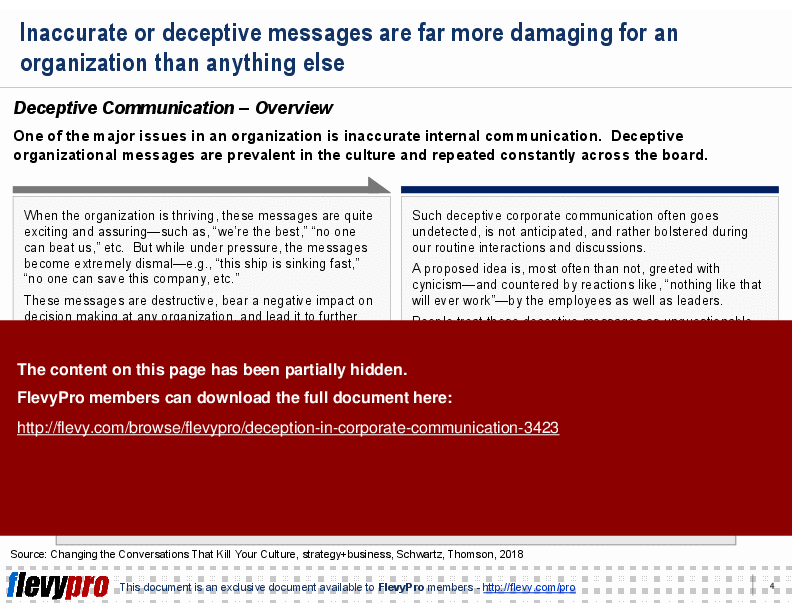
Such deceptive corporate communication often goes undetected, is not anticipated, and rather bolstered during our routine interactions and discussions. In such an environment, a proposed idea is, most often than not, greeted with cynicism—and countered by reactions like, "nothing like that will ever work"—by the employees as well as leaders.

Business leaders often complain about their culture. It is these corporate perceptive misrepresentations that they are so upset about. It is like everybody in the company is deceiving one another.

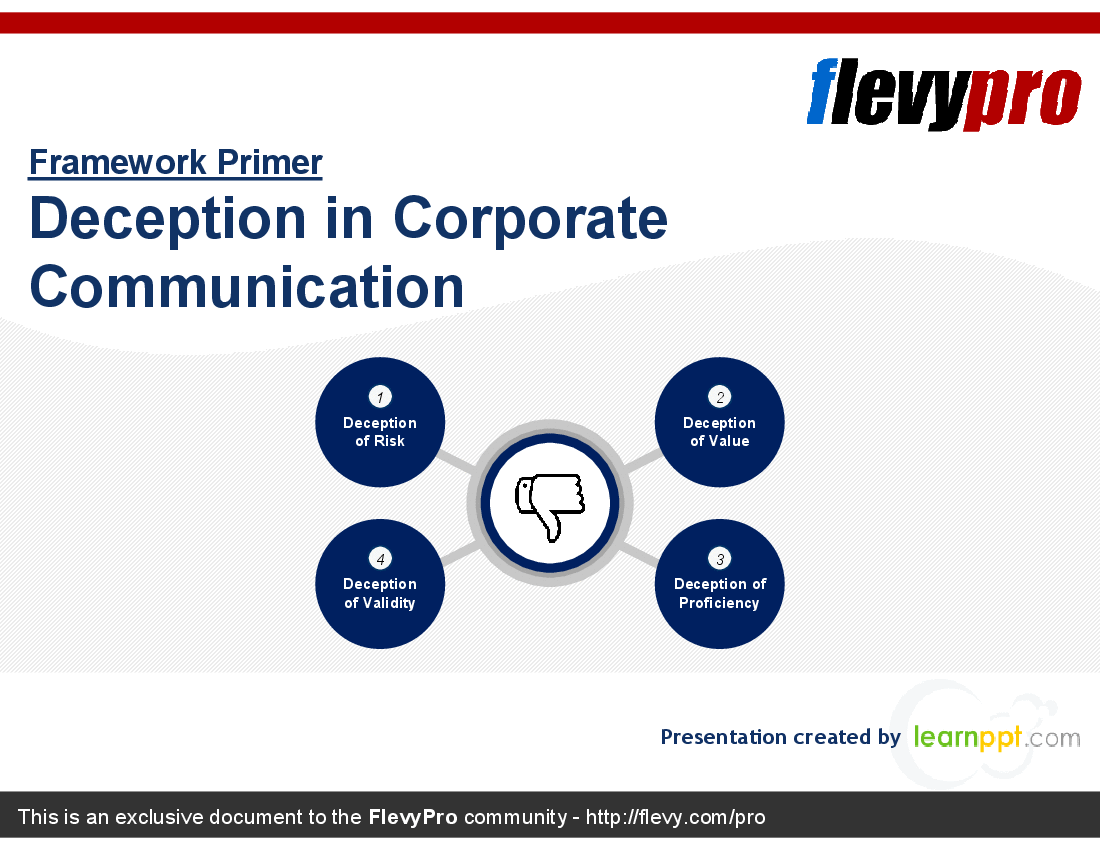
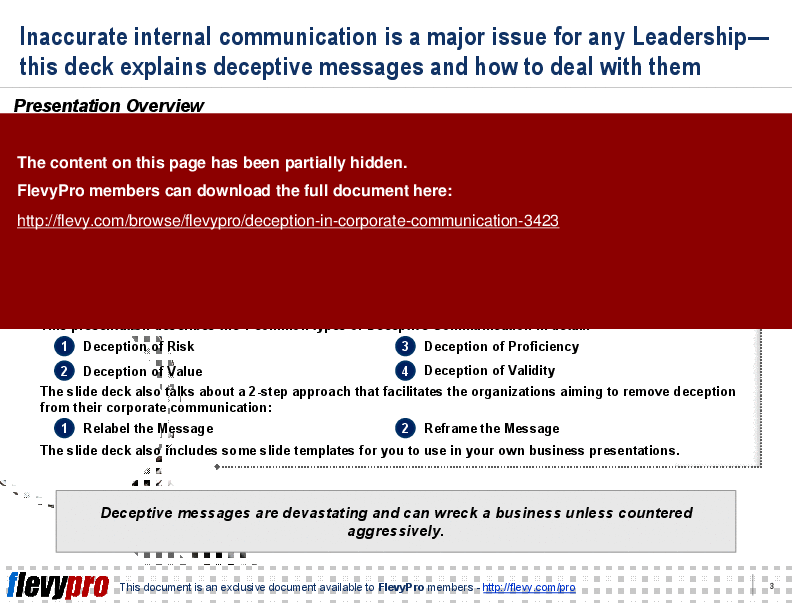
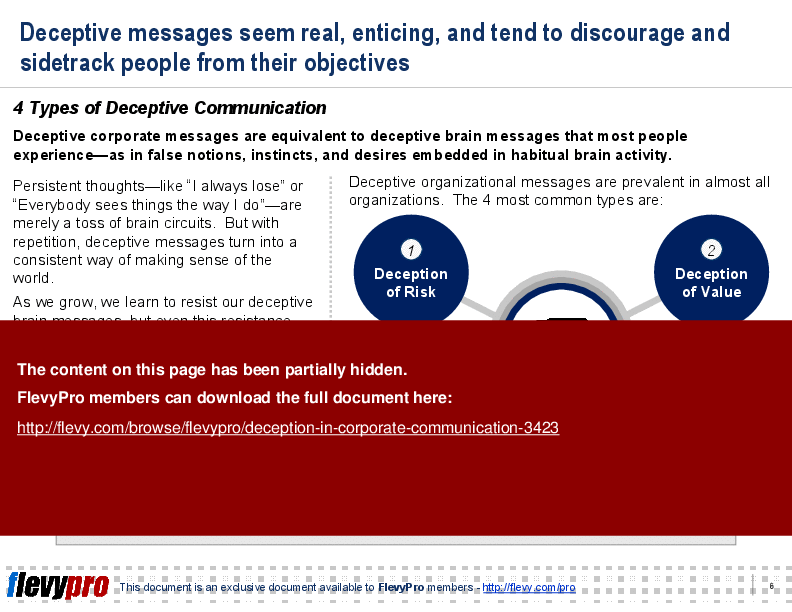
This presentation describes the 4 common types of Deceptive Communication in detail:

1. Deception of Risk
2. Deception of Value
3. Deception of Proficiency
4. Deception of Validity

The slide deck also talks about a 2-step approach that facilitates the organizations aiming to remove deception from their corporate communication:

1. Relabel the Message
2. Reframe the Message

The slide deck also includes some slide templates for you to use in your own business presentations.

This presentation delves into the pervasive nature of deceptive communication within organizations, offering a comprehensive analysis of its types and impacts. It provides actionable insights and practical templates to help leaders identify and mitigate these misleading messages. By implementing the outlined 2-step approach, companies can effectively reframe their internal communications, fostering a more transparent and productive corporate culture. This deck is an essential tool for any executive aiming to enhance organizational integrity and drive sustainable success.

Got a question about this document? Email us at flevypro@flevy.com.

MARCUS OVERVIEW

This synopsis was written by Marcus [?] based on the analysis of the full 24-slide presentation.


Executive Summary
The "Deception in Corporate Communication" presentation offers a critical examination of the pervasive issue of deceptive messaging within organizations. Crafted by experienced consultants from McKinsey and Big 4 firms, this deck provides a comprehensive overview of the types of deceptive communication, their impacts, and actionable strategies to mitigate them. By utilizing this resource, corporate leaders can enhance internal communication, foster a culture of transparency, and ultimately improve organizational morale and effectiveness.

Who This Is For and When to Use
•  Corporate executives seeking to improve internal communication strategies
•  Change management leaders focused on cultural transformation
•  HR professionals addressing morale and engagement issues
•  Communication teams aiming to refine messaging frameworks
•  Consultants advising organizations on communication best practices

Best-fit moments to use this deck:
•  During leadership workshops focused on communication strategies
•  In training sessions aimed at enhancing corporate culture
•  When addressing specific incidents of deceptive communication
•  As a resource for developing internal communication policies

Learning Objectives
•  Define the 4 types of deceptive communication prevalent in organizations
•  Analyze the impact of deceptive messages on organizational culture and morale
•  Develop strategies to relabel and reframe deceptive messages
•  Create actionable plans to improve internal communication
•  Foster an environment that encourages transparency and accountability
•  Implement frameworks for ongoing assessment of communication effectiveness

Table of Contents
•  Overview (page 3)
•  Types of Deceptive Communication (page 6)
•  Approach to Removing Deception (page 12)
•  Templates (page 16)

Primary Topics Covered
•  Deception of Risk - This type involves miscalculating risks due to overconfidence, leading to poor decision-making and potential organizational failure.
•  Deception of Value - Misleading messages create unrealistic expectations regarding the value of initiatives, often resulting in underperformance.
•  Deception of Proficiency - This occurs when individuals overestimate their capabilities, leading to ineffective actions and decisions.
•  Deception of Validity - Emotional reasoning distorts perceptions of truth, causing decisions to be based on feelings rather than facts.

Deliverables, Templates, and Tools
•  Slide templates for presenting the types of deceptive communication
•  Frameworks for relabeling and reframing messages
•  Assessment tools for measuring communication effectiveness
•  Guidelines for developing transparent communication strategies

Slide Highlights
•  Overview of the 4 types of deceptive communication
•  Case studies illustrating the impact of deceptive messages
•  Visual frameworks for relabeling and reframing strategies
•  Templates for internal communication assessments

Potential Workshop Agenda
Understanding Deceptive Communication (60 minutes)
•  Overview of the 4 types of deception
•  Discussion on organizational impacts and case studies

Strategies for Improvement (90 minutes)
•  Breakout sessions to develop relabeling and reframing strategies
•  Group presentations on proposed communication frameworks

Implementation Planning (60 minutes)
•  Action planning for integrating new communication strategies
•  Establishing metrics for ongoing assessment

Customization Guidance
•  Tailor the messaging frameworks to align with your organization's specific culture and values
•  Adapt the templates to reflect your internal communication style and branding
•  Incorporate real-life examples from your organization to enhance relatability

Secondary Topics Covered
•  The role of leadership in fostering transparent communication
•  Techniques for engaging employees in communication initiatives
•  Best practices for monitoring and evaluating communication effectiveness

Topic FAQ

What are the most common types of deceptive communication I should look for in my organization?

The common types are Deception of Risk, Deception of Value, Deception of Proficiency, and Deception of Validity: 4 distinct categories that describe misjudged risks, misleading value claims, overstated capabilities, and emotionally driven distortions, respectively, totaling 4 types.

How can organizations reliably identify deceptive messages internally?

The deck recommends using employee feedback channels, structured communication audits, and open dialogue to surface discrepancies between stated intent and perceived reality; these identification methods include communication audits and feedback mechanisms.

What does the relabeling and reframing approach involve in practice?

The approach is a 2-step method: first relabel the message to clarify its true nature, then reframe it into an accurate, constructive alternative; the presentation provides visual frameworks and templates to apply the 2-step approach.

What should I look for when purchasing a toolkit to address deceptive corporate communication?

Prioritize materials that define common deception types, provide relabel/reframe frameworks, include slide templates and assessment tools, and offer customization guidance; Flevy's Deception in Corporate Communication includes slide templates, frameworks, and assessment tools.

How often should we assess our internal communication effectiveness to catch deception early?

The materials advise regular, periodic assessments to maintain alignment; the product's guidance recommends conducting communication effectiveness reviews on a quarterly basis.

I need to run a post-incident workshop on deceptive messaging—what agenda does the product suggest?

The suggested workshop agenda comprises Understanding Deceptive Communication (60 minutes), Strategies for Improvement with breakout sessions (90 minutes), and Implementation Planning with metrics (60 minutes), presented as a 60/90/60 minute structure.

Can HR teams adapt the slide templates and frameworks for morale and engagement programs?

Yes; the deck includes customizable slide templates and guidance to tailor messaging frameworks to organizational culture and branding, and it explicitly advises incorporating real-life examples to increase relevance, using customizable slide templates.

What measurable outputs should we expect from applying a deception-removal program?

Expected outputs include relabeled and reframed communications, documented action plans, established metrics for ongoing assessment, and assessment tool results for tracking progress; these outputs are supported by the deck's assessment tools and implementation planning guidance.

Document FAQ
These are questions addressed within this presentation.

What are the 4 types of deceptive communication?
The 4 types are Deception of Risk, Deception of Value, Deception of Proficiency, and Deception of Validity, each impacting organizational effectiveness in unique ways.

How can organizations identify deceptive messages?
Organizations can identify deceptive messages through employee feedback, communication audits, and by fostering an open dialogue about perceptions and realities.

What strategies can be implemented to combat deceptive communication?
Strategies include relabeling and reframing messages, enhancing transparency, and establishing a culture of accountability.

How does deceptive communication affect employee morale?
Deceptive communication can lead to cynicism, disengagement, and a lack of trust among employees, ultimately harming organizational culture.

What role do leaders play in addressing deceptive communication?
Leaders are crucial in modeling transparent communication, fostering an environment of trust, and actively engaging employees in discussions about messaging.

Can the templates provided be customized?
Yes, the templates are designed to be adaptable to fit your organization's specific needs and communication style.

How often should communication strategies be assessed?
Regular assessments should be conducted, ideally on a quarterly basis, to ensure ongoing effectiveness and alignment with organizational goals.

What resources are available for further learning?
Additional resources include workshops, online courses, and literature on effective communication strategies and cultural transformation.

Glossary
•  Deception of Risk - Misjudgment of risks leading to poor decision-making.
•  Deception of Value - Misleading perceptions of the value of initiatives.
•  Deception of Proficiency - Overestimation of individual capabilities.
•  Deception of Validity - Distortion of truth based on emotional reasoning.
•  Relabeling - The process of redefining deceptive messages to clarify their nature.
•  Reframing - Substituting misleading messages with accurate, constructive alternatives.
•  Organizational Culture - The shared values, beliefs, and practices within an organization.
•  Employee Engagement - The level of commitment and involvement an employee has towards their organization.
•  Transparency - Openness in communication and decision-making processes.
•  Accountability - The obligation of individuals to report on their actions and decisions.
•  Communication Audit - A systematic evaluation of an organization's communication practices.
•  Feedback Mechanism - A process for collecting input from employees regarding communication effectiveness.
•  Cultural Transformation - The process of changing an organization's culture to improve performance and engagement.

COMMUNICATIONS STRATEGY PPT SLIDES

Understanding Deceptive Messaging in Organizational Value

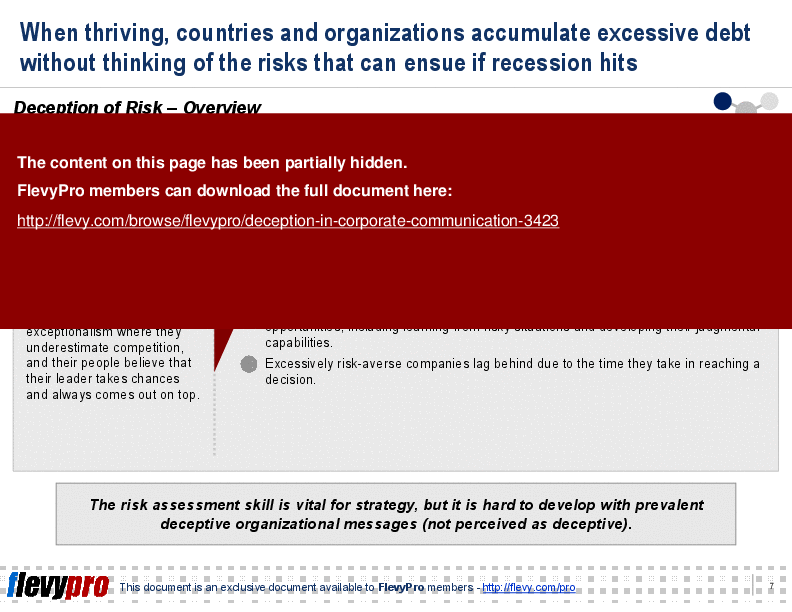
Understanding Deceptive Communication in Organizations

Strategies for Addressing Deceptive Organizational Messaging

Understanding Self-Efficacy and Organizational Miscommunication

Source: Best Practices in Corporate Communications PowerPoint Slides: Deception in Corporate Communication PowerPoint (PPT) Presentation Slide Deck, LearnPPT Consulting


$29.00
FlevyPro price: FREE (included in subscription)
This framework is developed by a team of former McKinsey and Big 4 consultants. The presentation follows the headline-body-bumper slide format used by global consulting firms.
Add to Cart
  

Did you need more documents?

Consider a FlevyPro subscription from $39/month. View plans here.

For $10.00 more, you can download this document plus 2 more FlevyPro documents. That's just $13 each.

ABOUT FLEVYPRO

This document is part of the FlevyPro Library, a curated knowledge base of documents for our FlevyPro subscribers.

FlevyPro is a subscription service for on-demand business frameworks and analysis tools. FlevyPro subscribers receive access to an exclusive library of curated business documents—business framework primers, presentation templates, Lean Six Sigma tools, and more—among other exclusive benefits.

Click here to learn more about FlevyPro and its benefits.

Did you know?
The average daily rate of a McKinsey consultant is $6,625 (not including expenses). The average price of a Flevy document is $65.


Trusted by over 10,000+ Client Organizations
Since 2012, we have provided business templates to over 10,000 businesses and organizations of all sizes, from startups and small businesses to the Fortune 100, in over 130 countries.
AT&T GE Cisco Intel IBM Coke Dell Toyota HP Nike Samsung Microsoft Astrazeneca JP Morgan KPMG Walgreens Walmart 3M Kaiser Oracle SAP Google E&Y Volvo Bosch Merck Fedex Shell Amgen Eli Lilly Roche AIG Abbott Amazon PwC T-Mobile Broadcom Bayer Pearson Titleist ConEd Pfizer NTT Data Schwab


Read Customer Testimonials

 
"I like your product. I'm frequently designing PowerPoint presentations for my company and your product has given me so many great ideas on the use of charts, layouts, tools, and frameworks. I really think the templates are a valuable asset to the job."

– Roberto Fuentes Martinez, Senior Executive Director at Technology Transformation Advisory
 
"As a niche strategic consulting firm, Flevy and FlevyPro frameworks and documents are an on-going reference to help us structure our findings and recommendations to our clients as well as improve their clarity, strength, and visual power. For us, it is an invaluable resource to increase our impact and value."

– David Coloma, Consulting Area Manager at Cynertia Consulting
 
"Flevy is our 'go to' resource for management material, at an affordable cost. The Flevy library is comprehensive and the content deep, and typically provides a great foundation for us to further develop and tailor our own service offer."

– Chris McCann, Founder at Resilient.World
 
"The wide selection of frameworks is very useful to me as an independent consultant. In fact, it rivals what I had at my disposal at Big 4 Consulting firms in terms of efficacy and organization."

– Julia T., Consulting Firm Owner (Former Manager at Deloitte and Capgemini)
 
"Flevy is now a part of my business routine. I visit Flevy at least 3 times each month.

Flevy has become my preferred learning source, because what it provides is practical, current, and useful in this era where the business world is being rewritten.

In today's environment where there are so "

– Omar Hernán Montes Parra, CEO at Quantum SFE
 
"One of the great discoveries that I have made for my business is the Flevy library of training materials.

As a Lean Transformation Expert, I am always making presentations to clients on a variety of topics: Training, Transformation, Total Productive Maintenance, Culture, Coaching, Tools, Leadership Behavior, etc. Flevy "

– Ed Kemmerling, Senior Lean Transformation Expert at PMG
 
"I have found Flevy to be an amazing resource and library of useful presentations for lean sigma, change management and so many other topics. This has reduced the time I need to spend on preparing for my performance consultation. The library is easily accessible and updates are regularly provided. A wealth of great information."

– Cynthia Howard RN, PhD, Executive Coach at Ei Leadership
 
"I have used FlevyPro for several business applications. It is a great complement to working with expensive consultants. The quality and effectiveness of the tools are of the highest standards."

– Moritz Bernhoerster, Global Sourcing Director at Fortune 500


Customers Also Bought These Documents


Customers Also Like These Documents

Explore Templates on Related Management Topics


Your Recently Viewed Documents
Download our FREE Organization, Change, & Culture, Templates

Download our free compilation of 50+ slides and templates on Organizational Design, Change Management, and Corporate Culture. Methodologies include ADKAR, Burke-Litwin Change Model, McKinsey 7-S, Competing Values Framework, etc.