
A large majority of organizations rarely focus on gathering and utilizing customer-centric knowledge. So much so that they even introduce a product without having vital insights on the customer and their unmet needs, and they are often clueless about them. Consequently, many product development initiatives fall flat as managers struggle to filter and evaluate ideas.
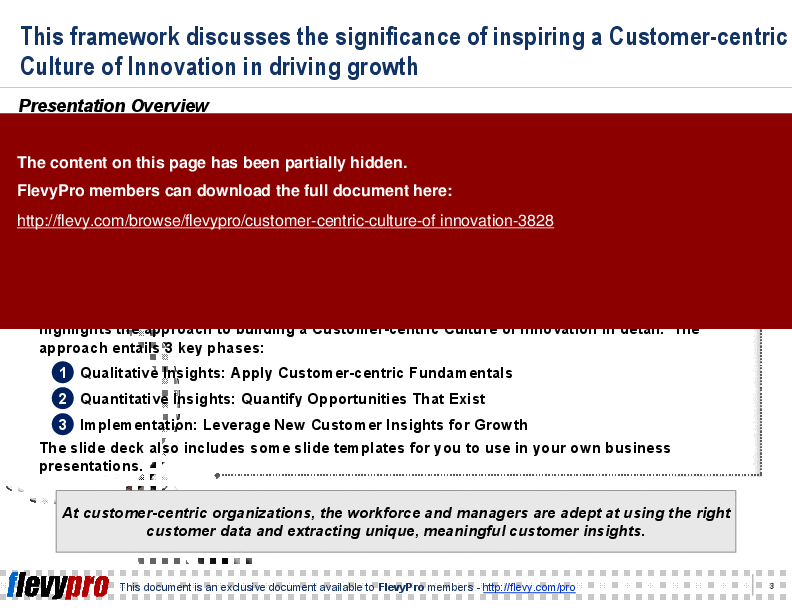
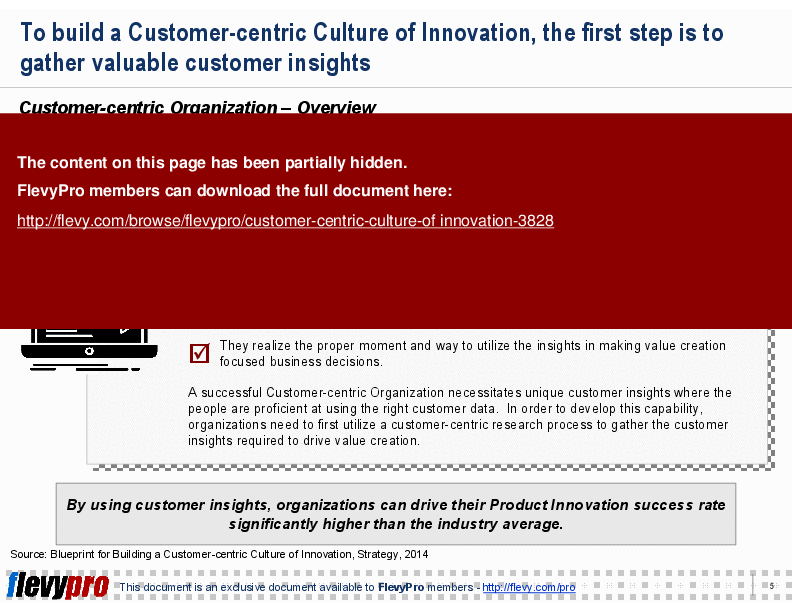
Customer-centric organizations are deeply focused towards value creation for their customers. They understand the unique customer insights needed to make customer-centric decisions, are able to gather those customer insights, and are aware of the way to utilize the insights in creating value for their customers. At customer-centric organizations, the workforce and managers are adept at using the right customer data and extracting unique, meaningful customer insights.
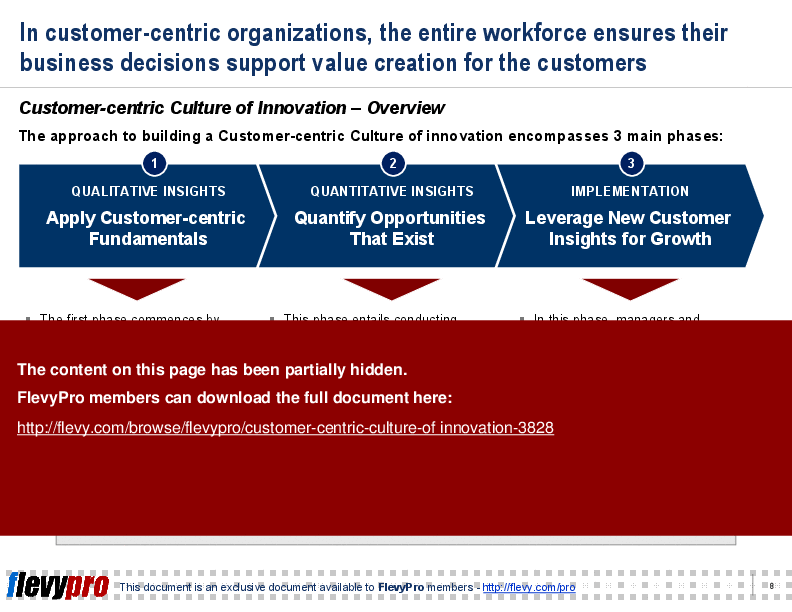
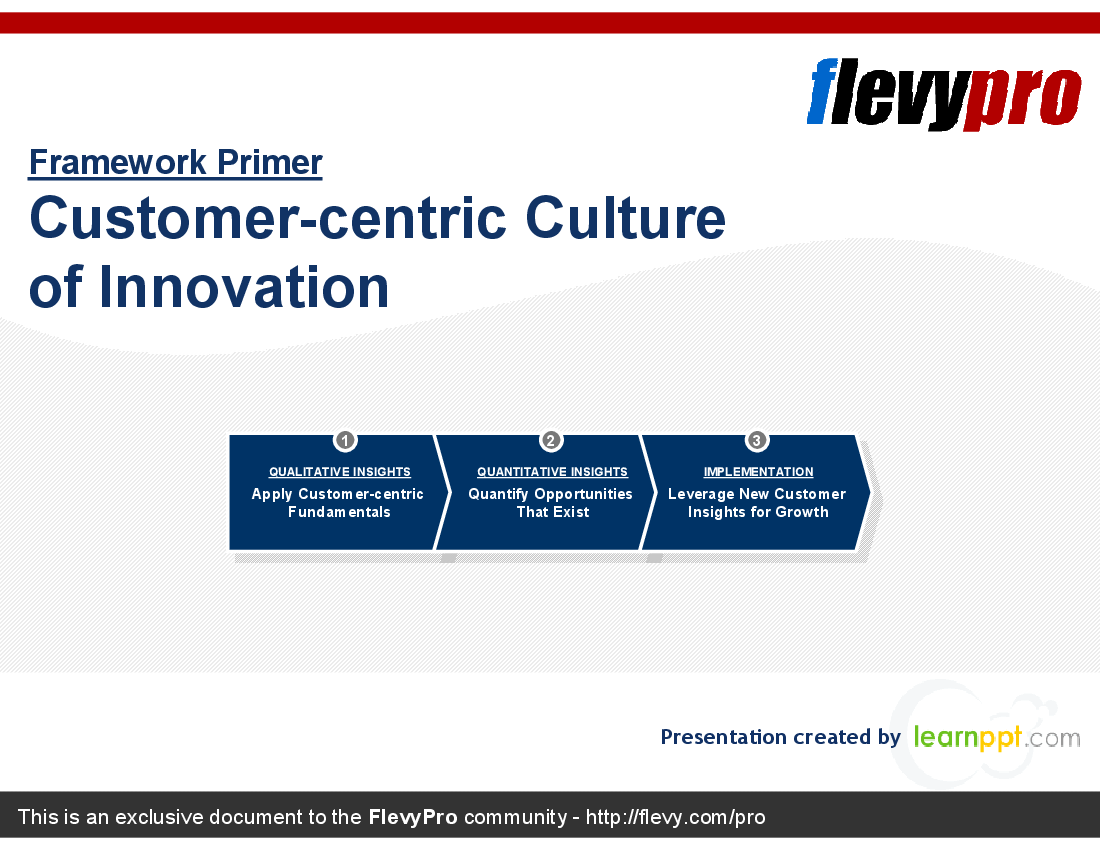
In order to develop this capability, organizations need to first utilize a customer-centric research process to gather the customer insights required to drive value creation. This presentation highlights the approach to building a Customer-centric Culture of Innovation in detail. The approach entails 3 key phases:
1. Qualitative Insights: Apply Customer-centric Fundamentals
2. Quantitative Insights: Quantify Opportunities That Exist
3. Implementation: Leverage New Customer Insights for Growth
The slide deck also includes some slide templates for you to use in your own business presentations.
This PPT provides a comprehensive framework for developing a customer-centric culture of innovation. It emphasizes the importance of gathering qualitative and quantitative insights to drive strategic decisions. The three-phase approach ensures that teams are equipped with the necessary tools and knowledge to leverage customer data effectively. The presentation also includes practical templates to aid in the implementation of these strategies, making it a valuable resource for any organization looking to enhance its innovation capabilities.
Got a question about this document? Email us at flevypro@flevy.com.
Executive Summary
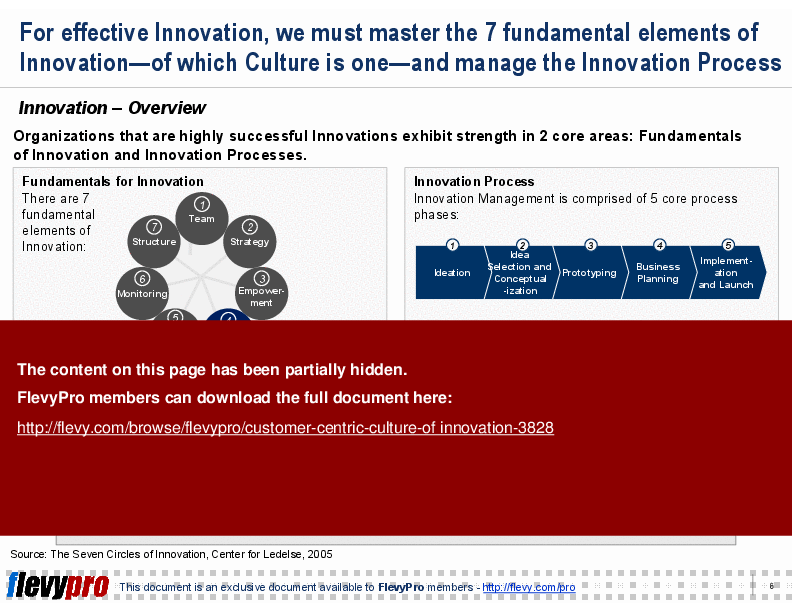
The "Customer-centric Culture of Innovation" presentation provides a structured approach for organizations aiming to enhance their innovation capabilities through a customer-focused lens. Developed by former consultants from McKinsey and the Big 4, this presentation outlines a three-phase framework that emphasizes the importance of gathering and utilizing customer insights to drive product innovation and business growth. By implementing this framework, organizations can significantly improve their product development success rates and foster a culture that prioritizes customer value.
Who This Is For and When to Use
• Product Managers seeking to align product development with customer needs
• Marketing Teams focused on enhancing customer engagement and satisfaction
• Innovation Leaders tasked with driving organizational change towards customer-centricity
• Executive Teams aiming to integrate customer insights into strategic decision-making
Best-fit moments to use this deck:
• During strategic planning sessions to align innovation initiatives with customer insights
• In workshops aimed at fostering a customer-centric mindset across teams
• When launching new products or services that require deep customer understanding
Learning Objectives
• Define the principles of a customer-centric culture and its impact on innovation
• Apply qualitative insights to identify customer needs and preferences
• Conduct quantitative research to validate customer insights and market opportunities
• Implement strategies to leverage customer insights for product development and marketing
• Foster a collaborative environment that encourages cross-functional teams to prioritize customer value
• Develop actionable plans that integrate customer feedback into the innovation process
Table of Contents
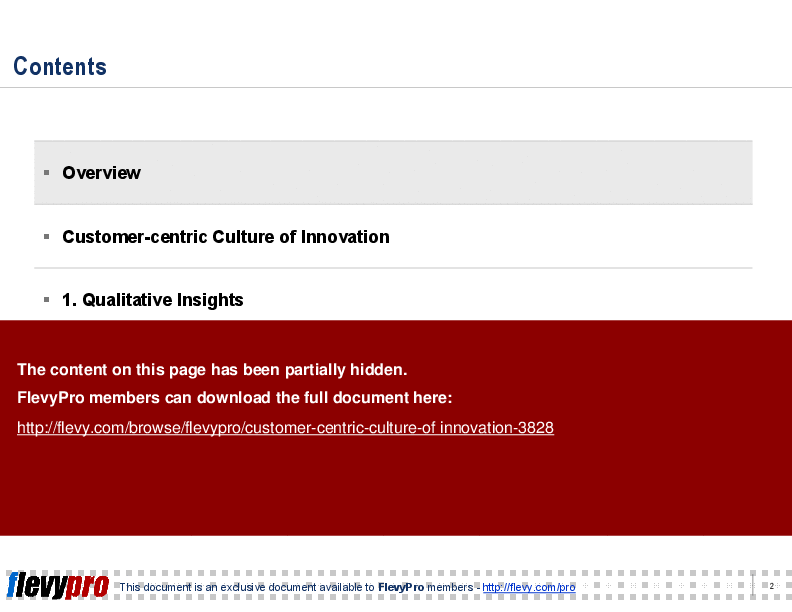
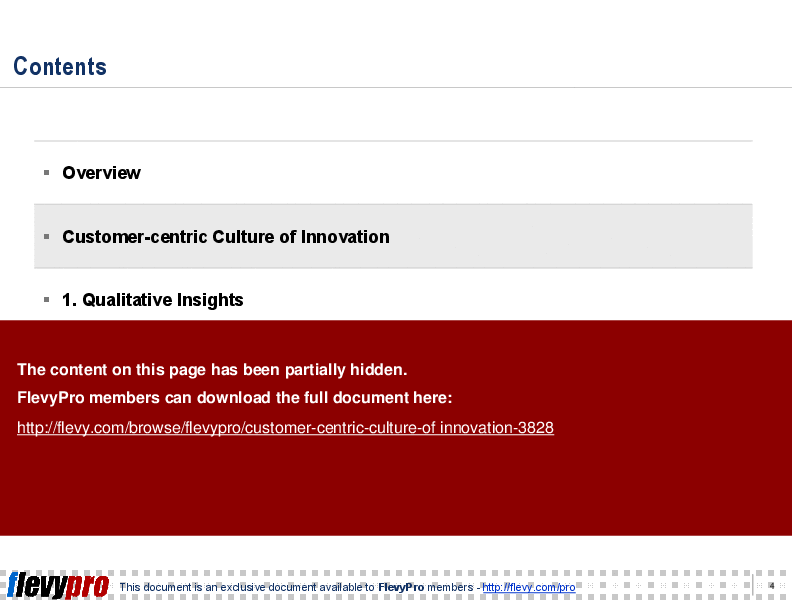
• Overview (page 3)
• Customer-centric Culture of Innovation (page 3)
• 1. Qualitative Insights (page 10)
• 2. Quantitative Insights (page 13)
• 3. Implementation (page 16)
• Templates (page 19)
Primary Topics Covered
• Qualitative Insights - This phase focuses on applying customer-centric fundamentals through workshops that engage cross-functional teams in identifying critical customer insights.
• Quantitative Insights - In this phase, teams conduct research to quantify customer needs and market opportunities, enabling data-driven decision-making.
• Implementation - This phase emphasizes leveraging gathered insights to develop strategies that enhance customer engagement and drive innovation.
Deliverables, Templates, and Tools
• Workshop facilitation guide for conducting customer-centric training sessions
• Customer journey mapping template to visualize customer experiences and needs
• Survey questionnaire template for gathering quantitative customer data
• Market analysis framework for evaluating product positioning and opportunities
• Action plan template for integrating customer insights into product development
• Communication strategy template for aligning marketing messages with customer needs
Slide Highlights
• Overview of the Customer-centric Culture of Innovation framework
• Visual representation of the 3 phases: Qualitative Insights, Quantitative Insights, and Implementation
• Case studies showcasing successful customer-centric initiatives
• Charts illustrating the impact of customer insights on product development success rates
• Templates for workshop facilitation and customer journey mapping
Potential Workshop Agenda
Customer-Centric Workshop (4 hours)
• Introduction to customer-centric principles and their importance
• Group activities to identify customer needs using qualitative insights
• Presentation of quantitative research methodologies and data analysis
Implementation Planning Session (2 hours)
• Review of insights gathered from previous phases
• Development of actionable strategies for product and marketing initiatives
• Assignment of responsibilities and timelines for implementation
Customization Guidance
• Tailor workshop content to reflect specific industry challenges and customer segments
• Adjust survey questions to align with organizational goals and product offerings
• Incorporate company-specific case studies to enhance relevance and engagement
Secondary Topics Covered
• The role of cross-functional teams in fostering innovation
• Techniques for effectively gathering and analyzing customer feedback
• Strategies for maintaining a customer-centric culture over time
• Best practices for integrating customer insights into strategic planning
Topic FAQ
Document FAQ
These are questions addressed within this presentation.
What is a customer-centric culture?
A customer-centric culture prioritizes understanding and addressing customer needs in all business decisions, driving innovation and value creation.
How can qualitative insights improve product development?
Qualitative insights help teams identify customer needs and preferences, leading to more relevant and successful product offerings.
What methods are used to gather quantitative insights?
Quantitative insights are typically gathered through surveys and data analysis, providing statistically valid information on customer preferences and market opportunities.
How can organizations implement customer insights effectively?
Organizations can implement customer insights by developing clear action plans, training teams on data utilization, and fostering a culture that values customer feedback.
What tools are included in the presentation?
The presentation includes templates for workshops, customer journey mapping, survey questionnaires, and action plans for integrating insights into product development.
How does this framework support innovation?
This framework supports innovation by ensuring that product development is aligned with actual customer needs, thereby increasing the likelihood of success.
Can this framework be customized for specific industries?
Yes, the framework can be tailored to address the unique challenges and customer segments of different industries.
What outcomes can organizations expect from adopting this framework?
Organizations can expect improved product success rates, enhanced customer satisfaction, and a more collaborative and innovative organizational culture.
Glossary
• Customer-centric Culture - An organizational mindset that prioritizes customer needs in decision-making.
• Qualitative Insights - Non-numerical data gathered through methods like interviews and focus groups to understand customer behaviors and preferences.
• Quantitative Insights - Numerical data collected through surveys and statistical analysis to identify trends and patterns in customer behavior.
• Customer Journey Mapping - A visual representation of the customer experience across various touchpoints.
• Market Analysis - The process of assessing market conditions to inform business decisions.
• Action Plan - A detailed strategy outlining steps to achieve specific goals based on customer insights.
• Workshop Facilitation - The process of guiding a group through discussions and activities to achieve specific outcomes.
• Survey Questionnaire - A structured set of questions designed to gather quantitative data from customers.
• Cross-functional Teams - Groups composed of members from different departments working together towards a common goal.
• Customer Feedback - Information provided by customers regarding their experiences and satisfaction with products or services.
• Innovation Strategy - A plan that outlines how an organization will foster and implement new ideas and improvements.
• Data Analysis - The process of inspecting, cleansing, and modeling data to discover useful information.
Source: Best Practices in Corporate Culture, Innovation, Customer-centric Organization PowerPoint Slides: Customer-centric Culture of Innovation PowerPoint (PPT) Presentation Slide Deck, LearnPPT Consulting
Did you need more documents?
Consider a FlevyPro subscription from $39/month. View plans here.
For $10.00 more, you can download this document plus 2 more FlevyPro documents. That's just $13 each.
|
Download our FREE Digital Transformation Templates
Download our free compilation of 50+ Digital Transformation slides and templates. DX concepts covered include Digital Leadership, Digital Maturity, Digital Value Chain, Customer Experience, Customer Journey, RPA, etc. |