
Continuous Improvement (CI), sometimes called Continual Improvement, is the ongoing improvement of products, services or processes through incremental and breakthrough improvements. These efforts can seek "incremental" improvement over time or "breakthrough" improvement all at once.
Very often Executive Leadership is disappointed with the results of their business improvement activities. This is usually because they do not make the changes needed to fully integrate improvement skills and behaviors into the daily work of their entire team, including the Leadership.
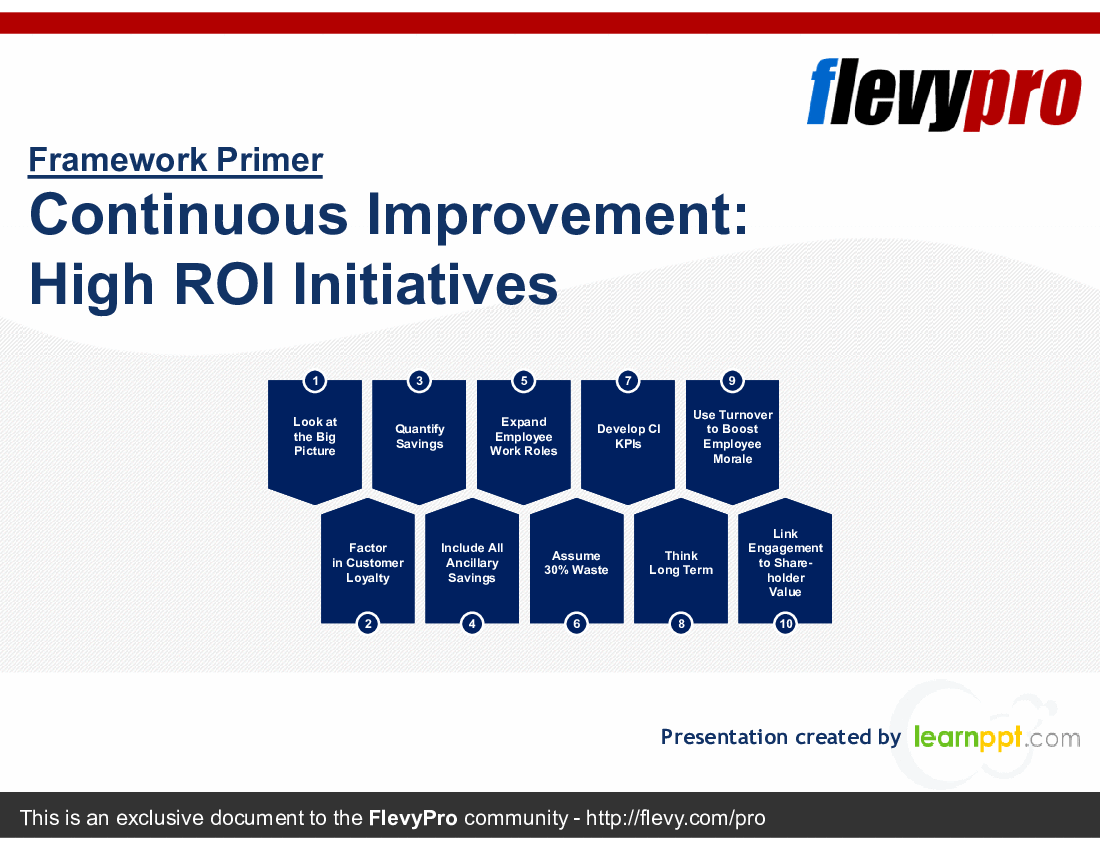
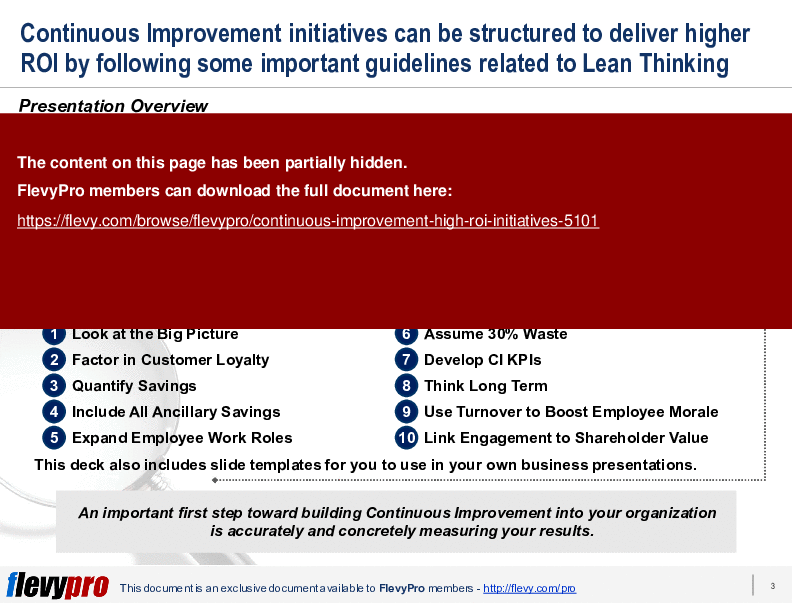
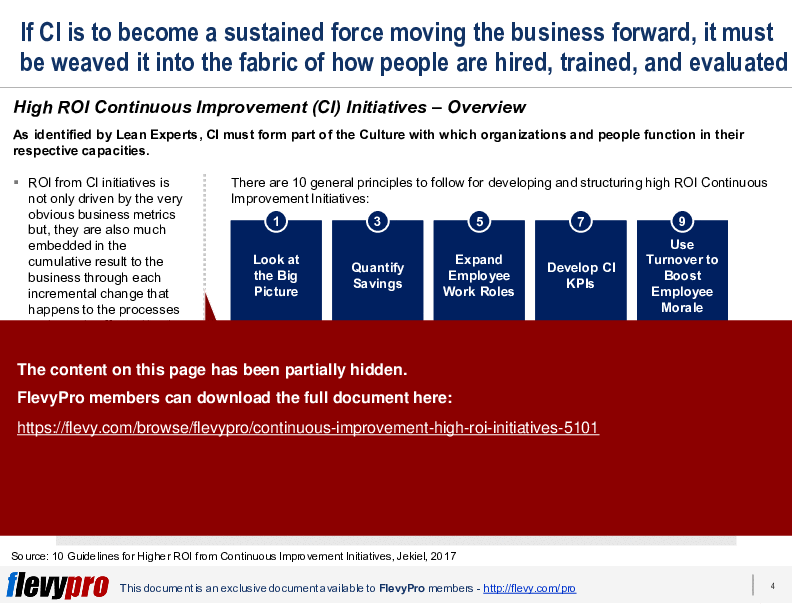
This presentation provides 10 guidelines for higher ROI from Continuous Improvement initiatives within organizations:
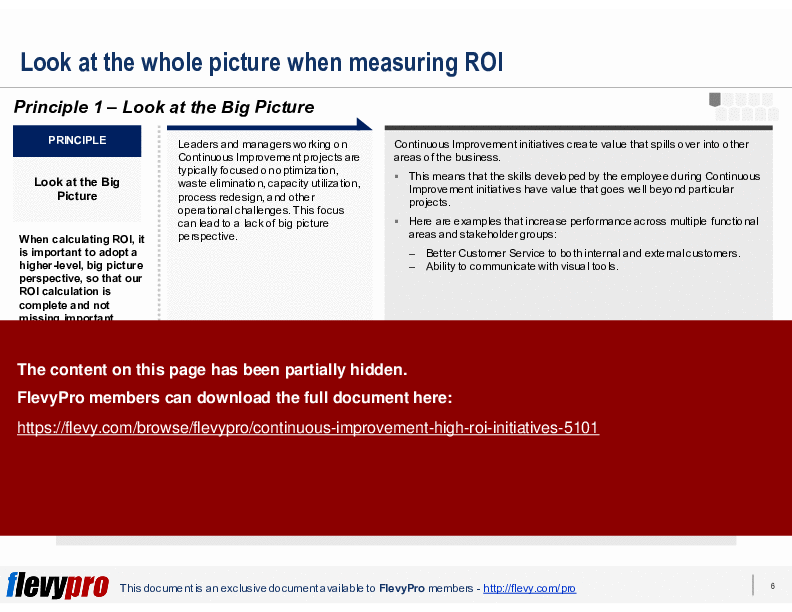
1. Look at the Big Picture
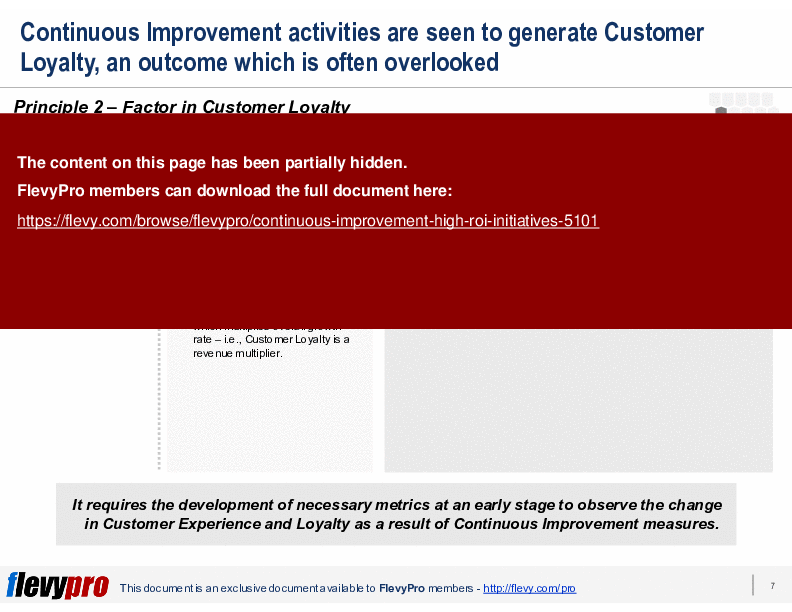
2. Factor in Customer Loyalty
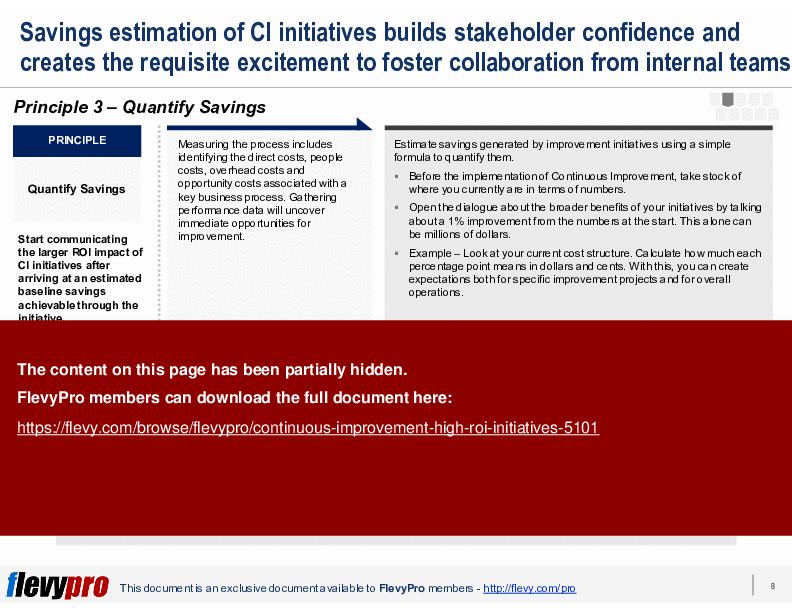
3. Quantify Savings
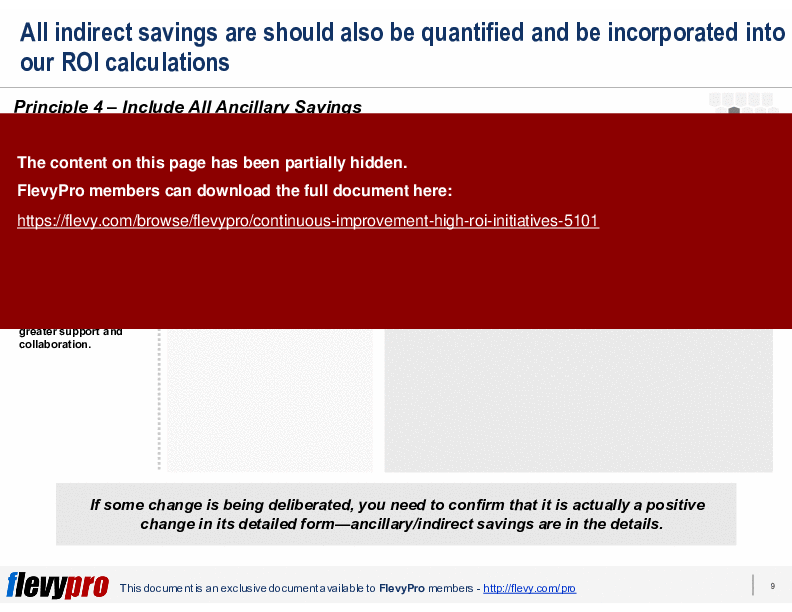
4. Include All Ancillary Savings
5. Expand Employee Work Roles
6. Assume 30% Waste
7. Develop CI KPIs
8. Think Long Term
9. Use Turnover to Boost Employee Morale
10. Link Engagement to Shareholder Value
This deck also includes slide templates for you to use in your own business presentations.
This PPT delves into the strategic integration of Continuous Improvement (CI) into the organizational culture, emphasizing its role in hiring, training, and evaluation processes. It highlights the importance of embedding CI into the fabric of daily operations to ensure sustained business growth and enhanced ROI. The presentation outlines how CI initiatives, when properly implemented, can drive significant improvements across various functional areas, leading to better customer service and enhanced communication with stakeholders.
The deck also provides practical templates for performance management, focusing on both cost reduction and revenue growth. It underscores the necessity of tracking performance metrics before and after CI initiatives to measure their true impact. By adopting these guidelines, organizations can foster a culture of continuous improvement that not only boosts employee morale, but also aligns with long-term business objectives and shareholder value. This resource is essential for executives looking to drive meaningful change and achieve high ROI through structured CI initiatives.
Got a question about this document? Email us at flevypro@flevy.com.
Executive Summary
The "Continuous Improvement: High ROI Initiatives" presentation provides a structured framework designed to enhance the effectiveness of Continuous Improvement (CI) initiatives within organizations. Developed by seasoned consultants from McKinsey and the Big 4, this presentation outlines ten strategic guidelines that can significantly boost ROI. By integrating these principles into daily operations, organizations can foster a culture of continuous improvement, ensuring that all team members, including leadership, are engaged in the process. This resource is essential for corporate executives and integration leaders looking to implement CI effectively and sustainably.
Who This Is For and When to Use
• Corporate executives aiming to drive organizational change through CI initiatives
• Integration leaders responsible for embedding CI practices in their teams
• Consultants seeking a robust framework for advising clients on CI strategies
• HR professionals focused on employee engagement and morale through CI
Best-fit moments to use this deck:
• During strategic planning sessions to align CI initiatives with business objectives
• At workshops aimed at training teams on CI principles and practices
• When assessing the effectiveness of existing CI initiatives and identifying areas for improvement
Learning Objectives
• Define Continuous Improvement and its significance in organizational growth
• Identify and quantify potential savings from CI initiatives
• Develop key performance indicators (KPIs) to measure CI success
• Foster a culture of employee engagement linked to CI practices
• Analyze customer loyalty as a critical factor in CI ROI
• Integrate CI principles into daily operational practices for long-term benefits
Table of Contents
• Overview (page 3)
• Principles for High ROI CI Initiatives (page 5)
• Performance Management Templates (page 17)
• Templates (page 19)
Primary Topics Covered
• Look at the Big Picture - Emphasizes the importance of considering the broader impact of CI initiatives beyond immediate results.
• Factor in Customer Loyalty - Discusses how CI initiatives can enhance customer loyalty and drive revenue growth.
• Quantify Savings - Provides methods for estimating and communicating savings generated from CI initiatives.
• Include All Ancillary Savings - Highlights the necessity of accounting for indirect savings in ROI calculations.
• Expand Employee Work Roles - Encourages empowering employees to take on broader responsibilities, enhancing engagement and efficiency.
• Assume 30% Waste - Suggests using a baseline of 30% waste in processes to estimate potential improvements.
• Develop CI KPIs - Focuses on creating measurable KPIs that translate CI efforts into financial value.
• Think Long-Term - Stresses the importance of measuring long-term impacts of CI initiatives rather than just short-term gains.
• Use Turnover to Boost Employee Morale - Advocates for leveraging natural turnover to enhance team morale and productivity.
• Link Engagement to Shareholder Value - Connects employee engagement with increased profitability and shareholder value.
Deliverables, Templates, and Tools
• Performance management templates for tracking cost reduction and revenue growth
• KPI development frameworks tailored for CI initiatives
• Savings estimation models for quantifying CI impacts
• Employee engagement strategies linked to CI practices
• Customer loyalty measurement tools related to CI outcomes
• Ancillary savings calculation templates for comprehensive ROI assessments
Slide Highlights
• Overview of the ten principles for high ROI CI initiatives
• Visual representation of the relationship between employee engagement and shareholder value
• Case studies illustrating successful CI implementations and their impacts
• Metrics tracking templates for pre- and post-Continuous Improvement assessments
• Graphical models linking CI practices to customer loyalty and revenue growth
Potential Workshop Agenda
CI Principles Overview Session (60 minutes)
• Introduce the ten principles of CI
• Discuss the importance of each principle in driving ROI
• Engage participants in identifying relevant applications in their roles
KPI Development Workshop (90 minutes)
• Guide teams in developing specific KPIs for their CI initiatives
• Facilitate group discussions on translating KPIs into financial metrics
• Review examples of successful KPI implementations
Employee Engagement Strategy Session (60 minutes)
• Explore methods for expanding employee work roles within CI frameworks
• Discuss the impact of employee morale on CI success
• Develop action plans for enhancing engagement through CI initiatives
Customization Guidance
• Tailor the presentation to reflect specific organizational goals and industry contexts
• Adjust KPI examples to align with the metrics relevant to your business operations
• Incorporate case studies or examples from your organization to enhance relatability
• Modify templates to fit the unique processes and workflows of your teams
Secondary Topics Covered
• The role of leadership in fostering a CI culture
• Techniques for measuring customer experience improvements
• Strategies for overcoming resistance to CI initiatives
• Best practices for sustaining CI momentum over time
• The impact of technology on CI processes
Document FAQ
These are questions addressed within this presentation.
What is Continuous Improvement (CI)?
Continuous Improvement refers to ongoing efforts to enhance products, services, or processes through incremental and breakthrough improvements.
How can I quantify savings from CI initiatives?
Savings can be quantified by establishing a baseline of current costs and measuring improvements against that baseline, often expressed as a percentage.
Why is customer loyalty important in CI initiatives?
Customer loyalty can significantly impact revenue growth and profitability, making it a crucial factor in assessing the ROI of CI efforts.
What are the key performance indicators (KPIs) for CI?
KPIs for CI should be specific, measurable, and aligned with organizational goals, translating improvement efforts into financial outcomes.
How do I ensure employee engagement in CI initiatives?
Engagement can be fostered by empowering employees with expanded roles, providing training, and communicating the benefits of CI efforts.
What is the significance of assuming 30% waste in processes?
Assuming a baseline of 30% waste helps organizations identify potential areas for improvement and set realistic goals for CI initiatives.
How can I measure the long-term impact of CI initiatives?
Long-term impacts should be assessed by tracking performance metrics over multiple years, focusing on sustained improvements rather than short-term gains.
What tools can assist in tracking CI performance?
Performance management templates and KPI frameworks can help organizations monitor and evaluate the effectiveness of their CI initiatives.
Glossary
• Continuous Improvement (CI) - Ongoing efforts to enhance products, services, or processes.
• Key Performance Indicator (KPI) - A measurable value that demonstrates how effectively an organization is achieving key business objectives.
• ROI (Return on Investment) - A performance measure used to evaluate the efficiency of an investment.
• Ancillary Savings - Indirect savings that result from improvements in processes or operations.
• Employee Engagement - The emotional commitment an employee has to their organization and its goals.
• Customer Loyalty - The tendency of customers to continue buying from a specific brand or company.
• Waste - Any activity that consumes resources without adding value to the product or service.
• Performance Management - The process of ensuring that goals are consistently being met in an effective and efficient manner.
• Stakeholder - Any individual or group that has an interest in the success of an organization.
• Lean Thinking - A methodology that focuses on minimizing waste within manufacturing systems while simultaneously maximizing productivity.
• Breakthrough Improvement - Significant and rapid advancements in performance or efficiency.
• Incremental Improvement - Small, gradual improvements made over time.
Source: Best Practices in Process Improvement, Continuous Improvement, ROI PowerPoint Slides: Continuous Improvement: High ROI Initiatives PowerPoint (PPTX) Presentation Slide Deck, LearnPPT Consulting
Did you need more documents?
Consider a FlevyPro subscription from $39/month. View plans here.
For $10.00 more, you can download this document plus 2 more FlevyPro documents. That's just $13 each.
|
Receive our FREE presentation on Operational Excellence
This 50-slide presentation provides a high-level introduction to the 4 Building Blocks of Operational Excellence. Achieving OpEx requires the implementation of a Business Execution System that integrates these 4 building blocks. |