
 Click main image to view in full screen. Unlock all 10 preview images:
Capabilities-driven Growth Strategy – PowerPoint PPTX Template
PowerPoint (PPTX) 27 Slides FlevyPro Document


GROWTH STRATEGY PPT TEMPLATE DESCRIPTION
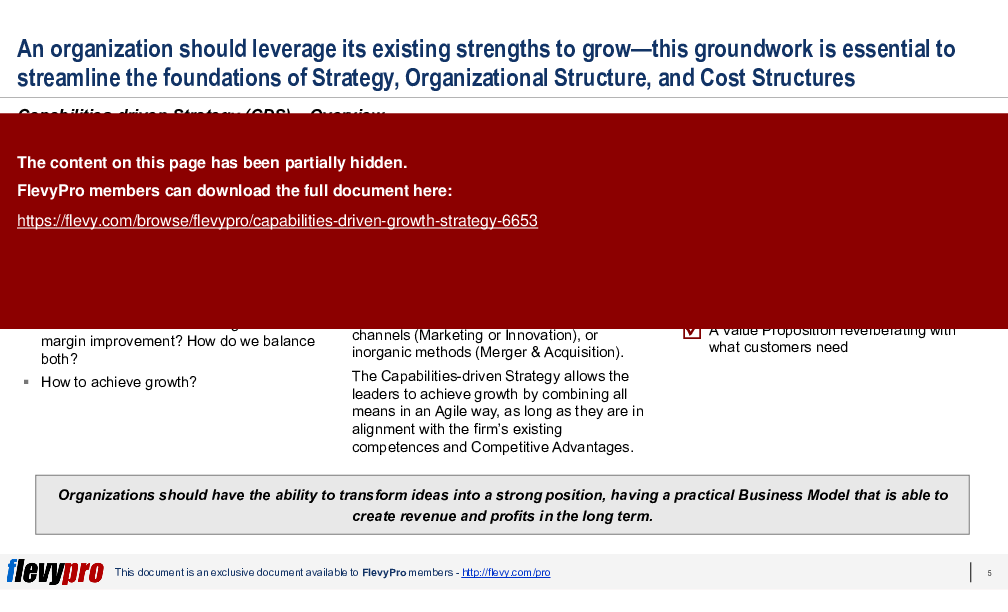
Sustainable growth necessitates a Capabilities-driven Strategy (CDS), instead of the conventional market-driven approaches, focusing on anything that customers want.
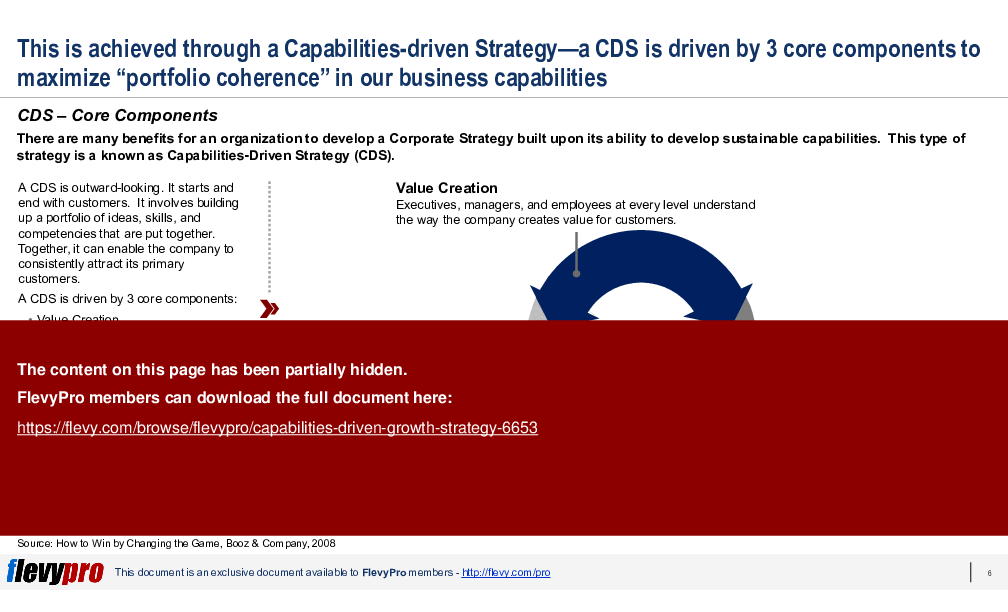
A coherent Capabilities-driven Growth Strategy demands from the organizations to establish 3 main factors prior to its execution:
• An assortment of product or service offerings
• A unique capabilities system, which competitors can't imitate
• A Value Proposition reverberating with what customers need
The Capabilities-driven Growth Strategy entails capitalizing on the organization's current strengths, utilizing all possible ways—e.g., existing or adjacent markets, organic channels (Marketing or Innovation), or inorganic methods (M&A). The Capabilities-driven Strategy allows the leaders to achieve growth by combining all means in an Agile way, as long as they are in alignment with the organization's existing competences and Competitive Advantages.
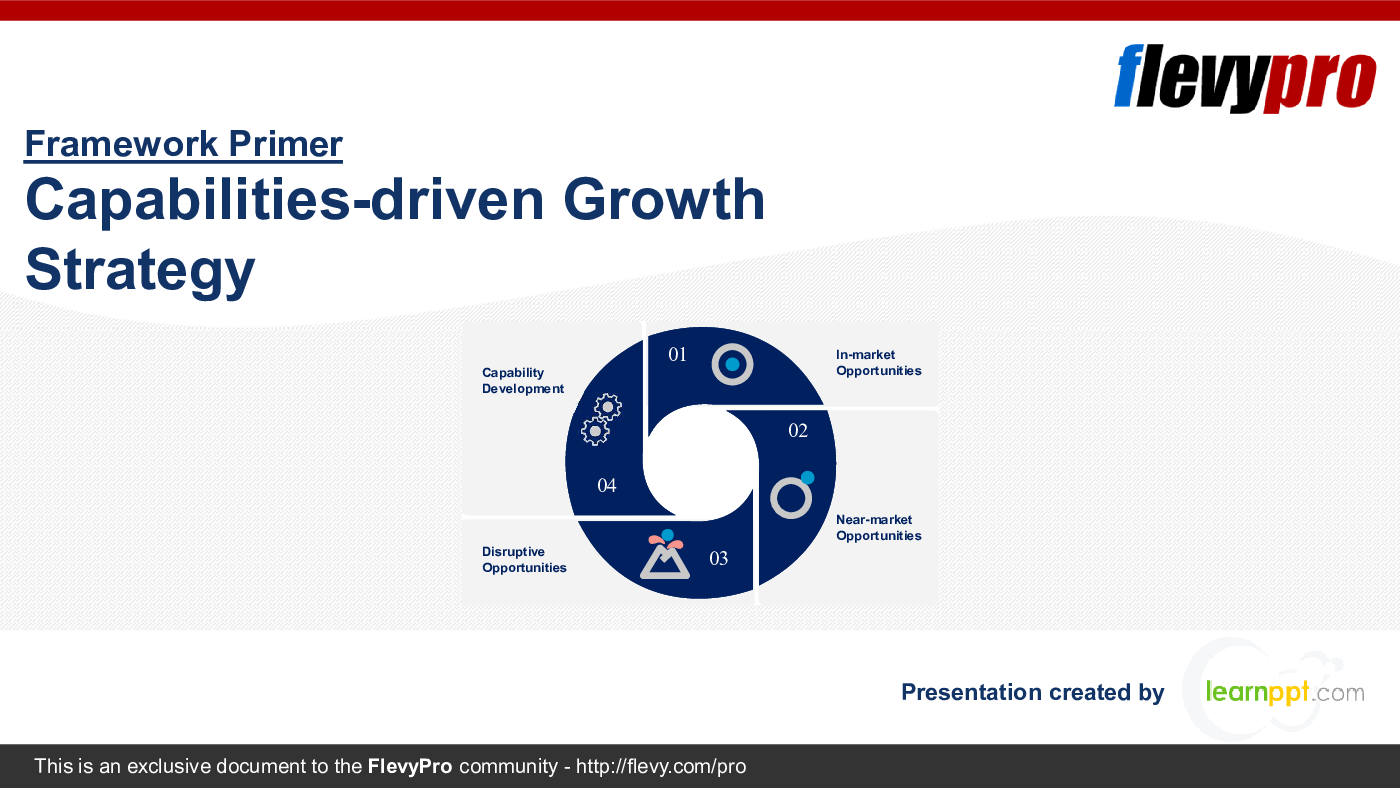
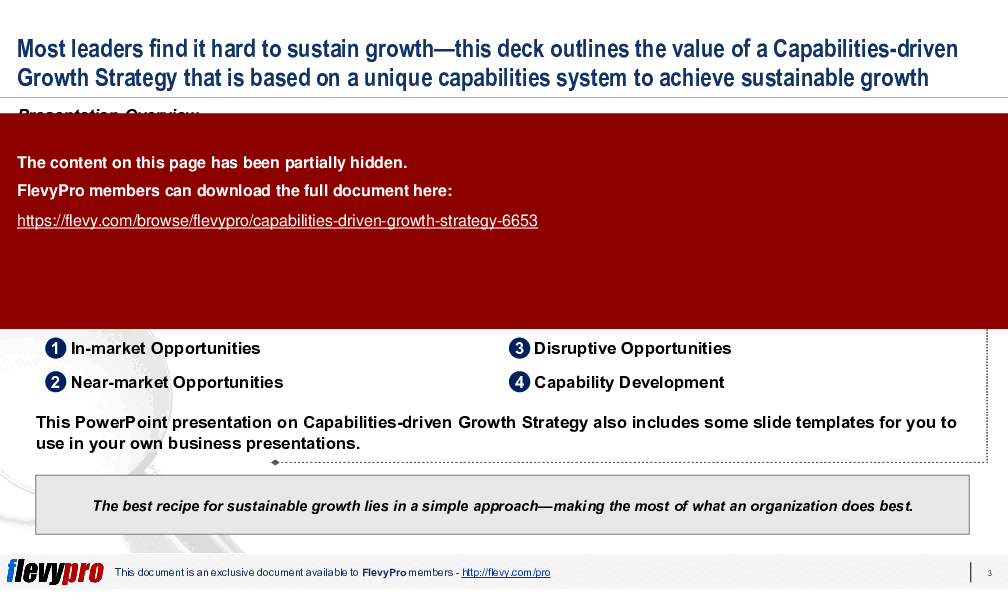
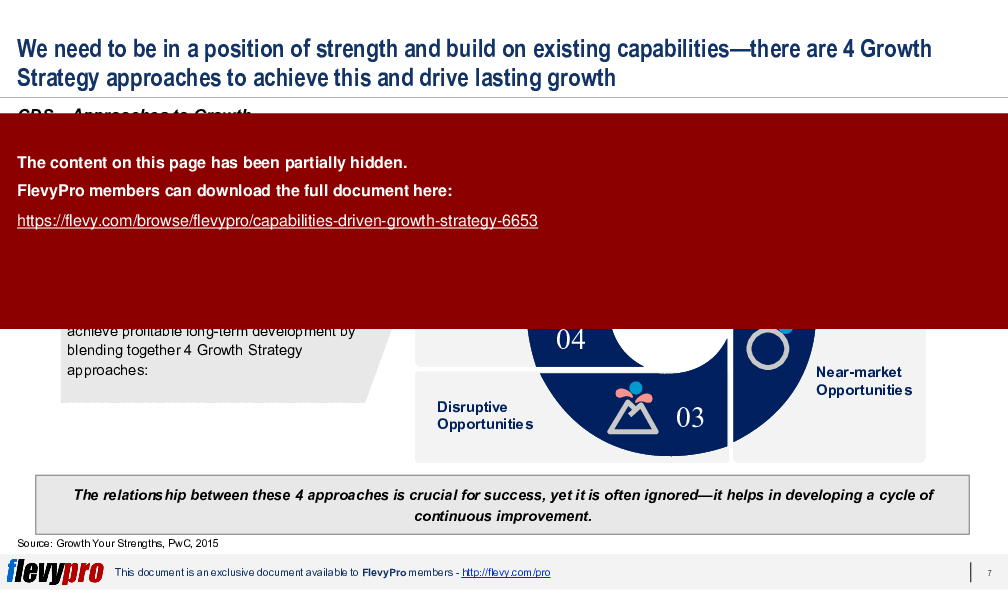
This presentation provides a detailed overview of 4 Growth Strategy approaches that can place organizations on the path to achieve profitable, long-term development:
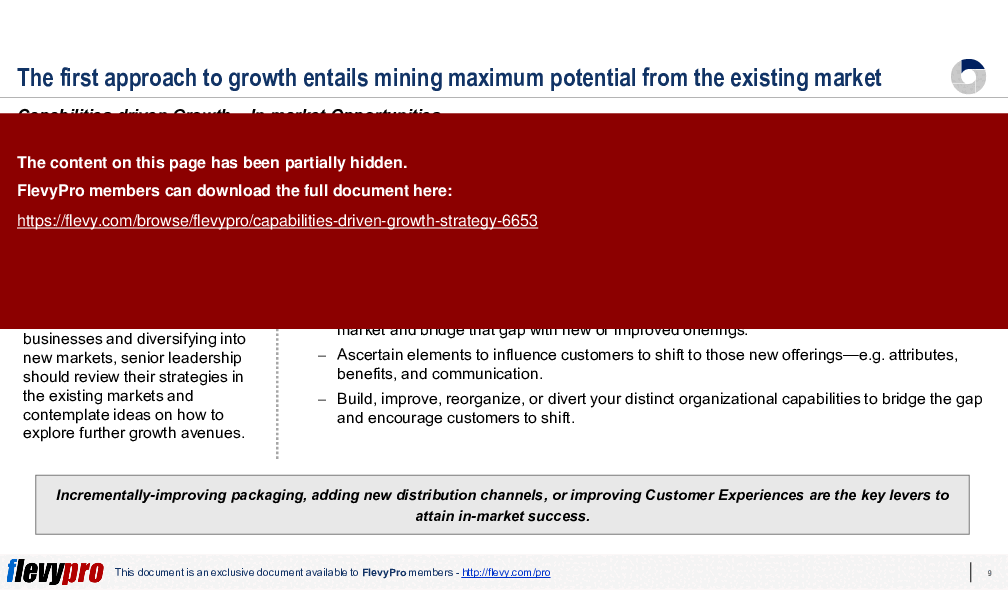
1. In-market Opportunities – Before looking into other businesses and diversifying into new markets, senior leadership should review their strategies in the existing markets and contemplate ideas on how to explore further growth avenues.
2. Near-market Opportunities – It is typical for organizations to look into nearby markets when thinking of expansion. These adjacent markets although seem attractive, but are developed by other enterprises using their capabilities systems that aren't straightforward to emulate.
3. Disruptive Opportunities – Disruption has become an overused buzz word these days, suggesting its ubiquity. However, business leaders must differentiate between an innovative evolutionary industry change and true disruption.
4. Capability Development – Successful Growth Strategy takes into account both in-market and near-market growth supported by appropriate capabilities to enhance revenue and capital for informed investments. It perpetuates a culture of Transformation and Innovation, since the three approaches reinforce each other.
This PowerPoint presentation on Capabilities-driven Growth Strategy also includes some slide templates for you to use in your own business presentations.
The presentation includes practical examples and case studies that illustrate how leading companies have successfully implemented Capabilities-driven Growth Strategies. It also provides actionable insights and templates to help you customize and apply these strategies within your own organization.
Got a question about this document? Email us at flevypro@flevy.com.
TOPIC FAQ
What is a capabilities-driven growth strategy?
A capabilities-driven growth strategy prioritizes an organization’s existing strengths and unique capabilities over chasing every market demand. It requires establishing 3 preconditions before execution: an assortment of product or service offerings, a capabilities system competitors can’t imitate, and a value proposition aligned with customer needs — 3 main factors.How does a capabilities-driven strategy differ from market-driven approaches?
Unlike market-driven approaches that focus primarily on customer wants, capabilities-driven strategy starts with what the organization can uniquely do and aligns offerings and value proposition to those strengths. It then pursues In-market, Near-market, Disruptive, and Capability Development routes rather than only responding to market signals — 4 approaches.What are the 4 growth approaches within capabilities-driven strategy?
The framework identifies 4 approaches: In-market Opportunities (deepening current markets), Near-market Opportunities (adjacent segments), Disruptive Opportunities (true industry disruption versus incremental innovation), and Capability Development (building capabilities to support growth). These 4 approaches are presented as complementary pathways.How should leaders evaluate near-market opportunities?
Leaders should treat adjacent markets cautiously: assess whether competitors’ capability systems created those markets and whether those capabilities are straightforward to emulate. The evaluation must check fit with the organization’s current offerings, capability system, and value proposition before entry into adjacent markets.What role do organic and inorganic channels play in capabilities-driven growth?
Organic channels (notably Marketing and Innovation) are paths to exploit and extend current capabilities; inorganic channels (M&A) are alternatives to acquire complementary capabilities. A capabilities-driven approach considers both options, but requires alignment with the firm’s capability system, citing marketing, innovation, or M&A.What should I look for when buying a capabilities-driven growth PowerPoint template?
Look for explicit coverage of the 4 growth approaches, slides that map offerings to capability systems and value proposition, examples or case studies, and editable templates for executive decks. Flevy’s Capabilities-driven Growth Strategy provides these elements in a 27-slide PowerPoint.How can my organization balance in-market and disruptive strategies?
Balance requires ensuring capability readiness: pursue in-market extensions where capabilities already deliver value, while reserving resources for genuine disruptive moves only when capability development supports them. Successful balance links revenue and capital allocation to capability development as an enabling activity.Are there case studies showing capabilities-driven growth in practice?
Yes, presentations in this category often include practical examples and case studies illustrating how companies implemented capabilities-driven approaches and how capability alignment supported growth; Flevy’s Capabilities-driven Growth Strategy specifically includes case studies and templates.GROWTH STRATEGY PPT TEMPLATES
Source: Best Practices in Growth Strategy, Distinctive Capabilities PowerPoint Slides: Capabilities-driven Growth Strategy PowerPoint (PPTX) Presentation Slide Deck, LearnPPT Consulting
Did you need more documents?
Consider a FlevyPro subscription from $39/month. View plans here.
For $10.00 more, you can download this document plus 2 more FlevyPro documents. That's just $13 each.




























