
This framework is developed by a team of former McKinsey and Big 4 consultants. The presentation follows the headline-body-bumper slide format used by global consulting firms.
Editor Summary
27-slide PowerPoint presentation (PPTX) titled Capabilities-driven Growth Strategy by LearnPPT Consulting that explains a capabilities-first approach requiring 3 preconditions: an assortment of offerings, a unique capabilities system competitors cannot imitate, and a value proposition aligned with customer needs.
Read moreDescribes 4 growth approaches — In-market, Near-market, Disruptive, and Capability Development — and discusses leveraging organic channels (Marketing, Innovation) or inorganic methods (M&A). Includes practical examples, case studies, and slide templates; sold as a digital download on Flevy.
Use this presentation when an organization needs sustainable, capability-aligned growth planning rather than pursuing every market opportunity. It supports selection and sequencing of growth approaches tied to existing competences and competitive advantage.
Senior leadership evaluating additional growth levers within current markets by reviewing in-market initiatives and expansion scenarios.
Corporate strategy teams mapping adjacent segments and assessing capability gaps versus competitor capability systems.
Marketing and innovation managers prioritizing organic channels to refine offerings and the value proposition.
M&A and business development teams screening inorganic moves for strategic fit with the firm’s capability system.
The four-approach framework (In-market, Near-market, Disruptive, Capability Development) emphasizes establishing offering, capability, and value-proposition alignment before execution, consistent with corporate strategy practice.
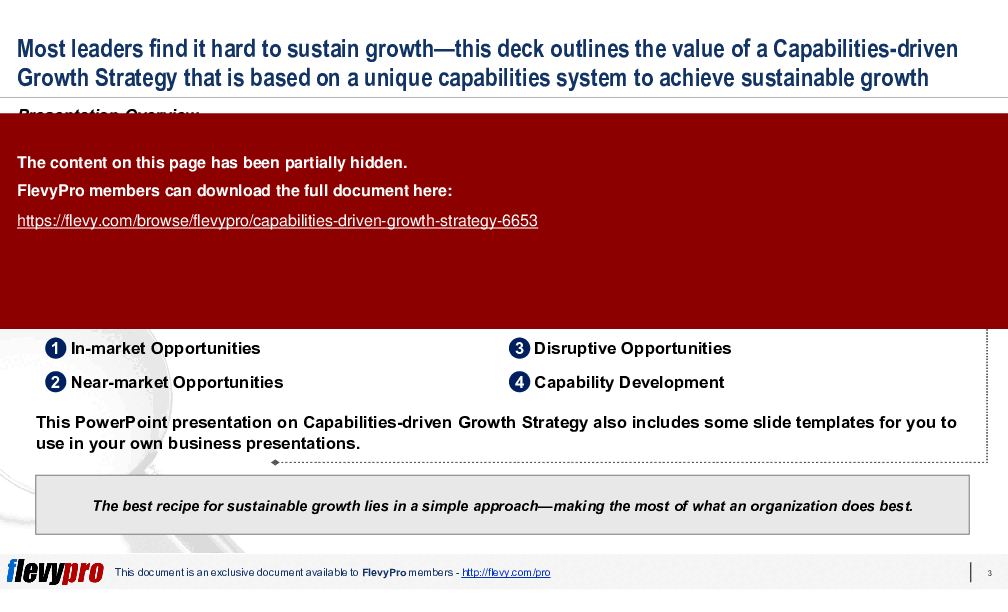
Sustainable growth necessitates a Capabilities-driven Strategy (CDS), instead of the conventional market-driven approaches, focusing on anything that customers want.
A coherent Capabilities-driven Growth Strategy demands from the organizations to establish 3 main factors prior to its execution:
• An assortment of product or service offerings
• A unique capabilities system, which competitors can't imitate
• A Value Proposition reverberating with what customers need
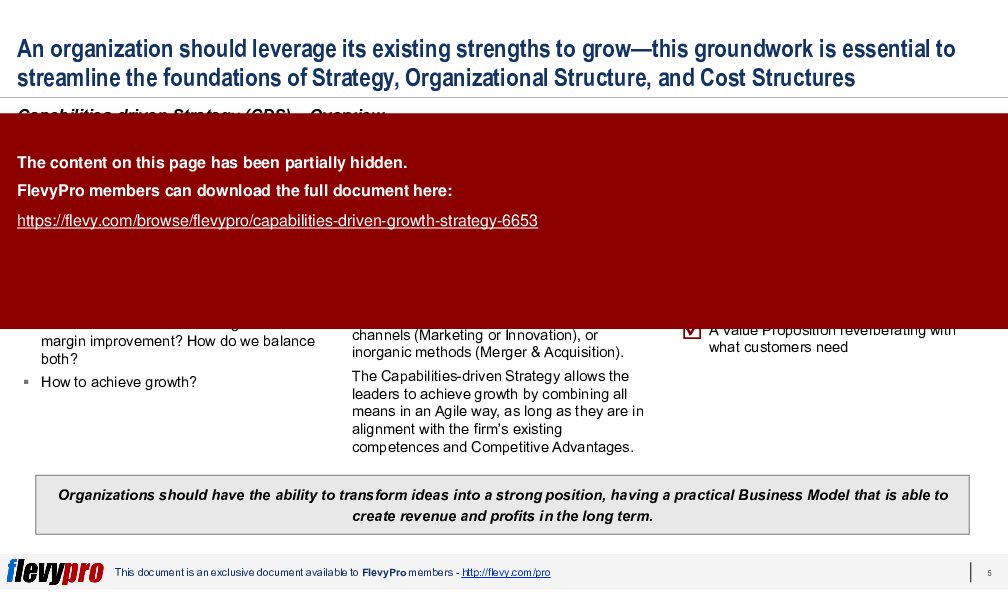
The Capabilities-driven Growth Strategy entails capitalizing on the organization's current strengths, utilizing all possible ways—e.g., existing or adjacent markets, organic channels (Marketing or Innovation), or inorganic methods (M&A). The Capabilities-driven Strategy allows the leaders to achieve growth by combining all means in an Agile way, as long as they are in alignment with the organization's existing competences and Competitive Advantages.
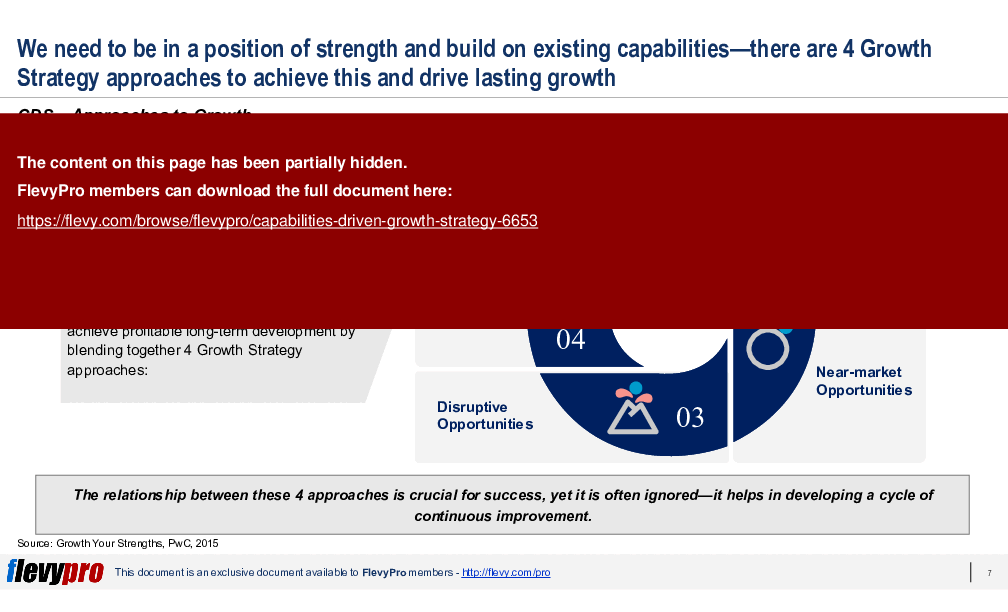
This presentation provides a detailed overview of 4 Growth Strategy approaches that can place organizations on the path to achieve profitable, long-term development:
1. In-market Opportunities – Before looking into other businesses and diversifying into new markets, senior leadership should review their strategies in the existing markets and contemplate ideas on how to explore further growth avenues.
2. Near-market Opportunities – It is typical for organizations to look into nearby markets when thinking of expansion. These adjacent markets although seem attractive, but are developed by other enterprises using their capabilities systems that aren't straightforward to emulate.
3. Disruptive Opportunities – Disruption has become an overused buzz word these days, suggesting its ubiquity. However, business leaders must differentiate between an innovative evolutionary industry change and true disruption.
4. Capability Development – Successful Growth Strategy takes into account both in-market and near-market growth supported by appropriate capabilities to enhance revenue and capital for informed investments. It perpetuates a culture of Transformation and Innovation, since the three approaches reinforce each other.
This PowerPoint presentation on Capabilities-driven Growth Strategy also includes some slide templates for you to use in your own business presentations.
The presentation includes practical examples and case studies that illustrate how leading companies have successfully implemented Capabilities-driven Growth Strategies. It also provides actionable insights and templates to help you customize and apply these strategies within your own organization.
A capabilities-driven growth strategy prioritizes an organization’s existing strengths and unique capabilities over chasing every market demand. It requires establishing 3 preconditions before execution: an assortment of product or service offerings, a capabilities system competitors can’t imitate, and a value proposition aligned with customer needs — 3 main factors.
How does a capabilities-driven strategy differ from market-driven approaches?
Unlike market-driven approaches that focus primarily on customer wants, capabilities-driven strategy starts with what the organization can uniquely do and aligns offerings and value proposition to those strengths. It then pursues In-market, Near-market, Disruptive, and Capability Development routes rather than only responding to market signals — 4 approaches.
What are the 4 growth approaches within capabilities-driven strategy?
The framework identifies 4 approaches: In-market Opportunities (deepening current markets), Near-market Opportunities (adjacent segments), Disruptive Opportunities (true industry disruption versus incremental innovation), and Capability Development (building capabilities to support growth). These 4 approaches are presented as complementary pathways.
How should leaders evaluate near-market opportunities?
Leaders should treat adjacent markets cautiously: assess whether competitors’ capability systems created those markets and whether those capabilities are straightforward to emulate. The evaluation must check fit with the organization’s current offerings, capability system, and value proposition before entry into adjacent markets.
What role do organic and inorganic channels play in capabilities-driven growth?
Organic channels (notably Marketing and Innovation) are paths to exploit and extend current capabilities; inorganic channels (M&A) are alternatives to acquire complementary capabilities. A capabilities-driven approach considers both options, but requires alignment with the firm’s capability system, citing marketing, innovation, or M&A.
What should I look for when buying a capabilities-driven growth PowerPoint template?
Look for explicit coverage of the 4 growth approaches, slides that map offerings to capability systems and value proposition, examples or case studies, and editable templates for executive decks. Flevy’s Capabilities-driven Growth Strategy provides these elements in a 27-slide PowerPoint.
How can my organization balance in-market and disruptive strategies?
Balance requires ensuring capability readiness: pursue in-market extensions where capabilities already deliver value, while reserving resources for genuine disruptive moves only when capability development supports them. Successful balance links revenue and capital allocation to capability development as an enabling activity.
Are there case studies showing capabilities-driven growth in practice?
Yes, presentations in this category often include practical examples and case studies illustrating how companies implemented capabilities-driven approaches and how capability alignment supported growth; Flevy’s Capabilities-driven Growth Strategy specifically includes case studies and templates.
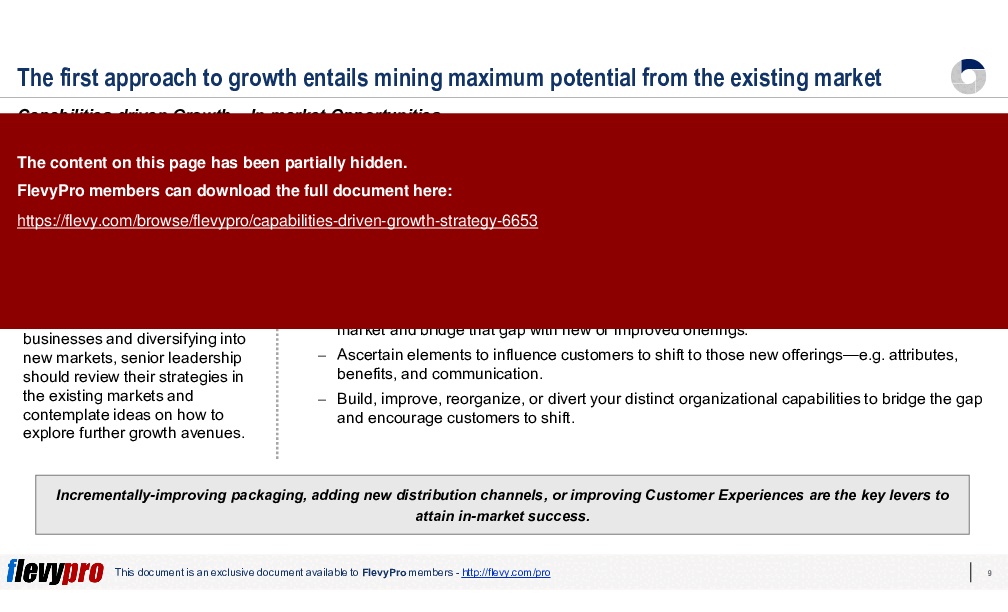
This PPT slide presents a strategic framework for maximizing growth potential within existing markets by leveraging in-market opportunities before pursuing new markets. It highlights the common oversight of leaders who often overlook untapped potential within their current customer base and market dynamics. Senior leadership is encouraged to reassess market strategies to identify new business and revenue sources. Key actions include identifying gaps between customer needs and current offerings, influencing customer adoption of new or improved products through effective communication strategies, and enhancing organizational capabilities to bridge these gaps. Optimizing existing resources and understanding customer needs can lead to substantial growth without the risks of entering new markets.
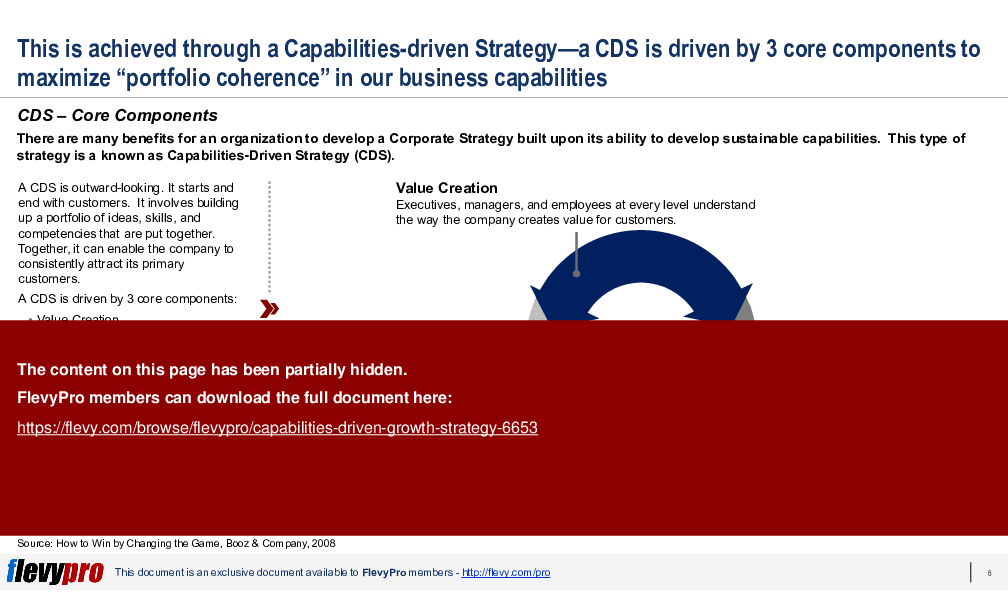
This PPT slide outlines the Capabilities-Driven Strategy (CDS), focusing on customer orientation and sustainable capabilities. A well-structured corporate strategy enhances an organization’s ability to attract and retain customers. The 3 core components driving a CDS are Value Creation, Product and Service Fit, and the Capabilities System.
Value Creation involves all organizational levels understanding how to generate customer value, aligning efforts towards satisfaction and loyalty. Product and Service Fit ensures offerings utilize the same capabilities system, meeting customer needs effectively. The Capabilities System, comprising 3 to 6 distinct capabilities, acts as the engine of Value Creation, enabling organizations to adapt to market changes and maintain relevance. This structured methodology supports strategic positioning and operational effectiveness for sustainable growth.
This PPT slide illustrates how organizations navigate the technology landscape by crossing capability boundaries. Companies in IT, telecommunications, and entertainment are expanding their operational scope. Major players like Apple, AT&T, and Google are categorized across technology capabilities such as Connectivity and Transport, Hardware, Software, Support and Services, Content Aggregation and Distribution, and Content Production. Google and Netflix have ventured into digital content production, indicating a strategic pivot towards integrating content creation with existing services. In contrast, Microsoft and Apple have not yet entered content production, highlighting potential growth areas. Crossing capability boundaries requires significant investments and adaptation to market demands, making it critical for executives to assess competitive positioning and identify market gaps for future growth.
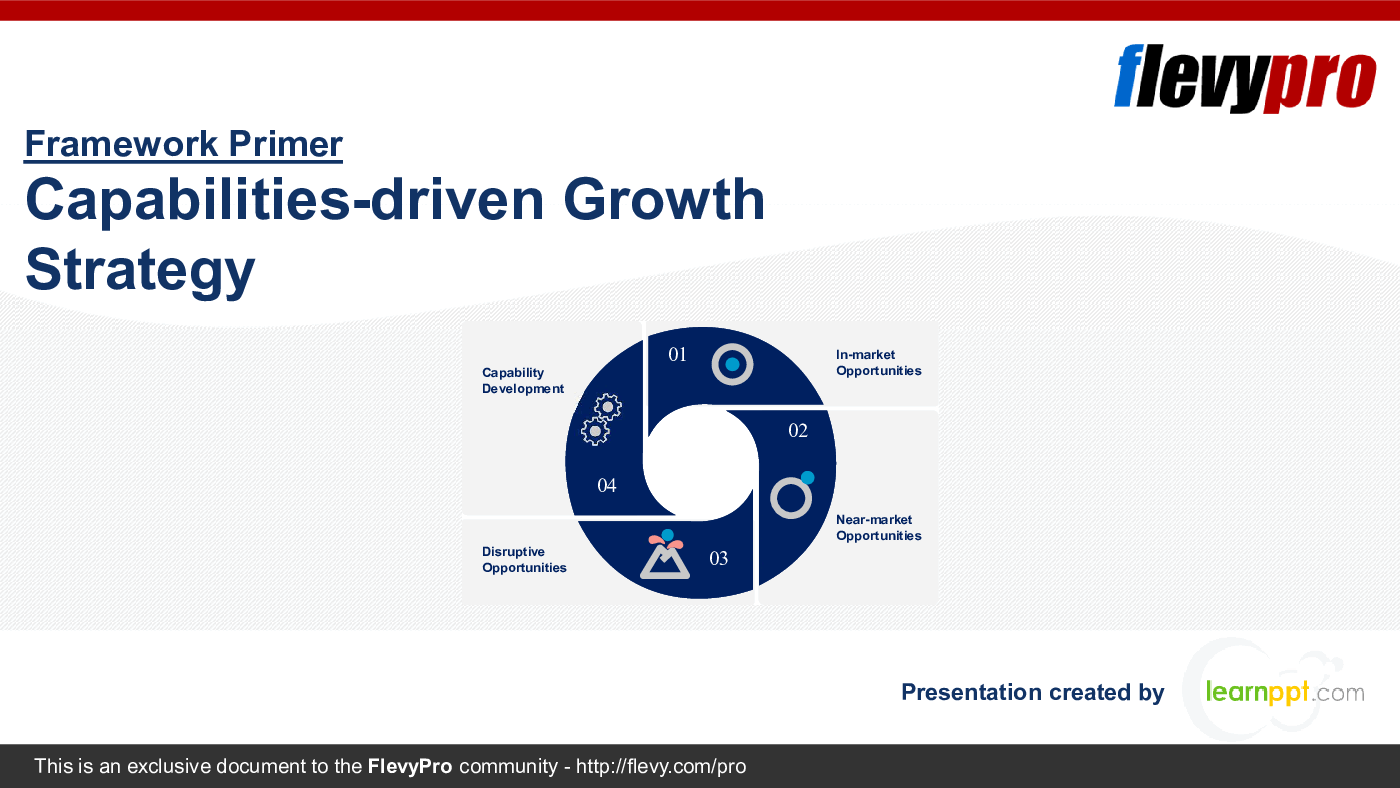
This PPT slide presents a capabilities-driven strategy framework for organizations expanding into new business segments. It outlines 4 growth approaches: "Capability Development," which enhances existing competencies for market positioning; "In-market Opportunities," focusing on capitalizing on current market dynamics for immediate growth; "Near-market Opportunities," exploring adjacent markets to leverage capabilities and create new revenue streams; and "Disruptive Opportunities," preparing for market disruptions that alter the competitive landscape. The interrelationship among these approaches is crucial for fostering continuous improvement and aligning with long-term growth objectives.
Capabilities development is essential for driving in-market and near-market growth. Its effectiveness depends on an organization’s market position, the distinctiveness of its capabilities, and their relevance to market opportunities. Organizations with weak capabilities should enhance growth strategies and improve service offerings, especially in low-growth markets. Firms in high-growth markets must proactively adapt to changes requiring new skills rather than diverting focus to less relevant markets. Companies stable in declining markets should reassess strategies, explore near-market opportunities, and revisit business models for expansion. Sustained profitable growth relies on continuous exploration of in-market opportunities, leveraging data, gaining insights, and optimizing human resources to achieve strategic adjacencies and refine capabilities. Aligning capabilities with market demands is crucial for effective growth.
Source: Best Practices in Growth Strategy, Distinctive Capabilities PowerPoint Slides: Capabilities-driven Growth Strategy PowerPoint (PPTX) Presentation Slide Deck, LearnPPT Consulting
This framework is developed by a team of former McKinsey and Big 4 consultants. The presentation follows the headline-body-bumper slide format used by global consulting firms.
For $10.00 more, you can download this document plus 2 more FlevyPro documents. That's just $13 each.
ABOUT FLEVYPRO
This document is part of the FlevyPro Library, a curated knowledge base of documents for our FlevyPro subscribers.

FlevyPro is a subscription service for on-demand business frameworks and analysis tools. FlevyPro subscribers receive access to an exclusive library of curated business documents—business framework primers, presentation templates, Lean Six Sigma tools, and more—among other exclusive benefits.
The average daily rate of a McKinsey consultant is $6,625 (not including expenses). The average price of a Flevy document is $65.
Trusted by over 10,000+ Client Organizations
Since 2012, we have provided business templates to over 10,000 businesses and organizations of all sizes, from startups and small businesses to the Fortune 100, in over 130 countries.
"I am extremely grateful for the proactiveness and eagerness to help and I would gladly recommend the Flevy team if you are looking for data and toolkits to help you work through business solutions."
– Trevor Booth, Partner, Fast Forward Consulting
"As a consulting firm, we had been creating subject matter training materials for our people and found the excellent materials on Flevy, which saved us 100's of hours of re-creating what already exists on the Flevy materials we purchased."
– Michael Evans, Managing Director at Newport LLC
"FlevyPro has been a brilliant resource for me, as an independent growth consultant, to access a vast knowledge bank of presentations to support my work with clients. In terms of RoI, the value I received from the very first presentation I downloaded paid for my subscription many times over! The
quality of the decks available allows me to punch way above my weight – it's like having the resources of a Big 4 consultancy at your fingertips at a microscopic fraction of the overhead.
"
– Roderick Cameron, Founding Partner at SGFE Ltd
"I have found Flevy to be an amazing resource and library of useful presentations for lean sigma, change management and so many other topics. This has reduced the time I need to spend on preparing for my performance consultation. The library is easily accessible and updates are regularly provided. A wealth of great information."
– Cynthia Howard RN, PhD, Executive Coach at Ei Leadership
"Flevy.com has proven to be an invaluable resource library to our Independent Management Consultancy, supporting and enabling us to better serve our enterprise clients.
The value derived from our [FlevyPro] subscription in terms of the business it has helped to gain far exceeds the investment made, making a subscription a no-brainer for any growing consultancy – or in-house strategy team."
– Dean Carlton, Chief Transformation Officer, Global Village Transformations Pty Ltd.
"If you are looking for great resources to save time with your business presentations, Flevy is truly a value-added resource. Flevy has done all the work for you and we will continue to utilize Flevy as a source to extract up-to-date information and data for our virtual and onsite presentations!"
– Debbi Saffo, President at The NiKhar Group
"One of the great discoveries that I have made for my business is the Flevy library of training materials.
As a Lean Transformation Expert, I am always making presentations to clients on a variety of topics: Training, Transformation, Total Productive Maintenance, Culture, Coaching, Tools, Leadership Behavior, etc. Flevy
It is well worth the money to purchase these presentations. Sure, I have the knowledge and information to make my point. It is another thing to create a presentation that captures what I want to say. Flevy has saved me countless hours of preparation time that is much better spent with implementation that will actually save money for my clients.
"
– Ed Kemmerling, Senior Lean Transformation Expert at PMG
"[Flevy] produces some great work that has been/continues to be of immense help not only to myself, but as I seek to provide professional services to my clients, it gives me a large "tool box" of resources that are critical to provide them with the quality of service and outcomes they are expecting."
– Royston Knowles, Executive with 50+ Years of Board Level Experience
Download our free compilation of 50+ Strategy & Transformation slides and templates. Frameworks include McKinsey 7-S, Balanced Scorecard, Disruptive Innovation, BCG Curve, and many more.