
This framework is developed by a team of former McKinsey and Big 4 consultants. The presentation follows the headline-body-bumper slide format used by global consulting firms.
Business Process Management Life Cycle PPT: Learn BPM stages, frameworks, and process optimization. Download this detailed Business Process Management Lifecycle (BPM-L) presentation now. BPM Lifecycle (BPM-L) is a 24-slide PPT PowerPoint presentation slide deck (PPT) available for immediate download upon purchase.
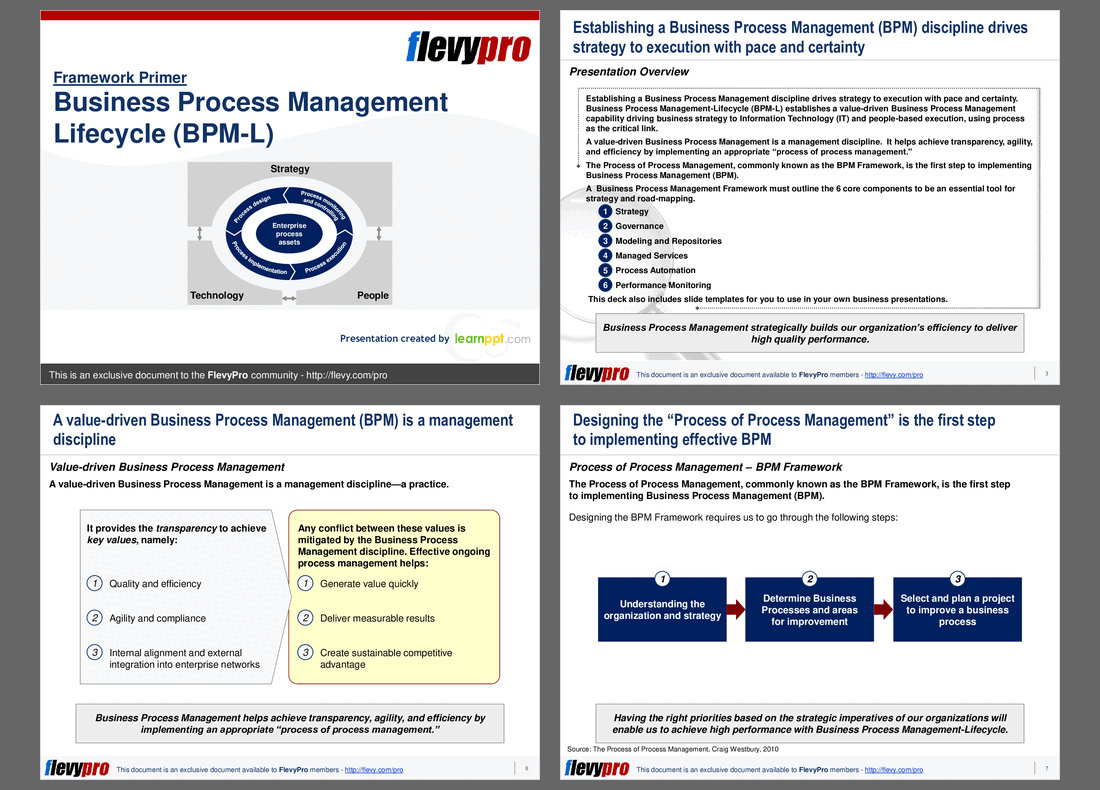
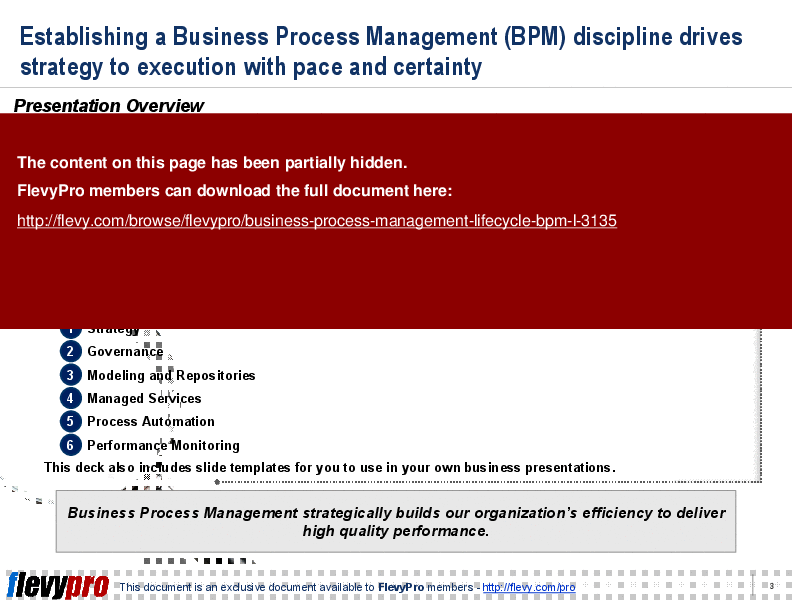
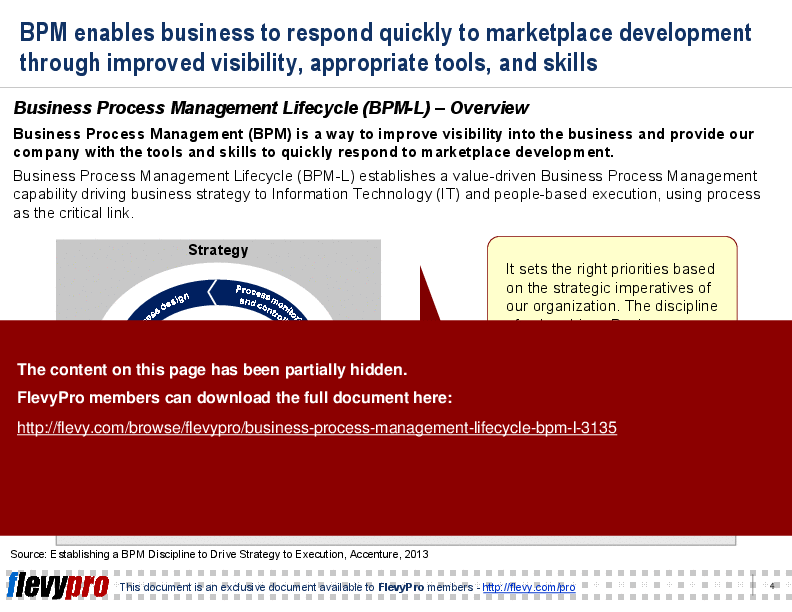
Establishing a Business Process Management discipline drives strategy to execution with pace and certainty. Business Process Management-Lifecycle (BPM-L) establishes a value-driven Business Process Management capability driving business strategy to Information Technology (IT) and people-based execution, using process as the critical link.
A value-driven Business Process Management is a management discipline. It helps achieve transparency, agility, and efficiency by implementing an appropriate "process of process management." BPM strategically builds our organization’s efficiency to deliver high quality performance.
The Process of Process Management, commonly known as the BPM Framework, is the first step to implementing Business Process Management (BPM).
A Business Process Management Framework must outline the 6 core components to be an essential tool for strategy and road-mapping.
1. Strategy
2. Governance
3. Modeling and Repositories
4. Management Services
5. Process Automation
6. Performance Monitoring
This deck also includes slide templates for you to use in your own business presentations.
This comprehensive deck on Business Process Management Lifecycle (BPM-L) provides a detailed roadmap for integrating BPM into your organization. It covers the six core components essential for a robust BPM framework, ensuring your strategy is aligned with execution. The templates included are designed to facilitate immediate application, enabling you to customize and implement BPM practices efficiently.
The PPT also addresses key questions and considerations for designing a BPM model, offering insights into process standardization, regulatory compliance, and process improvement. By leveraging the BPM-L framework, your organization can achieve significant improvements in process transparency, agility, and overall performance. This resource is indispensable for executives looking to drive strategic initiatives through effective process management.
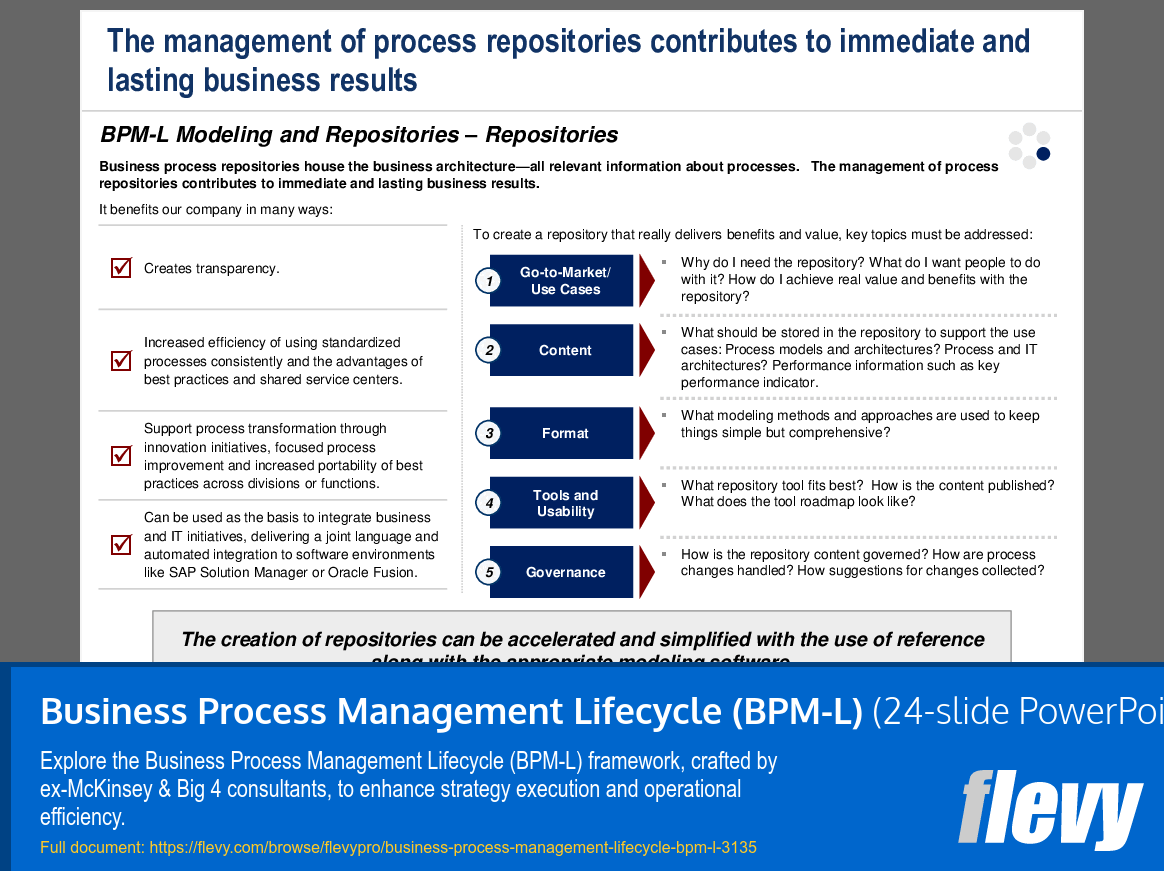
This PPT slide discusses managing process repositories within the Business Process Management Lifecycle (BPM-L). Effective repository management creates transparency for informed decision-making and increases efficiency through standardized processes and best practices. It supports process transformation, fostering innovation and adaptability across divisions, while integrating business and IT initiatives for a cohesive operational environment.
To maximize repository value, 5 essential topics are identified: "Go-to-Market/Use Cases" for defining purpose and outcomes; "Content" for determining stored information like process models and performance indicators; "Format" for selecting modeling methods; "Tools and Usability" for choosing repository tools and content publication roadmaps; and "Governance" for managing content and changes.
Using suitable modeling software can expedite repository creation, enhancing operational efficiency.
BPM, or Business Process Management, is a critical organizational capability that transcends task execution. The Business Process Management Framework outlines 6 core components essential for successful BPM implementation: BPM-L strategy, governance, performance monitoring, modeling and repositories, managed services, and process automation. Each component is vital for effective strategic planning and resource allocation. A comprehensive understanding of these components enables organizations to integrate them into their BPM strategies and road maps, facilitating immediate and sustainable value. Recognizing the interconnectedness of these components allows executives to navigate BPM complexities and enhance operational efficiency. Successful BPM requires a holistic view of organizational capabilities and a structured implementation approach aligned with strategic objectives.
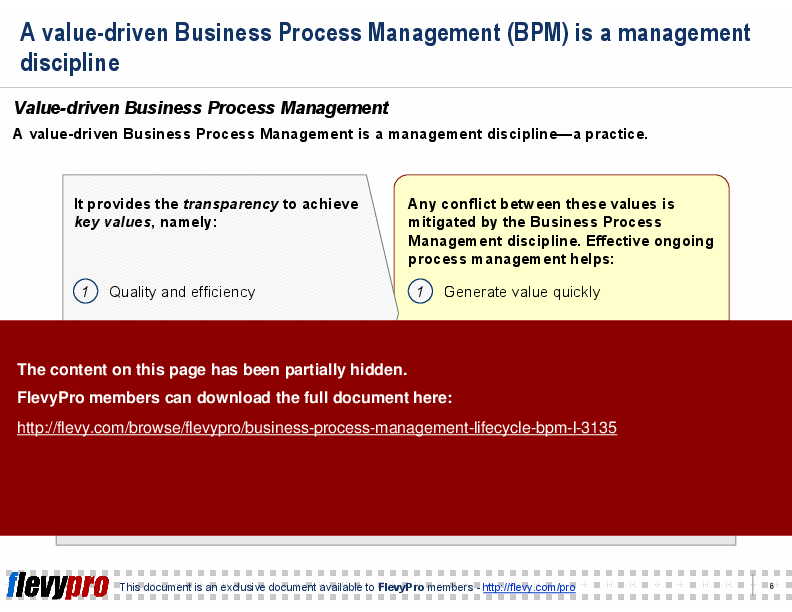
This PPT slide outlines value-driven Business Process Management (BPM) as a management discipline focused on transparency to achieve 3 key values: quality and efficiency, agility and compliance, and internal alignment with external integration into enterprise networks. Conflicts among these values can arise, but can be managed through BPM, which is essential for generating value quickly, delivering measurable results, and fostering long-term sustainability. The emphasis on measurable results highlights accountability and performance tracking, while sustainable outcomes underscore the need for ongoing improvement and adaptability in processes. BPM serves as a strategic discipline that enhances operational efficiency and aligns processes with broader business objectives.
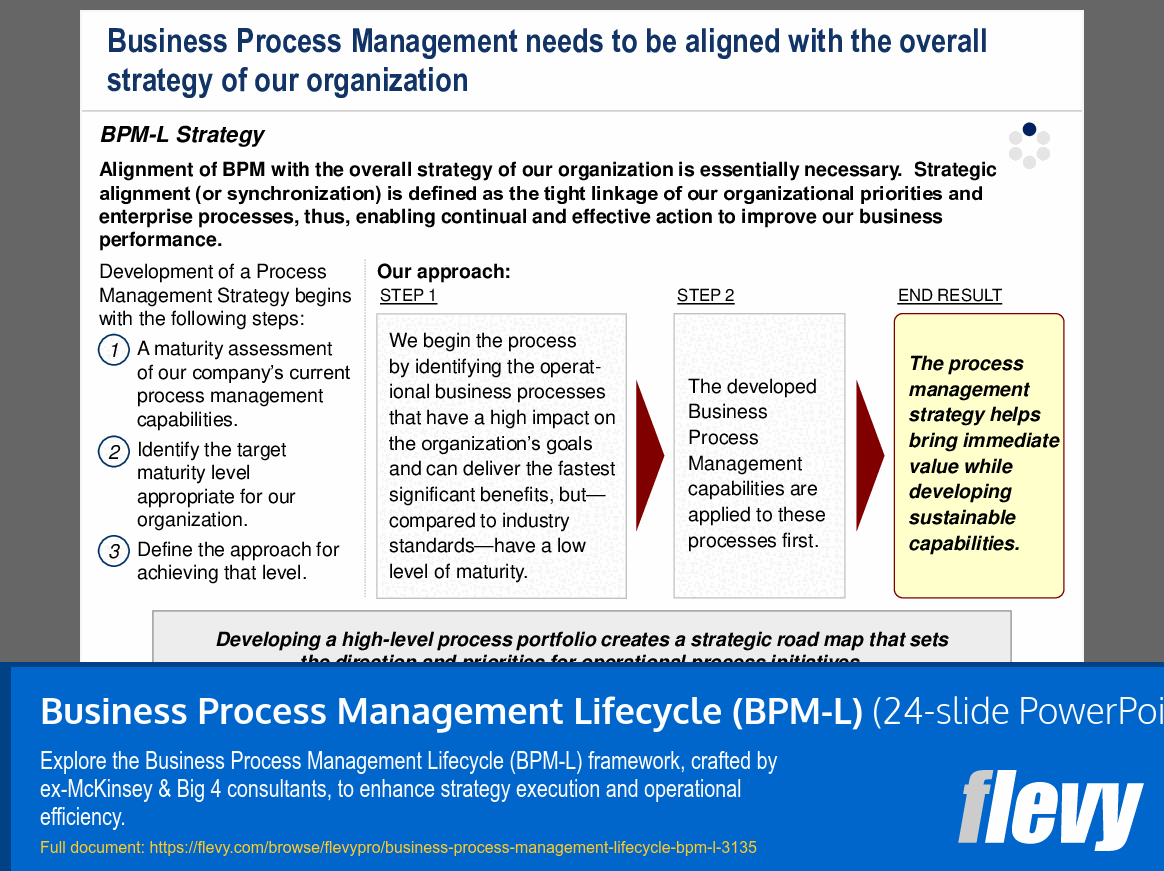
This PPT slide outlines the alignment of Business Process Management (BPM) with organizational strategy, introducing the BPM-L Strategy for developing a process management strategy. The development process includes 3 key steps: conducting a maturity assessment of current process management capabilities to establish a baseline, identifying the target maturity level for realistic process improvement goals, and defining the approach to reach the target maturity level through specific initiatives. It emphasizes prioritizing operational business processes with low maturity that impact organizational goals, enabling quick wins and substantial benefits. This structured approach results in a process management strategy that delivers immediate value and fosters sustainable capabilities for long-term success.
The BPM-L Performance Monitoring framework measures process performance to drive continuous improvement. It assesses goal achievement to ensure alignment between operational activities and strategic objectives. Dashboards display process-centric key performance indicators (KPIs) such as cycle times, customer inquiry resolutions, and order accuracy, enabling effective visualization of performance metrics for informed decision-making. Insights from these dashboards lead to the identification of improvement initiatives, fostering a proactive approach to performance management. Additionally, performance monitoring allows for reverse-engineering of processes to uncover inefficiencies and bottlenecks, enabling organizations to strategically target areas for enhancement and drive better outcomes.
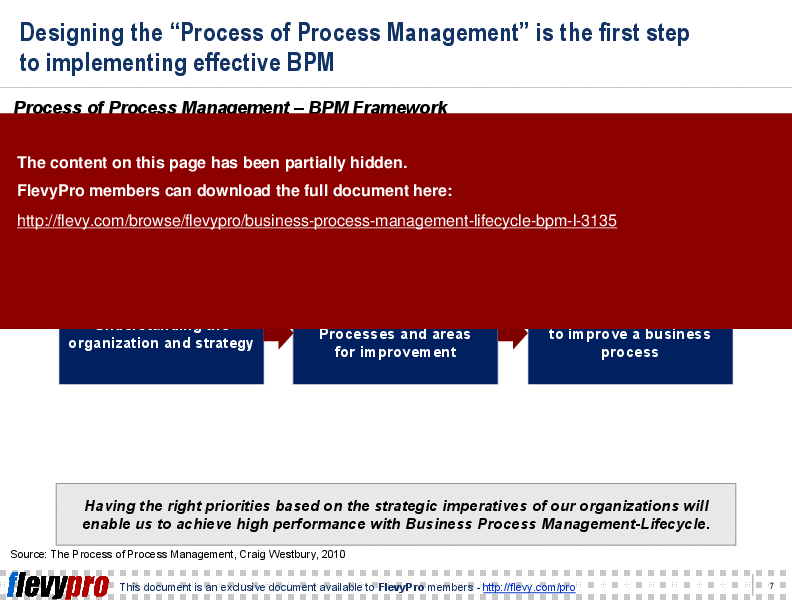
This PPT slide outlines the foundational steps for implementing an effective Business Process Management (BPM) Framework. The initial phase, the "Process of Process Management," sets the context for subsequent actions. The first step focuses on understanding the organization’s strategy, goals, culture, and operational dynamics to tailor the BPM Framework effectively. The second step involves identifying specific business processes and areas for improvement by analyzing current processes to target inefficiencies. The third step is selecting and planning a project to enhance a business process, including developing a detailed project plan with objectives, resources, and timelines. Aligning these priorities with the organization's strategic imperatives is vital for achieving high performance through BPM.
Source: Best Practices in Business Process Management, BPM PowerPoint Slides: Business Process Management Lifecycle (BPM-L) PowerPoint (PPT) Presentation Slide Deck, LearnPPT Consulting
This framework is developed by a team of former McKinsey and Big 4 consultants. The presentation follows the headline-body-bumper slide format used by global consulting firms.
For $10.00 more, you can download this document plus 2 more FlevyPro documents. That's just $13 each.
ABOUT FLEVYPRO
This document is part of the FlevyPro Library, a curated knowledge base of documents for our FlevyPro subscribers.

FlevyPro is a subscription service for on-demand business frameworks and analysis tools. FlevyPro subscribers receive access to an exclusive library of curated business documents—business framework primers, presentation templates, Lean Six Sigma tools, and more—among other exclusive benefits.
The average daily rate of a McKinsey consultant is $6,625 (not including expenses). The average price of a Flevy document is $65.
Trusted by over 10,000+ Client Organizations
Since 2012, we have provided business templates to over 10,000 businesses and organizations of all sizes, from startups and small businesses to the Fortune 100, in over 130 countries.
"I like your product. I'm frequently designing PowerPoint presentations for my company and your product has given me so many great ideas on the use of charts, layouts, tools, and frameworks. I really think the templates are a valuable asset to the job."
– Roberto Fuentes Martinez, Senior Executive Director at Technology Transformation Advisory
"Last Sunday morning, I was diligently working on an important presentation for a client and found myself in need of additional content and suitable templates for various types of graphics. Flevy.com proved to be a treasure trove for both content and design at a reasonable price, considering the time I
saved. I encountered a download issue during the ordering process. However, a quick email to Flevy's support team, even on a Sunday (!!!), resulted in assistance within less than an hour, allowing me to download the content I needed. Fantastic job, Flevy! I give 5 stars for both content/price and customer service. Thank you!
"
– M. E., Chief Commercial Officer, International Logistics Service Provider
"I have found Flevy to be an amazing resource and library of useful presentations for lean sigma, change management and so many other topics. This has reduced the time I need to spend on preparing for my performance consultation. The library is easily accessible and updates are regularly provided. A wealth of great information."
– Cynthia Howard RN, PhD, Executive Coach at Ei Leadership
"Flevy.com has proven to be an invaluable resource library to our Independent Management Consultancy, supporting and enabling us to better serve our enterprise clients.
The value derived from our [FlevyPro] subscription in terms of the business it has helped to gain far exceeds the investment made, making a subscription a no-brainer for any growing consultancy – or in-house strategy team."
– Dean Carlton, Chief Transformation Officer, Global Village Transformations Pty Ltd.
"My FlevyPro subscription provides me with the most popular frameworks and decks in demand in today’s market. They not only augment my existing consulting and coaching offerings and delivery, but also keep me abreast of the latest trends, inspire new products and service offerings for my practice, and educate me
in a fraction of the time and money of other solutions. I strongly recommend FlevyPro to any consultant serious about success.
"
– Bill Branson, Founder at Strategic Business Architects
"One of the great discoveries that I have made for my business is the Flevy library of training materials.
As a Lean Transformation Expert, I am always making presentations to clients on a variety of topics: Training, Transformation, Total Productive Maintenance, Culture, Coaching, Tools, Leadership Behavior, etc. Flevy
It is well worth the money to purchase these presentations. Sure, I have the knowledge and information to make my point. It is another thing to create a presentation that captures what I want to say. Flevy has saved me countless hours of preparation time that is much better spent with implementation that will actually save money for my clients.
"
– Ed Kemmerling, Senior Lean Transformation Expert at PMG
"I am extremely grateful for the proactiveness and eagerness to help and I would gladly recommend the Flevy team if you are looking for data and toolkits to help you work through business solutions."
– Trevor Booth, Partner, Fast Forward Consulting
"FlevyPro provides business frameworks from many of the global giants in management consulting that allow you to provide best in class solutions for your clients."
– David Harris, Managing Director at Futures Strategy
Receive our FREE presentation on Operational Excellence
This 50-slide presentation provides a high-level introduction to the 4 Building Blocks of Operational Excellence. Achieving OpEx requires the implementation of a Business Execution System that integrates these 4 building blocks.