
This framework is developed by a team of former McKinsey and Big 4 consultants. The presentation follows the headline-body-bumper slide format used by global consulting firms.
Editor Summary
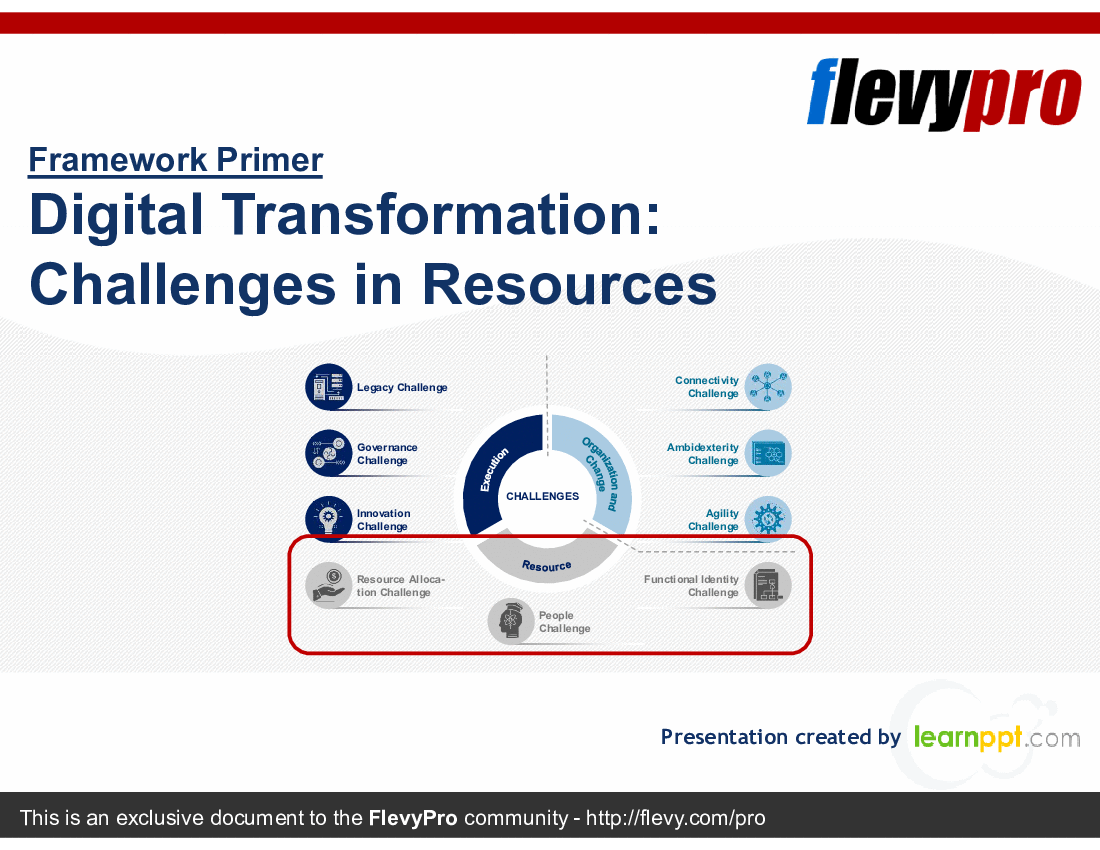
32-slide PowerPoint framework by LearnPPT Consulting that addresses Digital Transformation resource challenges, focused on the "Challenges in Resources" category within a broader 3-area taxonomy of 9 key digital transformation challenges.
Read moreCovers 3 composite resource challenges: Resource Allocation Challenge, Functional Identity Challenge, and People Challenge; explains project categorization into initiatives that save money, make more money, or create new revenue via business-model innovation; includes slide templates for client presentations; sold as a digital download on Flevy.
Use this deck when a large organization must prioritize digital initiatives, clarify evolving IT and digital leadership roles, and resolve resource and people constraints during enterprise-scale transformation.
CIOs allocating finite budgets to initiatives that either save costs, increase revenue, or create new business models, using project categorization as a decision input.
Chief Digital Officers designing cross-functional governance and a next-gen operating model to reduce silos and boost customer focus.
Digital/transformation leads building presentation-ready diagnostics and resource-allocation recommendations for executive review.
Strategy consultants preparing roadmaps that link digital projects to business objectives and organizational capability changes.
The framework’s diagnostic categorization followed by targeted operating-model and template outputs follows the typical consulting sequencing from problem diagnosis to solution design.
Digital Transformation is now at the forefront of most strategic agendas, as COVID-19 has accelerated the digitization of many industries by a decade or longer. The importance of "going digital" is undisputed.
However, successful and truly disruptive Digital Transformation requires massive efforts to create strategic and organizational capabilities that enable the organization to compete successfully in the Digital Era. These efforts become increasingly complex for larger organizations.
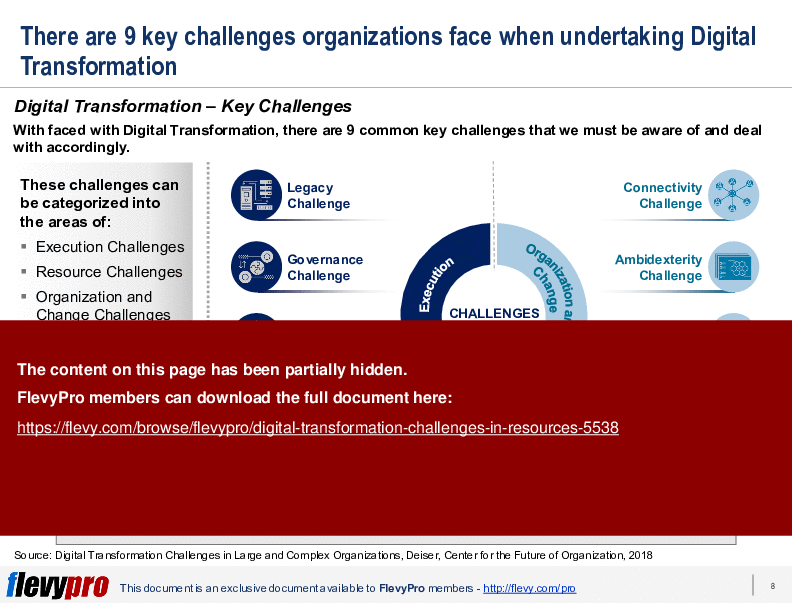
This framework introduces 9 key challenges to large scale Digital Transformation, which can be categorized into 3 areas:
1. Challenges in Execution
2. Challenges in Resources
3. Challenges in Organization and Change
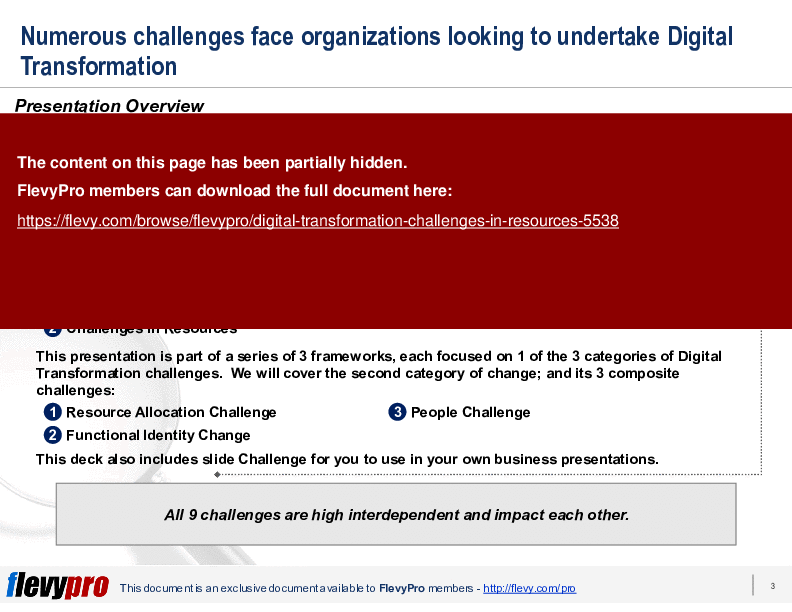
This presentation is part of a series of 3 frameworks, each focused on 1 of the 3 categories of Digital Transformation challenges. We will cover the second category of challenges; and its 3 composite challenges:
This deck also includes slide templates for you to use in your own business presentations.
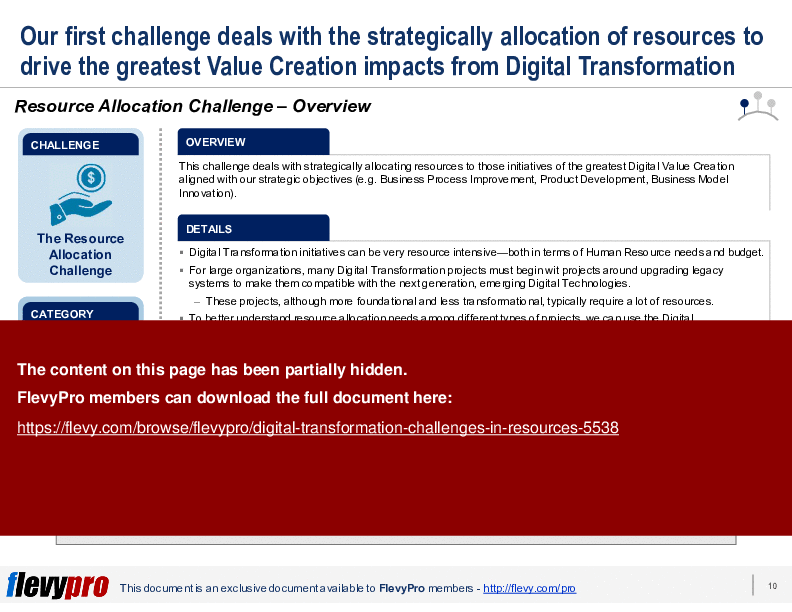
This presentation delves into the strategic allocation of resources, emphasizing the importance of aligning digital initiatives with overarching business objectives. It categorizes projects into those that save money, make more money, and create new revenue streams through business model innovation. Each type of project is dissected to provide actionable insights on leveraging digital technology for maximum impact.
Addressing the Functional Identity Challenge, the PPT outlines the evolving role of IT leadership and the necessity for cross-functional collaboration. It highlights the emergence of the Chief Digital Officer (CDO) role, underscoring its multidisciplinary nature. The presentation also offers a next-gen operating model to overcome organizational silos, fostering a more agile and customer-centric culture.
What are common ways to categorize digital transformation projects for resource allocation?
A pragmatic categorization groups projects by their primary economic impact: initiatives that save money, initiatives that make more money, and initiatives that create new revenue through business-model innovation. This classification helps align investment choices with strategic objectives and is presented as 3 project categories in the referenced framework.
How should companies prioritize digital initiatives when budgets are constrained?
Prioritization should align initiatives to overarching business objectives and use economic impact categories—save, make, or create—to compare trade-offs. Decision-making then weighs expected returns, strategic fit, and capability readiness; the discussed framework recommends using the save/make/create classification as a core input to prioritization decisions.
What does the Chief Digital Officer role typically encompass in large transformations?
The Chief Digital Officer is described as a multidisciplinary role that bridges IT and business, drives cross-functional collaboration, and helps define new operating models. The emergence of the CDO is positioned as a response to shifting functional identity and the need for integrated digital leadership.
How can organizations reduce functional identity barriers and organizational silos?
Organizations can adopt a next-generation operating model that emphasizes cross-functional governance, clearer role definitions for IT and digital leadership, and customer-centric ways of working. The framework outlines such a next-gen operating model as a mechanism to overcome silos and support agile, cross-functional collaboration.
What should I look for when buying a digital transformation slide deck or toolkit?
Look for resources that diagnose the core challenge areas (execution, resources, organization/change), provide a clear project categorization approach (e.g., save/make/create), and include ready-to-use templates for operating model and executive slides. The Flevy product includes these elements and delivers slide templates for presentation use.
How do people-related challenges typically present during enterprise digital programs?
People challenges often surface as capability gaps, role and identity shifts for IT and digital leaders, and resistance to new cross-functional ways of working. Addressing these requires role redefinition, upskilling, and governance changes; the deck treats People Challenge as one of 3 composite resource challenges.
Which frameworks help assess projects aimed at creating new digital revenue streams?
Useful approaches classify projects by whether they save, make, or create revenue and then evaluate strategic fit, monetization potential, and capability requirements. The referenced presentation explicitly discusses creating new revenue through business-model innovation as a distinct project category.
How should IT leadership and governance evolve during a large-scale digital transformation?
IT leadership needs to shift toward integrated, cross-functional stewardship—often via a multidisciplinary CDO or similar role—supported by new governance and an operating model that reduces silos and promotes customer-centric delivery. The deck recommends a next-gen operating model to enable that transition.
This PPT slide presents a segmentation framework for digital transformation projects, categorizing them into 3 types: "Save Money," "Make More Money," and "Make New Money." "Save Money" focuses on Business Process Improvement (BPI) to achieve cost convenience with low impact on the operating model. "Make More Money" emphasizes New Product Development (NPD) for growth within the current market, resulting in medium impact on the operating model. "Make New Money" targets Business Model Innovation (BMI) to create new markets, leading to high impact and disruptive changes in market and organizational structures. This framework guides organizations in prioritizing digital transformation efforts based on desired outcomes.
This PPT slide presents a framework for managing digital talent, focusing on the Digital Talent Management Lifecycle essential for organizations transitioning to digital-native status. The framework includes 4 components: Talent Planning, Talent Acquisition, Talent Development, and Talent Retention. Talent Planning identifies necessary skills to meet strategic goals, while Talent Acquisition sources key talent through various channels. Talent Development enhances existing workforce capabilities to meet digital demands, and Talent Retention ensures a skilled workforce by offering growth opportunities. Organizations must continuously assess and adapt their talent management strategies based on objective skill and performance measurements to sustain competitive performance in a digital landscape.
This PPT slide outlines 2 primary categories of digital transformation projects: "Save Money" and "Make More Money." "Save Money" projects focus on process optimization, improving efficiency through cost reduction and business process improvement, exemplified by Robotic Process Automation (RPA) in customer service and data cleansing. "Make More Money" projects encourage innovation by exploring new product and service opportunities, utilizing methodologies like Scrum, Design Thinking, and Hackathons. Cross-functional collaboration between technology and business teams is essential for understanding technological feasibility and business requirements. This framework highlights the need for both incremental improvements and innovative thinking to drive value creation in digital transformation.
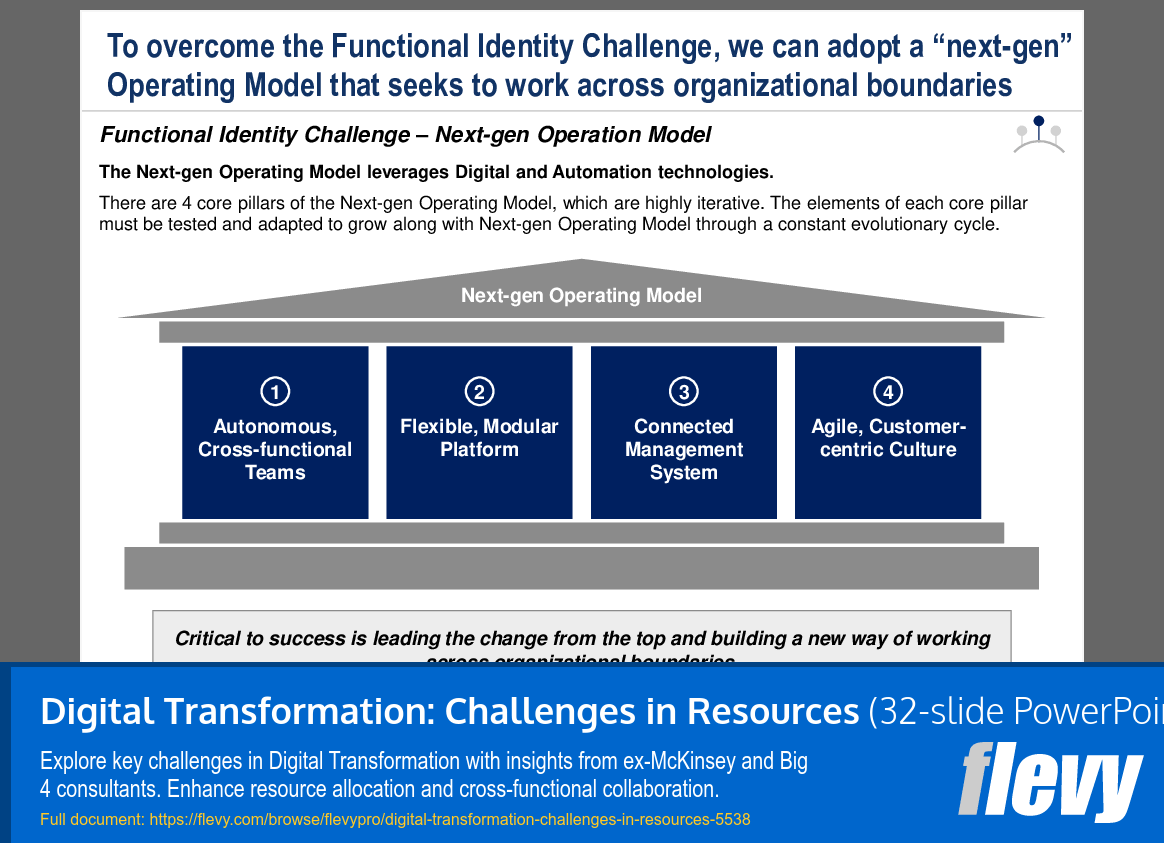
This PPT slide outlines a strategic framework addressing the "Functional Identity Challenge" through a "Next-gen Operating Model" to enhance organizational effectiveness via digital and automation technologies. Four core pillars support this model: "Autonomous, Cross-functional Teams" for agile decision-making; "Flexible, Modular Platform" for adaptable systems; "Connected Management System" for integration across management functions to drive efficiency; and "Agile, Customer-centric Culture" to prioritize customer needs. The iterative nature of the model emphasizes continuous testing and adaptation, ensuring alignment with strategic goals and overcoming functional silos through a transformation that integrates technology, culture, and management practices.
Source: Best Practices in Digital Transformation PowerPoint Slides: Digital Transformation: Challenges in Resources PowerPoint (PPTX) Presentation Slide Deck, LearnPPT Consulting
This framework is developed by a team of former McKinsey and Big 4 consultants. The presentation follows the headline-body-bumper slide format used by global consulting firms.
For $10.00 more, you can download this document plus 2 more FlevyPro documents. That's just $13 each.
ABOUT FLEVYPRO
This document is part of the FlevyPro Library, a curated knowledge base of documents for our FlevyPro subscribers.

FlevyPro is a subscription service for on-demand business frameworks and analysis tools. FlevyPro subscribers receive access to an exclusive library of curated business documents—business framework primers, presentation templates, Lean Six Sigma tools, and more—among other exclusive benefits.
The average daily rate of a McKinsey consultant is $6,625 (not including expenses). The average price of a Flevy document is $65.
Trusted by over 10,000+ Client Organizations
Since 2012, we have provided business templates to over 10,000 businesses and organizations of all sizes, from startups and small businesses to the Fortune 100, in over 130 countries.
"As a small business owner, the resource material available from FlevyPro has proven to be invaluable. The ability to search for material on demand based our project events and client requirements was great for me and proved very beneficial to my clients. Importantly, being able to easily edit and tailor
the material for specific purposes helped us to make presentations, knowledge sharing, and toolkit development, which formed part of the overall program collateral. While FlevyPro contains resource material that any consultancy, project or delivery firm must have, it is an essential part of a small firm or independent consultant's toolbox.
"
– Michael Duff, Managing Director at Change Strategy (UK)
"As a niche strategic consulting firm, Flevy and FlevyPro frameworks and documents are an on-going reference to help us structure our findings and recommendations to our clients as well as improve their clarity, strength, and visual power. For us, it is an invaluable resource to increase our impact and value."
– David Coloma, Consulting Area Manager at Cynertia Consulting
"I have used FlevyPro for several business applications. It is a great complement to working with expensive consultants. The quality and effectiveness of the tools are of the highest standards."
– Moritz Bernhoerster, Global Sourcing Director at Fortune 500
"Last Sunday morning, I was diligently working on an important presentation for a client and found myself in need of additional content and suitable templates for various types of graphics. Flevy.com proved to be a treasure trove for both content and design at a reasonable price, considering the time I
saved. I encountered a download issue during the ordering process. However, a quick email to Flevy's support team, even on a Sunday (!!!), resulted in assistance within less than an hour, allowing me to download the content I needed. Fantastic job, Flevy! I give 5 stars for both content/price and customer service. Thank you!
"
– M. E., Chief Commercial Officer, International Logistics Service Provider
"FlevyPro has been a brilliant resource for me, as an independent growth consultant, to access a vast knowledge bank of presentations to support my work with clients. In terms of RoI, the value I received from the very first presentation I downloaded paid for my subscription many times over! The
quality of the decks available allows me to punch way above my weight – it's like having the resources of a Big 4 consultancy at your fingertips at a microscopic fraction of the overhead.
"
– Roderick Cameron, Founding Partner at SGFE Ltd
"[Flevy] produces some great work that has been/continues to be of immense help not only to myself, but as I seek to provide professional services to my clients, it gives me a large "tool box" of resources that are critical to provide them with the quality of service and outcomes they are expecting."
– Royston Knowles, Executive with 50+ Years of Board Level Experience
"I am extremely grateful for the proactiveness and eagerness to help and I would gladly recommend the Flevy team if you are looking for data and toolkits to help you work through business solutions."
– Trevor Booth, Partner, Fast Forward Consulting
"If you are looking for great resources to save time with your business presentations, Flevy is truly a value-added resource. Flevy has done all the work for you and we will continue to utilize Flevy as a source to extract up-to-date information and data for our virtual and onsite presentations!"
Download our FREE Digital Transformation Templates
Download our free compilation of 50+ Digital Transformation slides and templates. DX concepts covered include Digital Leadership, Digital Maturity, Digital Value Chain, Customer Experience, Customer Journey, RPA, etc.