
 Click main image to view in full screen.
Strategy Classics: Balanced Scorecard (BSC) (PowerPoint PPTX Slide Deck)
PowerPoint (PPTX) 30 Slides FlevyPro Document


BALANCED SCORECARD PPT DESCRIPTION
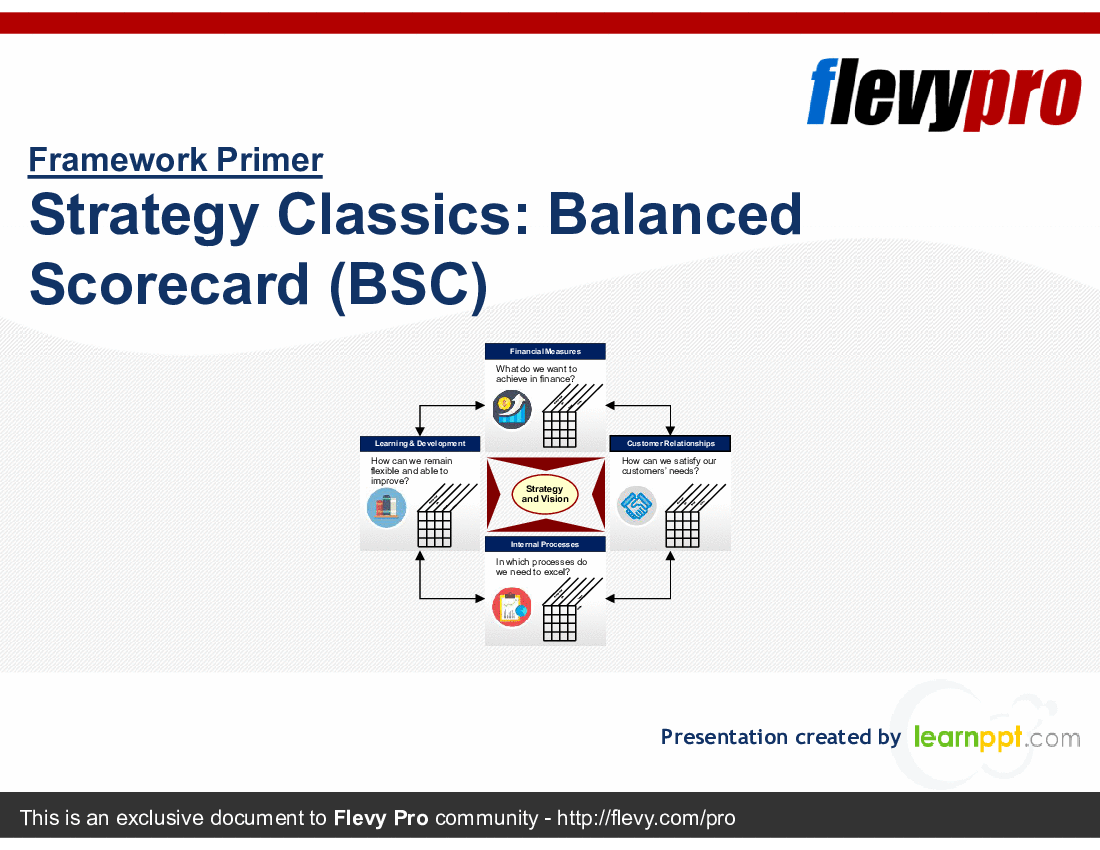
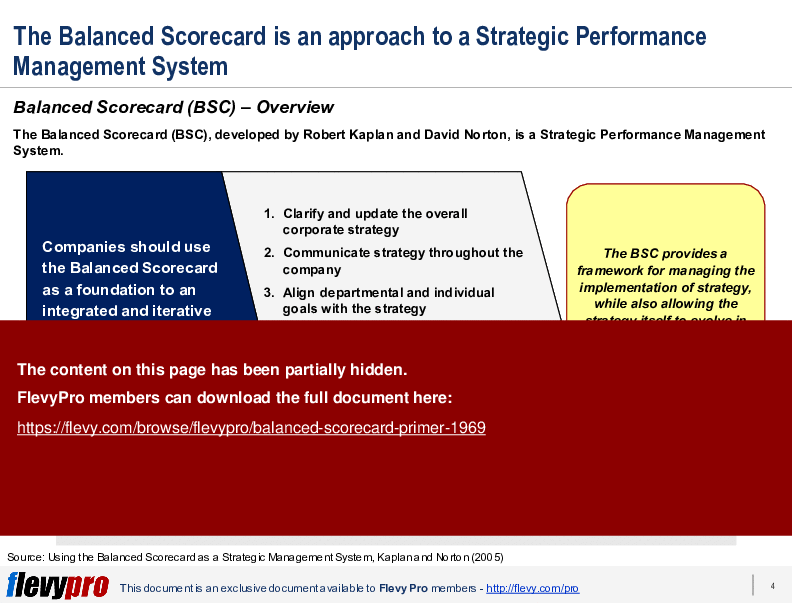
The Balanced Scorecard (BSC), developed by Robert Kaplan and David Norton, is a Strategic Performance Management System. It is a semi-standard structured report, supported by proven design methods and automation tools, that can be used by managers to keep track of the execution of activities by the staff within their control and to monitor the consequences arising from these actions.
Whereas conventional Performance Management focus on financial metrics, the BSC is "balanced," in that it takes into consideration non-financial metrics as well. Specifically, the Balanced Scorecard approach takes into account 4 areas of measurement:
1. Financial Measures
2. Customer Relationships
3. Internal Business Processes
4. Learning and Growth
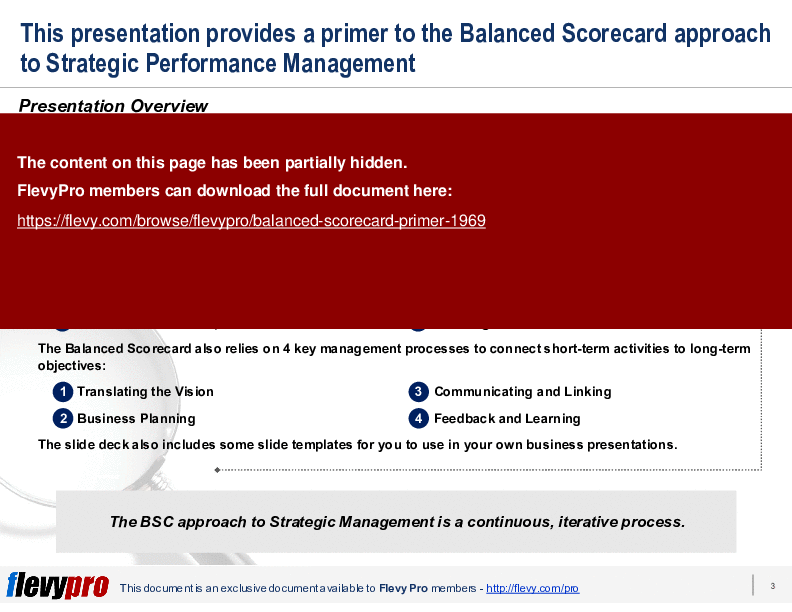
The Balanced Scorecard also relies on 4 key management processes to connect short-term activities to long-term objectives:
1. Translating the Vision
2. Business Planning
3. Communicating and Linking
4. Feedback and Learning
The BSC approach to Strategic Management is a continuous, iterative process.
The slide deck also includes some slide templates for you to use in your own business presentations.
This presentation offers a comprehensive primer on the Balanced Scorecard (BSC) methodology, guiding you through its core principles and practical applications. It emphasizes the importance of aligning departmental and individual goals with the overall corporate strategy, ensuring that every level of the organization is working towards common objectives. The BSC framework is presented as a robust tool for managing strategy implementation, allowing for continuous evolution and adaptation.
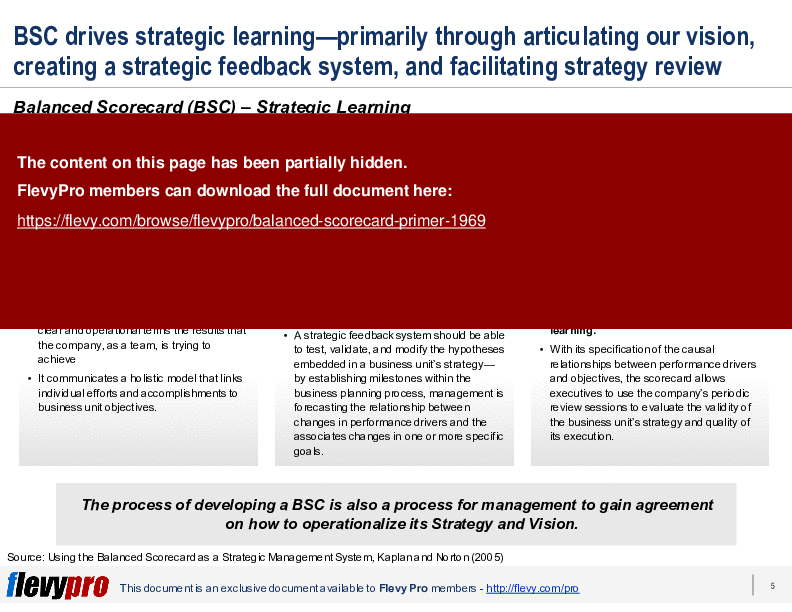
The slide deck also delves into the strategic learning aspect of the BSC, highlighting how it facilitates a holistic approach to linking individual efforts with broader business unit objectives. It underscores the value of a strategic feedback system, enabling management to test, validate, and refine business strategies in real-time. The included templates provide a practical resource for developing your own Balanced Scorecard, ensuring that you can effectively communicate and execute your strategic vision.
Got a question about this document? Email us at flevypro@flevy.com.
MARCUS OVERVIEW
This synopsis was written by Marcus [?] based on the analysis of the full 30-slide presentation.
Executive Summary
The Balanced Scorecard (BSC) PowerPoint template is an essential tool for organizations aiming to align business activities with their vision and strategy. This document provides a structured approach to performance management through 4 key perspectives: Finance, Customers, Internal Processes, and Learning & Development. By utilizing this template, corporate executives and consultants can effectively derive strategic objectives, set measurable targets, and ensure consistent commitment across the organization. The BSC framework not only facilitates performance tracking, but also supports strategic learning and adaptation in response to changing market conditions.
Who This Is For and When to Use
• Corporate executives responsible for strategic planning and performance management
• Business consultants guiding organizations in implementing the Balanced Scorecard framework
• Performance management teams focused on aligning departmental goals with corporate strategy
• Finance leaders seeking to measure financial performance against strategic objectives
Best-fit moments to use this deck:
• During strategic planning sessions to align departmental and individual goals with the overall corporate strategy
• In performance review meetings to assess progress against established targets
• When introducing the Balanced Scorecard framework to teams for the first time
Learning Objectives
• Define the Balanced Scorecard framework and its 4 key perspectives
• Establish strategic objectives aligned with corporate vision and goals
• Develop measurable KPIs for tracking performance across different perspectives
• Communicate strategy effectively throughout the organization
• Conduct periodic performance reviews to assess and improve strategy implementation
• Foster a culture of continuous learning and adaptation within the organization
Table of Contents
• Introduction to the Balanced Scorecard (page 1)
• Key Perspectives of the BSC (page 4)
• Strategic Learning Elements (page 5)
• BSC Template Overview (page 6)
• Linking Measures Across Perspectives (page 11)
• Example Personal Scorecard (page 12)
Primary Topics Covered
• Balanced Scorecard Overview - The BSC serves as a strategic management tool that aligns business activities with the vision and strategy of the organization.
• Key Perspectives - The framework includes 4 perspectives: Finance, Customers, Internal Processes, and Learning & Development, each addressing specific organizational goals.
• Strategic Objectives - The BSC helps define clear strategic objectives that guide departmental and individual performance.
• Performance Measures - Organizations can establish KPIs that measure success against the strategic objectives set within each perspective.
• Strategic Learning - The BSC facilitates ongoing learning and adaptation by linking performance measures to strategic goals, enabling organizations to respond to market changes.
• Template Utilization - The BSC template provides a structured format for organizations to document and track their strategic objectives, KPIs, and performance targets.
Deliverables, Templates, and Tools
• Balanced Scorecard template for documenting strategic objectives and performance measures
• KPI tracking sheets for each perspective of the BSC
• Performance review frameworks to assess progress against strategic goals
• Communication tools for disseminating strategy across the organization
• Learning and development plans to ensure continuous improvement
Slide Highlights
• Overview slide detailing the 4 perspectives of the Balanced Scorecard
• Template slides for documenting strategic objectives and KPIs
• Visual representation of linking measures across the BSC perspectives
• Example slide showcasing a personal scorecard based on the BSC framework
Potential Workshop Agenda
Introduction to the Balanced Scorecard (60 minutes)
• Overview of the BSC framework and its importance
• Discussion on aligning strategy with performance
Developing Strategic Objectives (90 minutes)
• Breakout sessions to define strategic objectives for each perspective
• Group presentations and feedback on proposed objectives
KPI Development and Measurement (60 minutes)
• Workshop on identifying key performance indicators for tracking progress
• Review of best practices in performance measurement
Customization Guidance
• Tailor the BSC template to reflect specific organizational goals and strategic priorities
• Adjust KPIs based on industry benchmarks and internal performance standards
• Incorporate unique terminology and metrics relevant to the organization’s operations
Secondary Topics Covered
• Strategic management systems and their role in organizational performance
• Integration of the Balanced Scorecard with other performance management frameworks
• Best practices for conducting performance reviews and strategic assessments
Topic FAQ
What are the core components of the Balanced Scorecard methodology?
The Balanced Scorecard consists of 4 measurement perspectives—Finance, Customers, Internal Processes, and Learning & Development—and 4 management processes: Translating the Vision, Business Planning, Communicating and Linking, and Feedback and Learning, together forming the core components of the framework with 4 perspectives and 4 processes.How does the Balanced Scorecard connect daily activities to long-term strategy?
The BSC connects activities to strategy through its 4 management processes: Translating the Vision into objectives, Business Planning to resource initiatives, Communicating and Linking to align staff, and Feedback and Learning to adjust strategy, using iterative performance data to close the short-term/long-term gap across these 4 processes.How often should organizations review performance using the Balanced Scorecard?
The Balanced Scorecard supports regular, periodic performance reviews; organizations commonly conduct reviews on a quarterly or annual basis to assess progress against strategic objectives and adjust KPIs, with the template advising quarterly or annual cadence.How do I develop measurable KPIs for each of the 4 BSC perspectives?
Start by translating the vision into strategic objectives per perspective, then define specific, measurable indicators that track those objectives; adjust KPIs using industry benchmarks and internal standards and document them using template KPI tracking sheets provided in the toolkit and in KPI tracking sheets.What should I look for when choosing a Balanced Scorecard template for my organization?
Choose a template that explains the 4 perspectives, provides slides for documenting strategic objectives and KPIs, shows how to link measures across perspectives, and includes tools for communication and performance reviews—specifically template slides and KPI tracking sheets.How much time and what team involvement is typical to run an initial BSC workshop?
Implementation often uses facilitated workshops with cross-functional stakeholders; a sample agenda includes an Introduction (60 minutes), Developing Strategic Objectives (90 minutes), and KPI Development and Measurement (60 minutes), totaling 3 workshop sessions of 210 minutes.We just completed a merger—how can the Balanced Scorecard help align teams post-merger?
Use the BSC to define shared strategic objectives across the 4 perspectives, translate the merged organization’s vision into departmental goals, communicate and link responsibilities, and run performance reviews to validate alignment using the performance review frameworks and the 4 perspectives.Our finance team tracks only financial metrics—how do we expand to a balanced approach?
Expand by adding Customer, Internal Process, and Learning & Development perspectives to complement financial measures; define objectives for each perspective, establish non-financial KPIs, and record them using a Balanced Scorecard template and KPI tracking sheets to ensure balanced measurement.Document FAQ
These are questions addressed within this presentation.
What is the Balanced Scorecard?
The Balanced Scorecard is a strategic management framework that helps organizations align their activities with their vision and strategy by measuring performance across 4 perspectives: Finance, Customers, Internal Processes, and Learning & Development.
How can the BSC improve organizational performance?
By providing a structured approach to performance measurement and management, the BSC enables organizations to track progress against strategic objectives, identify areas for improvement, and adapt to changing market conditions.
What types of organizations can benefit from using the BSC?
Any organization, regardless of size or industry, can benefit from implementing the Balanced Scorecard framework to enhance strategic alignment and performance management.
How often should performance reviews be conducted using the BSC?
Performance reviews should be conducted regularly, typically on a quarterly or annual basis, to assess progress against strategic objectives and make necessary adjustments.
Can the BSC be integrated with other management frameworks?
Yes, the Balanced Scorecard can be integrated with other management frameworks to create a comprehensive performance management system tailored to the organization’s needs.
What are KPIs, and why are they important in the BSC?
Key Performance Indicators (KPIs) are measurable values that indicate how effectively an organization is achieving its strategic objectives. They are crucial for tracking performance and guiding decision-making.
How can organizations ensure commitment to the BSC framework?
Organizations can foster commitment by communicating the importance of the BSC framework, providing training, and involving employees in the development of strategic objectives and KPIs.
What resources are available for implementing the BSC?
Various resources, including templates, training materials, and case studies, are available to assist organizations in implementing the Balanced Scorecard framework effectively.
Glossary
• Balanced Scorecard - A strategic management framework that aligns business activities with organizational vision and strategy.
• KPI (Key Performance Indicator) - A measurable value that indicates how effectively an organization is achieving its strategic objectives.
• Strategic Objective - A specific goal that an organization aims to achieve in alignment with its vision.
• Performance Review - A systematic evaluation of an organization’s performance against established objectives and KPIs.
• Learning & Development - The process of enhancing skills and knowledge within an organization to foster continuous improvement.
• Internal Processes - The operational activities and workflows that contribute to delivering value to customers.
• Customer Perspective - The viewpoint that focuses on how customers perceive the organization’s performance and value proposition.
• Finance Perspective - The viewpoint that assesses the organization’s financial performance and sustainability.
• Strategic Learning - The process of using performance feedback to adapt and improve organizational strategy.
• Template - A pre-designed format used to document and track strategic objectives and performance measures.
• Vision - The aspirational long-term goal that guides an organization’s strategy and decision-making.
• Performance Management - The systematic process of improving organizational performance by developing the performance of individuals and teams.
• Strategic Alignment - The process of ensuring that all aspects of an organization are aligned with its strategic objectives.
• Organizational Goals - The specific outcomes that an organization aims to achieve in pursuit of its vision.
• Market Conditions - The external factors that influence an organization’s performance, including competition, customer preferences, and economic trends.
• Feedback System - A mechanism for collecting and analyzing performance data to inform decision-making and strategy adjustments.
• Strategic Initiatives - Specific projects or actions undertaken to achieve strategic objectives.
• Departmental Goals - The specific objectives set by individual departments that align with the overall organizational strategy.
• Continuous Improvement - An ongoing effort to enhance products, services, or processes to increase efficiency and effectiveness.
• Performance Tracking - The process of monitoring progress against established KPIs and objectives.
• Organizational Culture - The shared values, beliefs, and behaviors that shape how work is done within an organization.
Source: Best Practices in Performance Management, Balanced Scorecard, Strategy Map, Strategic Management PowerPoint Slides: Strategy Classics: Balanced Scorecard (BSC) PowerPoint (PPTX) Presentation Slide Deck, LearnPPT Consulting
Did you need more documents?
Consider a FlevyPro subscription from $39/month. View plans here.
For $10.00 more, you can download this document plus 2 more FlevyPro documents. That's just $13 each.