
Editor Summary
ADKAR Change Management Model is a 16-slide PowerPoint (PPTX) by LearnPPT Consulting that presents Jeff Hiatt’s Prosci® ADKAR® framework for individual and organizational change.
Read moreThe model defines 5 sequential elements—Awareness, Desire, Knowledge, Ability, Reinforcement—to explain why some changes succeed. Target users include change management professionals and leaders planning behavior-focused change initiatives. Sold as a digital download on Flevy with immediate digital download.
Use the ADKAR model when an initiative requires deliberate individual behavior change alongside business process changes—such as adoption of new processes, role changes, or community engagement efforts.
Change managers mapping interventions to individual readiness indicators and sequencing activities across Awareness, Desire, Knowledge, Ability, and Reinforcement.
HR leaders designing readiness assessments and training programs to close Knowledge and Ability gaps.
Line managers coaching employees to practice new skills and build Ability through on-the-job activities.
Program managers aligning process changes with stakeholder Reinforcement and measurement.
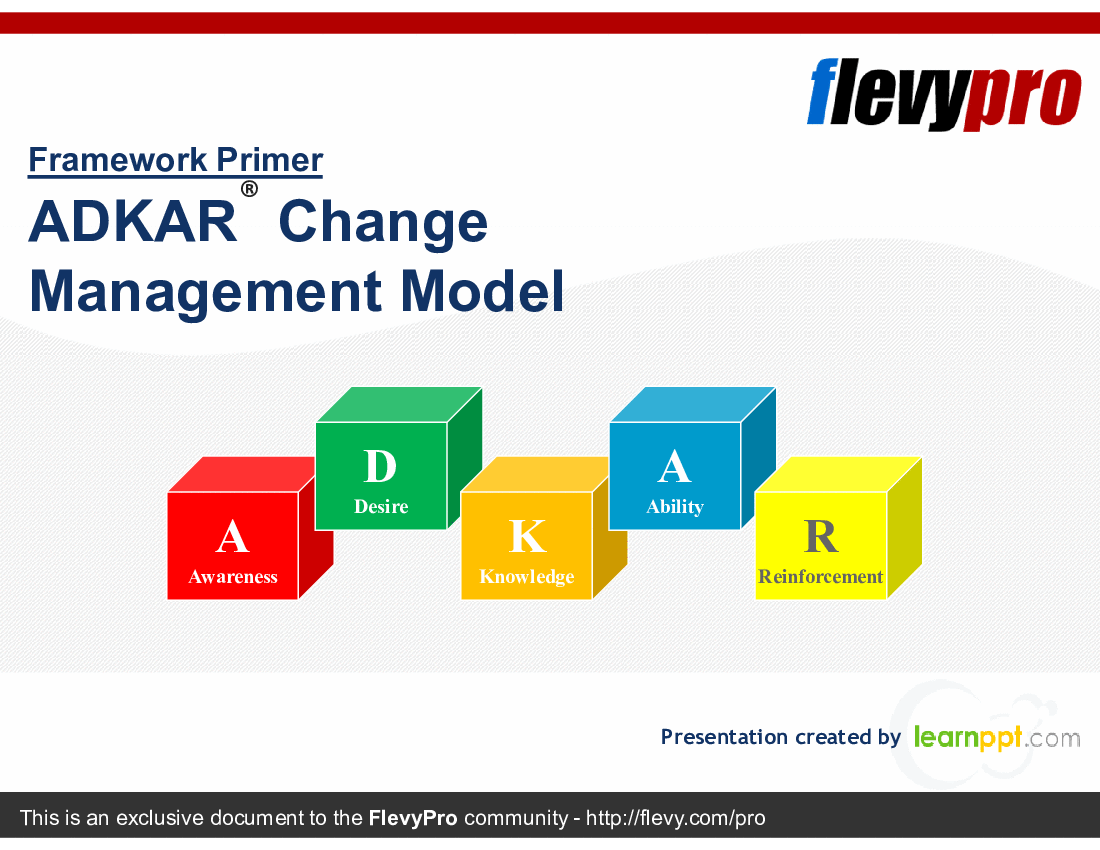
The 5 sequential ADKAR building blocks reflect Prosci’s outcome-focused approach to individual change management.
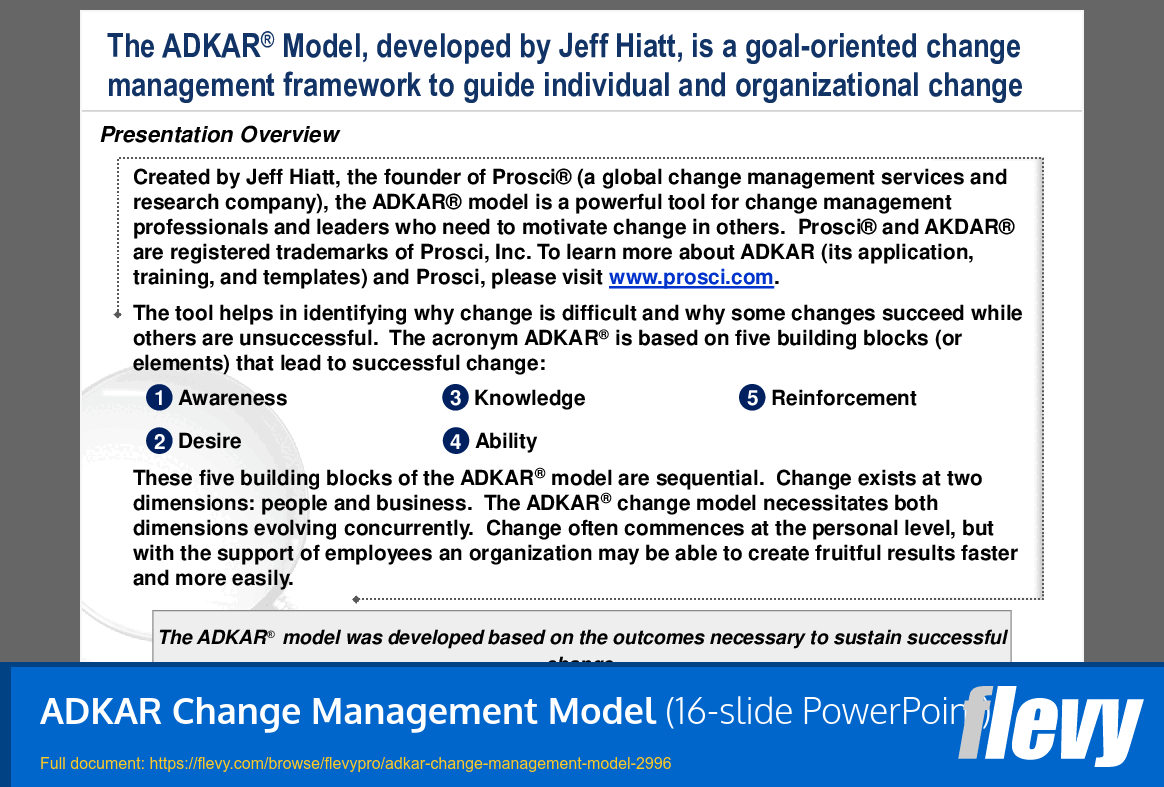
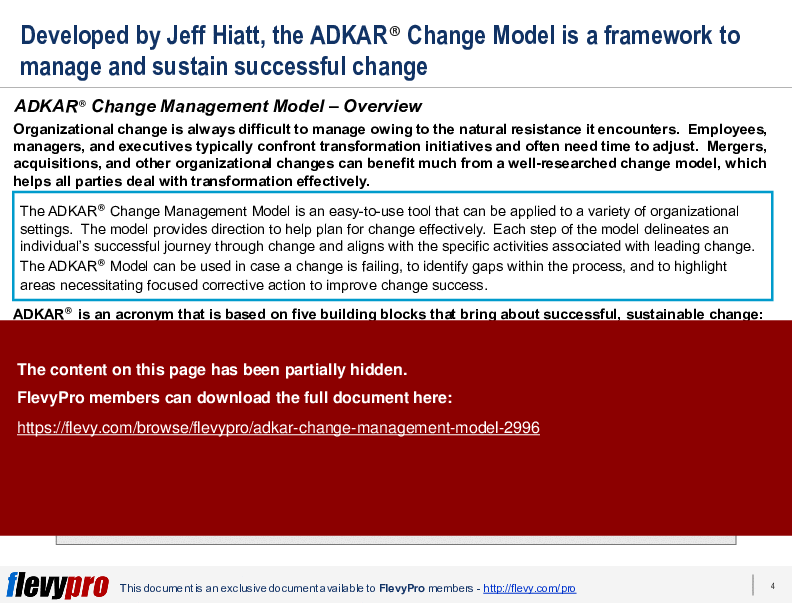
Created by Jeff Hiatt, the founder of Prosci® (a global change management services and research company), the ADKAR® model is a powerful tool for change management professionals and leaders who need to motivate change in others. The tool helps in identifying why change is difficult and why some changes succeed while others are unsuccessful. The ADKAR® model was developed based on the outcomes necessary to sustain successful change.
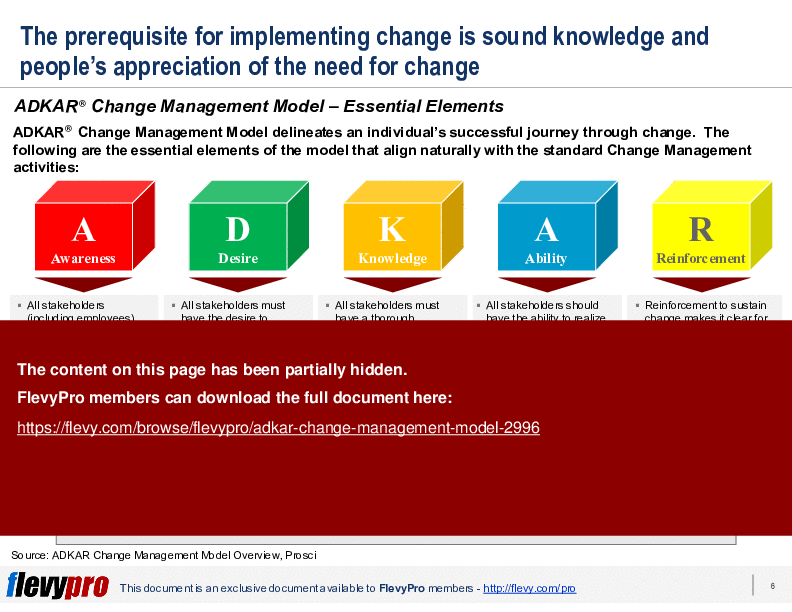
The acronym ADKAR® is based on five building blocks (or elements) that lead to successful change:
These five building blocks of the ADKAR® model are sequential. Change exists at two dimensions: people and business. The ADKAR® change model necessitates both dimensions evolving concurrently. Change often commences at the personal level, but with the support of employees an organization may be able to create fruitful results faster and more easily.
ADKAR® and Prosci® are both registered trademarks of Prosci, Inc.
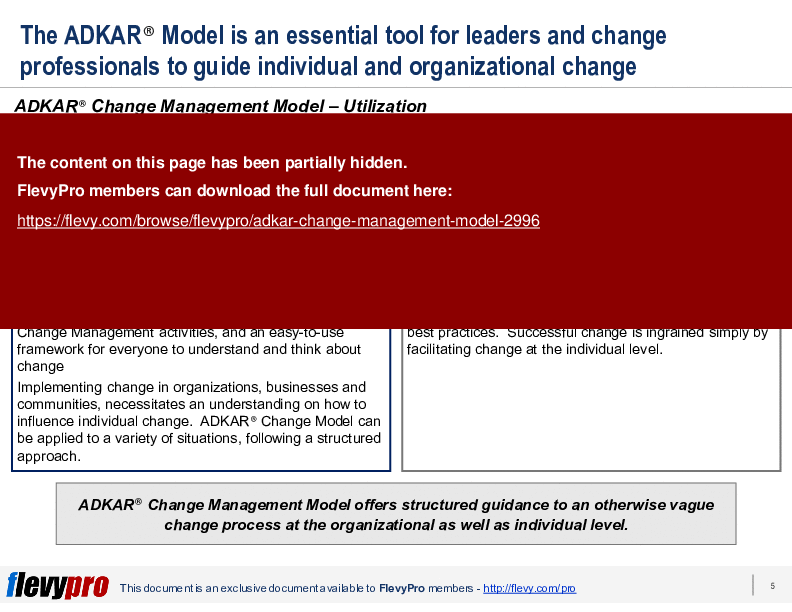
The ADKAR® Change Management Model offers structured guidance to an otherwise vague change process at the organizational as well as individual level. It delineates an individual’s successful journey through change, aligning naturally with standard Change Management activities. The model provides direction to help plan for change effectively, detailing each step with specific activities associated with leading change.
Implementing change in organizations, businesses, and communities necessitates an understanding of how to influence individual change. The ADKAR® Change Model can be applied to a variety of situations, following a structured approach. Successful change is ingrained by facilitating change at the individual level, ensuring all stakeholders are aligned and committed to the change process.
ADKAR names 5 sequential building blocks for individual change: Awareness (of the need), Desire (to participate), Knowledge (how to change), Ability (capacity to implement), and Reinforcement (sustainment). The model was developed by Jeff Hiatt of Prosci and is structured around these 5 elements.
How does ADKAR address individual versus organizational change?
ADKAR distinguishes 2 concurrent dimensions: people and business. It focuses on influencing individual behavior (the people dimension) while aligning organizational processes (the business dimension), emphasizing that both must evolve together to sustain results across individuals and the organization’s systems and processes.
In what order should ADKAR be applied during a change program?
ADKAR is applied sequentially: begin by creating Awareness, then build Desire, provide Knowledge, develop Ability, and conclude with Reinforcement to sustain change. The sequence is designed to follow an individual’s progression through change and to guide targeted interventions across the 5 elements.
How can ADKAR be used to plan change activities?
Use ADKAR to map specific activities to each element—communications for Awareness, sponsorship for Desire, training for Knowledge, coaching for Ability, and reward/measurement for Reinforcement—so that plans address where individuals are along the change journey and which activities are needed at each of the 5 elements.
What should I look for when choosing an ADKAR presentation or template?
Look for a template that clearly maps content to the 5 ADKAR elements, provides suggested activities for each element, is authored or aligned with Prosci principles, and matches your delivery format needs (e.g., PPTX). An example is Flevy's ADKAR Change Management Model: a 16-slide PPTX by LearnPPT Consulting.
Are paid ADKAR templates worth buying versus free resources?
Evaluate templates by whether they translate ADKAR into actionable steps for Awareness, Desire, Knowledge, Ability, and Reinforcement, include ready-to-use slides and tools, and match your timeline and team capability. For reference, Flevy’s offering is a 16-slide PPTX by LearnPPT Consulting that maps ADKAR elements into slide content.
I need to increase adoption of a new IT system—which ADKAR elements should I focus on first?
Adoption typically begins with Awareness (why the system is needed) and Desire (motivation to use it), followed by Knowledge (how to use it) and Ability (hands-on competence), and ending with Reinforcement (ongoing support and measurement). Prioritize Awareness and Desire early in the rollout.
After a merger, employees resist new processes—which ADKAR step addresses resistance?
Resistance often reflects gaps in Desire (willingness to support the change) and Knowledge (understanding of new processes). ADKAR helps identify which element is weak so interventions—sponsorship and communications for Desire, training for Knowledge—can be targeted to those elements.
This PPT slide contrasts 2 dimensions of change management: organizational and people dimensions. The organizational dimension focuses on tangible aspects, outlining steps for implementing a new solution: identifying business needs, defining project scope, designing the solution, developing processes, and implementing the solution. This structured approach aligns with standard project management practices. The people dimension emphasizes human factors, highlighting effective change management practices that engage employees, critical for project success. The slide introduces the ADKAR® model, which outlines 5 key elements for managing change: awareness, desire, knowledge, ability, and reinforcement. Balancing both dimensions is essential for successful change initiatives, as neglecting the people dimension can lead to resistance and project failure.

Organizations must address 2 dimensions of change: the organizational side and the people side. Successful change initiatives require simultaneous focus on both areas. The ADKAR model provides a framework for managing change, highlighting 5 key elements on the people side: Awareness, Desire, Knowledge, Ability, and Reinforcement. Each element is essential for individual transitions during the change process. The organizational side consists of phases: Business need, Concept & design, Implementation, and Post implementation. This structured approach ensures alignment between organizational frameworks and individual experiences. Both dimensions are interconnected and must be managed together for successful transformation.

This PPT slide outlines the application of the ADKAR Model in organizational change, focusing on Awareness and Desire. Effective change requires employee awareness of its necessity; without it, implementation may lack interest and commitment. Clear communication from leadership about the drawbacks of existing systems and the benefits of new software is essential. Awareness campaigns can foster positive employee responses. The Desire component emphasizes that employees must genuinely want to engage in the change process. Skepticism about the change's value can hinder progress, making supervisors vital in addressing concerns and clarifying benefits. Personal motivation among employees is key to successful change initiatives, as individuals must decide to participate based on personal reasons.
The ADKAR Change Management Model outlines 5 critical components for successful change implementation: Awareness, Desire, Knowledge, Ability, and Reinforcement. Awareness emphasizes the necessity for stakeholders to understand the reasons behind the change, serving as the foundation for organizational change. Desire focuses on stakeholders' willingness to engage with and support the change, fostering a positive attitude to overcome resistance. Knowledge highlights the need for stakeholders to understand the change process and its objectives, linked to training and coaching. Ability stresses the importance of developing new skills for effective change implementation. Reinforcement ensures ongoing support and recognition to sustain change, focusing on measuring adoption and providing corrective actions as needed. Each element is interdependent and essential for achieving successful outcomes.
Source: Best Practices in Change Management, ADKAR, Prosci PowerPoint Slides: ADKAR Change Management Model PowerPoint (PPTX) Presentation Slide Deck, LearnPPT Consulting
This document is part of the FlevyPro Library, a curated knowledge base of documents for our FlevyPro subscribers.
FlevyPro is a subscription service for on-demand business frameworks and analysis tools. FlevyPro subscribers receive access to an exclusive library of curated business documents—business framework primers, presentation templates, Lean Six Sigma tools, and more—among other exclusive benefits.
The average daily rate of a McKinsey consultant is $6,625 (not including expenses). The average price of a Flevy document is $65.
Trusted by over 10,000+ Client Organizations
Since 2012, we have provided business templates to over 10,000 businesses and organizations of all sizes, from startups and small businesses to the Fortune 100, in over 130 countries.
"As an Independent Management Consultant, I find Flevy to add great value as a source of best practices, templates and information on new trends. Flevy has matured and the quality and quantity of the library is excellent. Lastly the price charged is reasonable, creating a win-win value for
the customer, Flevy and the various authors. This is truly a service that benefits the consulting industry and associated clients. Thanks for providing this service.
"
– Jim Schoen, Principal at FRC Group
"I am extremely grateful for the proactiveness and eagerness to help and I would gladly recommend the Flevy team if you are looking for data and toolkits to help you work through business solutions."
– Trevor Booth, Partner, Fast Forward Consulting
"Last Sunday morning, I was diligently working on an important presentation for a client and found myself in need of additional content and suitable templates for various types of graphics. Flevy.com proved to be a treasure trove for both content and design at a reasonable price, considering the time I
saved. I encountered a download issue during the ordering process. However, a quick email to Flevy's support team, even on a Sunday (!!!), resulted in assistance within less than an hour, allowing me to download the content I needed. Fantastic job, Flevy! I give 5 stars for both content/price and customer service. Thank you!
"
– M. E., Chief Commercial Officer, International Logistics Service Provider
"As a niche strategic consulting firm, Flevy and FlevyPro frameworks and documents are an on-going reference to help us structure our findings and recommendations to our clients as well as improve their clarity, strength, and visual power. For us, it is an invaluable resource to increase our impact and value."
– David Coloma, Consulting Area Manager at Cynertia Consulting
"If you are looking for great resources to save time with your business presentations, Flevy is truly a value-added resource. Flevy has done all the work for you and we will continue to utilize Flevy as a source to extract up-to-date information and data for our virtual and onsite presentations!"
– Debbi Saffo, President at The NiKhar Group
"The wide selection of frameworks is very useful to me as an independent consultant. In fact, it rivals what I had at my disposal at Big 4 Consulting firms in terms of efficacy and organization."
– Julia T., Consulting Firm Owner (Former Manager at Deloitte and Capgemini)
"FlevyPro has been a brilliant resource for me, as an independent growth consultant, to access a vast knowledge bank of presentations to support my work with clients. In terms of RoI, the value I received from the very first presentation I downloaded paid for my subscription many times over! The
quality of the decks available allows me to punch way above my weight – it's like having the resources of a Big 4 consultancy at your fingertips at a microscopic fraction of the overhead.
"
– Roderick Cameron, Founding Partner at SGFE Ltd
"One of the great discoveries that I have made for my business is the Flevy library of training materials.
As a Lean Transformation Expert, I am always making presentations to clients on a variety of topics: Training, Transformation, Total Productive Maintenance, Culture, Coaching, Tools, Leadership Behavior, etc. Flevy
It is well worth the money to purchase these presentations. Sure, I have the knowledge and information to make my point. It is another thing to create a presentation that captures what I want to say. Flevy has saved me countless hours of preparation time that is much better spent with implementation that will actually save money for my clients.
"
– Ed Kemmerling, Senior Lean Transformation Expert at PMG
Download our free compilation of 50+ slides and templates on Organizational Design, Change Management, and Corporate Culture. Methodologies include ADKAR, Burke-Litwin Change Model, McKinsey 7-S, Competing Values Framework, etc.