
Designed by a firm of ex-consultants from McKinsey, E&Y, and Bearing Point, this presentation discusses how to build an enduring Corporate Vision, based on a classic Harvard Business Review publication by Collins and Porras.
Editor Summary
Building an Enduring Corporate Vision is a 45-slide PowerPoint presentation by PPT Lab, designed by a firm of ex-consultants from McKinsey, E&Y, and Bearing Point, that explains Collins and Porras’ Core Ideology and Envisioned Future framework.
Read moreSections include Core Ideology (page 9), Envisioned Future (page 24), Case Example (page 35), and Templates (page 37). Includes Yin Yang Diagram, Five Whys, Mars Group, BHAG framework, Vivid Description, and Case Example templates. Sold as a digital download on Flevy with immediate digital download, used by corporate executives, integration leaders, consultants, and strategy teams for strategic planning and vision workshops.
Use this deck when leadership must define, renew, or align a long-term organizational vision—typical triggers include strategic planning cycles, post-merger integration, or leadership alignment workshops.
Corporate executives drafting Core Values and Core Purpose using the Core Ideology slides and Yin Yang Diagram to codify enduring character.
Integration leaders aligning acquired teams by running the Mars Group exercise and consolidating unified BHAGs.
Consultants facilitating workshops that apply the Five Whys to surface purpose and craft vivid descriptions.
Strategy teams translating long-term ambitions into BHAGs and narrative-driven Envisioned Futures for planning.
The two-step focus—first defining Core Ideology, then crafting an Envisioned Future with BHAGs and vivid descriptions—reflects the structured, hypothesis-driven problem-solving practiced at McKinsey, Bain, and BCG.
Building an Enduring Corporate Vision: Core Ideology and Envisioned Future
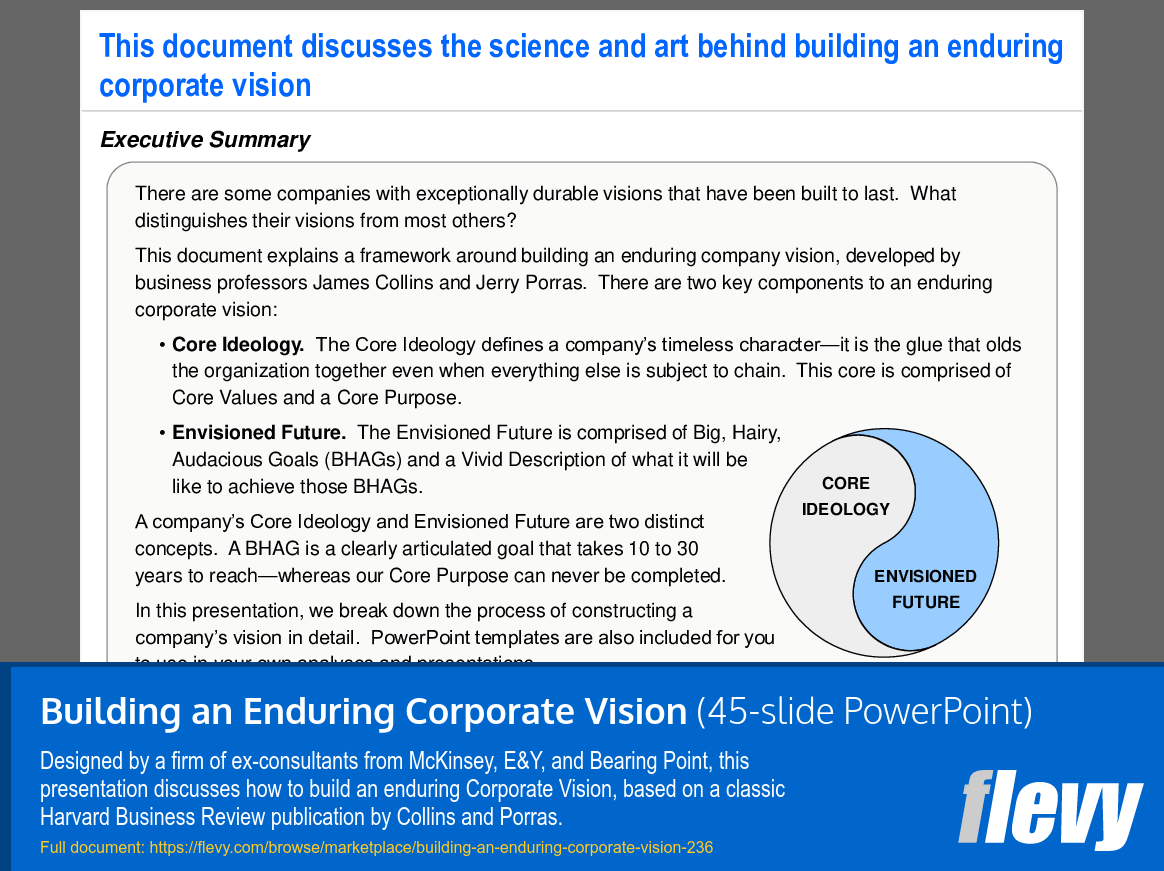
There are some companies with exceptionally durable visions that have been built to last. What distinguishes their visions from most others?
This document explains a framework around building an enduring company vision, developed by business professors James Collins and Jerry Porras. There are two key components to an enduring corporate vision:
*Core Ideology. The Core Ideology defines a company's timeless character—it is the glue that olds the organization together even when everything else is subject to chain. This core is comprised of Core Values and a Core Purpose.
*Envisioned Future. The Envisioned Future is comprised of Big, Hairy, Audacious Goals (BHAGs) and a Vivid Description of what it will be like to achieve those BHAGs.
A company's Core Ideology and Envisioned Future are two distinct concepts. A BHAG is a clearly articulated goal that takes 10 to 30 years to reach—whereas our Core Purpose can never be completed.
In this presentation, we break down the process of constructing a company?s vision in detail. PowerPoint templates are also included for you to use in your own analyses and presentations.
This document also includes comprehensive examples of enduring companies with well-defined core values and purposes. These examples serve as benchmarks, showcasing how leading organizations have successfully articulated and embedded their ideologies into their corporate fabric. The case studies provide actionable insights and practical applications, making it easier for you to translate theory into practice within your own organization.
The presentation is structured to guide you through the entire process, from understanding the foundational concepts to implementing them effectively. It includes detailed templates for crafting your own corporate vision, ensuring you have the tools needed to facilitate strategic discussions and workshops. This resource is essential for any executive looking to solidify their company's long-term vision and drive sustainable success.
Got a question about the product? Email us at support@flevy.com or ask the author directly by using the "Ask the Author a Question" form. If you cannot view the preview above this document description, go here to view the large preview instead.
MARCUS OVERVIEW
This synopsis was written by Marcus [?] based on the analysis of the full 45-slide presentation.
Executive Summary
This presentation, "Building an Enduring Corporate Vision," is designed to guide organizations in constructing a lasting corporate vision grounded in the principles outlined by business professors James Collins and Jerry Porras. It offers a McKinsey, Bain, or BCG-quality framework (consulting-grade; not affiliated) that emphasizes the importance of Core Ideology and Envisioned Future. The presentation equips executives with actionable insights and PowerPoint templates to articulate their corporate vision effectively, ensuring alignment with both timeless values and ambitious long-term goals.
Who This Is For and When to Use
• Corporate executives looking to define or refine their organization's vision
• Integration leaders responsible for aligning teams around a unified corporate direction
• Consultants assisting clients in developing a sustainable corporate vision
• Strategy teams focused on long-term planning and organizational alignment
Best-fit moments to use this deck:
• During strategic planning sessions to establish or revisit the corporate vision
• In workshops aimed at aligning leadership around Core Ideology and Envisioned Future
• When preparing for stakeholder presentations to communicate the corporate vision
Learning Objectives
• Define Core Ideology and its significance in organizational culture
• Build an Envisioned Future that aligns with long-term strategic goals
• Establish Big, Hairy, Audacious Goals (BHAGs) to drive organizational momentum
• Create a vivid description that inspires and motivates stakeholders
• Utilize templates to facilitate the articulation of corporate vision
• Apply the Five Whys technique to uncover deeper organizational purpose
Table of Contents
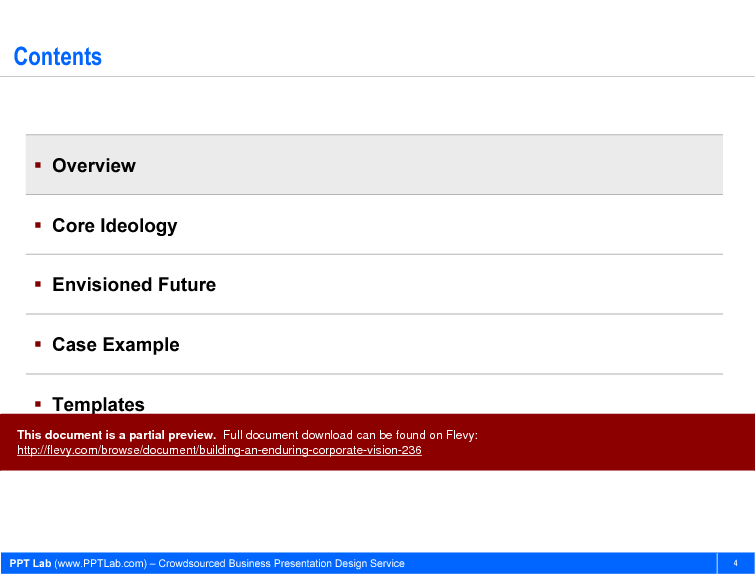
• Overview (page 4)
• Core Ideology (page 9)
• Envisioned Future (page 24)
• Case Example (page 35)
• Templates (page 37)
Primary Topics Covered
• Core Ideology - Defines the timeless character of an organization, encompassing Core Values and Core Purpose that guide decision-making and inspire commitment.
• Envisioned Future - Outlines the aspirational goals of the organization, including BHAGs and a vivid description of the desired future state.
• Big, Hairy, Audacious Goals (BHAGs) - Strategic goals that are bold and challenging, designed to unify efforts and stimulate progress over a 10 to 30-year horizon.
• Vivid Description - A compelling narrative that makes the BHAG tangible and engaging, fostering emotional connection among stakeholders.
• Mars Group Exercise - A method for identifying Core Values by selecting key representatives who embody the organization's essence.
• Five Whys Technique - A questioning method used to delve deeper into the organization's Core Purpose, ensuring clarity and alignment with its mission.
Deliverables, Templates, and Tools
• Yin Yang Diagram template illustrating the relationship between Core Ideology and Envisioned Future
• Case Example template for documenting organizational vision components
• Five Whys template to facilitate exploration of Core Purpose
• Mars Group template for identifying key representatives and their values
• BHAG framework template to outline ambitious organizational goals
• Vivid Description template to craft engaging narratives around the envisioned future
Slide Highlights
• Overview slide defining the framework for building an enduring corporate vision
• Core Ideology slide detailing the components of Core Values and Core Purpose
• Envisioned Future slide outlining the significance of BHAGs and vivid descriptions
• Case Example slide showcasing Sony's vision in the 1950s as a practical illustration
• Template slides for practical application, including the Yin Yang Diagram and Five Whys
Potential Workshop Agenda
Defining Core Ideology (90 minutes)
• Discuss the importance of Core Values and Core Purpose
• Conduct the Mars Group exercise to identify key representatives
• Draft initial statements of Core Ideology
Crafting the Envisioned Future (90 minutes)
• Define BHAGs and their role in organizational strategy
• Develop a vivid description that aligns with the BHAGs
• Share and refine descriptions among participants
Customization Guidance
• Tailor the Core Values and Core Purpose statements to reflect the unique culture of your organization
• Adjust the BHAGs to align with specific industry challenges and opportunities
• Incorporate organizational terminology and metrics into the templates provided
Secondary Topics Covered
• The distinction between Core Ideology and strategic goals
• The role of vision in guiding organizational change and continuity
• Examples of enduring companies and their successful Core Ideologies
• Techniques for engaging stakeholders in the vision-building process
Topic FAQ
What are the main components of an enduring corporate vision?
An enduring corporate vision consists of Core Ideology and an Envisioned Future. Core Ideology includes Core Values and a Core Purpose that guide behavior; Envisioned Future comprises Big, Hairy, Audacious Goals (BHAGs) and a Vivid Description that make the future tangible. The framework centers on Core Ideology and BHAGs with a 10–30 year horizon.
How do you define and use a BHAG in strategic planning?
A BHAG is a bold, long-term organizational goal intended to unify effort and provide a focal ambition. BHAGs are designed to be achieved over a multi-decade timeframe and to stimulate progress; they should be paired with a Vivid Description to make the objective emotionally engaging and concrete over a 10–30 year horizon.
How can the Five Whys technique help uncover a company's core purpose?
The Five Whys is a structured questioning method to probe underlying motivations, helping teams move beyond surface statements to a deeper Core Purpose. Used in facilitated workshops, it supports alignment between stated values and actual drivers; the presentation includes a Five Whys template to guide that analysis.
What is the Mars Group exercise and how does it identify core values?
The Mars Group exercise involves selecting representative individuals who embody the organization’s essence and examining their behaviors to surface recurrent principles. By discussing concrete examples from these representatives, teams can articulate Core Values that reflect lived organizational character via the Mars Group exercise.
What should I look for when buying a corporate vision toolkit?
Buyers should look for materials that separate Core Ideology from strategic goals and provide practical templates: Core Values/Core Purpose tools, BHAG frameworks, Vivid Description templates, Five Whys facilitation guides, Mars Group exercises, case examples, and a sample workshop agenda. For example, Flevy's Building an Enduring Corporate Vision includes these templates and case examples.
How much time should I allocate for running corporate vision workshops?
A sample agenda in the presentation suggests allocating focused blocks for each major activity, for example 2 workshop segments of about 90 minutes each: one for defining Core Ideology and running the Mars Group exercise, and another for crafting BHAGs and Vivid Descriptions, namely 2 90-minute sessions.
After a merger, how can we align leadership around a single vision?
Start by facilitating Core Ideology discussions to surface shared Core Values and a unified Core Purpose, use the Mars Group exercise to surface representative behaviors, apply the Five Whys to align on purpose, then co-create BHAGs and a Vivid Description to communicate the future; Flevy's Building an Enduring Corporate Vision provides Mars Group and Five Whys templates.
How do you turn a BHAG into a vivid description stakeholders can rally behind?
Translate the BHAG into a sensory, story-like narrative that describes what success will look and feel like for customers, employees, and investors; use examples and artifacts from enduring companies to ground the story. The presentation provides a Vivid Description template and a Sony case example to illustrate the approach.
Document FAQ
These are questions addressed within this presentation.
What is Core Ideology?
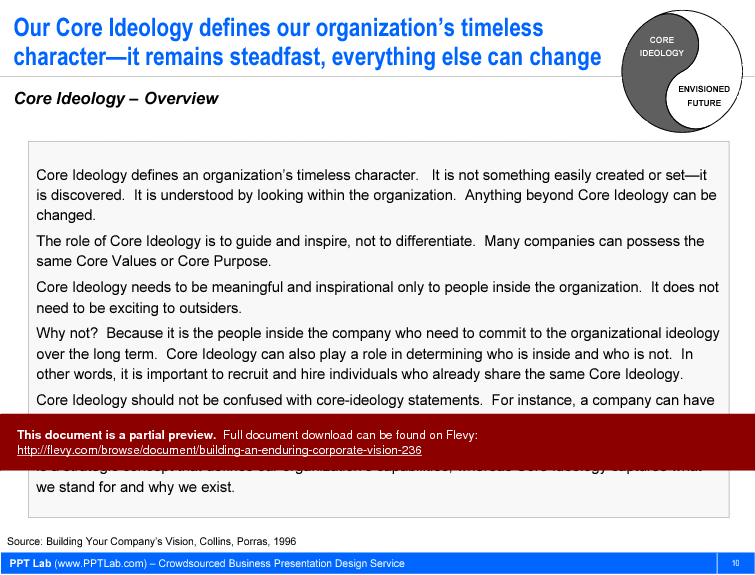
Core Ideology defines the timeless character of an organization, consisting of Core Values and Core Purpose that guide its actions and decisions.
How do I define a BHAG?
A BHAG is a bold, long-term goal that serves as a unifying focal point for the organization, typically requiring 10 to 30 years to achieve.
What is the purpose of a Vivid Description?
A Vivid Description translates the BHAG into an engaging narrative that inspires and motivates stakeholders by painting a clear picture of the desired future.
How can the Five Whys technique help?
The Five Whys technique helps uncover the deeper motivations behind the organization's existence, ensuring alignment with its Core Purpose.
What is the Mars Group exercise?
The Mars Group exercise involves selecting key representatives who embody the organization's values, helping to articulate its Core Values effectively.
How can I customize the templates provided?
Templates can be tailored by incorporating specific organizational terminology, metrics, and cultural elements to ensure relevance and alignment.
What are some examples of enduring companies?
Examples include 3M, Hewlett-Packard, and Walt Disney, each with a well-defined Core Purpose that transcends specific products or services.
Why is it important to differentiate between Core Ideology and strategic goals?
Understanding this distinction ensures that the organization maintains its foundational values while adapting its strategies to meet changing market conditions.
Glossary
• Core Ideology - The enduring character of an organization, comprising Core Values and Core Purpose.
• Core Values - Essential principles that guide an organization's behavior and decision-making.
• Core Purpose - The fundamental reason for an organization's existence, reflecting its idealistic motivations.
• Envisioned Future - The aspirational state of the organization, including BHAGs and vivid descriptions.
• BHAG - Big, Hairy, Audacious Goal; a bold, long-term organizational goal.
• Vivid Description - A compelling narrative that illustrates the desired future state associated with the BHAG.
• Mars Group - An exercise for identifying key representatives who embody the organization's values.
• Five Whys - A technique for exploring the deeper motivations behind an organization's purpose.
• Consulting-Grade - High-quality, professional presentation standards typically associated with top consulting firms.
• Stakeholders - Individuals or groups with an interest in the organization's success, including employees, customers, and investors.
• Vision - A structured definition of what an organization aspires to achieve in the future.
• Strategic Goals - Specific, measurable objectives that guide an organization's efforts toward achieving its vision.
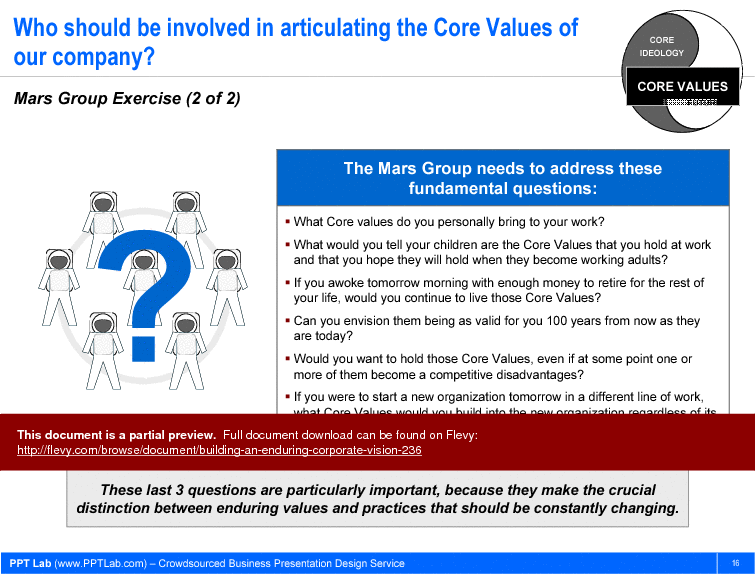
This PPT slide introduces the Mars Group methodology for exploring an organization's Core Purpose. It emphasizes engaging team members in a reflective process to uncover intrinsic motivations. Two key questions facilitate this exploration: first, how would individuals frame the company's purpose without financial concerns, and second, what sense of purpose would inspire ongoing commitment, aligning personal values with organizational goals. The collaborative approach suggested by visual elements indicates contributions from all levels, reinforcing that dedication arises from voluntary commitment to the mission, as highlighted by Peter Drucker. Fostering a culture of inquiry can enhance workforce engagement and alignment, leading to a deeper understanding of the organization's identity and effectiveness.
This PPT slide presents a framework for selecting representatives to define an organization’s core values, which can vary by size, age, and geography. It introduces the "Mars Group" exercise, a thought experiment where participants envision recreating their organization's attributes on another planet with 5 to 7 representatives. This limitation encourages critical thinking about who embodies the organization's essence and values. The selected group should consist of highly credible individuals who understand and can effectively communicate the organization’s core principles. This strategic approach engages stakeholders in articulating core values, aligning the organization’s identity with its operational practices.
This PPT slide presents a framework for articulating a corporate vision through 2 key components: Core Ideology and Envisioned Future. Core Ideology represents the organization's core values and purpose, providing stability and identity. It is characterized as the "yin" of the diagram. The Envisioned Future, the "yang," outlines long-term aspirations within a 10 to 30-year timeframe, emphasizing the importance of a vivid description for motivating stakeholders. This component is linked to the concept of a BHAG—Big Hairy Audacious Goal—representing a significant challenge requiring substantial effort to achieve. The interplay between these components is critical for a cohesive corporate vision, aligning strategic initiatives with core beliefs and long-term aspirations.
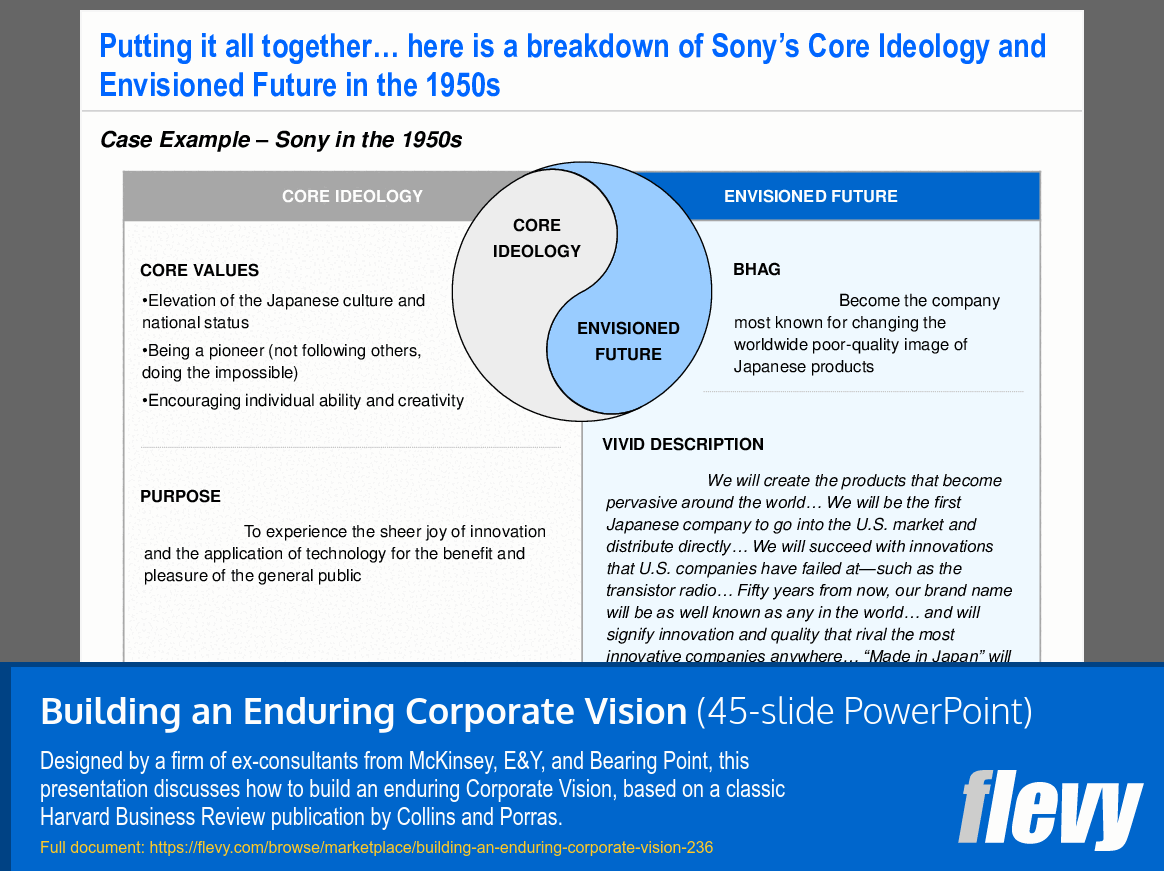
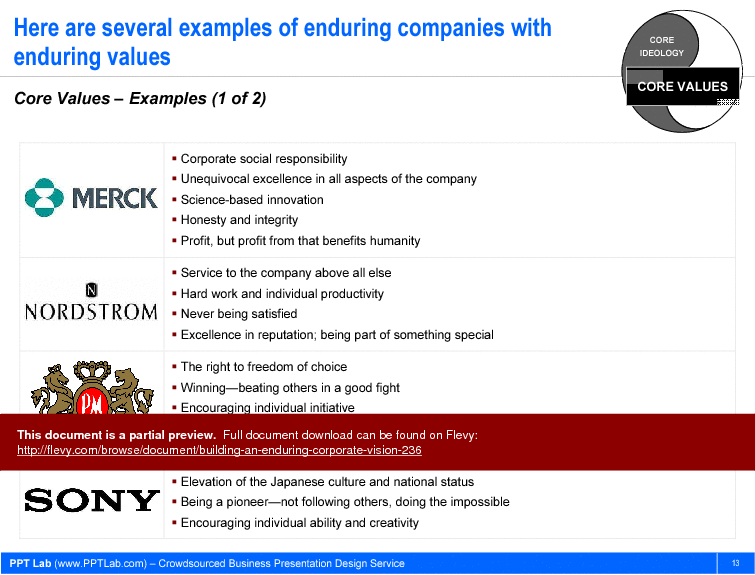
This PPT slide outlines Sony's core ideology and envisioned future from the 1950s, focusing on foundational values that elevate Japanese culture and innovation. Sony aims to achieve the impossible, fostering individual creativity to enhance public enjoyment through technological advancements. The Big Hairy Audacious Goal (BHAG) is to transform global perceptions of Japanese products, addressing quality stigma and redefining brand image internationally. The Vivid Description details plans for widely adopted products and direct entry into the U.S. market, emphasizing innovation exemplified by products like the transistor radio. This strategic vision intertwines cultural pride with a relentless pursuit of excellence, showcasing how foundational ideologies drive future aspirations.
This PPT slide presents a framework for understanding an organization's core ideology, which consists of Core Values and Core Purpose. Core Values are intrinsic guiding principles that direct a company, remaining constant despite market changes. A successful organization adapts its market strategies while upholding these Core Values. Core Purpose defines the organization's fundamental reason for existence, reflecting the deeper motivations of employees rather than current offerings. The visual structure connects Core Values and Core Purpose under "Core Ideology," emphasizing their interrelation in defining organizational identity. The concept of an "Envisioned Future" highlights the aspirational aspect of this ideology, essential for strategic planning and long-term success.
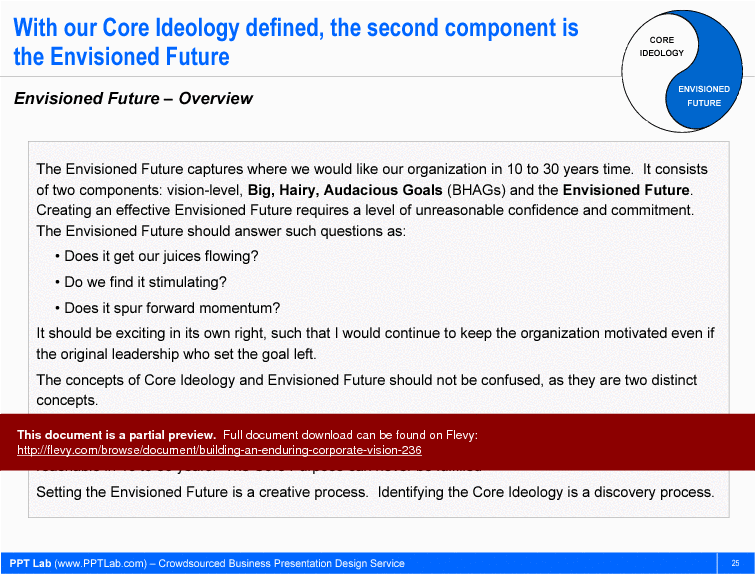
The concept of an "Envisioned Future" consists of 2 key components: a Vision-level BHAG (Big Hairy Audacious Goal) and a Vivid Description. The Vision-level BHAG serves as a strategic tool to stimulate organizational progress, characterized by its uniqueness and significant challenge compared to typical objectives. A true BHAG is clear, compelling, and acts as a guiding star, motivating teams toward ambitious outcomes. The Vivid Description provides an engaging narrative that illustrates the achievement of BHAGs, translating abstract goals into tangible terms for stakeholders. This dual approach enhances emotional resonance and fosters connection among team members, making it a powerful framework for driving transformation and achieving significant milestones.
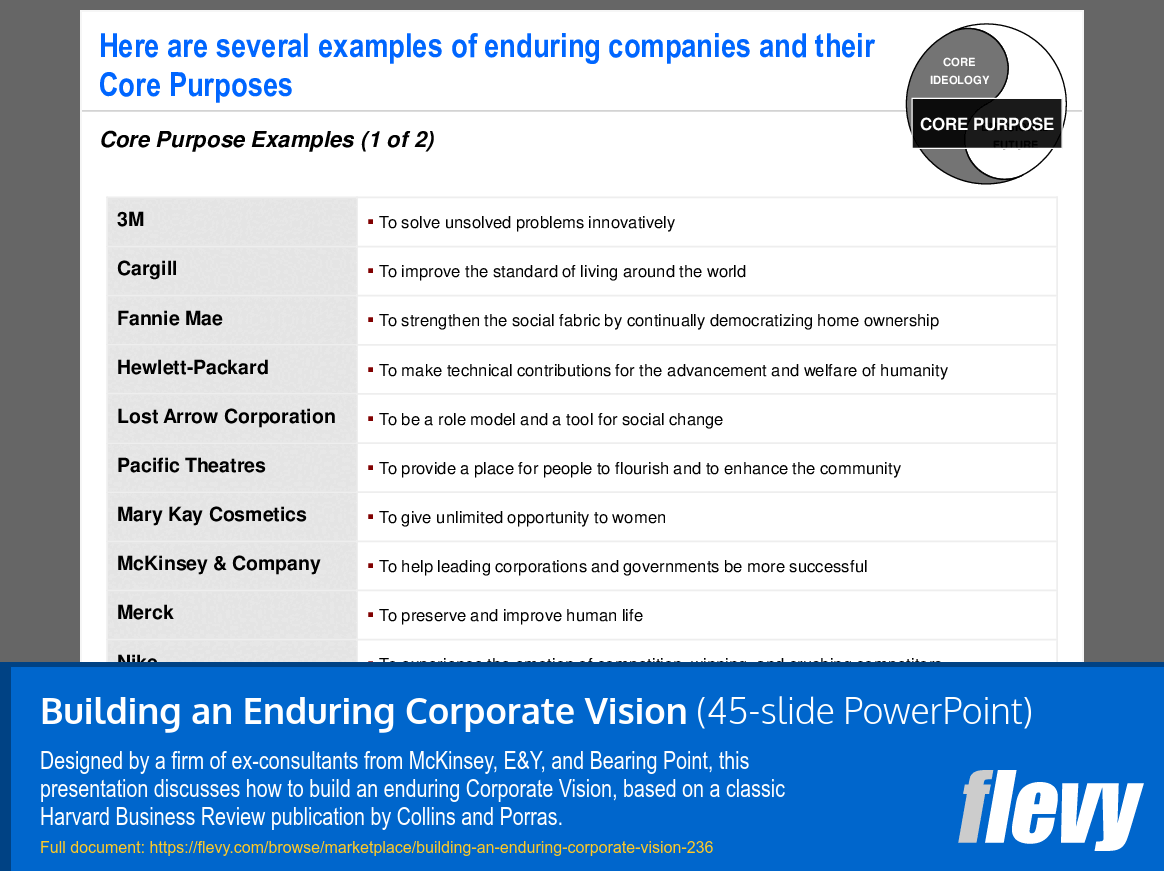
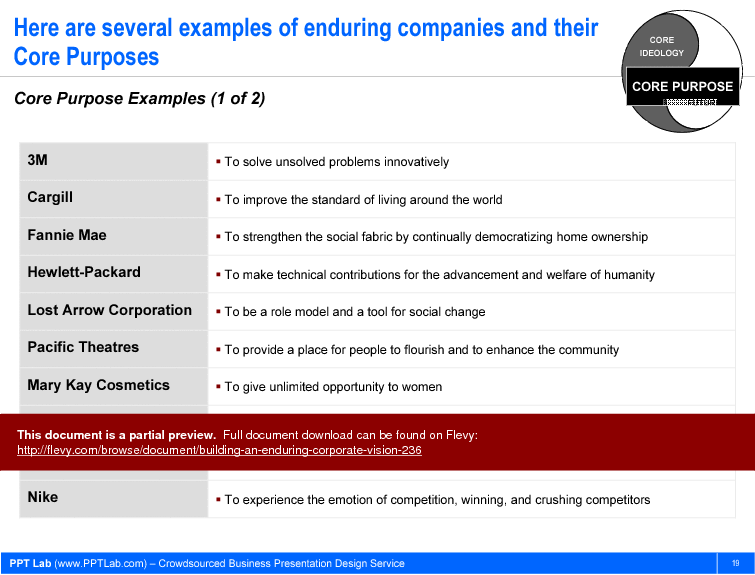
This PPT slide presents core purposes from various enduring companies, illustrating how they define their missions. 3M emphasizes innovative problem-solving, while Cargill focuses on improving global living standards. Fannie Mae centers on social equity through home ownership, and Hewlett-Packard highlights technological advancement for humanity's welfare. Lost Arrow Corporation promotes social change, and Pacific Theatres enhances community well-being. Mary Kay Cosmetics is dedicated to empowering women, while McKinsey & Company aids corporations and governments in achieving success. Merck's mission focuses on preserving human life, and Nike emphasizes creativity and inspiration. These examples demonstrate how a clearly defined core purpose guides company strategy and resonates with stakeholders.
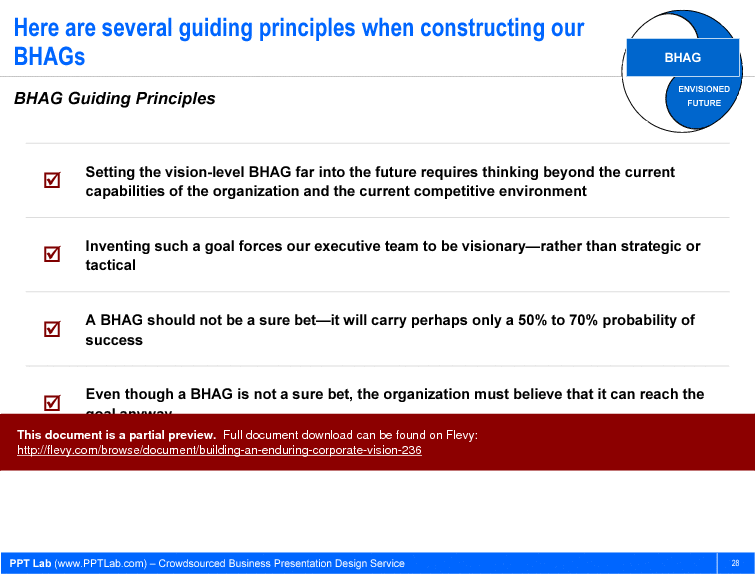
A BHAG, or Big Hairy Audacious Goal, is a strategic business statement that defines a significant medium to long-term objective for an organization. Characterized as audacious yet achievable, a true BHAG serves as a clear and compelling focal point, unifying efforts and motivating individuals. It must have a definitive endpoint, enabling the organization to recognize goal achievement. A BHAG should energize and engage team members, fostering ownership and commitment through clarity and accessibility. In contrast to typical corporate statements, a well-crafted BHAG inspires and drives momentum, emphasizing the need for organizations to establish ambitious and engaging goals that resonate deeply with their teams.
This PPT slide defines "vision" in an organizational context, contrasting vague conventional definitions with a structured framework. It identifies 2 core components: Core Ideology and Envisioned Future. Core Ideology reflects foundational values and beliefs, while Envisioned Future articulates the desired future state. The slide breaks down Core Ideology into Deeply Held Values, Outstanding Achievements, Exhilarating Goals, Societal Bonds, and Motivating Forces. This structured approach guides organizations in refining their vision statements, moving beyond ambiguity to create a clear articulation that fosters alignment and engagement among stakeholders.
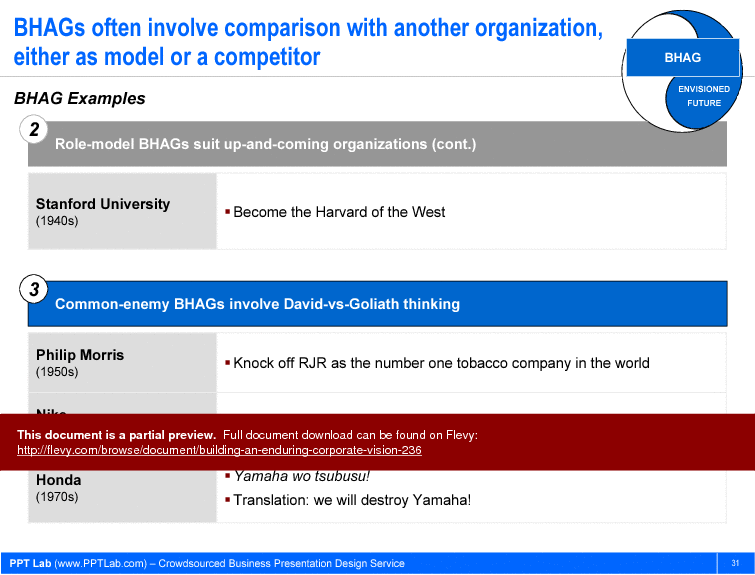
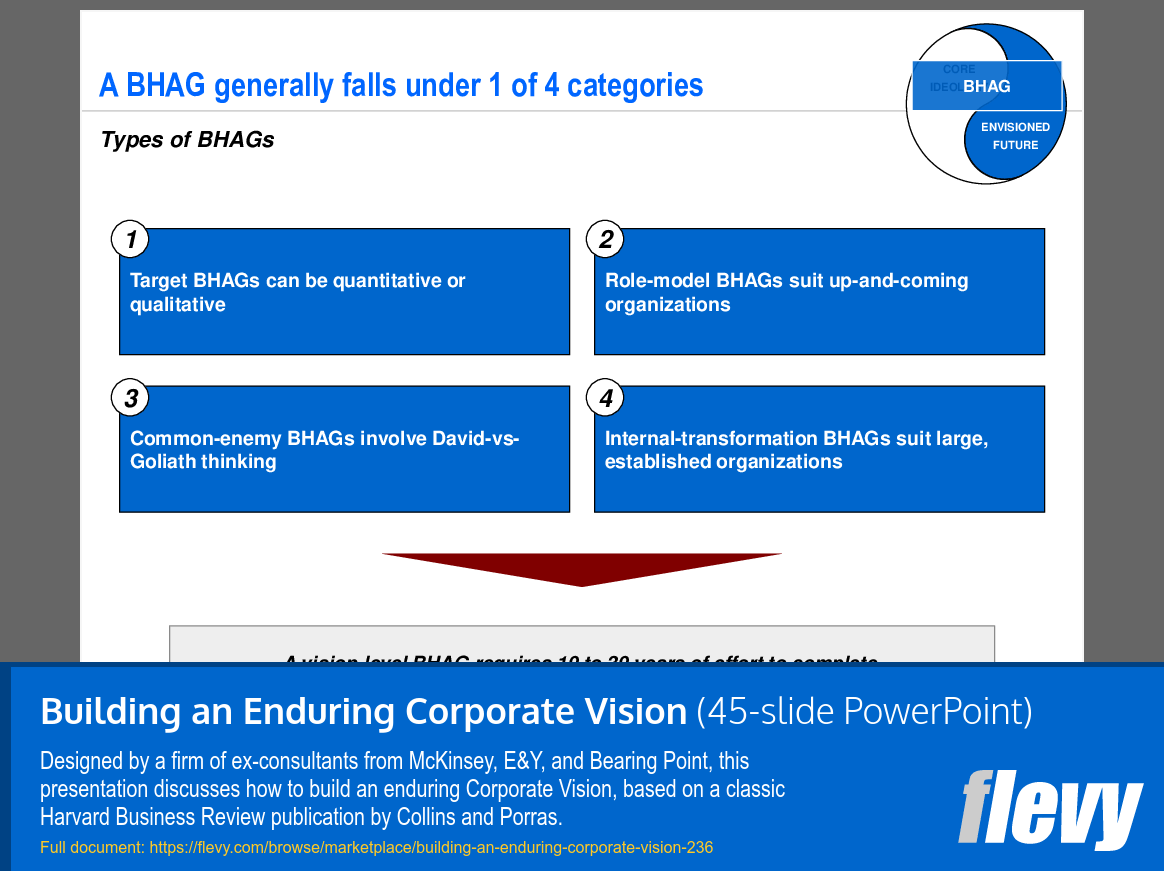
A BHAG, or Big Hairy Audacious Goal, is categorized into 4 types: Target, Role-model, Common-enemy, and Internal-transformation BHAGs. Target BHAGs focus on measurable objectives or aspirational benchmarks, allowing organizations to tailor goals to specific contexts. Role-model BHAGs inspire emerging organizations by emulating successful practices from industry leaders. Common-enemy BHAGs unite teams against perceived threats, fostering camaraderie and purpose. Internal-transformation BHAGs push large organizations toward significant internal changes in a rapidly evolving market. Achieving a vision-level BHAG typically requires a 10 to 20-year commitment, essential for implementing transformative changes. Understanding these categories helps executives align BHAGs with strategic objectives and cultivate a culture of ambition.
This PPT slide outlines the "Five Whys Exercise," a method for uncovering an organization's core purpose. It begins with a clear statement about the organization's purpose, such as "We make X products," serving as a foundation for deeper inquiry. Participants are prompted to ask "Why is that important?" 5 times, revealing fundamental motivations and fostering a deeper understanding of organizational identity. The Five Whys method is versatile and applicable across industries, helping companies articulate their purpose beyond short-term financial objectives like maximizing shareholder value. This distinction supports a long-term vision that engages both internal stakeholders and the market, aligning strategic initiatives with a purpose that transcends profitability.
Source: Best Practices in Mission, Vision, Values PowerPoint Slides: Building an Enduring Corporate Vision PowerPoint (PPT) Presentation Slide Deck, PPT Lab
Designed by a firm of ex-consultants from McKinsey, E&Y, and Bearing Point, this presentation discusses how to build an enduring Corporate Vision, based on a classic Harvard Business Review publication by Collins and Porras.
PPT Lab is a presentation design firm specializing in business frameworks and PowerPoint templates. Our team is comprised of ex-consultants from McKinsey, E&Y, Bearing Point, and boutique consulting firms. We have worked with hundreds of clients globally, ranging from mid-size manufacturing companies to global Fortune 500 conglomerates.
All of our documents are of the
... [read more] same quality produced by top-tier consulting firms and utilize the Consulting Presentation Framework.
The average daily rate of a McKinsey consultant is $6,625 (not including expenses). The average price of a Flevy document is $65.
Trusted by over 10,000+ Client Organizations
Since 2012, we have provided business templates to over 10,000 businesses and organizations of all sizes, from startups and small businesses to the Fortune 100, in over 130 countries.
"Last Sunday morning, I was diligently working on an important presentation for a client and found myself in need of additional content and suitable templates for various types of graphics. Flevy.com proved to be a treasure trove for both content and design at a reasonable price, considering the time I
saved. I encountered a download issue during the ordering process. However, a quick email to Flevy's support team, even on a Sunday (!!!), resulted in assistance within less than an hour, allowing me to download the content I needed. Fantastic job, Flevy! I give 5 stars for both content/price and customer service. Thank you!
"
– M. E., Chief Commercial Officer, International Logistics Service Provider
"As a consultant requiring up to date and professional material that will be of value and use to my clients, I find Flevy a very reliable resource.
The variety and quality of material available through Flevy offers a very useful and commanding source for information. Using Flevy saves me time, enhances my expertise and ends up being a good decision."
– Dennis Gershowitz, Principal at DG Associates
"The wide selection of frameworks is very useful to me as an independent consultant. In fact, it rivals what I had at my disposal at Big 4 Consulting firms in terms of efficacy and organization."
– Julia T., Consulting Firm Owner (Former Manager at Deloitte and Capgemini)
"If you are looking for great resources to save time with your business presentations, Flevy is truly a value-added resource. Flevy has done all the work for you and we will continue to utilize Flevy as a source to extract up-to-date information and data for our virtual and onsite presentations!"
– Debbi Saffo, President at The NiKhar Group
"Flevy.com has proven to be an invaluable resource library to our Independent Management Consultancy, supporting and enabling us to better serve our enterprise clients.
The value derived from our [FlevyPro] subscription in terms of the business it has helped to gain far exceeds the investment made, making a subscription a no-brainer for any growing consultancy – or in-house strategy team."
– Dean Carlton, Chief Transformation Officer, Global Village Transformations Pty Ltd.
"My FlevyPro subscription provides me with the most popular frameworks and decks in demand in today’s market. They not only augment my existing consulting and coaching offerings and delivery, but also keep me abreast of the latest trends, inspire new products and service offerings for my practice, and educate me
in a fraction of the time and money of other solutions. I strongly recommend FlevyPro to any consultant serious about success.
"
– Bill Branson, Founder at Strategic Business Architects
"Flevy is our 'go to' resource for management material, at an affordable cost. The Flevy library is comprehensive and the content deep, and typically provides a great foundation for us to further develop and tailor our own service offer."
– Chris McCann, Founder at Resilient.World
"FlevyPro provides business frameworks from many of the global giants in management consulting that allow you to provide best in class solutions for your clients."
– David Harris, Managing Director at Futures Strategy
Download our free compilation of 50+ Strategy & Transformation slides and templates. Frameworks include McKinsey 7-S, Balanced Scorecard, Disruptive Innovation, BCG Curve, and many more.